
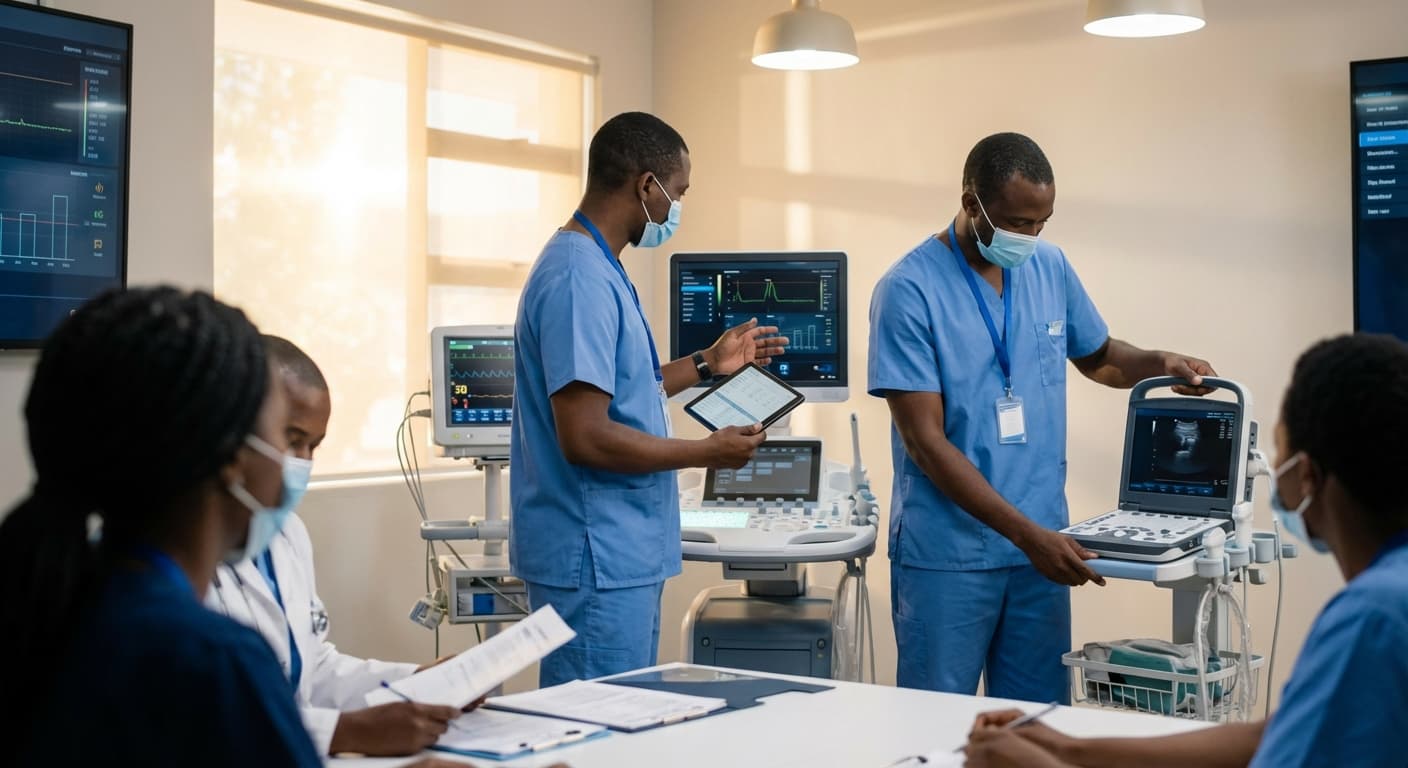
Clinical Needs Assessment for Medical Equipment in Gambia
Engineering Excellence & Technical Support
Clinical Needs Assessment for Medical Equipment High-standard technical execution following OEM protocols and local regulatory frameworks.
Comprehensive Needs Assessment Tool
Developed a standardized digital tool for nationwide clinical needs assessment of medical equipment, incorporating data on patient demographics, disease prevalence, existing equipment condition, and maintenance capacity. This ensures data-driven procurement decisions aligned with Gambia's health priorities and resource constraints.
Prioritization Matrix for Medical Equipment
Implemented a robust prioritization matrix based on essentiality, impact on patient outcomes, cost-effectiveness, and sustainability. This system guides the selection of critical medical equipment, ensuring that limited resources are allocated to technologies that will deliver the greatest public health benefit across various healthcare levels in Gambia.
Integrated Disease Surveillance & Equipment Planning
Established a framework that links ongoing disease surveillance data with medical equipment needs assessment. This proactive approach allows for the dynamic identification of emerging health challenges and the timely planning for specialized equipment, thereby enhancing Gambia's preparedness for public health emergencies and improving management of prevalent conditions.
What Is Clinical Needs Assessment For Medical Equipment In Gambia?
A Clinical Needs Assessment (CNA) for Medical Equipment in The Gambia is a systematic and data-driven evaluation process designed to identify, prioritize, and quantify the medical equipment requirements of healthcare facilities and health programs within the nation. This service involves a comprehensive analysis of existing healthcare infrastructure, current clinical practices, patient demographics, disease prevalence, and national health policies. The primary objective is to ensure that healthcare providers have access to appropriate, functional, and cost-effective medical devices necessary to deliver quality patient care and achieve desired health outcomes. The assessment typically considers a wide range of medical equipment, from basic diagnostic tools to complex surgical and imaging systems, across various levels of the healthcare system, including primary health centers, district hospitals, and tertiary referral facilities.
| Who Needs It? | Typical Use Cases | |||||
|---|---|---|---|---|---|---|
| Ministry of Health and Social Welfare (MoHSW) of The Gambia: For strategic planning, national health policy formulation, resource allocation, and development of national medical equipment strategies. | District Health Management Teams (DHMTs): To identify and justify equipment needs at district and sub-district levels, informing regional health plans. | Individual Healthcare Facilities (Hospitals, Health Centers): To assess their specific equipment requirements for improving service delivery, addressing patient care gaps, and planning for upgrades or replacements. | Non-Governmental Organizations (NGOs) and International Development Partners: To guide their support and funding for medical equipment procurement and capacity building initiatives in The Gambia. | Healthcare Professionals (Doctors, Nurses, Technicians): To provide input on clinical requirements, usability, and functionality of medical equipment to ensure effective patient management. | Medical Equipment Manufacturers and Suppliers: To understand the specific market demands and technological needs within The Gambia for product development and sales strategies. | |
| Establishing New Healthcare Facilities or Expanding Existing Ones: To equip facilities with the necessary diagnostic, therapeutic, and life-support equipment from inception. | Upgrading Existing Equipment: To replace outdated, obsolete, or non-functional equipment with modern, more efficient, and appropriate technologies. | Addressing Specific Disease Burden: To procure equipment for specialized treatment or diagnosis of prevalent diseases in The Gambia (e.g., malaria diagnostics, maternal and child health equipment, non-communicable disease screening tools). | Improving Emergency and Trauma Care: To equip facilities with critical care equipment, surgical tools, and emergency response devices. | Enhancing Diagnostic Capabilities: To expand or improve imaging (X-ray, ultrasound), laboratory (hematology, biochemistry), and other diagnostic services. | Implementing National Health Programs: To ensure that specific programs (e.g., vaccination, HIV/AIDS, tuberculosis control) are adequately supported by relevant medical equipment. | Facilitating Training and Education: To identify equipment needed for training healthcare professionals in new clinical procedures and equipment usage. |
Key Components of a Clinical Needs Assessment for Medical Equipment in The Gambia
- Data Collection: Gathering quantitative and qualitative data on patient caseloads, disease patterns, existing equipment inventory, equipment functionality status, maintenance records, staff technical proficiency, and user feedback.
- Gap Analysis: Comparing identified needs with the current equipment provision and functionality to determine discrepancies and prioritize areas for improvement.
- Technology Evaluation: Assessing the suitability, appropriateness, and sustainability of proposed equipment, considering factors such as local infrastructure (power, water, connectivity), availability of consumables and spare parts, and training requirements.
- Budgetary Planning: Estimating the capital and operational costs associated with acquiring, installing, training, and maintaining the identified equipment.
- Prioritization Framework: Developing a structured approach to rank equipment needs based on criteria such as public health impact, urgency of need, cost-effectiveness, and alignment with national health strategies.
- Procurement Strategy Development: Recommending appropriate procurement mechanisms, considering international standards, local procurement regulations, and total cost of ownership.
- Capacity Building Assessment: Evaluating the existing technical and clinical expertise within healthcare facilities to support the operation and maintenance of new equipment, and identifying training needs.
Who Needs Clinical Needs Assessment For Medical Equipment In Gambia?
A robust clinical needs assessment for medical equipment is crucial for any healthcare facility aiming to provide optimal patient care. In Gambia, where resources can be a significant consideration, a targeted approach to equipment procurement ensures that investments are both effective and sustainable. This process helps identify existing gaps, prioritize essential equipment based on clinical demand and staff expertise, and avoid redundant or unsuitable purchases. Ultimately, it leads to improved service delivery, better patient outcomes, and more efficient resource allocation within the healthcare system.
| Department | Clinical Needs Assessment Focus | Key Equipment Considerations |
|---|---|---|
| Emergency/Trauma | Immediate life-saving interventions, resuscitation, stabilization. | Defibrillators, ventilators, suction machines, trauma kits, monitoring equipment, surgical instruments for emergency procedures. |
| Maternity/Obstetrics | Prenatal care, labor and delivery, postpartum care, neonatal resuscitation. | Fetal Doppler, ultrasound machines, delivery beds, incubators, phototherapy units, vital signs monitors. |
| Pediatrics | Diagnosis and treatment of childhood illnesses, chronic conditions, developmental assessment. | Pediatric stethoscopes, thermometers, pulse oximeters, nebulizers, specialized infant/child examination tables, infant warmers. |
| Surgery | Pre-operative assessment, intra-operative procedures, post-operative care. | Surgical lights, operating tables, anesthesia machines, electrocautery units, a wide range of surgical instruments, sterilization equipment. |
| Internal Medicine/General Wards | Diagnosis and management of common and chronic diseases, patient monitoring. | Stethoscopes, sphygmomanometers, thermometers, ECG machines, infusion pumps, patient beds, basic diagnostic equipment. |
| Laboratory Services | Diagnostic testing for various conditions, quality control. | Microscopes, centrifuges, chemistry analyzers, hematology analyzers, refrigerators for sample storage, serology equipment. |
| Radiology/Imaging | Diagnostic imaging for bone, soft tissue, and organ assessment. | X-ray machines, ultrasound machines, (potentially) CT scanners or MRI if available/feasible, image processing systems. |
| Outpatient/Consultation | Primary care, diagnosis, and initial management of illnesses. | Examination tables, diagnostic kits, basic vital signs monitoring equipment, minor procedure tools. |
| Pharmacy/Dispensing | Safe storage and accurate dispensing of medications. | Refrigerators for temperature-sensitive medications, scales, counting trays, secure storage cabinets. |
| Rehabilitation/Physiotherapy | Restoration of function, pain management, exercise therapy. | Exercise equipment, electrotherapy modalities (e.g., ultrasound, TENS), massage tables, assistive devices. |
Target Customers for Clinical Needs Assessment in Gambia
- Public Hospitals (Tertiary and Secondary Level)
- District Hospitals
- Regional Health Centers
- Rural Health Centers
- Private Hospitals and Clinics
- Non-Governmental Organization (NGO) Healthcare Facilities
- Specialized Medical Centers (e.g., maternity, pediatric)
- Research Institutions and Training Centers
Clinical Needs Assessment For Medical Equipment Process In Gambia
This document outlines a comprehensive workflow for conducting a clinical needs assessment for medical equipment in The Gambia. The process is designed to be systematic, transparent, and evidence-based, ensuring that procured equipment aligns with the country's healthcare priorities, existing infrastructure, and user capabilities. The workflow begins with an initial inquiry and culminates in the execution of the procurement and deployment of identified equipment.
| Stage | Activity | Description | Key Stakeholders | Deliverables/Outcomes |
|---|---|---|---|---|
| Initial Request/Mandate | Formal request or mandate to conduct a clinical needs assessment is received from the Ministry of Health or other relevant governing body. This defines the scope (e.g., specific region, department, disease area) and initial objectives. | Ministry of Health (MoH), Project Management Unit (PMU) | Official Terms of Reference (ToR) for the needs assessment |
| Team Formation and Planning | A dedicated assessment team is formed, comprising clinical experts, technical specialists, and logistics personnel. A detailed work plan, including timelines and methodologies, is developed. | MoH, PMU, Technical Experts | Assessment Team established, Detailed Work Plan |
| Site Visits and Facility Assessment | The assessment team visits healthcare facilities to observe current practices, assess existing infrastructure (power, water, space), and identify immediate needs. | Healthcare Facility Staff (Doctors, Nurses, Technicians), Facility Managers, Assessment Team | Facility Assessment Reports, Site Observation Notes |
| Interviews and Focus Group Discussions (FGDs) | Conduct interviews with healthcare professionals to understand their challenges, desired equipment, and training needs. FGDs can gather broader perspectives. | Healthcare Providers, Administrators, Patient Representatives (where applicable), Assessment Team | Interview Transcripts, FGD Summaries |
| Review of Health Data and Reports | Analyze existing health data, epidemiological reports, and previous equipment assessments to identify disease burden, service utilization patterns, and gaps. | MoH (Planning Unit, Disease Surveillance), Health Information System (HIS) Officers, Assessment Team | Data Analysis Reports, Disease Burden Estimates |
| Gap Identification | Synthesize collected data to identify discrepancies between current capabilities and desired or essential healthcare services. | Assessment Team | List of identified clinical needs and service gaps |
| Prioritization Framework Development | Establish criteria for prioritizing needs, considering factors like impact on patient outcomes, feasibility of implementation, cost-effectiveness, and alignment with national health strategies. | Assessment Team, MoH Technical Committee | Prioritization Matrix/Criteria Document |
| Equipment Need Prioritization | Apply the prioritization framework to rank the identified equipment needs, distinguishing between essential, desirable, and aspirational items. | Assessment Team, MoH Technical Committee | Prioritized List of Equipment Needs |
| Technical Specification Development | For each prioritized equipment need, develop detailed technical specifications, including performance requirements, maintenance needs, and compatibility with existing systems. | Technical Experts, Biomedical Engineers, Assessment Team | Technical Specifications for each equipment item |
| Cost Estimation and Budgeting | Estimate the total cost for each equipment item, including purchase price, shipping, installation, training, and ongoing maintenance. Develop a preliminary budget. | Procurement Specialists, Finance Officers, Assessment Team | Cost Estimates, Preliminary Budget |
| Training and Maintenance Planning | Outline the necessary training for users and maintenance personnel, and plan for spare parts and servicing arrangements. | Training Specialists, Biomedical Engineers, Assessment Team | Training Plan, Maintenance Strategy |
| Draft Needs Assessment Report | Compile a comprehensive draft report detailing the methodology, findings, prioritized equipment list, technical specifications, and budget. | Assessment Team | Draft Needs Assessment Report |
| Stakeholder Validation Workshop | Present the draft report to key stakeholders for feedback, review, and validation of the findings and recommendations. | MoH Officials, Healthcare Providers, Technical Experts, Implementing Partners, Assessment Team | Validated Needs Assessment Report, Actionable Feedback |
| Final Needs Assessment Report | Incorporate feedback and finalize the needs assessment report, which serves as the basis for procurement. | Assessment Team | Final, Approved Needs Assessment Report |
| Procurement Process Initiation | Based on the validated report, initiate the procurement process according to national and international procurement guidelines. | Procurement Unit (MoH/PMU), Finance Department | Tender Documents Issued |
| Equipment Procurement | Suppliers are selected, and equipment is purchased. | Procurement Unit, Suppliers | Procured Medical Equipment |
| Installation and Commissioning | Equipment is delivered, installed, and commissioned at the designated healthcare facilities. | Biomedical Engineers, Suppliers, Facility Staff | Installed and Functional Equipment |
| User and Maintenance Training | Conduct training for healthcare professionals on the operation and basic maintenance of the new equipment. | Training Providers, Biomedical Engineers, Facility Staff | Trained Personnel |
| Post-Installation Monitoring | Regularly monitor the performance and utilization of the newly acquired equipment. | Biomedical Engineers, Facility Managers, MoH Monitoring Unit | Equipment Performance Data |
| Impact Evaluation | Assess the impact of the new equipment on service delivery, patient outcomes, and overall healthcare system efficiency. | MoH Monitoring Unit, Researchers, Assessment Team | Impact Evaluation Report |
| Feedback Loop for Future Assessments | Gather lessons learned from the entire process to inform and improve future clinical needs assessments. | All Stakeholders | Recommendations for Future Needs Assessments |
Workflow Stages
- Stage 1: Inquiry and Scoping
- Stage 2: Stakeholder Engagement and Data Collection
- Stage 3: Needs Analysis and Prioritization
- Stage 4: Equipment Specification and Justification
- Stage 5: Reporting and Validation
- Stage 6: Procurement and Implementation
- Stage 7: Monitoring and Evaluation
Clinical Needs Assessment For Medical Equipment Cost In Gambia
A comprehensive clinical needs assessment for medical equipment in The Gambia requires a detailed understanding of the local economic landscape and the specific pricing factors that influence the cost of acquiring and maintaining these essential resources. These factors are multifaceted, ranging from the type and complexity of the equipment to import duties, local supplier markups, and currency fluctuations. Understanding these nuances is crucial for effective budgeting, procurement strategies, and ensuring sustainable access to vital medical technologies. The local currency, the Gambian Dalasi (GMD), is subject to exchange rate volatility, which directly impacts the cost of imported goods. Therefore, pricing needs to be presented with a clear understanding of the GMD's current standing against major international currencies like the USD and EUR.
| Equipment Category | Estimated Price Range (GMD) | Estimated Price Range (USD Equivalent - indicative) |
|---|---|---|
| Basic Diagnostic Tools (e.g., Stethoscope, BP Monitor, Thermometer) | 500 - 5,000 GMD | $10 - $100 USD |
| Basic Laboratory Equipment (e.g., Microscope, Centrifuge, Basic Hematology Analyzer) | 20,000 - 150,000 GMD | $400 - $3,000 USD |
| Imaging Equipment (e.g., Portable X-ray, Ultrasound Machine) | 100,000 - 1,000,000 GMD | $2,000 - $20,000 USD |
| Surgical Instruments (Basic Set) | 5,000 - 50,000 GMD | $100 - $1,000 USD |
| Anesthesia Machine | 150,000 - 750,000 GMD | $3,000 - $15,000 USD |
| Hospital Beds (Manual) | 10,000 - 60,000 GMD | $200 - $1,200 USD |
| Hospital Beds (Electric/Specialized) | 70,000 - 300,000 GMD | $1,400 - $6,000 USD |
| Sterilization Equipment (Autoclave) | 50,000 - 400,000 GMD | $1,000 - $8,000 USD |
| Ventilator (Basic) | 200,000 - 1,500,000 GMD | $4,000 - $30,000 USD |
| Dental Chair | 80,000 - 500,000 GMD | $1,600 - $10,000 USD |
Key Pricing Factors for Medical Equipment in The Gambia
- Import Duties and Taxes: Significant tariffs and taxes imposed on imported medical equipment substantially increase the final cost. These can vary based on the type of equipment and trade agreements.
- Supplier Markups: Local distributors and suppliers add their own profit margins, which can be considerable, especially for specialized or less frequently imported items.
- Shipping and Logistics: The cost of international freight, local transportation, customs clearance, and warehousing all contribute to the overall price.
- Currency Exchange Rates: The fluctuating value of the Gambian Dalasi (GMD) against major international currencies (USD, EUR) directly impacts the cost of imported equipment. A weaker Dalasi translates to higher prices.
- Equipment Type and Complexity: Advanced, high-tech, or specialized equipment will inherently be more expensive than basic diagnostic or therapeutic tools.
- Brand and Manufacturer: Reputable international brands often command higher prices due to perceived quality, reliability, and after-sales support.
- Warranty and After-Sales Service: The inclusion of warranties, maintenance contracts, and readily available spare parts can influence the initial purchase price, but are vital for long-term cost-effectiveness.
- Volume Discounts: While less common for individual hospital needs, larger bulk purchases or consortiums may be able to negotiate better pricing.
- Local Availability and Competition: Limited local suppliers or a lack of competition can lead to higher prices. Conversely, a more competitive market can drive prices down.
- Installation and Training: The cost of expert installation and comprehensive training for medical staff on new equipment is an important component of the total acquisition cost.
Affordable Clinical Needs Assessment For Medical Equipment Options
This document outlines affordable strategies for conducting a clinical needs assessment for medical equipment. It emphasizes the importance of a thorough assessment to ensure that procured equipment aligns with clinical requirements and budget constraints. We explore the concept of 'value bundles' as a procurement strategy and detail various cost-saving measures applicable throughout the equipment lifecycle. A well-executed needs assessment, coupled with smart purchasing and maintenance practices, can significantly optimize healthcare facility resources.
| Value Bundle Component | Description | Cost-Saving Strategy Alignment |
|---|---|---|
| Integrated Solutions | Bundling multiple pieces of equipment or software that work together seamlessly, often from a single vendor. This can simplify integration and training. | Reduced integration costs, potentially volume discounts, streamlined training. |
| Service and Maintenance Contracts | Including extended warranties or comprehensive service plans with the initial equipment purchase. These can offer predictable maintenance costs and priority service. | Preventative maintenance minimizes costly breakdowns, predictable budgeting, avoids unexpected repair bills. |
| Consumables and Accessories | Negotiating bundled pricing for essential consumables and accessories required for the equipment's operation. | Bulk purchasing discounts, reduced administrative overhead for separate orders. |
| Training and Education | Including comprehensive training programs for clinical staff and technical support as part of the package. | Improved staff proficiency reduces errors, minimizes downtime, and maximizes equipment utilization. |
| Upgrade Paths and Trade-ins | Bundling future upgrade options or offering trade-in programs for older equipment when purchasing new. | Reduces the cost of future upgrades, facilitates responsible disposal of old equipment. |
Key Components of an Affordable Clinical Needs Assessment
- Define Clinical Requirements: Clearly articulate the specific medical procedures, patient populations, and diagnostic/therapeutic needs the equipment must address. Involve end-users (clinicians, technicians) in this process.
- Inventory Existing Equipment: Conduct a comprehensive audit of current medical equipment. Assess its functionality, age, maintenance history, and utilization. Identify redundant or underperforming assets.
- Analyze Utilization Data: Collect and analyze data on how existing equipment is used. This can reveal unmet needs or opportunities for reallocating or upgrading current assets.
- Research Market Options: Investigate a range of equipment manufacturers and models that meet the defined clinical requirements. Consider factors beyond initial purchase price, such as reliability, serviceability, and technological advancements.
- Evaluate Total Cost of Ownership (TCO): Move beyond the upfront purchase price to consider installation, training, maintenance contracts, consumables, and eventual disposal costs.
- Prioritize Needs: Based on clinical impact, patient safety, and budgetary constraints, prioritize the identified equipment needs. Focus on essential acquisitions first.
- Explore Refurbished or Pre-owned Equipment: For certain non-critical or less technologically demanding items, consider high-quality refurbished or pre-owned equipment as a cost-effective alternative.
- Phased Procurement: If significant investment is required, consider a phased approach to equipment acquisition, spreading costs over time and allowing for adjustments based on evolving needs.
Verified Providers In Gambia
In the pursuit of reliable healthcare in Gambia, identifying verified providers is paramount. Franance Health stands out as a leading entity, not only for its comprehensive network but also for the stringent credentials and quality assurance measures it employs. This commitment to verification ensures that patients receive care from qualified, ethical, and competent healthcare professionals and institutions. Choosing a verified provider like those within the Franance Health network means opting for a higher standard of safety, effectiveness, and patient satisfaction. Their meticulous vetting process minimizes risks and maximizes the likelihood of positive health outcomes, making them the best choice for your healthcare needs in Gambia.
| Credential Type | Verification Process | Importance for Patients |
|---|---|---|
| Medical Licenses | Checked against official licensing boards to confirm current validity and disciplinary history. | Ensures providers are legally permitted to practice and meet minimum competency standards. |
| Educational Background & Certifications | Verification of degrees, diplomas, and specialized certifications from accredited institutions. | Confirms providers possess the necessary theoretical knowledge and specialized skills. |
| Professional Experience | Reference checks and documentation review to confirm previous practice history and areas of expertise. | Ensures providers have practical experience relevant to their specialization. |
| Reputation & Disciplinary Records | Background checks and review of any past malpractice claims or disciplinary actions. | Guarantees providers adhere to ethical guidelines and have a clean professional record. |
| Facility Accreditation (for institutions) | Assessment of healthcare facilities against recognized national and international accreditation standards. | Confirms that facilities meet stringent safety, operational, and quality of care benchmarks. |
Why Franance Health Providers are the Best Choice
- Rigorous Credentialing: Franance Health verifies the licenses, qualifications, and experience of all affiliated healthcare professionals.
- Quality Assurance: They implement continuous quality improvement processes to maintain high standards of care.
- Patient Safety Focus: Emphasis on patient safety protocols and adherence to best practices.
- Ethical Practice Standards: Commitment to ethical conduct and patient rights.
- Comprehensive Network: Access to a wide range of specialists and facilities to meet diverse healthcare needs.
- Trust and Reliability: Proven track record of delivering dependable and high-quality healthcare services.
Scope Of Work For Clinical Needs Assessment For Medical Equipment
This Scope of Work (SOW) outlines the objectives, deliverables, and standard specifications for conducting a comprehensive clinical needs assessment for medical equipment. The assessment will identify current and future equipment requirements across various clinical departments to ensure optimal patient care, efficient resource allocation, and technological advancement within the healthcare facility.
| Deliverable | Description | Standard Specifications/Format | Timeline (Indicative) |
|---|---|---|---|
| Project Kick-off Meeting Minutes | Summary of initial discussions, confirmed objectives, project team roles, and communication plan. | Formal meeting minutes document, distributed within 2 business days of the meeting. | Week 1 |
| Departmental Equipment Inventory Report | Detailed list of all existing medical equipment per department, including make, model, serial number, purchase date, warranty status, and maintenance history. | Spreadsheet format (e.g., Excel, CSV) with standardized columns. Data validation checks applied. | Week 3 |
| Clinical Workflow Analysis Documentation | Mapping of current patient pathways and clinical workflows within each department, identifying points of equipment utilization and potential bottlenecks. | Flowcharts (e.g., Visio, Lucidchart), narrative descriptions, and process maps. Clear and concise language. | Week 5 |
| Needs Identification and Gap Analysis Report | Identification of current equipment deficiencies, obsolescence, underutilization, and future clinical service requirements. Comparison of existing inventory against identified needs. | Structured report with executive summary, detailed findings per department, gap analysis matrices, and supporting data. PDF format. | Week 7 |
| Equipment Prioritization Matrix | A matrix outlining recommended equipment based on criticality, clinical impact, cost-effectiveness, and strategic alignment. Includes justification for each recommendation. | Table format, cross-referenced with the Needs Identification Report. Can be integrated into the final report or provided as a standalone appendix. Excel or PDF. | Week 8 |
| Draft Clinical Needs Assessment Report | Comprehensive report detailing the entire assessment process, findings, prioritized equipment recommendations, and proposed acquisition strategies. | Formal report structure: Executive Summary, Introduction, Methodology, Findings (by department), Recommendations, Budgetary Implications (preliminary), Conclusion. PDF format. | Week 9 |
| Final Clinical Needs Assessment Report | Revised and finalized report incorporating feedback from stakeholders, presented in a clear and actionable format. | Finalized PDF report, potentially with an accompanying presentation deck (PowerPoint/Google Slides). | Week 10 |
| Equipment Specification Templates | Standard templates for documenting technical specifications of recommended equipment, including performance requirements, safety standards, and interoperability needs. | Template document (e.g., Word) with pre-defined sections for technical, functional, safety, and service requirements. Adherence to relevant international (e.g., IEC, ISO) and national standards. | Provided as an appendix to the final report or as standalone documents. |
Key Stages of the Clinical Needs Assessment
- Phase 1: Planning and Stakeholder Engagement
- Phase 2: Data Collection and Analysis
- Phase 3: Equipment Prioritization and Recommendations
- Phase 4: Report Generation and Presentation
Service Level Agreement For Clinical Needs Assessment For Medical Equipment
This Service Level Agreement (SLA) outlines the agreed-upon performance standards for the Clinical Needs Assessment (CNA) service provided for medical equipment. It details response times for requests and uptime guarantees for the assessment platform, ensuring timely and reliable support for our healthcare partners.
| Service Component | Service Level Objective (SLO) | Measurement Method | Remedy/Escalation |
|---|---|---|---|
| Initial Request Acknowledgement | 95% of requests acknowledged within 4 business hours. | Timestamp of request submission vs. timestamp of acknowledgement email/system notification. | If SLO not met, a senior service manager will review the backlog and reallocate resources. For repeated failures, a service review meeting will be scheduled. |
| Assessment Commencement | 90% of assessments commence within 2 business days of acknowledgement for standard requests. Urgent requests (marked as such) will commence within 1 business day. | Timestamp of acknowledgement vs. timestamp of first scheduled meeting or documented engagement with the client. | For delays exceeding the SLO, the assigned assessor will provide a daily update and a revised timeline. Priority will be given to re-engaging affected clients. |
| CNA Platform Uptime | 99.5% uptime during Service Hours. | Monitored by an independent uptime monitoring service. Uptime is calculated as (Total minutes in Service Hours - Downtime minutes) / Total minutes in Service Hours. | If uptime falls below 99.5% in a given month, a credit of 5% of the monthly service fee will be applied. If uptime falls below 98%, a credit of 10% will be applied, and a root cause analysis will be provided. |
| Response to Critical Incidents | Resolution or workaround within 4 business hours of identification. | Time from incident reported/detected to incident resolved or a viable workaround communicated to the affected users. | For each hour of downtime beyond the SLO for a Critical Incident, a credit of 2% of the monthly service fee will be applied, capped at 20% for a single incident. |
Service Level Objectives
- Scope of Service: This SLA covers the Clinical Needs Assessment process for new medical equipment procurement and upgrades, including initial consultations, needs documentation, and validation of requirements.
- Service Hours: The CNA service is available Monday to Friday, 9:00 AM to 5:00 PM (local time), excluding public holidays. Urgent requests outside these hours will be handled based on agreed-upon escalation procedures.
- Definitions:
- Request: Any formal submission for a Clinical Needs Assessment, submitted via the designated portal or email.
- Response Time: The time taken from the successful submission of a Request to the initial acknowledgment and confirmation of receipt.
- Assessment Commencement: The time from acknowledgment to the first dedicated engagement with the client to gather detailed requirements.
- Uptime: The percentage of time the CNA platform is available and operational for users to access and submit requests.
- Downtime: The percentage of time the CNA platform is unavailable.
- Critical Incident: Any event that significantly disrupts the ability to conduct or submit a Clinical Needs Assessment, impacting multiple users or critical functionalities.
Frequently Asked Questions

Ready when you are
Let's scope your Clinical Needs Assessment for Medical Equipment in Gambia project in Gambia.

Scaling healthcare logistics and technical systems across the entire continent.