
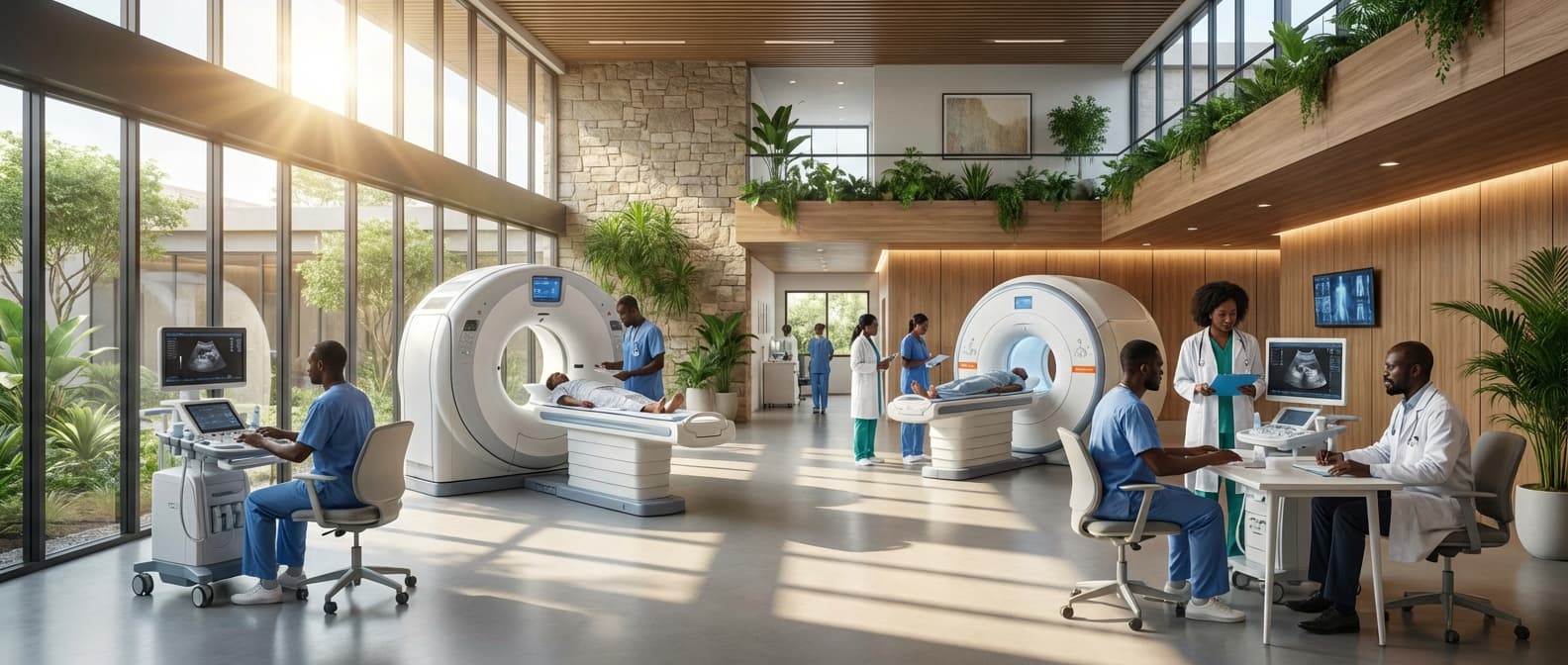
Diagnostic Imaging in Gambia
Engineering Excellence & Technical Support
High-resolution imaging systems including CT scanners, MRI, X-ray, and ultrasound technology for accurate clinical diagnosis. High-standard technical execution following OEM protocols and local regulatory frameworks.
Mobile X-ray Units for Remote Outreach
Deploying portable X-ray machines to remote clinics and villages, overcoming infrastructure limitations to provide essential diagnostic imaging services to underserved populations, facilitating early detection of conditions like tuberculosis and fractures.
PACS Implementation & Training
Establishing a Picture Archiving and Communication System (PACS) to digitize and store medical images, improving workflow efficiency, enabling remote consultation with specialists, and ensuring secure long-term archiving for better patient management and research.
Tele-radiology Network Expansion
Expanding a tele-radiology network connecting central hospitals with regional facilities, allowing for rapid interpretation of complex imaging studies by subspecialist radiologists, reducing diagnostic delays, and enhancing the quality of care nationwide.
What Is Diagnostic Imaging In Gambia?
Diagnostic imaging in The Gambia refers to the non-invasive use of various imaging modalities to visualize internal structures of the body for the purpose of medical diagnosis, monitoring, and intervention guidance. This service is crucial for identifying, characterizing, and staging diseases and injuries, thereby informing treatment strategies and improving patient outcomes within the Gambian healthcare system. The scope of diagnostic imaging can range from basic X-ray examinations to more advanced modalities depending on the availability of equipment and trained personnel. The service involves the acquisition of images using physical principles like radiation, magnetic fields, or ultrasound waves, followed by interpretation by qualified radiologists or other medical professionals. The accessibility and range of these services are often influenced by the resource limitations of the country.
| Who Needs Diagnostic Imaging? | Typical Use Cases | ||||||
|---|---|---|---|---|---|---|---|
| Patients with Suspected Fractures or Bone Trauma: To confirm the presence, location, and severity of bone breaks. | Patients with Symptoms of Respiratory Illnesses (e.g., pneumonia, tuberculosis): Chest X-rays are fundamental for diagnosis and monitoring. | Pregnant Women: Ultrasound is widely used for prenatal care, monitoring fetal development, and assessing maternal and fetal health. | Patients with Abdominal Pain or Suspected Organ Abnormalities: Ultrasound is a primary tool for visualizing organs like the liver, kidneys, gallbladder, and spleen. | Patients with Suspected Cancers or Tumors: Imaging can help detect, characterize, and stage malignancies. | Patients Requiring Pre-operative Assessment: To evaluate organ structure and identify potential complications before surgery. | Patients with Suspected Neurological Conditions: In facilities with CT scanners, head imaging can diagnose strokes, bleeds, or trauma. | Patients Presenting with Acute Injuries: To quickly assess for internal bleeding or organ damage. |
| Radiography (X-ray): Diagnosis of bone fractures, dislocations, pneumonia, foreign bodies, dental issues, and evaluation of the chest and abdomen. | Ultrasound (Sonography): Pelvic and abdominal examinations (gallbladder, kidneys, liver, spleen, pancreas), obstetric and gynecological assessments, thyroid evaluation, and superficial lesion assessment. | Computed Tomography (CT) Scan (where available): Detailed cross-sectional imaging for head injuries, strokes, complex abdominal pathologies, and trauma assessment. |
Key Aspects of Diagnostic Imaging in The Gambia
- Modalities: The specific imaging modalities available can vary. Common ones include X-ray (radiography), ultrasound (sonography), and, in more advanced facilities, Computed Tomography (CT) scans. Magnetic Resonance Imaging (MRI) is less commonly available due to significant infrastructure and cost requirements.
- Personnel: Services are provided by trained radiographers (who operate the equipment) and radiologists (who interpret the images and provide diagnostic reports). Training and retention of these professionals are critical challenges.
- Infrastructure: The availability and maintenance of imaging equipment are dependent on national health budgets and international aid. Rural areas often have limited or no access to advanced imaging facilities, necessitating referrals to urban centers.
- Integration: Diagnostic imaging findings are integrated into the broader clinical picture by referring physicians to formulate comprehensive patient management plans.
- Challenges: Key challenges include equipment availability and maintenance, scarcity of trained personnel, limited accessibility in rural areas, and the cost of advanced imaging procedures for patients.
Who Needs Diagnostic Imaging In Gambia?
Diagnostic imaging plays a crucial role in modern healthcare, enabling accurate diagnosis and effective treatment planning. In Gambia, as in many developing nations, understanding who requires these services and within which departments they are most critical is essential for resource allocation and service improvement. This document outlines the primary beneficiaries and the key departments that rely on diagnostic imaging in The Gambia.
| Imaging Modality | Primary Use Cases | Key Departments |
|---|---|---|
| X-ray | Bone fractures, lung infections (pneumonia, TB), foreign bodies, some soft tissue assessment, dental imaging. | Emergency, Orthopedics, Internal Medicine, Pediatrics, Pulmonology. |
| Ultrasound | Abdominal organs (liver, kidneys, spleen, gallbladder), obstetrics (fetal assessment), gynecology, thyroid, blood vessels (Doppler), soft tissue masses. | Internal Medicine, Obstetrics & Gynecology, General Surgery, Pediatrics, Cardiology. |
| CT Scan (where available) | Detailed cross-sectional imaging of the head, chest, abdomen, and pelvis; trauma assessment, tumor detection and staging, complex fractures, stroke. | Emergency, Neurosurgery, General Surgery, Internal Medicine, Oncology. |
| MRI (limited availability) | High-resolution soft tissue imaging, detailed assessment of the brain, spinal cord, joints, and muscles; used for complex neurological and musculoskeletal conditions. | Neurosurgery, Orthopedics, Neurology (if specialized unit exists). |
Target Customers & Departments for Diagnostic Imaging in The Gambia
- {"items":["Patients presenting with acute or chronic pain (e.g., abdominal pain, chest pain, bone pain).","Individuals with suspected fractures, dislocations, or other bone and joint injuries.","Patients requiring assessment of internal organ health (e.g., liver, kidneys, lungs, heart).","Individuals with suspected tumors, cysts, or other abnormalities.","Pregnant women for prenatal monitoring and assessment.","Patients undergoing pre-operative or post-operative evaluations.","Individuals with neurological symptoms (e.g., stroke, head injury, seizures).","Patients requiring screening for certain conditions (e.g., tuberculosis, mammography where available).","Patients with suspected infectious diseases requiring visualization of affected areas.","Emergency room patients requiring rapid diagnosis of trauma or acute conditions."],"title":"Target Customers"}
- {"items":["Emergency Department/Casualty: For immediate assessment of trauma, fractures, internal bleeding, and acute medical conditions.","Radiology Department: The central hub for all imaging procedures (X-ray, ultrasound, CT scans, MRI where available).","Surgical Departments (General Surgery, Orthopedics, Neurosurgery, etc.): For pre-operative planning, intra-operative guidance, and post-operative follow-up.","Internal Medicine/General Medicine: For diagnosis and management of a wide range of conditions affecting internal organs.","Pediatrics Department: For diagnosing childhood illnesses, congenital abnormalities, and injuries.","Obstetrics and Gynecology Department: For prenatal care, identifying pregnancy complications, and diagnosing gynecological issues.","Cardiology Department: For assessing heart conditions (echocardiography, chest X-rays).","Pulmonology Department: For diagnosing lung diseases (chest X-rays, CT scans of the chest).","Oncology Department: For staging and monitoring of cancers.","Outpatient Clinics: For initial diagnosis and follow-up of various conditions."],"title":"Key Departments Relying on Diagnostic Imaging"}
Diagnostic Imaging Process In Gambia
The diagnostic imaging process in Gambia, like in many developing nations, involves a series of sequential steps from the initial patient inquiry to the final execution of the imaging procedure. This workflow is often influenced by resource availability, infrastructure, and healthcare system structure. The process typically begins with a physician identifying the need for imaging based on a patient's symptoms and clinical presentation. This leads to a referral, often to a specific imaging department or facility. Patient registration and scheduling follow, which can be a bottleneck due to high demand and limited capacity. Upon arrival for the appointment, patient preparation may be required depending on the specific imaging modality. The imaging procedure itself is then performed by a radiographer or technologist. Following the scan, a radiologist interprets the images and generates a report. This report is then returned to the referring physician, who uses it to guide further patient management. Challenges at various stages, such as equipment maintenance, availability of skilled personnel, and timely report delivery, can impact the overall efficiency and effectiveness of the diagnostic imaging process.
| Stage | Description | Key Personnel Involved | Potential Bottlenecks/Challenges |
|---|---|---|---|
| Physician Referral | A doctor determines the need for diagnostic imaging based on clinical assessment. | Physician/Doctor | Limited access to specialist opinions for complex cases; over-reliance on imaging for all conditions. |
| Patient Registration and Scheduling | Patient details are recorded, and an appointment is booked for the imaging procedure. | Administrative Staff, Radiography Department Staff | Long waiting times due to high patient load and limited equipment; manual booking systems leading to errors; difficulty in prioritizing urgent cases. |
| Patient Preparation | Instructions are given to the patient to prepare for the specific imaging technique (e.g., fasting, hydration, contrast agent administration). | Radiographer/Technologist, Nurse (if applicable) | Lack of patient education materials; communication barriers with patients; limited availability of contrast agents. |
| Imaging Procedure Execution | The diagnostic imaging scan is performed using the appropriate equipment (X-ray, Ultrasound, CT, MRI). | Radiographer/Technologist | Equipment malfunction or breakdown; lack of spare parts for maintenance; insufficient power supply; shortage of trained radiographers. |
| Image Interpretation and Reporting | A radiologist analyzes the acquired images and generates a detailed diagnostic report. | Radiologist | Shortage of qualified radiologists; heavy workload leading to delayed reports; limited access to advanced interpretation software. |
| Report Delivery to Referring Physician | The completed diagnostic report is transmitted to the physician who requested the scan. | Administrative Staff, Courier/Messenger (if physical), Electronic System (if available) | Slow or unreliable postal services; limited internet connectivity for electronic transfer; lost reports; inefficient communication channels. |
| Further Patient Management | The referring physician uses the imaging report to confirm diagnosis, plan treatment, or monitor progress. | Physician/Doctor | Inability to act on reports due to lack of specialist follow-up services; limited treatment options based on findings; patient compliance issues. |
Key Stages in the Diagnostic Imaging Process in Gambia
- Physician Referral
- Patient Registration and Scheduling
- Patient Preparation
- Imaging Procedure Execution
- Image Interpretation and Reporting
- Report Delivery to Referring Physician
- Further Patient Management
Diagnostic Imaging Cost In Gambia
Diagnostic imaging services in The Gambia, like in many developing nations, are influenced by a complex interplay of factors that determine their cost. These include the type of imaging modality used, the specific body part being examined, the complexity of the examination, the equipment's age and maintenance status, the expertise of the radiologist and technician, and the location of the facility (public vs. private). Private facilities generally command higher prices due to overhead, specialized equipment, and perceived quality, while public hospitals may offer subsidized rates or operate on a more limited budget. The availability of advanced technology is often scarce and concentrated in urban centers, contributing to higher costs where it does exist. Furthermore, the cost of importing and maintaining specialized imaging equipment, along with the training of skilled personnel, adds to the overall expense. The Gambia Dalasi (GMD) is the local currency, and prices can fluctuate based on inflation, import duties, and the economic climate.
| Imaging Service | Estimated Cost Range (GMD) |
|---|---|
| X-ray (Single View) | 500 - 1,500 |
| X-ray (Multiple Views) | 800 - 2,500 |
| Ultrasound (Abdomen/Pelvis) | 1,000 - 3,000 |
| Ultrasound (Obstetric/Pregnancy) | 1,200 - 3,500 |
| CT Scan (Head) | 4,000 - 8,000 |
| CT Scan (Abdomen/Pelvis) | 5,000 - 10,000 |
| MRI Scan (Joint) | 8,000 - 15,000+ |
| MRI Scan (Brain) | 10,000 - 20,000+ |
Factors Influencing Diagnostic Imaging Costs in The Gambia
- Imaging Modality (e.g., X-ray, Ultrasound, CT scan, MRI)
- Body Part/Region Examined
- Examination Complexity
- Equipment Age and Maintenance
- Radiologist and Technician Expertise
- Facility Type (Public vs. Private)
- Location of Facility (Urban vs. Rural)
- Availability of Advanced Technology
- Importation and Maintenance Costs of Equipment
- Training Costs for Personnel
- Inflation and Economic Climate
- Import Duties
Affordable Diagnostic Imaging Options
Navigating the world of diagnostic imaging can be daunting, especially when considering the costs involved. Fortunately, various affordable options and cost-saving strategies exist to make these essential medical services more accessible. Understanding value bundles and exploring alternative avenues can significantly reduce out-of-pocket expenses while ensuring you receive high-quality care.
| Cost-Saving Strategy | Description | When to Consider |
|---|---|---|
| Compare Imaging Centers: | Different imaging facilities (hospitals, independent imaging centers, mobile units) have varying pricing structures. Shop around and compare costs for the same or similar procedures. | Always before scheduling a scan. |
| Inquire About Self-Pay Discounts: | If you don't have insurance or your insurance has a high deductible, ask about discounts for paying out-of-pocket. Many facilities offer significant savings. | When you are paying for the service yourself. |
| Utilize Health Savings Accounts (HSAs) or Flexible Spending Accounts (FSAs): | These pre-tax accounts can be used to pay for qualified medical expenses, including diagnostic imaging, saving you money on your tax bill. | If you have an HSA or FSA set up. |
| Ask About Generic or Unbranded Imaging: | While less common, sometimes less advanced or more general imaging techniques can suffice and be less expensive than highly specialized ones. Discuss options with your doctor. | When discussing your imaging needs with your referring physician. |
| Negotiate Prices (in some cases): | While not always possible, especially with large hospital systems, for independent imaging centers, you might be able to negotiate the price, particularly if you're paying upfront. | Before booking, especially with independent providers. |
| Seek Second Opinions (for necessity): | Before undergoing expensive imaging, ensure it's truly necessary. A second opinion from a trusted physician can confirm the need for the scan. | If you question the necessity of a recommended scan. |
| Explore Community Health Programs or Non-Profits: | Some community health organizations or non-profit medical groups offer reduced-cost or free diagnostic services to eligible individuals. | If you have limited income or insurance. |
| Consider 'Out-of-Network' Options (carefully): | Sometimes, a specialist or imaging center not in your insurance network might have lower cash prices, but carefully weigh the potential out-of-pocket costs against in-network benefits. | If your in-network options are prohibitively expensive and you've researched out-of-network costs thoroughly. |
Value Bundles: Understanding Integrated Packages
- What are Value Bundles? Value bundles, also known as package deals or comprehensive care packages, combine multiple diagnostic imaging services into a single, often discounted, price. These bundles are typically offered by imaging centers, hospitals, or insurance providers looking to streamline care and provide cost predictability for patients.
- Benefits of Value Bundles:
* **Cost Savings:** The primary advantage is a reduced overall cost compared to paying for each service individually. Providers can offer these discounts by optimizing their resources and increasing patient volume.* **Predictability:** Knowing the total cost upfront for a set of services can help with budgeting and financial planning, especially for individuals without comprehensive insurance coverage.* **Convenience:** Bundles can simplify the scheduling and payment process, as multiple tests are often coordinated and billed together.* **Integrated Care:** In some cases, value bundles are designed around specific medical conditions or procedures, ensuring that all necessary imaging is performed in a coordinated manner, which can lead to more accurate diagnoses and treatment plans.- Examples of Value Bundles:
* **Pre-operative Bundles:** For patients undergoing surgery, bundles might include pre-surgical X-rays, MRIs, or CT scans.* **Wellness Packages:** Some centers offer preventative imaging packages that might include mammograms, ultrasounds, or bone density scans.* **Specific Condition Bundles:** Bundles for conditions like joint pain could include X-rays, MRIs, and follow-up consultations.
Verified Providers In Gambia
When seeking healthcare services in Gambia, particularly those involving specialized medical procedures or reputable medical tourism options, identifying verified providers is paramount. This ensures you receive safe, effective, and ethically administered care. Franance Health stands out as a leading name, not only for its commitment to quality but also for its comprehensive credentialing process and established track record. Their credentials signify a dedication to international standards of medical practice, patient safety, and ethical conduct, making them the premier choice for many seeking healthcare solutions in Gambia.
| Credential Type | Significance for Patients | Franance Health's Commitment |
|---|---|---|
| International Accreditation (e.g., JCI, ISO) | Guarantees adherence to global best practices in patient care, safety, and facility management. | Partners with accredited facilities that meet or exceed these international benchmarks. |
| National Licensing and Regulatory Compliance | Ensures medical professionals and institutions operate legally and ethically within The Gambia. | Strictly vets all partners for valid national licenses and compliance with local health regulations. |
| Board Certification of Medical Staff | Confirms that doctors and specialists have met rigorous standards of knowledge and competence in their respective fields. | Prioritizes partnerships with board-certified and highly experienced medical practitioners. |
| Advanced Medical Technology and Infrastructure | Indicates access to modern diagnostic tools and treatment modalities for optimal patient outcomes. | Collaborates with healthcare providers equipped with state-of-the-art medical technology and facilities. |
| Patient Feedback and Outcomes Tracking | Provides insights into the effectiveness and patient satisfaction with provided services. | Maintains systems for collecting and analyzing patient feedback to drive continuous service improvement. |
Why Franance Health is the Best Choice for Verified Healthcare in Gambia:
- Rigorous Accreditation and Licensing: Franance Health partners exclusively with facilities and medical professionals who hold current and valid accreditations from recognized national and international health bodies. This includes adherence to stringent operational and clinical guidelines.
- Highly Qualified and Experienced Medical Professionals: All affiliated doctors, surgeons, and specialists undergo thorough vetting, ensuring they possess the necessary qualifications, extensive experience, and a proven history of successful patient outcomes. Many boast international training and certifications.
- Commitment to Patient Safety and Quality Assurance: Franance Health implements robust quality assurance protocols across all services. This encompasses infection control, patient rights, data privacy, and continuous improvement initiatives to maintain the highest standards of care.
- Transparent Fee Structures and Ethical Practices: Patients can expect clear and upfront cost breakdowns for all procedures. Franance Health is committed to ethical billing practices, free from hidden charges or misleading information.
- Comprehensive Patient Support and Care Coordination: Beyond medical treatment, Franance Health offers end-to-end patient support. This includes assistance with travel, accommodation, translation services, and post-treatment follow-up, ensuring a seamless and stress-free experience.
- Positive Patient Testimonials and Reputation: A strong network of satisfied patients and a consistently positive reputation within the medical community underscore Franance Health's reliability and excellence in service delivery.
Scope Of Work For Diagnostic Imaging
This document outlines the Scope of Work (SOW) for Diagnostic Imaging services, detailing the technical deliverables and standard specifications required for their provision. It aims to ensure clarity, consistency, and quality in the imaging procedures and reporting.
| Deliverable/Specification Category | Description | Key Parameters/Requirements | Compliance Standard |
|---|---|---|---|
| Imaging Procedures | Execution of various diagnostic imaging modalities. | Adherence to established imaging protocols (e.g., ACR, RSNA guidelines), proper patient positioning, use of appropriate contrast agents (if applicable), radiation dose optimization. | Accreditation standards of relevant professional bodies (e.g., ACR, IAC), institutional protocols. |
| Image Acquisition | Acquisition of high-quality diagnostic images. | Resolution, signal-to-noise ratio (SNR), artifact reduction, appropriate field of view, image reconstruction parameters. | Manufacturer's specifications, established imaging physics principles. |
| Image Archiving and Retrieval | Secure and efficient storage and retrieval of medical images. | PACS (Picture Archiving and Communication System) compatibility, DICOM (Digital Imaging and Communications in Medicine) compliance, data integrity, accessibility within defined timeframes. | DICOM standards, HIPAA (Health Insurance Portability and Accountability Act) regulations, institutional IT policies. |
| Radiological Interpretation | Professional interpretation of acquired images by qualified radiologists. | Accurate diagnosis, identification of abnormalities, differential diagnoses, correlation with clinical information. | Board certification in Radiology, peer review processes, departmental guidelines. |
| Radiology Reports | Comprehensive and timely written reports of the findings. | Clear and concise language, inclusion of pertinent findings, measurements, impressions, recommendations, standardized report format. | ACR (American College of Radiology) reporting guidelines, institutional template requirements. |
| Equipment Maintenance and Calibration | Regular maintenance and calibration of all imaging equipment. | Preventive maintenance schedules, performance testing, calibration records, adherence to manufacturer recommendations. | Manufacturer's specifications, regulatory requirements (e.g., FDA, state health departments). |
| Data Security and Privacy | Protection of patient data and compliance with privacy regulations. | Encryption of data, access controls, audit trails, adherence to HIPAA and other relevant privacy laws. | HIPAA, GDPR (General Data Protection Regulation) if applicable, institutional data security policies. |
| Reporting Turnaround Time (TAT) | Timely delivery of final radiology reports. | Defined TATs for routine, urgent, and STAT interpretations (e.g., routine: 24-48 hours, urgent: < 12 hours, STAT: < 1 hour). | Service Level Agreements (SLAs), departmental policies. |
| Quality Control (QC) | Implementation of robust QC measures. | Image quality assessment, protocol adherence checks, radiologist performance monitoring, root cause analysis for errors. | ACR accreditation criteria, internal QA/QI programs. |
Key Sections of the Scope of Work
- Introduction and Objectives
- Service Requirements
- Technical Deliverables
- Standard Specifications
- Reporting and Turnaround Times
- Quality Assurance and Compliance
- Contractual Terms
Service Level Agreement For Diagnostic Imaging
This Service Level Agreement (SLA) outlines the performance standards and guarantees for the Diagnostic Imaging services provided by [Provider Name] to [Client Name]. It covers key metrics such as response times for image acquisition requests and system uptime.
| Metric | Target | Measurement Period | Remedy for Failure |
|---|---|---|---|
| Urgent Imaging Request Response Time (Initiation to Image Availability) | Within 15 minutes | Per Request | 5% credit on monthly service fee for each instance of exceeding the target response time. |
| Routine Imaging Request Response Time (Initiation to Image Availability) | Within 60 minutes | Per Request | 2.5% credit on monthly service fee for each instance of exceeding the target response time. |
| PACS Uptime | 99.9% | Monthly | For every hour of unplanned downtime exceeding 0.1% of monthly availability, a credit of 1% of the monthly service fee will be applied, capped at 10%. |
| Imaging Equipment Uptime (excluding scheduled maintenance) | 99.5% | Monthly | For every hour of unplanned downtime exceeding 0.5% of monthly availability, a credit of 0.5% of the monthly service fee will be applied, capped at 5%. |
| Technical Support Response Time (Acknowledgement) | Within 30 minutes (for critical issues), Within 2 hours (for standard issues) | Per Request | No direct financial remedy, but repeated failures will be reviewed for process improvement and potential service contract renegotiation. |
Key Service Metrics
- Response time for urgent imaging requests.
- Response time for routine imaging requests.
- System uptime guarantee for the PACS (Picture Archiving and Communication System).
- System uptime guarantee for imaging equipment.
- Response time for technical support inquiries.
Frequently Asked Questions

Ready when you are
Let's scope your Diagnostic Imaging in Gambia project in Gambia.

Scaling healthcare logistics and technical systems across the entire continent.