
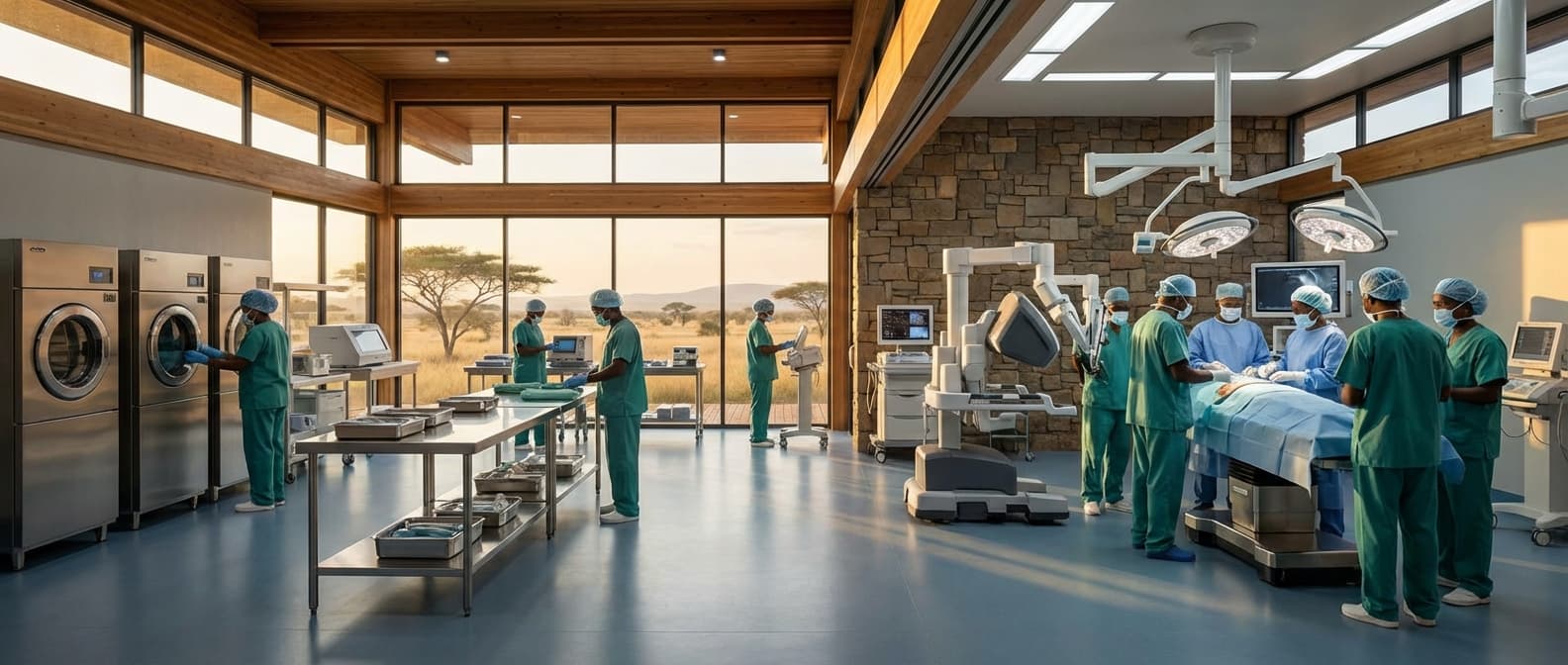
Medical Gas System Design & Installation in Gambia
Engineering Excellence & Technical Support
Medical gas pipeline systems: O2, N2O, air, vacuum High-standard technical execution following OEM protocols and local regulatory frameworks.
Centralized Medical Gas Systems
Designed and installed robust, centralized medical gas systems adhering to international standards (HTM 02-01, NFPA 99) for enhanced patient safety and operational efficiency in Gambian healthcare facilities. This includes medical air, oxygen, nitrous oxide, and vacuum systems with redundant supply and alarm capabilities.
Modular & Scalable Design for Regional Hospitals
Implemented modular and scalable medical gas system designs tailored to the specific needs and growth potential of regional hospitals across Gambia. This approach ensures future adaptability and cost-effectiveness, allowing for phased expansion of services and patient capacity.
Localized Training & Maintenance Protocols
Developed and delivered comprehensive training programs for local biomedical engineers and technicians on the operation, maintenance, and troubleshooting of installed medical gas systems. Established robust preventative maintenance protocols to ensure long-term reliability and compliance within the Gambian context.
What Is Medical Gas System Design & Installation In Gambia?
Medical Gas System Design & Installation in Gambia refers to the specialized engineering and construction process of creating, installing, and commissioning the integrated network of medical gas pipelines and associated equipment within healthcare facilities. This system is crucial for the safe and reliable delivery of medical gases, such as oxygen, medical air, vacuum, and nitrous oxide, to patient care areas and operating rooms. The design phase involves meticulous planning based on national and international standards (e.g., HTM 02-01, NFPA 99), facility blueprints, projected patient load, and specific clinical requirements. Installation encompasses the precise laying of medical-grade piping, the integration of supply sources (manifolds, compressors, vacuum pumps), pressure regulators, alarms, outlets, and point-of-use equipment. Commissioning is a critical validation stage, ensuring the system's integrity, performance, and compliance with regulatory requirements before it is placed into active service. This service is fundamental to modern healthcare infrastructure, directly impacting patient safety and the efficacy of medical treatments.
| Who Needs Medical Gas System Design & Installation? | Typical Use Cases |
|---|---|
| Hospitals (Public and Private) | Oxygen therapy for respiratory distress, post-operative recovery, and general patient care. Medical air for ventilation and respiratory support. Medical vacuum for surgical suction and waste management. Nitrous oxide for anesthesia and pain management. |
| Specialized Clinics (e.g., Surgical Centers, Intensive Care Units) | Anesthesia delivery in operating theaters. Mechanical ventilation in ICUs and critical care units. Continuous suctioning in surgical procedures. |
| Health Centers and Clinics | Basic oxygen provision for emergency resuscitation and stabilization. Emergency suction capabilities. |
| Research and Development Laboratories within Healthcare Facilities | Specialized gas mixtures for experimental procedures. Controlled atmospheric environments. |
| New Healthcare Facility Construction Projects | Establishing a foundational medical gas infrastructure from the outset. |
| Renovation or Expansion of Existing Healthcare Facilities | Upgrading outdated systems, expanding capacity, or incorporating new medical gas services. |
Key Components of a Medical Gas System Design & Installation Service:
- Needs Assessment and Feasibility Study
- System Design and Engineering (Piping layout, material selection, equipment specification)
- Compliance with Regulatory Standards (Gambia Ministry of Health regulations, international best practices)
- Procurement of Medical Gas Equipment and Materials
- Installation and Fabrication of Piping Networks
- Integration of Gas Supply Sources (Bulk storage, cylinders, compressors, vacuum pumps)
- Installation of Control and Monitoring Systems (Alarms, pressure regulators, flow meters)
- Pressure Testing and Leak Detection
- Flushing and Purging of Pipelines
- System Commissioning and Performance Validation
- Training of Facility Personnel
- As-Built Drawings and Documentation
Who Needs Medical Gas System Design & Installation In Gambia?
Designing and installing a reliable medical gas system is crucial for healthcare facilities in Gambia. This ensures the safe and efficient delivery of essential medical gases like oxygen, nitrous oxide, and medical air, vital for patient care, surgical procedures, and respiratory support. A well-designed system minimizes the risk of contamination, leaks, and supply interruptions, ultimately contributing to better patient outcomes and operational efficiency.
| Customer Type | Key Departments Requiring Medical Gas | Primary Needs |
|---|---|---|
| Public Hospitals | ICU, Operating Theaters, Emergency Room, Maternity, General Wards, Respiratory Therapy | Reliable and continuous supply of medical oxygen, air, and vacuum; emergency backup systems; compliance with national standards. |
| Private Hospitals | ICU, Operating Theaters, Emergency Room, Maternity, Specialized Surgical Units, Recovery Rooms | High-quality medical gases; efficient delivery systems for specialized procedures; modern infrastructure; patient safety. |
| Specialized Clinics | Surgical Suites, Anesthesia Rooms, Post-Operative Recovery, Diagnostic Imaging (for certain gases) | Precise gas mixtures and delivery; sterile gas supply; compliance with specific procedural requirements. |
| Maternity & Neonatal Units | Neonatal ICU, Delivery Rooms, Postnatal Wards | High-purity oxygen for premature infants; reliable airflow for incubators; safety during labor and delivery. |
| Government Health Ministries | Planning and Infrastructure Departments, Regulatory Bodies | Ensuring nationwide access to safe and standardized medical gas systems; infrastructure development planning; regulatory oversight. |
| NGOs | Project Implementation Teams, Healthcare Facility Managers | Establishing and upgrading medical gas infrastructure in underserved areas; cost-effective and sustainable solutions; training local personnel. |
Target Customers and Departments for Medical Gas System Design & Installation in Gambia:
- Hospitals (Public and Private)
- Specialized Clinics (e.g., Surgical Centers, Respiratory Clinics)
- Maternity Wards and Neonatal Units
- Emergency Rooms and Intensive Care Units (ICUs)
- Operating Theaters and Surgical Suites
- Dental Clinics with Anesthesia Capabilities
- Rehabilitation Centers requiring Oxygen Therapy
- Government Health Ministries and Departments overseeing healthcare infrastructure
- Non-Governmental Organizations (NGOs) involved in healthcare provision and development
- Medical Training Institutions with practical simulation facilities
Medical Gas System Design & Installation Process In Gambia
The design and installation of medical gas systems are critical for healthcare facility operations, ensuring the safe and reliable supply of essential gases like oxygen, medical air, and vacuum. In The Gambia, this process involves a structured workflow from the initial inquiry to the final execution and handover. This workflow is designed to meet international standards and local regulations, prioritizing patient safety and system integrity.
| Phase | Key Activities | Deliverables/Outcomes | Responsible Parties |
|---|---|---|---|
| Healthcare facility expresses interest; discussion of gas requirements (types, flow rates, pressure), existing infrastructure, and desired system capacity. Understanding of the facility's current and future medical gas needs. | Understanding of project scope, preliminary gas requirements, budget indications. | Client (Healthcare Facility), Potential Service Provider/Contractor |
| On-site inspection of the facility to assess space availability for plant rooms, pipe routing, outlet locations, and existing utility connections. Evaluation of site conditions and potential challenges. | Detailed site assessment report, identification of potential installation challenges, preliminary routing plans. | Service Provider/Contractor, Client Representatives |
| Development of a preliminary system design based on needs assessment and site survey. Estimation of costs and preparation of a detailed quotation for the client's review and approval. | Conceptual design drawings, system layout, cost estimate, formal quotation. | Service Provider/Contractor |
| Creation of comprehensive engineering drawings, including P&IDs (Piping and Instrumentation Diagrams), schematics, layout plans, and specifications for all components. Compliance with relevant standards (e.g., HTM, NFPA, ISO). | Complete set of detailed engineering drawings, specifications for all materials and equipment, Bill of Quantities (BOQ). | Service Provider/Contractor's Engineering Team |
| Submission of design documents to relevant Gambian authorities (e.g., Ministry of Health, relevant building permit offices) for review and approval. Obtaining necessary permits for construction and installation. | Approved design drawings and necessary permits. | Service Provider/Contractor, Client (for facilitating access and documentation) |
| Sourcing and purchasing of all necessary medical gas equipment (e.g., gas generators, regulators, control panels, piping, outlets) and materials from approved suppliers. | Delivery of all specified materials and equipment to the project site. | Service Provider/Contractor, Suppliers |
| Installation of the medical gas system components as per the approved design. This includes pipework, alarm systems, medical gas outlets, and central plant equipment. Adherence to strict quality control and safety protocols. | Physically installed medical gas system. | Service Provider/Contractor's Installation Team |
| Rigorous testing of the entire system to ensure it meets design specifications and safety standards. This includes pressure testing, leak detection, gas purity analysis, and functional testing of alarms and controls. Validation of system performance. | Comprehensive test reports, commissioning certificates, validated system performance. | Service Provider/Contractor's Commissioning Engineers |
| Training of the healthcare facility's maintenance staff on the operation, maintenance, and troubleshooting of the medical gas system. Formal handover of the system with all documentation, including as-built drawings and O&M manuals. | Trained facility staff, complete project documentation, formal system handover. | Service Provider/Contractor, Client's Technical Staff |
| Provision of ongoing support, maintenance services, and emergency response as per the service agreement. Regular inspections and servicing to ensure continued system reliability and compliance. | Reliable and compliant medical gas system, ongoing operational support. | Service Provider/Contractor (Service Department) |
Medical Gas System Design & Installation Process in Gambia: Workflow
- Initial Inquiry & Needs Assessment
- Site Survey & Feasibility Study
- Conceptual Design & Quotation
- Detailed Design & Engineering
- Regulatory Approvals & Permits
- Procurement of Materials & Equipment
- System Installation
- Testing & Commissioning
- Training & Handover
- Post-Installation Support & Maintenance
Medical Gas System Design & Installation Cost In Gambia
Designing and installing a medical gas system in Gambia involves a variety of factors that significantly influence the overall cost. These systems are crucial for healthcare facilities, supplying essential gases like oxygen, medical air, vacuum, and nitrous oxide directly to patient care areas. The pricing is not static and can fluctuate based on specific project requirements, the chosen supplier, and the complexity of the installation. Understanding these pricing dynamics is vital for accurate budgeting and project planning in the Gambian healthcare sector.
| Component/Service | Estimated Cost Range (GMD) | Notes |
|---|---|---|
| Design & Planning | 50,000 - 200,000+ | Varies based on facility size and complexity. |
| Piping Materials (Copper) | 300,000 - 1,500,000+ | Dependent on the length and diameter of pipes, number of outlets. |
| Gas Outlets & Sockets | 5,000 - 15,000 per outlet | Prices vary by type (oxygen, air, vacuum, etc.) and brand. |
| Regulators & Valves | 20,000 - 100,000+ per set | Includes central control panels, shut-off valves, etc. |
| Alarms & Monitoring Systems | 50,000 - 300,000+ | Essential for safety, complexity of monitoring affects cost. |
| Manifolds (for gas cylinders) | 100,000 - 500,000+ | Depends on the number of gases and capacity. |
| Installation Labor | 30% - 60% of material costs | Influenced by installer's rates, project duration, and site conditions. |
| Testing & Commissioning | 30,000 - 150,000+ | Includes pressure testing, leak detection, and system validation. |
| Contingency (10-15%) | Variable | Recommended for unforeseen costs. |
| Total Estimated Project Cost (Small to Medium Facility) | 1,000,000 - 5,000,000+ GMD | Excluding gas supply contracts and ongoing maintenance. This is a broad estimate. |
Key Pricing Factors for Medical Gas Systems in Gambia:
- {"title":"System Complexity and Scope","description":"The number of gases required, the size of the facility, the number of outlets per room, and the extent of piping required will directly impact material and labor costs. Larger or more complex systems naturally cost more."}
- {"title":"Type and Quantity of Medical Gases","description":"While the installation cost is primary, the initial and ongoing supply of gases also contributes to the total expenditure. The chosen supplier's pricing for oxygen, medical air, vacuum, and other gases will be a factor."}
- {"title":"Brand and Quality of Equipment","description":"Medical gas systems use specialized equipment, including regulators, alarms, valves, outlets, and manifolds. The brand reputation, warranty, and adherence to international standards (e.g., ISO, HTM) can influence the price. High-quality, durable equipment may have a higher upfront cost but can reduce long-term maintenance expenses."}
- {"title":"Supplier and Installer Expertise","description":"The experience and reputation of the company undertaking the design and installation are crucial. Local suppliers and installers may offer competitive pricing, but it's essential to ensure they have proven expertise in medical gas systems and adhere to relevant safety regulations. International suppliers or specialized firms may command higher fees but can offer specialized knowledge and global standards."}
- {"title":"Location and Site Accessibility","description":"The specific location of the healthcare facility within Gambia can affect transportation costs for materials and equipment, as well as labor availability and rates. Remote areas might incur higher logistical expenses."}
- {"title":"Regulatory Compliance and Certification","description":"Ensuring the system meets Gambian healthcare regulations and international safety standards requires proper design, installation, and testing. Costs associated with certification, inspections, and necessary documentation can add to the overall price."}
- {"title":"Ancillary Services and Maintenance","description":"The cost may include initial training for facility staff, system commissioning, and ongoing maintenance contracts. These services are crucial for system longevity and reliable operation."}
- {"title":"Economic Conditions and Currency Fluctuations","description":"The Gambian Dalasi (GMD) exchange rate against major currencies can impact the cost of imported components and equipment. Inflationary pressures can also affect labor and material prices over time."}
Affordable Medical Gas System Design & Installation Options
Designing and installing a medical gas system is a critical but often significant investment for healthcare facilities. Fortunately, there are numerous affordable options available, focusing on value bundles and strategic cost-saving measures. This approach ensures compliance and functionality without compromising essential patient care, while also being mindful of budget constraints. By understanding these options, facilities can make informed decisions to optimize their medical gas infrastructure.
| Value Bundle Components | Description | Cost-Saving Strategy/Benefit |
|---|---|---|
| Design, Installation & Commissioning Package | A comprehensive service that bundles the design, installation, and testing of the entire medical gas system. This often includes project management and coordination. | Streamlined process reduces administrative overhead and potential for delays. Can offer bulk discounts on labor and materials. Ensures a single point of accountability for the project. |
| Modular Gas Outlet & Alarm Systems | Pre-assembled units for gas outlets and alarms that can be easily installed, reducing on-site labor and complexity. Often integrated with control panels. | Faster installation times lead to lower labor costs. Pre-fabrication can improve quality control. Simplifies future maintenance and upgrades. |
| Standardized Piping & Manifold Solutions | Utilizing standardized pipe sizes, fittings, and manifold configurations that are widely available and cost-effective. Pre-fabricated manifold systems with standard components. | Bulk purchasing of standard components leads to lower material costs. Reduced customization requirements lower design and installation labor. Easier sourcing of replacement parts. |
| Basic Gas Cylinder Storage & Handling Systems | Essential storage solutions for medical gases, focusing on safety and compliance without unnecessary features. May include basic carts and securing devices. | Avoids overspending on elaborate storage structures. Prioritizes essential safety features over aesthetic or advanced functionalities. |
| Turnkey Project Management & Consulting | A service that handles all aspects of the project, from initial planning and vendor selection to final commissioning. May involve offering cost-effective design alternatives. | Reduces the internal workload for facility staff. Leverages expert knowledge to identify cost efficiencies. Ensures optimal vendor negotiation and contract management. |
Key Considerations for Affordable Medical Gas System Design & Installation
- Understanding the Scope and Requirements: Thoroughly assess the facility's needs, including the types and quantities of gases required, patient capacity, and future expansion plans. This prevents overspending on unnecessary features.
- Compliance and Standards: Prioritize adherence to all relevant national and local regulations (e.g., NFPA 99 in the US). Non-compliance can lead to costly rework and fines.
- Material Selection: Opt for durable and cost-effective materials that meet safety standards. While higher-grade materials may have a higher upfront cost, their longevity can offer better long-term value.
- System Scalability: Design for future growth. A scalable system allows for easier and less expensive upgrades as the facility's needs evolve, avoiding complete overhauls.
- Phased Installation: For new constructions or major renovations, consider a phased installation approach. This can spread the cost over time and align with construction milestones.
- Maintenance and Serviceability: Choose systems that are easy to maintain and repair. Accessibility of components and readily available spare parts can significantly reduce long-term operational costs.
- Budgetary Planning: Develop a detailed budget that accounts for all aspects of the project, including design, materials, labor, testing, commissioning, and ongoing maintenance.
- Choosing the Right Vendor: Partner with experienced and reputable medical gas system providers who offer transparent pricing and demonstrate a commitment to cost-effectiveness.
Verified Providers In Gambia
Navigating the healthcare landscape in any country can be challenging, and ensuring you are receiving care from qualified and trustworthy professionals is paramount. In Gambia, the emergence of verified providers, particularly those associated with Franance Health, offers a clear path to accessing high-quality medical services. This document outlines the credentials that define Franance Health and explains why they stand out as the best choice for your healthcare needs.
| Credential Type | Significance | Franance Health's Assurance |
|---|---|---|
| Medical Licenses | Confirms legal authorization to practice medicine by the relevant Gambian medical board. Essential for safe and lawful medical practice. | Franance Health verifies that all listed doctors and specialists hold current and valid Gambian medical licenses. |
| Educational Background (Degrees & Diplomas) | Indicates the foundational medical education and training received from recognized institutions. Demonstrates a strong theoretical and practical understanding of medicine. | Franance Health cross-references educational qualifications to ensure providers have graduated from accredited medical schools. |
| Specialist Certifications | Denotes advanced training and expertise in a specific area of medicine (e.g., cardiology, pediatrics, surgery). Crucial for specialized care needs. | Franance Health confirms specialist certifications to ensure patients are connected with the right expertise for their specific medical conditions. |
| Continuing Medical Education (CME) | Highlights a provider's commitment to staying updated with the latest medical advancements, technologies, and best practices. Reflects a dedication to lifelong learning. | While not always a direct verification item in initial registration, Franance Health encourages and favors providers who actively participate in CME programs. |
| Professional Affiliations & Memberships | Indicates membership in reputable medical associations, which often have their own ethical and professional standards. Shows engagement with the wider medical community. | Franance Health notes professional affiliations as an indicator of a provider's commitment to their profession and ethical conduct. |
| Experience (Years in Practice) | While not a formal credential, extensive experience often translates to enhanced diagnostic skills and a deeper understanding of patient care. Important for complex cases. | Franance Health collects and presents information on providers' years of experience to help patients make informed decisions. |
Understanding Verified Providers and Franance Health
- What are Verified Providers? Verified providers are healthcare professionals and institutions that have undergone a rigorous vetting process to confirm their qualifications, licenses, and adherence to established medical standards. This verification is crucial for patient safety and confidence.
- Franance Health's Commitment to Verification: Franance Health prioritizes patient well-being by meticulously verifying all healthcare professionals and facilities listed on their platform. This includes confirming medical licenses, educational backgrounds, and specialist certifications.
- The Importance of Credentials: The credentials of healthcare providers are the bedrock of trust. They signify a provider's education, training, experience, and their legal authorization to practice medicine. Franance Health ensures that only those with impeccable credentials are part of their network.
Scope Of Work For Medical Gas System Design & Installation
This Scope of Work (SOW) outlines the requirements for the design and installation of a medical gas system. It encompasses all aspects from initial design concepts and detailed engineering to final testing, commissioning, and handover. The objective is to deliver a safe, compliant, and fully functional medical gas system that meets all relevant healthcare standards and regulatory requirements.
| Technical Deliverables | Standard Specifications & Codes |
|---|---|
| Process and Instrumentation Diagrams (P&IDs) | NFPA 99: Health Care Facilities Code |
| System Schematics and Layout Drawings | ASSE Series Standards (e.g., ASSE 6010, ASSE 6020, ASSE 6030, ASSE 6040, ASSE 6050) |
| Equipment Specifications (Manifolds, Regulators, Alarms, Outlets, etc.) | Local Building Codes and Regulations |
| Piping and Material Specifications | Manufacturer's Installation and Operation Manuals |
| Pressure Test Reports | Client-Specific Standards (if applicable) |
| Gas Purity Test Reports | ISO 7396 Series (for piping systems) |
| Leak Test Reports | HIMSS Standards (for electronic health records integration considerations) |
| Commissioning Reports | Any other relevant national or international standards required by the project. |
| As-Built Drawings | |
| Operation and Maintenance (O&M) Manuals | |
| Training Materials |
Key Areas Covered by the Scope of Work
- 1. Design Services:
- Conceptual design and preliminary layouts.
- Detailed engineering design, including P&IDs, schematics, and equipment specifications.
- Compliance with relevant codes and standards (e.g., NFPA 99, ASSE Series, local building codes).
- Load calculations and system sizing.
- Development of construction drawings and submittals.
- Coordination with other building systems (HVAC, electrical, structural).
- 2. Procurement and Supply:
- Sourcing and supply of all necessary medical gas equipment (e.g., manifolds, regulators, alarm panels, outlet boxes, piping).
- Ensuring all materials meet specified quality and regulatory requirements.
- Material submittals and approvals.
- 3. Installation Services:
- Fabrication and installation of medical gas piping systems.
- Installation of all associated equipment and components.
- Adherence to best practices for medical gas installation to prevent contamination and ensure integrity.
- Quality control and assurance during installation.
- 4. Testing and Commissioning:
- Leak testing of all piping systems.
- Pressure testing and purging.
- Gas purity testing for all supplied gases.
- Functional testing of all components, including alarms and control systems.
- System commissioning and performance verification.
- 5. Documentation and Handover:
- As-built drawings and documentation.
- Operation and Maintenance (O&M) manuals.
- Training for facility staff on system operation and maintenance.
- Final inspection and handover to the client.
- 6. Project Management:
- Project planning, scheduling, and coordination.
- Site management and supervision.
- Communication and reporting to the client.
- Safety management and compliance.
Service Level Agreement For Medical Gas System Design & Installation
This Service Level Agreement (SLA) outlines the response times and uptime guarantees for the design and installation of medical gas systems. It defines the commitment of [Service Provider Name] to ensure timely and efficient service delivery, minimizing disruption and maintaining the operational integrity of critical medical gas infrastructure.
| Service Component | Response Time (Business Hours) | Uptime Guarantee | Details/Notes |
|---|---|---|---|
| Initial Design Consultation Request | 24 Business Hours | N/A | Acknowledgement of receipt and scheduling of initial meeting. |
| Design Document Submission (Draft) | 5 Business Days | N/A | Submission of preliminary design documents for client review. |
| Design Revision Incorporations | 3 Business Days (per revision cycle) | N/A | Incorporation of client feedback into design documents. |
| Final Design Approval | N/A | N/A | Client sign-off on final design. |
| Installation Kick-off Meeting Request | 2 Business Days | N/A | Scheduling of project kick-off meeting post-design approval. |
| Emergency On-site Support (Critical Failure) | 4 Business Hours | 99.9% (post-installation) | For critical system failures impacting patient care. Includes assessment and initiation of corrective action. |
| Non-Emergency On-site Support (Routine Maintenance/Minor Issues) | 8 Business Hours | 99.9% (post-installation) | For scheduled maintenance or non-critical system issues. Scheduling based on availability. |
| Remote Technical Support | 2 Business Hours | N/A | For troubleshooting and guidance via phone or video conference. |
| Scheduled Maintenance Service | As per Maintenance Agreement | N/A | Adherence to agreed-upon maintenance schedule. |
| System Uptime (Post-Installation) | N/A | 99.9% | This guarantee applies to the operational availability of the installed medical gas system, excluding scheduled maintenance and events beyond the service provider's control (e.g., natural disasters, power outages). |
Key Service Metrics
- Design Phase Response Times
- Installation Phase Response Times
- Uptime Guarantees
- Escalation Procedures
Frequently Asked Questions

Ready when you are
Let's scope your Medical Gas System Design & Installation in Gambia project in Gambia.

Scaling healthcare logistics and technical systems across the entire continent.