
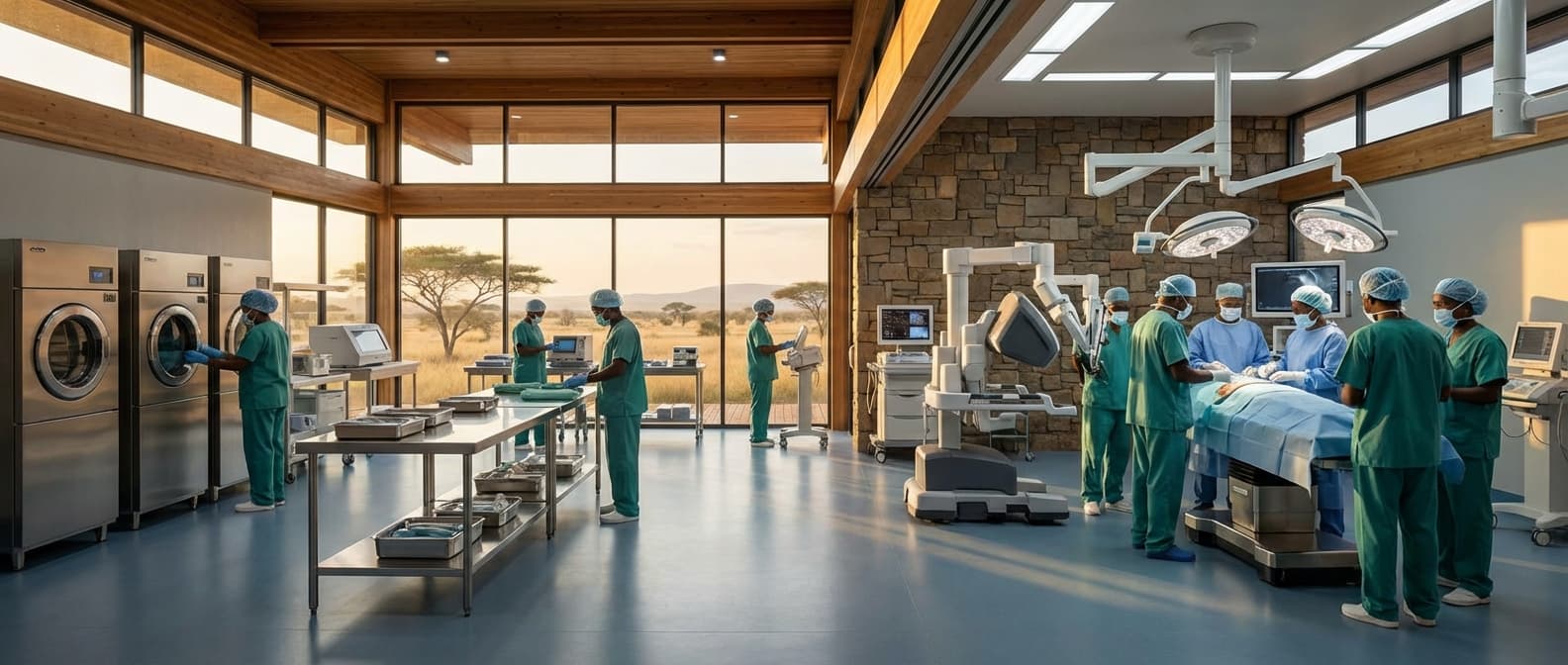
Endoscopy Reprocessing Validation in Gambia
Engineering Excellence & Technical Support
AER validation, SOP development and compliance High-standard technical execution following OEM protocols and local regulatory frameworks.
Advanced Sterilization Assurance
Implementing a robust validation framework for high-level disinfection (HLD) and sterilization processes for endoscopes, ensuring adherence to international standards (e.g., ISO 17665) and significantly reducing the risk of healthcare-associated infections (HAIs) in Gambian healthcare facilities.
Chemical Disinfectant Efficacy Testing
Conducting rigorous laboratory testing of locally sourced and approved chemical disinfectants against a panel of clinically relevant microorganisms (e.g., Mycobacterium tuberculosis, C. difficile spores) to establish validated reprocessing protocols tailored to the Gambian context.
Automated Reprocessing Equipment Validation
Validating the performance of automated endoscope reprocessors (AERs) through rigorous testing of cleaning and disinfection cycles, including mechanical and chemical efficacy checks, to guarantee consistent and reproducible reprocessing outcomes in resource-limited settings.
What Is Endoscopy Reprocessing Validation In Gambia?
Endoscopy reprocessing validation in The Gambia refers to the systematic verification and documentation that all processes involved in cleaning, disinfecting, and sterilizing reusable endoscopic instruments adhere to established standards and protocols to ensure patient safety and prevent healthcare-associated infections (HAIs). This validation is a critical component of infection prevention and control within healthcare facilities that utilize flexible and rigid endoscopes for diagnostic and therapeutic procedures. It confirms the efficacy of the entire reprocessing cycle, from initial cleaning to final storage, thereby mitigating the risk of microbial transmission between patients.
| Who Needs Endoscopy Reprocessing Validation | Typical Use Cases and Scenarios |
|---|---|
Healthcare facilities in The Gambia employing endoscopic procedures, including:
| Post-incident investigations (e.g., suspected HAI outbreak linked to endoscopy) Implementation of new reprocessing equipment or protocols Regular quality assurance and accreditation processes Compliance with national healthcare regulations and international guidelines Training and competency verification for reprocessing staff Routine monitoring to maintain a high standard of patient care |
Key Components of Endoscopy Reprocessing Validation
- Visual Inspection and Cleaning Verification: Ensuring all visible soil and organic debris are removed from the endoscope's lumens and surfaces.
- High-Level Disinfection (HLD) or Sterilization Efficacy Testing: Confirming that the chosen HLD agent or sterilization method effectively eliminates or inactivates all pathogenic microorganisms, including bacteria, viruses, fungi, and spores (for sterilization).
- Automated Endoscope Reprocessor (AER) Performance Monitoring: Verifying that the AER operates within specified parameters (e.g., temperature, cycle time, disinfectant concentration, water quality).
- Water System Quality Assurance: Testing the quality of water used for rinsing and the AER's internal water circuits to prevent microbial contamination.
- Personnel Competency Assessment: Evaluating the knowledge and skills of staff responsible for reprocessing procedures.
- Documentation Review: Auditing all records related to cleaning, disinfection, sterilization, equipment maintenance, and staff training.
- Environmental Monitoring: Assessing the cleanliness of the reprocessing area to prevent recontamination.
Who Needs Endoscopy Reprocessing Validation In Gambia?
Endoscopy reprocessing validation is a critical process to ensure the safety and efficacy of reusable endoscopic equipment, particularly in preventing the transmission of healthcare-associated infections. This validation confirms that cleaning and disinfection/sterilization processes effectively eliminate or reduce pathogenic microorganisms to safe levels. In the context of Gambia, facilities that utilize reusable endoscopes are the primary targets for this validation. This ensures patient safety and adherence to international healthcare standards, especially as the country strives to enhance its healthcare infrastructure and quality of care.
| Customer Type | Key Departments Involved | Reason for Validation |
|---|---|---|
| Public Hospitals | Gastroenterology, Surgery, Pulmonology, Urology, Gynecology, ENT, Infection Prevention & Control (IPC), Central Sterilization Supply Department (CSSD) | Ensuring patient safety, preventing healthcare-associated infections (HAIs), meeting national healthcare standards, supporting public health initiatives. |
| Private Hospitals | Gastroenterology, Surgery, Pulmonology, Urology, Gynecology, ENT, Infection Prevention & Control (IPC), Central Sterilization Supply Department (CSSD) | Maintaining patient trust, adhering to international best practices, minimizing medico-legal risks, ensuring high-quality patient care. |
| Specialized Clinics (e.g., Gastroenterology Clinics) | Gastroenterology, Endoscopy Suite, Infection Prevention & Control (IPC) | Guaranteeing the safety of specialized procedures, preventing cross-contamination, maintaining the integrity of delicate endoscopic equipment. |
| Surgical Centers | Surgery, Endoscopy Unit, Infection Prevention & Control (IPC), Central Sterilization Supply Department (CSSD) | Ensuring sterility of instruments for surgical procedures, preventing post-operative infections, meeting regulatory requirements. |
Target Customers & Departments for Endoscopy Reprocessing Validation in Gambia
- Public Hospitals
- Private Hospitals
- Specialized Clinics
- Surgical Centers
- Central Sterilization Supply Departments (CSSDs)
- Gastroenterology Departments
- Pulmonology Departments
- Urology Departments
- Gynecology Departments
- Otolaryngology (ENT) Departments
- Infection Prevention and Control (IPC) Departments
Endoscopy Reprocessing Validation Process In Gambia
This document outlines the workflow for the Endoscopy Reprocessing Validation Process in The Gambia, from the initial inquiry to the execution and reporting of the validation. This process ensures that reusable endoscopic equipment is cleaned and disinfected according to established standards, minimizing the risk of healthcare-associated infections.
| Phase | Step | Description | Key Stakeholders | Deliverables/Outcomes |
|---|---|---|---|---|
| Phase 1: Inquiry and Planning | 1.1 Initial Inquiry | Healthcare facility or relevant authority expresses interest in validating their endoscopy reprocessing procedures. This can be driven by regulatory requirements, quality improvement initiatives, or identification of potential risks. | Ministry of Health (MoH) Representative, Hospital Administration, Endoscopy Unit Manager, Infection Prevention and Control (IPC) Officer | Formal request for validation, initial understanding of scope and objectives. |
| Phase 1: Inquiry and Planning | 1.2 Scope Definition | Determine the specific types of endoscopes and reprocessing equipment to be validated, the number of reprocessing cycles, and the specific validation parameters (e.g., cleaning efficacy, high-level disinfection efficacy, material compatibility). | MoH IPC Department, Endoscopy Unit Manager, Technical Experts (if available) | Defined validation scope, list of equipment to be validated, agreed-upon validation parameters. |
| Phase 1: Inquiry and Planning | 1.3 Resource Allocation and Planning | Identify and secure necessary resources, including personnel (validation team, facility staff), equipment (testing kits, sampling materials), and budget. Develop a detailed validation plan and timeline. | MoH IPC Department, Hospital Administration, Finance Department | Approved validation plan, allocated budget, assigned validation team, detailed timeline. |
| Phase 2: Site Assessment and Preparation | 2.1 Pre-Validation Assessment | Conduct an on-site visit to assess the current reprocessing workflow, identify potential bottlenecks, review existing Standard Operating Procedures (SOPs), and observe the current practices. | Validation Team, Endoscopy Unit Staff, IPC Officer | Pre-validation report detailing current practices, potential areas of concern, and readiness for validation. |
| Phase 2: Site Assessment and Preparation | 2.2 SOP Review and Update | Review the facility's SOPs for endoscopy reprocessing to ensure they align with national guidelines and international best practices. Recommend updates or revisions as needed. | Validation Team, Endoscopy Unit Manager, IPC Officer | Reviewed SOPs, list of recommended revisions. |
| Phase 2: Site Assessment and Preparation | 2.3 Staff Training and Awareness | Ensure all relevant staff are trained on the validation process, the updated SOPs, and the correct use of reprocessing equipment and testing procedures. Conduct a brief refresher on critical steps. | Validation Team, Endoscopy Unit Staff | Trained staff, increased awareness of validation importance. |
| Phase 3: Validation Execution | 3.1 Pre-Cleaning and Manual Cleaning Validation | Assess the effectiveness of initial rinsing and manual cleaning steps using visual inspection and potentially residue testing (e.g., protein detection). | Validation Team, Endoscopy Unit Staff | Data on cleaning efficacy, identification of any residual contaminants. |
| Phase 3: Validation Execution | 3.2 Automated Reprocessing Validation | Monitor and validate the performance of automated endoscope reprocessors (AERs). This includes checking parameters like temperature, cycle time, detergent dispensing, and disinfection efficacy using biological indicators (BIs) or chemical indicators (CIs). | Validation Team, Endoscopy Unit Staff | Performance data of AERs, results of BI/CI testing for high-level disinfection (HLD). |
| Phase 3: Validation Execution | 3.3 Manual High-Level Disinfection Validation | If manual HLD is performed, validate the concentration and contact time of the disinfectant. This may involve chemical testing of the disinfectant solution and monitoring of exposure times. | Validation Team, Endoscopy Unit Staff | Data on disinfectant efficacy and correct contact time. |
| Phase 3: Validation Execution | 3.4 Leak Testing Validation | Verify the integrity of the endoscope by performing leak tests at various stages of the reprocessing cycle. | Validation Team, Endoscopy Unit Staff | Results of leak tests, identification of leaky endoscopes. |
| Phase 3: Validation Execution | 3.5 Rinsing and Drying Validation | Assess the adequacy of rinsing to remove residual disinfectants and the effectiveness of the drying process to prevent microbial growth. | Validation Team, Endoscopy Unit Staff | Data on residual disinfectant levels, assessment of drying efficiency. |
| Phase 3: Validation Execution | 3.6 Documentation Review | Collect and review all reprocessing logs, equipment maintenance records, and test results generated during the validation period. | Validation Team, Endoscopy Unit Manager | Comprehensive set of validation documentation. |
| Phase 4: Data Analysis and Reporting | 4.1 Data Compilation and Analysis | Compile all collected data, including visual inspections, test results, and documentation. Analyze the data against predefined acceptance criteria. | Validation Team, IPC Specialist | Compiled validation data, statistical analysis (if applicable). |
| Phase 4: Data Analysis and Reporting | 4.2 Validation Report Generation | Prepare a detailed validation report that includes the scope, methodology, results, analysis, and conclusions. Clearly state whether the reprocessing process meets the validation criteria. | Validation Team Lead | Comprehensive Endoscopy Reprocessing Validation Report. |
| Phase 4: Data Analysis and Reporting | 4.3 Presentation of Findings | Present the validation report and findings to the relevant stakeholders, including hospital management and the MoH. | Validation Team Lead, Hospital Administration, MoH Representative | Understanding of validation outcomes, discussion of recommendations. |
| Phase 5: Remediation and Follow-up | 5.1 Identification of Deviations | Identify any deviations from the established validation criteria and pinpoint the root causes. | Validation Team, Endoscopy Unit Manager, IPC Officer | List of identified deviations and their root causes. |
| Phase 5: Remediation and Follow-up | 5.2 Development of Corrective Actions | Collaborate with the facility to develop and implement corrective action plans (CAPs) to address any identified deviations. | Validation Team, Endoscopy Unit Manager, IPC Officer, Relevant Staff | Agreed-upon Corrective Action Plans (CAPs). |
| Phase 5: Remediation and Follow-up | 5.3 Re-validation (if necessary) | If significant deviations were identified, a re-validation of specific steps or the entire process may be required after corrective actions have been implemented. | Validation Team, Endoscopy Unit Staff | Confirmation of effectiveness of corrective actions through re-validation. |
| Phase 5: Remediation and Follow-up | 5.4 Ongoing Monitoring and Surveillance | Establish or reinforce a system for ongoing monitoring and surveillance of endoscopy reprocessing practices to ensure sustained compliance. | Hospital IPC Department, Endoscopy Unit Manager | Established or strengthened ongoing monitoring program. |
| Phase 5: Remediation and Follow-up | 5.5 Final Validation Approval | Upon successful completion of validation and any necessary remediation, issue a formal validation approval or certificate, indicating that the endoscopy reprocessing procedures are validated. | Ministry of Health IPC Department | Formal Endoscopy Reprocessing Validation Approval/Certificate. |
Endoscopy Reprocessing Validation Process Workflow in The Gambia
- Phase 1: Inquiry and Planning
- Phase 2: Site Assessment and Preparation
- Phase 3: Validation Execution
- Phase 4: Data Analysis and Reporting
- Phase 5: Remediation and Follow-up
Endoscopy Reprocessing Validation Cost In Gambia
Validating the reprocessing of endoscopic equipment in Gambia involves several cost considerations. The primary goal of validation is to ensure that reusable endoscopes are sterilized effectively to prevent cross-contamination and patient harm. The cost is influenced by the type and frequency of validation, the reagents and consumables used, the expertise of the personnel involved, and potential regulatory requirements. Due to the nascent stage of specialized healthcare services in Gambia, precise, publicly available pricing for such specific validation services is scarce. However, we can infer pricing based on the cost of materials, outsourced expertise (if any), and internal resource allocation.
| Validation Component/Service | Estimated Cost Range (GMD) | Notes |
|---|---|---|
| Chemical Indicator Strips (per pack) | 500 - 1,500 | Cost varies by brand and quantity purchased. |
| Biological Indicators (per test) | 1,000 - 3,000 | Significantly more expensive than chemical indicators; may require specialized incubators. |
| Disinfectant/Sterilant Testing Reagents (per kit) | 800 - 2,000 | For verifying the concentration and efficacy of reprocessing agents. |
| Personnel Time (per hour, estimated) | 50 - 150 | Reflects the hourly rate for trained healthcare professionals involved in validation. |
| External Laboratory Analysis (per test) | 2,000 - 5,000+ | Highly variable depending on the specific test and the laboratory's charges. May involve international shipping costs if outsourced abroad. |
| Process Validation Study (one-time, comprehensive) | 10,000 - 50,000+ | This would involve a detailed evaluation of the entire reprocessing workflow, including multiple validation cycles and expert consultation. This is a substantial undertaking. |
| Basic Equipment Calibration/Maintenance (annual) | 2,000 - 10,000 | For ensuring the accuracy of reprocessing equipment used in conjunction with validation. |
Key Factors Influencing Endoscopy Reprocessing Validation Costs in Gambia
- Type of Validation: Different validation methods have varying costs. This can range from simple chemical indicator testing to more comprehensive biological indicator testing or even full process validation studies.
- Frequency of Validation: Regular validation is crucial for ongoing safety. Hospitals or clinics will incur costs for each validation cycle, which can be daily, weekly, or monthly depending on the equipment's usage and national guidelines.
- Reagents and Consumables: Specific cleaning agents, disinfectants, and sterilizing agents used in the reprocessing cycle, along with indicators (chemical and biological), all contribute to the cost.
- Equipment and Technology: While the endoscope reprocessing equipment itself is a capital investment, validation might require specialized monitoring devices or testing kits, adding to the operational cost.
- Personnel Training and Expertise: Trained biomedical engineers, infection control nurses, or laboratory technicians are needed to perform validation procedures. The cost of their salaries and ongoing training is a significant factor.
- External Laboratory Services (if applicable): In the absence of in-house capabilities, sending samples to external laboratories for advanced testing (e.g., microbial testing) would incur additional fees.
- Documentation and Record-Keeping: Maintaining detailed records of validation tests is essential for compliance and quality assurance. The administrative effort and resources for this also represent a cost.
- Import Duties and Taxes: If validation consumables or specialized equipment need to be imported into Gambia, import duties, taxes, and shipping costs will significantly inflate the overall price.
- Geographic Location and Accessibility: The cost of transporting personnel or samples to and from the healthcare facility can also be a factor, especially in remote areas.
Affordable Endoscopy Reprocessing Validation Options
Affordable endoscopy reprocessing validation is crucial for patient safety and regulatory compliance. This involves verifying that the cleaning and disinfection processes effectively eliminate pathogens from reusable endoscopes. Traditional validation methods can be expensive and time-consuming. However, several value bundles and cost-saving strategies can significantly reduce the burden on healthcare facilities without compromising on quality or safety.
| Strategy | Description | Potential Cost Savings | Key Considerations |
|---|---|---|---|
| Bundled Service Agreements | Negotiating validation as part of a larger service contract (e.g., maintenance, supplies). | Discounted rates on validation, simplified vendor management. | Careful review of contract terms, ensuring validation scope meets needs. |
| Shared Validation Resources | Collaborating with other institutions for equipment or pooled studies. | Reduced capital investment, lower per-institution cost. | Logistical coordination, agreement on protocols and data sharing. |
| In-House Validation Training | Empowering existing staff to perform routine validation checks. | Reduced reliance on external vendors, lower labor costs over time. | Initial investment in training, ongoing competency assessment, regulatory compliance. |
| Leveraging Technology | Implementing automated validation systems or reporting software. | Increased efficiency, reduced manual labor, minimized errors. | Upfront technology investment, staff training, data security. |
| Risk-Based Validation | Prioritizing validation efforts based on risk assessment. | Optimized resource allocation, reduced testing where appropriate. | Thorough understanding of regulatory guidance, documented risk assessment. |
Value Bundles & Cost-Saving Strategies
- Bundled Service Agreements: Negotiate comprehensive packages with reprocessing equipment manufacturers or third-party service providers that include validation services as part of a larger maintenance or supply agreement. This often results in discounted validation costs.
- Shared Validation Resources: Collaborate with neighboring hospitals or healthcare networks to share the costs of validation equipment or to conduct pooled validation studies. This can leverage economies of scale.
- In-House Validation Training & Protocols: Invest in training existing sterile processing staff to perform routine validation tasks. Developing standardized, efficient in-house protocols can reduce reliance on external validation services for routine checks.
- Leveraging Technology for Efficiency: Utilize automated validation systems or software that streamline data collection, analysis, and reporting. This reduces manual labor and potential for errors.
- Risk-Based Validation Strategies: Focus validation efforts on high-risk areas or processes. This doesn't mean compromising on any validation, but rather prioritizing resources where they are most critical, as advised by regulatory guidelines and best practices.
- Consolidated Ordering of Supplies: When purchasing validation consumables (e.g., biological indicators, chemical indicators), consolidate orders to achieve bulk discounts.
- Vendor Partnerships for Integrated Solutions: Explore partnerships with vendors who offer integrated solutions for reprocessing, including validation testing. This can simplify procurement and potentially offer cost savings through bundled offerings.
- Focus on Preventative Maintenance: Regular and thorough preventative maintenance of reprocessing equipment can minimize breakdowns and costly emergency repairs, which can indirectly impact validation costs by ensuring consistent performance.
- Utilizing Manufacturer's Validation Kits: For specific equipment, use validation kits provided by the manufacturer. These are often designed to be cost-effective and meet specific validation requirements for that equipment.
- Exploring Accreditation Benefits: Some accreditation bodies may offer guidance or resources that can help streamline validation processes, potentially leading to cost efficiencies if those processes are more streamlined and less resource-intensive.
Verified Providers In Gambia
In Gambia's evolving healthcare landscape, identifying reliable and credentialed providers is paramount for accessible and quality medical care. Franance Health stands out as a beacon of trust, meticulously vetting its network of healthcare professionals. This commitment to verification ensures that patients receive care from practitioners who meet stringent standards of expertise, ethics, and patient safety. Choosing a Franance Health verified provider means opting for peace of mind, knowing you are in the hands of qualified and dependable medical professionals.
| Provider Type | Franance Health Verification Benefit | Why it Matters to You |
|---|---|---|
| General Practitioners | Verified for broad medical knowledge and diagnostic skills. | Ensures accurate initial assessments and effective primary care management. |
| Specialists (e.g., Cardiologists, Pediatricians, Surgeons) | Verified for advanced training, specialized expertise, and proven track record in their field. | Guarantees you are receiving care from highly skilled professionals for specific health conditions. |
| Nurses and Allied Health Professionals | Verified for relevant certifications, practical skills, and compassionate patient care. | Confirms they possess the necessary qualifications to support your treatment and recovery. |
| Hospitals and Clinics | Verified for adherence to safety protocols, quality of infrastructure, and professional staff management. | Indicates a safe and well-equipped healthcare facility dedicated to patient care. |
Why Franance Health Verified Providers are the Best Choice:
- Rigorous Credentialing Process: Franance Health employs a comprehensive vetting procedure that scrutinizes medical licenses, educational background, professional experience, and adherence to ethical guidelines.
- Commitment to Quality: Verification signifies that providers have demonstrated a consistent ability to deliver high-quality patient care and uphold best medical practices.
- Enhanced Patient Safety: By partnering with verified professionals, Franance Health prioritizes your well-being, minimizing risks associated with unqualified or substandard medical services.
- Access to Trusted Professionals: Franance Health's network comprises specialists and general practitioners who have met their exacting standards, offering a reliable pool of healthcare talent.
- Transparency and Accountability: The verification process fosters transparency, ensuring that patients have access to information about the qualifications of their healthcare providers and that these providers are held accountable for their practice.
Scope Of Work For Endoscopy Reprocessing Validation
This Scope of Work (SOW) outlines the requirements for validating the reprocessing of flexible endoscopes at [Healthcare Facility Name]. The objective is to ensure that the established reprocessing protocols effectively eliminate viable microorganisms and render the endoscopes safe for patient use, adhering to all relevant regulatory standards and best practices.
| Activity/Phase | Description | Technical Deliverables | Standard Specifications/Reference |
|---|---|---|---|
| Phase 1: Planning and Protocol Development | Review existing endoscope reprocessing procedures, equipment manuals, and relevant regulatory guidelines. Develop a detailed validation protocol outlining sampling plans, testing methodologies, acceptance criteria, and reporting requirements. | Validated Reprocessing Protocol, Risk Assessment Report, Sampling Plan, Test Methodologies Document | AAMI ST91: 2021 (Flexible and Rigid Medical Device Sterilization), Manufacturer's IFUs, CDC Guidelines for Disinfection and Sterilization in Healthcare Facilities, FDA Guidance Documents for Medical Devices. |
| Phase 2: Pre-Validation Assessment and Training | Conduct an initial assessment of the current reprocessing environment and workflow. Provide training to SPD staff on the validation protocol and any new procedures or techniques to be employed. | Pre-Validation Assessment Report, Training Records, Standard Operating Procedures (SOPs) for Validation Sampling | Internal SOPs, Manufacturer's IFUs, Relevant Professional Organization Guidelines. |
| Phase 3: Executing Validation Testing | Perform sampling and testing according to the approved protocol. This includes environmental monitoring, process validation (e.g., bioburden testing, microbial challenge testing, residual testing), and performance verification of automated endoscope reprocessors (AERs). | Environmental Monitoring Data, Bioburden Test Results, Microbial Challenge Test Results, Residual Chemical Test Results, AER Performance Verification Reports, Chain of Custody Documentation | AAMI ST91: 2021, ASTM E2314 (Standard Test Method for Determining the Effectiveness of Cleaning Agents in Removing Biofilm from Medical Devices), Manufacturer's IFUs for Test Kits, Relevant USP General Chapters. |
| Phase 4: Data Analysis and Reporting | Analyze all collected data against the pre-defined acceptance criteria. Prepare a comprehensive validation report summarizing the methodology, results, deviations (if any), conclusions, and recommendations. | Validation Report (including raw data, statistical analysis, and interpretation), Certificate of Validation (if criteria are met) | Acceptance Criteria defined in the Validation Protocol, Internal Quality Standards. |
| Phase 5: Remediation and Re-validation (If Required) | If the initial validation testing fails to meet acceptance criteria, identify root causes, implement corrective actions, and re-perform validation testing as necessary. | Corrective Action Plan, Revised SOPs, Re-validation Test Results, Updated Validation Report | Root Cause Analysis Methodologies, Best Practice Remediation Strategies. |
Key Objectives
- Verify the effectiveness of the endoscope high-level disinfection (HLD) and sterilization processes.
- Confirm adherence to manufacturer's instructions for use (IFU) for both the endoscope and reprocessing equipment.
- Assess the adequacy of environmental controls within the sterile processing department (SPD) relevant to endoscope reprocessing.
- Identify any potential gaps or areas for improvement in the current reprocessing workflow.
- Ensure compliance with relevant standards and guidelines (e.g., AAMI ST91, CDC guidelines, FDA recommendations).
Service Level Agreement For Endoscopy Reprocessing Validation
This Service Level Agreement (SLA) outlines the response times and uptime guarantees for the Endoscopy Reprocessing Validation service. This service ensures the proper functioning and availability of the systems and processes required for validating the reprocessing of endoscopic equipment, adhering to all relevant regulatory and safety standards.
| Incident Severity | Definition | Initial Response Time Target | Resolution Time Target | Availability Guarantee |
|---|---|---|---|---|
| Critical | Any issue that directly compromises patient safety, prevents the reprocessing of endoscopes, or violates regulatory requirements (e.g., failure of validation software, critical alarm). | 1 Hour | 8 Business Hours | N/A (Focus on immediate resolution) |
| Non-Critical | Any issue that does not immediately impact patient safety or regulatory compliance but affects system performance or user experience (e.g., minor reporting errors, interface slowness). | 4 Business Hours | 2 Business Days | 99.5% (Overall service uptime) |
Key Performance Indicators (KPIs)
- Uptime Guarantee: The Endoscopy Reprocessing Validation service shall be available 99.5% of the time, excluding scheduled maintenance.
- Response Time for Critical Incidents: For issues impacting patient safety or regulatory compliance, the initial response time will be within 1 hour.
- Response Time for Non-Critical Incidents: For issues that do not immediately impact patient safety or regulatory compliance, the initial response time will be within 4 business hours.
- Resolution Time for Critical Incidents: Resolution for critical incidents will be targeted within 8 business hours from initial response.
- Resolution Time for Non-Critical Incidents: Resolution for non-critical incidents will be targeted within 2 business days from initial response.
- Scheduled Maintenance Notification: Any scheduled maintenance that may impact service availability will be communicated at least 48 hours in advance.
Frequently Asked Questions

Ready when you are
Let's scope your Endoscopy Reprocessing Validation in Gambia project in Gambia.

Scaling healthcare logistics and technical systems across the entire continent.