
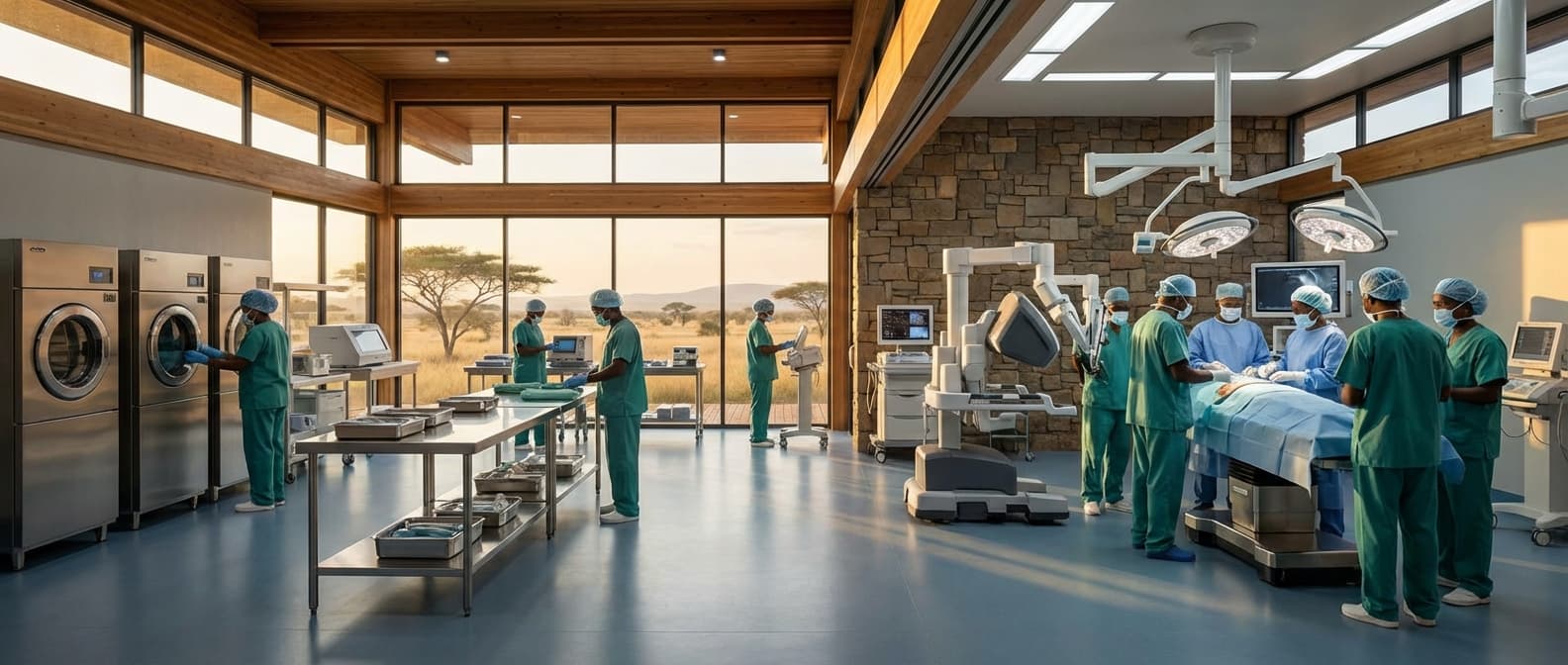
CSSD Design & Validation in Gambia
Engineering Excellence & Technical Support
CSSD workflow design, validation and process development High-standard technical execution following OEM protocols and local regulatory frameworks.
Advanced Sterilization Cycle Validation
Implementing rigorous validation protocols for CSSD sterilization cycles (steam, EtO, H2O2) in accordance with international standards (ISO, AAMI) to ensure efficacy and patient safety. Includes biological and chemical indicator testing, process parameter monitoring, and comprehensive documentation.
Optimized Workflow & Layout Design
Designing and optimizing CSSD workflows and physical layouts to minimize contamination risks, improve efficiency, and comply with Gambian healthcare regulations. Focus on segregation of dirty, clean, and sterile areas, traffic flow, and ergonomic considerations.
Equipment Specification & Commissioning
Providing expert guidance on the selection, specification, and commissioning of CSSD equipment (autoclaves, washer-disinfectors, instrument washers, packaging systems). Ensuring equipment meets performance requirements, is suitable for the Gambian context, and undergoes thorough performance qualification (PQ).
What Is Cssd Design & Validation In Gambia?
Central Sterile Supply Department (CSSD) Design & Validation in The Gambia refers to the systematic process of planning, developing, and verifying the functionality and efficacy of a CSSD facility and its associated processes. This involves establishing optimal layouts for workflow, equipment selection and placement, environmental controls, and robust sterilization and disinfection protocols to ensure the safety and sterility of reusable medical devices. The ultimate objective is to prevent healthcare-associated infections (HAIs) by providing sterile instruments and equipment for medical and surgical procedures.
| Stakeholder/Entity | Need for CSSD Design & Validation | Typical Use Cases |
|---|---|---|
| Hospitals & Healthcare Facilities (Public & Private) | Essential for ensuring patient safety by providing sterile surgical instruments and equipment, thereby reducing the risk of HAIs. Compliance with national and international healthcare standards is mandatory. | Establishment of new CSSDs, expansion or renovation of existing CSSDs, introduction of new sterilization technologies, response to outbreaks or increased infection rates, meeting accreditation requirements. |
| Surgical Centers & Clinics | Critical for maintaining the integrity of surgical procedures by ensuring the sterility of instruments. Small-scale operations still require robust sterile processing. | Setting up dedicated sterile processing areas, ensuring compliance for specialized procedures, improving turnaround times for instrument reprocessing. |
| Government Health Ministries & Regulatory Bodies | To set standards, provide guidelines, and oversee the implementation of safe sterile processing practices across the nation's healthcare infrastructure. Ensures public health safety. | Developing national guidelines for CSSD design and operation, conducting facility inspections and audits, licensing and accreditation of healthcare facilities. |
| Medical Device Manufacturers & Suppliers | While not directly performing the design, they provide equipment and consumables whose performance is integral to CSSD function. They may offer design consultation or validation support for their specific products. | Providing specifications for equipment integration, offering validation support for their sterilizers, advising on optimal usage of their sterile packaging materials. |
| International Health Organizations (e.g., WHO) | To promote best practices, provide technical assistance, and support capacity building in developing countries like The Gambia to achieve high standards of healthcare quality and safety. | Developing global standards, providing training programs, funding for infrastructure development, technical advisory services. |
Key Components of CSSD Design & Validation
- Facility Design & Layout: Optimizing the physical space to create distinct zones (e.g., decontamination, preparation & packaging, sterilization, sterile storage) that ensure unidirectional workflow and prevent cross-contamination.
- Equipment Specification & Integration: Selecting appropriate sterilization equipment (e.g., autoclaves, low-temperature sterilizers), cleaning equipment (e.g., ultrasonic cleaners, washer-disinfectors), and ancillary systems (e.g., ventilation, water purification) based on the facility's needs and regulatory requirements. Integration of these systems for seamless operation.
- Workflow Optimization: Defining and documenting efficient processes for receiving, cleaning, inspecting, assembling, packaging, sterilizing, storing, and distributing reusable medical devices.
- Environmental Controls: Establishing and monitoring critical environmental parameters such as temperature, humidity, air pressure differentials between zones, and air filtration to maintain a sterile or clean environment.
- Sterilization & Disinfection Protocol Development: Creating, implementing, and validating specific protocols for each sterilization method used, ensuring compliance with international standards (e.g., ISO 13485, AAMI standards) and national guidelines.
- Validation & Qualification: This is a critical phase involving a series of documented tests to prove that the CSSD design, equipment, and processes consistently perform as intended and meet predetermined specifications. This includes: * Installation Qualification (IQ): Verifying that equipment is installed correctly according to manufacturer specifications and relevant standards. * Operational Qualification (OQ): Testing the equipment's functionality within its intended operating ranges. * Performance Qualification (PQ): Challenging the entire system (equipment and processes) under worst-case or simulated use conditions to demonstrate consistent achievement of sterility or disinfection.
- Training & Competency Assessment: Ensuring that all CSSD personnel are adequately trained on procedures, equipment operation, safety protocols, and quality control measures, with regular competency assessments.
- Quality Management System (QMS) Implementation: Establishing a robust QMS that governs all CSSD operations, including documentation, record-keeping, internal audits, corrective and preventive actions (CAPA), and continuous improvement initiatives.
Who Needs Cssd Design & Validation In Gambia?
Central Sterile Supply Department (CSSD) design and validation are crucial for ensuring the safety and efficacy of medical procedures in any healthcare setting. In The Gambia, with its growing healthcare infrastructure and commitment to improving patient care, these services are becoming increasingly vital. This document outlines who needs CSSD design and validation in The Gambia, identifying key target customers and the departments within healthcare facilities that benefit most.
| Department | CSSD Design & Validation Needs | Benefits of Optimized CSSD |
|---|---|---|
| Surgical Departments (General, Orthopedic, Obstetrics/Gynecology, Ophthalmology, etc.) | Ensuring adequate sterile instrument supply for all procedures; proper workflow design to prevent contamination; validation of sterilization cycles for critical and semi-critical items. | Reduced surgical site infections; improved patient safety; increased operating room efficiency; reliable availability of sterile instruments. |
| Emergency Departments | Rapid turnaround of sterile instruments for urgent procedures; efficient reprocessing of commonly used items; appropriate storage solutions. | Faster response times in emergencies; reduced risk of cross-contamination; greater operational readiness. |
| Intensive Care Units (ICUs) | Sterile reprocessing of equipment used in critical care (e.g., ventilators, monitoring probes); appropriate cleaning and disinfection protocols. | Prevention of healthcare-associated infections (HAIs) in vulnerable patients; maintained readiness of essential equipment. |
| Outpatient Clinics (especially those performing minor procedures) | Efficient sterilization of instruments for minor surgeries, biopsies, and diagnostic procedures; compliance with infection control standards. | Safe and effective delivery of outpatient services; patient confidence in procedural safety. |
| Central Sterile Supply Department (CSSD) Staff & Management | Expert guidance on optimal layout, equipment selection, workflow, and compliance with international standards; training and competency validation. | Enhanced operational efficiency; improved staff safety and ergonomics; adherence to regulatory requirements; cost-effectiveness through optimized processes. |
| Infection Prevention and Control (IPC) Teams | Validation of sterilization processes to meet IPC standards; ensuring proper handling and storage of sterile items; contributing to overall patient safety initiatives. | Reduced incidence of HAIs; compliance with national and international IPC guidelines; robust infection control framework. |
| Quality Assurance and Regulatory Bodies | Verification of compliance with sterilization standards and validation protocols; ensuring the safety and quality of healthcare services. | Increased trust in healthcare facilities; consistent quality of sterile products; national and international accreditation readiness. |
| Procurement and Facilities Management | Assistance in selecting appropriate, durable, and cost-effective CSSD equipment; understanding space requirements and utility needs for optimal design. | Informed equipment purchasing decisions; efficient use of space and resources; long-term operational savings. |
Target Customers for CSSD Design & Validation in The Gambia
- Public Hospitals (e.g., Edward Francis Small Teaching Hospital, Royal Victoria Teaching Hospital)
- Private Hospitals and Clinics
- Specialty Surgical Centers
- Maternity and Gynecology Clinics
- Dental Clinics (with surgical procedures)
- Eye Clinics (with surgical procedures)
- Diagnostic and Imaging Centers (with interventional procedures)
- Non-Governmental Organization (NGO) Healthcare Facilities
- Government Ministry of Health Departments (for policy and oversight)
- New Healthcare Facility Developers and Investors
- Existing Healthcare Facilities undergoing renovation or expansion
Cssd Design & Validation Process In Gambia
This document outlines the typical workflow for the design and validation of a Central Sterile Supply Department (CSSD) in Gambia, from initial inquiry to final execution. The process emphasizes adherence to international standards and local regulations to ensure safe and effective sterilization practices.
| Phase | Key Activities | Deliverables | Key Stakeholders Involved | Typical Timeline (indicative) |
|---|---|---|---|---|
| Initial contact from healthcare facility, understanding requirements, scope of services, patient volume, instrument types, existing infrastructure assessment, regulatory overview. | Needs Assessment Report, Preliminary Scope of Work, Budgetary Estimate. | Hospital Management, Clinical Department Heads, Biomedical Engineering, Potential CSSD Consultant/Designer. | 1-4 Weeks |
| Developing preliminary layouts, defining workflow zones (receiving, cleaning, packaging, sterilization, storage), identifying essential equipment, assessing space availability, preliminary costings, identifying potential challenges. | Conceptual Layouts, Equipment List (preliminary), Feasibility Report, Risk Assessment (initial). | CSSD Consultant/Designer, Hospital Management, Architects, Engineers. | 2-6 Weeks |
| Developing detailed architectural and engineering drawings, specifying materials, finishes, ventilation, plumbing, electrical requirements, workflow optimization, developing detailed equipment specifications, creating construction/renovation plan. | Detailed Architectural Drawings, Engineering Drawings (MEP), Equipment Specifications, Bill of Quantities (BoQ), Project Schedule, Tender Documents. | CSSD Consultant/Designer, Architects, Mechanical Engineers, Electrical Engineers, Plumbing Engineers, Hospital Management, Procurement Department. | 6-12 Weeks |
| Tendering for construction/renovation works, selecting contractors, site preparation, construction or renovation of the CSSD space according to approved designs, ensuring compliance with building codes and hygiene standards. | Completed Construction/Renovation, Site Handover Documentation. | Construction Contractor, Project Manager, Hospital Management, Regulatory Bodies (for permits). | 3-12 Months (depending on scope) |
| Procurement and installation of all CSSD equipment (washers, dryers, sterilizers, sealers, storage units), initial testing, verification of functionality, ensuring all connections and utilities are correctly set up. | Installed Equipment, Manufacturer's Test Certificates, Initial Commissioning Report. | Equipment Suppliers/Manufacturers, Biomedical Engineers, CSSD Consultant, Hospital Management. | 2-8 Weeks |
| Rigorous testing of equipment and processes to demonstrate they consistently perform as intended. Includes Installation Qualification (IQ), Operational Qualification (OQ), and Performance Qualification (PQ) of all sterilization cycles and cleaning processes. Compliance with international standards (e.g., ISO 13485, AAMI ST series). | Validation Protocols, Validation Reports (IQ, OQ, PQ), Sterilization Cycle Record Reviews, Microbiology Testing Results. | Validation Engineers/Specialists, CSSD Staff, Biomedical Engineers, Quality Assurance Department, Regulatory Representatives (if applicable). | 4-10 Weeks |
| Comprehensive training for CSSD staff on all aspects of CSSD operations, including handling of instruments, cleaning, disinfection, sterilization, packaging, storage, documentation, and infection control protocols. Development of Standard Operating Procedures (SOPs). | Trained Staff, Approved SOPs, Training Records, Operational Readiness Checklist. | CSSD Staff, CSSD Manager, Infection Control Practitioner, Trainers (internal/external), CSSD Consultant. | 2-4 Weeks |
| Establishing and maintaining a robust quality management system for CSSD. Regular internal audits, performance monitoring, equipment maintenance, continuous staff development, review of validation data, and adherence to updated guidelines. | Quality Management System Documentation, Audit Reports, Performance Monitoring Data, Maintenance Logs, Continuous Improvement Plans. | CSSD Manager, Infection Control Practitioner, Hospital Management, Quality Assurance Department, Biomedical Engineering. | Ongoing |
CSSD Design & Validation Process Workflow
- Phase 1: Inquiry & Needs Assessment
- Phase 2: Conceptual Design & Feasibility Study
- Phase 3: Detailed Design & Planning
- Phase 4: Procurement & Construction/Renovation
- Phase 5: Equipment Installation & Commissioning
- Phase 6: Validation & Performance Qualification
- Phase 7: Staff Training & Operationalization
- Phase 8: Ongoing Monitoring & Quality Assurance
Cssd Design & Validation Cost In Gambia
Designing and validating a Central Sterile Supply Department (CSSD) in Gambia involves a range of costs influenced by several key factors. These factors determine the overall investment required for setting up a compliant and efficient CSSD. The pricing ranges provided are estimates and can fluctuate based on specific project needs, chosen vendors, and the prevailing economic conditions in Gambia. It is crucial to obtain detailed quotes from local and international suppliers and consultants for accurate budgeting.
| Service/Component | Estimated Cost Range (GMD) | Notes |
|---|---|---|
| CSSD Design & Consultancy Fees | 150,000 - 750,000+ | Varies based on consultant experience and project complexity. |
| Equipment (Basic Set) | 2,000,000 - 8,000,000+ | Includes washer-disinfector, autoclave, sealer, etc. Brand and capacity dependent. |
| Equipment (Advanced/Larger Scale) | 8,000,000 - 25,000,000+ | For larger hospitals or specialized sterilization needs. |
| Facility Renovation/Construction | 500,000 - 3,000,000+ | Depends on the state of the existing facility and required modifications. |
| Validation & Commissioning Services | 300,000 - 1,500,000+ | Includes testing, documentation, and certification. Higher for more complex systems. |
| Staff Training | 100,000 - 400,000+ | Depends on the number of staff and the training program. |
| Ancillary Supplies & Consumables (Initial Stock) | 200,000 - 800,000+ | Detergents, wrapping materials, indicators, etc. |
| Regulatory Fees & Permits | 50,000 - 200,000+ | Subject to local government charges. |
Key Pricing Factors for CSSD Design & Validation in Gambia
- Scope of Services: The complexity of the CSSD design, including the number of treatment areas, specialized equipment, and workflow integration, significantly impacts costs. Validation services will vary based on the extent of testing and documentation required.
- Equipment Selection: The type, brand, and quantity of CSSD equipment (e.g., autoclaves, washer-disinfectors, sterile storage cabinets, packaging materials) are major cost drivers. High-end, advanced equipment will be more expensive.
- Facility Size & Renovation: The size of the existing space to be converted or the new construction required, along with the extent of renovations (plumbing, electrical, HVAC, ventilation, finishes), will influence the overall price.
- Consultancy & Design Fees: Engaging experienced CSSD consultants for design, planning, and project management incurs fees. The reputation and experience of the consultant will affect their charges.
- Validation & Commissioning: This includes the cost of external validation engineers or companies, testing equipment, and comprehensive documentation. Compliance with international standards (e.g., ISO, AAMI) often necessitates rigorous validation.
- Staff Training: Training CSSD personnel on the new equipment, workflows, and sterilization processes is an essential component of validation and operational readiness.
- Location & Logistics: The specific location within Gambia can affect transportation costs for equipment and materials, as well as the availability of skilled labor.
- Regulatory Approvals & Permits: Obtaining necessary permits and approvals from local health authorities and building departments will involve associated fees.
- Currency Exchange Rates: As some specialized equipment or consultancy services may be sourced internationally, fluctuating exchange rates can impact the final cost in Gambian Dalasi (GMD).
Affordable Cssd Design & Validation Options
Designing and validating a Central Sterile Services Department (CSSD) is crucial for patient safety and operational efficiency. While often perceived as a significant investment, there are numerous affordable options and cost-saving strategies available. This document outlines value bundles and practical approaches to achieve a compliant and effective CSSD without breaking the budget.
| Cost-Saving Strategy | Description | Impact on Affordability |
|---|---|---|
| Prioritize Essential Equipment & Services | Focus on the core needs for decontamination, sterilization, and sterile storage. Avoid unnecessary or overly complex equipment in the initial phase. Consider used or refurbished equipment from reputable suppliers for non-critical items. | Significantly reduces upfront capital expenditure and installation costs. |
| Leverage Standardized Designs & Layouts | Utilize pre-existing, evidence-based CSSD layout templates and consult with experts who specialize in cost-effective designs. This minimizes custom architectural fees and design delays. | Reduces design consultant fees and speeds up the project timeline, lowering overall indirect costs. |
| Negotiate Equipment Bundles & Service Contracts | When purchasing multiple pieces of equipment from a single vendor, negotiate bundled discounts. Secure comprehensive service and maintenance contracts upfront to avoid unexpected repair costs and ensure uptime. | Lower per-unit equipment costs and predictable maintenance expenses. |
| Invest in Efficient Workflow Design Early On | A well-designed workflow minimizes instrument turnaround time, reduces staff movement, and prevents bottlenecks. This translates to better resource utilization and potentially fewer staff required in the long run. | Improves operational efficiency, reducing labor costs and maximizing equipment throughput. |
| Explore Leasing or Financing Options | For significant equipment purchases, explore leasing or flexible financing plans rather than outright purchase. This can spread the cost over time and conserve initial capital. | Manages cash flow and makes high-value equipment accessible with lower initial outlay. |
| Optimize Space Utilization | Careful planning of space to maximize efficiency. Consider vertical storage solutions and multi-functional areas to reduce the overall footprint required, thereby lowering construction or renovation costs. | Minimizes construction and real estate expenses. |
| Outsource Non-Core Functions (if applicable) | For smaller facilities, consider outsourcing specific sterilization needs to external providers if setting up a full-scale CSSD is prohibitively expensive, while still meeting regulatory requirements. | Eliminates the need for significant capital investment and ongoing operational costs of a dedicated CSSD. |
| Phased Validation & Commissioning | Break down validation into logical phases. Commission critical equipment first and conduct validation as it's installed, rather than waiting for the entire department to be complete. Engage validation specialists strategically. | Spreads validation costs and allows for early operational use of essential equipment. |
| Standardized Training Programs | Utilize standardized, evidence-based training modules for staff. This is more cost-effective than bespoke, time-consuming individual training. Ensure comprehensive training to prevent errors and rework. | Ensures staff competency, reducing errors and associated costs from reprocessing or instrument damage. |
| Data Management & Reporting Software | Implement cost-effective software solutions for tracking, inventory management, and validation reporting. This reduces manual effort and improves compliance, saving time and reducing the risk of non-compliance fines. | Enhances efficiency, reduces administrative burden, and mitigates risks associated with non-compliance. |
Key Value Bundles for Affordable CSSD Design & Validation
- Modular Design Packages: Pre-designed, scalable CSSD layouts that can be adapted to specific facility needs, reducing bespoke architectural costs and speeding up the design process. These often include optimized workflows for instrument processing and storage.
- Integrated Equipment & Workflow Solutions: Bundles that combine essential sterilization equipment (autoclaves, washer-disinfectors) with optimized workflow design, training, and initial validation services. This ensures equipment is properly integrated and personnel are trained from the outset.
- Phased Implementation Plans: Breaking down the CSSD project into manageable stages, allowing for gradual investment and implementation. This can involve prioritizing essential services first and expanding over time as budget allows.
- Software & Data Management Bundles: Solutions for tracking instruments, managing inventory, and generating validation reports. These can be bundled with initial setup and training, improving traceability and compliance while minimizing manual data entry.
- Training & Competency Assessment Packages: Comprehensive training programs for CSSD staff covering best practices, equipment operation, and decontamination procedures, often bundled with initial competency assessments to ensure a skilled workforce from day one.
Verified Providers In Gambia
In Gambia's healthcare landscape, identifying reliable and credentialed providers is paramount for ensuring quality and safe medical services. Franance Health stands out as a leading organization that meticulously verifies its network of healthcare professionals and facilities. Their rigorous credentialing process ensures that every provider associated with Franance Health has met stringent standards of education, experience, and ethical practice. This commitment to verification offers patients peace of mind, knowing they are receiving care from qualified and trustworthy individuals. Choosing Franance Health means opting for transparency, accountability, and a superior standard of healthcare in Gambia.
| Verification Aspect | Franance Health Standard | Patient Benefit |
|---|---|---|
| Educational Attainment | Mandatory verification of medical degrees and certifications from accredited institutions. | Assurance of foundational knowledge and training in their respective medical fields. |
| Professional Experience | Thorough review of past work history, including specialties and tenure. | Confidence in the provider's practical application of medical expertise. |
| Licensure and Registration | Confirmation of valid and up-to-date medical licenses and registrations with Gambian health authorities. | Ensures providers are legally permitted to practice and adhere to regulatory requirements. |
| Reputation and Background Checks | Evaluation of professional conduct and absence of disciplinary actions. | Protection against providers with a history of malpractice or unethical behavior. |
| Continuing Medical Education (CME) | Requirement for ongoing professional development to stay abreast of medical advancements. | Access to healthcare professionals committed to modern and effective treatment methodologies. |
| Facility Accreditation (for partner clinics/hospitals) | Verification of facility standards, equipment, and operational protocols. | Access to safe and well-equipped healthcare environments for procedures and consultations. |
Why Franance Health Credentials Matter
- Ensures adherence to the highest educational and professional standards.
- Guarantees a verified track record of experience and competency.
- Confirms compliance with ethical guidelines and best practices in healthcare.
- Provides patients with confidence and trust in their chosen medical providers.
- Reduces the risk of encountering unqualified or fraudulent healthcare services.
- Facilitates access to a network of reputable and inspected healthcare facilities.
Scope Of Work For Cssd Design & Validation
This document outlines the Scope of Work for the Design and Validation of a Central Sterile Supply Department (CSSD), including key technical deliverables and applicable standard specifications.
| Technical Deliverable | Description | Applicable Standards/Specifications |
|---|---|---|
| CSSD Workflow Analysis Report | Detailed analysis of current and proposed sterile processing workflows, identifying bottlenecks and optimization opportunities. | ISO 13485 (Medical devices – Quality management systems), AAMI ST55 (Guidelines for a sterile processing department) |
| Space Planning and Layout Drawings | Comprehensive drawings detailing the spatial arrangement of the CSSD, including work zones, equipment placement, and traffic flow. | HTM 01-01 (Decontamination and sterilization of medical devices), Guidelines for the design and operation of sterile supply departments |
| Mechanical, Electrical, and Plumbing (MEP) Design | Detailed drawings and specifications for HVAC, electrical power distribution, water supply, drainage, and ventilation systems. | ASHRAE Standards (e.g., ASHRAE 170 for ventilation of healthcare facilities), National Electrical Code (NEC), Local Building Codes |
| Equipment Specifications | Detailed technical specifications for all CSSD equipment, including sterilizers, washer-disinfectors, instrument management systems, and sterile storage solutions. | Manufacturer's specifications, EN ISO 17665 (Sterilization of health care products – Moist heat), EN ISO 15883 (Washer-disinfectors) |
| Material and Finishes Specifications | Selection and specification of durable, easy-to-clean, and infection-control compliant materials for floors, walls, ceilings, and work surfaces. | Healthcare Facility Design Guidelines, Antimicrobial material standards |
| Validation Master Plan (VMP) | Comprehensive plan outlining the strategy for validating the CSSD's design, equipment, processes, and systems. | ISPE Baseline® Guide: Commissioning and Qualification of Pharmaceutical Manufacturing Facilities, IQ/OQ/PQ protocols |
| Installation Qualification (IQ) Protocols | Protocols to verify that equipment and systems are installed correctly according to design specifications and manufacturer's instructions. | FDA's Guidance for Industry on Process Validation, GAMP® 5: A Risk-Based Approach to Compliant GxP Automation |
| Operational Qualification (OQ) Protocols | Protocols to verify that equipment and systems operate within specified parameters and ranges. | FDA's Guidance for Industry on Process Validation, GAMP® 5: A Risk-Based Approach to Compliant GxP Automation |
| Performance Qualification (PQ) Protocols | Protocols to verify that the CSSD, as a whole system, consistently performs as intended under normal operating conditions. | FDA's Guidance for Industry on Process Validation, Healthcare industry best practices for sterile processing |
| Sterilization Cycle Validation Reports | Documentation demonstrating that sterilization cycles are effective in achieving the required level of microbial kill. | EN ISO 17665 (Sterilization of health care products – Moist heat), EN ISO 11135 (Sterilization of health care products – Ethylene oxide) |
| Washer-Disinfector Validation Reports | Documentation confirming the efficacy of washer-disinfector cycles in cleaning and disinfecting instruments. | EN ISO 15883 (Washer-disinfectors) |
| Environmental Monitoring Reports | Reports documenting the monitoring of air quality, surface cleanliness, and other environmental factors within the CSSD. | AAMI ST55 (Guidelines for a sterile processing department), Relevant ISO 14644 standards for cleanrooms |
| Training Manuals and Records | Comprehensive training materials for CSSD staff on equipment operation, infection control, and workflow procedures, along with signed training records. | Internal training protocols, Manufacturer's operating manuals |
Scope of Work Breakdown
- Phase 1: Needs Assessment and Conceptual Design
- Phase 2: Detailed Design and Engineering
- Phase 3: Equipment Specification and Procurement Support
- Phase 4: Installation and Commissioning Oversight
- Phase 5: Validation and Verification
- Phase 6: Training and Handover
- Phase 7: Post-Occupancy Evaluation
Service Level Agreement For Cssd Design & Validation
This Service Level Agreement (SLA) outlines the commitment to response times and uptime guarantees for the CSSD (Central Sterile Supply Department) Design & Validation services. It defines the agreed-upon standards for service availability and the remediation actions to be taken in case of service disruptions. This SLA applies to all clients engaging CSSD Design & Validation services for their projects.
| Service Component | Response Time Target (Business Hours) | Uptime Guarantee |
|---|---|---|
| Initial Inquiry / Ticket Creation | 2 Business Hours | N/A |
| Design Consultation Scheduling | 4 Business Hours | N/A |
| Technical Support (Design/Validation Questions) | 8 Business Hours | N/A |
| Validation Protocol Review & Feedback | 2 Business Days | N/A |
| On-site Validation Support (during scheduled execution) | Immediate (during scheduled hours) | N/A |
| Access to Cloud-based Design/Documentation Platform | N/A | 99.5% Uptime (excluding scheduled maintenance) |
| Remote Design Review Sessions | N/A | N/A (dependent on client connectivity) |
Scope of Services Covered
- Initial CSSD design consultation and conceptualization.
- Detailed design documentation, including layouts, equipment specifications, and workflow analysis.
- Validation protocol development (IQ/OQ/PQ) for CSSD equipment and processes.
- On-site validation execution support and troubleshooting.
- Post-validation reporting and documentation.
- Design review and revision processes.
Frequently Asked Questions

Ready when you are
Let's scope your CSSD Design & Validation in Gambia project in Gambia.

Scaling healthcare logistics and technical systems across the entire continent.