
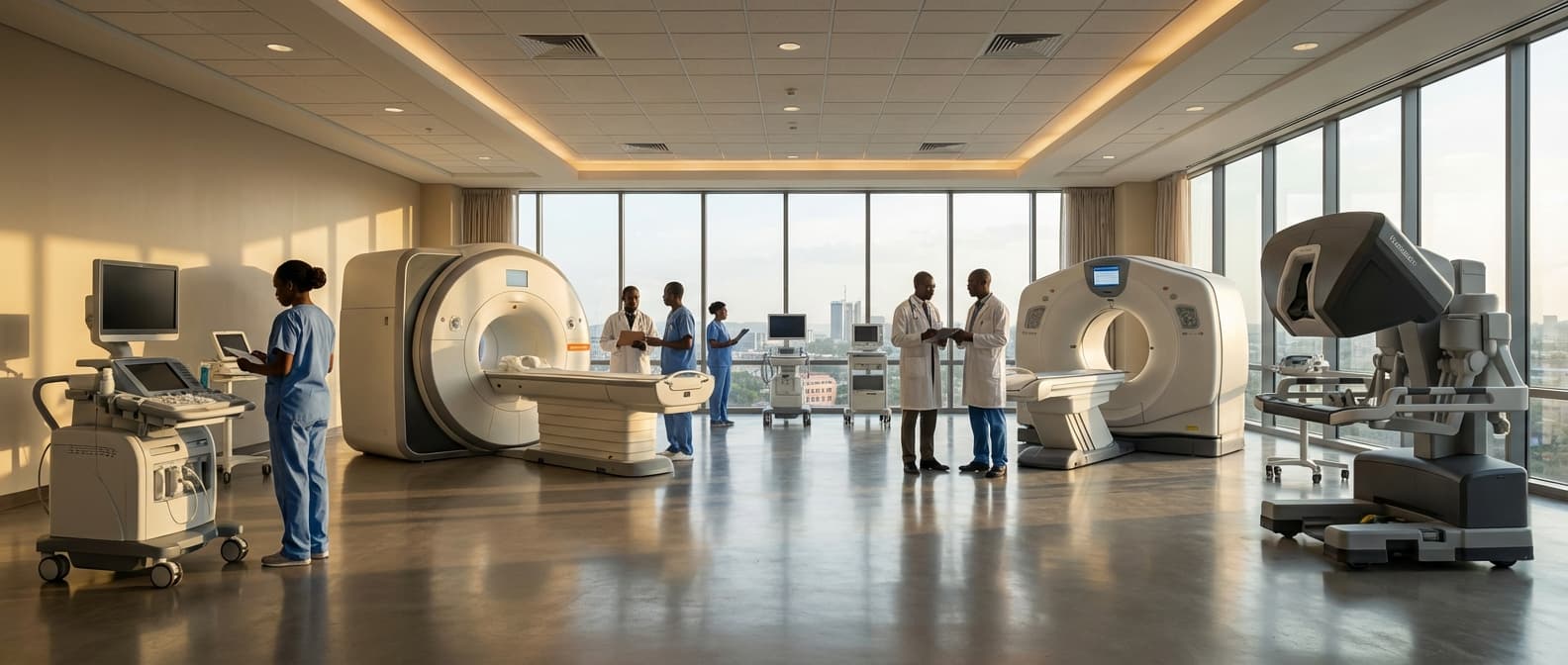
Renal Solutions in Gambia
Engineering Excellence & Technical Support
Complete dialysis systems and renal care equipment designed to deliver safe, effective, and patient-centered kidney treatment. High-standard technical execution following OEM protocols and local regulatory frameworks.
State-of-the-Art Dialysis Center
Equipped with the latest hemodialysis machines and advanced monitoring technology, Renal Solutions provides safe, efficient, and comfortable dialysis treatments, significantly improving patient outcomes and quality of life.
Comprehensive Diagnostic Services
Offering a full spectrum of renal function tests, ultrasound imaging, and laboratory analysis, Renal Solutions ensures accurate diagnosis and personalized treatment plans for a wide range of kidney-related conditions.
Patient-Centered Education & Support
Dedicated to empowering patients, Renal Solutions provides extensive education on kidney disease management, dietary guidelines, and lifestyle adjustments, fostering a collaborative approach to long-term renal health.
What Is Renal Solutions In Gambia?
Renal Solutions in The Gambia refers to a spectrum of medical services and interventions aimed at diagnosing, managing, and treating kidney-related diseases and conditions. These solutions encompass a range of clinical practices, technological applications, and patient support mechanisms designed to address the growing burden of renal pathology within the country. The primary objective is to preserve renal function, mitigate complications, and improve the quality of life for individuals affected by kidney disorders.
| Service/Component | Description | Target Population | Typical Use Cases |
|---|---|---|---|
| Renal Screening & Early Detection | Proactive identification of individuals at risk or in the early stages of kidney disease. | Individuals with risk factors: diabetes mellitus, hypertension, family history of kidney disease, recurrent UTIs, elderly population. | Routine health check-ups for diabetic/hypertensive patients; screening of high-risk individuals. |
| Diagnostic Services | Laboratory and imaging modalities to confirm diagnosis, assess severity, and monitor disease progression. | Patients presenting with symptoms suggestive of kidney dysfunction (e.g., edema, fatigue, changes in urination), or those undergoing routine monitoring. | Diagnosis of glomerulonephritis, polycystic kidney disease; staging of CKD; identifying causes of AKI. |
| Medical Management of CKD | Pharmacological and non-pharmacological interventions to slow disease progression and manage comorbidities. | Individuals diagnosed with any stage of Chronic Kidney Disease. | Controlling blood pressure with antihypertensives; managing anemia with erythropoiesis-stimulating agents; dietary modifications; treatment of electrolyte imbalances. |
| Dialysis Services (Hemodialysis) | Extracorporeal blood purification to remove waste products and excess fluid in patients with ESRD. | Patients with End-Stage Renal Disease (ESRD) whose kidney function is insufficient to sustain life. | Acute renal failure requiring temporary dialysis; chronic renal failure requiring maintenance hemodialysis. |
| Renal Transplantation | Surgical procedure to replace a diseased kidney with a healthy kidney from a donor. | Selected ESRD patients who are medically suitable and have access to post-transplant care. | Long-term treatment for ESRD, offering improved survival and quality of life compared to dialysis. |
| Management of AKI | Interventions to reverse or stabilize acute declines in kidney function. | Patients experiencing sudden onset of kidney dysfunction due to various causes. | Management of sepsis-induced AKI; treatment of drug-induced acute tubular necrosis; supportive care for pre-renal azotemia. |
Components of Renal Solutions in The Gambia
- Renal disease screening and early detection programs.
- Diagnostic services including laboratory tests (e.g., urinalysis, serum creatinine, estimated glomerular filtration rate - eGFR) and renal imaging (e.g., ultrasound).
- Medical management of chronic kidney disease (CKD) with pharmacotherapy and lifestyle interventions.
- Dialysis services, including hemodialysis and potentially peritoneal dialysis, for end-stage renal disease (ESRD).
- Renal transplantation as a definitive treatment option (though availability may be limited).
- Management of acute kidney injury (AKI).
- Patient education and self-management support for individuals with renal conditions.
- Public health initiatives focused on prevention and awareness of risk factors for kidney disease (e.g., hypertension, diabetes).
Who Needs Renal Solutions In Gambia?
Renal solutions are crucial for individuals and healthcare facilities in Gambia facing the growing burden of kidney disease. This includes patients requiring dialysis, kidney transplantation services, and preventative care, as well as hospitals and clinics equipped to manage chronic kidney disease (CKD) and acute kidney injury (AKI).
| Target Customer/Department | Specific Needs & Services | Importance in Gambia |
|---|---|---|
| Individuals with Chronic Kidney Disease (CKD) | Early detection, lifestyle management advice, medication, monitoring, access to specialized care. | Rising prevalence of non-communicable diseases (like diabetes and hypertension) contributing to CKD. |
| Patients with End-Stage Renal Disease (ESRD) | Hemodialysis, peritoneal dialysis, potential access to kidney transplantation information and referral. | Essential for life maintenance for patients whose kidneys have failed. |
| Individuals requiring Acute Kidney Injury (AKI) management | Intensive care, temporary dialysis, underlying cause treatment. | Crucial for survival in cases of sudden kidney function loss due to infections, dehydration, or other critical conditions. |
| Hospitals and Clinics (Public & Private) | Dialysis machines, laboratory equipment for kidney function tests, specialized medical staff (nephrologists, nurses), infrastructure for sterile environments, medication supply. | Primary providers of direct patient care and management of renal conditions. |
| Government Health Ministries and Agencies | Policy development for kidney disease prevention and management, funding for public health initiatives, procurement of essential renal equipment and medications for public facilities, public awareness campaigns. | Responsible for the overall healthcare strategy and ensuring equitable access to renal care for the population. |
Target Customers & Departments for Renal Solutions in Gambia
- Individuals with Chronic Kidney Disease (CKD)
- Patients with End-Stage Renal Disease (ESRD)
- Individuals requiring Acute Kidney Injury (AKI) management
- Hospitals and Clinics
- Government Health Ministries and Agencies
Renal Solutions Process In Gambia
The Renal Solutions Process in Gambia outlines the comprehensive workflow for individuals seeking kidney-related medical solutions, from their initial inquiry to the successful execution of treatment or services. This process is designed to be patient-centric, ensuring clarity, accessibility, and efficient management of care.
| Stage | Description | Key Actions | Responsible Parties |
|---|---|---|---|
| Inquiry and Initial Consultation | The patient or their representative contacts Renal Solutions to express a need for kidney-related services. This stage involves understanding the patient's concerns and providing preliminary information. | Receive inquiry, schedule initial consultation, gather basic patient information, explain available services. | Patient/Representative, Renal Solutions Administrative Staff, Patient Liaison Officer. |
| Assessment and Diagnosis | A thorough medical evaluation is conducted to accurately diagnose the patient's condition and its severity. This often involves specialist consultations and diagnostic tests. | Medical history review, physical examination, laboratory tests (blood, urine), imaging studies (ultrasound, CT scan), specialist referral (nephrologist, urologist). | Patient, Renal Solutions Medical Team (Nurses, Doctors), Specialist Physicians, Laboratory Technicians, Radiologists. |
| Treatment Planning | Based on the diagnosis, a personalized treatment plan is developed in collaboration with the patient. This plan outlines the recommended course of action, including potential procedures, medications, and lifestyle modifications. | Discuss diagnosis with patient, present treatment options (e.g., dialysis, transplant referral, medication management), explain risks and benefits, obtain informed consent. | Patient, Renal Solutions Medical Team, Nephrologist, Surgeon (if applicable). |
| Preparation and Pre-treatment | This stage involves preparing the patient for the chosen treatment. It may include pre-operative assessments, education on the treatment process, and necessary administrative arrangements. | Pre-admission checks, patient education sessions, scheduling of procedures/appointments, procurement of necessary supplies, visa/travel arrangements (if applicable). | Patient, Renal Solutions Medical Team, Administrative Staff, Social Workers (if applicable). |
| Execution of Treatment/Procedure | The actual medical intervention or treatment is carried out as per the established plan. This is the core of the service provision. | Performing dialysis, conducting surgery, administering medication, monitoring vital signs, managing complications. | Patient, Renal Solutions Medical Team (Doctors, Nurses, Technicians), Surgeons, Anesthesiologists. |
| Post-treatment Monitoring and Follow-up | After the treatment, the patient's recovery and progress are closely monitored. Regular follow-up appointments are scheduled to ensure optimal outcomes and detect any potential issues early. | Post-procedure recovery monitoring, regular check-ups, follow-up lab tests, medication adjustment, wound care (if applicable). | Patient, Renal Solutions Medical Team, Specialist Physicians. |
| Rehabilitation and Long-term Management | This stage focuses on helping the patient regain their quality of life and manage their condition long-term. It can involve lifestyle adjustments, ongoing therapy, and continuous medical support. | Physical therapy, nutritional counseling, psychological support, chronic disease management education, periodic health assessments. | Patient, Renal Solutions Medical Team, Allied Health Professionals (Dietitians, Physiotherapists), Psychologists. |
Workflow Stages
- Inquiry and Initial Consultation
- Assessment and Diagnosis
- Treatment Planning
- Preparation and Pre-treatment
- Execution of Treatment/Procedure
- Post-treatment Monitoring and Follow-up
- Rehabilitation and Long-term Management
Renal Solutions Cost In Gambia
The cost of renal solutions in The Gambia can vary significantly depending on several factors, including the type of solution, the brand, the quantity purchased, and the specific supplier or healthcare facility. Local currency used is the Gambian Dalasi (GMD). It's important to note that these are estimates and actual prices may differ.
| Renal Solution Type (Example) | Estimated Price Range (GMD per Liter/Unit) | Notes |
|---|---|---|
| Peritoneal Dialysis Solution (Standard - 1.5% Glucose) | 200 - 400 GMD | Price can vary by bag size (e.g., 2L, 5L) and brand. Imported solutions will be at the higher end. |
| Peritoneal Dialysis Solution (Higher Glucose Concentration - 2.5% or 4.25%) | 250 - 500 GMD | More concentrated solutions for fluid removal are typically more expensive. |
| Hemodialysis Concentrate (Acid Concentrate - various electrolytes) | 150 - 300 GMD | Sold in larger containers (e.g., 5L, 10L). Price depends on electrolyte composition. |
| Hemodialysis Concentrate (Bicarbonate Concentrate) | 180 - 350 GMD | Often used in conjunction with acid concentrate. Pricing is similar. |
| Specialty Dialysis Solutions (e.g., buffer solutions, specific electrolyte profiles) | 300 - 600+ GMD | These are less common and more expensive due to specialized formulations. |
Factors Influencing Renal Solution Costs in The Gambia
- Type of Renal Solution: Different types of dialysis solutions (e.g., peritoneal dialysis solutions, hemodialysis concentrates) have varying costs based on their composition and intended use.
- Brand and Manufacturer: Imported brands often command higher prices due to shipping, import duties, and established reputation compared to locally sourced or less established brands.
- Volume and Packaging: Larger volumes or bulk purchases might offer a lower per-unit cost, while smaller, individual-use packs will be more expensive per liter.
- Supplier and Pharmacy Markups: Retail pharmacies and specialized medical suppliers will have their own markups, affecting the final price. Hospitals or clinics may have negotiated rates.
- Availability and Demand: Limited availability or high demand for specific solutions can drive up prices.
- Importation Costs: As The Gambia relies on imports for many medical supplies, factors like international shipping, currency exchange rates, and import tariffs play a crucial role.
- Regulatory Approval and Quality Standards: Solutions meeting stringent international quality standards might be more expensive but offer greater reliability.
Affordable Renal Solutions Options
Finding affordable renal solutions is crucial for individuals managing kidney disease. This often involves exploring various treatment options, understanding their associated costs, and implementing effective cost-saving strategies. Value bundles, in particular, can offer a more predictable and potentially lower overall expense for healthcare services.
| Strategy | Description | Potential Savings | Considerations |
|---|---|---|---|
| Generic Medications | Using generic versions of prescribed medications when available can significantly reduce out-of-pocket expenses compared to brand-name drugs. | 20-80% reduction in medication costs. | Always consult with your doctor or pharmacist to ensure the generic is an appropriate substitute. |
| In-Network Providers | Utilizing healthcare providers and facilities that are in your insurance plan's network typically results in lower costs due to negotiated rates. | Lower co-pays, deductibles, and coinsurance. | Verify network status before appointments or procedures. |
| Preventive Care and Early Detection | Regular check-ups and screenings can help detect kidney disease in its early stages, when it's more manageable and less costly to treat. | Potentially avoids or delays expensive treatments like dialysis or transplant. | Requires consistent adherence to recommended screening schedules. |
| Home Dialysis Options | In some cases, home hemodialysis or peritoneal dialysis can be more cost-effective than in-center dialysis due to reduced facility fees and increased patient autonomy. | Lower per-treatment costs, reduced transportation expenses. | Requires patient and caregiver training, home suitability assessment, and robust support systems. |
| Medication Adherence Programs | Many pharmaceutical companies and patient advocacy groups offer programs to help patients afford their medications, including co-pay assistance and free drug programs. | Reduced out-of-pocket prescription costs. | Eligibility criteria and program availability vary. |
| Negotiating Medical Bills | If facing unexpected or high medical bills, don't hesitate to contact the billing department to discuss payment plans or potential reductions, especially for uninsured or underinsured patients. | Reduced overall medical debt. | Requires effective communication and a willingness to negotiate. |
| Exploring Government Programs and Assistance | Investigate eligibility for programs like Medicare, Medicaid, or state-specific assistance programs designed to help individuals with chronic conditions afford healthcare. | Significant reduction or elimination of healthcare costs for eligible individuals. | Application processes can be complex; seek assistance from social workers or patient navigators. |
Understanding Value Bundles and Cost-Saving Strategies for Renal Care
- {"title":"What are Value Bundles in Healthcare?","description":"Value bundles are pre-defined packages of healthcare services that are clinically related and designed to be provided to a patient for a specific medical condition or procedure. Instead of paying for each individual service, providers and payers agree on a single bundled payment. This encourages coordination among different healthcare providers (doctors, hospitals, therapists, etc.) and focuses on achieving the best possible patient outcomes at the most efficient cost."}
- {"title":"Benefits of Value Bundles for Renal Patients","description":"For patients undergoing treatments like dialysis or kidney transplantation, value bundles can offer predictability in costs, encourage better care coordination between nephrologists, dialysis centers, and surgeons, and potentially reduce the likelihood of complications that lead to unexpected expenses."}
- {"title":"Common Cost-Saving Strategies for Renal Care","description":"Beyond value bundles, several other strategies can help manage the cost of renal care."}
Verified Providers In Gambia
In the realm of healthcare, particularly when seeking specialized medical services or treatments, identifying and trusting verified providers is paramount. In Gambia, Franance Health stands out as a leading organization committed to connecting patients with highly credentialed and reliable healthcare professionals. Their rigorous vetting process ensures that all associated providers meet stringent standards, offering patients peace of mind and access to exceptional care. This commitment to quality and transparency makes Franance Health the best choice for individuals seeking verified medical expertise in Gambia.
| Provider Type | Key Credentials Verified | Benefits of Choosing Franance Health |
|---|---|---|
| General Practitioners | Medical Degree (MBBS/MD), General Medical Council Registration, Practicing License | Access to experienced primary care physicians, comprehensive health assessments, and referrals to specialists. |
| Specialists (e.g., Cardiologists, Dermatologists, Orthopedists) | Medical Degree, Specialist Training/Residency, Board Certification in their specialty, Professional Body Membership | Direct access to highly skilled experts for complex conditions, advanced diagnostics, and tailored treatment plans. |
| Surgeons | Medical Degree, Surgical Residency, Fellowship in a surgical subspecialty (if applicable), Surgical Board Certification, Hospital Privileges | Assurance of receiving care from meticulously trained and experienced surgeons, with a focus on patient safety and optimal surgical outcomes. |
| Dentists | Dental Degree (DDS/DMD), Dental Board Registration and License, Continuing Professional Development | Reliable access to qualified dentists for a full range of dental services, from routine check-ups to complex procedures. |
| Diagnostic Professionals (e.g., Radiologists, Pathologists) | Medical Degree, Specialty Training in Radiology/Pathology, Board Certification, Accreditation of Imaging/Laboratory Facilities | Accurate and reliable diagnostic services from experts trained to interpret medical imaging and laboratory results. |
Why Franance Health Providers are the Best Choice:
- Uncompromising Credential Verification: Franance Health employs a meticulous process to verify the qualifications, licenses, and certifications of every healthcare professional in their network. This ensures you are connected with legitimate and skilled practitioners.
- Specialized Expertise: Their network encompasses a wide range of medical specialties, allowing you to find providers with the precise expertise needed for your specific health concerns.
- Commitment to Patient Safety: Patient safety is a top priority. Franance Health ensures that their providers adhere to the highest ethical standards and best practices in medical care.
- Seamless Access to Care: Franance Health simplifies the process of finding and booking appointments with top-tier medical professionals, saving you time and reducing stress.
- Transparent Communication: They foster an environment of open and honest communication between patients and providers, ensuring you are well-informed about your treatment options and care plan.
- Focus on Patient Outcomes: Franance Health is dedicated to facilitating positive health outcomes for all patients by connecting them with the most competent and caring healthcare providers.
Scope Of Work For Renal Solutions
This Scope of Work (SOW) outlines the technical deliverables and standard specifications for the Renal Solutions project. The objective is to develop a comprehensive software solution that aids in the management of renal patients, encompassing patient data, treatment plans, and reporting functionalities. This document defines the key technical components, their specifications, and the expected outcomes.
| Deliverable/Component | Description | Standard Specifications/Technologies | Key Features |
|---|---|---|---|
| Cloud-based platform architecture | Scalable and secure cloud infrastructure for hosting the Renal Solutions application. | AWS/Azure/GCP, Microservices architecture, RESTful APIs, Docker, Kubernetes, CI/CD pipelines. | High availability, fault tolerance, automated scaling, robust security. |
| Patient Information Management Module (PIMM) | Centralized system for storing and managing all patient-related data. | Relational Database (PostgreSQL/MySQL) or NoSQL (MongoDB), FHIR standard for interoperability. | Patient demographics, medical history, allergies, lab results, imaging, clinical notes. |
| Treatment Planning Module (TPM) | Tools for creating, managing, and tracking patient treatment plans. | Rule-based engine, calendar integration, progress tracking features. | Dialysis schedules, medication management, fluid intake monitoring, physician orders. |
| Reporting and Analytics Module (RAM) | Generation of reports and insights on patient data and treatment outcomes. | Business Intelligence (BI) tools (e.g., Tableau, Power BI integration), data warehousing. | Patient outcome reports, treatment adherence statistics, disease progression trends, population health analytics. |
| Integration APIs for EMR/EHR systems | Secure interfaces for data exchange with existing Electronic Medical Record/Health Record systems. | HL7, FHIR, OAuth 2.0, RESTful APIs. | Bi-directional data flow, real-time data synchronization, secure authentication. |
| User Authentication and Authorization Module (UAAM) | Secure system for managing user access and permissions. | OAuth 2.0, OpenID Connect, JWT, role-based access control (RBAC). | Secure login, multi-factor authentication, granular permission management. |
| Data Migration Strategy and Tools | Plan and tools for migrating existing patient data into the new platform. | ETL processes, data validation scripts, secure data transfer protocols. | Minimal downtime, data integrity assurance, phased migration approach. |
| Comprehensive Test Suite | Automated and manual testing across all modules and integrations. | Selenium, JUnit, Postman, JMeter, TestRail. | Unit testing, integration testing, system testing, user acceptance testing (UAT), performance testing. |
| Deployment Package and Infrastructure Setup Guide | Pre-configured deployment artifacts and detailed instructions for setting up the infrastructure. | Docker images, Kubernetes manifests, Terraform/CloudFormation scripts. | Automated deployment, reproducible environments, clear setup procedures. |
| Technical Documentation | Comprehensive documentation for developers, administrators, and end-users. | Swagger/OpenAPI for API docs, Confluence/Markdown for guides, Architecture diagrams (UML). | Clear, concise, and up-to-date documentation for all aspects of the system. |
Technical Deliverables
- Cloud-based platform architecture
- Patient Information Management Module (PIMM)
- Treatment Planning Module (TPM)
- Reporting and Analytics Module (RAM)
- Integration APIs for EMR/EHR systems
- User Authentication and Authorization Module (UAAM)
- Data Migration Strategy and Tools
- Comprehensive Test Suite (Unit, Integration, UAT)
- Deployment Package and Infrastructure Setup Guide
- Technical Documentation (API docs, architecture diagrams, deployment guides)
Service Level Agreement For Renal Solutions
This Service Level Agreement (SLA) outlines the commitments made by Renal Solutions to its clients regarding the availability and performance of its services. It defines the expected response times for support requests and the uptime guarantees for critical systems.
| Service Component | Uptime Guarantee | Response Time (Critical Issues) | Response Time (High Priority Issues) | Response Time (Normal Priority Issues) |
|---|---|---|---|---|
| Core Renal Solutions Platform (e.g., Patient Management, Data Analytics) | 99.9% Monthly Uptime | 15 minutes (acknowledgement) | 1 hour (acknowledgement) | 4 business hours (acknowledgement) |
| Patient Portal Access | 99.5% Monthly Uptime | 30 minutes (acknowledgement) | 2 hours (acknowledgement) | 8 business hours (acknowledgement) |
| Technical Support Hotline/Email | N/A (Service Availability) | 15 minutes (acknowledgement of request) | 1 hour (acknowledgement of request) | 4 business hours (acknowledgement of request) |
Key Service Commitments
- Purpose: To ensure reliable and responsive service delivery for all Renal Solutions clients.
- Scope: Applies to all cloud-based services and critical support functions provided by Renal Solutions.
- Definitions: Critical System: Any component of Renal Solutions' service infrastructure essential for the core functionality of the client's operations.
- Definitions: Uptime: The percentage of time a Critical System is operational and accessible to clients.
- Definitions: Response Time: The maximum time allowed for Renal Solutions to acknowledge and begin addressing a client-reported issue.
- Definitions: Resolution Time: The target time for resolving an issue, varying by severity level.
- Definitions: Scheduled Maintenance: Planned downtime for system upgrades or maintenance, communicated in advance.
- Definitions: Unscheduled Downtime: Any unplanned interruption to Critical System availability.
Frequently Asked Questions

Ready when you are
Let's scope your Renal Solutions in Gambia project in Gambia.

Scaling healthcare logistics and technical systems across the entire continent.