
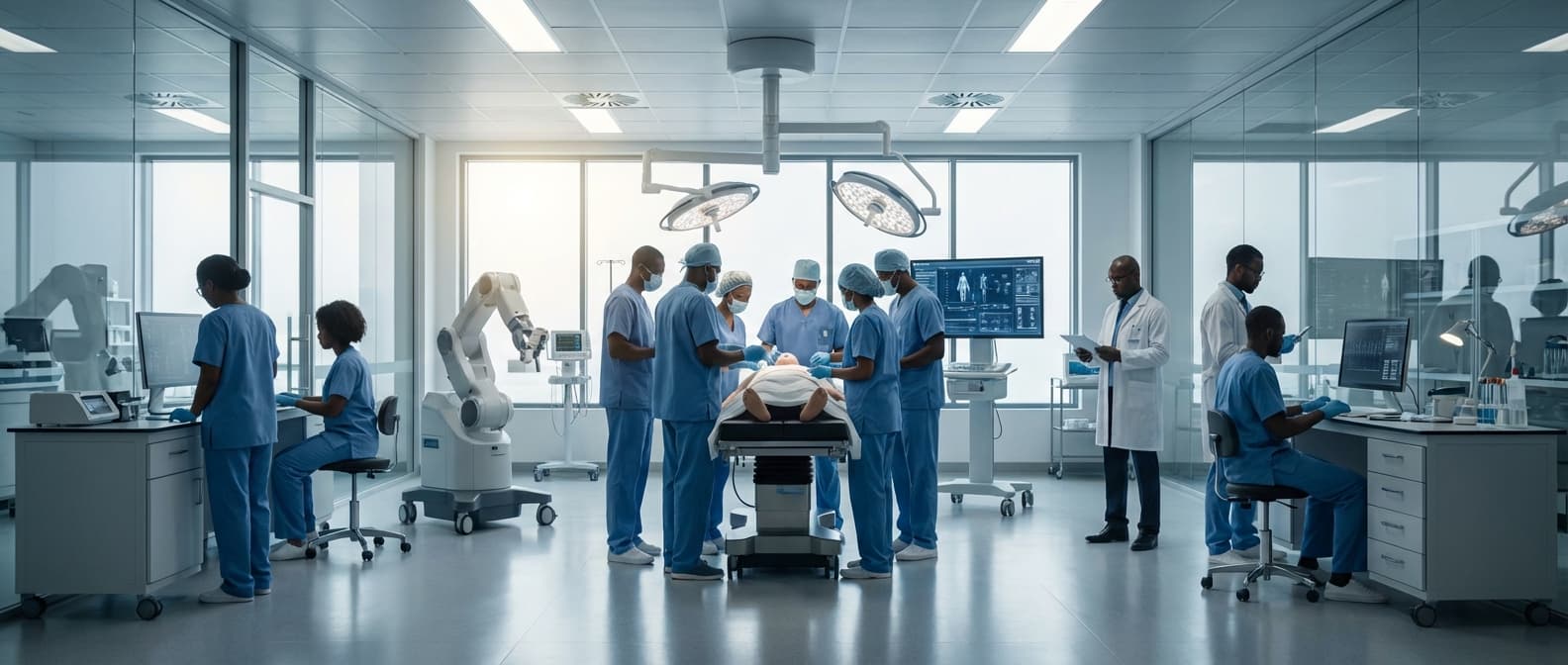
Managed Equipment Service (MES) in Gambia
Engineering Excellence & Technical Support
Long‑term equipment provision with uptime SLAs and lifecycle management. High-standard technical execution following OEM protocols and local regulatory frameworks.
Enhanced Medical Device Uptime
Our MES proactively monitors and maintains critical medical equipment across Gambia, ensuring maximum operational uptime and reducing costly downtime for healthcare providers.
Expert Biomedical Engineering Support
Access a team of highly skilled biomedical engineers providing on-site and remote technical support, calibration, and repair services for a wide range of medical devices.
Cost-Effective Equipment Lifecycle Management
Our comprehensive MES solutions optimize equipment procurement, deployment, maintenance, and eventual replacement, leading to significant cost savings and improved resource allocation for health facilities in Gambia.
What Is Managed Equipment Service (Mes) In Gambia?
Managed Equipment Service (MES) in The Gambia refers to a comprehensive outsourcing model wherein a third-party provider assumes responsibility for the acquisition, installation, maintenance, operation, and eventual decommissioning of critical medical equipment on behalf of healthcare facilities. This service aims to optimize the lifecycle management of medical technology, ensuring its optimal functionality, cost-effectiveness, and alignment with evolving healthcare needs. MES contracts typically involve a service level agreement (SLA) that defines performance metrics, uptime guarantees, response times for repairs, and training protocols. The core objective is to shift the burden of capital expenditure, operational overhead, and technical expertise from the healthcare provider to the MES provider, allowing the former to focus on core clinical services.
| Who Needs MES? | Typical Use Cases in The Gambia |
|---|---|
| Public Hospitals and Clinics: Especially those with limited capital budgets and in-house technical expertise to manage complex medical technology. | Diagnostic imaging departments: Managing CT scanners, MRI machines, X-ray units, and ultrasound devices, ensuring high availability for patient diagnosis. |
| Private Healthcare Providers: Seeking to reduce operational overhead and leverage specialized expertise for advanced medical equipment. | Surgical suites: Ensuring the reliability of anesthesia machines, surgical lighting, electrosurgical units, and patient monitoring systems. |
| Tertiary and Specialized Medical Centers: Requiring access to cutting-edge equipment and consistent technical support to deliver specialized care. | Intensive Care Units (ICUs): Maintaining critical life-support equipment such as ventilators, defibrillators, and infusion pumps. |
| Government Health Ministries and Agencies: Aiming to standardize equipment across multiple facilities, improve service delivery, and enhance national health infrastructure. | Centralized sterilization and laundry services: Managing high-volume equipment for infection control and hygiene. |
| Rural and Remote Healthcare Facilities: Where local technical support is scarce and specialized maintenance is challenging. | Point-of-care testing (POCT) devices: Ensuring the accuracy and availability of diagnostic equipment in various clinical settings. |
Key Components of Managed Equipment Service (MES) in The Gambia:
- Equipment Sourcing and Procurement: Identifying, selecting, and acquiring appropriate medical equipment based on facility requirements and budget constraints.
- Installation and Commissioning: Overseeing the correct installation, calibration, and initial testing of all procured equipment.
- Preventive Maintenance: Implementing scheduled maintenance programs to minimize downtime and extend equipment lifespan.
- Corrective Maintenance and Repairs: Providing rapid response and resolution for equipment malfunctions and breakdowns.
- Training and Skill Development: Educating clinical and technical staff on the proper operation, troubleshooting, and basic maintenance of the equipment.
- Technology Refresh and Upgrades: Managing the lifecycle of equipment, including identifying opportunities for upgrades or replacements to incorporate newer technologies.
- Asset Management and Tracking: Maintaining a detailed inventory of all managed equipment, including serial numbers, warranty information, and maintenance history.
- Performance Monitoring and Reporting: Continuously monitoring equipment performance against defined SLAs and providing regular reports to the healthcare facility.
- Decommissioning and Disposal: Safely removing and disposing of obsolete or end-of-life equipment in compliance with relevant regulations.
Who Needs Managed Equipment Service (Mes) In Gambia?
Managed Equipment Service (MES) in The Gambia offers a vital solution for organizations seeking to optimize their operations, reduce costs, and improve the reliability of their critical equipment. Instead of bearing the full burden of purchasing, maintaining, and upgrading expensive machinery, businesses and government entities can outsource these responsibilities to a specialized MES provider. This allows them to focus on their core competencies while ensuring access to cutting-edge technology and expert support. MES is particularly beneficial for sectors that rely heavily on sophisticated and often costly equipment, where downtime can have significant financial and operational repercussions.
| Target Customer Type | Key Departments/Areas Benefiting from MES |
|---|---|
| Healthcare Sector (Hospitals, Clinics, Diagnostic Centers) | Radiology (X-ray, CT Scans, MRI), Laboratory (Analyzers, Microscopes), Surgery (Surgical Instruments, Anesthesia Machines), ICU Equipment (Ventilators, Monitors) |
| Manufacturing and Industrial Enterprises | Production Lines, Quality Control Equipment, Heavy Machinery, Packaging Equipment, Specialized Tools |
| Telecommunications Providers | Network Infrastructure Equipment, Base Stations, Data Centers, Testing and Measurement Devices |
| Government Agencies & Public Services | Transportation (Vehicle Maintenance, Traffic Management Systems), Utilities (Water Treatment, Power Generation), Defense (Specialized Equipment), Education (Research Labs, Technical Training Equipment) |
| Agriculture and Agribusiness | Processing Equipment, Irrigation Systems, Specialized Harvesting Machinery, Laboratory Testing Equipment |
| Mining and Extractive Industries | Heavy Mining Equipment, Processing Plants, Safety and Monitoring Systems |
| Research and Development Institutions | Laboratory Equipment, Scientific Instruments, Specialized Testing Apparatus |
| Large Hospitality & Tourism Businesses | Kitchen Equipment, Laundry Equipment, Building Management Systems (HVAC, Elevators) |
Who Needs Managed Equipment Service (MES) in Gambia?
- Organizations that require specialized, high-value, or rapidly depreciating equipment.
- Entities facing budget constraints or seeking to convert capital expenditure (CAPEX) to operational expenditure (OPEX).
- Businesses and government departments where equipment uptime and reliability are critical for service delivery or production.
- Sectors with rapidly evolving technological landscapes, necessitating frequent equipment upgrades.
- Organizations lacking in-house technical expertise for the maintenance and repair of complex machinery.
- Companies aiming to improve operational efficiency and reduce the administrative burden associated with equipment management.
Managed Equipment Service (Mes) Process In Gambia
The Managed Equipment Service (MES) process in The Gambia, though its specific implementation can vary based on the provider and the nature of the equipment, generally follows a structured workflow from the initial inquiry to the final execution and ongoing management. This process is designed to ensure that healthcare facilities have reliable access to essential medical equipment, supported by comprehensive maintenance and operational services.
| Stage | Description | Key Activities | Responsible Parties |
|---|---|---|---|
| Inquiry and Needs Assessment | The initial stage where a healthcare facility expresses interest in MES and the provider assesses their specific equipment needs. | Facility identifies need for MES. Provider meets with facility stakeholders. Needs analysis (type, quantity, specifications of equipment). Budgetary discussions. | Healthcare Facility, MES Provider |
| Proposal Development and Negotiation | The MES provider develops a tailored proposal based on the needs assessment, outlining services, costs, and timelines. | Provider prepares detailed proposal. Includes equipment list, service scope, maintenance plans, KPIs, financial model. Negotiation of terms and conditions. Clarification of any ambiguities. | MES Provider, Healthcare Facility |
| Contracting and Agreement | Formalization of the MES partnership through a legally binding contract. | Drafting of the MES contract. Legal review by both parties. Signing of the contract. Establishment of payment schedules and performance indicators. | MES Provider, Healthcare Facility, Legal Counsel |
| Equipment Procurement and Installation | The provider sources, procures, and installs the agreed-upon medical equipment at the healthcare facility. | Ordering of equipment from manufacturers. Quality control checks upon arrival. Site preparation for installation. Professional installation and setup. Initial testing and calibration. | MES Provider, Equipment Manufacturers, Installation Technicians |
| Training and Handover | Ensuring that healthcare staff are adequately trained to operate and perform basic maintenance on the new equipment. | Development of training materials. Conduct of training sessions for clinical and technical staff. Demonstration of equipment functionality. Handover of user manuals and documentation. | MES Provider, Healthcare Facility Staff (Clinical & Technical) |
| Ongoing Maintenance and Support | The core of MES, involving regular preventive maintenance, corrective repairs, and technical support to ensure equipment uptime. | Scheduled preventive maintenance. Unscheduled repair calls. Supply of spare parts. Technical troubleshooting and support. Remote monitoring (if applicable). | MES Provider (Biomedical Engineers, Technicians), Healthcare Facility Staff (for reporting issues) |
| Performance Monitoring and Reporting | Regular tracking of equipment performance against agreed Key Performance Indicators (KPIs) and reporting to the facility. | Collection of data on equipment uptime, response times, repair rates. Generation of performance reports. Review meetings with the facility to discuss performance. Identification of areas for improvement. | MES Provider, Healthcare Facility Management |
| End-of-Life Management | Planning for the eventual decommissioning and replacement of equipment. | Assessment of equipment lifespan. Planning for replacement cycles. Decommissioning and safe disposal of old equipment. Procurement and installation of new equipment. | MES Provider, Healthcare Facility, Waste Management Services |
Managed Equipment Service (MES) Workflow in The Gambia
- Inquiry and Needs Assessment
- Proposal Development and Negotiation
- Contracting and Agreement
- Equipment Procurement and Installation
- Training and Handover
- Ongoing Maintenance and Support
- Performance Monitoring and Reporting
- End-of-Life Management
Managed Equipment Service (Mes) Cost In Gambia
Managed Equipment Service (MES) in The Gambia, like in many developing economies, is a complex offering influenced by a variety of pricing factors. MES typically involves a healthcare provider outsourcing the management, maintenance, and often the financing of its medical equipment to a third-party specialist. This allows the provider to focus on patient care while benefiting from up-to-date technology and predictable operational costs. The pricing in The Gambia is not as standardized as in more mature markets, making it crucial to understand the underlying drivers. Key factors influencing MES costs include the type and quantity of equipment, the desired service level agreements (SLAs), the technology lifecycle, the supplier's expertise and reputation, and the overall economic climate in The Gambia. While specific price ranges can fluctuate significantly, understanding these factors helps in estimating potential costs.
| Service Type / Equipment Category | Estimated Monthly Cost Range (GMD) | Notes |
|---|---|---|
| Basic Diagnostic Equipment (e.g., standard X-ray, ultrasound) | 15,000 - 50,000 | Includes maintenance, minor repairs, and basic consumables. SLA for response time is crucial. |
| Mid-Tier Imaging Equipment (e.g., CT scanner, advanced ultrasound) | 60,000 - 200,000 | Covers comprehensive maintenance, spare parts, and potentially software updates. Higher uptime guarantees. |
| High-End Imaging / Surgical Equipment (e.g., MRI scanner, complex surgical suites) | 250,000 - 1,000,000+ | Full service, including regular upgrades, advanced technical support, and significant risk transfer. Costs highly dependent on specific technology and contract terms. |
| Comprehensive Hospital-Wide MES (including multiple departments and varied equipment) | Varies significantly (often a percentage of capital expenditure or a fixed fee per bed/service) | Requires detailed assessment and bespoke quotation. This is the most complex and expensive offering. |
| Equipment Leasing/Financing Component (additional to service) | Added based on equipment value and financing terms | If MES includes financing, the lease payments are added to the service costs. |
Key Pricing Factors for MES in The Gambia
- Equipment Type and Quantity: The core of any MES contract. High-end, specialized equipment (e.g., MRI scanners, advanced surgical robots) will inherently be more expensive than basic diagnostic tools or general hospital furniture. The sheer volume of equipment also plays a significant role.
- Service Level Agreements (SLAs): The level of service guaranteed by the MES provider is a major cost determinant. This includes response times for maintenance, uptime guarantees, availability of spare parts, and the frequency of preventive maintenance. More stringent SLAs typically command higher prices.
- Technology Lifecycle and Modernization: MES contracts often include provisions for upgrading or replacing equipment at predetermined intervals. The cost of newer, more advanced technology will be factored into the pricing. The provider's ability to forecast and manage technological obsolescence is critical.
- Supplier Expertise and Reputation: Established MES providers with a proven track record, strong technical teams, and robust supply chains in The Gambia can command premium pricing due to the reliability and risk reduction they offer.
- Financing and Ownership Model: MES can be structured with various financing models. If the MES provider finances the acquisition of equipment, this cost will be amortized over the contract period and reflected in the overall pricing. Alternatively, if the provider only manages existing equipment, the costs might be lower but exclude capital expenditure.
- Infrastructure and Geographic Reach: The MES provider's ability to service equipment across different locations within The Gambia, considering logistical challenges and potential travel costs, can influence pricing.
- Training and Capacity Building: Some MES contracts may include training for hospital staff on operating new equipment, adding to the overall service cost.
- Risk Transfer: A significant component of MES pricing is the transfer of risks associated with equipment breakdown, obsolescence, and maintenance costs from the healthcare provider to the MES provider.
- Contract Duration: Longer-term MES contracts can sometimes offer better per-unit pricing due to economies of scale and reduced administrative overhead for the provider.
- Economic Conditions and Currency Fluctuations: The Gambian Dalasi (GMD) exchange rate against major international currencies (USD, EUR) will impact the cost of imported equipment and spare parts, which are often priced in foreign currency.
Affordable Managed Equipment Service (Mes) Options
Managed Equipment Service (MES) can significantly reduce operational costs and improve efficiency in various industries, from healthcare to manufacturing. MES involves outsourcing the management, maintenance, and upgrade of specialized equipment to a third-party provider. When seeking affordable options, understanding value bundles and implementing smart cost-saving strategies is crucial. Value bundles typically combine essential services at a discounted rate, offering predictable costs and a comprehensive solution. Cost-saving strategies focus on optimizing equipment utilization, extending equipment lifespan, and leveraging technology for proactive maintenance.
| MES Cost-Saving Strategy | Description | Potential Savings Benefit |
|---|---|---|
| Value-Based Bundling | Combining core services (maintenance, repair, calibration, basic training) into a single package with tiered options. Higher tiers may include preventive maintenance schedules, software updates, and priority support. | Reduced administrative overhead, predictable monthly/annual costs, discount on bundled services compared to à la carte pricing. |
| Preventive Maintenance Programs | Scheduled inspections and servicing to identify and address potential issues before they cause failures. Often included in higher-tier bundles. | Minimizes costly emergency repairs, extends equipment lifespan, reduces unplanned downtime, leading to higher productivity. |
| Equipment Utilization Optimization | Data analytics and reporting provided by the MES provider to identify underutilized or overutilized equipment. Recommendations for reallocation or consolidation. | Reduces the need for purchasing additional equipment, maximizes ROI on existing assets, lowers maintenance costs per unit of use. |
| Technology Integration for Remote Monitoring | Utilizing IoT sensors and remote diagnostics to monitor equipment health in real-time. Allows for proactive intervention and predictive maintenance. | Fewer on-site technician visits, faster issue resolution, reduced downtime, potential for early detection of minor issues before they become major problems. |
| Extended Equipment Lifespan Strategies | Proactive maintenance, proper usage training, and timely component replacements to maximize the operational life of equipment. | Delays or eliminates the need for costly capital equipment upgrades, reduces total cost of ownership over time. |
| Consolidated Procurement | MES providers often have established relationships with manufacturers, allowing them to procure parts and consumables at competitive prices. | Lower cost of replacement parts and consumables, simplified procurement process. |
| Flexible Service Level Agreements (SLAs) | Tailoring response times, uptime guarantees, and coverage based on the critical nature of specific equipment. Not all equipment requires the same level of service. | Ensures critical equipment has robust support while less critical items have standard, more affordable coverage, optimizing service spend. |
Key Components of Affordable MES
- Predictable Budgeting: MES provides fixed costs, eliminating unexpected repair bills and allowing for better financial planning.
- Access to Latest Technology: Providers often include upgrades and access to newer, more efficient equipment as part of the service, avoiding large capital expenditures.
- Reduced Downtime: Proactive maintenance and rapid response minimize equipment failures, ensuring operational continuity.
- Expertise and Specialization: MES providers offer specialized knowledge and trained technicians, ensuring optimal equipment performance and longevity.
- Focus on Core Competencies: By outsourcing equipment management, organizations can concentrate their resources and personnel on their primary business objectives.
- Scalability: MES solutions can be adapted to changing organizational needs, allowing for flexible scaling of equipment and services.
- Improved Compliance and Safety: Providers ensure equipment meets regulatory standards and safety protocols, reducing risk and liability.
Verified Providers In Gambia
Finding reliable and accredited healthcare providers is paramount for ensuring quality care. In Gambia, Franance Health stands out as a premier organization, boasting a network of verified providers who meet rigorous standards for medical expertise, ethical practice, and patient safety. This commitment to excellence makes Franance Health the best choice for individuals seeking trustworthy healthcare solutions.
| Provider Type | Key Verification Criteria | Franance Health Assurance |
|---|---|---|
| Doctors (GPs & Specialists) | Medical Licensure, Board Certification, Clinical Experience, Peer Review | Ensures highly qualified and experienced medical professionals. |
| Hospitals & Clinics | Facility Accreditation, Equipment Standards, Hygiene Protocols, Emergency Preparedness | Guarantees safe and well-equipped healthcare facilities. |
| Laboratories & Diagnostic Centers | Accreditation, Quality Control Measures, Equipment Calibration, Staff Qualifications | Confirms accurate and reliable diagnostic services. |
| Pharmacies | Pharmacy Licensure, Drug Quality and Storage Standards, Dispensing Protocols | Ensures access to safe and genuine medications. |
Why Franance Health Providers Are the Best Choice:
- Rigorous Vetting Process: Franance Health employs a comprehensive screening and verification process for all affiliated healthcare professionals and facilities.
- Commitment to Quality Care: Providers are selected based on their proven track record, adherence to international medical standards, and dedication to patient well-being.
- Ethical Practice and Transparency: Franance Health emphasizes a culture of integrity and transparency, ensuring patients receive clear communication and ethical treatment.
- Access to Specialized Services: The network includes a diverse range of specialists, offering access to comprehensive healthcare solutions for various medical needs.
- Patient-Centric Approach: Verified providers are trained to prioritize patient comfort, involve them in decision-making, and provide compassionate care.
Scope Of Work For Managed Equipment Service (Mes)
This document outlines the Scope of Work (SOW) for a Managed Equipment Service (MES) agreement. It details the technical deliverables and standard specifications required to ensure efficient, reliable, and high-quality operation of the managed equipment throughout the service lifecycle. The MES provider is responsible for the proactive management, maintenance, and optimization of specified equipment.
| Deliverable | Description | Standard Specifications / Requirements | Metrics / KPIs |
|---|---|---|---|
| Initial Equipment Assessment and Inventory | Comprehensive evaluation of all existing equipment to be managed, including make, model, serial number, age, condition, and current operational status. | Detailed asset register provided in a standardized digital format (e.g., CSV, Excel). Includes images and warranty information where available. Assessment report to identify immediate risks and recommended actions. | Completion percentage of inventory. Accuracy of asset data. |
| Preventive Maintenance Schedule and Execution | Development and execution of a proactive maintenance plan to minimize downtime and extend equipment lifespan. Includes scheduled inspections, cleaning, lubrication, and replacement of wear parts. | Maintenance procedures aligned with manufacturer recommendations and industry best practices. Scheduled interventions documented with checklists. Use of certified technicians and manufacturer-approved parts. | Adherence to PM schedule (%). Mean Time Between Failures (MTBF) improvement. Reduction in unplanned downtime (%). |
| Corrective Maintenance and Repair Services | Rapid response to equipment failures, including diagnosis, repair, and restoration to operational status. | Guaranteed response times for different criticality levels. Use of qualified technicians with appropriate tools and diagnostic equipment. Root cause analysis (RCA) for recurring issues. | Mean Time To Repair (MTTR). First-time fix rate (%). Number of critical failures. Customer satisfaction with repair services. |
| Performance Monitoring and Reporting | Continuous monitoring of equipment performance against defined parameters and historical data. Regular reporting on equipment status, utilization, and maintenance activities. | Real-time monitoring via integrated sensors or software. Customizable reporting dashboards. Monthly/Quarterly reports including uptime, downtime, costs, and performance trends. | Equipment uptime percentage. Utilization rates. Reporting accuracy and timeliness. |
| Equipment Upgrades and Replacements | Assessment of equipment obsolescence and recommendation of upgrades or replacements to maintain optimal performance and meet evolving needs. | Needs assessment based on performance data, technological advancements, and business requirements. Provision of cost-benefit analysis for upgrades/replacements. Management of procurement and installation. | Timeliness of upgrade/replacement recommendations. Successful integration of new equipment. |
| End-of-Life Management and Decommissioning | Safe and environmentally responsible decommissioning and disposal of equipment at the end of its lifecycle. | Compliance with all relevant environmental regulations. Secure data sanitization. Provision of certificates of destruction/recycling. | Adherence to decommissioning timelines. Compliance with environmental standards. |
| Spare Parts Management | Proactive management of spare parts inventory to ensure availability for timely repairs. | Identification of critical spare parts. Min/max inventory levels established. Just-in-time (JIT) delivery where appropriate. Secure storage and tracking of parts. | Spare parts availability rate (%). Inventory turnover rate. |
| Technical Support and Troubleshooting | Provision of expert technical support to address operational issues and queries. | 24/7 technical support availability for critical equipment. Access to a knowledge base and escalation procedures. Trained and experienced support staff. | First contact resolution rate (%). Average handling time for support calls. Customer satisfaction with technical support. |
| Calibration and Validation Services | Ensuring equipment accuracy and reliability through regular calibration and validation processes. | Adherence to national/international calibration standards (e.g., ISO 17025). Provision of calibration certificates. Validation protocols for critical equipment. | Calibration frequency adherence. Number of out-of-tolerance events. Successful validation completion rate. |
| Asset Tracking and Management System Integration | Implementation and maintenance of a robust asset tracking and management system, integrated with the client's existing infrastructure where applicable. | Use of a centralized, secure database. Real-time tracking capabilities. Compatibility with client's IT infrastructure. Regular data backups and disaster recovery plans. | System uptime. Data integrity. Successful integration with client systems. |
Key Technical Deliverables
- Initial Equipment Assessment and Inventory
- Preventive Maintenance Schedule and Execution
- Corrective Maintenance and Repair Services
- Performance Monitoring and Reporting
- Equipment Upgrades and Replacements
- End-of-Life Management and Decommissioning
- Spare Parts Management
- Technical Support and Troubleshooting
- Calibration and Validation Services
- Asset Tracking and Management System Integration
Service Level Agreement For Managed Equipment Service (Mes)
This Service Level Agreement (SLA) outlines the commitment of [Service Provider Name] (hereinafter referred to as 'Provider') to [Client Name] (hereinafter referred to as 'Client') for the Managed Equipment Service (MES) provided for the equipment specified in Appendix A. This SLA defines the agreed-upon response times and uptime guarantees to ensure the optimal performance and availability of the client's managed equipment.
| Service Level | Description | Target Response Time (during Business Hours) | Target Response Time (outside Business Hours/24x7) | Target Uptime Guarantee |
|---|---|---|---|---|
| Critical Equipment Failure | Complete unavailability of essential equipment impacting core business operations. | 1 Hour | 2 Hours | 99.9% Monthly |
| Major Equipment Malfunction | Significant degradation of equipment performance, impacting productivity but not completely halting operations. | 2 Hours | 4 Hours | 99.5% Monthly |
| Minor Equipment Issue | Non-critical equipment issues that may cause inconvenience but do not significantly impact operations. | 4 Business Hours | 8 Business Hours | 99.0% Monthly |
| Preventative Maintenance | Scheduled maintenance activities performed to prevent future failures and ensure optimal performance. | As per scheduled agreement | N/A | Included in overall uptime |
Key Definitions
- Managed Equipment Service (MES): The comprehensive management and maintenance of specified equipment by the Provider, including but not limited to installation, monitoring, preventative maintenance, corrective maintenance, and proactive support.
- Downtime: Any period during which the Managed Equipment is unavailable for its intended use due to failure, malfunction, or unavailability of necessary support services provided by the Provider.
- Response Time: The maximum allowable time from when a service request is officially logged by the Provider until a qualified technician begins working on resolving the issue.
- Resolution Time: The maximum allowable time from when a service request is officially logged by the Provider until the Managed Equipment is restored to full operational status.
- Uptime Guarantee: The minimum percentage of time the Managed Equipment is expected to be available and operational over a defined period.
- Service Request: A formal notification from the Client to the Provider regarding an issue, malfunction, or request for support related to the Managed Equipment.
- Business Hours: [Specify Business Hours, e.g., Monday to Friday, 9:00 AM to 5:00 PM Local Time, excluding public holidays].
Frequently Asked Questions

Ready when you are
Let's scope your Managed Equipment Service (MES) in Gambia project in Gambia.

Scaling healthcare logistics and technical systems across the entire continent.