
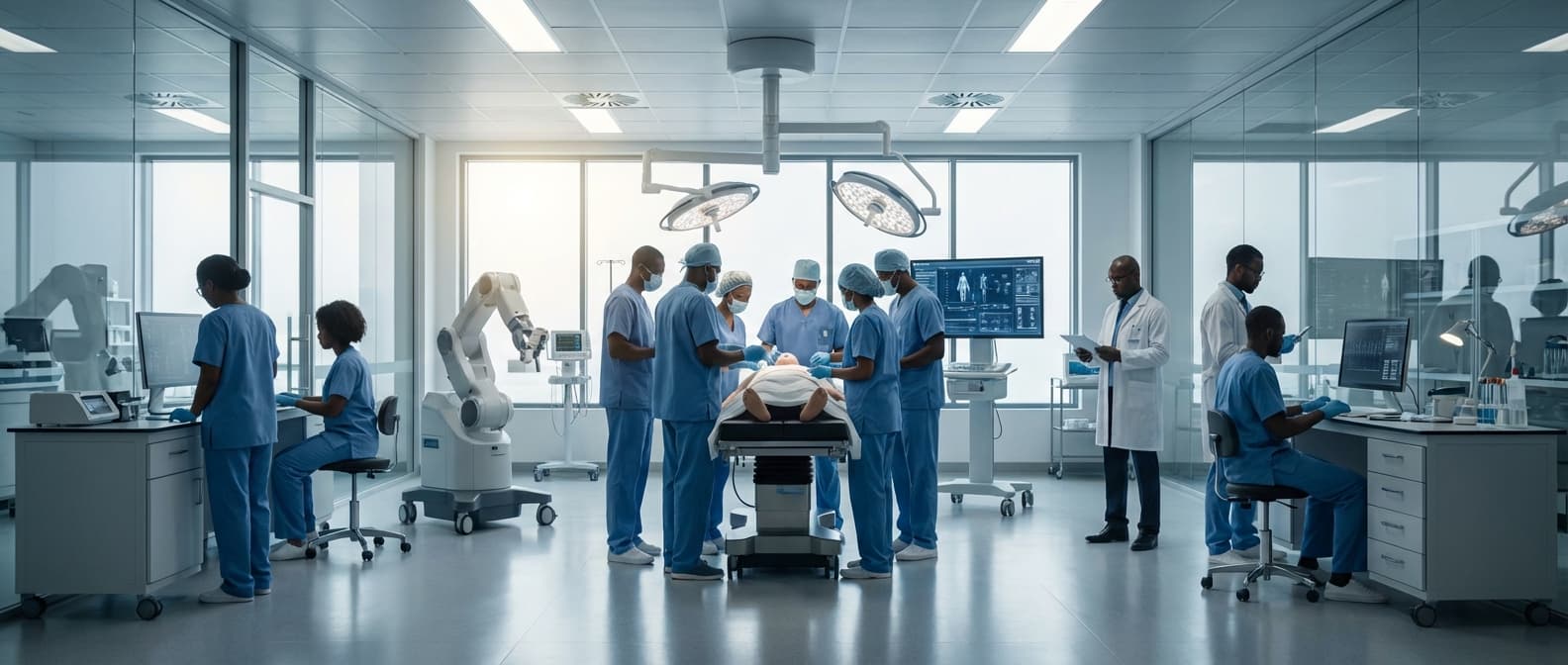
Biomedical Staffing Augmentation in Gambia
Engineering Excellence & Technical Support
Onsite biomedical engineers and PACS administrators High-standard technical execution following OEM protocols and local regulatory frameworks.
Bridging the Healthcare Gap
Our platform provides rapid deployment of highly skilled and vetted biomedical professionals to underserved regions in The Gambia, ensuring critical healthcare facilities remain operational and accessible.
Specialized Expertise On-Demand
We offer access to a diverse pool of specialists in areas like diagnostic imaging, laboratory sciences, and medical equipment maintenance, bolstering local capacity and improving diagnostic accuracy and patient outcomes.
Sustainable Capacity Building
Beyond staffing, we facilitate knowledge transfer and on-the-job training, empowering local biomedical staff and fostering long-term improvements in healthcare infrastructure and service delivery across The Gambia.
What Is Biomedical Staffing Augmentation In Gambia?
Biomedical Staffing Augmentation in The Gambia refers to the strategic provision of specialized, often temporary, biomedical personnel and expertise to healthcare facilities and research institutions. This service addresses critical gaps in the local workforce, enhancing diagnostic capabilities, research endeavors, and the maintenance of essential medical equipment. It encompasses a range of roles, from highly skilled medical technologists and laboratory scientists to biomedical engineers and specialized technicians. The primary objective is to bolster the capacity and efficiency of the biomedical sector, ensuring access to advanced healthcare services and contributing to public health improvements.
| Who Needs It? | Typical Use Cases |
|---|---|
| Public Hospitals and Clinics (e.g., Edward Francis Small Teaching Hospital, regional hospitals) | To supplement laboratory staff during high demand periods (e.g., disease outbreaks). To operate and maintain complex diagnostic equipment (e.g., MRI, CT scanners). To provide specialized analytical services not locally available. To cover for staff on extended leave or during recruitment periods. |
| Private Diagnostic Laboratories | To introduce new or advanced testing methodologies. To handle increased sample volumes. To ensure compliance with international quality standards. To train existing staff on new equipment or protocols. |
| Medical Research Institutions and Universities (e.g., Medical Research Council Unit The Gambia at LSHTM) | To support specific research projects requiring specialized technical skills. To operate and maintain cutting-edge research equipment. To conduct complex data analysis and interpretation. To facilitate collaboration with international research partners. |
| Government Health Ministries and Agencies | To support national health programs requiring specialized technical input. To contribute to policy development and implementation related to biomedical services. To assist in capacity building initiatives across the healthcare system. |
| Non-Governmental Organizations (NGOs) focused on health | To provide technical support for health initiatives. To manage and maintain medical equipment deployed in remote areas. To offer specialized diagnostic services in underserved populations. |
Key Aspects of Biomedical Staffing Augmentation
- Temporary or project-based deployment of skilled biomedical professionals.
- Expertise in specific areas such as advanced diagnostics, molecular biology, or medical imaging technology.
- Support for operational continuity in understaffed or specialized departments.
- Facilitation of training and knowledge transfer to local personnel.
- Access to international best practices and novel techniques.
- Bridging workforce shortages due to retirements, emigration, or specialized skill deficits.
Who Needs Biomedical Staffing Augmentation In Gambia?
Biomedical staffing augmentation in Gambia is a critical need for healthcare facilities aiming to enhance their operational efficiency, patient care, and technological adoption. This service addresses the shortage of specialized biomedical personnel, allowing organizations to scale their technical support and maintenance capabilities without the long-term commitment of permanent hires. It's particularly beneficial during peak periods, project implementations, or when existing staff require specialized training or are on leave.
| Target Customer/Department | Specific Needs Addressed by Augmentation | Key Benefits |
|---|---|---|
| Public Hospitals & Clinics | Addressing critical shortages of biomedical engineers and technicians; ensuring continuous maintenance of essential medical equipment; supporting new technology deployments; covering staff shortages due to leave or turnover. | Improved equipment uptime and reliability; enhanced patient safety; reduced maintenance backlogs; efficient utilization of existing infrastructure. |
| Private Hospitals & Specialized Clinics | Scaling technical support for advanced medical devices; rapid response to equipment malfunctions; specialized skills for new diagnostic or therapeutic technologies; project-based support for facility upgrades or expansions. | Minimized disruption to patient services; faster resolution of technical issues; access to specialized expertise without permanent overhead; competitive service delivery. |
| Diagnostic Laboratories | Ensuring the calibration and maintenance of laboratory analyzers and equipment; support for the integration of new lab technologies; on-demand technical assistance for complex diagnostic platforms. | Accurate and reliable diagnostic results; reduced downtime of critical lab equipment; efficient workflow in laboratory operations. |
| Medical Research Institutions | Maintenance and troubleshooting of specialized research equipment; support for the setup and validation of novel research apparatus; technical assistance during research projects with tight deadlines. | Uninterrupted research activities; accurate data collection; efficient use of research grants; access to specialized technical knowledge. |
| Government Health Ministries/Agencies | Supporting national health initiatives and programs requiring widespread equipment maintenance; managing technical aspects of public health campaigns; capacity building for regional health facilities. | Improved public health infrastructure; equitable access to functioning medical technology; effective implementation of health policies. |
| NGOs with Healthcare Programs | Providing technical support for equipment in remote or underserved areas; ensuring the sustainability of donated medical devices; training local staff on equipment operation and basic maintenance. | Effective delivery of healthcare services in challenging environments; maximizing the impact of humanitarian aid; building local capacity for long-term sustainability. |
| Medical Equipment Suppliers/Service Providers | Augmenting their own in-house technical teams during high demand periods; fulfilling service contracts for clients; providing specialized installation and commissioning services. | Meeting service level agreements (SLAs); expanding service reach; improving customer satisfaction; optimizing resource allocation. |
Who Needs Biomedical Staffing Augmentation in Gambia?
- Hospitals and Clinics (Public and Private)
- Diagnostic Laboratories
- Medical Research Institutions
- Government Health Ministries/Agencies
- Non-Governmental Organizations (NGOs) with healthcare programs
- Medical Equipment Suppliers and Service Providers
Biomedical Staffing Augmentation Process In Gambia
The Biomedical Staffing Augmentation Process in Gambia outlines the systematic steps involved in addressing temporary or specialized staffing needs for biomedical personnel within healthcare facilities. This process ensures that critical roles are filled efficiently, maintaining the quality of biomedical services. The workflow begins with an inquiry from a healthcare facility facing a staffing gap, progresses through assessment and recruitment, and culminates in the successful placement and support of augmented staff.
| Phase | Description | Key Activities | Responsible Parties |
|---|---|---|---|
| The process initiates when a healthcare facility identifies a need for augmented biomedical staff. | Formal request submission, detailed specification of required skills, experience, duration, and location. Initial consultation to understand the scope and urgency. | Healthcare Facility, Ministry of Health (MoH) - Staffing Unit |
| Identifying and screening potential candidates who meet the specified requirements. | Reviewing existing databases, advertising vacancies, conducting initial screenings, verifying qualifications, and checking references. | MoH - Staffing Unit, Recruitment Agency (if applicable) |
| Choosing the most suitable candidate(s) and formalizing their engagement. | Interviews (if necessary), final candidate selection, negotiation of terms and conditions (salary, benefits, contract duration), and extending a formal offer of employment/contract. | Healthcare Facility, MoH - Staffing Unit, Selected Candidate |
| Integrating the augmented staff into the facility and commencing their duties. | Pre-deployment orientation (facility policies, procedures, safety protocols), provision of necessary equipment and access, official start date, and introduction to the team. | Healthcare Facility, MoH - Staffing Unit |
| Ensuring the augmented staff are performing effectively and addressing any challenges. | Regular check-ins with the augmented staff and their supervisors, performance evaluations, providing mentorship and training opportunities, and addressing any logistical or operational issues. | Healthcare Facility - Supervisors, MoH - Staffing Unit |
| Concluding the augmentation period and gathering feedback for process improvement. | Formal completion of the assignment, final performance review, collection of feedback from the facility and the augmented staff, and archiving of records. | Healthcare Facility, MoH - Staffing Unit, Augmented Staff |
Biomedical Staffing Augmentation Workflow in Gambia
- Inquiry & Needs Assessment
- Candidate Sourcing & Vetting
- Selection & Offer
- Onboarding & Deployment
- Ongoing Support & Performance Monitoring
- Project Closure & Feedback
Biomedical Staffing Augmentation Cost In Gambia
Biomedical staffing augmentation in Gambia involves bringing in specialized biomedical professionals, either on a temporary or project basis, to fill critical skill gaps within healthcare facilities. This can include biomedical engineers, technicians, IT specialists for medical equipment, and even training personnel. The cost is influenced by several key factors, including the specialization and experience level of the staff, the duration of the engagement, the scope of work, and the logistical considerations of deploying personnel, especially from outside the immediate region. The local Gambian currency is the Gambian Dalasi (GMD). Pricing ranges can be highly variable, but general estimates can be provided based on common service models.
| Staff Category | Typical Engagement Length | Estimated Daily Rate (GMD) | Estimated Monthly Rate (GMD) | Notes |
|---|---|---|---|---|
| Biomedical Technician (General) | 1-3 Months | 2,000 - 4,000 | 40,000 - 80,000 | Covers routine maintenance, basic repairs, and preventive checks. |
| Senior Biomedical Technician / Specialist | 1-6 Months | 3,500 - 6,000 | 70,000 - 120,000 | For specific equipment types (e.g., lab equipment, basic imaging) or complex diagnostics. |
| Biomedical Engineer | 3-12 Months | 5,000 - 10,000+ | 100,000 - 200,000+ | Involves more complex problem-solving, system integration, project management, and potentially design input. |
| IT Specialist (Medical Equipment Focus) | 1-4 Months | 4,000 - 8,000 | 80,000 - 160,000 | Focus on network integration, software updates, and cybersecurity for medical devices. |
| Training & Development Specialist | Project-based (1-2 Weeks) | N/A (Project Fee) | N/A (Project Fee) | Costs are often bundled with the services provided or charged as a separate project fee based on curriculum and duration. |
Key Pricing Factors for Biomedical Staffing Augmentation in Gambia
- Specialization and Experience: Highly specialized roles (e.g., advanced imaging equipment technicians, clinical engineers) command higher rates than general biomedical technicians. Years of experience and relevant certifications significantly impact pricing.
- Duration of Engagement: Short-term projects or emergency cover will typically have higher hourly or daily rates than longer-term contracts. Volume discounts might be applicable for extended periods.
- Scope of Work: The complexity and extent of the tasks assigned (e.g., routine maintenance, complex repairs, installation, training, calibration) will directly influence the cost. A comprehensive service package will be more expensive than a single task.
- Logistics and Travel: If staff need to be brought in from outside of the major urban centers or internationally, costs for travel, accommodation, per diem, and visa processing (if applicable) will be added.
- Provider Type: Whether engaging directly with independent contractors, local biomedical service companies, or international staffing agencies will result in different pricing structures and overheads.
- Urgency: Emergency call-outs or rapid deployment requests often incur premium charges.
- Training and Knowledge Transfer: If the augmentation includes training local staff, this component will be factored into the overall cost.
Affordable Biomedical Staffing Augmentation Options
Securing qualified biomedical staff can be a significant challenge for healthcare organizations, especially within budget constraints. Affordable biomedical staffing augmentation offers a strategic solution. This involves supplementing your existing team with specialized professionals on a flexible basis, rather than committing to full-time hires. Value bundles and targeted cost-saving strategies are key to maximizing the benefits of this approach, ensuring you get the expertise you need without overspending.
| Cost-Saving Strategy | Description | Benefit |
|---|---|---|
| Flexible Engagement Models | Utilizing contract, temporary, or part-time staff instead of permanent hires. | Reduces costs associated with benefits, payroll taxes, and long-term overhead. |
| Outsourcing Non-Core Functions | Delegating tasks like routine maintenance, calibration, or inventory management to external specialists. | Allows in-house staff to focus on critical patient care and complex issues, improving efficiency. |
| Shared Services & Consortiums | Collaborating with other organizations to share biomedical engineering resources and services. | Distributes costs across multiple entities, leading to significant savings on equipment, software, and specialized personnel. |
| Skill-Based Augmentation | Hiring specialists only for specific, high-demand skills that your in-house team may lack or that are needed for short periods. | Avoids the expense of training or hiring full-time staff for temporary or niche requirements. |
| Telehealth & Remote Support Integration | Implementing remote monitoring and troubleshooting solutions to minimize on-site visits. | Dramatically reduces travel costs, technician time, and equipment downtime. |
| Strategic Vendor Partnerships | Negotiating comprehensive service agreements with vendors that include staffing augmentation or training components. | Leverages vendor expertise and can offer bundled pricing or discounts. |
Key Value Bundles for Affordable Biomedical Staffing Augmentation
- Project-Based Support Bundles: Tailored packages for specific projects like equipment installations, software upgrades, or new department setups. This includes the necessary technical expertise for the project duration, reducing the need for long-term commitment.
- On-Demand Technical Expertise Bundles: Access to a pool of specialists for troubleshooting, repairs, or specialized consultations as needed. This often involves pre-negotiated hourly rates or retainer agreements for guaranteed response times.
- Preventive Maintenance & Compliance Bundles: Combines routine maintenance services with regulatory compliance checks performed by experienced biomedical technicians. This proactive approach minimizes downtime and avoids costly fines.
- Training & Development Augmentation Bundles: Focused support for your in-house team, providing specialized training on new equipment or technologies, or mentoring junior staff. This enhances internal capabilities and reduces reliance on external support long-term.
- Remote Support & Monitoring Bundles: Leveraging technology to provide remote diagnostics, troubleshooting, and even some repair interventions. This significantly reduces on-site visit costs and response times for common issues.
Verified Providers In Gambia
In Gambia's evolving healthcare landscape, identifying trusted and credentialed providers is paramount for ensuring quality care. Franance Health stands out as a beacon of reliability, consistently demonstrating a commitment to excellence through its rigorous credentialing processes and dedication to patient well-being. This document outlines Franance Health's credentials and the compelling reasons why they represent the best choice for healthcare services in Gambia.
| Credential/Attribute | Franance Health's Commitment | Benefit to Patients |
|---|---|---|
| Accreditation & Affiliation | Adherence to national and international health standards. | Assurance of quality, safety, and recognized best practices. |
| Medical Staff Qualification | Rigorous vetting, recognized qualifications, and continuous development. | Access to experienced and up-to-date medical expertise. |
| Quality Assurance | Regular audits, patient feedback, and outcome monitoring. | Enhanced patient safety and continuously improving care quality. |
| Technology & Facilities | Investment in modern equipment and infrastructure. | Accurate diagnostics, effective treatments, and improved comfort. |
| Patient Focus | Compassionate care, clear communication, and patient involvement. | Personalized, respectful, and empowering healthcare experience. |
| Ethical Operations | Commitment to transparency, integrity, and privacy. | Trustworthy and reliable healthcare services. |
| Community Investment | Active participation in health initiatives and social responsibility. | Contribution to a healthier society and accessible care for all. |
Franance Health Credentials and Why They Represent the Best Choice:
- Accreditation and Affiliation: Franance Health partners with and is accredited by leading national and international health organizations. This signifies adherence to strict standards of quality, safety, and operational efficiency. Such affiliations ensure that their practices are aligned with global best practices in healthcare delivery.
- Qualified Medical Professionals: The backbone of any reputable healthcare provider is its medical staff. Franance Health meticulously vets its healthcare professionals, ensuring they possess recognized degrees, certifications, and extensive experience in their respective specialties. Continuous professional development is a core tenet, guaranteeing that staff remain at the forefront of medical advancements.
- Robust Quality Assurance Programs: Franance Health implements comprehensive quality assurance and control programs. This includes regular audits, patient feedback mechanisms, and performance monitoring of clinical outcomes. These programs are designed to identify and address any potential areas for improvement proactively, thereby enhancing patient safety and satisfaction.
- State-of-the-Art Facilities and Technology: Investment in modern medical equipment and technology is a hallmark of Franance Health. This enables accurate diagnostics, effective treatments, and a more comfortable patient experience. Their commitment to technological advancement ensures that patients receive the highest standard of care available.
- Patient-Centric Approach: Beyond technical expertise, Franance Health prioritizes a patient-centric approach. This means fostering a compassionate and respectful environment, clear communication, and active patient involvement in decision-making. Their focus is on understanding individual needs and delivering personalized care plans.
- Ethical Practices and Transparency: Franance Health operates with the highest ethical standards, emphasizing transparency in all its dealings. This includes clear billing practices, informed consent, and a commitment to patient privacy. Patients can trust that their care is delivered with integrity and respect.
- Community Engagement and Social Responsibility: Franance Health is deeply invested in the Gambian community. They actively participate in health awareness campaigns, provide access to healthcare for underserved populations, and contribute to the overall health and well-being of the nation. This commitment underscores their role as a responsible and integral part of the community.
Scope Of Work For Biomedical Staffing Augmentation
This Scope of Work (SOW) outlines the requirements for augmenting existing biomedical engineering services with specialized technical staff. The objective is to provide temporary expertise in areas such as medical device maintenance, calibration, repair, installation, and lifecycle management, ensuring continued operational efficiency and compliance for the client's healthcare facilities.
| Technical Deliverable | Standard Specification | Key Performance Indicators (KPIs) | Acceptance Criteria |
|---|---|---|---|
| On-site Medical Device Maintenance & Repair | Perform routine preventive maintenance (PM), corrective maintenance (CM), and emergency repairs on assigned medical equipment. Adhere to manufacturer's service manuals, internal SOPs, and relevant industry standards (e.g., IEC 60601 series). Utilize approved parts and consumables. | Mean Time Between Failures (MTBF) for critical equipment, Percentage of PMs completed on time, Average repair turnaround time (ART). | All PMs completed within scheduled windows. CMs resolved within agreed-upon SLAs (e.g., < 4 hours for critical equipment). Successful repair documented with test results verifying functionality and safety. |
| Medical Device Calibration | Conduct periodic calibration of medical equipment using traceable and certified calibration standards. Document all calibration procedures and results according to regulatory and client requirements. | Calibration accuracy within manufacturer specifications, Percentage of calibrations completed on schedule, Number of calibration failures. | Calibration results demonstrate equipment is within acceptable tolerances. All calibration certificates issued promptly and accurately reflect measured values and uncertainty. |
| New Medical Device Installation & Commissioning | Unpack, install, configure, and test new medical devices according to manufacturer instructions and client site requirements. Perform full system integration and user training where applicable. | Successful installation and functional testing rate, Time to commission new equipment, Number of post-installation issues. | All installed devices pass functional, safety, and performance tests. Commissioning completed within the agreed project timeline. No critical issues reported post-handover. |
| Medical Equipment Inventory Management Support | Assist in maintaining accurate and up-to-date electronic inventory records, including asset tagging, location tracking, and maintenance history. Support audits and lifecycle planning. | Accuracy of inventory data, Timeliness of record updates, Completeness of asset information. | Inventory records accurately reflect the current state of all managed equipment. All updates processed within 24 hours of equipment status change. All critical data fields populated for each asset. |
| Technical Documentation & Reporting | Generate detailed service reports, work orders, PM reports, calibration certificates, and other required documentation in a timely and accurate manner. Maintain electronic and/or physical records as specified. | Completeness and accuracy of reports, Turnaround time for report generation, Compliance with documentation standards. | All reports are complete, accurate, and submitted within the specified timeframe (e.g., within 48 hours of service completion). Documentation adheres to client's established templates and quality standards. |
| Regulatory Compliance Assistance | Provide technical input and support to ensure medical equipment complies with relevant national and international regulations (e.g., FDA, CE, local health authorities) and accreditation standards (e.g., Joint Commission). | Number of compliance observations related to equipment, Audit readiness of documentation. | Zero critical non-compliance findings during regulatory or accreditation audits related to biomedical equipment. All required safety and performance checks are documented. |
Key Objectives of Biomedical Staffing Augmentation
- Enhance the capacity of the internal biomedical engineering department to manage increased workloads or specialized projects.
- Provide access to niche technical skills and expertise not readily available in-house.
- Ensure timely and effective maintenance, repair, and calibration of medical equipment to minimize downtime.
- Support the installation and commissioning of new medical devices and systems.
- Facilitate compliance with regulatory standards and accreditation requirements related to medical equipment.
- Optimize the lifecycle management of medical assets, including planning for upgrades, replacements, and decommissioning.
- Reduce the risk of operational disruptions due to equipment malfunction or lack of specialized technical support.
Service Level Agreement For Biomedical Staffing Augmentation
This Service Level Agreement (SLA) outlines the response times and uptime guarantees for biomedical staffing augmentation services provided by [Your Company Name] to [Client Company Name]. This SLA is an addendum to the Master Service Agreement (MSA) dated [Date of MSA].
| Service Component | Service Level Objective (SLO) | Measurement Metric | Reporting Frequency |
|---|---|---|---|
| Critical Staffing Request Response | Acknowledge request within 1 hour; propose initial candidate(s) within 8 business hours. | Timestamp of request acknowledgment and candidate proposal. | Weekly |
| Non-Critical Staffing Request Response | Acknowledge request within 4 business hours; propose initial candidate(s) within 24 business hours. | Timestamp of request acknowledgment and candidate proposal. | Weekly |
| Staffing Augmentation Platform Uptime | 99.8% uptime during standard business hours (Monday-Friday, 8:00 AM - 6:00 PM Client Time Zone). | System logs and monitoring tools. | Monthly |
| Initial Candidate Screening Turnaround | Complete initial screening (resume review and basic qualification) within 48 business hours of receiving candidate profile. | Timestamp of screening completion. | Weekly |
| Support Personnel Availability | Provide access to a dedicated account manager or support contact during business hours. | Availability of designated support personnel. | Ongoing |
Key Performance Indicators (KPIs)
- Response times for critical and non-critical staffing requests.
- Uptime guarantees for the staffing augmentation platform/portal.
- Guaranteed turnaround time for initial candidate screening.
- Availability of support personnel.
Frequently Asked Questions

Ready when you are
Let's scope your Biomedical Staffing Augmentation in Gambia project in Gambia.

Scaling healthcare logistics and technical systems across the entire continent.