
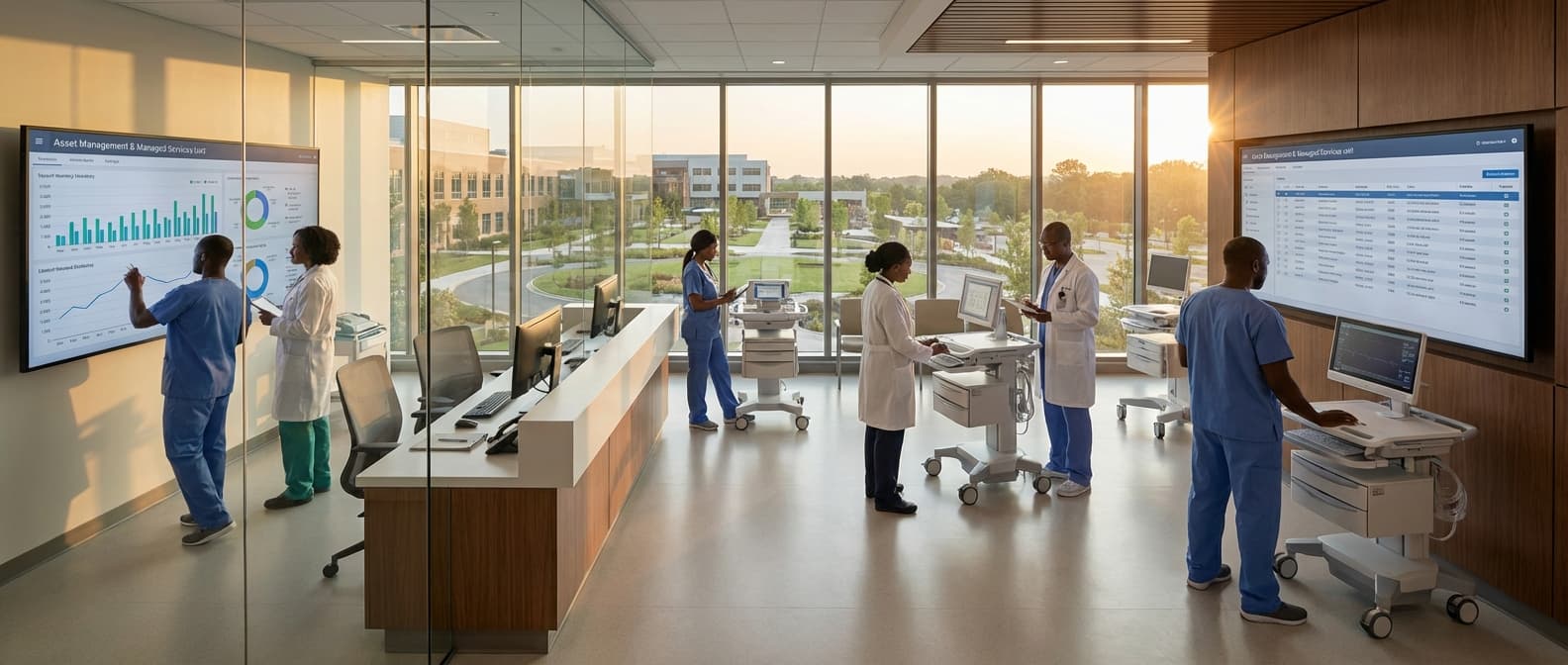
Maintenance KPI Reporting Service (Uptime/MTBF/MTTR) in Gambia
Engineering Excellence & Technical Support
Maintenance KPI Reporting Service (Uptime/MTBF/MTTR) High-standard technical execution following OEM protocols and local regulatory frameworks.
Enhanced Uptime Visibility
Leverage our service to gain real-time insights into asset availability and operational uptime across your Gambian facilities. Identify bottlenecks and proactively address issues to maximize production continuity and minimize costly disruptions.
Optimized Mean Time Between Failures (MTBF)
Track and analyze your MTBF trends with our robust reporting. Pinpoint recurring failure patterns and equip your Gambian maintenance teams with the data-driven strategies needed to improve equipment reliability and extend operational lifespans.
Streamlined Mean Time To Repair (MTTR)
Reduce downtime efficiently by monitoring and optimizing your MTTR. Our service provides clear diagnostics and performance metrics, empowering your Gambian maintenance operations to diagnose, repair, and return assets to service faster, directly impacting your bottom line.
What Is Maintenance Kpi Reporting Service (Uptime/mtbf/mttr) In Gambia?
Maintenance KPI Reporting Service (Uptime/MTBF/MTTR) in Gambia refers to a specialized service that focuses on collecting, analyzing, and reporting on key performance indicators (KPIs) related to the maintenance and operational reliability of physical assets and systems. These KPIs are crucial for understanding and improving the availability, maintainability, and overall effectiveness of infrastructure, machinery, and IT systems. The service provides actionable insights to optimize maintenance strategies, minimize downtime, and enhance operational efficiency within the Gambian economic landscape. It typically involves the implementation of data collection mechanisms, software platforms for analysis, and the generation of regular reports tailored to the specific needs of the client.
| Who Needs This Service? | Typical Use Cases in Gambia | |||||||
|---|---|---|---|---|---|---|---|---|
| Industries with Critical Infrastructure: Power generation and distribution companies, telecommunications providers, water and wastewater management authorities, and transportation networks (ports, airports). | Utilities: Monitoring the uptime of power grids and water treatment plants to ensure continuous service delivery. Analyzing MTBF of turbines or pumps to optimize maintenance schedules. Calculating MTTR for grid substations to expedite restoration after outages. | Manufacturing and Processing Plants: Ensuring high operational availability of production lines, machinery, and equipment. Optimizing preventative maintenance to reduce unplanned downtime. Analyzing failure patterns of critical machinery to improve reliability. | Telecommunications Companies: Maintaining high network availability for mobile and fixed-line services. Monitoring the uptime of cell towers and data centers. Analyzing MTBF of network equipment to proactively replace aging components. Calculating MTTR for fiber optic cable repairs. | Transportation and Logistics: Ensuring the operational readiness of fleets (ships, trucks, buses), port equipment (cranes, conveyors), and airport ground support equipment. Optimizing maintenance schedules for vehicles to minimize delivery disruptions. | Mining and Extractive Industries: Maximizing the uptime of heavy machinery, processing equipment, and conveyor systems. Analyzing MTBF of drilling rigs or crushers to schedule replacements. Reducing MTTR for equipment breakdowns in remote locations. | Hospitality and Large Facilities Management: Maintaining the reliability of HVAC systems, elevators, generators, and other critical building infrastructure in hotels, resorts, and commercial complexes. | IT and Data Centers: Ensuring high availability of servers, network infrastructure, and storage systems for businesses operating in Gambia. | Government and Public Sector Agencies: Managing the reliability of critical public infrastructure and service delivery systems. |
Key Components of a Maintenance KPI Reporting Service (Uptime/MTBF/MTTR) in Gambia:
- Data Acquisition and Integration: Establishing robust methods for collecting real-time or historical data from diverse sources such as sensors, SCADA systems, enterprise asset management (EAM) software, and manual logs.
- KPI Calculation and Analysis: Implementing algorithms and statistical methodologies to accurately calculate Uptime (Percentage of time a system is operational), Mean Time Between Failures (MTBF - average time between system failures), and Mean Time To Repair (MTTR - average time taken to repair a failed system).
- Reporting and Visualization: Generating comprehensive reports, dashboards, and graphical representations that clearly illustrate KPI trends, identify problem areas, and highlight areas for improvement. This includes historical performance, predictive insights, and comparative analysis.
- Root Cause Analysis Support: Facilitating the identification of underlying causes of failures and inefficiencies through detailed analysis of maintenance records and operational data.
- Performance Benchmarking: Comparing performance against industry standards, historical data, or other similar assets to identify areas of underperformance.
- Recommendations and Strategic Guidance: Providing actionable recommendations for maintenance scheduling, spare parts management, technician training, and asset replacement strategies based on KPI insights.
- Technology Platform Utilization: Employing specialized software platforms for data aggregation, analysis, and reporting, often cloud-based for scalability and accessibility.
Who Needs Maintenance Kpi Reporting Service (Uptime/mtbf/mttr) In Gambia?
Reliable maintenance is critical for businesses in Gambia to ensure operational efficiency, minimize downtime, and maximize profitability. A comprehensive Maintenance KPI Reporting Service, focusing on Uptime, Mean Time Between Failures (MTBF), and Mean Time To Repair (MTTR), is essential for organizations seeking to optimize their asset management and maintenance strategies. This service helps identify recurring issues, predict potential failures, and streamline repair processes, leading to significant cost savings and improved productivity.
| Target Customer Segment | Key Departments Benefiting | Primary Needs Addressed |
|---|---|---|
| Manufacturing & Industrial | Operations, Maintenance, Production Planning, Quality Control | Maximizing machine uptime, reducing production stoppages, improving OEE, optimizing spare parts inventory. |
| Energy & Utilities | Plant Operations, Maintenance, Engineering, Grid Management | Ensuring continuous power/water supply, minimizing service interruptions, predictive maintenance of critical infrastructure, compliance with regulatory standards. |
| Mining & Extractive | Mine Operations, Fleet Maintenance, Equipment Management, Production | Reducing downtime of heavy machinery, optimizing repair cycles, ensuring safety, maximizing extraction efficiency. |
| Transportation & Logistics | Fleet Management, Operations, Maintenance, Safety & Compliance | Improving vehicle/vessel/aircraft availability, minimizing transit delays, reducing operational costs, ensuring asset longevity. |
| Telecommunications | Network Operations, Field Maintenance, Engineering | Ensuring network availability, minimizing service outages, optimizing technician response times, proactive fault detection. |
| Hospitality & Tourism | Facilities Management, Engineering, Operations | Ensuring guest comfort (e.g., HVAC, elevators), maintaining operational readiness of services, reducing guest complaints due to equipment failure. |
| Healthcare | Facilities Management, Biomedical Engineering, Operations | Ensuring critical medical equipment reliability, minimizing patient care disruptions, optimizing maintenance schedules for life-saving devices. |
| Construction & Infrastructure | Equipment Management, Project Management, Maintenance | Maximizing the availability of construction machinery, minimizing project delays due to equipment breakdowns, optimizing repair costs. |
| Agriculture & Food Processing | Farm Operations, Processing Plant Maintenance, Production | Ensuring continuous operation of processing equipment, minimizing spoilage due to downtime, optimizing maintenance of agricultural machinery. |
Target Customers in Gambia Requiring Maintenance KPI Reporting Service
- Manufacturing and Industrial Facilities
- Energy and Utilities Companies (Power Generation, Water Treatment)
- Mining and Extractive Industries
- Transportation and Logistics Providers (Aviation, Shipping, Road Freight)
- Telecommunications Infrastructure Operators
- Hospitality and Tourism Sector (Large Hotels, Resorts)
- Healthcare Facilities (Hospitals, Clinics)
- Construction and Infrastructure Development Companies
- Agricultural and Food Processing Operations
Maintenance Kpi Reporting Service (Uptime/mtbf/mttr) Process In Gambia
This document outlines the workflow for the Maintenance KPI Reporting Service (Uptime/MTBF/MTTR) in Gambia, detailing the process from initial inquiry to the final delivery of reports. This service aims to provide clients with critical insights into their asset maintenance performance, enabling informed decision-making and operational efficiency improvements. The Key Performance Indicators (KPIs) covered include Uptime (percentage of time an asset is operational), Mean Time Between Failures (MTBF - average time an asset operates before failing), and Mean Time To Repair (MTTR - average time it takes to repair a failed asset).
| Stage | Description | Key Activities | Responsible Party | Deliverables/Outcomes | Key Considerations/Notes |
|---|---|---|---|---|---|
| Initial contact and understanding of client's needs and existing systems. |
| Sales/Business Development Team, Client Representative | Signed Service Agreement, Defined Scope of Work, Agreed-upon KPIs and reporting frequency | Clear communication is crucial to set realistic expectations. Understanding the client's current data management practices is vital. |
| Gathering and consolidating relevant maintenance and operational data from the client's systems. |
| Technical Team, Client IT/Operations Team | Cleaned and integrated dataset, Access to relevant data sources | Data security and privacy are paramount. Ensuring data quality upfront saves significant effort later. |
| Processing the integrated data to calculate the defined maintenance KPIs. |
| Data Analysts, Technical Team | Calculated KPI values, Identified trends and insights | Understanding the client's operational context helps in interpreting the data and KPI values accurately. |
| Creating comprehensive reports that visualize and present the calculated KPIs and insights. |
| Reporting Specialists, Data Analysts | Draft Maintenance KPI Report | Reports should be clear, concise, and actionable. Customization to client preferences enhances usability. |
| Presenting the generated reports to the client and facilitating a review process. |
| Account Manager, Reporting Specialists, Client Representative | Final Maintenance KPI Report, Client understanding of findings | Open communication and willingness to explain the data are key to client satisfaction. Timely delivery is important. |
| Incorporating client feedback to refine the service and reporting process. |
| Account Manager, Technical Team, Client Representative | Revised reporting process, Improved report quality, Enhanced client satisfaction | This stage is crucial for building long-term partnerships and ensuring the service remains valuable to the client. |
Workflow Stages for Maintenance KPI Reporting Service
- Inquiry & Scoping
- Data Collection & Integration
- Data Analysis & KPI Calculation
- Report Generation
- Report Delivery & Review
- Feedback & Continuous Improvement
Maintenance Kpi Reporting Service (Uptime/mtbf/mttr) Cost In Gambia
Estimating the precise cost of a Maintenance KPI Reporting Service (focusing on Uptime, Mean Time Between Failures (MTBF), and Mean Time To Repair (MTTR)) in The Gambia requires understanding several influencing factors. These services are crucial for optimizing maintenance operations, reducing downtime, and improving overall equipment effectiveness. The pricing can vary significantly based on the complexity of the reporting, the scope of assets covered, the level of customization required, and the provider's expertise and overhead. Below, we break down the key pricing factors and provide estimated cost ranges in Gambian Dalasi (GMD).
| Service Component | Estimated Cost Range (GMD) - Low | Estimated Cost Range (GMD) - High | Notes |
|---|---|---|---|
| Basic Monthly Reporting (Standard Templates, Limited Assets) | 1,500 | 5,000 | Covers essential Uptime, MTBF, and MTTR metrics with standard reports for a small number of assets. |
| Intermediate Monthly Reporting (Customizable Templates, Moderate Assets) | 4,000 | 12,000 | Includes more detailed analysis, customizable report formats, and reporting for a medium-sized asset fleet. |
| Advanced Monthly Reporting (In-depth Analysis, Full Asset Fleet, Predictive Insights) | 10,000 | 30,000+ | Comprehensive reporting with advanced analytics, predictive maintenance indicators, and full asset coverage. May include dashboard customization. |
| Initial Setup and Integration Fee | 2,000 | 15,000 | One-time fee for setting up data collection, configuring systems, and initial integration. Varies significantly based on complexity. |
| Data Analysis and Consulting (Per Hour) | 100 | 350 | For ad-hoc analysis, problem-solving, or expert consultations beyond standard reporting. |
Key Pricing Factors for Maintenance KPI Reporting Services in The Gambia:
- Scope of Assets: The number and type of assets being monitored will directly impact the effort required for data collection, analysis, and reporting. Larger and more diverse asset fleets will generally incur higher costs.
- Data Collection Method: Are you using existing systems (e.g., CMMS, SCADA) that can be integrated, or will the service provider need to implement new data logging mechanisms? Manual data entry will be more labor-intensive and costly.
- Reporting Frequency and Detail: How often are reports generated (daily, weekly, monthly)? What level of detail is required? Basic summaries will be cheaper than in-depth, multi-dimensional analyses with predictive insights.
- Customization and Integration: The need for custom dashboards, specific report formats, or integration with other business systems (like ERP) will add to the cost.
- Provider Expertise and Reputation: Established providers with proven track records and specialized expertise may command higher fees.
- Software and Technology: If the service relies on proprietary software or advanced analytical tools, this cost will be factored into the pricing.
- On-site vs. Remote Services: While most reporting services are remote, any on-site consultations or setup requirements will increase costs.
- Support Levels: The availability and responsiveness of customer support can influence pricing.
- Contract Duration: Longer-term contracts often come with discounted rates compared to short-term engagements.
- Data Volume and Complexity: The sheer volume of data generated by assets and the complexity of analyzing it (e.g., sensor data, historical performance) will influence processing costs.
Affordable Maintenance Kpi Reporting Service (Uptime/mtbf/mttr) Options
Our Affordable Maintenance KPI Reporting Service provides essential visibility into your operational performance, focusing on key metrics like Uptime, Mean Time Between Failures (MTBF), and Mean Time To Repair (MTTR). Understanding these metrics is crucial for proactive maintenance, minimizing downtime, and optimizing resource allocation. We offer flexible service options designed to fit various budgets and organizational needs, ensuring you gain valuable insights without breaking the bank. Our approach emphasizes delivering actionable data that empowers you to make informed decisions, reduce costs, and improve overall equipment effectiveness (OEE).
| Feature | Basic Insights Bundle | Standard Performance Bundle | Premium Optimization Bundle |
|---|---|---|---|
| Uptime Reporting (Daily/Weekly) | ✓ | ✓ | ✓ |
| MTBF Calculation & Reporting | ✓ | ✓ | ✓ |
| MTTR Calculation & Reporting | ✓ | ✓ | ✓ |
| Basic Trend Analysis | ✓ | ✓ | ✓ |
| Customizable Dashboards | ✓ | ✓ | |
| Root Cause Analysis Support | ✓ | ||
| Predictive Maintenance Insights | ✓ | ||
| Benchmarking Against Industry Standards | ✓ | ||
| Monthly Strategic Review Call | ✓ | ✓ | |
| On-Demand Support (Tiered) | Limited | Extensive |
Value Bundles for Essential KPI Reporting
- {"title":"Basic Insights Bundle","description":"Ideal for small to medium-sized businesses or those just starting with KPI tracking. This bundle provides foundational reporting on your core maintenance metrics.","price_point":"Entry-Level"}
- {"title":"Standard Performance Bundle","description":"A comprehensive option for businesses seeking a deeper understanding of their maintenance operations. Includes advanced trend analysis and customizable dashboards.","price_point":"Mid-Range"}
- {"title":"Premium Optimization Bundle","description":"For organizations committed to maximizing uptime and minimizing maintenance costs. This bundle offers predictive analytics, root cause analysis support, and strategic recommendations.","price_point":"Advanced"}
Verified Providers In Gambia
In Gambia's evolving healthcare landscape, identifying trustworthy and accredited medical professionals is paramount for ensuring quality care. Franance Health stands out as a premier organization, meticulously vetting and certifying healthcare providers to guarantee a high standard of practice. This rigorous credentialing process by Franance Health assures patients that they are engaging with competent, ethical, and skilled practitioners, making them the best choice for their healthcare needs.
| Category | Franance Health Verification Ensures: | Benefits for Patients |
|---|---|---|
| Medical Expertise | Up-to-date knowledge and skills, adherence to current medical protocols. | Accurate diagnoses and effective treatment plans. |
| Professional Ethics | Upholding patient rights, confidentiality, and informed consent. | Respectful and trustworthy patient-provider relationships. |
| Licensing and Accreditation | Valid and current professional licenses and certifications. | Legally sound and recognized medical practice. |
| Patient Safety | Adherence to stringent safety protocols and infection control measures. | Minimized risk of medical errors and adverse outcomes. |
| Specialized Care | Verification of qualifications for specific medical specialties. | Access to appropriate specialists for complex health conditions. |
Why Franance Health Credentials Matter
- Rigorous Verification Process: Franance Health employs a multi-stage verification system that scrutinizes educational qualifications, professional licenses, past performance, and adherence to ethical guidelines.
- Commitment to Quality: Their certification signifies a provider's dedication to maintaining the highest standards of patient care, safety, and medical expertise.
- Enhanced Patient Trust: By choosing a Franance Health-verified provider, patients gain confidence in the quality and reliability of the medical services they receive.
- Access to Skilled Professionals: Franance Health helps connect patients with a network of highly qualified doctors, nurses, specialists, and other healthcare professionals.
- Continuous Monitoring and Improvement: Providers under Franance Health's umbrella are subject to ongoing evaluation, ensuring they remain current with medical advancements and best practices.
Scope Of Work For Maintenance Kpi Reporting Service (Uptime/mtbf/mttr)
This Scope of Work (SOW) outlines the requirements for a Maintenance KPI Reporting Service focused on Uptime, Mean Time Between Failures (MTBF), and Mean Time To Repair (MTTR). The service will provide regular, accurate, and actionable reporting to support maintenance operations and strategic decision-making. This document details the technical deliverables, standard specifications, and expected outcomes of the service.
| Deliverable | Description | Standard Specifications | Frequency | Format | Reporting Tools/Methods |
|---|---|---|---|---|---|
| Initial KPI Baseline Report | Establishes the current state of Uptime, MTBF, and MTTR based on historical data. | Includes data validation and accuracy checks. Defines initial target values. | One-time at commencement of service. | PDF, Excel | Data import and analysis using provided historical data. Manual verification of data sources. |
| Weekly KPI Summary Report | Provides a concise overview of weekly performance for Uptime, MTBF, and MTTR. | Highlights trends, anomalies, and deviations from targets. Identifies high-impact failures. | Weekly | PDF, Interactive Dashboard (URL) | Automated data extraction and aggregation from CMMS/EAM systems. Visualization via Power BI/Tableau or similar. |
| Monthly KPI Performance Report | Detailed analysis of monthly performance, including root cause analysis for significant deviations. | Includes breakdown by asset type, critical systems, and failure modes. Forecasts future performance. | Monthly | PDF, Interactive Dashboard (URL), Presentation Deck | Advanced statistical analysis. Machine learning for trend prediction. Collaborative review with maintenance stakeholders. |
| Quarterly KPI Review Meeting | Presentation and discussion of quarterly performance, strategic insights, and recommendations for improvement. | Covers achievement of targets, identification of systemic issues, and action plan development. | Quarterly | Presentation Deck, Meeting Minutes | Facilitated by reporting provider. Involves key maintenance and operations personnel. |
| Ad-hoc Exception Reports | Generated when critical KPIs fall outside predefined thresholds or during significant operational events. | Timely notification of urgent issues. Includes immediate impact assessment and recommended actions. | As needed | Email, SMS, Real-time Dashboard Alert | Configurable alert system integrated with reporting platform. |
| Data Validation and Quality Assurance Process | Ensures the accuracy, completeness, and consistency of the data used for KPI calculation. | Includes data cleansing, outlier detection, and reconciliation with source systems. Documented data governance procedures. | Ongoing, with periodic audits | Internal documentation, Audit reports | Automated data validation scripts, Manual data checks, Regular audits of data sources and integrity. |
Key Performance Indicators (KPIs)
- Uptime: Percentage of time a system or asset is operational and available for use.
- Mean Time Between Failures (MTBF): Average time between consecutive failures of a repairable system or asset.
- Mean Time To Repair (MTTR): Average time taken to repair a system or asset after a failure.
- Availability: The proportion of time a system is in a functioning state and capable of performing its required function.
Service Level Agreement For Maintenance Kpi Reporting Service (Uptime/mtbf/mttr)
This Service Level Agreement (SLA) outlines the performance standards and response times for the Maintenance KPI Reporting Service, focusing on Uptime, Mean Time Between Failures (MTBF), and Mean Time To Repair (MTTR) metrics. This SLA applies to all services provided by [Your Company Name] to [Client Company Name] for the reporting and analysis of these critical maintenance indicators.
| Service Component | Response Time (Critical Incident) | Resolution Time (Critical Incident) | Response Time (Non-Critical Incident) | Resolution Time (Non-Critical Incident) |
|---|---|---|---|---|
| KPI Dashboard Availability | 1 Hour | 4 Business Hours | 4 Business Hours | 1 Business Day |
| Data Ingestion & Processing | 1 Hour (for critical data feeds) | 4 Business Hours (for critical data feeds) | 4 Business Hours (for non-critical data feeds) | 2 Business Days (for non-critical data feeds) |
| Report Generation (Scheduled) | N/A (Scheduled) | Within 1 business day of scheduled time | N/A (Scheduled) | Within 1 business day of scheduled time |
| Report Generation (Ad-hoc Request) | 2 Business Hours | 8 Business Hours | 8 Business Hours | 2 Business Days |
| Data Anomaly Detection Alerts | 1 Hour | 4 Business Hours | 4 Business Hours | 1 Business Day |
Key Performance Indicators (KPIs) and Guarantees
- Uptime Guarantee: The Maintenance KPI Reporting Service will be available 99.9% of the time, measured monthly.
- MTBF Reporting Accuracy: Reported Mean Time Between Failures (MTBF) will be calculated based on accurate and timely data input from the client's maintenance systems. The service itself does not guarantee MTBF but provides accurate reporting based on provided data.
- MTTR Reporting Accuracy: Reported Mean Time To Repair (MTTR) will be calculated based on accurate and timely data input from the client's maintenance systems. The service itself does not guarantee MTTR but provides accurate reporting based on provided data.
Frequently Asked Questions

Ready when you are
Let's scope your Maintenance KPI Reporting Service (Uptime/MTBF/MTTR) in Gambia project in Gambia.

Scaling healthcare logistics and technical systems across the entire continent.