
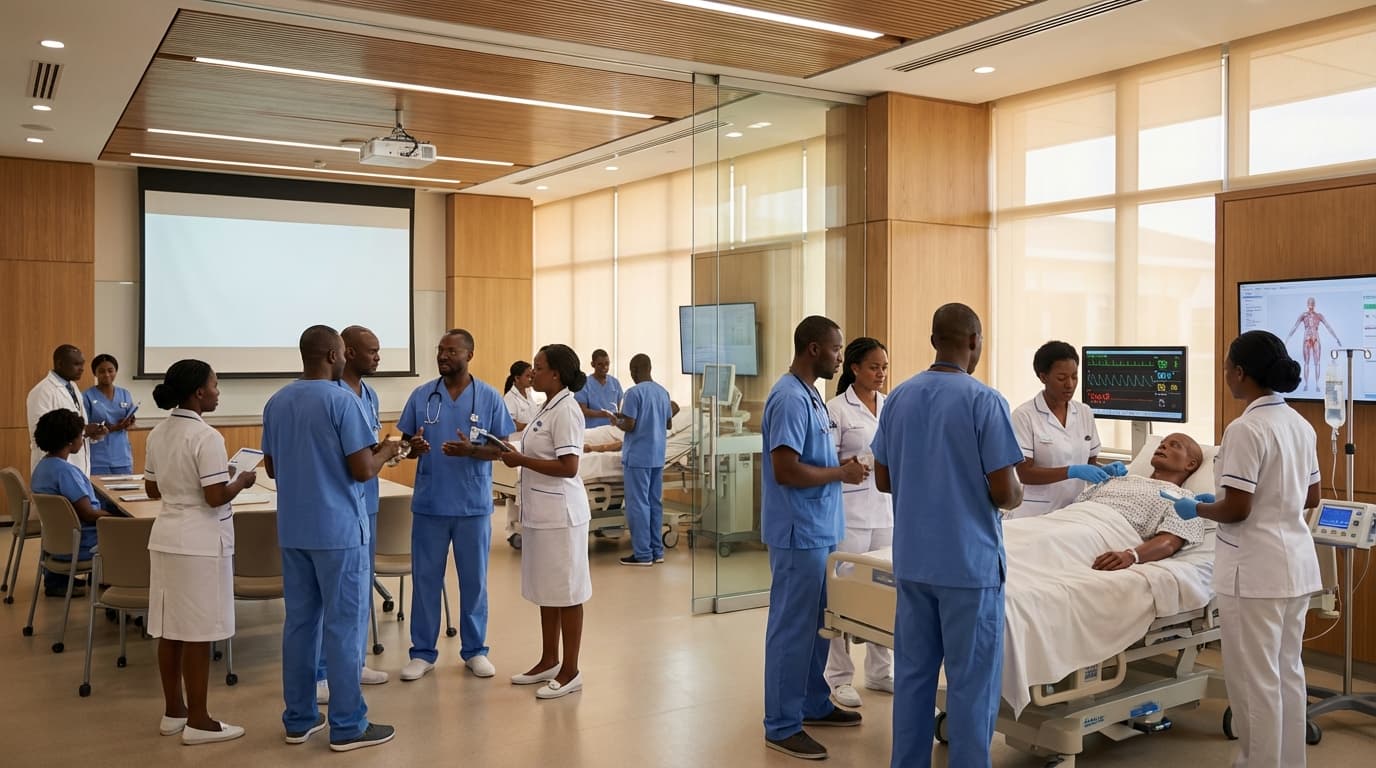
Equipment Training & Education in Gabon
Engineering Excellence & Technical Support
Comprehensive equipment training and certification programs High-standard technical execution following OEM protocols and local regulatory frameworks.
Advanced Machinery Operation Certification
Our comprehensive training program equips Gabonese professionals with the certified skills to safely and efficiently operate a wide range of heavy machinery, including excavators, bulldozers, and loaders, crucial for the nation's infrastructure development and resource extraction sectors.
Preventive Maintenance & Troubleshooting Workshops
We provide hands-on workshops focused on critical preventive maintenance techniques and rapid troubleshooting for essential industrial equipment. This training minimizes downtime, extends equipment lifespan, and enhances operational reliability across Gabon's key industries like oil & gas and mining.
Digital Twin & Remote Monitoring Skills Development
Empowering Gabon's workforce with the latest in digital transformation, this highlight focuses on training in digital twin technologies and remote equipment monitoring. This enables proactive performance analysis, predictive maintenance, and optimized asset management, driving efficiency and innovation.
What Is Equipment Training & Education In Gabon?
Equipment training and education in Gabon refers to the structured process of imparting knowledge and practical skills to individuals for the safe, efficient, and effective operation, maintenance, and troubleshooting of various types of equipment. This encompasses a broad spectrum of machinery, from industrial heavy machinery and specialized technical apparatus to common workplace tools and diagnostic equipment. The primary objective is to enhance user competency, minimize operational risks, optimize asset lifespan, and ensure compliance with regulatory standards. The training methodologies can range from classroom-based theoretical instruction, hands-on practical demonstrations, simulated environments, to on-the-job mentoring and certifications. The scope of training often includes understanding equipment specifications, operating procedures, safety protocols, preventive maintenance schedules, diagnostic techniques, and emergency response actions. Furthermore, it can extend to the application of new technologies and software related to equipment control and monitoring.
| Target Audience | Needs and Objectives | Typical Use Cases |
|---|---|---|
| Industrial Operators & Technicians | Proficient and safe operation of heavy machinery, assembly lines, and specialized industrial equipment; minimizing downtime; adherence to production targets. | Operation of excavators, cranes, drilling rigs, forklifts, conveyor systems, manufacturing machinery, chemical processing equipment. |
| Maintenance Personnel & Engineers | Effective execution of preventive and corrective maintenance; rapid troubleshooting and repair; extending equipment lifespan; reducing maintenance costs. | Servicing of generators, pumps, HVAC systems, electrical panels, hydraulic systems, IT infrastructure hardware. |
| Healthcare Professionals | Accurate and safe operation of medical diagnostic and treatment equipment; patient safety; understanding of complex functionalities. | Usage of MRI scanners, CT scanners, X-ray machines, ultrasound devices, laboratory analysers, patient monitoring systems. |
| IT & Telecommunications Staff | Installation, configuration, and maintenance of networking hardware, servers, and telecommunications infrastructure; network security. | Deployment of routers, switches, servers, fiber optic equipment, mobile base stations, satellite communication devices. |
| Agriculture Sector Workers | Efficient operation and maintenance of agricultural machinery and implements; optimizing crop yields; responsible resource management. | Operation of tractors, harvesters, irrigation systems, processing machinery for agricultural products. |
| Construction Workers | Safe operation of power tools, scaffolding, and heavy construction equipment; site safety compliance. | Use of concrete mixers, welding equipment, cutting tools, scaffolding systems, compactors. |
Key Components of Equipment Training & Education in Gabon
- Theoretical Knowledge Transfer: Understanding equipment principles, functionality, and specifications.
- Practical Skills Development: Hands-on operation, manipulation, and execution of tasks.
- Safety and Risk Management: Identification and mitigation of hazards associated with equipment use.
- Maintenance and Troubleshooting: Basic upkeep, fault diagnosis, and repair procedures.
- Regulatory Compliance: Adherence to national and international safety and operational standards.
- Performance Optimization: Techniques for maximizing efficiency and output.
- Documentation and Record-Keeping: Understanding manuals, logs, and reporting requirements.
- Emergency Procedures: Response protocols for equipment malfunctions or incidents.
Who Needs Equipment Training & Education In Gabon?
In Gabon, comprehensive equipment training and education are crucial for a wide range of industries and professionals. This ensures safe, efficient, and productive operation of machinery, leading to reduced downtime, improved quality, and adherence to international standards. The demand for such training extends across various sectors, from heavy industry to specialized technical fields.
| Target Customer Group | Key Departments/Roles | Types of Equipment Requiring Training |
|---|---|---|
| Oil & Gas | Drilling Operations, Production, Maintenance, Safety Officers | Drilling Rigs, Pumps, Valves, Offshore Cranes, Safety Shut-off Systems |
| Mining | Mine Operators, Maintenance Technicians, Supervisors | Excavators, Loaders, Haul Trucks, Crushers, Conveyor Belts, Drills |
| Construction | Site Managers, Equipment Operators, Foremen, Engineers | Cranes, Bulldozers, Graders, Excavators, Concrete Mixers, Survey Equipment |
| Manufacturing | Production Line Workers, Machine Operators, Maintenance Staff | CNC Machines, Assembly Lines, Welding Machines, Forklifts, Packaging Equipment |
| Agriculture | Farmers, Farm Managers, Agricultural Technicians | Tractors, Harvesters, Planting Machines, Irrigation Systems, Food Processing Machinery |
| Transportation & Logistics | Port Operators, Warehouse Staff, Fleet Mechanics | Port Cranes, Forklifts, Reach Stackers, Ground Support Equipment, Heavy Vehicle Maintenance Tools |
| Healthcare | Radiologists, Technicians, Biomedical Engineers | MRI/CT Scanners, X-ray Machines, Laboratory Analyzers, Ventilators, Surgical Equipment |
| Public Utilities | Plant Operators, Maintenance Engineers, Field Technicians | Turbines, Boilers, Water Treatment Filters, Electrical Switchgear, Network Repair Tools |
| SMEs | Business Owners, Employees operating specific machinery | Varies widely based on industry: e.g., specialized tools for workshops, printing presses, commercial kitchen equipment |
| Government/Public Sector | Public Works Departments, Disaster Management Units, Municipalities | Road Graders, Water Tankers, Firefighting Equipment, Specialized Rescue Tools |
Target Customers & Departments in Gabon Needing Equipment Training & Education
- {"item":"Oil and Gas Sector","description":"Given Gabon's significant reliance on oil and gas, professionals involved in exploration, extraction, refining, and transportation require extensive training on specialized drilling equipment, safety systems, pipeline maintenance machinery, and processing plant components."}
- {"item":"Mining Industry","description":"With active mining operations for minerals like manganese and iron ore, workers operating heavy machinery such as excavators, loaders, haul trucks, crushers, and conveyor systems need robust training for optimal performance and safety."}
- {"item":"Construction and Infrastructure Development","description":"As Gabon invests in infrastructure, construction workers, engineers, and site supervisors involved with cranes, earthmoving equipment, concrete mixers, power tools, and surveying instruments necessitate comprehensive training."}
- {"item":"Manufacturing and Industrial Production","description":"Factories and production facilities utilize various machinery. Employees operating assembly lines, packaging equipment, CNC machines, welding apparatus, and material handling systems benefit greatly from specialized training."}
- {"item":"Agriculture and Agribusiness","description":"Modern agricultural practices often involve mechanized farming equipment. Farmers, farm managers, and technicians involved with tractors, harvesters, irrigation systems, and processing equipment for agricultural products require training."}
- {"item":"Transportation and Logistics","description":"Personnel managing and operating port equipment (cranes, forklifts), airport ground support equipment, and mechanics involved in maintaining fleets of trucks and heavy vehicles need specialized training."}
- {"item":"Healthcare Sector","description":"While not always considered 'heavy' equipment, medical professionals and technicians operating complex diagnostic and treatment machinery (MRI scanners, CT scanners, surgical robots, laboratory analyzers) require specific training to ensure patient safety and accurate results."}
- {"item":"Public Utilities (Water, Power)","description":"Workers involved in operating and maintaining power generation equipment, water treatment plants, and distribution network machinery need training to ensure uninterrupted service and system integrity."}
- {"item":"Small and Medium Enterprises (SMEs)","description":"Many SMEs rely on a variety of equipment for their operations, from specialized tools to operational machinery. Providing training can significantly improve their efficiency and competitiveness."}
- {"item":"Government and Public Sector Agencies","description":"Agencies responsible for infrastructure maintenance, disaster response, and public works often utilize heavy equipment and specialized tools, requiring trained personnel."}
Equipment Training & Education Process In Gabon
The Equipment Training & Education Process in Gabon encompasses a structured workflow designed to ensure personnel are proficient in the safe and effective operation, maintenance, and troubleshooting of various equipment. This process typically begins with an initial inquiry and culminates in comprehensive training execution and post-training evaluation. The specific steps and documentation may vary based on the equipment type, vendor requirements, and client needs, but the general workflow remains consistent.
| Step | Description | Key Activities | Responsible Parties | Deliverables/Outcomes |
|---|---|---|---|---|
| The process begins when a client expresses interest in training for specific equipment. | Client submits an inquiry, specifies equipment, desired training scope, number of participants, and location. Training provider conducts a needs assessment to understand existing skill levels and specific learning objectives. | Client (Requesting Party), Training Provider (Sales/Technical Team) | Clear understanding of training requirements, initial scope definition. |
| Based on the needs assessment, a detailed proposal is created. | Training provider develops a comprehensive proposal outlining training modules, duration, methodology, trainer qualifications, costs, and terms. A formal quotation is provided. | Training Provider (Sales/Technical Team) | Formal training proposal and quotation. |
| Upon acceptance of the proposal, a formal contract is established. | Negotiation of terms and conditions, signing of a training agreement or contract, defining payment schedules and responsibilities. | Client (Procurement/Legal), Training Provider (Legal/Management) | Signed training contract, outlining scope, deliverables, and payment terms. |
| Training content is prepared to meet the specific needs. | Development of training manuals, presentations, practical exercises, case studies, and assessment tools. Customization of existing materials to align with the specific equipment models and operational environment in Gabon. | Training Provider (Technical Trainers/Instructional Designers) | Comprehensive and relevant training materials (digital and/or print). |
| Arrangements are made for the training delivery. | Scheduling of training dates, booking training venues (if off-site), arranging for equipment availability, travel and accommodation for trainers and participants (if applicable), visa arrangements (if required for expatriate trainers). | Training Provider (Logistics Coordinator), Client (Facilitator) | Confirmed training schedule, booked venue, arranged travel and accommodation. |
| Ensuring both trainers and participants are ready for the training. | Trainers review materials and prepare for delivery. Participants are informed of the schedule, prerequisites, and any pre-reading required. Confirmation of participant list. | Training Provider (Trainers), Client (Participant Manager) | Prepared trainers, informed participants. |
| The actual training takes place. | Delivery of theoretical sessions, practical demonstrations, hands-on exercises, simulations, and Q&A sessions. Training can be conducted on-site at the client's facility, at a dedicated training center, or remotely via virtual platforms. | Training Provider (Certified Trainers) | Effective knowledge transfer and skill development. |
| Measuring the effectiveness of the training. | Administering theoretical and practical assessments, quizzes, and performance evaluations. Gathering feedback from participants and client representatives on the training content, delivery, and relevance. | Training Provider (Trainers), Client (Participants & Supervisors) | Assessment results, participant feedback, training effectiveness evaluation report. |
| Formal recognition of successful completion. | Issuance of certificates of completion to participants who meet the required standards. Providing a comprehensive training report to the client, including attendance records, assessment results, and recommendations. | Training Provider (Training Administration) | Certificates of completion, final training report. |
| Providing ongoing assistance. | Offering post-training support, answering follow-up questions, providing refresher training if needed, and gathering long-term feedback on the impact of the training on operational performance. This can include on-site support or remote troubleshooting. | Training Provider (Technical Support/Trainers), Client (Operations Team) | Sustained operational proficiency, improved equipment performance, long-term client satisfaction. |
Equipment Training & Education Workflow in Gabon
- Inquiry & Needs Assessment
- Proposal Development & Quotation
- Contracting & Agreement
- Training Material Development/Customization
- Logistics & Scheduling
- Trainer & Participant Preparation
- Training Delivery (On-site/Remote)
- Assessment & Evaluation
- Certification & Documentation
- Post-Training Support & Follow-up
Equipment Training & Education Cost In Gabon
Securing adequate equipment training and education is paramount for businesses in Gabon to ensure operational efficiency, safety, and compliance. The cost of such training is influenced by a variety of factors, leading to a wide range of pricing in the local currency, the Central African CFA franc (XAF).
| Training Type/Scope | Estimated Price Range (XAF) | Notes |
|---|---|---|
| Basic Equipment Familiarization (e.g., hand tools, simple machinery) | 50,000 - 150,000 | Short duration, typically on-site, for a small group. |
| Intermediate Equipment Operation (e.g., forklifts, basic construction machinery) | 150,000 - 400,000 | Half-day to full-day sessions, may include practical exercises and basic safety protocols. |
| Advanced/Specialized Equipment Operation (e.g., heavy excavators, industrial cranes) | 300,000 - 1,000,000+ | Multi-day training, in-depth operational procedures, safety, and potentially certification preparation. |
| Safety Training (e.g., working at heights, hazardous materials handling) | 100,000 - 500,000+ | Often mandated by law, cost depends on complexity and potential for certification. |
| Maintenance and Repair Training (for specific equipment models) | 400,000 - 1,500,000+ | Requires highly skilled technicians, detailed manuals, and potentially specialized tools. |
| Customized Corporate Training Programs | Varies widely based on scope | Negotiated pricing per project, can include needs assessment, curriculum development, and ongoing support. |
| Certification Programs (e.g., IT, project management) | 200,000 - 800,000+ | Includes course fees, materials, and exam fees. Specialized certifications can be significantly higher. |
Key Pricing Factors for Equipment Training & Education in Gabon:
- Type of Equipment: Specialized or complex machinery (e.g., heavy construction equipment, advanced industrial machinery, sophisticated IT systems) typically commands higher training costs due to the need for expert instructors and more in-depth curriculum.
- Training Duration and Intensity: The length of the training program, whether it's a short introductory session or an extended certification course, directly impacts the overall cost. More intensive, hands-on training usually costs more.
- Instructor Expertise and Qualifications: Highly experienced and certified instructors, especially those with specialized knowledge or international credentials, will charge more for their services. This is particularly true for niche or safety-critical equipment.
- Location of Training: Training conducted at the client's site (on-site) may incur additional costs for travel, accommodation, and logistical support for the trainers. Conversely, off-site training at a dedicated facility might have facility rental fees.
- Training Customization: Tailored training programs designed to meet specific organizational needs and existing skill gaps are generally more expensive than standardized courses.
- Number of Participants: While some training providers offer per-participant rates, group discounts are often available for larger cohorts. However, very small groups might face higher per-person costs to ensure viability for the trainer.
- Training Materials and Resources: The cost of providing comprehensive training manuals, practical exercise materials, simulation software, and assessment tools will be factored into the overall price.
- Certification and Assessment: If the training leads to a recognized certification or includes formal assessments, these added components will increase the cost.
- Provider Reputation and Accreditations: Reputable training institutions or companies with strong industry accreditations may command premium pricing due to their perceived quality and value.
- Regulatory Requirements: Training mandated by Gabonese regulations or international standards for specific industries will likely have a baseline cost associated with meeting those compliance needs.
Affordable Equipment Training & Education Options
Investing in equipment training and education is crucial for maximizing productivity, ensuring safety, and extending the lifespan of your assets. Fortunately, several affordable options exist to equip your team with the necessary knowledge without breaking the bank. This section explores value bundles and practical cost-saving strategies to make professional development accessible.
| Strategy | Description | Potential Savings | Considerations |
|---|---|---|---|
| Bundled Training Packages | Purchasing multiple courses at a reduced collective price. | 15-30% off individual course costs | Ensure the bundle covers all necessary skills for your team. |
| Online & On-Demand Learning | Accessing digital courses at your own pace, reducing travel and venue costs. | 50-70% less than in-person training | Requires reliable internet access and self-discipline from learners. |
| Train-the-Trainer Programs | Developing internal expertise to deliver training, reducing reliance on external providers. | Significant long-term savings, eliminates per-person course fees | Requires investment in selecting and developing internal trainers. |
| Subscription Services | Unlimited access to a course library for a recurring fee. | Cost-effective for continuous learning and diverse needs | Assess the breadth and depth of the library to match your needs. |
| Manufacturer-Provided Training | Leveraging training offered by the equipment supplier. | Often free or heavily discounted with equipment purchase | May be limited to specific equipment or feature sets. |
| Apprenticeship Programs | Combining paid on-the-job experience with formal education. | Reduced recruitment and training costs, builds loyalty | Requires structured program development and mentorship. |
| Utilize Free Resources | Accessing free webinars, tutorials, and documentation. | No direct monetary cost | Best used as supplementary learning, not a replacement for comprehensive training. |
Value Bundles & Cost-Saving Strategies
- Bundled Training Packages: Many providers offer discounted rates when you purchase multiple training courses or certifications together. This is ideal for teams needing a comprehensive skillset.
- Online & On-Demand Learning: Digital platforms offer flexibility and often lower costs than in-person workshops. Access courses anytime, anywhere, reducing travel and accommodation expenses.
- Train-the-Trainer Programs: Empower your internal staff to become trainers. This is a significant long-term cost-saving measure, allowing for continuous in-house education.
- Subscription Services: Some platforms offer monthly or annual subscriptions that grant access to a library of courses, providing unlimited learning opportunities for a fixed fee.
- Partnerships & Group Discounts: Collaborate with other organizations to negotiate bulk discounts for training sessions. Forming a consortium can significantly reduce per-person costs.
- Government & Industry Grants: Explore available grants from government agencies or industry associations that can subsidize training costs for eligible businesses or individuals.
- Manufacturer-Provided Training: Often, equipment manufacturers offer introductory or specialized training as part of the purchase agreement or at a reduced cost for their customers.
- Apprenticeship Programs: Integrate new employees into paid apprenticeship programs that combine on-the-job training with formal education, a cost-effective way to build a skilled workforce.
- Utilize Free Resources: Leverage free webinars, tutorials, and documentation provided by manufacturers and industry experts. While not a substitute for formal training, these can supplement learning.
- Phased Training Approach: Break down complex training into smaller, manageable modules. This allows for more flexible scheduling and can spread the cost over time.
Verified Providers In Gabon
In Gabon, securing reliable and trustworthy healthcare is paramount. Franance Health has emerged as a leading organization, distinguished by its rigorous verification processes and commitment to excellence. Their verified providers represent the gold standard in healthcare services, offering peace of mind and ensuring patients receive the highest quality of care. This section delves into what makes Franance Health credentials stand out and why choosing their verified providers is the optimal decision for your health needs.
| Benefit for Patients | Why Franance Health Verified Providers Excel |
|---|---|
| Access to Highly Skilled Professionals | Franance Health's verification ensures providers possess the necessary expertise and qualifications, often exceeding standard requirements. |
| Reliable and Trustworthy Services | The stringent vetting process minimizes the risk of encountering unqualified or unethical practitioners. |
| Enhanced Patient Safety | Verified providers are committed to best practices, reducing the likelihood of medical errors and ensuring a safe healthcare environment. |
| Improved Health Outcomes | By partnering with competent and dedicated professionals, patients are more likely to receive effective treatments and achieve positive health results. |
| Peace of Mind | Knowing that your healthcare provider has been thoroughly vetted by a reputable organization like Franance Health provides invaluable reassurance. |
What Franance Health Credentials Signify
- Rigorous Vetting and Verification Process: Franance Health employs a multi-stage vetting system that goes beyond basic licensing. This includes in-depth background checks, review of professional experience, and confirmation of specialized training and certifications.
- Commitment to Quality Standards: Verified providers adhere to strict quality control measures and ethical guidelines established by Franance Health, ensuring consistent and superior patient care.
- Patient-Centric Approach: The verification process prioritizes providers who demonstrate a strong commitment to patient well-being, effective communication, and personalized treatment plans.
- Continuous Professional Development: Franance Health encourages and often mandates ongoing education and training for its verified providers, keeping them at the forefront of medical advancements.
- Transparent and Accountable Network: Franance Health maintains a transparent network, allowing patients to access information about their healthcare providers with confidence.
Scope Of Work For Equipment Training & Education
This Scope of Work (SOW) outlines the requirements for providing comprehensive equipment training and educational services. The objective is to ensure that end-users and support personnel gain the necessary knowledge and skills to operate, maintain, and troubleshoot the specified equipment effectively and safely. This SOW covers the definition of training objectives, curriculum development, delivery methods, materials, and assessment of learning. It also details the technical deliverables expected from the training provider and outlines the standard specifications for the training program and its outcomes.
| Deliverable Type | Description | Format | Responsibility | Timeline (Relative to SOW Start) |
|---|---|---|---|---|
| Training Needs Analysis Report | A detailed report identifying specific training needs based on equipment type, user roles, and existing skill levels. | PDF Document | Training Provider | Week 1 |
| Customized Training Curriculum | A structured learning program outlining modules, topics, learning activities, and assessment methods. | Editable Document (e.g., Word, Google Docs) | Training Provider | Week 2-3 |
| Training Materials (Participant) | Handouts, workbooks, presentations, user guides, and any other materials provided to trainees. | Printable PDF, Digital Copies (e.g., PPTX, DOCX) | Training Provider | Week 4 |
| Training Materials (Instructor) | Instructor guides, facilitator notes, presentation slides, and case studies. | Editable Document (e.g., PPTX, DOCX, PDF) | Training Provider | Week 4 |
| Hands-on Training Sessions | Practical, instructor-led sessions utilizing the actual equipment or a functional simulator. | On-site or Virtual Session (as specified) | Training Provider | Week 5-8 (as scheduled) |
| Competency Assessment Tools | Quizzes, practical tests, simulations, or observation checklists to evaluate trainee understanding and skill proficiency. | Digital or Printable Forms | Training Provider | Throughout and at the end of training |
| Trainee Performance Reports | Individual reports detailing each trainee's performance against learning objectives and assessment results. | PDF Document | Training Provider | Within 1 week of training completion |
| Final Training Report | A comprehensive report summarizing the training conducted, attendance, assessment outcomes, feedback received, and any recommendations. | PDF Document | Training Provider | Within 2 weeks of training completion |
| Certificates of Completion | Formal documentation recognizing successful completion of the training program. | Digital (PDF) and/or Hard Copy | Training Provider | Upon successful completion |
| Post-Training Support Plan | Outline of available support mechanisms (e.g., helpdesk, Q&A sessions, refresher courses) and their availability. | PDF Document | Training Provider | Concurrent with training delivery |
Key Training Objectives
- Ensure safe and proper operation of all specified equipment.
- Develop proficiency in routine maintenance procedures.
- Equip personnel with troubleshooting skills to identify and resolve common issues.
- Familiarize users with the equipment's features, functionalities, and limitations.
- Promote understanding of best practices for equipment longevity and performance.
- Meet all regulatory and safety compliance requirements related to equipment usage.
Service Level Agreement For Equipment Training & Education
This Service Level Agreement (SLA) outlines the terms and conditions for training and educational services provided for the Equipment listed herein. It defines the expected response times for support requests and uptime guarantees for any associated online learning platforms or resources. This SLA is effective as of the Start Date and continues until the End Date.
| Service Component | Service Level Objective (SLO) | Measurement Method |
|---|---|---|
| Technical Support (for Training Platforms) | Acknowledge Support Request within 2 business hours. | Timestamp of request submission vs. timestamp of first acknowledgement. |
| Technical Support (for Training Platforms) | Resolve critical issues affecting access to core training content within 8 business hours. | Timestamp of request submission vs. timestamp of verified resolution. |
| Technical Support (for Training Platforms) | Resolve non-critical issues or provide workarounds within 24 business hours. | Timestamp of request submission vs. timestamp of verified resolution. |
| Content-Related Inquiries (clarification on training materials) | Acknowledge inquiry within 4 business hours. | Timestamp of inquiry submission vs. timestamp of first acknowledgement. |
| Content-Related Inquiries (clarification on training materials) | Provide a substantive response or clarification within 1 business day. | Timestamp of inquiry submission vs. timestamp of verified response. |
| Online Learning Platform Uptime | 99.5% uptime during scheduled access hours. | Monitoring of platform availability via external monitoring tools. Excludes scheduled maintenance. |
Key Definitions
- Equipment: Refers to the specific hardware and software for which training and education are being provided, as detailed in Appendix A.
- Training Materials: Includes but is not limited to, user manuals, online modules, video tutorials, and any other educational content provided.
- Support Request: Any inquiry, issue, or request for assistance related to the Equipment's operation or the provided training materials, submitted through the designated support channels.
- Response Time: The maximum time allowed to acknowledge a Support Request and initiate a resolution.
- Resolution Time: The maximum time allowed to resolve a Support Request.
- Uptime Guarantee: The guaranteed percentage of time that online learning platforms or associated digital resources will be available and accessible to authorized users.
Frequently Asked Questions

Ready when you are
Let's scope your Equipment Training & Education in Gabon project in Gabon.

Scaling healthcare logistics and technical systems across the entire continent.