
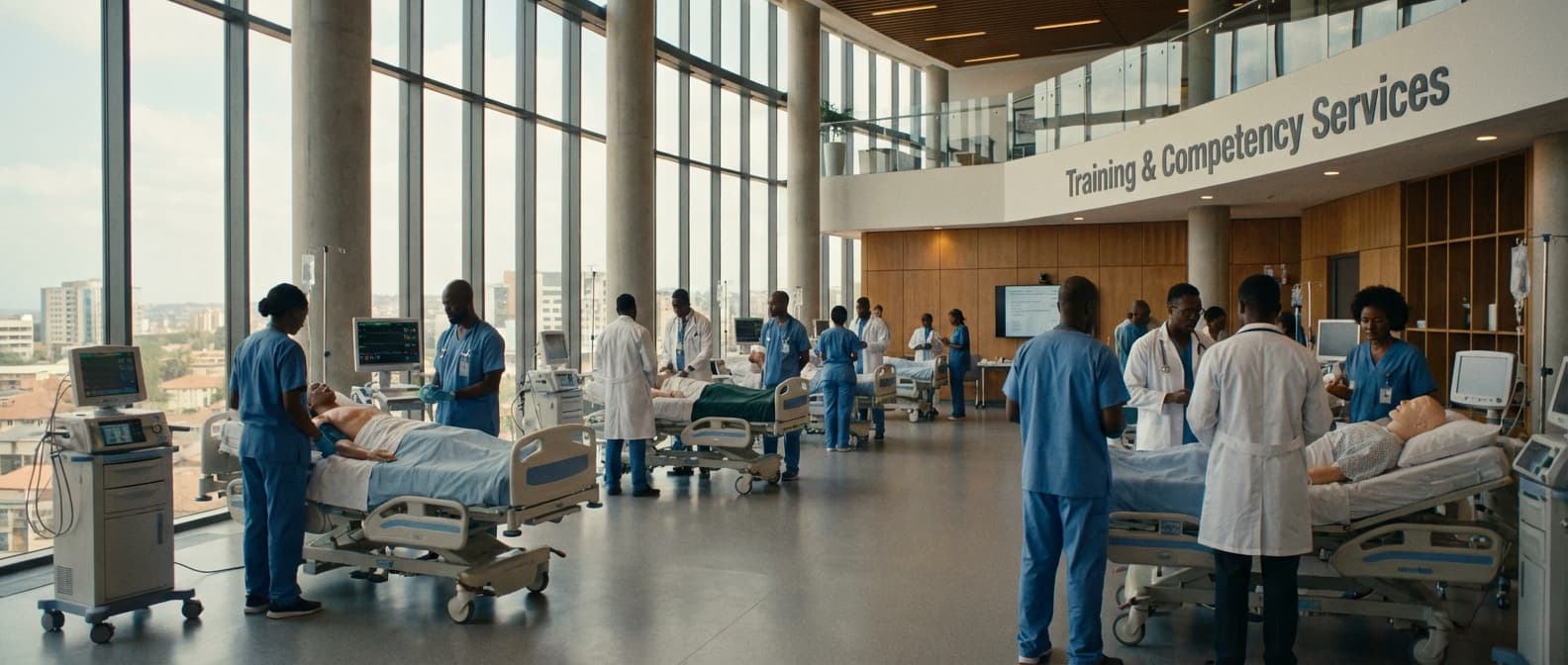
Ventilator User Training Service (Nurses) in Gabon
Engineering Excellence & Technical Support
Ventilator User Training Service (Nurses) High-standard technical execution following OEM protocols and local regulatory frameworks.
Mastering Ventilation Modes for Diverse Patient Needs
Learn to confidently select and adjust critical ventilation modes (e.g., Pressure Support, Volume Control, BiPAP) based on patient's respiratory status, vital signs, and clinical presentation. Understand the physiological impact of each mode and how to optimize settings for effective gas exchange and patient comfort in a Gabonese healthcare setting.
Optimizing Oxygenation and Ventilation Parameters
Develop advanced skills in setting and monitoring key ventilator parameters such as FiO2, PEEP, tidal volume, and respiratory rate. Learn to interpret arterial blood gas (ABG) results and adjust settings to address hypoxemia and hypercapnia effectively, considering the specific challenges and resources available in Gabon.
Recognizing and Responding to Ventilator Alarms & Complications
Gain expertise in identifying the causes of common ventilator alarms (e.g., high pressure, low tidal volume, apnea). Understand how to troubleshoot and promptly manage potential complications such as pneumothorax, ventilator-associated pneumonia (VAP), and patient-ventilator dyssynchrony, ensuring patient safety and optimal outcomes in Gabonese clinical environments.
What Is Ventilator User Training Service (Nurses) In Gabon?
Ventilator User Training Service (Nurses) in Gabon refers to specialized educational programs designed to equip registered nurses with the knowledge and practical skills necessary for the safe and effective operation of mechanical ventilators within healthcare facilities in Gabon. This service focuses on enabling nurses to manage patients requiring ventilatory support, ensuring optimal respiratory care, and responding competently to emergent situations.
| Who Needs Ventilator User Training Service? | Typical Use Cases in Gabon |
|---|---|
| Registered Nurses working in critical care units (ICUs, CCUs), emergency departments, operating rooms, and postanesthesia care units (PACUs) of hospitals and clinics in Gabon. | Management of patients with acute respiratory failure due to conditions such as: severe pneumonia, acute respiratory distress syndrome (ARDS), exacerbations of chronic obstructive pulmonary disease (COPD), asthma, sepsis, trauma, and post-surgical complications requiring ventilatory support. Facilitation of transport of mechanically ventilated patients within the facility or for inter-facility transfers. Application of non-invasive ventilation (NIV) for patients with less severe respiratory distress or as a step-down therapy. |
| Nurses in specialized care settings that may require mechanical ventilation, such as neonatal intensive care units (NICUs) or pediatric intensive care units (PICUs), with age-specific training. | Support during natural disasters or public health emergencies leading to a surge in patients requiring respiratory support. Provision of essential respiratory care in resource-limited settings where a dedicated respiratory therapist may not be available. |
Key Components of Ventilator User Training Service for Nurses in Gabon:
- Physiological Basis of Ventilation: Understanding the pathophysiology of respiratory failure, gas exchange principles, and the impact of mechanical ventilation on cardiopulmonary function.
- Ventilator Modes and Settings: Comprehensive instruction on various ventilation modes (e.g., Volume Control, Pressure Control, Pressure Support, SIMV), their specific indications, and the rationale behind setting parameters such as tidal volume, respiratory rate, PEEP, FiO2, and inspiratory flow.
- Ventilator Interface Management: Training on the selection, application, and maintenance of endotracheal tubes, tracheostomy tubes, and non-invasive ventilation interfaces (e.g., nasal masks, full-face masks).
- Alarm Management and Troubleshooting: Developing proficiency in identifying, interpreting, and responding to ventilator alarms, as well as basic troubleshooting of common equipment malfunctions.
- Monitoring and Assessment: Emphasis on continuous patient assessment, including vital signs, SpO2, EtCO2, blood gases, and clinical signs of adequate or inadequate ventilation.
- Weaning from Mechanical Ventilation: Protocols and techniques for assessing readiness to wean and implementing appropriate weaning strategies.
- Infection Control and Prevention: Protocols for maintaining ventilator circuit integrity, humidification, and preventing ventilator-associated pneumonia (VAP).
- Emergency Procedures: Training on responding to critical events such as accidental extubation, pneumothorax, and cardiopulmonary arrest in ventilated patients.
- Documentation: Accurate and timely recording of ventilator settings, patient response, and interventions.
Who Needs Ventilator User Training Service (Nurses) In Gabon?
This document outlines the target audience and departments for Ventilator User Training Services specifically for nurses in Gabon. The aim is to identify key personnel and areas within healthcare facilities that would benefit most from comprehensive training on the operation, maintenance, and troubleshooting of ventilators.
| Department | Description of Need | Specific Roles/Nurses |
|---|---|---|
| Intensive Care Unit (ICU) | Direct patient care for critically ill individuals requiring mechanical ventilation. High volume of ventilator usage and complexity of cases. | ICU Nurses, Respiratory Therapists (if integrated into nursing roles). |
| High Dependency Unit (HDU) / Step-down Unit | Care for patients transitioning from ICU or requiring closer monitoring and potential ventilatory support. | HDU Nurses. |
| Emergency Department (ED) | Initial stabilization and management of patients with acute respiratory distress requiring immediate mechanical ventilation. | ED Nurses, Triage Nurses (for initial assessment). |
| Anesthesiology Department | Ventilator management during surgical procedures and post-operative care in recovery units. | Anesthesia Nurses, Recovery Room Nurses. |
| Pediatric Intensive Care Unit (PICU) / Neonatal Intensive Care Unit (NICU) | Specialized care for pediatric and neonatal patients requiring mechanical ventilation, often with specific pediatric ventilators. | PICU Nurses, NICU Nurses. |
| Pulmonary/Respiratory Department | Management of patients with chronic respiratory conditions who may require home or hospital-based ventilatory support. | Pulmonary Nurses, Home Care Nurses (if applicable). |
| Nursing Education / Training Departments | Development and delivery of training programs, competency assessments, and ongoing education for nursing staff. | Nurse Educators, Clinical Nurse Specialists, In-service Trainers. |
Target Customers
- Registered Nurses (RNs) specializing in critical care and respiratory therapy.
- Nurses with general responsibilities in intensive care units (ICUs), high dependency units (HDUs), and emergency departments.
- Newly graduated nurses requiring foundational ventilator training.
- Experienced nurses seeking refresher courses or training on new ventilator models.
- Nurse supervisors and educators responsible for staff development and competency assessments.
Ventilator User Training Service (Nurses) Process In Gabon
This document outlines the workflow for the Ventilator User Training Service specifically for nurses in Gabon. It details the process from the initial inquiry by a healthcare facility or individual nurse to the successful execution and completion of the training program.
| Phase | Step | Description | Responsible Party | Key Deliverables/Outcomes | Timeline (Estimated) |
|---|---|---|---|---|---|
| Phase 1: Inquiry and Needs Assessment |
| Healthcare facility (hospital, clinic) or individual nurses express interest in ventilator user training. | Healthcare Facility/Nurses, Training Provider | Inquiry received, initial contact established. | 1-3 business days |
| Training provider consults with the inquiring party to understand specific training needs, including types of ventilators used, current skill levels, number of participants, and desired learning outcomes. | Training Provider, Healthcare Facility/Nurses | Detailed understanding of training requirements, identified specific ventilator models, skill gaps. | 3-5 business days | |
| Based on the needs assessment, the scope of training is defined, including the curriculum, duration, location, and any practical simulation requirements. | Training Provider, Healthcare Facility/Nurses | Agreed-upon training scope and objectives. | 1-2 business days | |
| Phase 2: Proposal and Agreement |
| Training provider prepares a comprehensive proposal detailing the training program, curriculum, trainers, schedule, costs, and terms and conditions. | Training Provider | Formal training proposal submitted. | 3-5 business days |
| The healthcare facility reviews the proposal, negotiates terms if necessary, and provides feedback. | Healthcare Facility, Training Provider | Feedback received, negotiations completed. | 3-7 business days | |
| Once terms are agreed upon, a formal training contract or service agreement is signed by both parties. | Healthcare Facility, Training Provider | Signed training agreement. | 1-2 business days | |
| Phase 3: Pre-Training Preparation |
| The healthcare facility identifies and registers the nurses who will attend the training. | Healthcare Facility | List of registered participants with relevant details. | Varies based on facility's internal processes |
| Training provider finalizes or customizes training materials (presentations, manuals, case studies, practical exercises) based on the agreed scope. | Training Provider | Ready-to-use training materials. | 1-2 weeks (depending on customization) | |
| Training provider coordinates logistical aspects such as trainer availability, venue booking (if applicable), equipment (ventilators for practice), and any travel/accommodation for trainers. | Training Provider, Healthcare Facility (for venue/equipment access) | Confirmed training schedule, venue, and equipment availability. | 1-2 weeks | |
| Participants receive pre-training information including the schedule, location, objectives, and any pre-reading materials. | Training Provider | Participants informed and prepared for training. | 1 week before training | |
| Phase 4: Training Execution |
| The training is conducted by qualified instructors, incorporating theoretical sessions, practical demonstrations, hands-on practice with ventilators, and case-based scenarios. | Training Provider (Trainers) | Knowledge and skills imparted to participants. | Duration as per agreement (e.g., 1-5 days) |
| Participants undergo assessments to evaluate their understanding and practical skills. This may include written tests, practical skills checklists, and observed simulations. | Training Provider (Trainers) | Evaluation of participant competence. | Throughout and at the end of training | |
| Phase 5: Post-Training Follow-up and Evaluation |
| Upon successful completion of the training and assessment, participants receive a certificate of completion. | Training Provider | Certificates issued to successful participants. | Within 1 week of training completion |
| Both participants and the healthcare facility provide feedback on the training program, its effectiveness, and areas for improvement. | Training Provider, Participants, Healthcare Facility | Feedback data collected. | Immediately after training | |
| Training provider submits a report to the healthcare facility summarizing the training, participant performance, and feedback received. | Training Provider | Training completion report. | 1-2 weeks after training completion | |
| Depending on the agreement, the training provider may offer follow-up support, such as refresher courses or on-site consultation. | Training Provider | Continued support for skill reinforcement. | As per agreement |
Ventilator User Training Service (Nurses) Workflow in Gabon
- Phase 1: Inquiry and Needs Assessment
- Phase 2: Proposal and Agreement
- Phase 3: Pre-Training Preparation
- Phase 4: Training Execution
- Phase 5: Post-Training Follow-up and Evaluation
Ventilator User Training Service (Nurses) Cost In Gabon
Estimating the precise cost of Ventilator User Training Services specifically for nurses in Gabon is challenging due to a lack of publicly available, standardized pricing. The cost can fluctuate significantly based on several key factors. These factors include the reputation and experience of the training provider, the complexity and type of ventilators being covered (e.g., basic vs. advanced modes, specific manufacturer models), the duration and intensity of the training program, and whether the training is conducted on-site at a healthcare facility or at a dedicated training center. The number of nurses participating in the training also plays a crucial role, with group discounts often available for larger cohorts. Furthermore, the inclusion of practical hands-on sessions with actual equipment, simulation, and assessment methodologies will impact the overall price. Logistical considerations such as travel and accommodation for trainers (if applicable) also contribute to the final cost. Given these variables, it's advisable for healthcare institutions in Gabon to solicit direct quotes from multiple reputable training providers.
| Training Type/Scope | Estimated Price Range (XAF - Central African CFA Franc) | Notes |
|---|---|---|
| Basic Ventilator Familiarization (1-2 days) | 50,000 - 150,000 XAF per nurse | Covers fundamental operation, alarms, and basic modes. |
| Intermediate Ventilator Management (2-3 days) | 100,000 - 250,000 XAF per nurse | Includes advanced modes, ventilation strategies, and troubleshooting. |
| Advanced/Specialized Ventilator Training (3-5 days) | 200,000 - 400,000+ XAF per nurse | For complex ventilators, specific patient populations (e.g., pediatrics, neonates), or specialized therapies. |
| Group/Institutional Training (per day, group rate) | 250,000 - 700,000+ XAF | Negotiable based on the number of participants and the scope of training. May include custom curriculum development. |
Key Pricing Factors for Ventilator User Training in Gabon:
- Provider's Reputation and Experience
- Ventilator Model(s) and Complexity
- Training Program Duration and Intensity
- On-site vs. Off-site Training Location
- Number of Participating Nurses
- Inclusion of Practical/Hands-on Sessions
- Simulation and Assessment Components
- Logistical Costs (Travel, Accommodation)
Affordable Ventilator User Training Service (Nurses) Options
This document outlines affordable ventilator user training service options specifically for nurses, focusing on value bundles and cost-saving strategies. Effective ventilator training is crucial for patient safety and optimal outcomes. We aim to provide flexible and economical solutions that meet the diverse needs of healthcare facilities.
| Cost-Saving Strategy | Description | Potential Benefit |
|---|---|---|
| Group Discounts | Reduced per-nurse cost when multiple nurses from the same facility enroll in training. | Lower overall training expenditure for the facility. |
| Online/Blended Learning | Combines self-paced online modules with shorter, in-person practical sessions, reducing travel and instructor time. | Significant savings on instructor fees, travel, and facility space rental. |
| Train-the-Trainer Programs | Empowers designated nurses within the facility to become trainers, reducing reliance on external instructors for ongoing training. | Long-term cost reduction and internal capacity building. |
| Simulation-Based Training | Utilizes high-fidelity simulators to provide realistic practice scenarios without risking patient safety or using actual equipment, reducing wear and tear. | Minimizes consumable costs and potential equipment damage. |
| Bulk Purchase Agreements | Negotiating discounted rates for recurring training needs or large cohorts. | Secures predictable and lower pricing for future training requirements. |
| Partnerships with Educational Institutions | Collaborating with nursing schools or community colleges for joint training programs or access to their resources. | Leverages existing infrastructure and expertise, potentially reducing costs. |
Value Bundles for Ventilator User Training (Nurses)
- {"title":"Core Skills Bundle","description":"Focuses on fundamental ventilator operation, patient interface, monitoring, and basic troubleshooting. Ideal for newly graduated nurses or those requiring a refresher on essential concepts."}
- {"title":"Advanced Respiratory Management Bundle","description":"Expands on core skills to include advanced modes of ventilation, weaning protocols, ARDS management, and more complex troubleshooting scenarios. Suitable for experienced nurses or those in specialized critical care units."}
- {"title":"Team-Based Learning Bundle","description":"Designed for interdisciplinary teams, emphasizing communication, roles, and responsibilities during ventilator management. Includes scenarios involving physicians, respiratory therapists, and nurses working collaboratively."}
- {"title":"Customizable Training Bundle","description":"Allows facilities to tailor training content to their specific ventilator models, patient populations, and institutional protocols. This ensures maximum relevance and efficiency."}
Verified Providers In Gabon
In Gabon, accessing reliable and high-quality healthcare services is paramount. When seeking medical assistance, it's crucial to identify Verified Providers who have undergone rigorous checks and met stringent standards. Franance Health is a leading organization dedicated to this verification process, ensuring that healthcare facilities and professionals listed on their platform offer exceptional care and adhere to best practices. Choosing Franance Health-credentialed providers means opting for a pathway to healthcare that prioritizes patient safety, ethical conduct, and medical expertise, making them the most trustworthy choice for your health needs in Gabon.
| Credential/Aspect | Franance Health Standard | Benefit for Patients |
|---|---|---|
| Facility Infrastructure & Equipment | Meets or exceeds national and international standards for cleanliness, functionality, and availability of essential medical equipment. | Ensures a safe and effective treatment environment with access to necessary tools for accurate diagnosis and care. |
| Healthcare Professional Qualifications | Verified licenses, certifications, and continuous professional development records of all medical staff. | Guarantees that you are treated by competent and up-to-date medical professionals in their respective fields. |
| Patient Safety Protocols | Adherence to strict infection control measures, safe medication administration, and emergency response plans. | Minimizes risks of healthcare-associated infections and ensures prompt and effective management of medical emergencies. |
| Ethical Conduct & Patient Rights | Demonstrated commitment to patient confidentiality, informed consent, and non-discriminatory treatment. | Ensures your privacy is protected, you have autonomy in your healthcare decisions, and you receive respectful and equitable care. |
| Service Quality & Accessibility | Commitment to providing timely and efficient healthcare services, with clear communication and patient-centered approaches. | Reduces waiting times, improves communication with your healthcare team, and fosters a positive patient experience. |
Key Credentials and Benefits of Choosing Franance Health Verified Providers
- Rigorous Vetting Process: Franance Health employs a comprehensive evaluation system that scrutinizes facilities' infrastructure, equipment, hygiene standards, and adherence to international medical protocols.
- Professional Qualification Verification: Individual healthcare practitioners undergo thorough checks of their licenses, certifications, educational background, and specialized training.
- Commitment to Patient Safety: Verified providers demonstrate a strong commitment to patient safety through established protocols for infection control, medication management, and emergency preparedness.
- Ethical Practice Standards: Franance Health ensures that its verified providers uphold the highest ethical standards in patient care, including informed consent, confidentiality, and equitable treatment.
- Access to Quality Resources: Choosing a verified provider guarantees access to modern medical equipment, well-maintained facilities, and a competent team of healthcare professionals.
- Peace of Mind: Partnering with Franance Health-credentialed providers offers unparalleled peace of mind, knowing you are receiving care from reputable and trusted sources.
- Improved Patient Outcomes: The emphasis on quality and standards by Franance Health directly contributes to better diagnostic accuracy, effective treatment plans, and ultimately, improved patient health outcomes.
Scope Of Work For Ventilator User Training Service (Nurses)
This document outlines the scope of work for providing comprehensive ventilator user training services specifically for nurses. It details the technical deliverables, standard specifications, and ensures a standardized approach to training that promotes patient safety and optimal ventilator utilization.
| Technical Deliverable | Description | Standard Specifications / Requirements | Format / Medium |
|---|---|---|---|
| Training Curriculum Development | Comprehensive curriculum covering theoretical concepts and practical application of ventilator use for nurses. | Modules to include: Principles of Ventilation, Ventilator Components & Controls, Common Ventilation Modes (e.g., Volume Control, Pressure Control, Pressure Support, NIV), Alarm Management, Patient Assessment & Monitoring, Troubleshooting Scenarios, Weaning Principles, Infection Control related to Ventilation. Curriculum should be evidence-based and aligned with current best practices. | Digital Document (PDF, DOCX), Training Manual |
| Training Modules (Theoretical) | Detailed modules covering the scientific basis and clinical application of mechanical ventilation. | Content to be presented in a clear, concise, and easily understandable manner. Include visual aids, case studies, and interactive elements. Topics should be tailored to the nursing scope of practice. | Digital Presentations (PowerPoint, Google Slides), E-learning Modules, Handouts |
| Hands-on Training Sessions | Practical, in-person training sessions using actual or simulated ventilators. | Must include opportunities for nurses to set up, operate, and manage ventilators under direct supervision. Sessions should cover common ventilator models used in the institution. Group size optimized for effective hands-on experience. | In-person Demonstration & Practice, Simulation Lab Sessions |
| Competency Assessment Tools | Tools to evaluate the knowledge and skills acquired by nurses during the training. | Include written examinations (multiple choice, short answer) and practical skills checklists. Assessments should be objective and measure mastery of learning objectives. | Digital Quizzes, Paper-based Tests, Practical Skills Checklists |
| Training Manual / Handbook | A reference guide for nurses to use during and after the training. | Should include key concepts, step-by-step procedures, troubleshooting guides, and a glossary of terms. Portable and accessible format. | Printed Booklet, Digital PDF |
| Certification of Completion | Formal acknowledgment of successful completion of the training program. | Issued upon satisfactory performance in all assessment components. Should include nurse's name, training date, and training provider details. | Digital Certificate (PDF), Printed Certificate |
| Post-Training Support & Resources | Ongoing support to reinforce learning and address emergent questions. | Access to online resources, Q&A sessions, or a designated point of contact for clinical inquiries related to ventilator management. | Online Portal, Scheduled Q&A Sessions, Email Support |
| Train-the-Trainer Module (Optional) | Training for designated senior nurses or educators to deliver future training sessions. | Focus on adult learning principles, curriculum delivery techniques, and assessment methodologies. | Dedicated Workshop, Training Materials for Trainers |
Key Objectives of Ventilator User Training (Nurses)
- To equip nurses with the fundamental knowledge and practical skills required for safe and effective operation of various mechanical ventilators.
- To ensure nurses can confidently perform patient assessment, ventilator setup, monitoring, and troubleshooting.
- To foster an understanding of different ventilation modes, their indications, contraindications, and appropriate parameter settings.
- To promote best practices in ventilator management, including weaning protocols and complication prevention.
- To enhance nurses' ability to respond to alarms and critical events related to mechanical ventilation.
- To ensure compliance with institutional policies and national/international guidelines for ventilator care.
Service Level Agreement For Ventilator User Training Service (Nurses)
This Service Level Agreement (SLA) outlines the response times and uptime guarantees for the Ventilator User Training Service specifically tailored for nurses. This SLA is an addendum to the Master Service Agreement (MSA) between [Your Company Name] and [Client Company Name].
| Service Component | Response Time Guarantee | Uptime Guarantee |
|---|---|---|
| Technical Support for Training Platform Access | 99% of support requests acknowledged within 2 business hours, with a resolution target of 4 business hours for standard inquiries. Urgent issues (e.g., platform inaccessibility affecting scheduled training) will be acknowledged within 1 business hour and addressed with priority. | The online training platform shall be available 99.5% of the time during business hours (defined as Monday-Friday, 8:00 AM to 5:00 PM [Client's Time Zone]). Scheduled maintenance will be communicated at least 48 hours in advance and performed outside of core business hours where possible. |
| Certified Trainer Availability for Scheduled Sessions | Once a training session is scheduled and confirmed, the certified trainer is guaranteed to be available for the scheduled time slot. In the event of unforeseen trainer unavailability (e.g., illness), [Your Company Name] will provide at least 24 hours' notice and offer alternative rescheduled sessions. | Not Applicable (Service is event-based, not continuous uptime) |
| Access to Training Materials and Resources | Access to updated training materials and online resources will be provided within 24 hours of their release or update. | The repository for training materials shall be available 99.5% of the time during business hours. |
Key Service Components
- Ventilator User Training Modules (online and/or in-person)
- On-demand technical support for training platform access
- Access to training materials and resources
- Certified trainer availability for scheduled sessions
Frequently Asked Questions

Ready when you are
Let's scope your Ventilator User Training Service (Nurses) in Gabon project in Gabon.

Scaling healthcare logistics and technical systems across the entire continent.