
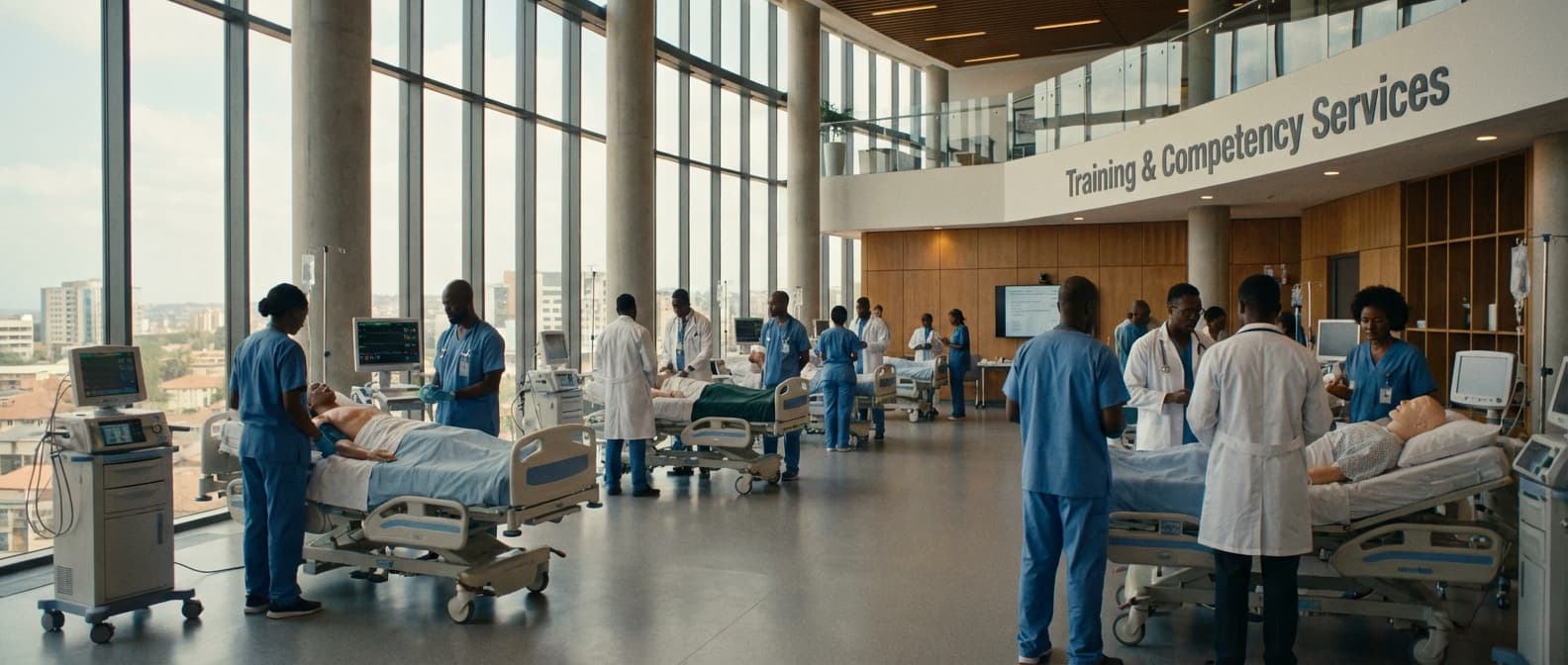
Ultrasound Application Training Service (Protocol-Based) in Gabon
Engineering Excellence & Technical Support
Ultrasound Application Training Service (Protocol-Based) High-standard technical execution following OEM protocols and local regulatory frameworks.
Standardized Protocol Implementation
Master advanced ultrasound techniques through our protocol-based training, ensuring consistent, high-quality diagnostic imaging tailored for Gabon's healthcare landscape. Focus on core protocols for improved patient care.
Expert-Led Knowledge Transfer
Benefit from hands-on instruction by seasoned sonographers and radiologists. Our training emphasizes practical application and critical thinking, empowering your team to confidently interpret complex ultrasound findings in Gabon.
Accredited Skill Enhancement
Earn recognized certification upon successful completion of our comprehensive ultrasound training. Enhance your professional credentials and contribute to the advancement of diagnostic imaging services in Gabon.
What Is Ultrasound Application Training Service (Protocol-based) In Gabon?
Ultrasound Application Training Service (Protocol-Based) in Gabon refers to specialized educational programs designed to equip healthcare professionals with the theoretical knowledge and practical skills required to perform diagnostic ultrasound examinations according to established, standardized protocols. This service focuses on systematic approaches to imaging, ensuring reproducibility, accuracy, and comprehensive evaluation of specific anatomical regions or pathological conditions. The training emphasizes adherence to pre-defined scanning sequences, optimal probe selection, appropriate transducer manipulation, and standardized image acquisition techniques, all tailored to the Gabonese healthcare context, considering available equipment and common pathologies.
| Who Needs It | Typical Use Cases |
|---|---|
| Radiologists and Radiology Residents | Enhancing diagnostic accuracy and efficiency in specialized ultrasound examinations (e.g., Doppler studies, targeted pelvic scans). |
| Obstetricians and Gynecologists | Standardizing prenatal ultrasound screening, fetal biometry, and assessment of gynecological pathologies. |
| General Practitioners and Family Physicians | Developing skills in Point-of-Care Ultrasound (POCUS) for rapid bedside assessment in primary healthcare settings (e.g., FAST scans, basic abdominal surveys). |
| Emergency Medicine Physicians and Staff | Implementing structured protocols for trauma assessment (FAST/eFAST), cardiac emergencies (basic ECHO), and identification of acute conditions. |
| Sonographers and Ultrasound Technicians | Formalizing and standardizing scanning techniques to meet international benchmarks and improve service quality. |
| Healthcare Facilities in Gabon (Public and Private) | Ensuring consistent and high-quality ultrasound services, improving diagnostic yield, and facilitating inter-facility referrals. |
| Medical Training Institutions in Gabon | Integrating practical, protocol-driven ultrasound training into undergraduate and postgraduate medical curricula. |
What this Service Involves:
- Protocol Development and Customization: Adapting or developing ultrasound imaging protocols for common clinical applications relevant to Gabon (e.g., obstetrics, general abdominal, vascular, point-of-care ultrasound).
- Theoretical Instruction: Covering ultrasound physics, machine operation, artifact recognition, and the specific anatomy and physiology relevant to each application protocol.
- Hands-on Practical Sessions: Supervised practical scanning on phantoms and/or volunteer patients, rigorously following the defined protocols.
- Image Optimization and Interpretation: Training on achieving diagnostic-quality images and basic interpretation of findings within the scope of the trained application.
- Case Review and Feedback: Analyzing real-world cases and providing constructive feedback on scanning technique and protocol adherence.
- Competency Assessment: Evaluating the trainee's ability to independently and correctly apply the learned protocols.
- Equipment Familiarization: Training on the specific ultrasound machines and transducers commonly utilized in Gabonese healthcare facilities.
Who Needs Ultrasound Application Training Service (Protocol-based) In Gabon?
This document outlines the critical need for specialized Ultrasound Application Training Services (Protocol-Based) in Gabon. Such training is vital for healthcare professionals to effectively utilize ultrasound technology in a standardized and evidence-based manner, leading to improved diagnostic accuracy, patient care, and optimal resource utilization. The services are designed to equip practitioners with the skills and knowledge to perform and interpret ultrasound examinations according to established protocols, ensuring consistency and reliability across various clinical settings.
| Department/Sector | Target Professionals | Specific Training Needs |
|---|---|---|
| Radiology/Medical Imaging | Radiologists, Radiographers, Sonographers | Advanced abdominal, obstetric, gynecological, vascular, musculoskeletal, and pediatric ultrasound protocols; quality assurance and image optimization. |
| Obstetrics and Gynecology | Obstetricians, Gynecologists, Midwives | Fetal anomaly screening, growth monitoring, gynecological pathology assessment, basic obstetric scanning for midwives. |
| Internal Medicine | Internists, General Practitioners | Basic abdominal scanning for diagnostic purposes, fluid assessment, bedside ultrasound (POCUS) for critical care. |
| Emergency Medicine/Intensive Care | Emergency Physicians, Intensivists, Critical Care Nurses | Point-of-Care Ultrasound (POCUS) for trauma assessment (FAST/eFAST), cardiac function, fluid management, procedural guidance. |
| Pediatrics | Pediatricians, Neonatologists | Pediatric abdominal scans, neonatal brain ultrasound, pediatric cardiac assessment, musculoskeletal scans in children. |
| Surgery | Surgeons | Pre-operative assessment, intra-operative guidance, post-operative monitoring, vascular access guidance. |
| Cardiology | Cardiologists | Transthoracic Echocardiography (TTE) protocols, interpretation of cardiac parameters. |
| Urology | Urologists | Renal and bladder assessment, prostate ultrasound, guiding interventional procedures. |
| Anesthesiology | Anesthesiologists | Ultrasound-guided regional anesthesia techniques, vascular access. |
| Medical Education Institutions | Faculty, Lecturers, Medical Students | Curriculum development, hands-on training for students, simulation-based learning. |
Target Customers and Departments for Ultrasound Application Training Service (Protocol-Based) in Gabon
- Hospitals (Public and Private)
- Clinics and Medical Centers
- Diagnostic Imaging Centers
- Referral Laboratories
- Medical Schools and Universities
- Public Health Institutions
- Non-Governmental Organizations (NGOs) involved in healthcare
Ultrasound Application Training Service (Protocol-based) Process In Gabon
This document outlines the workflow for the Ultrasound Application Training Service (Protocol-Based) in Gabon, detailing the process from initial inquiry to successful execution. The service aims to equip healthcare professionals with the skills and knowledge to effectively utilize ultrasound in their practice, adhering to established protocols. This structured approach ensures a standardized and high-quality training experience tailored to the specific needs and context of Gabon.
| Phase | Stage | Key Activities | Responsible Parties | Deliverables/Outcomes |
|---|---|---|---|---|
| 1: Inquiry and Needs Assessment | Initial Contact | Healthcare institution/individual expresses interest in ultrasound training. Discussion of specific needs, target audience, and desired ultrasound applications (e.g., obstetrics, general imaging, emergency). | Prospective Client (Hospital, Clinic, Individual), Training Provider Representative | Initial understanding of training requirements, confirmation of service suitability. |
| 1: Inquiry and Needs Assessment | Needs Assessment | Detailed analysis of current skill levels, equipment availability, specific clinical challenges, and learning objectives. Site visit (if feasible) to assess infrastructure. | Training Provider (Needs Assessment Team), Prospective Client (Clinical Staff, Management) | Comprehensive needs assessment report, identification of specific training modules and customization requirements. |
| 2: Proposal Development and Agreement | Proposal Generation | Development of a tailored training proposal outlining objectives, curriculum, duration, methodology, trainers, equipment requirements, budget, and schedule. Emphasis on protocol-based learning. | Training Provider (Proposal Team) | Formal training proposal document. |
| 2: Proposal Development and Agreement | Proposal Review & Negotiation | Client reviews the proposal, provides feedback, and negotiates terms. Clarification of any ambiguities regarding protocols and practical applications. | Prospective Client (Management, Clinical Lead), Training Provider | Agreed-upon training scope, budget, and schedule. |
| 2: Proposal Development and Agreement | Contract Signing | Formalization of the agreement through a signed contract outlining all terms and conditions, including confidentiality and intellectual property related to protocols. | Prospective Client (Legal/Procurement), Training Provider (Legal/Management) | Signed Service Level Agreement (SLA) or Training Contract. |
| 3: Pre-Training Preparation | Curriculum Finalization | Finalizing the specific training modules and protocols to be covered, ensuring alignment with Gabonese healthcare guidelines and best practices. | Training Provider (Curriculum Development Team), Prospective Client (Clinical Advisors) | Finalized training curriculum and protocol documentation. |
| 3: Pre-Training Preparation | Logistics Arrangement | Booking of training venue, scheduling of trainers, arrangement of ultrasound equipment (if provided by trainer), ensuring participant registration, and distribution of pre-reading materials. | Training Provider (Logistics Team), Prospective Client (Administration, IT) | Confirmed training dates, venue, registered participants, pre-training materials distributed. |
| 3: Pre-Training Preparation | Participant Briefing | Communication of training schedule, objectives, expected outcomes, and any pre-course work or requirements to participants. | Training Provider | Informed and prepared participants. |
| 4: Training Execution | Theoretical Sessions | Delivery of lectures and presentations covering ultrasound physics, instrumentation, safety, and specific application protocols. Emphasis on understanding the rationale behind protocols. | Certified Ultrasound Trainers | Enhanced theoretical understanding of ultrasound principles and protocols. |
| 4: Training Execution | Practical Demonstrations | Live demonstrations of ultrasound scanning techniques by trainers, showcasing the application of learned protocols on simulated or real patients (with ethical approval). | Certified Ultrasound Trainers | Visual understanding of correct scanning techniques and protocol adherence. |
| 4: Training Execution | Hands-on Practice | Supervised hands-on scanning sessions where participants practice on phantoms, simulators, and/or real patients under the guidance of trainers. Focus on protocol-driven scanning. | Participants, Certified Ultrasound Trainers | Development of practical scanning skills and protocol execution proficiency. |
| 4: Training Execution | Case Study Review & Discussion | Analysis of real-life ultrasound cases, correlating findings with clinical scenarios and emphasizing how protocols aid in diagnosis and management. | Certified Ultrasound Trainers, Participants | Improved diagnostic reasoning and application of protocols to clinical cases. |
| 4: Training Execution | Assessment | Evaluation of participant learning through theoretical tests (quizzes, exams) and practical assessments (scanning proficiency, protocol adherence). | Certified Ultrasound Trainers | Assessment of individual learning outcomes and identification of areas for further support. |
| 5: Post-Training Support and Evaluation | Feedback Collection | Gathering feedback from participants and their institutions on the training content, delivery, trainers, and overall experience. | Training Provider, Participants, Client Management | Training evaluation report, identification of strengths and areas for improvement. |
| 5: Post-Training Support and Evaluation | Certification | Issuance of certificates of completion to participants who successfully meet the training objectives and pass assessments. | Training Provider | Formal recognition of acquired skills and knowledge. |
| 5: Post-Training Support and Evaluation | Follow-up Support | Provision of ongoing technical support, access to online resources, and potentially refresher courses or advanced modules as needed. Assistance with protocol implementation in daily practice. | Training Provider (Support Team) | Sustained skill development and effective integration of ultrasound into practice. |
| 5: Post-Training Support and Evaluation | Impact Evaluation | Assessing the long-term impact of the training on clinical practice, patient care, and diagnostic accuracy within the Gabonese healthcare system. May involve follow-up surveys or data analysis. | Training Provider, Client Institutions | Demonstration of training effectiveness and return on investment. |
Ultrasound Application Training Service (Protocol-Based) Process in Gabon
- Phase 1: Inquiry and Needs Assessment
- Phase 2: Proposal Development and Agreement
- Phase 3: Pre-Training Preparation
- Phase 4: Training Execution
- Phase 5: Post-Training Support and Evaluation
Ultrasound Application Training Service (Protocol-based) Cost In Gabon
Providing Ultrasound Application Training services in Gabon, particularly those that are protocol-based, involves a structured approach to learning specific ultrasound procedures. The cost of such training can fluctuate based on several key factors. These include the duration and intensity of the training, the number of participants, the specific ultrasound applications covered (e.g., obstetrics, abdominal, vascular), the expertise and qualifications of the trainers, and the location within Gabon where the training is conducted. Additionally, the inclusion of practical hands-on sessions with ultrasound equipment, the provision of training materials, and any necessary certifications will influence the overall price. The current economic conditions and the demand for specialized medical training within Gabon also play a role.
| Training Type/Scope | Estimated Cost Range (XAF) |
|---|---|
| Basic Introduction to Ultrasound Principles (1-2 days) | 150,000 - 300,000 |
| Specific Protocol-Based Training Module (e.g., Obstetric Scan - 3-5 days) | 300,000 - 750,000 |
| Comprehensive Ultrasound Applications Training (e.g., multiple specialties, 1-2 weeks) | 750,000 - 2,000,000+ |
| On-site Training (per day, group rate, excluding travel/accommodation) | 100,000 - 300,000 |
| Individualized/Refresher Training Session (per day) | 50,000 - 150,000 |
Key Factors Influencing Ultrasound Application Training Costs in Gabon
- Training Duration and Intensity
- Number of Participants
- Specific Ultrasound Applications Covered (e.g., Obstetrics, Abdominal, Vascular)
- Trainer Expertise and Qualifications
- Training Location within Gabon
- Inclusion of Hands-on Practical Sessions with Equipment
- Provision of Training Materials and Manuals
- Certification Requirements
- Current Economic Conditions and Market Demand
Affordable Ultrasound Application Training Service (Protocol-based) Options
Our affordable ultrasound application training service is designed to equip healthcare professionals with essential scanning skills through a structured, protocol-based approach. We understand that budget constraints are a significant factor, and our program offers flexible value bundles and cost-saving strategies to make high-quality training accessible.
| Value Bundle | Description | Included Modules | Cost-Saving Benefit | Price (Example) |
|---|---|---|---|---|
| Core Essentials Bundle | Foundation in essential ultrasound principles and common applications. | Abdominal, Pelvic, OB/GYN Basics | Most affordable entry point, covers fundamental skills. | $800 |
| Specialty Focus Bundle | In-depth training in a specific ultrasound specialty. | Cardiac Essentials, Vascular Essentials, Breast Imaging | Discounted rate compared to individual module purchases. | $1200 |
| Comprehensive Certification Prep Bundle | All-inclusive training designed to prepare for ARDMS/CCI certification. | Core Essentials + Specialty Modules (choice of one) + Mock Exams | Significant savings on a complete training package, maximizing learning. | $2000 |
| Group Training Discount | Training for multiple individuals from the same institution. | Customizable based on group size and training needs. | Per-person cost decreases with larger groups. | Varies (e.g., 10% off for 3-5 participants, 15% off for 6+) |
Key Features and Benefits
- Protocol-Driven Curriculum: Ensures standardized and efficient scanning techniques across various applications.
- Hands-on Practice: Provides ample opportunities for real-time scanning with experienced sonographers.
- Modular Training: Allows for customization based on specific needs and career goals.
- Expert Instructors: Led by certified professionals with extensive clinical experience.
- Certification Preparation: Focuses on building confidence and competence for professional certification exams.
Verified Providers In Gabon
In Gabon's evolving healthcare landscape, the assurance of quality and reliability in medical services is paramount. Franance Health stands out as a beacon of trust, offering a network of verified providers that consistently meet the highest international standards. Their rigorous credentialing process not only ensures patient safety but also guarantees access to competent and ethical healthcare professionals. Choosing a Franance Health-affiliated provider means opting for peace of mind, superior medical expertise, and a commitment to patient well-being.
| Provider Attribute | Franance Health Verification Standard | Patient Benefit |
|---|---|---|
| Medical Licenses & Certifications | Thorough validation of all active and relevant professional licenses and certifications. | Ensures providers are legally qualified and possess the necessary expertise. |
| Professional Experience & Training | Verification of educational background, residency, fellowships, and years of practice. | Guarantees access to experienced and highly trained medical professionals. |
| Reputation & Ethical Conduct | Background checks and a review of professional history for any disciplinary actions or ethical concerns. | Assures patients of receiving care from trustworthy and morally upright practitioners. |
| Specialty Expertise | Confirmation of specific training and certifications in their declared areas of specialization. | Ensures patients are treated by experts in their specific medical needs. |
| Facility Standards (where applicable) | Assessment of clinic or hospital facilities for compliance with safety and hygiene regulations. | Provides a safe and conducive environment for treatment and recovery. |
Why Franance Health Verified Providers are the Best Choice:
- Uncompromising Quality Assurance: Franance Health employs a multi-faceted verification process that scrutinizes qualifications, experience, and ethical conduct of all its listed providers.
- Access to Top-Tier Medical Professionals: The network comprises specialists and general practitioners with proven track records and a commitment to continuous professional development.
- Patient-Centric Approach: Verified providers prioritize patient comfort, clear communication, and personalized treatment plans.
- Adherence to International Standards: Franance Health ensures its providers align with globally recognized medical best practices and safety protocols.
- Streamlined Healthcare Experience: Accessing care through Franance Health simplifies the process, offering reliability and predictability in a crucial sector.
Scope Of Work For Ultrasound Application Training Service (Protocol-based)
This Scope of Work (SOW) outlines the requirements for providing Ultrasound Application Training Services, specifically focused on protocol-based learning. The objective is to equip participants with the knowledge and practical skills necessary to perform ultrasound examinations according to established protocols, ensuring diagnostic quality and consistency. The training will cover theoretical concepts, hands-on practice, and competency assessment.
| Component | Description | Standard Specification |
|---|---|---|
| Training Curriculum | Content covering theoretical principles, instrumentation, image optimization, protocolized scanning techniques, and interpretation for selected ultrasound applications. | Must be evidence-based, current, and adhere to recognized professional guidelines. Each protocol should be clearly defined with specific views, measurements, and documentation requirements. |
| Training Manuals | Printed or digital documents providing in-depth explanations of curriculum topics, including anatomy, physiology, pathology, and step-by-step scanning guides. | High-quality graphics, clear language, and easy navigation. Minimum font size: 10pt. Digital manuals to be in PDF format. |
| Presentation Slides | Visual aids used during lectures, summarizing key concepts and illustrating techniques. | Visually engaging, concise, and aligned with training manuals. Resolution of images and diagrams to be at least 300 dpi. |
| Training Equipment | Ultrasound machine(s) with appropriate probes and phantom(s) for hands-on practice. | Machine must be functional, representative of commonly used clinical systems, and capable of performing the required applications. Phantoms should accurately simulate human tissue properties for practice. |
| Case Studies | Representative clinical scenarios with corresponding ultrasound images and patient histories. | Diverse range of normal and abnormal findings. Images should be clear and representative of diagnostic quality scans. |
| Competency Assessment | Tools to evaluate participants' theoretical understanding and practical scanning skills. | Practical assessment to include real-time scanning on a phantom or supervised patient scanning (if applicable). Minimum passing score for theoretical and practical components to be defined (e.g., 80%). |
| Certificates | Official documents confirming completion of the training and demonstrated competency. | Include participant name, training course title, date of completion, and trainer signature. Watermarked or holographically secured for authenticity. |
| Reporting | Regular updates on training progress and a comprehensive final report. | Reports to be submitted weekly (for longer courses) or bi-weekly. Final report to be delivered within 5 business days of training completion. |
Technical Deliverables
- Comprehensive training curriculum tailored to specific ultrasound applications (e.g., Abdominal, OB/GYN, Vascular, Cardiac, Small Parts).
- Detailed training manuals and accompanying presentation slides.
- Access to simulated ultrasound environments or a designated training ultrasound machine with phantoms.
- Case studies and practical scanning scenarios aligned with common clinical presentations.
- Competency assessment tools, including practical scanning evaluation checklists and theoretical knowledge quizzes.
- Post-training support resources, such as online forums or Q&A sessions (duration to be specified).
- Attendance and competency certificates for successful participants.
- Regular progress reports to the client outlining training attendance, performance, and areas for improvement.
- A final training report summarizing overall outcomes, participant feedback, and recommendations for future training.
Service Level Agreement For Ultrasound Application Training Service (Protocol-based)
This Service Level Agreement (SLA) outlines the agreed-upon service levels for the Ultrasound Application Training Service (Protocol-Based). It defines the expected response times for support requests and the guaranteed uptime for the training platform. This SLA is an appendix to the Master Services Agreement (MSA) between [Your Company Name] and [Client Company Name].
| Service Component | Severity Level | Target Response Time | Maximum Uptime Guarantee |
|---|---|---|---|
| Ultrasound Application Training Platform Access | Critical (Platform Unavailable, Training Inaccessible) | 15 minutes | 99.9% (Calculated Monthly) |
| Ultrasound Application Training Platform Access | High (Major Functionality Impaired, Training Significantly Difficult) | 1 hour | 99.9% (Calculated Monthly) |
| Ultrasound Application Training Platform Access | Medium (Minor Functionality Impaired, Training Possible but Inconvenient) | 4 business hours | 99.9% (Calculated Monthly) |
| Ultrasound Application Training Platform Access | Low (General Inquiries, Feature Requests, Non-Urgent Issues) | 8 business hours | 99.9% (Calculated Monthly) |
| Protocol-Specific Training Content Support | Critical (Incorrect or Missing Essential Protocol Steps) | 2 business hours | N/A (Resolved via support ticket) |
| Protocol-Specific Training Content Support | High (Inaccurate or Misleading Protocol Information) | 8 business hours | N/A (Resolved via support ticket) |
| Protocol-Specific Training Content Support | Medium (Clarity Issues, Minor Inaccuracies) | 2 business days | N/A (Resolved via support ticket) |
Key Service Level Objectives
- Response Time: The time taken by [Your Company Name] to acknowledge and begin addressing a support request from the Client.
- Uptime Guarantee: The percentage of time the Ultrasound Application Training Service platform is available and operational for the Client's users.
Frequently Asked Questions

Ready when you are
Let's scope your Ultrasound Application Training Service (Protocol-Based) in Gabon project in Gabon.

Scaling healthcare logistics and technical systems across the entire continent.