
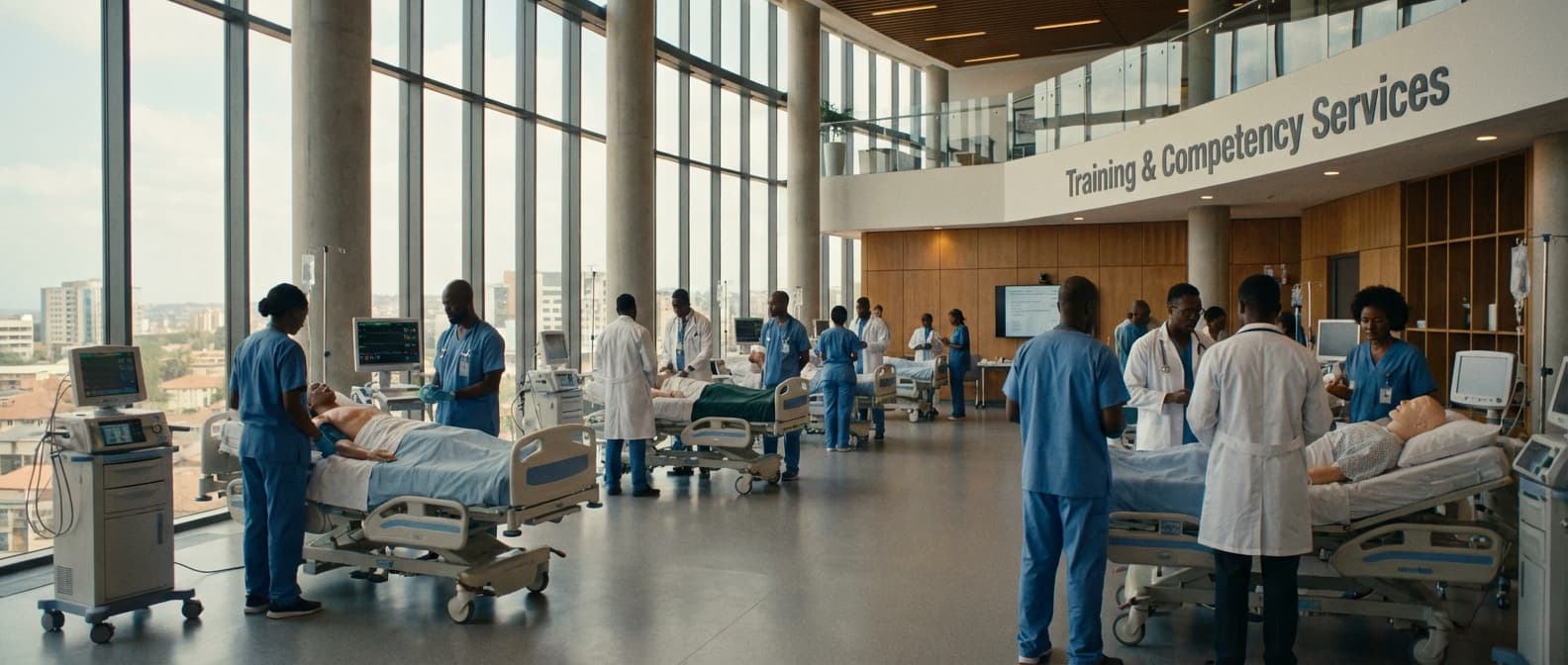
MRI Operator Training Service (Radiographers) in Gabon
Engineering Excellence & Technical Support
MRI Operator Training Service (Radiographers) High-standard technical execution following OEM protocols and local regulatory frameworks.
Advanced MRI Protocol Mastery
Develop expertise in optimizing and executing advanced MRI pulse sequences and protocols specifically tailored for common pathologies encountered in Gabon, ensuring high-quality diagnostic imaging and efficient patient throughput.
Patient Safety & Comfort Enhancement
Gain in-depth knowledge of best practices for patient screening, preparation, and management during MRI procedures, focusing on minimizing risks and maximizing patient comfort and compliance within the local healthcare context.
Image Quality Troubleshooting & Optimization
Acquire practical skills in identifying and resolving common MRI artifacts, optimizing image parameters for specific anatomical regions, and implementing quality control measures to ensure diagnostic accuracy and reliable results for radiographers in Gabon.
What Is Mri Operator Training Service (Radiographers) In Gabon?
MRI Operator Training Service (Radiographers) in Gabon refers to specialized educational programs designed to equip radiographers with the necessary knowledge and practical skills to safely and effectively operate Magnetic Resonance Imaging (MRI) scanners. This training is crucial for ensuring the accurate acquisition of diagnostic MRI data, patient safety, and compliance with international radiation safety standards within the Gabonese healthcare sector. The service encompasses theoretical instruction, hands-on practical sessions, and competency assessments tailored to the specific MRI equipment prevalent in Gabon and the clinical requirements of its healthcare facilities.
| Target Audience | Need for Training | Typical Use Cases |
|---|---|---|
| Radiographers and Imaging Technologists in Gabon. | To acquire proficiency in operating MRI scanners, ensuring patient safety, producing high-quality diagnostic images, and meeting the growing demand for advanced imaging services. | New MRI facility establishment, introduction of new MRI equipment, upskilling existing staff, compliance with accreditation requirements, and specialized training for advanced MRI techniques. |
| Radiology Department Managers and Supervisors. | To understand the scope of MRI operator training requirements, ensure staff competency, and optimize resource allocation for imaging services. | Developing training budgets, selecting appropriate training providers, and implementing ongoing professional development programs for radiology staff. |
| Healthcare Facility Administrators. | To understand the capital investment in MRI technology and the crucial role of trained personnel in maximizing its utility and return on investment. | Evaluating the feasibility of introducing MRI services, ensuring the quality of diagnostic imaging, and maintaining a competitive edge in healthcare provision. |
Key Components of MRI Operator Training Service:
- Physics of MRI: Principles of nuclear magnetic resonance, radiofrequency pulses, gradient coils, and image formation.
- MRI Safety Protocols: Understanding magnetic field hazards, radiofrequency and gradient coil safety, cryogen safety, and patient screening procedures.
- Patient Preparation and Positioning: Techniques for optimizing image quality and patient comfort, including the use of contrast agents.
- Image Acquisition Techniques: Protocols for various anatomical regions (e.g., neuroimaging, musculoskeletal, abdominal), pulse sequences, and parameter optimization.
- Artifact Recognition and Mitigation: Identifying common artifacts and implementing strategies to minimize their impact on image quality.
- Quality Assurance and Control: Performing routine checks and calibrations to ensure optimal scanner performance and image integrity.
- Ethical and Legal Considerations: Patient confidentiality, informed consent, and adherence to regulatory guidelines.
- Troubleshooting and Basic Maintenance: Identifying and addressing common operational issues and performing basic preventative maintenance.
- Hands-on Practical Training: Supervised operation of MRI scanners with a variety of clinical cases.
Who Needs Mri Operator Training Service (Radiographers) In Gabon?
MRI Operator Training Services are essential for radiographers in Gabon to ensure they possess the specialized skills and knowledge required to operate MRI scanners safely and effectively. This training is crucial for accurate diagnosis, patient care, and the efficient utilization of advanced medical imaging technology. The demand for such services is driven by healthcare facilities seeking to enhance their diagnostic capabilities and adhere to international standards of medical practice. These services provide comprehensive training covering MRI physics, safety protocols, image acquisition techniques, patient preparation, contrast agent administration, and image interpretation support.
| Customer Type | Departments Requiring Training | Key Needs & Benefits |
|---|---|---|
| Public Hospitals | Radiology Department, Diagnostic Imaging Services | Enhance diagnostic capacity, serve a larger patient population, improve healthcare outcomes, comply with national health initiatives. |
| Private Hospitals | Radiology Department, Imaging Services, Medical Staff Development | Attract more patients seeking advanced imaging, maintain competitive edge, ensure high-quality patient care, optimize equipment utilization. |
| Radiology Clinics/Diagnostic Centers | Imaging Technicians, Radiographers, Clinical Support Staff | Provide specialized MRI services, offer accurate and timely diagnoses, build reputation for expertise, meet market demand for advanced imaging. |
| University Hospitals/Teaching Institutions | Radiology Department, Medical Education Faculty, Radiography Students | Develop skilled radiography graduates, conduct research, provide continuous professional development for existing staff, foster academic excellence in medical imaging. |
| Government Health Ministries/Agencies | Human Resources for Health, Healthcare Infrastructure Planning | Ensure national availability of trained MRI operators, standardize training quality, address healthcare workforce shortages, facilitate equitable access to advanced diagnostics. |
| NGOs Supporting Healthcare | Project Managers, Clinical Staff at Supported Facilities | Equip local healthcare providers with necessary skills, enable sustainable operation of imaging equipment, improve health services in underserved areas. |
Target Customers and Departments for MRI Operator Training Service (Radiographers) in Gabon:
- Hospitals (Public and Private): Facilities that have invested in or plan to acquire MRI technology and require skilled operators.
- Radiology Clinics and Diagnostic Centers: Standalone centers specializing in medical imaging services.
- University Hospitals and Teaching Institutions: For training future radiographers and for ongoing professional development.
- Government Health Ministries and Agencies: Responsible for setting standards and ensuring the availability of qualified healthcare professionals.
- Non-Governmental Organizations (NGOs) involved in healthcare: Particularly those supporting or establishing healthcare infrastructure in Gabon.
Mri Operator Training Service (Radiographers) Process In Gabon
This document outlines the process for an MRI Operator Training Service specifically for Radiographers in Gabon, from initial inquiry to the successful execution of the training program. The workflow is designed to be comprehensive, ensuring all necessary steps are followed for a smooth and effective training experience. The service aims to equip radiographers with the specialized skills and knowledge required to operate MRI scanners safely and efficiently, adhering to international standards and local regulatory requirements where applicable.
| Phase | Step | Description | Key Activities | Responsible Party | Deliverables/Outcomes |
|---|---|---|---|---|---|
| Inquiry & Needs Assessment | Initial Contact | Prospective client (e.g., hospital, clinic) expresses interest in MRI operator training. | Contacting the training service provider, requesting information about services, dates, and costs. | Client | Expressed interest, request for information. |
| Inquiry & Needs Assessment | Needs Analysis Meeting | Understanding the client's specific training requirements, current skill levels of radiographers, and available MRI equipment. | On-site or virtual meeting with client's management and/or HR, discussion of existing radiographer qualifications, number of trainees, specific MRI scanner models, desired training outcomes. | Training Service Provider (TSP) & Client | Detailed understanding of training needs, trainee profile, and equipment specifics. |
| Proposal Development & Agreement | Proposal Submission | The TSP develops and submits a comprehensive proposal outlining the training program, curriculum, schedule, trainers, costs, and terms. | Tailoring the curriculum to specific needs, defining learning objectives, outlining practical sessions, specifying assessment methods, detailing logistical requirements, providing a detailed cost breakdown. | TSP | Formal training proposal. |
| Proposal Development & Agreement | Contract Negotiation & Signing | Reviewing and finalizing the terms of the training agreement. | Discussion and agreement on pricing, payment schedules, training dates, venue, equipment access, confidentiality, and liability. | TSP & Client | Signed training contract/agreement. |
| Pre-Training Preparations | Curriculum Finalization & Customization | Refining the training content based on the signed agreement and specific needs identified. | Confirming theoretical modules, practical demonstration scenarios, case studies, and assessment criteria. | TSP | Finalized training curriculum. |
| Pre-Training Preparations | Trainer Allocation & Briefing | Assigning qualified and experienced MRI trainers and briefing them on the specific training context. | Selecting trainers with relevant expertise, providing them with client-specific information and curriculum details. | TSP | Assigned and briefed trainers. |
| Pre-Training Preparations | Logistics & Resource Arrangement | Ensuring all necessary resources and logistical arrangements are in place for the training. | Booking venue (if applicable), ensuring availability of MRI scanner for practical sessions, arranging for training materials (manuals, presentations), coordinating travel and accommodation for trainers (if required). | TSP & Client | Ready training environment and resources. |
| Pre-Training Preparations | Trainee Confirmation & Pre-assessment (Optional) | Confirming the list of trainees and potentially conducting a pre-assessment to gauge existing knowledge. | Receiving final list of participants from the client, administering a brief questionnaire or knowledge test. | Client & TSP | Confirmed trainee list, baseline knowledge assessment (optional). |
| Training Delivery | Theoretical Training | Delivering classroom-based or online instruction on MRI principles, safety protocols, imaging techniques, and equipment operation. | Lectures, presentations, group discussions, interactive Q&A sessions. | TSP (Trainer) | Trainees gain foundational knowledge. |
| Training Delivery | Practical Demonstrations & Hands-on Sessions | Providing live demonstrations of MRI scanner operation and allowing trainees to practice under supervision. | Operator interface navigation, patient positioning, protocol selection, image acquisition, quality control, troubleshooting common issues. | TSP (Trainer) & Trainees | Trainees develop practical skills. |
| Training Delivery | Case Study Analysis & Problem Solving | Working through real-world scenarios to apply learned knowledge and develop critical thinking. | Reviewing anonymized patient scans, discussing diagnostic challenges, identifying optimal scanning parameters. | TSP (Trainer) & Trainees | Enhanced diagnostic and problem-solving abilities. |
| Training Delivery | Assessment & Feedback | Evaluating trainee performance throughout the training and providing constructive feedback. | Quizzes, practical skill assessments, observation during hands-on sessions, verbal feedback. | TSP (Trainer) | Identification of areas for improvement, performance evaluation. |
| Post-Training Evaluation & Support | Final Assessment & Certification | Conducting a comprehensive assessment to verify competency and issuing certificates upon successful completion. | Written exams, practical proficiency tests, review of assessment results. | TSP | Certified MRI Operators. |
| Post-Training Evaluation & Support | Post-Training Evaluation | Gathering feedback from trainees and the client to assess the effectiveness of the training program. | Distributing feedback forms, conducting post-training debriefing sessions with the client. | TSP & Client | Program evaluation report, identification of strengths and areas for future improvement. |
| Post-Training Evaluation & Support | Ongoing Support & Refresher Training (Optional) | Providing continued support and offering opportunities for refresher training. | Answering follow-up questions, offering remote assistance, scheduling advanced or refresher courses. | TSP | Sustained competence, client satisfaction. |
MRI Operator Training Service Workflow for Radiographers in Gabon
- Inquiry & Needs Assessment
- Proposal Development & Agreement
- Pre-Training Preparations
- Training Delivery
- Post-Training Evaluation & Support
Mri Operator Training Service (Radiographers) Cost In Gabon
The cost of MRI Operator Training for Radiographers in Gabon can vary significantly based on several factors. These include the duration and intensity of the training program, the provider's reputation and accreditation, the location of the training (on-site at a facility versus a dedicated training center), and the level of specialization or advanced topics covered. While specific official pricing structures are not widely published, we can discuss the typical influencing factors and provide estimated cost ranges in the local currency, the West African CFA franc (XOF).
| Training Type/Duration | Estimated Cost Range (XOF) |
|---|---|
| Basic/Introductory MRI Operator Training (1-3 days) | 200,000 - 600,000 |
| Comprehensive MRI Operator Training (1-2 weeks) | 700,000 - 2,000,000 |
| Specialized/Advanced MRI Module (e.g., specific sequences, anatomy) (2-5 days) | 400,000 - 1,200,000 |
| On-site Training (per participant, negotiated based on volume and duration) | Varies widely; can be competitive with standalone courses |
Key Pricing Factors for MRI Operator Training in Gabon:
- Training Provider: Established training institutions or specialized medical imaging companies may command higher fees due to their expertise, equipment access, and certification recognition.
- Course Duration and Intensity: Shorter, introductory courses will be less expensive than comprehensive, multi-week programs covering a wide range of MRI techniques and applications.
- Curriculum Content: Training focused on general MRI operation will be more affordable than specialized modules like advanced MRI sequences, specific anatomical imaging (e.g., neuro, musculoskeletal), or quality assurance protocols.
- Training Location: On-site training at a hospital or imaging center might be negotiated differently than attending a dedicated training facility, potentially involving additional logistical costs for the provider.
- Materials and Resources: Inclusion of comprehensive training manuals, simulation software, and hands-on practice time with actual MRI scanners will influence the overall cost.
- Certification and Accreditation: Training programs that lead to recognized certifications or are accredited by relevant professional bodies often have higher associated costs.
- Trainer Expertise: The qualifications and experience of the instructors, especially if they are international experts, can impact pricing.
- Group Size: Larger group bookings for training at a single institution might secure bulk discounts.
Affordable Mri Operator Training Service (Radiographers) Options
This document outlines affordable Magnetic Resonance Imaging (MRI) operator training service options specifically designed for radiographers. It focuses on providing value through bundled services and effective cost-saving strategies to make advanced MRI training accessible and economically viable.
| Cost-Saving Strategy | Description | Benefit |
|---|---|---|
| Early Bird Registration Discounts | Register and pay for training well in advance of the course start date. | Significant percentage off tuition fees. |
| Group Discounts | Enroll multiple radiographers from the same facility in a training program. | Tiered discounts based on the number of participants, reducing per-person cost. |
| Bundled Course Packages | Purchase a combination of related courses at a reduced overall price compared to individual enrollment. | Comprehensive skill development at a lower total investment. |
| Online/Virtual Learning Options | Utilize self-paced online modules or live virtual instructor-led sessions, eliminating travel and accommodation costs. | Reduced overhead for both the trainee and the training provider, translating to lower course fees. |
| Payment Plans | Spread the cost of training over several installments. | Manages cash flow and makes expensive training more manageable for individuals or smaller facilities. |
| Partnerships with Professional Organizations | Seek training providers that offer discounted rates to members of relevant radiographer associations. | Access to exclusive pricing through existing professional affiliations. |
| Utilize In-House Expertise (where applicable) | For facilities with experienced MRI physicists or senior MRI technologists, consider incorporating them into training delivery for certain modules. | Reduces reliance on external trainers for specific content, lowering overall training expenditure. |
| Focus on Essential Skills | Prioritize training modules that directly address the most common MRI procedures and safety concerns relevant to your practice. | Avoids unnecessary expenditure on highly specialized or niche topics that may not be immediately required. |
Value Bundles for Affordable MRI Operator Training
- Core MRI Principles & Safety Bundle: Covers fundamental physics, image acquisition techniques, patient preparation, and crucial safety protocols. Ideal for new MRI operators or those needing a solid refresher.
- Advanced Imaging Techniques Bundle: Expands on core knowledge with specialized sequences (e.g., fMRI, diffusion-weighted imaging, contrast-enhanced MRI), advanced artifact reduction, and protocol optimization. Geared towards experienced radiographers seeking to enhance their skillset.
- Clinical Application Focus Bundle: Tailored to specific anatomical regions (e.g., Neuro, Musculoskeletal, Abdominal) and their associated MRI protocols and interpretation nuances. Beneficial for radiographers specializing or aiming to specialize in certain areas.
- Certification Preparation Bundle: Combines comprehensive coursework with practice exams and study materials designed to help radiographers pass industry-recognized MRI certification exams (e.g., ARRT MRI).
- Blended Learning Bundle: Integrates online self-paced modules with live virtual instructor-led sessions, offering flexibility and interactive learning opportunities.
- On-Site Training Package: For facilities requiring multiple staff members to be trained simultaneously, offering cost efficiencies through group discounts and customized curriculum delivery at your location.
Verified Providers In Gabon
In Gabon, the integrity and reliability of healthcare providers are paramount. Franance Health has emerged as a leading entity in verifying healthcare professionals and facilities, ensuring that the services you receive meet the highest standards of quality and safety. Their rigorous credentialing process offers a vital layer of trust, allowing individuals and organizations to make informed decisions about their healthcare needs. This commitment to verification not only protects patients but also elevates the overall healthcare landscape in Gabon.
| Credentialing Area | Franance Health's Rigor | Benefit to Patients |
|---|---|---|
| Education and Training | Thorough validation of degrees, certifications, and specialized training from accredited institutions. | Ensures providers possess the foundational knowledge and skills necessary for effective patient care. |
| Licensing and Registration | Verification of current and valid medical licenses and registrations with relevant Gabonese authorities. | Confirms legal authorization to practice and adherence to regulatory requirements. |
| Professional Experience | In-depth review of work history, including areas of specialization, previous roles, and references. | Confirms practical experience and suitability for specific medical needs. |
| Ethical Conduct and Disciplinary History | Background checks and inquiries into any past disciplinary actions or ethical breaches. | Safeguards against unqualified or unprofessional practitioners, promoting patient well-being. |
| Continuing Professional Development | Assessment of ongoing training and commitment to staying abreast of medical advancements. | Guarantees access to up-to-date treatments and evidence-based practices. |
Why Franance Health Credentials Represent the Best Choice:
- Uncompromising Verification Standards: Franance Health employs a multi-faceted approach to credentialing, scrutinizing educational backgrounds, licensing, professional experience, and ethical conduct of healthcare providers.
- Patient Safety Assurance: By partnering with Franance Health-verified providers, individuals gain confidence that they are receiving care from qualified and competent professionals, minimizing risks and ensuring optimal health outcomes.
- Enhanced Trust and Transparency: The Franance Health seal of approval serves as a beacon of trust, providing clarity and transparency in a sector that demands it most.
- Access to Elite Healthcare Professionals: Their network comprises a curated selection of Gabon's most skilled and dedicated healthcare practitioners, offering access to top-tier medical expertise.
- Commitment to Continuous Improvement: Franance Health doesn't just verify; they foster a culture of ongoing professional development and adherence to best practices among their accredited providers.
Scope Of Work For Mri Operator Training Service (Radiographers)
This Scope of Work outlines the requirements for providing comprehensive MRI Operator Training Services specifically tailored for radiographers. The training aims to equip radiographers with the necessary theoretical knowledge and practical skills to safely and effectively operate MRI scanners, acquire high-quality diagnostic images, and contribute to efficient patient care. The training will cover fundamental MRI physics, patient preparation, imaging protocols, image optimization, safety considerations, and basic troubleshooting.
| Deliverable | Description | Standard Specification / Criteria | Format / Medium | Acceptance Criteria |
|---|---|---|---|---|
| Training Curriculum | A detailed, structured curriculum covering all listed modules, aligned with current best practices in MRI. | Must be comprehensive, up-to-date, and include learning objectives for each module. Internationally recognized MRI standards (e.g., ARRT, ISRRT) should be referenced where applicable. | Digital document (PDF) and/or printed manual. | Curriculum approved by the Client's Clinical/Radiology Department Head. |
| Training Materials | All supporting learning materials, including presentations, handouts, case studies, and visual aids. | High-quality, clear, and concise materials. Visual aids should be relevant and illustrative. Case studies should reflect common clinical scenarios. | Digital files (e.g., PowerPoint, PDF) and/or printed copies. | Materials reviewed and approved by the Client's training committee. |
| Practical Training Sessions | Hands-on sessions on a live or simulated MRI scanner, guided by experienced trainers. | Minimum number of supervised hours on the scanner per trainee. Trainees must demonstrate proficiency in patient positioning, protocol selection, scanning, and basic image manipulation. A structured checklist for practical assessment will be used. | On-site practical sessions. | Successful completion of practical assessment checklist by each trainee, verified by trainer and Client representative. |
| Competency Assessment | Formal assessment of radiographer's understanding and practical skills post-training. | Includes a written examination covering theoretical knowledge and a practical skills evaluation. A minimum passing score (e.g., 80%) for both components. | Written examination (online or paper-based) and practical demonstration. | Individual trainee passes both written and practical assessments. |
| Training Report | A comprehensive report detailing the training conducted, trainee performance, and recommendations. | Includes list of attendees, module completion rates, assessment results, any identified areas for improvement, and trainer feedback. | Digital document (PDF). | Report submitted within 5 working days of training completion and approved by the Client. |
| Certificate of Completion | Official certification for radiographers who successfully complete the training program. | Includes trainee's name, training dates, modules covered, and a unique certificate number. | Digital and/or printed certificate. | Issued upon successful completion of all training components and assessments. |
Key Training Modules
- Introduction to Magnetic Resonance Imaging (MRI)
- Principles of MRI Physics (Magnetism, RF Pulses, Gradients, Signal Formation)
- MRI Scanner Components and Operation
- Patient Care and Safety in the MRI Environment (Screening, Contraindications, Artifacts)
- Pulse Sequences and Image Weighting (T1, T2, FLAIR, DWI, etc.)
- Image Acquisition Techniques and Protocol Optimization
- Introduction to Contrast Agents and Administration (if applicable)
- Image Post-processing and Basic Manipulation
- Quality Assurance and Quality Control (QA/QC) in MRI
- Common Artifacts and Troubleshooting Techniques
- Ethical Considerations and Professional Practice
Service Level Agreement For Mri Operator Training Service (Radiographers)
This Service Level Agreement (SLA) outlines the response times and uptime guarantees for the MRI Operator Training Service provided to Radiographers. This SLA is effective as of [Start Date] and remains valid until [End Date].
| Service Component | Response Time (for technical support inquiries) | Uptime Guarantee (for online training platform) |
|---|---|---|
| MRI Operator Training Modules | 4 business hours for initial acknowledgement, 24 business hours for resolution of technical issues | 99.5% during scheduled training hours |
| Technical Support for Training Platform | 2 business hours for initial acknowledgement, 8 business hours for resolution of common issues; 24 business hours for complex issues | 99.5% during scheduled business hours (Monday-Friday, 9 AM - 5 PM [Time Zone]) |
| Access to Training Resources (e.g., documentation, videos) | N/A (Access is generally immediate) | 99.5% during scheduled business hours |
Key Service Components
- MRI Operator Training Modules (online and/or in-person)
- Technical Support for Training Platform
- Access to Training Resources
Frequently Asked Questions

Ready when you are
Let's scope your MRI Operator Training Service (Radiographers) in Gabon project in Gabon.

Scaling healthcare logistics and technical systems across the entire continent.