
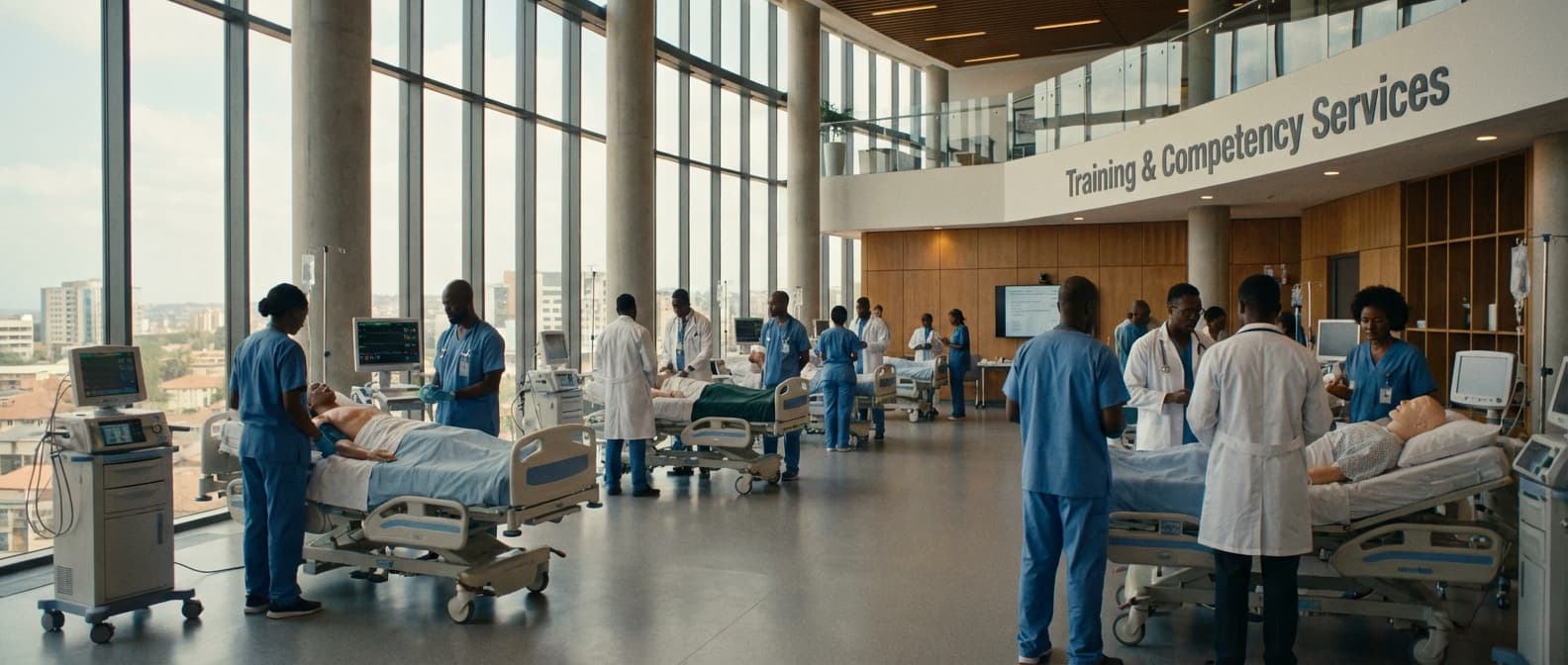
CT Operator Training Service (Radiographers) in Gabon
Engineering Excellence & Technical Support
CT Operator Training Service (Radiographers) High-standard technical execution following OEM protocols and local regulatory frameworks.
Advanced Imaging Modalities Training
Our CT Operator Training Service in Gabon provides hands-on experience with state-of-the-art CT scanners, covering advanced techniques like dual-energy CT, cardiac CT, and interventional CT for enhanced diagnostic capabilities.
Radiation Safety & Compliance Mastery
We ensure all radiographers in Gabon receive comprehensive training on the latest radiation safety protocols and national/international regulatory compliance standards, safeguarding both patients and personnel.
Image Optimization & Quality Assurance
Our curriculum focuses on achieving optimal image quality through precise parameter selection, artifact reduction, and robust quality assurance procedures, leading to more accurate diagnoses and reduced repeat scans.
What Is Ct Operator Training Service (Radiographers) In Gabon?
CT Operator Training Service (Radiographers) in Gabon refers to specialized educational and competency development programs designed for radiographers and allied health professionals in Gabon who operate or intend to operate Computed Tomography (CT) scanners. This service aims to equip them with the theoretical knowledge, practical skills, and safety protocols necessary for the proficient and safe acquisition of diagnostic CT imaging. The training encompasses a broad spectrum of competencies, including but not limited to, CT physics and principles, patient preparation and positioning, scanner operation and protocol optimization, image acquisition techniques, image quality assessment, radiation safety for patients and personnel, contrast media administration, and artifact identification and reduction. The objective is to ensure that radiographers can perform CT examinations to a high standard, yielding diagnostically valuable images while minimizing radiation dose and ensuring patient comfort and safety.
| Target Audience | Need for Training | Typical Use Cases |
|---|---|---|
| Newly qualified radiographers in Gabon. | To gain foundational knowledge and practical skills required to operate CT scanners independently and safely. | Initial certification and employment as CT radiographers in hospitals and diagnostic imaging centers. |
| Experienced radiographers seeking specialization in CT imaging. | To enhance existing skills, learn advanced techniques, or adapt to new CT scanner technologies and protocols. | Transitioning to CT-specific roles, advanced diagnostic procedures, or implementing new imaging protocols. |
| Radiographers working in facilities acquiring new CT scanner technology. | To familiarize personnel with the specific features, operational nuances, and safety guidelines of the new equipment. | Onboarding for new CT systems, ensuring optimal performance and safe operation from deployment. |
| Radiographers in Gabon requiring refresher courses or addressing specific performance gaps. | To reinforce knowledge, update on best practices, address identified areas of weakness in CT acquisition, or comply with continuing professional development requirements. | Performance improvement initiatives, quality assurance programs, or to maintain professional licensure. |
| Radiographers in remote or underserved areas of Gabon with limited access to advanced imaging. | To provide essential training that enables the operation of basic CT services and contributes to broader healthcare access. | Establishing or maintaining basic CT diagnostic capabilities in regional hospitals and clinics. |
Key Components of CT Operator Training Service (Radiographers) in Gabon
- Fundamental principles of CT physics and technology.
- Scanner hardware and software operation.
- Image acquisition protocols for various anatomical regions and pathologies.
- Patient preparation, immobilization, and positioning techniques.
- Contrast media administration (intravenous and oral) and management of potential reactions.
- Radiation safety principles and dose optimization strategies (ALARA principle).
- Image quality control and artifact detection/mitigation.
- Basic patient management and emergency procedures within the CT suite.
- Introduction to post-processing techniques.
- Ethical considerations and regulatory compliance in medical imaging.
Who Needs Ct Operator Training Service (Radiographers) In Gabon?
CT Operator Training Services in Gabon are crucial for ensuring the safe, efficient, and high-quality utilization of CT imaging technology. This specialized training is primarily aimed at radiographers and imaging technologists who operate CT scanners and are responsible for patient care during CT examinations. The need for such services stems from the increasing adoption of advanced medical imaging equipment, the continuous evolution of CT technology, and the imperative to maintain high standards of patient safety and diagnostic accuracy. Radiographers who perform CT scans require comprehensive training on a range of topics, including but not limited to, CT physics, image acquisition protocols, patient preparation and positioning, radiation safety, contrast media administration, image processing and post-processing, and troubleshooting common equipment issues. This training is vital for both new entrants into the field and experienced professionals seeking to update their skills and knowledge on newer CT systems and advanced applications.
| Customer Type | Primary Responsibility | Training Focus Areas |
|---|---|---|
| Radiographers | Performing CT scans, patient care during procedures | CT physics, protocol optimization, patient positioning, radiation safety, contrast administration, image interpretation basics, troubleshooting |
| Radiology Technologists | Assisting radiographers, operating CT equipment, patient preparation | CT equipment operation, patient preparation and comfort, protocol selection, basic image acquisition, radiation safety protocols |
| Imaging Technicians | Equipment maintenance, basic operation, quality control | CT hardware understanding, routine quality control procedures, basic troubleshooting, safety checks |
| Medical Physicists | Radiation safety compliance, equipment calibration, image quality assurance | Advanced CT physics, dose optimization strategies, quality assurance protocols, regulatory compliance |
Target Customers and Departments for CT Operator Training in Gabon
- {"items":["Radiographers","Radiology Technologists","Imaging Technicians","Medical Physicists (for understanding and quality assurance aspects)"],"title":"Primary Target Customers"}
- {"items":["Radiology Departments (within hospitals and clinics)","Diagnostic Imaging Centers","Public Health Facilities","Private Healthcare Institutions","Tertiary Referral Hospitals","Medical Research Institutions (utilizing CT for studies)"],"title":"Key Departments Requiring Training"}
Ct Operator Training Service (Radiographers) Process In Gabon
This document outlines the standard workflow for CT Operator Training Services (Radiographers) in Gabon, from initial inquiry to successful execution. The process is designed to be clear, efficient, and compliant with local regulations and industry best practices.
| Stage | Description | Key Activities | Responsible Party | Deliverables/Outcomes | Notes/Considerations |
|---|---|---|---|---|---|
| The process begins with a prospective client (e.g., a hospital or clinic in Gabon) expressing interest in CT operator training for their radiographers. | Client contacts training provider via phone, email, or website. Initial discussion to understand general training needs and objectives. Provider shares introductory information about services. | Client, Training Provider | Initial understanding of client's interest and basic requirements. Provider's service overview. | Clearly define communication channels. Ensure initial contact is logged. |
| A detailed assessment of the client's specific training requirements is conducted. | Detailed discussion to identify specific CT scanner models, existing radiographer skill levels, desired outcomes, trainee numbers, and any specializations needed. Provider develops a tailored training proposal outlining curriculum, duration, methodology, location, trainers, and cost. | Training Provider, Client | Detailed training needs report. Comprehensive training proposal with a quotation. | Involve key personnel from the client's radiology department. Site visit may be beneficial. |
| Formal agreement on the terms and scope of the training service. | Client reviews and approves the proposal. Negotiation of terms (if any). Signing of a formal training contract or service agreement. Payment schedule confirmation. | Client, Training Provider | Signed training contract/agreement. Initial payment or deposit as per agreement. | Ensure all legal and financial aspects are clearly defined in the contract. Compliance with Gabonese business law. |
| Logistics and administrative tasks to ensure a smooth training commencement. | Provider finalizes training materials (manuals, presentations, practical exercises). Scheduling of training dates and times. Confirmation of trainer availability and travel arrangements. Communication of pre-reading materials or prerequisites to trainees. Arranging access to CT scanners for practical sessions. | Training Provider, Client | Training schedule. Confirmed trainer logistics. Ready training materials. Informed trainees. | Close coordination with the client's facility management for access and scheduling. Inform trainees about the training location and timing well in advance. |
| The core training program is conducted. | Theoretical sessions covering CT physics, anatomy, protocols, patient safety, radiation protection, and image optimization. Practical sessions on the specific CT scanner(s) with hands-on experience for radiographers. Case study discussions and troubleshooting exercises. | Trainer(s), Trainees | Knowledge and practical skills acquisition by radiographers. Interactive learning environment. | Maintain high engagement. Adapt to trainee pace. Ensure adequate hands-on time. Address questions and concerns promptly. |
| Measuring the effectiveness of the training and trainee comprehension. | Quizzes, practical skill assessments, and potentially a final examination to evaluate understanding and competency. Trainer provides feedback to individual trainees. Client may also evaluate trainer performance and training effectiveness. | Trainer(s), Trainees, Client | Assessment results. Individual trainee performance reports. Feedback on training quality. | Assessments should be relevant to the learning objectives. Provide constructive feedback. Document all assessment outcomes. |
| Formal recognition of successful completion of the training. | Issuance of certificates of completion to trainees who meet the required standards. Provider submits a final training report to the client, summarizing the training conducted, trainee performance, and any recommendations. | Training Provider, Trainees | Certificates of Completion. Final training report to client. | Ensure certificates are professionally produced and clearly state the training received. Deliver the report in a timely manner. |
| Ongoing support and gathering feedback for continuous improvement. | Provider offers limited post-training support for follow-up questions or minor issues. Client and trainees provide feedback on the training experience via surveys or direct communication. Provider uses feedback for service improvement and future training offerings. | Training Provider, Client, Trainees | Resolved post-training queries. Feedback collected. Service improvement initiatives. | Establish a clear channel for post-training inquiries. Act on feedback to enhance future services. Maintain client relationships. |
CT Operator Training Service Workflow in Gabon
- Inquiry & Initial Consultation
- Needs Assessment & Proposal Development
- Contracting & Agreement
- Pre-Training Preparations
- Training Delivery
- Assessment & Evaluation
- Certification & Documentation
- Post-Training Support & Feedback
Ct Operator Training Service (Radiographers) Cost In Gabon
The cost of CT Operator Training (Radiographers) in Gabon can vary significantly based on several key factors. These include the reputation and accreditation of the training institution, the duration and intensity of the course, the specific curriculum and modules covered (e.g., basic CT, advanced techniques, specific modalities like CT angiography), the qualifications of the instructors, and the location within Gabon where the training is provided. Additionally, the inclusion of practical hands-on experience with actual CT scanners, the provision of training materials, and any examination or certification fees will influence the overall price. Group discounts for multiple participants from the same facility are also common. Due to the specialized nature of CT training, it is often provided by dedicated medical training centers or in collaboration with hospitals that possess CT imaging facilities. The cost is generally quoted in West African CFA Franc (XOF).
| Training Type/Duration | Estimated Cost Range (XOF) | Notes |
|---|---|---|
| Basic CT Operator Course (e.g., 1-2 weeks) | 500,000 - 1,500,000 | Covers fundamental principles of CT, patient positioning, basic image acquisition, and safety protocols. May be more theoretical with limited hands-on. |
| Comprehensive CT Operator Program (e.g., 3-4 weeks) | 1,200,000 - 3,000,000 | Includes advanced protocols, cross-sectional anatomy relevant to CT, image interpretation basics, quality control, and significant hands-on scanner time. |
| Specialized CT Modality Training (e.g., CT Angiography, Cardiac CT, 1 week) | 700,000 - 2,000,000 | Focuses on the specific techniques, protocols, and post-processing for a particular CT application. Often an add-on or for experienced operators. |
| Refresher/Advanced Training (e.g., few days) | 300,000 - 800,000 | For existing radiographers looking to update skills or learn new features of advanced CT scanners. |
Key Pricing Factors for CT Operator Training in Gabon:
- Training Institution Reputation and Accreditation
- Course Duration and Intensity
- Curriculum Specificity (Basic, Advanced, Modality-Specific)
- Instructor Qualifications and Experience
- Location of Training (Major Cities vs. Remote Areas)
- Inclusion of Practical/Hands-on Experience
- Training Materials and Resources Provided
- Examination and Certification Fees
- Group Discounts for Multiple Participants
- Inclusion of Accommodation and Living Expenses (if applicable)
Affordable Ct Operator Training Service (Radiographers) Options
This guide outlines affordable CT operator training services tailored for radiographers, focusing on value bundles and cost-saving strategies. Acquiring specialized CT skills is crucial for career advancement and providing high-quality patient care, but cost can be a significant barrier. This resource aims to demystify the pricing and offer practical solutions for individuals and institutions seeking cost-effective training.
| Training Type/Bundle | Typical Components | Cost-Saving Strategies | Estimated Price Range (USD) |
|---|---|---|---|
| Basic CT Principles & Physics Online Course | Theoretical foundation of CT imaging, radiation physics, image formation, artifacts, and safety protocols. | Self-paced online modules, no live instructors, minimal interactive elements, group discounts for institutions. | $300 - $800 |
| Comprehensive CT Operator Certification (Blended) | Online theory modules + live online or in-person didactic sessions + supervised hands-on scanning at a clinical site. | Utilize employer-sponsored training, seek grants or scholarships, negotiate package deals for multiple trainees, choose regional providers to reduce travel costs. | $1,500 - $4,000 |
| Advanced CT Applications & Protocols Bundle | Specialized training in areas like cardiac CT, neuro CT, abdominal CT, contrast administration, and advanced reconstruction techniques. | Focus on modules directly applicable to your specialization, look for shorter, focused workshops, leverage employer-provided access to learning platforms. | $500 - $1,500 per module |
| 'Train-the-Trainer' CT Program | Equips experienced radiographers to train junior staff in CT operations. | Cost-effective for larger departments looking to build internal training capacity, can be a more cost-effective long-term solution. | $2,000 - $5,000 |
| On-site Institutional CT Training | Customized CT training delivered at the facility for a group of employees. | Negotiate bulk pricing, schedule training during off-peak hours to minimize disruption, leverage existing equipment for training. | Varies significantly based on duration, number of participants, and customization. Potentially $5,000+ for a comprehensive program. |
| University/College Continuing Education CT Courses | Often offer accredited courses as part of continuing education units, can be more affordable and academically rigorous. | Check for student discounts if applicable, inquire about financial aid or payment plans, compare tuition fees with private training providers. | $500 - $2,500 |
Key Considerations for Affordable CT Operator Training
- Accreditation & Recognition: Ensure the training program is accredited and recognized by relevant professional bodies to guarantee the quality and validity of the certification.
- Curriculum Relevance: Verify that the curriculum covers essential CT principles, protocols, safety, and common imaging applications relevant to your current or desired role.
- Training Modalities: Explore various delivery methods, including online, blended (online + in-person), or purely in-person, as different modalities have varying cost implications.
- Instructor Expertise: Investigate the qualifications and experience of the instructors. Experienced professionals can offer invaluable practical insights.
- Hands-on Experience: Determine the availability and quality of hands-on scanning practice, as this is often a critical component of effective CT training.
- Post-Training Support: Inquire about ongoing support, such as access to resources, case studies, or mentorship opportunities after course completion.
Verified Providers In Gabon
In Gabon, access to reliable and trustworthy healthcare services is paramount. Franance Health stands out as a leading credentialing body, ensuring that healthcare providers meet the highest standards of quality, safety, and ethical practice. Their rigorous verification process gives patients the confidence they need to make informed decisions about their health. Choosing a Franance Health-verified provider means opting for expertise, a commitment to patient well-being, and adherence to international best practices. This dedication to excellence makes Franance Health credentials a benchmark for superior healthcare in Gabon.
| Provider Type | Franance Health Verification Benefits | Patient Assurance |
|---|---|---|
| Hospitals | Confirms adherence to safety protocols, advanced equipment, and skilled staff. | Access to safe, well-equipped facilities with competent medical teams. |
| Clinics | Verifies licensed practitioners, proper sanitation, and quality patient management. | Reliable primary and specialized care from qualified professionals. |
| Specialist Doctors | Validates medical degrees, licenses, and specialized training. | Treatment by experts in their respective fields with proven credentials. |
| Diagnostic Laboratories | Ensures accuracy of tests, use of calibrated equipment, and trained technicians. | Trustworthy diagnostic results for accurate treatment planning. |
| Pharmacies | Confirms licensed pharmacists, authentic medication sourcing, and safe storage. | Access to genuine medications dispensed by qualified professionals. |
Why Franance Health Credentials Matter in Gabon
- Ensures providers meet stringent quality and safety standards.
- Promotes ethical practices and patient-centered care.
- Builds trust and confidence for patients seeking healthcare.
- Verifies the qualifications and experience of medical professionals.
- Upholds international best practices in healthcare delivery.
- Facilitates easier access to reliable medical expertise.
- Contributes to a higher overall standard of healthcare in Gabon.
Scope Of Work For Ct Operator Training Service (Radiographers)
This document outlines the Scope of Work (SOW) for providing CT Operator Training Services specifically for Radiographers. It details the technical deliverables and standard specifications required to ensure effective and comprehensive training that meets industry best practices and regulatory requirements.
| Deliverable | Description | Standard Specification / Acceptance Criteria | Format |
|---|---|---|---|
| Training Program Curriculum | A detailed outline of all training modules, learning objectives, duration, and assessment methods. | Curriculum must align with current professional standards (e.g., ASRT, ARRT guidelines) and address all listed content areas. Learning objectives should be measurable and observable. | Document (PDF) |
| Training Materials (Participant) | Comprehensive set of handouts, presentations, case studies, and practical guides for each trainee. | Materials must be clear, accurate, up-to-date, and visually engaging. Include relevant diagrams, images, and anatomical references. Minimum 80% positive feedback from trainees on clarity and usefulness. | Digital (PDF/PPT) & Printable |
| Training Materials (Instructor) | Instructor guide, lesson plans, presentation slides, and facilitator notes. | Materials must support effective delivery of the curriculum and enable instructors to guide discussions and practical sessions. Sufficient detail for independent delivery by qualified instructors. | Digital (PDF/PPT) |
| Hands-on Practical Session Plan | Detailed schedule and procedures for hands-on scanner operation and simulation exercises. | Each trainee must have adequate supervised access to CT scanner simulators or actual equipment for practical application of learned skills. Minimum 90% completion of all scheduled practical exercises. | Document (PDF) |
| Assessment Tools | Quizzes, practical skill evaluations, and final examinations to assess trainee competency. | Assessments must accurately measure achievement of learning objectives. A passing score of at least 80% for knowledge-based assessments and successful demonstration of all critical skills for practical evaluations. | Document (Word/PDF) |
| Training Completion Certificates | Official certificates issued to trainees upon successful completion of the training program. | Certificates must include trainee name, course title, duration, date of completion, and issuing organization's details. Must be a verifiable record of attendance and successful assessment. | Printable/Digital (PDF) |
| Post-Training Evaluation Report | Summary of trainee performance, feedback on the training program, and recommendations for improvement. | Report should include aggregate assessment scores, common areas of difficulty, and qualitative feedback from trainees and instructors. Submitted within 5 business days of training completion. | Document (PDF) |
| Instructor Qualifications Documentation | Proof of qualifications, experience, and relevant certifications for all instructors. | Instructors must possess a minimum of 3-5 years of experience as a certified radiographer specializing in CT, and demonstrate expertise in adult education methodologies. Verified via CVs, certifications, and reference checks. | Document (PDF) |
Key Training Modules & Content Areas
- CT Physics and Principles: Understanding X-ray generation, beam attenuation, image formation, detectors, and reconstruction algorithms.
- CT Anatomy and Pathology: Detailed review of cross-sectional anatomy for various body regions and common pathologies visualized with CT.
- CT Scanner Operation & Hardware: Hands-on training on specific CT scanner models, including patient positioning, gantry operation, console functions, and routine maintenance checks.
- Image Acquisition Techniques: Optimization of scan parameters (kVp, mAs, slice thickness, pitch, FOV), contrast administration protocols, and advanced imaging techniques (e.g., dual-energy, low-dose CT).
- Image Quality & Artifact Management: Identification and correction of common CT artifacts, principles of image quality assessment, and dose reduction strategies.
- Radiation Safety & Protection: Principles of ALARA, patient and personnel dose monitoring, regulatory requirements, and emergency procedures.
- Contrast Media Administration: Safe handling, administration, and monitoring of intravenous contrast agents, including management of adverse reactions.
- PACS & DICOM Compliance: Understanding Picture Archiving and Communication Systems (PACS) and Digital Imaging and Communications in Medicine (DICOM) standards for image management and transfer.
- Quality Assurance & Control: Implementing and documenting QC procedures for CT equipment and image acquisition.
- Ethical & Professional Conduct: Patient care, consent, confidentiality, and professional responsibilities of a CT radiographer.
Service Level Agreement For Ct Operator Training Service (Radiographers)
This Service Level Agreement (SLA) outlines the performance standards for the CT Operator Training Service provided to Radiographers. It defines response times for support requests and guarantees a minimum uptime for the training platform and associated resources. This SLA applies to all registered and active users of the CT Operator Training Service.
| Service Element | Performance Target | Measurement Method |
|---|---|---|
| Technical Support - Critical Issues (e.g., platform inaccessible, unable to launch training) | 1 Hour Acknowledgement; 4 Business Hours Resolution Target | Time from ticket creation to acknowledgement; Time from acknowledgement to verified resolution. |
| Technical Support - Standard Issues (e.g., minor bugs, feature questions) | 4 Business Hours Acknowledgement; 2 Business Days Resolution Target | Time from ticket creation to acknowledgement; Time from acknowledgement to verified resolution. |
| CT Operator Training Platform Uptime | 99.5% Monthly | Monitored by automated system checks of core platform functionalities and accessibility. |
| Training Material Accessibility | 99.8% Monthly | Monitored by automated checks of access to individual training modules and assessment platforms. |
| Scheduled Maintenance Notification | Minimum 48 hours prior notice | Communication via email to registered users and posted on the training portal. |
Key Performance Indicators (KPIs)
- Support Response Time: The maximum time within which the support team will acknowledge and begin addressing a reported issue.
- Platform Uptime: The percentage of time the CT Operator Training platform and its essential functionalities are available and operational.
- Training Material Accessibility: The guaranteed availability of all online training modules, videos, and assessments.
Frequently Asked Questions

Ready when you are
Let's scope your CT Operator Training Service (Radiographers) in Gabon project in Gabon.

Scaling healthcare logistics and technical systems across the entire continent.