
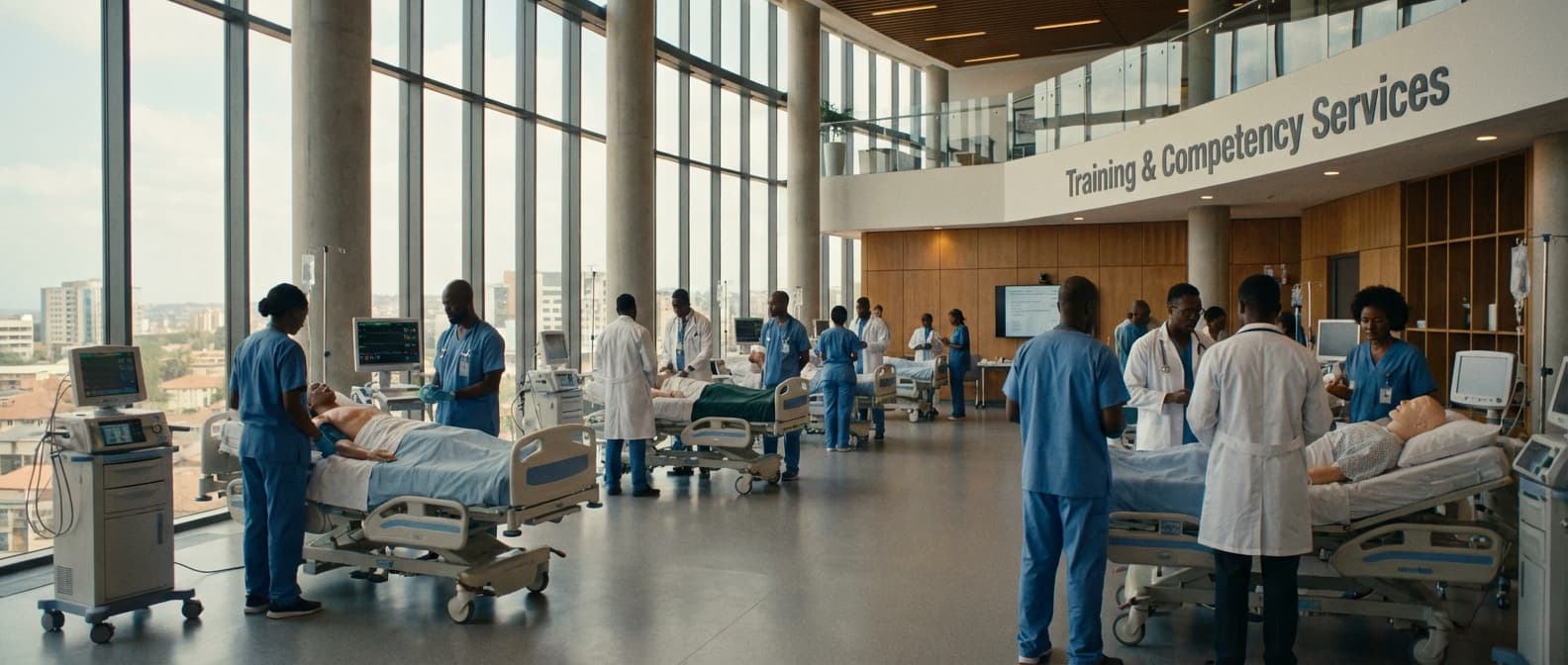
Biomedical Engineering First-Line Support Training Service in Gabon
Engineering Excellence & Technical Support
Biomedical Engineering First-Line Support Training Service High-standard technical execution following OEM protocols and local regulatory frameworks.
Advanced Biomedical Equipment Troubleshooting & Repair
Master hands-on techniques for diagnosing and resolving common malfunctions in critical medical devices, ensuring minimal downtime and optimal patient care delivery within Gabonese healthcare facilities.
Precise Medical Device Calibration & Validation
Learn the rigorous protocols for calibrating and validating a wide range of biomedical equipment, adhering to international standards and local regulations to guarantee accuracy and safety.
Biomedical Safety & Regulatory Compliance
Develop a strong understanding of essential biomedical safety procedures and navigate the specific regulatory landscape in Gabon for medical devices, ensuring compliant and secure operation.
What Is Biomedical Engineering First-line Support Training Service In Gabon?
Biomedical Engineering First-Line Support Training Service in Gabon refers to the initial level of technical training and operational assistance provided to individuals responsible for the basic maintenance, troubleshooting, and user support of biomedical equipment within healthcare facilities in Gabon. This service is crucial for ensuring the operational readiness and longevity of medical devices, thereby directly impacting patient care quality and safety.
| Who Needs This Service? | Typical Use Cases in Gabon | |||||
|---|---|---|---|---|---|---|
| Healthcare Facility Technicians/Assistants: Individuals tasked with the day-to-day operational support of biomedical equipment in hospitals, clinics, and health centers. | Biomedical Engineering Department (Junior Staff): Entry-level personnel within a biomedical engineering department who are the first point of contact for equipment issues. | Clinical Staff (Nurses, Technicians): In facilities with limited dedicated technical personnel, certain clinical staff may receive basic training to handle minor issues and ensure proper equipment usage. | NGOs and International Health Organizations: Personnel involved in setting up or maintaining medical infrastructure in remote or underserved areas. | Equipment Suppliers/Distributors (Local Representatives): To ensure their local support staff are adequately trained to provide initial troubleshooting and user assistance. | Public Health Agencies: To equip their field staff with the necessary skills for managing and supporting medical equipment in public health programs. | |
| Initial Setup and User Training: A new batch of vital signs monitors arrives at a district hospital; first-line support trains nursing staff on operation and basic checks. | Routine Preventive Maintenance: A clinic's infusion pumps undergo scheduled cleaning and functional checks by trained assistants. | Responding to Alarms: A nurse encounters an unusual alarm on a patient monitor; trained personnel perform initial troubleshooting to identify if it's a simple setting issue or requires further investigation. | Minor Fault Rectification: A faulty power cord on a portable ultrasound is identified and replaced by a trained technician. | Equipment Downtime Mitigation: Basic troubleshooting helps resolve an issue with a sterilizer, preventing prolonged downtime and ensuring critical procedures can proceed. | Reporting Equipment Malfunctions: Trained staff document a persistent error code on a diagnostic machine for escalation to specialized engineers. | Ensuring User Compliance: Reinforcing correct operating procedures with clinical staff to prevent accidental damage or misuse of equipment. |
Key Components of Biomedical Engineering First-Line Support Training in Gabon
- Basic Equipment Familiarization: Training on the fundamental principles of operation, intended use, and common features of various biomedical devices prevalent in Gabonese healthcare settings (e.g., vital signs monitors, infusion pumps, basic laboratory equipment).
- Preventive Maintenance (PM) Procedures: Instruction on performing routine checks, cleaning, calibration (where applicable at the first-line level), and scheduled inspections to prevent equipment failure and extend its lifespan.
- Basic Troubleshooting and Diagnostics: Equipping personnel with the skills to identify common malfunctions, perform initial diagnostic steps using built-in self-tests or simple external checks, and differentiate between user-induced issues and actual equipment faults.
- User Support and Training: Educating end-users (clinicians, nurses) on the proper operation, basic safety precautions, and immediate actions to take in case of minor issues or alarms.
- Documentation and Reporting: Training on accurate record-keeping of maintenance activities, incident reports, and equipment status for escalation and data analysis.
- Safety Protocols: Emphasizing electrical safety, infection control related to equipment handling, and emergency procedures.
- Logistics and Spare Parts Management (Basic): Understanding of basic inventory management for consumables and common spare parts, and the process for requesting replacements.
- Escalation Procedures: Clearly defining when and how to escalate issues that cannot be resolved at the first-line level to higher tiers of technical support or specialized biomedical engineers.
Who Needs Biomedical Engineering First-line Support Training Service In Gabon?
Biomedical Engineering First-Line Support Training Service in Gabon is crucial for ensuring the reliable operation and maintenance of essential medical equipment. This training aims to equip individuals with the foundational knowledge and practical skills to identify, diagnose, and resolve common technical issues encountered with a wide range of medical devices. By empowering local personnel with this expertise, healthcare facilities can minimize downtime, improve patient care, and optimize resource utilization. This service is particularly vital in regions where access to specialized biomedical engineers might be limited, or where rapid response to equipment malfunctions is paramount.
| Customer Type | Relevant Departments/Roles | Key Needs Addressed by Training | |||||
|---|---|---|---|---|---|---|---|
| Hospitals (Public & Private) | Biomedical Engineering Department (Technicians, Assistants) | Initial troubleshooting and basic repair of medical devices (e.g., patient monitors, infusion pumps, ECG machines) | Preventive maintenance tasks | Equipment sterilization and safety checks | Basic diagnostics and fault identification | Escalation procedures for complex issues | Record keeping and documentation |
| Hospitals (Public & Private) | Nursing Staff | Understanding basic equipment functionality and operation | Recognizing and reporting equipment malfunctions | Performing simple user-level checks and calibrations | Safe handling and connection of medical devices | ||
| Clinics and Health Centers | Healthcare Technicians/Assistants | Operating and maintaining essential diagnostic equipment (e.g., basic lab analyzers, vital signs monitors) | Troubleshooting common issues with portable medical devices | Ensuring equipment readiness for patient care | |||
| Diagnostic Laboratories | Laboratory Technicians | Basic maintenance and troubleshooting of laboratory equipment (e.g., centrifuges, incubators, basic analyzers) | Understanding equipment parameters and calibration needs | ||||
| Medical Training Institutions | Instructors and Technical Staff | Training future biomedical technicians and healthcare professionals | Maintaining simulation equipment and training models | Providing hands-on experience with medical device maintenance | |||
| Government Ministries (Health) | Technical Support Staff | Overseeing and supporting the maintenance of medical equipment in public health facilities | Developing and implementing training programs for national healthcare workforce | Ensuring compliance with equipment maintenance standards | |||
| NGOs with Healthcare Programs | Field Technicians and Program Managers | Maintaining and repairing medical equipment in remote or underserved areas | Empowering local staff with essential technical skills to ensure program sustainability |
Target Customers and Departments for Biomedical Engineering First-Line Support Training Service in Gabon
- Hospitals (Public and Private)
- Clinics and Health Centers
- Diagnostic Laboratories
- Medical Training Institutions
- Government Ministries (Health, Higher Education)
- Non-Governmental Organizations (NGOs) with healthcare programs
Biomedical Engineering First-line Support Training Service Process In Gabon
This document outlines the Biomedical Engineering First-Line Support Training Service process in Gabon, detailing the workflow from initial inquiry to the successful execution of training. The service aims to equip healthcare professionals with the foundational knowledge and practical skills to perform basic maintenance, troubleshooting, and operation of biomedical equipment, thereby improving healthcare delivery and reducing equipment downtime.
| Stage | Description | Key Activities | Responsible Party | Deliverables/Outcomes |
|---|---|---|---|---|
| Inquiry and Needs Assessment | The process begins when a healthcare institution or individual expresses interest in first-line support training for biomedical equipment. | Initial contact (phone, email, website form), discussion of training needs, identification of specific equipment types, number of trainees, and desired outcomes. | Client (Healthcare Institution/Individual), Training Service Provider (TSP) | Clear understanding of training requirements, scope of work, and target audience. |
| Proposal Development and Agreement | Based on the needs assessment, the TSP prepares a detailed proposal outlining the training program. | Development of a comprehensive proposal including training objectives, curriculum, methodology, duration, trainers' profiles, costs, and a proposed schedule. Negotiation and finalization of the training agreement. | Training Service Provider (TSP), Client | Formal training proposal, signed training agreement/contract. |
| Training Material Preparation | The TSP develops or customizes training materials to suit the agreed-upon curriculum and equipment. | Curriculum design, creation of presentations, manuals, practical exercises, assessment tools (quizzes, practical tests), and facilitator guides. | Training Service Provider (TSP) | Approved training curriculum, student and facilitator manuals, assessment materials. |
| Logistics and Scheduling | Arrangements are made for the venue, equipment, and participant confirmation. | Booking of training venue (on-site or off-site), ensuring availability of functional training equipment, confirmation of participant list and communication of schedule, travel and accommodation arrangements (if applicable). | Training Service Provider (TSP), Client | Confirmed training schedule, secured training venue and equipment, participant registration. |
| Training Delivery | The core training sessions are conducted by qualified instructors. | Theoretical instruction (lectures, presentations), practical demonstrations, hands-on exercises, troubleshooting scenarios, Q&A sessions, and initial assessments. | Training Service Provider (TSP) Trainers, Trainees | Enhanced understanding of equipment operation, basic maintenance, and troubleshooting techniques. Practical skills development. |
| Post-Training Support and Evaluation | Following the training, support is provided and the effectiveness of the training is assessed. | Distribution of certificates, collection of feedback from trainees and client, post-training follow-up (e.g., answering queries), and formal evaluation of training effectiveness through reports or surveys. | Training Service Provider (TSP), Client, Trainees | Training feedback reports, initial evaluation of knowledge/skill retention, and recommendations for further training or support. |
| Certification and Reporting | Formal certification is issued, and a final report is submitted. | Issuance of attendance and/or completion certificates to participants. Submission of a comprehensive training report to the client, summarizing the training conducted, participant performance, feedback, and outcomes. | Training Service Provider (TSP) | Formal training certificates, final training report. |
Key Stages of the Biomedical Engineering First-Line Support Training Service Process
- Inquiry and Needs Assessment
- Proposal Development and Agreement
- Training Material Preparation
- Logistics and Scheduling
- Training Delivery
- Post-Training Support and Evaluation
- Certification and Reporting
Biomedical Engineering First-line Support Training Service Cost In Gabon
Providing first-line support for biomedical engineering equipment in Gabon involves specialized knowledge and on-site presence. The cost of such training services is influenced by several key factors, leading to a range of pricing structures. These factors include the complexity and type of biomedical equipment being covered, the duration and intensity of the training program, the qualifications and experience of the trainers, the location of the training (whether at a client's facility or a dedicated training center), and the number of participants. Additional considerations like travel and accommodation for trainers, materials provided, and any ongoing support or certification can also impact the overall cost. Due to these variables, it's challenging to provide a single definitive price, but a general understanding of the pricing components can help organizations budget effectively.
| Service Component | Typical Cost Range (XAF - Central African CFA franc) |
|---|---|
| Basic Equipment Familiarization (e.g., simple diagnostic tools) | 150,000 - 300,000 XAF per day per trainer |
| Intermediate Equipment Training (e.g., patient monitors, basic imaging) | 250,000 - 500,000 XAF per day per trainer |
| Advanced Equipment Training (e.g., complex surgical equipment, specialized imaging) | 400,000 - 750,000+ XAF per day per trainer |
| On-site Training Setup Fee (per session) | 50,000 - 150,000 XAF |
| Training Materials (per participant) | 20,000 - 75,000 XAF |
| Trainer Travel (local, per trip) | 30,000 - 100,000 XAF (varies by distance) |
| Trainer Accommodation (per night) | 40,000 - 120,000 XAF |
| Certification Fee (per participant, if applicable) | 50,000 - 200,000 XAF |
| Package Deal (e.g., 3-day training for 10 participants on moderate equipment, including materials and local travel) | 1,500,000 - 3,500,000 XAF |
Key Pricing Factors for Biomedical Engineering First-Line Support Training in Gabon
- Complexity and Type of Biomedical Equipment
- Training Program Duration and Intensity
- Trainer Qualifications and Experience
- Training Location (On-site vs. Off-site)
- Number of Participants
- Travel and Accommodation Expenses for Trainers
- Training Materials and Resources
- Certification and Ongoing Support
Affordable Biomedical Engineering First-line Support Training Service Options
Finding affordable and effective first-line biomedical engineering support training is crucial for healthcare facilities to ensure equipment uptime, patient safety, and efficient operations. This service focuses on equipping entry-level technicians, nurses, and other relevant personnel with the foundational knowledge and skills to identify, troubleshoot, and resolve common issues with medical devices, thereby reducing reliance on specialized engineers for basic problems and minimizing downtime. Key to making these services cost-effective are the implementation of value bundles and strategic cost-saving measures.
| Cost-Saving Strategy | Description | Impact on Affordability |
|---|---|---|
| Group Discounts & Volume Licensing | Purchasing training for multiple individuals or departments simultaneously often unlocks reduced per-person costs. Volume licensing for digital resources further enhances savings. | Directly reduces per-unit training cost. |
| Blended Learning Models | Combining online self-paced modules with occasional in-person workshops or virtual instructor-led sessions optimizes resource utilization and reduces travel/venue costs. | Minimizes overhead expenses associated with full-time in-person training. |
| Focus on High-Impact Equipment | Prioritizing training for the most frequently used and critical medical devices ensures that limited training budgets are allocated where they provide the greatest return on investment in terms of reduced downtime. | Maximizes the benefits of training by addressing the most common and impactful issues first. |
| Leveraging Existing Resources | Utilizing internal subject matter experts for certain training components or integrating training with existing IT infrastructure can reduce external vendor dependence. | Reduces fees for external trainers and infrastructure. |
| Subscription-Based Access | Opting for subscription models for online learning platforms provides ongoing access to updated content and a wider range of courses for a predictable recurring cost, rather than per-course fees. | Offers predictable budgeting and continuous learning opportunities at a lower long-term cost. |
| Outcome-Based Pricing | Negotiating with training providers for pricing structures tied to demonstrable improvements in equipment uptime or reduction in service calls can ensure value for money. | Aligns training provider incentives with facility's cost-saving goals. |
Value Bundles for Affordable Biomedical Engineering First-Line Support Training
- Basic Troubleshooting & Safety: Covers fundamental diagnostic steps, common error code interpretation, basic preventative maintenance, and essential safety protocols for a range of prevalent medical equipment.
- Device-Specific Modules: Offers targeted training for high-volume or critical equipment within a facility (e.g., infusion pumps, vital signs monitors, EKG machines), allowing for customized skill development.
- Remote Support Integration: Trains staff on utilizing remote diagnostic tools and support platforms, enabling quicker resolution of issues that don't require physical intervention.
- Decontamination & Sterilization Protocols: Focuses on the safe and effective cleaning and sterilization procedures for medical devices, a critical aspect of first-line support.
- On-Demand Learning Library Access: Provides access to a repository of video tutorials, FAQs, and troubleshooting guides for ongoing self-paced learning and reference.
- Train-the-Trainer Program: Equips internal staff to become trainers, creating a sustainable and scalable in-house training program over time.
- Certification & Competency Assessment: Includes standardized assessments to verify the acquired skills and knowledge, providing a tangible measure of training effectiveness.
Verified Providers In Gabon
In Gabon, navigating the healthcare landscape to find reliable and trustworthy providers is crucial for personal well-being. 'Verified Providers' are those who have undergone rigorous vetting processes, ensuring they meet high standards of professionalism, ethical conduct, and quality of care. Franance Health plays a pivotal role in this ecosystem by rigorously credentialing healthcare professionals and facilities. Their verification process signifies that a provider has met stringent criteria, offering patients peace of mind and confidence in their choice of care. Choosing a Franance Health-verified provider means opting for a professional who is committed to excellence, adherence to best practices, and continuous professional development. This dedication translates into a safer, more effective, and patient-centered healthcare experience. They are not just licensed; they are validated.
| Credentialing Aspect | Franance Health Verification Process | Benefit to Patients |
|---|---|---|
| Professional Licenses & Qualifications | Thorough review of medical degrees, licenses, and certifications from recognized institutions. | Ensures providers possess the fundamental knowledge and legal authorization to practice. |
| Clinical Experience & Competence | Verification of past practice history, peer reviews, and assessment of specific skill sets. | Confirms practical experience and proven ability in chosen medical specialties. |
| Criminal Background Checks | Comprehensive checks to ensure no history of malpractice or criminal offenses impacting patient care. | Protects patients from potential harm and ensures a safe care environment. |
| Ethical Conduct & Professionalism | Evaluation of adherence to ethical guidelines and professional codes of conduct. | Guarantees respectful, honest, and patient-focused interactions. |
| Continuing Medical Education (CME) | Confirmation of participation in ongoing training and educational programs. | Ensures providers are up-to-date with the latest medical knowledge and techniques. |
Why Franance Health Verified Providers are the Best Choice in Gabon:
- Enhanced Patient Safety: Rigorous background checks and credential validation minimize risks associated with unqualified practitioners.
- Commitment to Quality Care: Verification ensures providers adhere to established medical standards and best practices.
- Ethical Standards: Franance Health assesses providers for ethical conduct and patient-centered approaches.
- Professional Development: Verified providers often demonstrate a commitment to ongoing learning and staying current with medical advancements.
- Trust and Credibility: The Franance Health seal signifies a trusted and reliable healthcare professional.
- Access to Expertise: Identification of specialists and facilities with proven competencies in their fields.
- Improved Patient Outcomes: Higher quality care directly contributes to better health results for patients.
Scope Of Work For Biomedical Engineering First-line Support Training Service
This Scope of Work (SOW) outlines the requirements for a comprehensive Biomedical Engineering First-Line Support Training Service. The objective is to equip newly hired or existing biomedical engineering technicians with the fundamental knowledge and practical skills necessary to effectively perform first-line support for a range of medical devices. This training will focus on common issues, basic troubleshooting, preventive maintenance, safety protocols, and proper documentation, enabling them to resolve a significant percentage of routine problems independently and escalate complex issues appropriately.
| Category | Specification/Requirement | Details/Notes |
|---|---|---|
| Device Coverage | Minimum X number of device categories | Examples: Patient Monitoring, Infusion Pumps, ECG Machines, Ventilators (entry-level). |
| Troubleshooting Methodology | Standardized systematic approach | Emphasis on problem identification, hypothesis generation, testing, and resolution. |
| Safety Protocols | Adherence to relevant standards | Includes electrical safety, infection control, and patient safety during device interaction. |
| Preventive Maintenance (PM) | Understanding of PM schedules and procedures | Basic inspection, cleaning, lubrication, and functional testing. |
| Documentation Standards | Accurate and timely record-keeping | Use of service logs, work orders, and asset management systems. |
| Escalation Procedures | Clear guidelines for issue escalation | When and how to involve senior technicians or specialized support. |
| Training Duration | X days/hours per module/overall | To be determined based on complexity and scope. |
| Participant to Trainer Ratio | Maximum Y:1 for practical sessions | Ensures adequate individual attention and supervision. |
| Assessment Pass Mark | Minimum Z% | For written and practical evaluations. |
| Material Format | Digital and/or printed | Includes presentations, manuals, checklists, and case studies. |
Technical Deliverables and Standard Specifications
- Training Material Development & Delivery: Comprehensive, up-to-date training modules covering device types, common malfunctions, diagnostic procedures, basic repair techniques, preventive maintenance schedules, safety standards (e.g., IEC 60601), and regulatory compliance.
- Hands-on Practical Sessions: Supervised practical exercises using actual or simulated medical equipment to reinforce theoretical knowledge and develop troubleshooting skills. This includes utilizing diagnostic tools and test equipment.
- Competency Assessments: Evaluation of trainee understanding and skill acquisition through a combination of written tests, practical demonstrations, and scenario-based problem-solving exercises. Minimum passing scores will be defined for each assessment.
- Post-Training Support: A defined period of remote or on-site support for trainees to address any lingering questions or assist with initial real-world application of learned skills.
- Trainer Qualifications: Instructors must possess demonstrable expertise in biomedical engineering, extensive experience in medical device maintenance and repair, and proven training delivery capabilities.
- Training Environment: A suitable training facility with adequate space, appropriate lighting, power outlets, and access to a representative sample of medical devices (or high-fidelity simulators) for practical sessions.
- Documentation & Record Keeping: Provision of training attendance records, assessment results, and a summary report of the training conducted.
Service Level Agreement For Biomedical Engineering First-line Support Training Service
This Service Level Agreement (SLA) outlines the response times and uptime guarantees for the Biomedical Engineering First-Line Support Training Service. This service is critical for ensuring that new and existing personnel are proficient in the operation and basic troubleshooting of biomedical equipment, minimizing downtime and improving patient safety.
| Service Component | Response Time (Business Hours) | Uptime Guarantee (for online resources) |
|---|---|---|
| Request for New Equipment Training Session | Within 4 business hours | N/A |
| Request for Refresher Training Module | Within 8 business hours | N/A |
| Access to Online Troubleshooting Guides | N/A | 99.5% |
| Access to Knowledge Base | N/A | 99.5% |
| Technical Support for Training Platform | Within 2 business hours | N/A |
Key Service Components
- On-demand training sessions for new equipment introductions.
- Refresher training modules for existing equipment.
- Troubleshooting guides and practical exercises.
- Certification for trained personnel.
- Access to a knowledge base of common issues and solutions.
Frequently Asked Questions

Ready when you are
Let's scope your Biomedical Engineering First-Line Support Training Service in Gabon project in Gabon.

Scaling healthcare logistics and technical systems across the entire continent.