
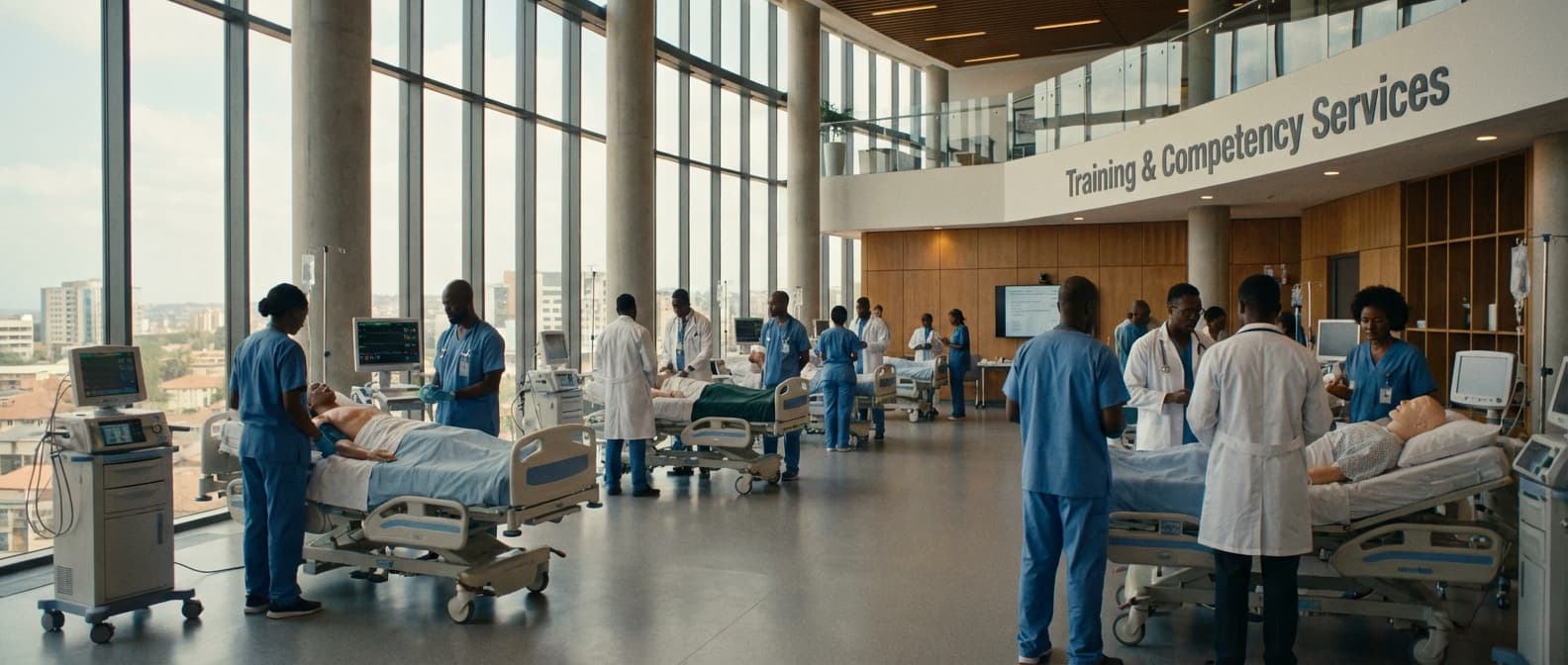
Anesthesia Workstation User Training Service in Gabon
Engineering Excellence & Technical Support
Anesthesia Workstation User Training Service High-standard technical execution following OEM protocols and local regulatory frameworks.
Mastering Advanced Gas Delivery Controls
This module provides hands-on training on precise control of oxygen, nitrous oxide, and volatile anesthetic delivery, ensuring optimal patient ventilation and minimal waste, crucial for resource-conscious environments in Gabon.
Integrated Patient Monitoring & Alarm Management
Learn to effectively interpret and respond to integrated patient vital signs displayed on the workstation, with a focus on proactive alarm management to enhance patient safety and reduce critical event risks in diverse clinical settings.
Routine Maintenance & Troubleshooting for Reliability
Gain essential skills in performing daily checks, basic troubleshooting, and preventative maintenance for the anesthesia workstation, ensuring consistent performance and minimizing downtime for uninterrupted patient care across Gabon.
What Is Anesthesia Workstation User Training Service In Gabon?
The Anesthesia Workstation User Training Service in Gabon refers to a specialized educational program designed to equip healthcare professionals with the comprehensive knowledge and practical skills required to operate and maintain modern anesthesia workstations. These advanced medical devices are critical for patient care during surgical and invasive procedures, necessitating a deep understanding of their functionalities, safety protocols, and troubleshooting capabilities. The service aims to ensure optimal performance of the anesthesia workstation, thereby enhancing patient safety, procedural efficiency, and compliance with international healthcare standards within the Gabonese medical infrastructure.
| Target Audience | Purpose of Training | Typical Use Cases |
|---|---|---|
| Anesthesiologists | To ensure proficient and safe administration of anesthesia using advanced workstations, optimizing patient outcomes. | Pre-operative patient assessment and workstation setup; intra-operative anesthetic management and monitoring; post-operative patient transition and data retrieval. |
| Anesthesia Nurses/Technicians | To provide essential support in workstation setup, operation, monitoring, and basic maintenance, freeing anesthesiologists for critical patient management. | Workstation preparation and sterilization; connection of breathing circuits and monitoring lines; routine equipment checks and alarm response; restocking of consumables. |
| Medical Device Engineers/Biomedical Technicians | To enable in-depth understanding of workstation architecture for advanced troubleshooting, repair, and preventive maintenance. | Calibration and performance verification; diagnosis and repair of complex malfunctions; installation of software updates and firmware; comprehensive equipment servicing. |
| Healthcare Facility Administrators/Procurement Officers | To facilitate informed decision-making regarding workstation acquisition, service contracts, and staff training investment. | Evaluating workstation features against clinical needs; understanding training requirements for new equipment; budgeting for training and maintenance services. |
Service Components:
- Theoretical Instruction: In-depth modules covering the principles of anesthesia delivery, ventilation mechanics, gas monitoring, drug administration systems, and the integrated functionalities of specific workstation models.
- Practical Hands-on Training: Simulated and live demonstrations of workstation setup, patient connection, parameter adjustment, alarm management, and routine maintenance procedures.
- Safety Protocols and Risk Management: Training on identifying and mitigating potential hazards associated with anesthesia workstation operation, including equipment malfunction, incorrect settings, and adverse patient responses.
- Troubleshooting and Maintenance: Education on common operational issues, diagnostic procedures, and basic maintenance tasks to ensure the longevity and reliability of the equipment.
- Regulatory Compliance: Guidance on adhering to local and international guidelines and standards pertaining to the use of medical equipment in anesthesia.
- Advanced Features Utilization: Instruction on advanced modes of ventilation, patient monitoring integration, and data logging capabilities specific to the deployed workstations.
Who Needs Anesthesia Workstation User Training Service In Gabon?
Anesthesia workstation user training is crucial in Gabon to ensure the safe and effective operation of these complex medical devices. This service is vital for healthcare professionals who operate anesthesia machines, as improper usage can lead to patient harm. The primary goal of such training is to enhance user competency, reduce the risk of errors, and maximize the lifespan and performance of the equipment.
| Department | Reason for Training | Key Personnel Involved |
|---|---|---|
| Anesthesiology Department | Direct operation of anesthesia workstations during surgical and critical care procedures. Ensuring patient safety and optimal anesthetic delivery. | Anesthesiologists, Nurse Anesthetists (if applicable), Anesthesia Technicians |
| Operating Room (OR) Staff | Integration of anesthesia workstations into the surgical workflow. Understanding basic functions for monitoring and emergency response. | Surgeons, OR Nurses, Surgical Technicians |
| Intensive Care Unit (ICU) / Critical Care Unit (CCU) | Use of anesthesia workstations for mechanical ventilation and advanced respiratory support in critically ill patients. | Intensivists, Critical Care Nurses, Respiratory Therapists |
| Biomedical Engineering/Technical Department | Understanding the technical aspects for troubleshooting, routine maintenance, and repair. Ensuring equipment reliability and compliance. | Biomedical Engineers, Medical Equipment Technicians |
| Procurement/Materials Management Department | Understanding the capabilities and maintenance requirements when purchasing new equipment, ensuring adequate training is factored into the acquisition process. | Procurement Officers, Hospital Administrators |
Target Customers and Departments in Gabon Requiring Anesthesia Workstation User Training Service
- Public Hospitals and Clinics: Facilities funded and operated by the Gabonese government, often serving a large portion of the population.
- Private Hospitals and Clinics: For-profit healthcare institutions that may offer specialized services and cater to a different patient demographic.
- University Teaching Hospitals: Centers that not only provide patient care but also train future medical professionals, necessitating up-to-date and comprehensive training programs.
- Non-Governmental Organization (NGO) Hospitals: Healthcare facilities operated by non-profit organizations, which may have varying levels of resources but still require competent staff.
- Military Hospitals: Healthcare facilities serving the armed forces, which require reliable equipment and well-trained personnel for critical operations.
- Medical Equipment Suppliers/Distributors: Companies that sell and service anesthesia workstations in Gabon. They often provide training as part of their sales or support packages.
Anesthesia Workstation User Training Service Process In Gabon
This document outlines the user training service process for Anesthesia Workstations in Gabon, from initial inquiry to successful execution. The process is designed to be comprehensive, ensuring that healthcare professionals are adequately trained to operate and maintain anesthesia workstations safely and efficiently.
| Phase | Step | Description | Responsible Party | Key Deliverables/Outcomes |
|---|---|---|---|---|
| Phase 1: Inquiry & Needs Assessment | 1.1 Initial Inquiry | Healthcare facility or individual contacts the service provider to inquire about anesthesia workstation user training. | Client (Healthcare Facility/Individual) | Formal or informal request for training services. |
| 1.2 Needs Assessment Call/Meeting | A meeting or call to understand the client's specific training needs, including the type of anesthesia workstation, number of trainees, existing knowledge base, and desired learning objectives. | Service Provider & Client | Documented training needs analysis. | |
| 1.3 Site Visit (Optional) | If necessary, a site visit to assess the training environment, available equipment, and logistical considerations. | Service Provider | Confirmation of training environment suitability. | |
| Phase 2: Proposal & Agreement | 2.1 Training Proposal Development | Based on the needs assessment, the service provider develops a detailed training proposal outlining the curriculum, duration, methodology, trainer profiles, and costs. | Service Provider | Formal training proposal document. |
| 2.2 Proposal Review & Negotiation | The client reviews the proposal and may negotiate terms, content, or pricing. Feedback is incorporated. | Client & Service Provider | Agreed-upon training proposal. | |
| 2.3 Contract/Service Agreement | A formal contract or service agreement is drafted, signed, and executed, detailing the scope of work, payment terms, and liabilities. | Service Provider & Client | Signed training contract/agreement. | |
| Phase 3: Preparation & Scheduling | 3.1 Curriculum Finalization | The training curriculum is finalized and may include theoretical sessions, practical demonstrations, hands-on exercises, and case studies. | Service Provider | Finalized training curriculum. |
| 3.2 Trainer Assignment | Qualified and experienced trainers are assigned to the training program. | Service Provider | Assigned trainers. | |
| 3.3 Training Material Preparation | Development or procurement of training manuals, presentations, participant guides, and any necessary supplementary materials. | Service Provider | Completed training materials. | |
| 3.4 Scheduling & Logistics | Coordination with the client to schedule the training dates, times, location, and ensure all logistical arrangements (e.g., room booking, equipment availability, participant notification) are in place. | Service Provider & Client | Confirmed training schedule and logistics plan. | |
| Phase 4: Training Delivery | 4.1 Welcome & Introduction | Opening session to welcome participants, introduce trainers, outline the training objectives, and establish ground rules. | Trainer | Participant engagement and understanding of training goals. |
| 4.2 Theoretical Sessions | Lectures, presentations, and discussions covering the principles of anesthesia workstation operation, safety features, maintenance, and troubleshooting. | Trainer | Knowledge acquisition by participants. | |
| 4.3 Practical Demonstrations | Live demonstrations of the anesthesia workstation's functions, features, and common procedures by the trainer. | Trainer | Visual understanding of workstation operation. | |
| 4.4 Hands-on Practice | Participants engage in supervised hands-on practice with the anesthesia workstation, performing various tasks and scenarios. | Trainer & Participants | Development of practical skills and confidence. | |
| 4.5 Q&A and Discussion | Dedicated time for participants to ask questions, discuss challenges, and share experiences. | Trainer & Participants | Clarification of doubts and knowledge reinforcement. | |
| 4.6 Case Studies & Scenarios | Application of learned knowledge and skills through realistic case studies and simulated patient scenarios. | Trainer & Participants | Enhanced problem-solving and critical thinking abilities. | |
| 4.7 Assessment (Optional/Formal) | Evaluation of participant learning through quizzes, practical assessments, or observation. This can be formal for certification or informal for progress monitoring. | Trainer | Measure of participant comprehension and skill acquisition. | |
| Phase 5: Post-Training Support & Evaluation | 5.1 Feedback Collection | Participants and potentially their supervisors provide feedback on the training program, trainers, and materials through evaluation forms. | Participants & Client | Valuable feedback for program improvement. |
| 5.2 Training Report | The service provider compiles a training report detailing attendance, assessment results (if applicable), feedback summary, and any recommendations. | Service Provider | Official training completion report. | |
| 5.3 Certificate of Completion | Certificates of completion are issued to participants who successfully complete the training program. | Service Provider | Recognition of training attainment. | |
| 5.4 Post-Training Support (e.g., Helpline, Refresher) | Provision of ongoing support, such as a technical helpline, access to online resources, or offering refresher courses as needed. | Service Provider | Sustained user proficiency and support. | |
| 5.5 Performance Monitoring & Follow-up | Occasional follow-up with the client to monitor the application of learned skills in practice and identify any further training needs. | Service Provider & Client | Long-term effectiveness of training. |
Anesthesia Workstation User Training Service Process in Gabon
- Phase 1: Inquiry & Needs Assessment
- Phase 2: Proposal & Agreement
- Phase 3: Preparation & Scheduling
- Phase 4: Training Delivery
- Phase 5: Post-Training Support & Evaluation
Anesthesia Workstation User Training Service Cost In Gabon
The cost of anesthesia workstation user training services in Gabon can vary significantly based on several factors. These include the complexity and specific features of the anesthesia workstation model being trained on, the duration and depth of the training program, the qualifications and experience of the trainers, and the location of the training within Gabon (e.g., Libreville versus a more remote region). Additionally, the number of participants and whether the training is conducted on-site at a healthcare facility or at a dedicated training center will influence the overall price. Providers may also offer customized training packages, which can affect pricing.
| Training Type | Estimated Cost Range (XAF) | Description |
|---|---|---|
| Basic User Training (1-2 Days) | 150,000 - 300,000 | Covers fundamental operations, safety checks, and basic troubleshooting for a specific workstation model. |
| Intermediate User Training (2-3 Days) | 250,000 - 500,000 | Includes advanced features, ventilation modes, patient monitoring integration, and more in-depth troubleshooting. |
| Advanced/Specialized Training (3-5 Days) | 400,000 - 800,000+ | Focuses on complex protocols, maintenance procedures, integration with other hospital systems, and specific clinical applications. May involve simulation. |
| On-site Training Surcharge | 50,000 - 150,000+ | Additional cost for trainers to travel to a specific hospital or clinic, covering travel, accommodation, and per diem expenses. |
| Per Participant Fee (for group training) | 20,000 - 75,000 | Cost per individual attending a larger group training session, often for supplementary materials or certification. |
Key Pricing Factors for Anesthesia Workstation User Training in Gabon:
- Anesthesia Workstation Model & Complexity
- Training Program Duration & Depth
- Trainer Qualifications & Experience
- Geographic Location of Training
- Number of Participants
- On-site vs. Off-site Training
- Customization of Training Content
Affordable Anesthesia Workstation User Training Service Options
Our Affordable Anesthesia Workstation User Training Service is designed to equip healthcare professionals with the essential knowledge and skills to operate anesthesia workstations safely and efficiently. We understand the critical importance of proper training for patient care and operational effectiveness, while also recognizing the budgetary constraints faced by many healthcare facilities. This service offers flexible and cost-effective options to ensure your team is proficient without breaking the bank.
| Cost-Saving Strategy | Description | Benefits |
|---|---|---|
| Group Training Discounts | Enroll multiple staff members from the same facility in our training programs. Discounts are tiered based on the number of participants. | Reduced per-person training cost, consistent knowledge across the team, fosters collaborative learning. |
| Train-the-Trainer Programs | Empower your internal staff to become certified trainers. We provide them with comprehensive knowledge and materials to train future colleagues. | Long-term cost reduction by eliminating recurring external training fees, builds internal expertise, scalable training capacity. |
| Online/Remote Training Options | Utilize our flexible online modules and live virtual sessions to reduce travel expenses and minimize staff downtime. | Significant savings on travel, accommodation, and per diem costs. Increased flexibility for staff scheduling, accessible from anywhere. |
| Bundled Service Packages | Combine training services with workstation maintenance or calibration packages for integrated cost benefits. | Streamlined procurement, potential discounts for bundled services, ensures equipment readiness alongside user proficiency. |
| Early Bird Registration | Sign up for training sessions well in advance of the scheduled date to secure discounted rates. | Lower upfront costs, allows for better budget planning, guarantees a spot in popular sessions. |
| Subscription-Based Access | For ongoing training needs and updates, consider our subscription model for continuous access to our training resources and new modules. | Predictable budgeting, ensures staff are up-to-date with the latest technology and best practices, cost-effective for high-turnover environments. |
Value Bundles for Comprehensive Training
- {"title":"Basic Proficiency Bundle","description":"Ideal for new users or those requiring a refresher on fundamental operations. Covers essential workstation functions, patient monitoring integration, and basic troubleshooting. Offers a cost-effective entry point into our training program."}
- {"title":"Advanced Functionality Bundle","description":"For experienced users looking to master advanced features. Includes in-depth training on ventilation modes, drug delivery systems, data management, and more complex troubleshooting scenarios. Enhances the team's ability to optimize patient care."}
- {"title":"Comprehensive Suite Bundle","description":"Our most popular option, combining basic and advanced modules for a complete understanding. Caters to all user levels and ensures a highly competent anesthesia team. Provides the best value for facilities seeking well-rounded training."}
- {"title":"Customizable Module Bundle","description":"Tailor your training to specific needs. Select individual modules from our extensive library to focus on particular aspects of workstation operation or specific equipment models. Perfect for targeted skill development or addressing unique challenges."}
Verified Providers In Gabon
In Gabon, ensuring access to quality healthcare is paramount, and identifying verified healthcare providers is a critical step. Franance Health stands out as a trusted name, offering a rigorous credentialing process that signifies a commitment to excellence, patient safety, and ethical medical practices. Their verification process involves a multi-faceted evaluation of healthcare professionals and facilities, ensuring they meet and exceed established standards. This comprehensive approach provides patients with the confidence that they are receiving care from competent and reliable sources.
| Provider Type | Franance Health Verification Criteria | Benefits for Patients |
|---|---|---|
| Doctors and Specialists | Valid medical license, board certification (if applicable), proof of continuous medical education, clean disciplinary record. | Access to highly qualified and competent medical expertise, reduced risk of misdiagnosis or ineffective treatment. |
| Hospitals and Clinics | Compliance with national healthcare regulations, established patient safety protocols, adequate infrastructure and equipment, qualified staffing. | Safe and sterile environment, access to necessary medical technology, comprehensive care for various medical needs. |
| Laboratories and Diagnostic Centers | Accreditation from recognized bodies, adherence to quality control standards, qualified technicians, accurate and reliable test results. | Precise diagnostic information for effective treatment planning, timely results. |
| Pharmacies | Valid operating license, proper storage of medications, qualified pharmacists, adherence to drug dispensing regulations. | Access to safe and authentic medications, professional advice on drug usage and interactions. |
Why Franance Health Credentials Matter:
- Rigorous vetting of medical professionals' qualifications and experience.
- Adherence to international standards of patient care and safety.
- Commitment to ethical medical practices and patient well-being.
- Ensuring facilities meet required health and safety regulations.
- Promoting transparency and accountability within the healthcare sector.
- Providing peace of mind for individuals seeking reliable medical services.
Scope Of Work For Anesthesia Workstation User Training Service
This Scope of Work (SOW) outlines the requirements for providing comprehensive user training services for Anesthesia Workstations. The training will equip healthcare professionals with the necessary knowledge and skills to safely and effectively operate, maintain, and troubleshoot the Anesthesia Workstation. This document details the technical deliverables and standard specifications that will guide the training program.
| Deliverable | Description | Standard Specification / Requirement | |||
|---|---|---|---|---|---|
| Training Curriculum Development | Creation of a comprehensive and modular training curriculum covering all aspects of the Anesthesia Workstation. | Curriculum must be tailored to different user roles (e.g., anesthesiologists, nurse anesthetists, biomedical engineers). | Must include theoretical knowledge, practical demonstrations, and hands-on exercises. | Content must align with manufacturer's guidelines, clinical best practices, and relevant safety standards. | |
| Training Materials Production | Development and production of high-quality training materials. | Materials to include, but not be limited to: User Manuals (digital/print), Quick Reference Guides, Presentation Slides, Video Demonstrations, Case Studies, and Quizzes. | All materials must be clear, concise, accurate, and easily understandable. | Materials should be available in the primary language of the trainees and potentially translated into other required languages. | |
| Instructor-Led Training Sessions | Delivery of interactive training sessions by certified and experienced instructors. | Sessions to include lectures, group discussions, and Q&A. | Practical sessions on actual or simulated Anesthesia Workstations. | Minimum instructor-to-trainee ratio to be defined based on the complexity of the equipment and the training module. | Sessions to be conducted at the client's facility or a designated training center. |
| Hands-on Practical Training | Dedicated time for trainees to interact directly with the Anesthesia Workstation under instructor supervision. | Trainees will perform simulated procedures and functionalities. | Focus on realistic clinical scenarios and troubleshooting common issues. | Access to fully functional Anesthesia Workstations for practical sessions is mandatory. | |
| Competency Assessment and Evaluation | Development and implementation of methods to assess trainee competency. | Includes pre- and post-training assessments (quizzes, practical exams). | Formal evaluation of each trainee's understanding and practical skills. | Training effectiveness evaluation through feedback forms from trainees and instructors. | |
| Certification of Training Completion | Issuance of certificates of completion to trainees who successfully meet the competency requirements. | Certificates should clearly state the training provided, duration, and the name of the certified individual. | Certificates to be issued within a specified timeframe after training completion. | ||
| Post-Training Support | Provision of limited post-training support. | Includes access to a dedicated support channel for technical queries related to the training content (e.g., email, phone). | Support duration and scope to be clearly defined (e.g., 30 days post-training). | ||
| Reporting | Provision of comprehensive reports on training activities and outcomes. | Reports to include: attendance records, assessment results, trainee feedback summaries, and any identified areas for curriculum improvement. | Reports to be submitted to the client project manager within a specified timeframe. |
Objectives
- To ensure all trained personnel are proficient in the safe and effective operation of the Anesthesia Workstation.
- To familiarize users with the workstation's features, functionalities, and integrated systems.
- To train users on routine maintenance, cleaning, and basic troubleshooting procedures.
- To enhance user understanding of patient monitoring and ventilation strategies utilizing the workstation.
- To promote adherence to best practices and regulatory guidelines for anesthesia delivery.
- To ensure users can identify and report critical system errors or malfunctions.
Service Level Agreement For Anesthesia Workstation User Training Service
This Service Level Agreement (SLA) outlines the terms and conditions for the Anesthesia Workstation User Training Service provided by [Your Company Name] (hereinafter referred to as "Provider") to [Client Company Name] (hereinafter referred to as "Client"). This SLA specifically addresses response times for support requests and uptime guarantees for the training platform/resources. This agreement is effective as of [Start Date] and remains in effect until [End Date] or as otherwise terminated in accordance with the master service agreement between the parties.
| Service Component | Response Time (Business Hours) | Uptime Guarantee |
|---|---|---|
| Critical Support (e.g., platform completely inaccessible, major simulation failure) | 1 Business Hour | 99.5% |
| High Priority Support (e.g., specific module non-functional, persistent errors affecting training flow) | 4 Business Hours | 99.0% |
| Medium Priority Support (e.g., questions regarding content, minor bugs, feature requests) | 1 Business Day | 98.5% |
| Low Priority Support (e.g., general inquiries, feedback submission) | 2 Business Days | N/A (Best Effort) |
Key Definitions
- Anesthesia Workstation User Training Service: Refers to the provision of educational materials, virtual simulations, and/or instructor-led sessions designed to train users on the operation and maintenance of anesthesia workstations.
- Business Hours: Refers to the hours between 9:00 AM and 5:00 PM, Monday through Friday, in the [Client's Time Zone], excluding national holidays.
- Downtime: Refers to any period during which the training platform or core training resources are unavailable to the Client due to an unscheduled outage or failure within the Provider's control.
- Response Time: The maximum time elapsed between the Client initiating a support request and the Provider acknowledging receipt of the request and initiating troubleshooting.
- Uptime: The percentage of time the training platform or core training resources are available and operational during scheduled service hours.
Frequently Asked Questions

Ready when you are
Let's scope your Anesthesia Workstation User Training Service in Gabon project in Gabon.

Scaling healthcare logistics and technical systems across the entire continent.