
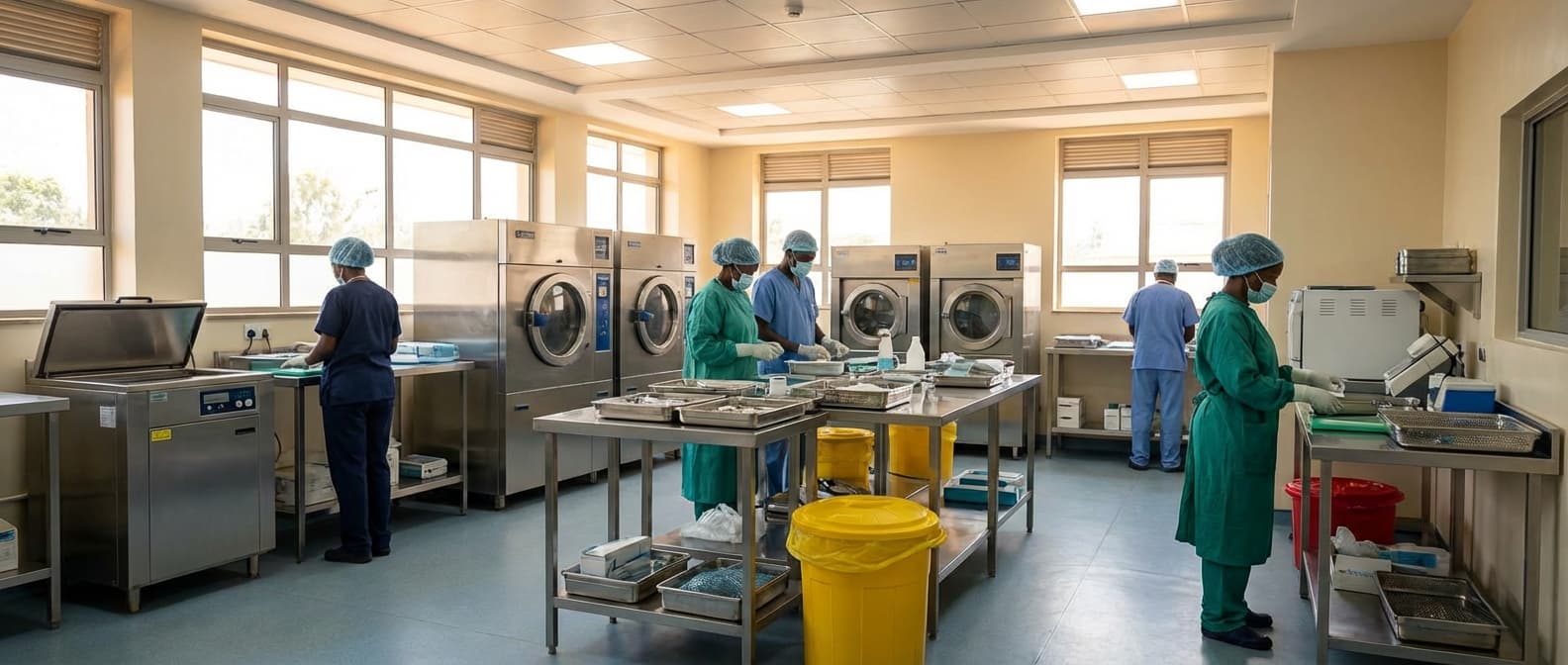
Medical Equipment Decontamination Service (Pre-Repair/Pre-Relocation) in Gabon
Engineering Excellence & Technical Support
Medical Equipment Decontamination Service (Pre-Repair/Pre-Relocation) High-standard technical execution following OEM protocols and local regulatory frameworks.
Enhanced Bio-Safety Protocols
Our specialized decontamination process rigorously eliminates biohazardous contaminants from medical equipment prior to repair or relocation, ensuring a sterile environment and safeguarding both technical personnel and future patient interactions in Gabon.
Pre-Repair Component Integrity
We meticulously decontaminate medical equipment, removing residual fluids, particulate matter, and biological agents. This critical step protects sensitive internal components, prevents cross-contamination during repairs, and extends the operational lifespan of valuable medical assets in Gabon.
Seamless Relocation Preparedness
Our pre-relocation decontamination service guarantees that medical equipment is fully sanitized, meeting all regulatory and safety standards for transport. This ensures a smooth transition for facilities across Gabon, minimizing downtime and maintaining operational continuity.
What Is Medical Equipment Decontamination Service (Pre-repair/pre-relocation) In Gabon?
Medical Equipment Decontamination Service (Pre-Repair/Pre-Relocation) in Gabon refers to the specialized process of cleaning, disinfecting, and sterilizing medical devices and equipment prior to their submission for repair or relocation. This service is crucial for preventing the transmission of infectious agents, ensuring the safety of both healthcare personnel and the technicians involved in subsequent handling, and maintaining the integrity of the equipment during transport and repair processes. The objective is to render the equipment biologically safe by eliminating or inactivating all viable microorganisms, including bacteria, viruses, fungi, and prions, to a level that is considered safe for handling by non-sterile personnel.
| Who Needs This Service | Typical Use Cases | |||||||
|---|---|---|---|---|---|---|---|---|
| Hospitals and Clinics: All healthcare facilities housing medical equipment requiring repair or relocation. | Equipment Malfunctions: Devices exhibiting faults that necessitate external repair, where contamination poses a risk to technicians. | Medical Equipment Manufacturers/Distributors: Companies receiving returned equipment for servicing or evaluation. | Relocation of Facilities: When entire departments or entire healthcare institutions are being moved, and all equipment must be decontaminated before transit and reinstallation. | Biomedical Engineering Departments: In-house technical teams responsible for equipment maintenance and repair. | Outbound Equipment Shipments: Devices being sent to external repair centers, laboratories, or for lease/sale. | Diagnostic Laboratories: Facilities dealing with infectious materials and requiring decontamination of their analytical instruments. | Emergency Medical Services (EMS): Ambulances and associated equipment requiring servicing or transfer. | Medical Research Institutions: Laboratories utilizing specialized equipment that may have been exposed to biohazards. |
Key Components of Medical Equipment Decontamination Service (Pre-Repair/Pre-Relocation)
- Pre-cleaning and gross contamination removal: Initial removal of visible soil, blood, and biological debris.
- Disinfection: Application of chemical agents or physical methods to kill or inactivate most pathogenic microorganisms.
- Sterilization (where applicable): Elimination of all forms of microbial life, including resistant spores.
- Validation and verification: Procedures to ensure the decontamination process has been effective.
- Packaging and containment: Secure packaging to prevent recontamination during transport.
- Documentation: Detailed records of the decontamination process, including methods used, agents, and dates.
Who Needs Medical Equipment Decontamination Service (Pre-repair/pre-relocation) In Gabon?
In Gabon, medical equipment decontamination services are crucial for various entities to ensure safety, compliance, and operational efficiency before equipment undergoes repairs or relocation. This service addresses the critical need to eliminate biological, chemical, and radiological contaminants that can pose risks to technicians, patients, and the environment. Proper decontamination is a vital step in preventing cross-contamination, protecting the integrity of sensitive equipment, and meeting regulatory standards.
| Target Customer/Department | Specific Needs/Reasons for Decontamination (Pre-Repair/Pre-Relocation) | Key Departments Involved |
|---|---|---|
| Hospitals and Clinics (Public & Private) | To ensure the safety of repair technicians, prevent the spread of infectious agents during transport, and maintain a sterile environment for patient care areas. Essential for equipment moved between wards or departments for repair. | Biomedical Engineering, Infection Control, Central Sterile Supply Department (CSSD), Facilities Management |
| Diagnostic Laboratories | To prevent cross-contamination of reagents and samples during equipment servicing. Crucial for maintaining the accuracy of diagnostic tests and protecting laboratory personnel from biohazards. | Laboratory Management, Quality Assurance, Technical Staff |
| Surgical Centers | Sterilization and infection control are paramount. Decontamination before repair or relocation of surgical equipment ensures no biological material is transferred to repair facilities or other patient areas. | Surgical Department Heads, Infection Control, Biomedical Engineering, CSSD |
| Blood Banks and Transfusion Centers | Strict protocols are in place to prevent pathogen transmission. Decontamination of equipment used for blood processing and storage before servicing is critical for public health. | Blood Bank Management, Laboratory Directors, Quality Control |
| Research Institutions | Handling of biological and chemical agents requires rigorous decontamination to protect researchers and prevent contamination of research materials. | Principal Investigators, Laboratory Managers, Safety Officers |
| Medical Device Manufacturers and Distributors | For equipment returned for repair or refurbishment. Ensures compliance with safety regulations and protects their own service personnel and facilities. | Service and Repair Departments, Logistics, Quality Assurance |
| Government Health Agencies | Overseeing public health infrastructure, they mandate and ensure adherence to decontamination protocols for equipment within public healthcare facilities. | Ministry of Health, Public Health Departments |
| Non-Governmental Organizations (NGOs) with Healthcare Operations | Operating in diverse settings, often with limited resources, NGOs need to ensure the safety and efficacy of their medical equipment through proper decontamination, especially when moving equipment between field sites or for repairs. | Program Managers, Medical Coordinators, Logistics Officers |
| Emergency Medical Services (EMS) | Ambulances and first-response vehicles are mobile environments with high potential for contamination. Decontamination of equipment before servicing is vital to protect EMS personnel and the public. | EMS Station Chiefs, Fleet Managers, Training Officers |
| Private Healthcare Providers | Similar to public hospitals, private clinics and practices require decontamination services to maintain patient safety, protect staff, and ensure equipment longevity. | Clinic Administrators, Practice Managers, Biomedical Technicians |
Who Needs Medical Equipment Decontamination Service (Pre-Repair/Pre-Relocation) in Gabon?
- Hospitals and Clinics
- Diagnostic Laboratories
- Surgical Centers
- Blood Banks and Transfusion Centers
- Research Institutions
- Medical Device Manufacturers and Distributors
- Government Health Agencies
- Non-Governmental Organizations (NGOs) with Healthcare Operations
- Emergency Medical Services (EMS)
- Private Healthcare Providers
Medical Equipment Decontamination Service (Pre-repair/pre-relocation) Process In Gabon
This document outlines the workflow for the Medical Equipment Decontamination Service (Pre-Repair/Pre-Relocation) in Gabon. This service ensures that medical equipment is rendered safe and sterile before undergoing repairs or being relocated, protecting both technicians and the environment. The process is designed to be clear, efficient, and compliant with relevant health and safety standards.
| Stage | Description | Key Activities | Responsible Party | Deliverables |
|---|---|---|---|---|
| Inquiry & Initial Assessment | The process begins when a healthcare facility or individual expresses interest in the decontamination service for medical equipment slated for repair or relocation. | Receive inquiry, gather information on equipment type, quantity, condition, and reason for decontamination (repair/relocation). Conduct preliminary risk assessment. | Client (Healthcare Facility/Individual), Decontamination Service Provider | Initial understanding of service scope, preliminary risk assessment report. |
| Quotation & Service Agreement | Based on the initial assessment, a detailed quotation and service agreement are prepared and presented to the client. | Develop detailed quotation outlining services, materials, timeline, and cost. Draft a legally binding service agreement covering terms, conditions, liability, and payment schedules. Obtain client approval and signature. | Decontamination Service Provider, Client | Formal quotation, signed service agreement. |
| Logistics & Scheduling | Once the agreement is signed, the practical aspects of service delivery are planned and coordinated. | Schedule decontamination date and time, considering client availability and equipment accessibility. Arrange for necessary transport of decontamination personnel, equipment, and specialized chemicals/materials to the client's site. | Decontamination Service Provider | Confirmed schedule, logistics plan. |
| On-site Decontamination Execution | The core service is performed at the client's location, adhering to strict protocols. | Transport and set up decontamination equipment and supplies. Implement chosen decontamination method (e.g., chemical disinfection, autoclaving, UV irradiation) based on equipment type and risk assessment. Ensure proper containment and disposal of biohazardous waste. Conduct post-decontamination verification checks. | Decontamination Service Provider (Certified Technicians) | Decontaminated medical equipment, waste disposal records. |
| Documentation & Certification | All decontamination activities are meticulously documented and certified. | Record all decontamination procedures, chemicals used, temperatures, and times. Issue a Certificate of Decontamination confirming the equipment's sterile status and suitability for repair/relocation. Provide a safety data sheet (SDS) for any residual treatments if applicable. | Decontamination Service Provider | Certificate of Decontamination, detailed service report, SDS (if applicable). |
| Equipment Release for Repair/Relocation | With the decontamination complete and certified, the equipment is formally released. | Hand over the decontaminated equipment and all relevant documentation to the client. Obtain client acknowledgement of receipt and satisfactory completion of services. | Decontamination Service Provider, Client | Released equipment, signed acknowledgement of receipt. |
| Post-Service Follow-up | A brief follow-up is conducted to ensure client satisfaction and gather feedback. | Contact the client to confirm satisfaction with the service. Address any queries or concerns. Gather feedback for continuous service improvement. | Decontamination Service Provider | Client satisfaction feedback, potential service improvement insights. |
Workflow Stages
- Inquiry & Initial Assessment
- Quotation & Service Agreement
- Logistics & Scheduling
- On-site Decontamination Execution
- Documentation & Certification
- Equipment Release for Repair/Relocation
- Post-Service Follow-up
Medical Equipment Decontamination Service (Pre-repair/pre-relocation) Cost In Gabon
The cost of medical equipment decontamination services in Gabon, particularly for pre-repair or pre-relocation needs, can vary significantly due to several key pricing factors. These services are crucial to prevent the spread of infectious agents and ensure the safety of technicians and the environment. Gabon's economic landscape, the specific nature of the medical equipment, the level of contamination, and the service provider's expertise all play a role in the final price.
| Service Type/Equipment Size | Estimated Cost Range (XAF) | Notes |
|---|---|---|
| Small Diagnostic Devices (e.g., BP monitors, otoscopes) | 15,000 - 40,000 | Basic surface disinfection. Low risk of contamination. |
| Medium-Sized Laboratory Equipment (e.g., centrifuges, basic analyzers) | 40,000 - 100,000 | May involve internal cleaning. Moderate contamination risk. |
| Large Diagnostic/Imaging Equipment (e.g., ultrasound machines, X-ray units) | 100,000 - 300,000+ | More complex cleaning, potentially involving specialized solutions. Higher contamination risk, especially in active clinical settings. |
| High-Level Disinfection/Sterilization of Reusable Instruments (per batch) | 20,000 - 80,000 | Specific to instruments, not whole machines. Depends on complexity and sterilization method. |
| Emergency/Urgent Decontamination Service | +20-50% of standard rate | Applies to any service requiring immediate attention. |
| Travel/Mobilization Fees (outside major cities) | Variable (e.g., 30,000 - 100,000+) | Dependent on distance and logistical challenges. |
Key Factors Influencing Medical Equipment Decontamination Costs in Gabon:
- Type and Size of Medical Equipment: Larger and more complex equipment (e.g., MRI machines, CT scanners, large-scale laboratory analyzers) require more time, specialized chemicals, and potentially more personnel for decontamination compared to smaller, simpler devices (e.g., stethoscopes, blood pressure monitors, small diagnostic kits).
- Level and Type of Contamination: The presence of biological hazards (e.g., blood, bodily fluids, known pathogens like HIV or hepatitis) will necessitate higher-grade disinfectants and more rigorous protocols, increasing costs. Decontamination for routine dirt and grime is less expensive than for hazardous biological materials.
- Decontamination Method: Different methods have varying costs. Standard surface wiping with disinfectants is generally the least expensive. More advanced methods like high-level disinfection, sterilization (e.g., autoclaving for certain components if applicable), or vaporized hydrogen peroxide (VHP) decontamination are more costly due to specialized equipment and consumables.
- Required Turnaround Time: Urgent decontamination services, requiring immediate attention and potentially overtime for staff, will command a premium price compared to standard scheduled services.
- Location of Service: The geographical location within Gabon can affect costs due to transportation expenses for personnel and equipment, especially if the facility is in a remote area. Port cities like Libreville might have more competitive pricing due to a higher density of service providers.
- Service Provider's Reputation and Expertise: Established companies with a proven track record, specialized certifications, and highly trained personnel may charge more than smaller, less experienced providers. This often reflects the quality of service and the assurance of proper protocols being followed.
- Scope of Service: Does the service include just superficial cleaning, or does it involve detailed disassembly and decontamination of internal components? The extent of the decontamination required will directly impact the labor and material costs.
- Consumables and Chemicals: The cost of specialized disinfectants, sterilants, personal protective equipment (PPE) for the decontamination team, and any single-use items contribute to the overall expense.
- Disposal of Contaminated Waste: Proper and safe disposal of hazardous waste generated during the decontamination process is a regulated and often costly procedure.
Affordable Medical Equipment Decontamination Service (Pre-repair/pre-relocation) Options
Ensuring medical equipment is properly decontaminated before repair or relocation is crucial for patient safety, equipment longevity, and regulatory compliance. Our affordable decontamination services offer pre-emptive solutions that save you time and money in the long run. We understand the budgetary constraints faced by healthcare facilities, which is why we've developed flexible value bundles and cost-saving strategies to make essential decontamination accessible.
| Value Bundle Option | Included Services | Ideal For | Estimated Savings Compared to A La Carte |
|---|---|---|---|
| Basic Decontamination Package | Surface cleaning and disinfection using EPA-approved disinfectants; visual inspection for gross contamination. | Low-risk equipment (e.g., non-invasive monitoring devices, standard diagnostic tools) with minimal perceived bioburden. | 10-15% |
| Standard Decontamination Package | Includes Basic Decontamination plus targeted cleaning of accessible ports and connections; adherence to manufacturer's recommended cleaning agents for specific materials. | General medical equipment (e.g., patient monitors, infusion pumps) with moderate usage. | 15-20% |
| Advanced Decontamination Package | Includes Standard Decontamination plus specialized cleaning for internal components (where accessible without disassembly), bioburden testing (optional add-on), and detailed documentation. | Complex or high-risk equipment (e.g., surgical instruments, ventilators) with significant potential for bioburden accumulation. | 20-25% |
| Bulk Service Discount | Discounted rates for pre-scheduling a high volume of decontamination services over a specified period (e.g., quarterly, annually). | Facilities with consistent equipment turnover, planned upgrades, or large fleets of devices. | Up to 30% (tiered based on volume) |
| Preventative Maintenance Bundle | Combines scheduled decontamination with basic preventative maintenance checks (e.g., battery health, cable integrity). | Facilities seeking to optimize equipment uptime and reduce the frequency of individual service calls. | Customizable, can yield significant long-term savings. |
Why Decontaminate Before Repair/Relocation?
- Prevents Cross-Contamination: Protects technicians, new users, and subsequent patients from residual biohazards.
- Extends Equipment Lifespan: Removes corrosive residues and debris that can damage internal components.
- Facilitates Smooth Repairs: Clean equipment is easier and safer for technicians to work on, reducing labor time.
- Ensures Regulatory Compliance: Meets hygiene and safety standards for handling medical devices.
- Reduces Risk of Infection Transmission: A fundamental step in infection control protocols.
Verified Providers In Gabon
When seeking healthcare services in Gabon, it's paramount to ensure you are engaging with verified and credible providers. Franance Health stands out as a leading entity in this regard, offering a robust framework for credential verification that provides patients with an unparalleled level of trust and confidence. Understanding their credentials and the rigorous processes they employ reveals why Franance Health represents the best choice for accessing quality medical care in Gabon.
| Credential Type | Verification Process | Significance for Patients |
|---|---|---|
| Medical Licenses & Certifications | Cross-referencing with national and international licensing bodies. | Confirms legal authorization to practice medicine and adherence to professional standards. |
| Educational Background & Training | Verification of degrees, diplomas, and specialized training from accredited institutions. | Ensures providers have received comprehensive theoretical and practical education. |
| Professional Experience | Review of work history, references, and documented practice periods. | Indicates practical application of knowledge and skill over time. |
| Specialty Accreditations | Confirmation of board certifications and accreditations in specific medical fields. | Guarantees expertise in particular areas of medicine, ensuring specialized care. |
| Reputation & Patient Feedback | Monitoring of patient reviews and professional conduct. | Provides insights into patient satisfaction and ethical practice. |
| Adherence to Protocols | Assessment of compliance with Franance Health's quality assurance protocols. | Ensures providers consistently meet high standards of care and safety. |
Why Franance Health Credentials Matter:
- Rigorous Vetting Process: Franance Health meticulously vets all healthcare professionals and facilities listed on their platform. This includes verifying medical licenses, educational qualifications, professional affiliations, and any required certifications.
- Commitment to Quality Standards: Beyond basic verification, Franance Health assesses providers against established international and national quality of care benchmarks. This ensures that practitioners not only possess the necessary qualifications but also adhere to high standards of medical practice.
- Patient Safety Focus: The core of Franance Health's mission is patient safety. Their credentialing process is designed to filter out unqualified or fraudulent individuals, significantly reducing the risk of medical errors or malpractice.
- Transparency and Accessibility: Franance Health provides clear and accessible information about the credentials of their verified providers. This transparency empowers patients to make informed decisions about their healthcare.
- Continuous Monitoring: Verification is not a one-time event. Franance Health implements ongoing monitoring of their providers to ensure continued compliance with their standards and to address any emerging concerns.
- Access to Specialized Care: By partnering with a wide network of verified specialists, Franance Health facilitates access to diverse medical expertise across Gabon, ensuring patients can find the right care for their specific needs.
Scope Of Work For Medical Equipment Decontamination Service (Pre-repair/pre-relocation)
This Scope of Work (SOW) outlines the requirements for professional decontamination services for medical equipment prior to repair or relocation. The primary objective is to ensure the safety of service personnel, protect sensitive equipment from contamination, and comply with relevant health and safety regulations. This service is critical for maintaining a safe working environment and preventing the spread of infectious agents.
| Equipment Category | Potential Contaminants | Decontamination Level Required | Applicable Standards/Guidelines |
|---|---|---|---|
| Diagnostic Imaging Equipment (e.g., MRI, CT Scanners) | Blood, bodily fluids, cleaning solutions | High-level disinfection | CDC Guidelines, Manufacturer's Instructions |
| Surgical Equipment (e.g., Endoscopes, Robotic Arms) | Blood, tissues, pathogens | Sterilization or High-level disinfection (depending on invasiveness) | AAMI Standards, Manufacturer's Instructions |
| Patient Monitoring Systems (e.g., ECG Machines, Ventilators) | Blood, secretions, surface contaminants | Low-to intermediate-level disinfection | Manufacturer's Instructions, EPA Guidelines |
| Laboratory Equipment (e.g., Centrifuges, Incubators) | Biological samples, chemical reagents | Low-to intermediate-level disinfection (risk-based) | OSHA Standards, Manufacturer's Instructions |
| General Medical Devices (e.g., Infusion Pumps, Stethoscopes) | Surface contaminants, light soiling | Low-level disinfection | Manufacturer's Instructions, EPA Guidelines |
Scope of Work - Medical Equipment Decontamination (Pre-Repair/Pre-Relocation)
- 1. Objective: To provide comprehensive decontamination of medical equipment to render it safe for subsequent repair or relocation, minimizing risks of biological and chemical contamination.
- 2. Services Included:
- a. Pre-Service Assessment: Site visit (if necessary) to assess equipment type, size, complexity, and potential contamination levels.
- b. Containment and Isolation: Establishing appropriate containment measures to prevent the spread of contaminants during the decontamination process.
- c. Surface Decontamination: Thorough cleaning and disinfection of all external surfaces of the medical equipment using approved disinfectants.
- d. Internal Component Decontamination (if applicable and accessible): Careful cleaning and disinfection of accessible internal components based on equipment design and contamination assessment.
- e. Waste Disposal: Proper collection, containment, and disposal of all contaminated materials (e.g., wipes, PPE, cleaning solutions) in accordance with hazardous waste regulations.
- f. Documentation: Providing a certificate of decontamination for each piece of equipment, detailing the services performed, date, personnel involved, and chemicals used.
- g. Post-Decontamination Verification (optional): Visual inspection or ATP testing to confirm the effectiveness of the decontamination process.
- 3. Exclusions:
- a. Repair or maintenance of the medical equipment.
- b. Relocation or transportation of the medical equipment (unless specified as a separate service).
- c. Decontamination of equipment that has been exposed to radioactive materials (requires specialized radioactive decontamination services).
- d. Decontamination of biohazardous spills outside the immediate equipment area.
- 4. Standard Specifications and Requirements:
- a. Personnel Qualifications: All personnel performing decontamination services must be trained in infection control, hazardous material handling, and the proper use of decontamination agents and equipment. Certifications in relevant areas are preferred.
- b. Decontamination Agents: All cleaning and disinfection agents used must be EPA-registered, approved for use on medical equipment, and effective against a broad spectrum of pathogens (including viruses, bacteria, and fungi). Safety Data Sheets (SDS) for all agents must be available.
- c. Personal Protective Equipment (PPE): Appropriate PPE, including gloves, gowns, masks, and eye protection, must be worn by all personnel during the decontamination process.
- d. Equipment: Specialized cleaning tools, HEPA vacuums (if required), and approved disinfectants will be utilized.
- e. Process Control: Decontamination procedures will follow manufacturer recommendations for the specific medical equipment and recognized industry best practices.
- f. Waste Management: Compliance with all local, state, and federal regulations for the disposal of medical waste and hazardous materials is mandatory.
- g. Safety Procedures: Strict adherence to safety protocols to prevent cross-contamination and ensure the well-being of personnel and the environment.
- 5. Technical Deliverables:
- a. Certificate of Decontamination: A signed and dated certificate for each decontaminated piece of equipment.
- b. Waste Manifests (if applicable): Documentation for hazardous waste disposal.
- c. Pre-Service Report (optional): Summary of assessment findings, identified risks, and proposed decontamination strategy.
- d. Post-Decontamination Verification Report (if applicable): Results of verification tests.
Service Level Agreement For Medical Equipment Decontamination Service (Pre-repair/pre-relocation)
This Service Level Agreement (SLA) outlines the response times and uptime guarantees for the Medical Equipment Decontamination Service (Pre-Repair/Pre-Relocation) provided by [Your Company Name] (hereinafter referred to as "Provider") to [Client Name] (hereinafter referred to as "Client"). This SLA is an addendum to the Master Service Agreement (MSA) executed between the parties on [Date of MSA].
| Service Level | Definition | Response Time (Business Hours) | Uptime Guarantee | Service Credits (if applicable) |
|---|---|---|---|---|
| Emergency Decontamination Request | A request for decontamination of equipment that is critical for patient care and cannot be delayed, and is impacting immediate clinical operations. | 1 Hour (for initial contact and assessment) | N/A (Focus on rapid response) | 10% discount on the next decontamination service for each unmet hour beyond the guaranteed response time for assessment. |
| Urgent Decontamination Request (Pre-Repair) | A request for decontamination of equipment scheduled for repair that will result in significant disruption to clinical services if not addressed promptly. | 4 Business Hours (for scheduling and commencement of service) | N/A (Focus on timely scheduling) | 5% discount on the next decontamination service for each missed scheduled start time. |
| Routine Decontamination Request (Pre-Relocation) | A request for decontamination of equipment prior to planned relocation, with a reasonable lead time available. | 24 Business Hours (for scheduling and commencement of service) | N/A (Focus on scheduled service delivery) | 2.5% discount on the next decontamination service for each 24-hour delay in scheduled commencement. |
| Decontamination Process Completion Time | The time from commencement of decontamination to the issuance of the decontamination certificate. | Varies based on equipment complexity and type (defined in Appendix A). Provider will provide an estimated completion time upon request. | N/A (Specific completion times are estimated per equipment) | If the actual completion time exceeds the estimated time by more than 20%, a 5% discount will be applied to the current service fee. |
| Emergency Availability | Provider's commitment to have trained personnel and resources available to respond to Emergency Decontamination Requests. | 24x7x365 for receiving requests. Response commitment starts upon confirmation of an 'Emergency Decontamination Request'. | 95% availability of emergency response teams during business hours and on-call availability during non-business hours. | For each instance of unavailability impacting an confirmed 'Emergency Decontamination Request', a credit of $500 will be applied to the next invoice. |
Scope of Service
- Decontamination of specified medical equipment prior to repair.
- Decontamination of specified medical equipment prior to relocation within the Client's facility or to another authorized location.
- Cleaning and disinfection procedures compliant with relevant industry standards and regulatory guidelines (e.g., CDC, OSHA, EPA).
- Use of approved decontamination agents and equipment.
- Provision of decontamination certificates upon completion.
Frequently Asked Questions

Ready when you are
Let's scope your Medical Equipment Decontamination Service (Pre-Repair/Pre-Relocation) in Gabon project in Gabon.

Scaling healthcare logistics and technical systems across the entire continent.