
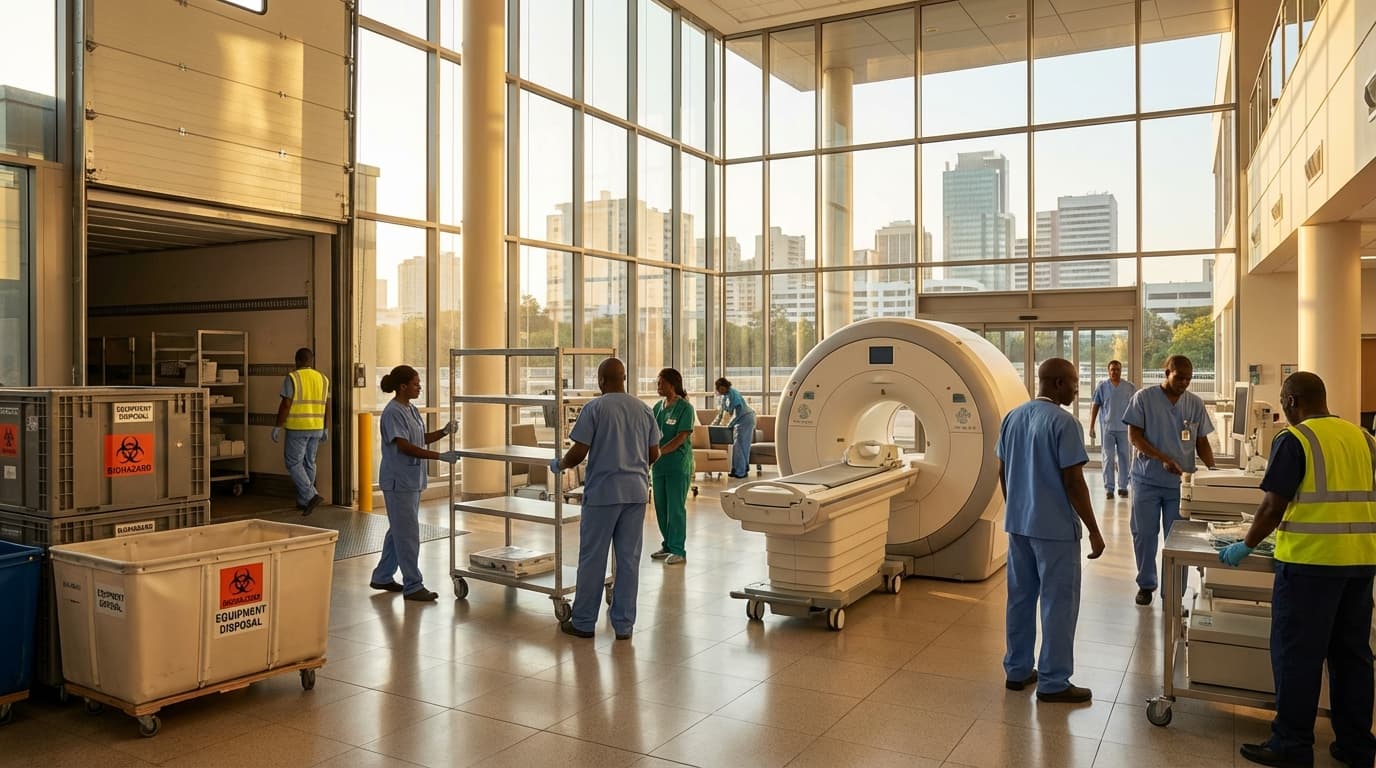
Heavy Medical Equipment De-Installation Service (MRI/CT/Cath Lab) in Gabon
Engineering Excellence & Technical Support
Heavy Medical Equipment De-Installation Service (MRI/CT/Cath Lab) High-standard technical execution following OEM protocols and local regulatory frameworks.
Precision De-Installation & Logistics
Expertly dismantling and preparing complex medical imaging equipment (MRI, CT, Cath Labs) for secure transport, adhering to strict Gabon import/export regulations and environmental standards.
Specialized Rigging & Safety Protocols
Implementing advanced rigging techniques and stringent safety protocols for the secure handling and removal of heavy, sensitive medical equipment in diverse Gabonese environments.
Certified Technical Expertise
Leveraging certified technicians with in-depth knowledge of MRI, CT, and Cath Lab systems, ensuring a seamless and compliant de-installation process tailored to Gabon's infrastructure.
What Is Heavy Medical Equipment De-installation Service (Mri/ct/cath Lab) In Gabon?
Heavy Medical Equipment De-Installation Service (MRI/CT/Cath Lab) in Gabon refers to the specialized process of dismantling, packaging, and preparing large-scale diagnostic and interventional medical imaging and treatment systems for relocation, disposal, or long-term storage. These systems, including Magnetic Resonance Imaging (MRI), Computed Tomography (CT) scanners, and Cardiac Catheterization (Cath) Laboratories, are characterized by their substantial physical size, intricate engineering, sensitive components, and critical reliance on precise calibration and environmental control. The de-installation process necessitates a multidisciplinary team of highly trained technicians, engineers, and project managers with expertise in electrical engineering, mechanical engineering, radiation safety, and logistics. This service is crucial for healthcare facilities undergoing renovations, equipment upgrades, facility closures, or mergers. It ensures that valuable assets are handled with the utmost care to prevent damage, maintain their integrity, and comply with all relevant safety and regulatory standards during the complex transition phase.
| Who Needs This Service? | Typical Use Cases | |||||
|---|---|---|---|---|---|---|
| Hospitals and Healthcare Facilities in Gabon undergoing infrastructure changes or equipment lifecycle management. | Facility renovations or expansions requiring temporary or permanent relocation of existing imaging suites. | Healthcare providers upgrading to newer, more advanced MRI, CT, or Cath Lab systems. | Hospitals or clinics that are closing, merging, or consolidating services. | Manufacturers or third-party service providers managing asset redeployment or returns. | Government health ministries or agencies involved in the management of public healthcare infrastructure. | Research institutions or universities acquiring or relocating specialized medical equipment. |
| Equipment Upgrade/Replacement: When an existing MRI, CT, or Cath Lab is being replaced with a newer model, the old unit must be de-installed to make space and prepare for the new installation. | Facility Relocation/Expansion: If a hospital wing or an entire facility is moving to a new location or undergoing significant expansion, all heavy medical equipment needs to be safely de-installed for transit. | Downtime Minimization During Renovation: For essential services, de-installation can be part of a phased renovation plan, allowing for continued, albeit potentially relocated, operations. | Equipment Sale or Donation: Preparing equipment for sale to another institution or for donation involves secure de-installation and packaging. | End-of-Life Equipment Disposal: When equipment reaches the end of its operational lifespan, de-installation is the first step towards responsible disposal or recycling. | Technological Obsolescence: De-installation becomes necessary when older systems no longer meet current diagnostic or treatment standards or are no longer supported by the manufacturer. | Emergency Shutdown/Decommissioning: In rare cases, a facility may need to cease operations of specific equipment rapidly due to safety concerns or unforeseen circumstances. |
Key Aspects of Heavy Medical Equipment De-Installation in Gabon:
- Specialized Expertise: Requires personnel with advanced technical knowledge of specific imaging modalities (MRI, CT, Cath Lab) and their proprietary systems.
- Dismantling Procedures: Involves the systematic disassembly of large components, including patient tables, magnet assemblies (MRI), gantry systems (CT), X-ray tubes, detectors, and console units.
- Component Handling & Protection: Critical components such as superconducting magnets (MRI) requiring cryogenic management, sensitive electronic boards, and high-vacuum systems (CT) need meticulous handling and specialized protective packaging.
- Infrastructure Disconnection: Safe and compliant disconnection of power supply, cooling systems (chilled water, cryogens), data networks, and radiation shielding.
- Logistics and Transportation Planning: Detailed planning for the movement of oversized and heavy equipment, including necessary permits, specialized transportation vehicles (e.g., cranes, heavy-haul trucks), and route surveys.
- Decontamination & Radiation Safety: Adherence to strict protocols for decontamination and radiation safety, especially for equipment that has been in active use.
- Documentation & Compliance: Comprehensive documentation of the de-installation process, including photographic records, inventory lists, and adherence to local and international regulations governing medical equipment disposal and transport.
- Environmental Considerations: Management of hazardous materials, such as coolants or old electronic components, in accordance with environmental regulations.
Who Needs Heavy Medical Equipment De-installation Service (Mri/ct/cath Lab) In Gabon?
For facilities in Gabon operating advanced medical imaging and interventional systems like MRI, CT scanners, and Cath Labs, specialized de-installation services are crucial. These high-value, complex pieces of equipment require expert handling during relocation, upgrades, or decommissioning to ensure safety, preserve functionality, and comply with regulatory standards. This service caters to specific needs arising from equipment lifecycle management, technological advancements, and infrastructure changes within healthcare institutions.
| Customer Type | Relevant Departments | Specific Needs/Scenarios | ||||
|---|---|---|---|---|---|---|
| Hospitals (Public & Private) | Radiology/Imaging Department | Relocation within the hospital, upgrade to newer models, disposal of obsolete equipment. | Cardiology Department | Decommissioning of older Cath Lab systems, relocation for renovation. | IT/Biomedical Engineering Department | Managing equipment lifecycle, ensuring proper data security during de-installation, coordinating with vendors. |
| Specialized Imaging Centers | Diagnostic Imaging Services | Expansion of services requiring equipment relocation, replacing outdated systems, site closures. | Technical Services | Oversight of the de-installation process, ensuring compliance with manufacturer specifications. | ||
| Diagnostic Clinics | Radiology and Imaging Services | Upgrading to more advanced CT or MRI technology, space optimization, consolidating services. | Operations Management | Budgeting for de-installation costs, project management of equipment moves. | ||
| Research Institutions | Medical Research Departments | Relocating research-specific imaging equipment for new projects, decommissioning for research obsolescence. | Lab Management | Ensuring minimal disruption to ongoing research activities. | ||
| Government Health Ministries | Public Health Infrastructure Management | Upgrading public hospital equipment, establishing new imaging centers, asset management and disposal. | Procurement and Logistics | Coordinating large-scale equipment replacements and removals across multiple facilities. |
Target Customers & Departments for MRI/CT/Cath Lab De-Installation in Gabon:
- Hospitals (Public and Private)
- Specialized Imaging Centers
- Diagnostic Clinics
- Research Institutions
- Government Health Ministries (for public health infrastructure)
Heavy Medical Equipment De-installation Service (Mri/ct/cath Lab) Process In Gabon
This document outlines the comprehensive workflow for the Heavy Medical Equipment De-Installation Service (MRI/CT/Cath Lab) in Gabon, covering the process from initial inquiry to successful execution. This service is critical for facility upgrades, relocations, or decommissioning of complex imaging and interventional radiology equipment. Our approach prioritizes safety, regulatory compliance, and minimal disruption to ongoing operations where applicable.
| Phase | Key Activities | Description | Deliverables/Outcomes | Responsible Party |
|---|---|---|---|---|
| Receive client request, understand scope, identify equipment type (MRI, CT, Cath Lab), and preliminary timeline. | Initial discussion to gather essential information about the project's goals and constraints. | Clarified project scope, initial understanding of equipment, and client needs. | Client, Service Provider Sales/Technical Team |
| On-site visit to evaluate equipment location, access routes, power requirements, environmental conditions, and structural considerations. Develop a detailed de-installation plan. | Involves engineers and project managers to assess all technical and logistical challenges. Includes site surveys, power audits, and environmental checks. Risk assessment is conducted. | Detailed site survey report, comprehensive de-installation plan, risk mitigation strategy, preliminary timeline confirmation. | Service Provider Technical Team, Project Manager, Client Facilities/Biomedical Engineering |
| Provide a detailed quotation based on the site assessment and de-installation plan. Formalize the agreement through a contract. | Includes breakdown of costs (labor, materials, logistics, permits), payment terms, scope of work, and liabilities. | Formal quotation, signed service contract, agreed-upon payment schedule. | Service Provider Sales/Contracts Team, Client Procurement/Legal |
| Procure necessary tools, specialized equipment, safety gear, and arrange for any required permits or regulatory approvals in Gabon. Schedule de-installation dates. | Includes sourcing specialized lifting equipment, power disconnects, coolant handling systems, and coordinating with local authorities if necessary. Pre-installation client briefing. | All required tools and materials on-site, necessary permits secured, confirmed de-installation schedule, client readiness notification. | Service Provider Operations Team, Project Manager, Client |
| Safely disconnect and dismantle the heavy medical equipment following manufacturer guidelines and best practices. This includes electrical disconnection, structural separation, and component disassembly. | Expert technicians perform the de-installation, prioritizing safety protocols for personnel and the equipment itself. For MRI, this includes safe helium venting (if applicable). | Dismantled equipment components, safely contained hazardous materials (if any), cleared installation site. | Service Provider Technical Team (Engineers, Technicians) |
| Package and prepare de-installed equipment for secure transportation. Arrange and manage the logistics for moving the equipment from the site to the designated destination (storage, another facility, etc.). | Includes crating, labeling, loading onto specialized transport vehicles, and managing customs and transit documentation for movement within or out of Gabon. | Packaged and secured equipment, transportation manifest, customs clearance (if applicable), delivery to destination. | Service Provider Logistics Team, Transportation Partners, Client |
| Provide a final report detailing the de-installation process, including photographs, inventory of removed parts, and confirmation of site clearance. Offer ongoing support as per contract. | This report serves as a record of the service provided. Includes final invoicing and closure of the project. Future de-installation or re-installation support options can be discussed. | Final de-installation report, project closure confirmation, final invoice, optional support agreement. | Project Manager, Service Provider Administration, Client |
De-Installation Service Workflow
- Inquiry & Initial Consultation
- Site Assessment & Planning
- Quotation & Contract
- Pre-De-Installation Preparation
- Equipment De-Installation
- Logistics & Transportation
- Post-De-Installation Documentation & Support
Heavy Medical Equipment De-installation Service (Mri/ct/cath Lab) Cost In Gabon
De-installing heavy medical equipment like MRI, CT scanners, and Cath Labs is a highly specialized and complex process in Gabon. The cost is heavily influenced by a variety of factors, making precise estimates challenging without detailed site surveys. These services are typically performed by expert technicians with specific training and certifications, often involving international teams due to the rarity of such expertise locally. The goal of de-installation is to safely dismantle, prepare, and package these intricate machines for transport, whether for relocation within Gabon, export, or disposal. Factors such as the type and model of equipment, accessibility of the site, required disassembly level, disposal or transport arrangements, and the urgency of the service all play a significant role in determining the final price. Given the logistical challenges and the specialized nature of the work, expect these services to represent a substantial investment.
| Equipment Type | Estimated Cost Range (XAF) | Notes |
|---|---|---|
| CT Scanner (e.g., 64-slice, 128-slice) | 3,000,000 - 8,000,000 | Costs vary based on model, size, and accessibility. May include specialized handling and moderate disassembly. |
| MRI Scanner (e.g., 1.5T, 3T) | 5,000,000 - 15,000,000+ | Significantly higher due to magnet weight, complex disassembly, cryogen handling (if applicable), and specialized shielding. 3T systems are more complex and costly. |
| Cath Lab (e.g., Single-plane, Bi-plane) | 4,000,000 - 12,000,000 | Involves intricate cabling, heavy detector systems, and potentially moving large gantry components. Bi-plane systems are more expensive. |
Key Pricing Factors for Heavy Medical Equipment De-Installation in Gabon
- Equipment Type and Model: Larger and more complex machines (e.g., 3T MRI vs. 1.5T MRI, advanced CT scanners, or multi-plane Cath Labs) will naturally incur higher de-installation costs due to increased disassembly, specialized tools, and handling requirements.
- Site Accessibility and Location: The ease of access to the equipment within the medical facility (e.g., ground floor vs. upper floor, narrow corridors, elevator availability) and the remoteness of the facility in Gabon will significantly impact labor and logistics costs.
- Level of Disassembly Required: The extent to which the equipment needs to be broken down for transport or disposal is a crucial factor. Complete disassembly is more time-consuming and labor-intensive.
- Specialized Tools and Equipment: Access to and use of specific lifting, rigging, and transport equipment required for these heavy and sensitive machines will add to the cost.
- Packaging and Preparation for Transport: The materials and labor involved in safely packing and protecting the components for transit can be substantial, especially for long-distance or international shipping.
- Labor Costs and Expertise: De-installation requires highly skilled and experienced technicians, often with international certifications. Labor rates in Gabon, coupled with potential travel and accommodation for specialized teams, will be a significant component.
- Permits and Regulatory Compliance: Obtaining necessary permits for the movement and handling of such equipment, as well as ensuring compliance with local environmental and safety regulations, can incur additional costs.
- Urgency and Timeline: Expedited de-installation services will generally command higher prices due to the need for immediate resource allocation and potentially overtime labor.
- Disposal or Relocation Plan: Whether the equipment is being relocated to another site (requiring coordination for re-installation) or disposed of will influence the complexity and cost of the de-installation process.
- Third-Party Services: In some cases, specialized rigging companies, crane operators, or transport providers may need to be engaged, adding to the overall expense.
Affordable Heavy Medical Equipment De-installation Service (Mri/ct/cath Lab) Options
De-installing heavy medical equipment like MRI machines, CT scanners, and Cath Labs can be a significant undertaking, requiring specialized expertise, proper tools, and careful planning to ensure safety and prevent damage. Opting for an affordable de-installation service not only saves costs but also allows your facility to focus on patient care and essential operations. This guide explores the value bundles and cost-saving strategies available for these complex de-installations.
| Value Bundle Type | What's Included | Cost-Saving Strategies | Ideal For |
|---|---|---|---|
| Basic De-installation Package | On-site dismantling and removal of equipment from its installed location. | Scheduling during off-peak hours to avoid disruption, clear communication to minimize on-site time. | Facilities with readily available space for immediate equipment staging and minimal need for advanced logistics. |
| Standard De-installation & Logistics Package | Basic de-installation plus coordinated transportation to a designated location (e.g., warehouse, next facility). | Bundling de-installation and transport with the same provider, pre-negotiated shipping rates, efficient route planning. | Hospitals or clinics relocating equipment within a region or preparing it for sale/storage. |
| Comprehensive De-installation & Asset Recovery Package | Full de-installation, logistics, and options for equipment appraisal, refurbishment, resale, or responsible disposal. | Maximizing return on investment through resale of functional components, bulk disposal discounts, tax incentives for recycling. | Facilities decommissioning old equipment, looking to recoup costs, or adhering to strict environmental disposal policies. |
| Project-Based Custom Solutions | Tailored packages for unique or large-scale de-installation projects, including project management, multiple equipment types, and complex site requirements. | Detailed site surveys to prevent unexpected costs, phased de-installation for budget management, leveraging long-term service contracts. | Large hospital networks, research institutions, or facilities undergoing significant infrastructure upgrades. |
Key Components of Affordable Heavy Medical Equipment De-Installation
- Specialized De-installation Teams: Certified technicians with experience in handling sensitive and high-value equipment.
- Safety Protocols: Strict adherence to safety regulations during dismantling, rigging, and transportation.
- Logistics and Transportation Planning: Efficient coordination for equipment removal and delivery to its next destination (storage, resale, or disposal).
- Disposal and Recycling Options: Environmentally responsible methods for unserviceable components.
- Documentation and Reporting: Detailed records of the de-installation process for compliance and asset management.
Verified Providers In Gabon
In Gabon, accessing reliable and high-quality healthcare is paramount. When seeking medical services, it's crucial to identify providers who have undergone rigorous vetting processes and demonstrated a commitment to excellence. Franance Health has emerged as a leading name in this regard, establishing a network of verified providers who consistently meet stringent standards. Their credentials represent more than just certifications; they signify a dedication to patient safety, ethical practice, and the delivery of superior medical care. Choosing a Franance Health verified provider ensures peace of mind, knowing you are in the hands of professionals who are not only skilled but also thoroughly evaluated for their integrity and competence.
| Provider Type | Key Verification Criteria | Franance Health Assurance |
|---|---|---|
| Hospitals & Clinics | Accreditation status, medical equipment quality, patient-to-staff ratios, patient satisfaction scores, adherence to safety regulations. | Ensures advanced facilities, well-equipped diagnostic and treatment capabilities, and a commitment to patient-centered care. |
| Specialist Physicians | Board certifications, years of experience, peer reviews, specialization credentials, ethical practice history, successful case management. | Guarantees access to highly skilled and experienced specialists in various fields of medicine. |
| Diagnostic Laboratories | Quality control protocols, accuracy of test results, adherence to international standards (e.g., ISO), technology used, turnaround time for results. | Provides confidence in the accuracy and reliability of diagnostic testing for precise medical assessments. |
| Emergency Services | Response times, availability of trained medical personnel, equipment for critical care, established emergency protocols. | Ensures prompt and effective medical intervention during critical situations. |
Why Franance Health Credentials Matter:
- Rigorous Vetting Process: Franance Health employs a multi-faceted evaluation system that goes beyond basic licensing, assessing clinical expertise, patient feedback, and adherence to international best practices.
- Commitment to Quality: Verified providers demonstrate a consistent track record of delivering high-quality medical services, with a focus on patient outcomes and satisfaction.
- Ethical Standards: Franance Health emphasizes ethical conduct and transparency in all aspects of healthcare delivery, ensuring patients are treated with respect and dignity.
- Access to Expertise: By partnering with Franance Health, patients gain access to a network of specialists and healthcare professionals with diverse and advanced skill sets.
- Enhanced Patient Safety: The verification process includes checks on safety protocols, infection control measures, and the overall environment of care, prioritizing patient well-being.
- Continuous Improvement: Franance Health regularly monitors and evaluates its providers, encouraging ongoing professional development and the adoption of new medical advancements.
Scope Of Work For Heavy Medical Equipment De-installation Service (Mri/ct/cath Lab)
This Scope of Work (SOW) outlines the requirements for the de-installation of heavy medical equipment, specifically Magnetic Resonance Imaging (MRI), Computed Tomography (CT) scanners, and Cardiac Catheterization (Cath Lab) systems. The service encompasses the safe and efficient disconnection, dismantling, and preparation for transport of these complex medical devices. This SOW details the technical deliverables and standard specifications to ensure adherence to industry best practices and regulatory requirements.
| Phase/Activity | Description | Technical Deliverables | Standard Specifications/Notes |
|---|---|---|---|
| Site Assessment and Planning | Thorough evaluation of the installation site, including access routes, power requirements, structural integrity, and potential hazards. Development of a detailed de-installation plan. | De-installation plan document, including risk assessment, timeline, personnel requirements, equipment list, and site survey report. | All assessments and plans must be reviewed and approved by the Client's Project Manager. Compliance with local building codes and safety regulations. |
| Pre-De-installation Safety Procedures | Implementation of all necessary safety protocols to protect personnel, equipment, and the environment. This includes Lockout/Tagout (LOTO) procedures and hazardous material handling. | Completed LOTO procedures, safety briefing records, and confirmation of appropriate Personal Protective Equipment (PPE) usage. | Adherence to OSHA (or equivalent) safety standards. Identification and safe handling of any refrigerants or hazardous materials as per manufacturer guidelines and environmental regulations. |
| Equipment Disconnection and Dismantling | Safe and systematic disconnection of all power, data, cooling, and ancillary systems. Careful dismantling of the equipment according to manufacturer specifications. | All cables, conduits, and connections clearly labeled for re-installation. Major components segregated and secured. | Follow manufacturer's de-installation manuals strictly. Minimize stress on components. Cooling systems (e.g., helium for MRI) must be managed by certified technicians following manufacturer protocols. |
| Component Segregation and Labeling | Each dismantled component will be clearly identified with unique part numbers, serial numbers, and its intended re-installation location. | Comprehensive labeling system applied to all components. Digital inventory of all de-installed parts. | Labels must be durable and resistant to environmental conditions. Color-coding may be used for specific systems (e.g., MRI coils, CT detectors). |
| Packaging and Preparation for Transport | Appropriate protective packaging for all dismantled components to prevent damage during transit. | All components securely packaged. Specialized cradles or bracing used for heavy or sensitive parts. Water-resistant and shock-absorbent materials utilized. | Packaging must meet or exceed industry standards for the transport of sensitive medical equipment. Weight distribution and balance must be considered for lifting and moving. |
| Documentation and Handover | Detailed documentation of the de-installation process, including photographic evidence, parts inventory, and any encountered issues. | Final de-installation report, including detailed parts list, condition of components, and photographic log. Sign-off from Client representative. | All documentation must be clear, concise, and auditable. A comprehensive inventory list is critical for future re-installation and asset management. |
| Post-De-installation Site Restoration (Optional) | Removal of debris and basic cleaning of the de-installation area. | Cleaned de-installation site. Removal of all project-related waste and materials. | Site to be left in a safe and tidy condition. Major structural repairs or wall patching are typically outside the scope unless specified. |
Key Phases and Activities
- Site Assessment and Planning
- Pre-De-installation Safety Procedures
- Equipment Disconnection and Dismantling
- Component Segregation and Labeling
- Packaging and Preparation for Transport
- Documentation and Handover
- Post-De-installation Site Restoration (Optional)
Service Level Agreement For Heavy Medical Equipment De-installation Service (Mri/ct/cath Lab)
This Service Level Agreement (SLA) outlines the response times and uptime guarantees for the de-installation of heavy medical equipment, specifically MRI, CT scanners, and Cath Labs. This agreement is designed to ensure minimal disruption to hospital operations and facilitate efficient equipment relocation or decommissioning. Service is considered critical due to the high impact of these systems on patient care and revenue generation.
| Service Component | Response Time (for initial contact and dispatch) | Uptime Guarantee (for readiness to commence de-installation) | Escalation Procedure |
|---|---|---|---|
| Emergency Notification Received (e.g., unexpected equipment removal requirement) | 1 Hour (acknowledgement and confirmation of scheduling) | N/A (Uptime is not applicable to emergency de-installation initiation, but service commencement is prioritized) | Immediate escalation to Vendor Management and Operations Director upon receipt. |
| Scheduled De-Installation Commencement (as per agreed-upon schedule) | 15 Minutes (confirmation of technician arrival on-site, from scheduled start time) | 99.5% Uptime (System availability for de-installation to proceed uninterrupted once on-site, barring unforeseen site-specific issues like power outages not caused by vendor equipment) | If technician is not on-site within 15 minutes of the scheduled start, or if de-installation cannot commence due to vendor-related reasons: Immediate notification to customer contact and escalation to Vendor's Project Manager. |
| Communication Outage/Delay During De-Installation (if vendor-initiated and impacting progress) | 30 Minutes (for providing an update and estimated resolution time) | N/A (Focus is on minimizing delay, uptime guarantee applies to the overall window) | Notification to customer contact and escalation to Vendor's Lead Technician and Site Supervisor. |
Service Level Objectives for De-Installation
- Criticality Level: All de-installation services for MRI, CT, and Cath Labs are classified as Critical (Tier 1). This means immediate attention and priority are required.
- Scope of Service: Includes safe and compliant disconnection, disassembly, and preparation for transportation of specified medical imaging equipment.
- Exclusions: This SLA does not cover installation, relocation within the same facility, or on-site repair services. It is strictly for de-installation and preparation for transport.
- Customer Responsibilities: Provide access to the equipment and facility, ensure necessary power and environmental controls are available for safe shutdown procedures, and designate a single point of contact for the de-installation project.
- Vendor Responsibilities: Provide qualified technicians, specialized tools and equipment for de-installation, adherence to all safety and environmental regulations, and comprehensive documentation of the de-installation process.
- Reporting: Regular progress reports will be provided to the designated customer contact throughout the de-installation process. A final de-installation report will be issued upon completion.
Frequently Asked Questions

Ready when you are
Let's scope your Heavy Medical Equipment De-Installation Service (MRI/CT/Cath Lab) in Gabon project in Gabon.

Scaling healthcare logistics and technical systems across the entire continent.