
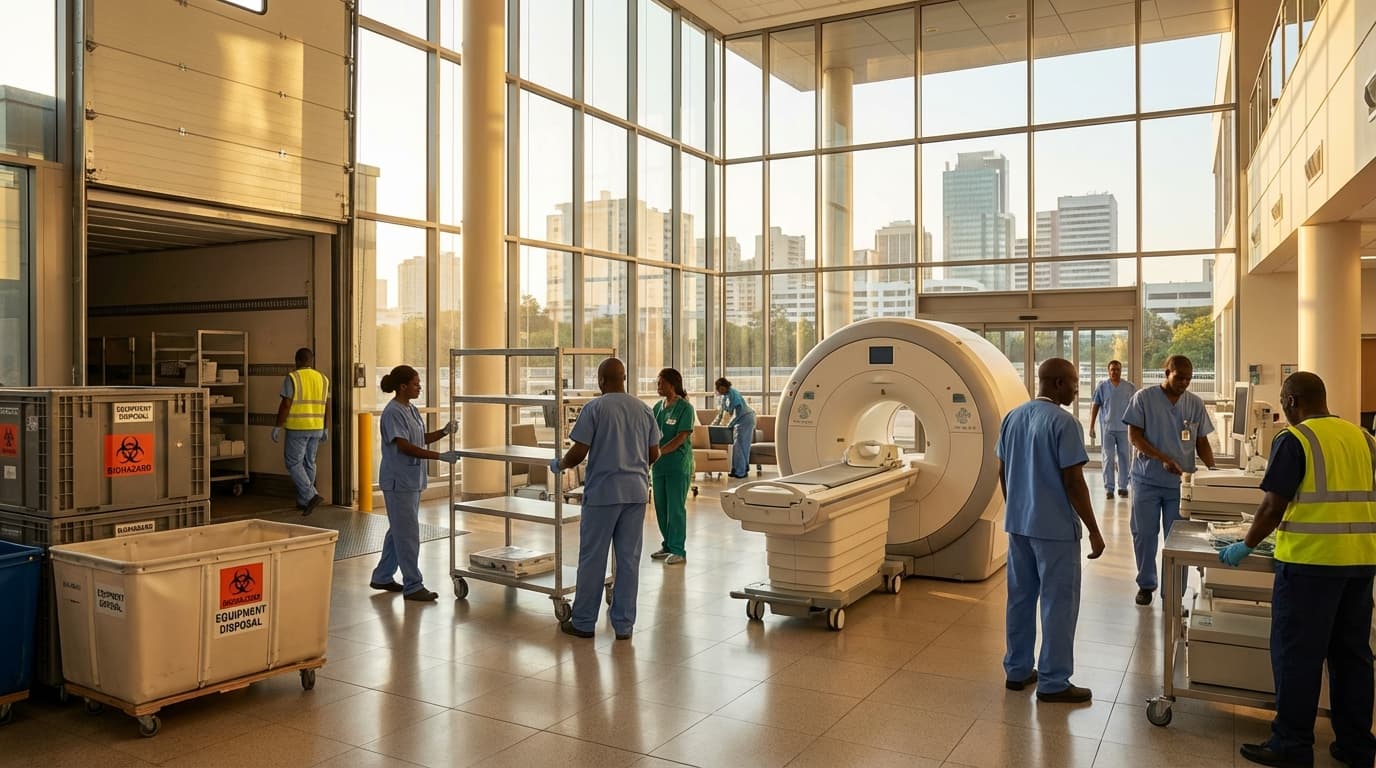
Decommissioning Service for Medical Devices in Gabon
Engineering Excellence & Technical Support
Decommissioning Service for Medical Devices High-standard technical execution following OEM protocols and local regulatory frameworks.
Regulatory Compliance & Certified Disposal
Ensuring complete adherence to Gabonese healthcare regulations and international environmental standards. Our certified processes guarantee the safe and responsible disposal of all medical devices, preventing data breaches and biohazards.
Expert On-Site Decommissioning & Inventory Management
Highly trained technicians conduct thorough on-site assessments, inventorying, and secure removal of all medical equipment. We specialize in minimizing disruption to active medical facilities and maximizing asset recovery where possible.
Secure Data Destruction & Environmental Stewardship
Implementing advanced data sanitization techniques to protect sensitive patient information. We prioritize environmentally sound disposal methods, including recycling and responsible waste management, for all decommissioned medical devices.
What Is Decommissioning Service For Medical Devices In Gabon?
Decommissioning service for medical devices in Gabon refers to the comprehensive process of safely and compliantly retiring medical equipment from active clinical use. This service encompasses all necessary steps to ensure the device is no longer operational, its data is securely managed or destroyed, and its disposal adheres to environmental and regulatory standards specific to Gabon. It is a critical component of the medical device lifecycle management, ensuring patient safety, data privacy, and responsible waste management.
| Who Needs Decommissioning Services? | Typical Use Cases |
|---|---|
| Hospitals and Healthcare Facilities (Public and Private): All institutions operating medical equipment. | End-of-life disposal of imaging equipment (e.g., X-ray machines, CT scanners, MRI machines). |
| Clinics and Diagnostic Laboratories: Facilities utilizing specialized medical instruments. | Retirement of surgical and anesthetic apparatus. |
| Medical Research Institutions: Organizations employing advanced medical technology for studies. | Upgrade or replacement of older patient monitoring systems. |
| Medical Device Manufacturers and Distributors: For devices returned, recalled, or at the end of their service life under warranty or service agreements. | Disposal of expired or obsolete laboratory analysers. |
| Government Health Agencies: Overseeing public health infrastructure. | Removal of damaged or non-functional therapeutic devices (e.g., ventilators, dialysis machines). |
| Any entity possessing and operating medical devices that are no longer in service. | Secure data eradication from devices containing electronic health records (EHRs). |
| Compliance with asset management policies and disposal protocols. |
Key Components of Medical Device Decommissioning in Gabon
- Deactivation and Render-inoperable: Physical or logical disabling of the device to prevent any further use. This may involve hardware removal, software uninstallation, or component destruction.
- Data Management and Sanitization: Secure erasure or physical destruction of all patient-identifiable information (PHI) and other sensitive data stored on the device, in accordance with relevant data protection regulations.
- Functional Testing/Verification of Deactivation: Confirmation that the device is indeed non-operational and cannot be reactivated.
- Environmental Assessment and Disposal Planning: Identification of hazardous materials within the device (e.g., mercury, batteries, radioactive components) and planning for their safe handling and disposal according to Gabonese environmental legislation.
- Logistical Management: Arranging for the secure transportation of the decommissioned device to a designated disposal or recycling facility.
- Documentation and Certification: Generation of comprehensive records detailing the decommissioning process, including dates, personnel involved, data sanitization methods, and final disposal certificates. This documentation is crucial for audit and compliance purposes.
- Regulatory Compliance: Ensuring all activities comply with current Gabonese Ministry of Health directives, environmental protection laws, and any applicable international standards for medical waste management.
Who Needs Decommissioning Service For Medical Devices In Gabon?
Decommissioning of medical devices is a critical process that ensures the secure and compliant disposal, repurposing, or transfer of medical equipment. In Gabon, various entities that utilize medical devices require specialized decommissioning services to manage their lifecycle responsibly.
| Customer Type | Relevant Departments | Specific Needs | |
|---|---|---|---|
| Hospitals (Public and Private) | Biomedical Engineering Department, Facilities Management, IT Department, Procurement Department, Infection Control | Secure data sanitization of imaging devices, sterilization of equipment for resale/donation, environmentally sound disposal of hazardous components, asset tracking and inventory management. | Hospitals are often the largest users of medical devices and generate the most decommissioning needs due to frequent upgrades and equipment obsolescence. Data security and regulatory compliance are paramount. |
| Clinics and Medical Centers | Clinical Staff, Administrative Office, IT Support (if applicable) | Disposal of smaller diagnostic equipment, secure erasure of patient data, management of expiring consumables, compliance with local waste disposal regulations. | Smaller facilities may have less specialized internal teams, making outsourced decommissioning services essential for efficient and compliant handling. |
| Diagnostic Laboratories | Laboratory Management, Technical Staff, Quality Control Department, IT Department | Decommissioning of analytical instruments, safe disposal of chemical reagents and biohazardous waste, data management for instrument calibration and maintenance logs. | Laboratories deal with a range of specialized equipment, often with specific disposal requirements for chemicals and biological materials. |
| Research Institutions and Universities | Research Labs, Biomedical Departments, IT Department, Procurement, Safety Officers | Decommissioning of research-grade equipment, secure data wiping from research data storage, safe handling of potentially hazardous research materials, compliance with academic and ethical guidelines. | Research settings may have unique equipment and require decommissioning that considers experimental data and specialized materials. |
| Government Health Agencies | Procurement, Asset Management, Public Health Programs | Management of donated or surplus medical equipment, strategic disposal of outdated national medical stockpiles, ensuring compliance across public health facilities. | These agencies often oversee large networks of healthcare providers and require standardized decommissioning protocols. |
| Non-Governmental Organizations (NGOs) | Project Managers, Logistics, Medical Coordinators | Repurposing of equipment for projects in resource-limited settings, donation of functional devices, environmentally responsible disposal of non-functional equipment in diverse operational contexts. | NGOs often operate in challenging environments and require flexible decommissioning solutions that can include donation and reuse. |
Target Customers for Medical Device Decommissioning Services in Gabon
- Hospitals (Public and Private)
- Clinics and Medical Centers
- Diagnostic Laboratories
- Research Institutions and Universities with Medical Programs
- Government Health Agencies
- Non-Governmental Organizations (NGOs) involved in healthcare
- Medical Equipment Suppliers and Distributors (for end-of-life management)
- Insurance Companies (in specific asset recovery scenarios)
- Military and Defense Healthcare Facilities
Decommissioning Service For Medical Devices Process In Gabon
This document outlines the decommissioning service process for medical devices in Gabon, detailing the workflow from initial inquiry to the final execution of the service. The process is designed to ensure compliance with national regulations, environmental standards, and client requirements for the safe and responsible disposal or repurposing of medical equipment.
| Phase | Description | Key Activities | Deliverables/Outcomes |
|---|---|---|---|
| The client contacts the decommissioning service provider with a need to decommission medical devices. | Receive and review client request, discuss scope, device types, quantities, and any specific client requirements or regulatory concerns. | Understanding of client needs, initial scope definition, and preliminary advice. |
| A thorough assessment of the client's location and the medical devices to be decommissioned. | On-site visit to identify devices, assess their condition, location, accessibility, and any potential hazards. Detailed inventory creation (device type, serial number, condition, estimated weight). | Comprehensive inventory report, identification of potential challenges, and confirmation of scope. |
| Based on the assessment, a formal proposal is presented to the client. | Develop a detailed service proposal including scope of work, methodology, timeline, cost breakdown, environmental compliance plan, and terms and conditions. Client review and negotiation, followed by contract signing. | Formal service agreement, detailed project plan, and payment terms. |
| Planning and preparation for the on-site execution phase. | Secure necessary permits and authorizations, schedule decommissioning dates, arrange for specialized personnel, transportation, and appropriate disposal/recycling facilities. | Confirmed schedule, mobilized resources, and logistical arrangements in place. |
| The physical decommissioning of the medical devices. | Safe disconnection and dismantling of devices by trained technicians. Adherence to safety protocols and environmental regulations. Segregation of devices based on type and disposal pathway. | Dismantled and segregated medical devices ready for further processing. |
| Ensuring sensitive patient data is irrecoverably removed from devices where applicable. | Secure and certified data wiping or physical destruction of storage media within medical devices, adhering to data privacy regulations. | Confirmation of secure data destruction, certificates of sanitization. |
| Responsible management of decommissioned devices according to environmental standards. | Transport of devices to approved recycling centers or licensed hazardous waste disposal facilities. Prioritizing recycling and material recovery, with environmentally sound disposal of non-recyclable components. | Confirmation of proper disposal and recycling, reduction of environmental impact. |
| Providing documentation to the client confirming the completion of the service. | Issuance of certificates of decommissioning, certificates of data destruction (if applicable), and a final report detailing the entire process, including quantities handled, disposal methods, and environmental impact assessment. | Comprehensive audit trail, regulatory compliance documentation, and client satisfaction. |
| Ensuring client satisfaction and addressing any outstanding matters. | Client feedback collection, addressing any queries, and maintaining records for future reference. | Client endorsement, ongoing relationship management, and continuous improvement of services. |
Decommissioning Service Workflow for Medical Devices in Gabon
- Initial Inquiry & Consultation
- Site Assessment & Inventory
- Proposal & Agreement
- Logistics & Scheduling
- On-Site Execution
- Data Destruction & Sanitization
- Environmental Disposal & Recycling
- Certification & Reporting
- Post-Service Follow-up
Decommissioning Service For Medical Devices Cost In Gabon
Decommissioning medical devices in Gabon involves a structured process to ensure safe and environmentally responsible disposal. The cost associated with this service is influenced by several key factors, leading to a range of pricing. These factors include the type and complexity of the medical device, its size and weight, the presence of hazardous materials (such as radioactive components, mercury, or certain chemicals), the required level of data sanitization, and the transportation distance to the designated disposal facility. The decommissioning process typically involves disassembly, proper segregation of materials, and secure transportation to licensed waste management centers. The current economic climate in Gabon and the specific service provider's operational costs also play a significant role in determining the final price.
| Device Category | Estimated Cost Range (XAF) | Notes |
|---|---|---|
| Small, Non-Hazardous Devices (e.g., stethoscopes, basic diagnostic tools) | 5,000 - 25,000 | Primarily labor and basic transport. |
| Medium-Sized, Non-Hazardous Devices (e.g., examination beds, basic lab equipment) | 25,000 - 100,000 | Includes more labor, potentially specialized handling, and moderate transport. |
| Large, Non-Hazardous Devices (e.g., standard hospital beds, some laboratory centrifuges) | 100,000 - 300,000 | Requires significant labor, potential for disassembly, and substantial transport. |
| Complex Electronic Devices (e.g., monitors, ventilators, older imaging components) | 150,000 - 500,000 | Includes specialized handling, data sanitization, and proper e-waste disposal. |
| Devices with Hazardous Materials (e.g., older X-ray machines with lead shielding, some laboratory equipment with mercury) | 300,000 - 1,500,000+ | Costs highly variable based on the type and quantity of hazardous materials, requiring specialized permits and disposal methods. |
| Large Imaging Equipment (e.g., MRI, CT scanners - partial or full decommissioning) | 1,000,000 - 5,000,000+ | Extremely complex, involves expert technicians, specialized transport, and often disposal of significant hazardous components (e.g., refrigerants, superconducting magnets). |
Key Pricing Factors for Medical Device Decommissioning in Gabon
- Device Type and Complexity: Simple devices like examination tables are less costly to decommission than complex imaging equipment (MRI, CT scanners) which may contain specialized components and require expert handling.
- Size and Weight: Larger and heavier equipment incurs higher costs due to increased labor, specialized equipment for handling, and potentially higher transportation fees.
- Hazardous Materials: The presence of hazardous materials necessitates specialized disposal procedures and certifications, significantly increasing the cost. This includes items containing radioactive isotopes, mercury, or certain refrigerants.
- Data Sanitization Requirements: Devices containing sensitive patient data require secure data erasure or physical destruction to comply with privacy regulations. This adds to the service cost.
- Transportation Distance: The distance from the healthcare facility to the approved decommissioning and disposal site impacts fuel, labor, and vehicle wear costs.
- Regulatory Compliance and Certification: Ensuring all decommissioning activities meet Gabonese environmental and health regulations, and obtaining necessary certificates of disposal, are factored into the price.
- Service Provider's Overhead and Expertise: The reputation, experience, and operational costs of the decommissioning service provider will influence their pricing structure.
Affordable Decommissioning Service For Medical Devices Options
Decommissioning medical devices is a critical and often overlooked aspect of healthcare facility management. It involves the safe, secure, and compliant removal of medical equipment from service, including data sanitization, environmental disposal, and asset tracking. Choosing an affordable decommissioning service requires careful consideration of various options and understanding how value bundles and cost-saving strategies can be leveraged to reduce overall expenditure.
| Decommissioning Strategy | Description | Cost-Saving Potential | Value Proposition |
|---|---|---|---|
| Tiered Service Packages | Offering different levels of service based on device complexity and data security needs. Basic packages might cover standard disposal, while premium packages include advanced data sanitization and detailed reporting. | By selecting the appropriate tier, facilities avoid paying for services they don't require. Allows for predictable budgeting. | Provides flexibility and cost control, ensuring essential compliance and security needs are met without unnecessary expense. |
| Value-Added Bundling | Combining decommissioning with other services like equipment relocation, minor repairs, or refurbishment of non-decommissioned assets. This can be offered as a package deal by providers. | Volume discounts and reduced administrative overhead when multiple services are contracted with a single vendor. Potential for revenue generation through resale of refurbished items. | Streamlines operations, reduces vendor management complexity, and can unlock cost efficiencies and even revenue generation. |
| Strategic Partnerships with Vendors | Building long-term relationships with specialized decommissioning vendors. This can lead to preferred pricing, dedicated account management, and tailored service agreements. | Negotiating bulk discounts, priority scheduling, and customized service level agreements (SLAs) that optimize costs over time. | Ensures consistent, reliable, and cost-effective decommissioning over multiple projects, fostering trust and efficiency. |
| Focus on Resale and Recycling | Prioritizing vendors who can effectively resell functional equipment or responsibly recycle components, generating credits or offsetting disposal costs. | Revenue generated from the sale of working equipment can significantly reduce the net cost of decommissioning. Recycling initiatives can also offer rebates or reduced disposal fees. | Transforms a cost center into a potential revenue stream, aligning with sustainability goals and improving the overall financial outcome. |
| On-site vs. Off-site Decommissioning | Evaluating whether decommissioning can be performed partially or fully on-site to save on transportation costs, or if off-site facilities offer specialized services and economies of scale. | Reduced logistics and transportation expenses when decommissioning is performed on-site. Off-site may offer better pricing for large volumes or specialized processes. | Optimizes logistics and cost based on the specific needs of the facility and the nature of the medical devices. |
| Comprehensive Asset Auditing | Thoroughly auditing all medical devices before decommissioning to accurately identify what needs to be removed, repurposed, or resold. This prevents unnecessary decommissioning costs. | Avoids paying for the decommissioning of equipment that is still in use, in repair, or has already been accounted for. Improves inventory accuracy. | Ensures efficient resource allocation and prevents wasted decommissioning efforts and associated costs. |
Key Components of Medical Device Decommissioning:
- Secure Data Destruction (HIPAA Compliance)
- Environmental Disposal (e-waste, hazardous materials)
- Asset Tracking and Inventory Management
- Documentation and Certification
- Logistics and Transportation
- Recycling and Resale Opportunities
Verified Providers In Gabon
In the rapidly evolving landscape of healthcare in Gabon, discerning patients and organizations seek reliable and trustworthy medical partners. Franance Health has emerged as a leading force, distinguished by its rigorous vetting process and commitment to excellence. This makes Franance Health credentials a significant indicator of quality and a strong reason to consider them the best choice for your healthcare needs in Gabon.
| Credential Category | Franance Health Verification Focus | Benefit to Patients/Organizations |
|---|---|---|
| Medical Licenses and Board Certifications | Verification of current, unencumbered licenses and recognized board certifications. | Ensures providers meet minimum legal and professional qualification standards. |
| Educational Background and Training | Confirmation of accredited medical school diplomas and specialized training programs. | Guarantees a solid theoretical and practical foundation in their field. |
| Clinical Experience and Practice History | Review of past practice affiliations, patient outcomes, and any disciplinary actions. | Assesses practical competency and ethical conduct in real-world settings. |
| Continuing Medical Education (CME) | Verification of active participation in ongoing professional development. | Confirms providers stay updated with the latest medical advancements and techniques. |
| Professional References and Peer Review | Gathering feedback from trusted colleagues and past supervisors. | Provides insights into a provider's reputation and collaborative abilities. |
| Background Checks | Comprehensive checks for criminal records or professional misconduct. | Safeguards against individuals with concerning pasts. |
Why Franance Health Credentials Represent the Best Choice:
- Stringent Verification Process: Franance Health employs an in-depth credentialing process for all affiliated healthcare providers. This goes beyond basic licensing, encompassing a thorough review of qualifications, experience, training, and practice history.
- Commitment to Patient Safety: Their credentialing standards are designed with patient safety as the paramount concern. By verifying the competence and ethical standing of their providers, Franance Health minimizes risks and ensures a higher standard of care.
- Access to Specialized Expertise: Franance Health actively seeks out and vets specialists across a wide range of medical disciplines. This allows patients to access highly skilled professionals for their specific health concerns, from routine check-ups to complex surgical procedures.
- Upholding International Standards: Their verification protocols often align with or exceed international best practices for healthcare provider credentialing. This provides an added layer of assurance for those accustomed to globally recognized quality benchmarks.
- Continuous Monitoring and Re-evaluation: Franance Health's commitment doesn't end with initial credentialing. They maintain systems for ongoing monitoring and re-evaluation of their providers, ensuring that their standards remain consistently high over time.
- Building Trust and Confidence: The transparency and rigor of their credentialing process build a strong foundation of trust with patients and corporate clients. Knowing that a provider has been thoroughly vetted by Franance Health offers significant peace of mind.
Scope Of Work For Decommissioning Service For Medical Devices
This document outlines the Scope of Work (SOW) for decommissioning medical devices. It details the required technical deliverables and adheres to standard specifications for safe and compliant removal and disposal of medical equipment. The primary objective is to ensure the secure, environmentally responsible, and regulatory-compliant cessation of functionality and disposal of specified medical devices.
| Phase | Activity Description | Technical Deliverables | Standard Specifications/Compliance |
|---|---|---|---|
| Site assessment, inventory verification, risk assessment, and creation of a detailed decommissioning plan. | Decommissioning Plan Document, Risk Assessment Report, Site Survey Report. | HIPAA (for data privacy), facility-specific SOPs, safety regulations (e.g., OSHA). |
| Safely disconnect devices from power, network, and any associated utilities. Ensure a controlled shutdown. | Confirmation of complete power isolation, Network disconnection logs, Utility disconnection logs. | Manufacturer's operating manuals, facility electrical safety protocols. |
| Securely erase or physically destroy all data storage media within the medical device. | Data Sanitization Certificate (for erasure), Certificate of Destruction (for physical destruction), detailed media inventory and disposal logs. | NIST SP 800-88 (Guidelines for Media Sanitization), HIPAA, facility data retention policies. |
| Carefully disassemble devices as required for safe removal, ensuring no damage to the surrounding environment. | Deconstructed device components (segregated for disposal/recycling), Removal path verification reports, site integrity report. | Manufacturer's service manuals, general safety protocols for lifting and handling equipment. |
| Transport and dispose of or recycle devices and their components according to environmental regulations. | Waste manifests, Certificates of Recycling, Hazardous waste disposal documentation (if applicable). | EPA regulations (RCRA), local environmental laws, R2/e-Stewards certification (for recyclers). |
| Compile all relevant documentation, provide a final report, and close out the decommissioning project. | Final Decommissioning Report (including all previous deliverables), Asset disposition records, Project completion sign-off. | Facility asset management policies, audit trail requirements, project management best practices. |
Key Objectives of Decommissioning
- Ensure complete data sanitization and physical destruction of sensitive patient information.
- Safeguard against unauthorized reuse or resale of equipment.
- Comply with all relevant environmental regulations regarding waste disposal.
- Adhere to healthcare facility policies and procedures for asset management and disposal.
- Minimize disruption to ongoing clinical operations during the decommissioning process.
- Provide auditable documentation of all decommissioning activities.
Service Level Agreement For Decommissioning Service For Medical Devices
This Service Level Agreement (SLA) outlines the response times and uptime guarantees for the Decommissioning Service for Medical Devices provided by [Your Company Name]. This SLA is an addendum to the Master Service Agreement (MSA) between [Your Company Name] and [Client Name].
| Service Component/Incident Severity | Response Time Guarantee | Uptime Guarantee (Monthly) |
|---|---|---|
| Critical Incident (Service Unavailability):<br>Complete loss of access to the Decommissioning Service preventing all decommissioning activities. | 1 Hour | 99.9% |
| High Incident (Service Degradation):<br>Significant impact on the Decommissioning Service, affecting a large portion of functionality or users, but not complete unavailability. | 2 Hours | 99.8% |
| Medium Incident (Minor Functional Impact):<br>A non-critical issue affecting a specific feature or a small number of users, with workarounds available. | 4 Business Hours | N/A (focus on resolution, not uptime for this tier) |
| Low Incident (Inquiry/Request):<br>General inquiries, feature requests, or non-urgent issues. | 8 Business Hours | N/A |
Definitions
- Decommissioning Service: The process of safely and securely rendering medical devices unusable and unusable, including data sanitization and physical destruction, in accordance with relevant regulations and best practices.
- Downtime: Any period during which the Decommissioning Service is unavailable for use by the Client due to a failure within [Your Company Name]'s direct control.
- Scheduled Maintenance: Pre-announced periods during which the Decommissioning Service may be temporarily unavailable for upgrades, patches, or other planned maintenance activities. Scheduled Maintenance will be communicated to the Client at least [Number] days in advance.
- Response Time: The maximum time allowed for [Your Company Name]'s technical support to acknowledge and begin working on a reported incident.
- Resolution Time: The maximum time allowed for [Your Company Name] to resolve a reported incident and restore the Decommissioning Service to normal operation.
Frequently Asked Questions

Ready when you are
Let's scope your Decommissioning Service for Medical Devices in Gabon project in Gabon.

Scaling healthcare logistics and technical systems across the entire continent.