
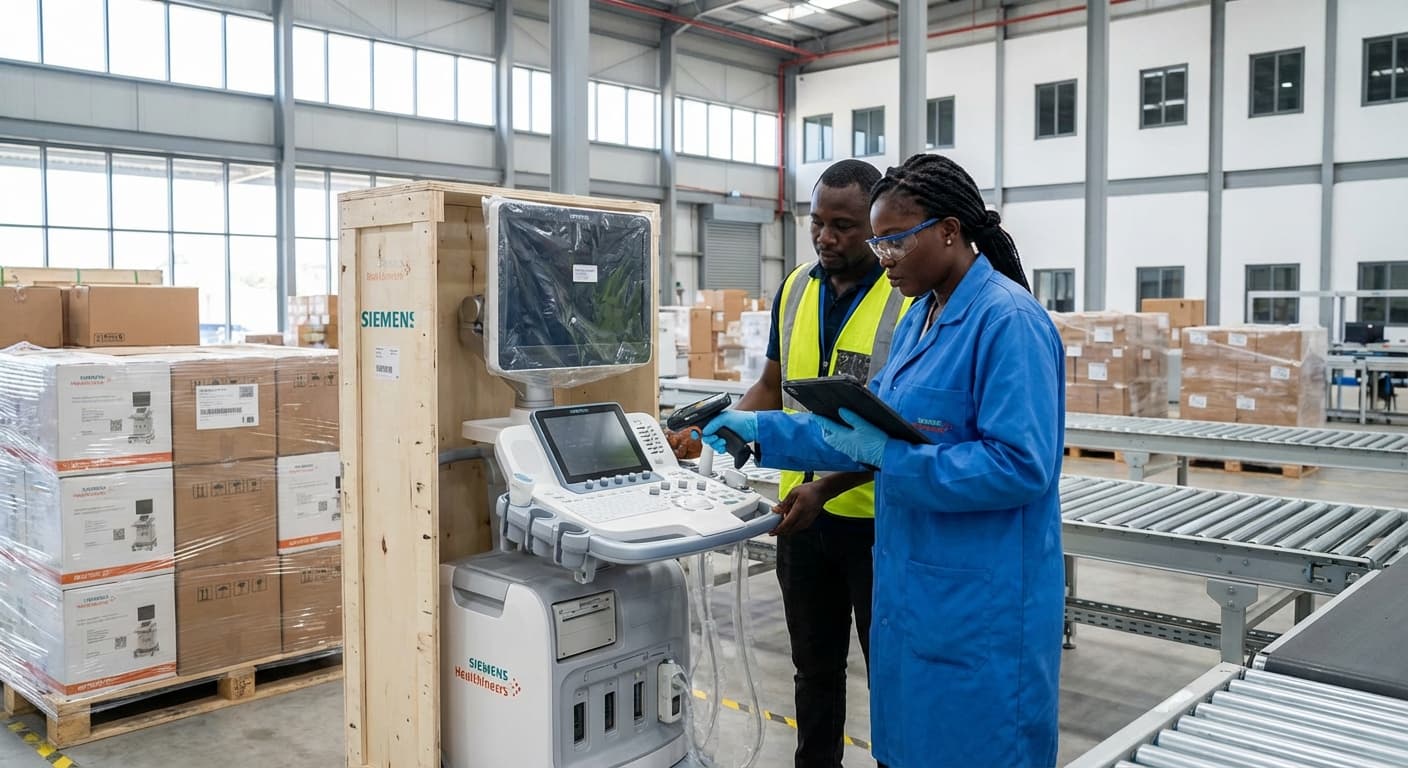
Warehouse Receiving Inspection Service (Medical Equipment) in Gabon
Engineering Excellence & Technical Support
Warehouse Receiving Inspection Service (Medical Equipment) High-standard technical execution following OEM protocols and local regulatory frameworks.
Rigorous Quality Assurance for Medical Equipment
Our expert team conducts comprehensive pre-shipment and post-arrival inspections of all medical equipment destined for Gabon. This includes verification of manufacturer specifications, functional testing, calibration checks, and adherence to international quality standards, ensuring patient safety and operational reliability.
Navigating Gabonese Regulatory Compliance
We specialize in ensuring all imported medical equipment meets the specific regulatory requirements of Gabon's Ministry of Health and other relevant authorities. Our services include documentation review, import permit verification, and liaison with local agencies to streamline the customs clearance process and prevent costly delays.
Optimized Logistics and Chain of Custody
Beyond inspection, we provide end-to-end logistical support, including secure warehousing, temperature-controlled storage if required, and detailed tracking of your medical equipment from port of entry to final destination within Gabon. This safeguards the integrity of your supply chain and minimizes risk of damage or loss.
What Is Warehouse Receiving Inspection Service (Medical Equipment) In Gabon?
Warehouse Receiving Inspection Service (Medical Equipment) in Gabon refers to a specialized quality control and verification process conducted upon the arrival of medical equipment at a designated warehouse facility within Gabon. This service ensures that all received medical equipment conforms to predefined specifications, regulatory requirements, and the terms of the purchase agreement before being formally accepted into inventory. The primary objective is to mitigate risks associated with substandard, damaged, counterfeit, or incorrectly supplied medical devices, thereby safeguarding public health and ensuring the operational integrity of healthcare institutions.
| Stakeholder Group | Reason for Requiring Service | Typical Use Cases |
|---|---|---|
| Healthcare Providers (Hospitals, Clinics, Diagnostic Centers) | To ensure the procurement of safe, effective, and compliant medical equipment that meets patient care standards and avoids operational disruptions due to faulty or non-conforming devices. | Receiving bulk orders of surgical instruments, diagnostic machines (e.g., X-ray, MRI), patient monitoring systems, and specialized medical furniture. |
| Government Health Agencies and Ministries of Health | To uphold national health standards, ensure public safety, prevent the influx of counterfeit or substandard medical products, and maintain oversight of public health expenditures. | Importation of essential medical supplies for public health programs, disaster relief stockpiles, and national medical equipment procurement initiatives. |
| Medical Equipment Distributors and Importers | To fulfill contractual obligations with manufacturers and end-users, manage inventory effectively, minimize financial losses due to damaged or incorrect shipments, and maintain their reputation for quality. | Receiving shipments from international manufacturers, verifying product authenticity and condition before onward distribution to healthcare facilities. |
| Non-Governmental Organizations (NGOs) and Humanitarian Aid Organizations | To guarantee the functionality and suitability of donated or procured medical equipment for deployment in aid programs, ensuring efficient resource utilization and maximizing positive impact on beneficiary populations. | Receiving shipments of medical consumables, basic medical equipment for remote health posts, and specialized equipment for medical missions. |
| Medical Equipment Manufacturers (Local and International) | To ensure that their products are received in good condition by their partners and end-users, and to maintain brand integrity through a controlled receiving process. | Verifying that their exported equipment arrives as specified and in good order, particularly for high-value or complex medical systems. |
Service Components
- Document Verification: Cross-referencing shipping manifests, invoices, purchase orders, certificates of origin, and any relevant regulatory documentation (e.g., import permits, quality certifications).
- Physical Inspection: Conducting visual examinations of packaging for integrity, damage, or signs of tampering. Inspecting the equipment itself for physical defects, cosmetic imperfections, or signs of prior use.
- Quantity and Description Verification: Confirming that the quantity and exact model/serial numbers of received items match the documentation.
- Documentation Review: Examining accompanying technical manuals, user guides, warranty information, and sterilization/calibration certificates (if applicable).
- Condition Assessment: Evaluating the operational status or apparent condition of complex equipment, which may involve basic functional checks if permitted and within scope.
- Labeling and Marking Verification: Ensuring that labeling, including serial numbers, model numbers, manufacturing dates, expiry dates (where applicable), and regulatory markings, is accurate and compliant.
- Sampling and Testing (Conditional): In specific cases, based on contractual agreements or risk assessment, a sample of the equipment may be subjected to basic functional tests or performance verification.
- Damage Reporting and Non-Conformance Documentation: Meticulously documenting any discrepancies, damages, or deviations from specifications, including photographic evidence, to facilitate claims or corrective actions.
- Inventory System Update Support: Providing verified data to facilitate accurate entry into the warehouse's inventory management system.
Who Needs Warehouse Receiving Inspection Service (Medical Equipment) In Gabon?
In Gabon, the rigorous inspection of medical equipment upon receiving is crucial for ensuring patient safety, regulatory compliance, and the effective functioning of healthcare facilities. This service is not a luxury but a necessity for various entities involved in the procurement and deployment of medical technology. The primary objective is to verify that the received equipment meets specifications, is free from damage, and is in optimal working condition before it enters the healthcare system.
| Target Customer Category | Key Departments Involved | Primary Concerns | Typical Equipment Scenarios |
|---|---|---|---|
| Hospitals (Public & Private) | Procurement Department, Biomedical Engineering, Clinical Departments (e.g., Radiology, Surgery, Cardiology), Central Stores | Patient safety, equipment reliability, compliance with tender specifications, operational readiness, return on investment, avoiding costly breakdowns. | New facility setups, equipment upgrades, routine replenishment of consumables, specialized diagnostic and therapeutic devices. |
| Clinics and Health Centers | Clinic Management, Lead Clinician, Procurement Officer (if applicable) | Basic functionality, immediate usability, cost-effectiveness, patient care continuity. | Essential diagnostic tools, basic patient monitoring equipment, minor surgical instruments. |
| Medical Equipment Suppliers & Distributors | Logistics & Warehouse Management, Quality Control, Sales Department, Technical Support | Product integrity, compliance with manufacturer's specifications, protection during transit, customer satisfaction, avoiding warranty claims, maintaining reputation. | Bulk shipments of various medical devices, imported specialized equipment, pre-delivery checks for local clients. |
| Government Ministries/Agencies (e.g., Ministry of Health) | Procurement Unit, Health Services Department, Quality Assurance Unit, Inspectorate | Public health impact, responsible use of public funds, national health standards adherence, regulatory compliance, accountability of suppliers. | Large-scale procurement for public health programs, essential medical supplies for national emergencies, infrastructure development projects. |
| NGOs & Humanitarian Organizations | Operations Manager, Procurement & Logistics, Medical Coordinator | Effectiveness in challenging environments, durability, ease of maintenance, immediate deployment, patient benefit. | Donated equipment, field hospital setups, mobile clinics, specialized medical outreach programs. |
| International Development Agencies | Project Management, Procurement Specialists, Technical Advisors | Project deliverable fulfillment, financial accountability, impact assessment, adherence to international standards, sustainability. | Equipment for funded health initiatives, capacity building projects, primary healthcare strengthening programs. |
| Research & Diagnostic Laboratories | Laboratory Manager, Chief Technologist, Procurement Officer | Accuracy and precision of results, equipment calibration, compliance with scientific standards, data integrity. | Analytical instruments, imaging equipment for research, specialized diagnostic systems, laboratory automation. |
Target Customers for Warehouse Receiving Inspection Service (Medical Equipment) in Gabon
- {"title":"Hospitals (Public and Private)","description":"These are the primary end-users of medical equipment. Both large public hospitals (e.g., the Albert Schweitzer Hospital, Libreville General Hospital) and private healthcare institutions require assurance that their investments in diagnostic, therapeutic, and surgical equipment are sound and safe for patient use. They often procure equipment through tenders and direct purchases."}
- {"title":"Clinics and Health Centers","description":"Smaller healthcare facilities, including specialized clinics and rural health centers, also rely on the quality of their medical equipment. Receiving inspection ensures that even smaller, crucial devices function correctly, preventing delays in patient care and potential misdiagnoses."}
- {"title":"Medical Equipment Suppliers and Distributors","description":"Companies that import, sell, and distribute medical equipment in Gabon can benefit from independent receiving inspections. This service helps them verify the quality of goods from manufacturers, mitigate risks associated with transportation damage, and maintain their reputation by supplying compliant and functional products to their clients."}
- {"title":"Government Ministries and Agencies (e.g., Ministry of Health)","description":"Government bodies responsible for public health infrastructure, procurement of essential medical supplies, and regulatory oversight need to ensure that public funds are used for high-quality, safe, and effective medical equipment. Receiving inspections support their due diligence and quality assurance efforts for national health programs."}
- {"title":"Non-Governmental Organizations (NGOs) and Humanitarian Organizations","description":"Organizations involved in providing healthcare services in Gabon, particularly those receiving donated or procured medical equipment, need to confirm the integrity and functionality of these critical assets before deployment to remote or underserved areas."}
- {"title":"International Development Agencies","description":"Agencies funding or managing healthcare projects in Gabon will often mandate receiving inspections as part of their project management and accountability frameworks to ensure that procured equipment meets international standards and project objectives."}
- {"title":"Research and Diagnostic Laboratories","description":"Laboratories involved in medical diagnostics and research require precise and reliable equipment. Receiving inspection guarantees that specialized laboratory instruments are functioning as expected, preventing errors in testing and research outcomes."}
Warehouse Receiving Inspection Service (Medical Equipment) Process In Gabon
This document outlines the standard workflow for a Warehouse Receiving Inspection Service for medical equipment in Gabon, covering the process from initial inquiry to the completion of the inspection and reporting.
| Step | Phase | Description | Key Activities | Deliverables/Outcomes |
|---|---|---|---|---|
| 1 | Inquiry & Proposal | Initial contact and request for inspection services. | Client submits an inquiry detailing equipment type, quantity, origin, and expected arrival date. ISP reviews inquiry and provides a service proposal outlining scope, methodology, timeline, and cost. | Service Proposal, Preliminary Cost Estimate |
| 2 | Contracting & Planning | Formal agreement and detailed planning of the inspection. | Upon acceptance of the proposal, a formal contract is signed. ISP develops a detailed inspection plan, including specific checks, standards to be referenced (e.g., WHO, CE, national Gabonese regulations), and required documentation. Client provides necessary import documentation and technical specifications. | Signed Contract, Detailed Inspection Plan, Required Documentation Checklist |
| 3 | Pre-Arrival Notification | Informing the ISP of the impending arrival of the shipment. | Client notifies the ISP of the exact arrival date, time, and location of the medical equipment at the designated warehouse in Gabon. This allows for timely resource allocation. | Pre-Arrival Notification, Updated Shipment Details |
| 4 | On-Site Inspection (Receiving) | Physical examination of the equipment upon arrival at the warehouse. | ISP inspectors arrive at the warehouse at the agreed time. They conduct visual inspections for damage, verify the quantity against shipping documents, check packaging integrity, and ensure proper labeling and marking. They may also sample-test critical components or functionalities if specified. | Visual Inspection Report, Damage Assessment, Quantity Verification |
| 5 | Documentation Verification | Review of all relevant documentation accompanying the shipment. | ISP verifies the presence and authenticity of crucial documents such as: Certificate of Origin, Bill of Lading/Air Waybill, Packing List, Commercial Invoice, Manufacturer's Declaration of Conformity, product manuals, warranty information, and any required Gabonese import permits or licenses. They check for compliance with Gabonese medical device regulations. | Documentation Checklist, Compliance Assessment Report |
| 6 | Quality & Compliance Checks | Detailed assessment of the equipment's quality and adherence to standards. | Depending on the scope, this may include checking serial numbers against records, verifying model numbers and specifications against purchase orders, assessing expiration dates (if applicable), and confirming that the equipment meets the declared quality standards and intended use. For certain equipment, functional tests or basic operational checks might be performed. | Quality Assessment Findings, Compliance Verification Status |
| 7 | Non-Conformance Reporting | Identification and documentation of any deviations or issues found. | If any discrepancies, damages, or non-compliance issues are identified, the ISP meticulously documents them with photographic evidence and detailed descriptions. A preliminary Non-Conformance Report (NCR) is generated. | Preliminary Non-Conformance Report (NCR), Photographic Evidence |
| 8 | Reporting & Recommendations | Formal reporting of inspection findings to the client. | ISP compiles a comprehensive Inspection Report detailing all observations, verification of documentation, compliance status, and any identified non-conformances. The report includes recommendations for the client, such as acceptance, rejection, repair, or further investigation. This report is submitted to the client. | Final Inspection Report, Certificate of Inspection (if applicable), Detailed Recommendations |
| 9 | Client Decision & Follow-up | Client reviews the report and decides on the next steps. | Client reviews the Inspection Report and decides on the course of action based on the recommendations. This may involve accepting the shipment, initiating claims for damaged goods, arranging for re-inspection if corrective actions are taken, or rejecting the entire shipment. ISP may be involved in facilitating follow-up actions as per the contract. | Client Decision Notification, Agreed Follow-up Actions |
| 10 | Close-out | Concluding the inspection service engagement. | Once all actions are completed and agreed upon, the service engagement is formally closed. Final invoices are processed, and records are archived. | Service Completion Confirmation, Archived Records |
Warehouse Receiving Inspection Service (Medical Equipment) Process in Gabon
- The process ensures that medical equipment received at warehouses in Gabon meets specified quality, safety, and regulatory standards.
- Key stakeholders include the Client (importer/owner of the equipment), the Inspection Service Provider (ISP), and potentially regulatory bodies in Gabon.
- The service aims to prevent the introduction of substandard, counterfeit, or non-compliant medical equipment into the Gabonese market, safeguarding public health.
Warehouse Receiving Inspection Service (Medical Equipment) Cost In Gabon
The cost of Warehouse Receiving Inspection Services for Medical Equipment in Gabon is influenced by several key factors, leading to a range of pricing. These services are crucial for ensuring the quality, integrity, and regulatory compliance of medical devices upon arrival at a warehouse. Understanding these pricing dynamics is essential for medical equipment distributors, manufacturers, and healthcare providers operating in Gabon. The local currency for Gabon is the Central African CFA franc (XAF).
| Inspection Scope/Type | Estimated Cost Range (XAF) | Notes |
|---|---|---|
| Basic Quantity & Damage Check (Per Container/Pallet) | 20,000 - 50,000 XAF | Covers visual inspection for external damage, basic quantity verification. |
| Standard Receiving Inspection (Per Shipment - Mixed Equipment) | 75,000 - 200,000 XAF | Includes quantity, damage, packaging, serial number verification, basic documentation check. |
| Detailed Inspection of Complex Medical Equipment (Per Unit - e.g., Imaging Machines, Lab Analyzers) | 250,000 - 750,000+ XAF | Requires specialized technical expertise, in-depth checks, potential functional assessments. |
| High Volume Shipments (Per Unit Rate) | 15,000 - 40,000 XAF | Negotiated rate for large, recurring volumes; depends heavily on total quantity. |
| Expedited Service Surcharge | 30% - 75% Increase on Standard Rate | For urgent inspections within 24-48 hours. |
| Remote Location Surcharge | Additional 50,000 - 150,000 XAF (per inspection) | To cover travel, accommodation, and per diem for inspectors in less accessible areas. |
Key Pricing Factors for Warehouse Receiving Inspection Services (Medical Equipment) in Gabon:
- Scope of Inspection: The depth and breadth of the inspection are paramount. This includes checks for physical damage, quantity verification against shipping documents, examination of packaging integrity, verification of serial numbers and batch codes, and confirmation of expiry dates (if applicable). More comprehensive inspections will naturally incur higher costs.
- Type and Complexity of Medical Equipment: Inspecting simple consumables will be less complex and time-consuming than inspecting intricate diagnostic imaging machines, surgical robots, or specialized laboratory equipment. The level of technical expertise required for the inspection directly impacts the price.
- Volume and Quantity of Equipment: A larger volume of equipment to be inspected will generally lead to a lower per-unit cost due to economies of scale. However, the total cost will increase with the volume.
- Location of the Warehouse: The geographical location of the receiving warehouse within Gabon can influence costs. Inspections in remote areas might incur higher travel and logistical expenses for the inspection personnel compared to those in major urban centers like Libreville or Port-Gentil.
- Turnaround Time (Urgency): If an expedited inspection is required, clients will likely face higher fees. Standard inspection timelines will be more cost-effective.
- Regulatory Compliance Requirements: Specific inspection protocols mandated by Gabonese health authorities (e.g., Ministry of Health, Agence Gabonaise de Normalisation et de Certification - AGANOR, depending on the specific equipment) will add to the complexity and cost if they require specialized knowledge or documentation.
- Experience and Reputation of the Inspection Service Provider: Established inspection companies with a proven track record in medical equipment are often more expensive but offer greater reliability and assurance. Newer or less experienced providers might offer lower rates.
- Additional Services: Services beyond the basic receiving inspection, such as pre-shipment inspection verification, sample testing, or initial functional checks, will add to the overall cost.
- Documentation and Reporting Requirements: The level of detail and format of the inspection report required can also affect pricing. Detailed reports with photographic evidence and specific compliance statements will be more costly to produce.
Affordable Warehouse Receiving Inspection Service (Medical Equipment) Options
Securing reliable and cost-effective warehouse receiving inspection services for medical equipment is crucial for ensuring product integrity, compliance, and efficient supply chain management. This document outlines affordable service options, focusing on value bundles and strategic cost-saving measures. Medical equipment, due to its sensitive nature and regulatory requirements, demands meticulous inspection upon arrival, covering aspects like packaging integrity, damage assessment, quantity verification, and initial documentation review. By understanding the different service tiers and implementing smart procurement strategies, businesses can optimize their receiving processes without compromising quality.
| Cost-Saving Strategy | Description | Impact on Service | Considerations |
|---|---|---|---|
| Value Bundling | Combining multiple inspection services (e.g., basic + enhanced for specific product lines) into a single package at a reduced combined rate. Negotiate bundled services with a single provider. | Offers discounts for committing to a wider scope of services. Can simplify vendor management. | Ensure the bundled services genuinely meet your needs; don't pay for unnecessary extras. |
| Volume Discounts | Negotiating lower per-unit inspection costs based on the anticipated volume of equipment received over a period (e.g., monthly, quarterly). | Directly reduces the cost per item inspected. Encourages long-term commitment. | Requires accurate volume forecasting to secure the best rates. Penalties might apply for falling short of commitments. |
| Tiered Service Levels | Implementing different inspection levels based on the criticality and value of the medical equipment. High-value or high-risk items receive enhanced inspection, while lower-risk items receive basic inspection. | Optimizes inspection resources, allocating more thorough checks to where they are most needed, reducing overall inspection costs. | Requires a clear classification system for medical equipment based on risk and value. |
| Long-Term Contracts | Committing to a provider for an extended period (e.g., 1-3 years) in exchange for preferential pricing or dedicated resources. | Often unlocks significant discounts. Ensures consistent service quality and availability. | Requires careful due diligence on the provider's reliability and flexibility to accommodate changing business needs. |
| Technology Integration | Utilizing inspection software or mobile apps that streamline data capture, reporting, and communication, reducing manual effort and errors. | Increases efficiency, reduces labor costs associated with manual reporting, and improves accuracy. Can reduce inspection time per unit. | Requires an initial investment in technology or a provider that already offers integrated solutions. |
| Risk-Based Inspection Focus | Prioritizing inspection efforts on specific components, critical features, or known failure points based on historical data and supplier performance. | More targeted inspections can be quicker and more efficient, reducing the overall inspection time and cost. | Requires robust data analysis and a deep understanding of the medical equipment's failure modes. |
| Negotiating Payment Terms | Discussing payment schedules and terms that align with your cash flow, potentially securing early payment discounts or extended payment periods. | Can improve working capital and reduce overall project costs if early payment discounts are available. | Requires strong negotiation skills and understanding of the provider's financial policies. |
Affordable Warehouse Receiving Inspection Service Options for Medical Equipment
- Basic Inspection: This foundational service typically includes visual inspection of packaging for damage, seal integrity checks, and verification of received quantities against shipping manifests. It's ideal for high-volume, low-risk items or as a first-line defense.
- Standard Inspection: Builds upon the basic level by adding initial product identification verification (part numbers, serial numbers), checking for obvious external damage to the equipment itself, and ensuring the presence of all expected accessories and manuals. This is a good middle-ground option for many medical devices.
- Enhanced Inspection: This comprehensive service incorporates detailed product identification, thorough visual inspection of the equipment for cosmetic and functional defects, verification of lot/batch numbers, and confirmation of compliance with basic labeling requirements. It may also include basic functional checks if specified.
- Custom Inspection: Tailored to specific product types, regulatory requirements, or client needs. This can involve specialized testing, in-depth functional assessments, detailed documentation review, or adherence to unique SOPs.
- On-Demand Inspection: For businesses with fluctuating needs, this flexible option allows for inspection services to be called upon as required, without long-term contracts. This can be a cost-effective solution for seasonal businesses or startups.
- Outsourced Third-Party Inspection: Engaging specialized third-party inspection agencies can offer expertise and economies of scale, often leading to more competitive pricing than developing an in-house capability, especially for smaller operations.
Verified Providers In Gabon
In Gabon, access to reliable healthcare is paramount. 'Verified Providers in Gabon' highlights a commitment to quality and trust within the nation's health sector. Franance Health stands out as a leading example, upholding rigorous credentials that signify a dedication to superior patient care, ethical practices, and advanced medical expertise. Choosing healthcare providers with verified credentials, particularly those accredited by esteemed organizations like Franance Health, ensures a higher standard of service and peace of mind for individuals seeking medical attention.
| Provider Type | Franance Health Verification Benefit | Example of Service Quality |
|---|---|---|
| Hospitals | Ensures advanced diagnostic capabilities, sterile environments, and multidisciplinary teams for comprehensive care. | Faster and more accurate diagnosis, reduced risk of hospital-acquired infections. |
| Clinics | Guarantees well-equipped facilities for outpatient services and specialist consultations. | Timely access to specialized medical advice and minor procedures. |
| Diagnostic Laboratories | Confirms the use of calibrated equipment and adherence to quality control measures for reliable test results. | Trustworthy and accurate laboratory reports essential for diagnosis and treatment planning. |
| Specialist Practices (e.g., Cardiology, Oncology) | Indicates a high level of expertise and specialized equipment for complex medical conditions. | Access to leading specialists and advanced treatment options for specific diseases. |
Why Franance Health Credentials Represent the Best Choice:
- Stringent Quality Assurance: Franance Health's accreditation process involves thorough evaluations of facilities, equipment, and operational protocols, ensuring adherence to international healthcare standards.
- Experienced and Qualified Professionals: Providers under the Franance Health umbrella are rigorously vetted for their medical expertise, professional certifications, and commitment to ongoing training.
- Patient-Centric Approach: The credentials reflect a dedication to putting patient well-being and satisfaction at the forefront of all medical services.
- Ethical Medical Practices: Franance Health champions ethical conduct, transparency, and patient rights, fostering a trustworthy healthcare environment.
- Access to Advanced Treatments: Verified providers often have access to and are trained in the latest medical technologies and treatment methodologies, offering cutting-edge care.
Scope Of Work For Warehouse Receiving Inspection Service (Medical Equipment)
This Scope of Work (SOW) defines the services required for the comprehensive receiving inspection of medical equipment. The objective is to ensure that all delivered medical equipment meets the specified quality, functionality, and safety standards before being accepted into inventory. This includes verification of documentation, physical inspection, basic functional testing, and reporting.
| Technical Deliverable | Description | Standard Specification / Verification Method |
|---|---|---|
| Receiving Inspection Report (RIR) | A detailed report documenting the findings of the inspection for each equipment item. | Standard template to include: PO number, supplier, item description, serial number, quantity received, date of inspection, inspector name, findings (conformity/non-conformity), photos of any damage, recommendation (accept/reject/rework). |
| Documentation Checklist | Verification of all accompanying documents against purchase order and manufacturer specifications. | Checklist to include: Certificate of Conformance (CoC), User Manual, Service Manual, Installation Guide, Warranty Information, Calibration Certificates (if applicable), SDS (Safety Data Sheets). |
| Physical Inspection Checklist | Inspection of the equipment's exterior for damage, completeness, and conformity to specifications. | Checklist to include: Damage assessment (dents, scratches, cracks), component verification (all parts present and correct), labeling and marking verification (serial number, model number, regulatory markings), cleanliness. |
| Basic Functional Test Protocol | Execution of basic operational tests to confirm essential functionality. | Protocol to be defined per equipment type, but generally includes: Power-on test, self-test sequence (if applicable), basic operational checks (e.g., key functions, indicator lights, basic movement for mechanical parts). Specific tests to be detailed in equipment-specific appendices. |
| Damage Assessment Photos | Photographic evidence of any physical damage identified during inspection. | High-resolution digital photographs clearly showing the extent and location of damage. Multiple angles may be required. |
| Non-Conformance Report (NCR) | A formal report detailing any deviations from specified requirements. | Standard NCR format to include: Identification of the non-conformance, affected item(s), root cause (if immediately identifiable), proposed corrective action, responsible party, closure date. |
| Acceptance/Rejection Log | A log recording the final disposition of each inspected item. | Log to include: Item identifier, date of inspection, RIR number, decision (Accepted, Rejected, Rework Required), reason for decision. |
| Inventory Update Notification | Formal notification for the warehouse management system (WMS) to update inventory status. | Data fields to be provided for WMS integration: Item ID, Quantity Accepted, Location, Status (e.g., 'Received - Approved', 'Received - Pending Disposition'). |
Key Stages of Receiving Inspection:
- Pre-Receiving Preparation
- Arrival and Unloading Inspection
- Documentation Verification
- Physical Inspection
- Basic Functional Testing
- Damage Assessment and Reporting
- Acceptance or Rejection Determination
- Post-Inspection Activities
Service Level Agreement For Warehouse Receiving Inspection Service (Medical Equipment)
This Service Level Agreement (SLA) outlines the performance standards and guarantees for the Warehouse Receiving Inspection Service for Medical Equipment provided by [Service Provider Name] to [Client Name]. This SLA aims to ensure the timely and accurate inspection of received medical equipment, maintaining product integrity and compliance.
| Service Component | Response Time | Uptime Guarantee | Notes |
|---|---|---|---|
| Acknowledgement of Delivery Arrival | Within 30 minutes of physical arrival at the warehouse dock. | 99.9% during operating hours. | Applies to notification to the client of successful delivery. |
| Initiation of Pre-Inspection Documentation Review | Within 2 business hours of delivery acknowledgement. | 99.9% during operating hours. | Ensures prompt verification against POs. |
| Completion of Detailed Inspection (per shipment) | Within 4 business hours for standard shipments (up to 20 items). | 99.5% during operating hours. | Excludes complex equipment requiring extended testing. Complex equipment will be quoted separately or have a defined extended timeline. |
| Issuance of Final Inspection Report | Within 1 business hour of detailed inspection completion. | 99.9% during operating hours. | Includes any identified issues and recommendations. |
| Availability of Inspection Personnel | On-site and available for scheduled inspections during agreed operating hours. | 100% during agreed operating hours. | Operating hours: [Specify Client's and Service Provider's agreed operating hours, e.g., Monday-Friday, 8:00 AM - 5:00 PM Local Time]. |
| System Availability (for reporting/tracking) | N/A (System is integrated or report is emailed). | 99.9% during operating hours. | Refers to the platform or method used for reporting and tracking. |
Key Service Components
- Receiving Dock Procedures: Verification of delivery manifests, initial visual inspection for damage.
- Pre-Inspection Documentation Review: Cross-referencing received items against purchase orders and packing lists.
- Detailed Inspection: Thorough examination of medical equipment for cosmetic defects, functional anomalies, and adherence to specifications.
- Quality Control Checks: Verification of serial numbers, batch numbers, and expiration dates where applicable.
- Reporting: Generation of detailed inspection reports, including any discrepancies or non-conformities.
- Quarantine Management: Proper segregation and labeling of rejected or non-conforming items.
Frequently Asked Questions

Ready when you are
Let's scope your Warehouse Receiving Inspection Service (Medical Equipment) in Gabon project in Gabon.

Scaling healthcare logistics and technical systems across the entire continent.