
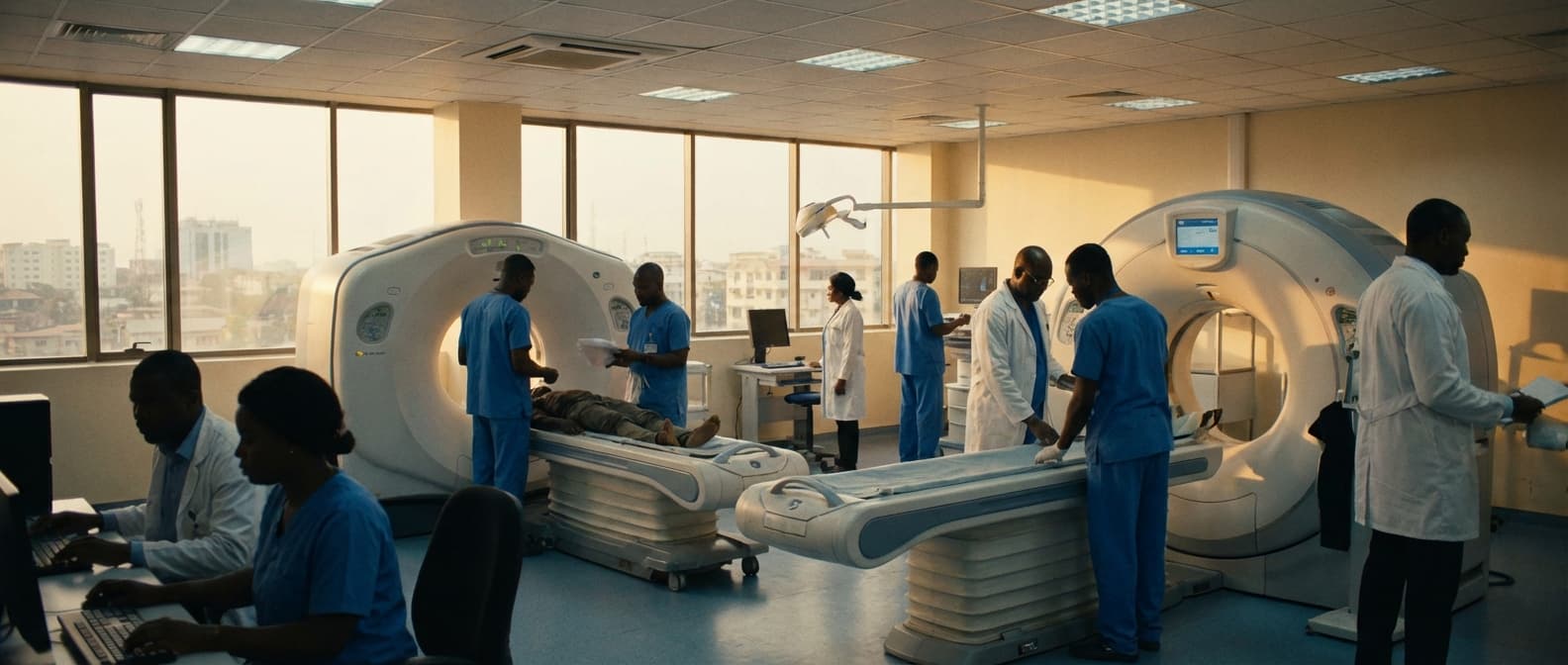
Imaging Acceptance Testing & QA in Gabon
Engineering Excellence & Technical Support
Commissioning and periodic QA for CT/MRI/X‑ray/US/Mammo. High-standard technical execution following OEM protocols and local regulatory frameworks.
Advanced Imaging Modality Calibration
Ensuring precision and accuracy of medical imaging equipment (X-ray, CT, MRI) through rigorous calibration against international standards. This includes verification of image quality parameters, radiation dose accuracy, and artifact reduction, vital for reliable diagnostics in Gabonese healthcare facilities.
AI-Powered Image Analysis Verification
Implementing and validating Artificial Intelligence (AI) algorithms for image interpretation and anomaly detection. This involves testing algorithm performance on diverse patient datasets representative of Gabon's population, ensuring robust and bias-free diagnostic support for radiologists.
PACS & DICOM Compliance Audits
Conducting comprehensive audits of Picture Archiving and Communication Systems (PACS) and Digital Imaging and Communications in Medicine (DICOM) compliance. This guarantees seamless image transfer, storage, and interoperability between different imaging devices and clinical workstations, enhancing workflow efficiency across Gabon.
What Is Imaging Acceptance Testing & Qa In Gabon?
Imaging Acceptance Testing & Quality Assurance (QA) in Gabon refers to the systematic process of verifying that medical imaging equipment and associated software function according to predefined specifications and regulatory requirements, ensuring diagnostic image quality, patient safety, and operational efficiency. This service is critical for healthcare providers in Gabon to validate the performance of newly installed or upgraded imaging systems before they are integrated into clinical workflows. It encompasses a suite of tests designed to assess the physical and performance characteristics of imaging devices such as X-ray, CT, MRI, ultrasound, and mammography machines, as well as their supporting Picture Archiving and Communication Systems (PACS) and Electronic Health Records (EHR) integration. The objective is to identify and rectify any deviations from expected performance, thereby mitigating risks of misdiagnosis, equipment downtime, and non-compliance with national and international standards.
| Who Needs Imaging Acceptance Testing & QA in Gabon? | Typical Use Cases | ||||
|---|---|---|---|---|---|
| Hospitals and Clinics: Both public and private healthcare facilities acquiring new imaging equipment or upgrading existing systems. | Diagnostic Imaging Centers: Standalone centers specializing in medical imaging services. | Radiology Departments: Within larger healthcare institutions. | Medical Equipment Vendors and Integrators: Responsible for installing and commissioning new systems. | Regulatory Bodies: Overseeing the quality and safety of medical devices and healthcare services. | |
| New Equipment Installation: Verifying that newly purchased X-ray, CT, MRI, ultrasound, or other imaging modalities meet performance specifications before clinical deployment. | System Upgrades: Assessing the impact and performance of software or hardware upgrades on existing imaging systems. | Periodic Quality Control: Establishing and validating the ongoing quality of imaging across the installed base. | Post-Maintenance Verification: Ensuring that performance and safety are restored after major repairs or servicing. | Mergers and Acquisitions: Standardizing imaging equipment performance and QA protocols across multiple facilities. | Preparation for Accreditation: Demonstrating compliance with quality standards required for national or international accreditation. |
Key Components of Imaging Acceptance Testing & QA in Gabon
- Performance Verification: Assessment of image resolution, contrast, signal-to-noise ratio (SNR), geometric accuracy, and artifact levels across various imaging protocols and parameters.
- Calibration and Alignment: Ensuring that imaging parameters are accurately calibrated and that geometric alignment is maintained for precise imaging.
- Safety Assessments: Verification of radiation protection measures (for ionising modalities), electromagnetic compatibility (EMC), and electrical safety to ensure patient and operator safety.
- Image Quality Control (IQC): Establishing baseline image quality metrics and implementing protocols for ongoing monitoring and maintenance.
- Workflow Integration: Testing the seamless integration of imaging systems with PACS, EHR, and other IT infrastructure, including data transfer, archiving, retrieval, and reporting functionalities.
- Software Functionality Testing: Validating the performance of imaging software, including user interface, image manipulation tools, reconstruction algorithms, and post-processing capabilities.
- Compliance Audits: Ensuring adherence to relevant Gabonese healthcare regulations, standards (e.g., those from the Ministry of Health), and international best practices (e.g., IEC standards for medical electrical equipment).
- Training and Documentation Review: Verifying that operational and maintenance manuals are adequate and that clinical staff are adequately trained on the equipment's functionality and safety protocols.
Who Needs Imaging Acceptance Testing & Qa In Gabon?
Imaging Acceptance Testing & Quality Assurance (QA) are critical for ensuring that medical imaging systems perform reliably, produce accurate diagnostic images, and integrate seamlessly into healthcare workflows. In Gabon, as in any country striving for robust healthcare, these services are indispensable for a variety of stakeholders to maintain high standards of patient care and operational efficiency.
| Target Customer/Department | Why Imaging Acceptance Testing & QA is Needed | Key Areas of Focus |
|---|---|---|
| Public Hospitals and Clinics (e.g., Hôpital d'Instruction des Armées Omar Bongo, Centre Hospitalier Universitaire de Libreville) | Ensuring reliable operation of vital diagnostic equipment, maintaining patient safety, optimizing resource utilization, and complying with national health standards. | Radiology Departments (X-ray, CT, MRI, Ultrasound), Cardiology Departments (Echocardiography), Oncology Departments (PET-CT), Diagnostic Imaging Units. |
| Private Healthcare Facilities (e.g., Clinique Owendo, Hôpital le Bon Samaritain) | Delivering high-quality patient care to attract and retain patients, safeguarding investments in advanced imaging technology, and meeting international service standards. | Radiology Departments, Imaging Suites, Diagnostic Services, Quality Management Departments. |
| Specialized Imaging Centers | Verifying the performance of highly specialized equipment, ensuring accuracy for specific diagnostic procedures, and maintaining a reputation for expertise. | Dedicated MRI/CT/Ultrasound Centers, Mammography Clinics, Interventional Radiology Suites. |
| Research Institutions (if applicable in Gabon's medical research landscape) | Confirming the precision and consistency of imaging data for research studies, ensuring reproducibility, and contributing to scientific advancements. | Research Laboratories, Imaging Cores, Clinical Trial Support Departments. |
| Government Health Agencies (e.g., Ministère de la Santé) | Overseeing the quality of healthcare services nationwide, ensuring public safety, and facilitating evidence-based decision-making for public health initiatives. | Health Regulation and Standards Bodies, Public Health Monitoring Units, Procurement and Accreditation Departments. |
| Medical Device Vendors and Distributors (operating in Gabon) | Ensuring that newly installed or upgraded imaging systems meet manufacturer specifications and client expectations, facilitating successful product deployment, and providing evidence of quality to their clients. | Technical Support Teams, Installation and Commissioning Departments, Sales and Customer Service (to demonstrate system performance). |
Target Customers & Departments for Imaging Acceptance Testing & QA in Gabon
- Public Hospitals and Clinics
- Private Healthcare Facilities
- Specialized Imaging Centers
- Research Institutions
- Government Health Agencies
- Medical Device Vendors and Distributors
Imaging Acceptance Testing & Qa Process In Gabon
This document outlines the Imaging Acceptance Testing & QA Process specifically tailored for implementation in Gabon. It details the end-to-end workflow, from the initial inquiry about imaging services or equipment to the final execution and sign-off of acceptance testing and quality assurance.
| Stage | Key Activities | Deliverables | Responsible Party | Gabon Specific Considerations |
|---|---|---|---|---|
| Inquiry & Requirements Gathering | Initial contact, needs assessment, scope definition, technical specifications, regulatory understanding. | Requirement document, scope of work. | Client, Service Provider/Vendor. | Understanding local healthcare/industrial needs, relevant Gabonese regulations (e.g., health ministry approvals, environmental standards). |
| Proposal & Quotation | Developing solution, defining methodology, estimating costs, project timelines. | Formal proposal, quotation. | Service Provider/Vendor. | Pricing in local currency (if applicable), understanding of local market pricing. |
| Contract Agreement | Negotiating terms, defining SLAs, payment schedules, legal clauses. | Signed contract. | Client, Service Provider/Vendor. | Adherence to Gabonese contract law, dispute resolution mechanisms. |
| Planning & Preparation | Developing test plans, checklists, scheduling, logistics, site readiness. | Test plans, site preparation report, logistics plan. | Service Provider/Vendor (with Client input). | Logistics for remote areas in Gabon, potential customs clearance for equipment, securing local permits if needed. |
| Procurement & Delivery (if applicable) | Sourcing equipment, quality checks, shipping, import documentation. | Procured equipment, delivery confirmation. | Service Provider/Vendor. | Import duties and taxes in Gabon, shipping routes and reliability, local customs agents. |
| Installation & Configuration (if applicable) | On-site setup, calibration, initial testing, software configuration. | Installed and configured system, initial calibration reports. | Service Provider/Vendor's technical team. | Availability of qualified local technicians or need for expatriate staff, power stability, environmental conditions (humidity, temperature). |
| Pre-Acceptance Testing (Internal QA) | Functionality checks, performance benchmarks, error detection. | Internal QA report, identified issues list. | Service Provider/Vendor's QA team. | Standard QA protocols adapted for the specific imaging technology. |
| Formal Acceptance Testing (Client On-site) | Executing test cases, data acquisition, image quality evaluation, performance validation. | Acceptance test results, performance reports, anomaly log. | Client representatives, Service Provider/Vendor's technical and QA team. | Conducting tests under local operating conditions, ensuring relevance to Gabonese patient population/industrial context, language of reporting (French is official). |
| Quality Assurance (Ongoing Monitoring & Validation) | Establishing monitoring protocols, regular checks, maintaining standards. | QA protocols, periodic performance reports. | Service Provider/Vendor (with Client oversight). | Procedures for remote monitoring if applicable, local resources for maintenance. |
| Documentation & Reporting | Compiling all test results, reports, manuals, certificates. | Comprehensive documentation package. | Service Provider/Vendor. | Ensuring documentation is in French or bilingual if required by client, clarity for local users. |
| Client Review & Sign-off | Reviewing documentation, addressing feedback, final approval. | Signed acceptance certificate. | Client. | Timely review and feedback from client representatives, ensuring understanding of technical reports. |
| Training & Handover | User training, maintenance training, knowledge transfer, handover of all materials. | Training materials, user manuals, handover certificate. | Service Provider/Vendor's trainers and technical staff. | Tailoring training to user's existing skill levels, providing hands-on practice relevant to their workflow, language of instruction. |
| Post-Implementation Support & Feedback | Ongoing technical support, troubleshooting, collecting feedback for improvement. | Support logs, feedback reports. | Service Provider/Vendor's support team, Client. | Establishing clear communication channels for support, understanding local support infrastructure limitations. |
Imaging Acceptance Testing & QA Process Workflow
- Inquiry & Requirements Gathering: The process begins when a client in Gabon expresses interest in imaging services (e.g., medical imaging, industrial inspection) or the procurement/installation of imaging equipment. This stage involves detailed discussions to understand specific needs, technical specifications, regulatory compliance (if applicable in Gabon), intended use cases, and desired outcomes.
- Proposal & Quotation: Based on the gathered requirements, a comprehensive proposal is developed. This includes the scope of work, proposed imaging solutions or equipment, methodologies for testing and QA, timelines, required resources (personnel, equipment, facilities), and associated costs. A formal quotation is provided.
- Contract Agreement: Upon acceptance of the proposal and quotation, a formal contract is signed. This contract clearly defines the terms and conditions, deliverables, responsibilities of both parties, payment schedules, and legal frameworks applicable in Gabon.
- Planning & Preparation: This phase involves detailed planning for the acceptance testing and QA. It includes developing specific test plans, test cases, checklists, and defining the criteria for acceptance. Site preparation (if equipment installation is involved), logistics for personnel and equipment, and coordination with local stakeholders in Gabon are also managed here.
- Procurement & Delivery (if applicable): If new imaging equipment is being procured, this stage involves sourcing, purchasing, and ensuring the safe and timely delivery of the equipment to the designated location in Gabon, adhering to import regulations.
- Installation & Configuration (if applicable): For new equipment, professional installation and configuration are performed by qualified technicians. This ensures the equipment is set up according to manufacturer specifications and operational requirements.
- Pre-Acceptance Testing (Internal QA): Before client involvement, internal QA teams perform preliminary tests to verify basic functionality, calibration, and performance of the imaging system or service. This is a crucial step to identify and resolve any initial issues.
- Formal Acceptance Testing (Client On-site): This is the core of the process. The client's representatives, alongside the testing team, execute the pre-defined test cases on-site in Gabon. This involves simulating real-world scenarios to validate that the imaging system or service meets all specified performance, accuracy, and reliability requirements. Data acquisition, image quality assessment, and operational checks are performed.
- Quality Assurance (Ongoing Monitoring & Validation): QA activities extend beyond the formal acceptance testing. This includes establishing protocols for ongoing quality monitoring, routine calibration checks, performance verification, and data integrity audits. This ensures sustained high-quality imaging output.
- Documentation & Reporting: Comprehensive documentation is generated throughout the process. This includes test plans, test results, QA reports, calibration certificates, user manuals, and training materials. All documentation is reviewed and approved.
- Client Review & Sign-off: The client reviews all test results and documentation. Any discrepancies or issues identified during testing are addressed through re-testing or corrective actions. Upon satisfactory review and resolution of all concerns, the client formally signs off on the acceptance testing and QA.
- Training & Handover: The client's personnel receive comprehensive training on the operation, maintenance, and troubleshooting of the imaging system or services. A formal handover of the system/service and all associated documentation is completed.
- Post-Implementation Support & Feedback: Following the handover, ongoing support is provided to address any emergent issues. Feedback mechanisms are established to gather client input for continuous improvement of imaging services and processes in Gabon.
Imaging Acceptance Testing & Qa Cost In Gabon
Imaging Acceptance Testing & QA in Gabon involves a range of costs influenced by several key factors. These costs are crucial for ensuring that medical imaging equipment functions correctly and meets diagnostic standards, thereby safeguarding patient care. The pricing can vary significantly based on the type of equipment, the complexity of the tests required, the location within Gabon, and the expertise of the testing personnel. It's essential for healthcare facilities to budget appropriately for these services to maintain operational efficiency and adhere to regulatory requirements.
| Service Type | Estimated Cost Range (XAF) | Notes |
|---|---|---|
| Basic Acceptance Testing (per unit) | 250,000 - 750,000 | Covers initial functional checks and basic performance verification for standard equipment like X-ray or ultrasound. |
| Comprehensive Acceptance Testing & QA (per unit) | 600,000 - 2,000,000+ | Includes in-depth performance evaluations, image quality assessment, and initial QA checks for advanced modalities like CT or MRI. |
| Routine QA (annual/bi-annual, per unit) | 300,000 - 1,000,000 | Ongoing checks to ensure consistent image quality and equipment performance. Price depends on frequency and scope. |
| Specialized Equipment Testing (e.g., Mammography, Angiography) | 800,000 - 2,500,000+ | Requires specialized phantoms, software, and expertise, leading to higher costs. |
| Travel and Per Diem (if applicable) | Variable | Costs will depend on distance, duration, and number of personnel. Can add significant cost for remote locations. |
| Consultation and Reporting | 150,000 - 400,000 | For detailed analysis, recommendations, and formal reports. |
Key Pricing Factors for Imaging Acceptance Testing & QA in Gabon
- Type of Imaging Equipment: Different modalities (e.g., X-ray, CT scanner, MRI, Ultrasound) have varying testing protocols and complexity, directly impacting cost.
- Scope and Depth of Testing: Basic acceptance testing versus comprehensive quality assurance (QA) protocols will have different price points.
- Number of Equipment Units: Larger facilities with multiple imaging units will naturally incur higher overall costs.
- Location within Gabon: Costs can be higher in major cities like Libreville due to higher operational expenses for testing firms, compared to more remote areas.
- Vendor and Service Provider: The reputation, experience, and pricing structure of the testing service provider (whether an independent firm or the equipment vendor) will influence the final cost.
- Technological Sophistication: Newer, more advanced equipment may require specialized tools and expertise, leading to higher testing fees.
- Travel and Logistics: If the testing team needs to travel to remote locations, travel and accommodation expenses will be added.
- Certification and Accreditation Requirements: Some tests may be mandated for specific certifications, potentially increasing the scope and cost.
- Urgency of Service: Expedited testing services often come with a premium.
- Post-Installation Support: Some contracts may bundle initial acceptance testing with ongoing QA support, affecting the overall price.
Affordable Imaging Acceptance Testing & Qa Options
Ensuring the accuracy and reliability of imaging systems is paramount for patient care and operational efficiency. Acceptance Testing (AT) and Quality Assurance (QA) are critical components of this process. For organizations seeking cost-effective solutions, understanding value bundles and implementing smart cost-saving strategies can significantly reduce the financial burden without compromising quality.
| Value Bundle Type | Description | Cost-Saving Strategies | Typical Benefits |
|---|---|---|---|
| Comprehensive Vendor-Specific AT/QA Package | Includes initial acceptance testing and a defined period of ongoing QA, bundled by the imaging equipment manufacturer. | Negotiate package inclusions; inquire about phased payment options; compare bundled pricing against à la carte options. | Streamlined process; integrated expertise; potentially faster resolution of issues. |
| Independent Third-Party AT/QA Services | Engaging an external, vendor-neutral company for acceptance testing and/or ongoing QA. Can offer standardized protocols. | Obtain multiple quotes; look for companies specializing in your imaging modalities; consider long-term service agreements for discounts. | Objective evaluation; potential cost savings through competitive bidding; broader expertise across vendors. |
| Modular/Phased Testing Approach | Breaking down AT and QA into smaller, manageable phases based on system criticality or project timelines. Can be combined with other bundle types. | Focus on essential tests first; defer less critical tests to later phases; allocate budget incrementally. | Improved cash flow management; allows for adjustments based on initial findings; easier to manage complex projects. |
| Hybrid In-House & Outsourced QA | Utilizing internal staff for routine, less complex QA tasks, while outsourcing specialized or periodic comprehensive QA to external providers. | Invest in training for internal staff; clearly define responsibilities; negotiate service level agreements (SLAs) for outsourced components. | Optimized resource utilization; leveraging internal knowledge; cost-effectiveness through shared responsibility. |
| Software-Driven QA Solutions | Implementing automated software tools for specific QA measurements and reporting, often complementing manual testing. May be a standalone purchase or part of a service bundle. | Evaluate ROI for software; consider subscription models over perpetual licenses; ensure compatibility with existing infrastructure. | Increased efficiency; reduced human error; consistent data collection; valuable for large-scale deployments. |
Key Considerations for Affordable Imaging AT & QA
- Defining clear scope and objectives for AT/QA to avoid unnecessary testing.
- Leveraging existing internal expertise and resources where possible.
- Exploring vendor-neutral testing solutions for flexibility and competitive pricing.
- Understanding the true cost of ownership, including ongoing QA.
- Prioritizing testing based on clinical impact and regulatory requirements.
- Implementing phased testing approaches to manage budget and resources.
- Utilizing automation tools for repetitive QA tasks.
Verified Providers In Gabon
In Gabon's evolving healthcare landscape, the distinction of "Verified Providers" signifies a commitment to quality, safety, and patient-centered care. Franance Health plays a pivotal role in this verification process, ensuring that healthcare facilities and professionals meet rigorous standards. Choosing a Franance Health verified provider offers significant advantages, bringing peace of mind and a higher probability of receiving effective and ethical medical services.
| Verification Aspect | Franance Health Standard | Benefit to Patients |
|---|---|---|
| Infrastructure & Equipment | Meets or exceeds national and international standards for facilities and medical technology. | Access to modern, well-maintained medical equipment for accurate diagnosis and effective treatment. |
| Medical Staff Credentials | Verification of licenses, certifications, and ongoing professional development for all healthcare practitioners. | Ensured treatment by qualified, experienced, and up-to-date medical professionals. |
| Patient Safety Protocols | Strict adherence to infection control, emergency preparedness, and patient identification procedures. | Minimizing risks of healthcare-associated infections and ensuring patient safety during all procedures. |
| Ethical Practice & Patient Rights | Commitment to patient confidentiality, informed consent, and fair treatment. | Trustworthy and respectful healthcare experience where patient rights are paramount. |
| Operational Efficiency | Streamlined administrative processes and efficient patient flow. | Reduced waiting times and a more organized and less stressful healthcare experience. |
Why Franance Health Verified Providers are the Best Choice:
- Unwavering Commitment to Quality: Franance Health's verification process scrutinizes facilities for state-of-the-art equipment, stringent hygiene protocols, and adherence to best medical practices.
- Highly Qualified Professionals: Verified providers ensure their medical staff possess the necessary credentials, ongoing training, and a dedication to continuous professional development.
- Patient Safety First: Rigorous safety checks and protocols are a cornerstone of the verification, minimizing risks and ensuring a secure environment for all patients.
- Ethical Standards and Transparency: Franance Health champions ethical conduct and transparency in healthcare delivery, fostering trust between patients and providers.
- Access to Advanced Treatments: Verified providers are more likely to offer access to the latest medical technologies and treatment options available.
- Improved Patient Outcomes: The combination of quality infrastructure, skilled professionals, and patient-focused care directly contributes to better health outcomes.
- Enhanced Patient Experience: From appointment scheduling to post-treatment care, verified providers prioritize a smooth and positive patient journey.
Scope Of Work For Imaging Acceptance Testing & Qa
This Scope of Work (SOW) outlines the requirements for Imaging Acceptance Testing & Quality Assurance (QA). The objective is to ensure that the imaging systems and workflows meet defined technical requirements, operational standards, and performance benchmarks before being fully integrated into production. This includes the verification of image quality, system functionality, data integrity, security, and interoperability with existing healthcare IT infrastructure.
| Deliverable | Description | Standard/Specification Reference |
|---|---|---|
| Imaging System Configuration Report | Documentation of all hardware and software configurations, including version numbers, settings, and integration points. | System design documents, vendor specifications. |
| Image Quality Assessment Report | Detailed analysis of image quality metrics (e.g., spatial resolution, contrast-to-noise ratio, artifact levels) using established phantoms and clinical images. | ACR (American College of Radiology) guidelines, modality-specific QC protocols, DICOM Part 14 (Grayscale Standard Display Function). |
| Functional Test Cases & Results | A comprehensive set of test cases covering all specified functionalities of each imaging component, with documented execution results. | User requirements specifications (URS), functional design specifications (FDS), use case diagrams. |
| Interoperability Test Report | Verification of seamless data exchange (e.g., images, reports, patient demographics) between imaging systems and other healthcare IT systems. | HL7 v2.x and v3 standards, DICOM conformance statements, IHE (Integrating the Healthcare Enterprise) profiles. |
| Data Integrity & Validation Report | Confirmation that image data and metadata are accurately stored, retrieved, and remain unaltered throughout their lifecycle. | Database integrity checks, DICOM conformance, metadata validation scripts. |
| Security Audit Report | Assessment of implemented security measures, including access controls, role-based permissions, audit logs, and data encryption. | HIPAA Security Rule, GDPR Article 32, organizational security policies. |
| Performance Benchmarking Report | Measurement of system response times, throughput, and resource utilization under various load conditions. | System performance requirements, industry best practices, load testing tools. |
| User Acceptance Testing (UAT) Sign-off | Formal sign-off from end-users (radiologists, technologists, clinicians) confirming satisfaction with system functionality and usability. | UAT plan, end-user feedback, operational workflows. |
| Workflow Validation Report | Documentation demonstrating that clinical imaging workflows are efficient, accurate, and meet operational needs. | Current state analysis, future state workflows, process mapping. |
| Training Documentation Review | Assessment of the completeness and accuracy of user training materials. | Training needs analysis, vendor-provided documentation. |
Key Objectives of Imaging Acceptance Testing & QA
- Verify that imaging hardware (e.g., scanners, PACS workstations, viewing stations) meets specified performance criteria and image quality standards.
- Validate that imaging software (e.g., PACS, RIS, modality software, AI analysis tools) functions as designed and meets functional and performance requirements.
- Confirm successful integration and interoperability of imaging systems with other healthcare IT systems (e.g., EMR/EHR, ADT, LIS) according to HL7, DICOM, and other relevant standards.
- Assess the accuracy, completeness, and integrity of image data and associated metadata throughout the imaging lifecycle.
- Evaluate system security features, including access controls, data encryption, and audit trails, to ensure compliance with regulatory requirements (e.g., HIPAA, GDPR).
- Test workflow efficiency, including image acquisition, processing, storage, retrieval, and reporting, to identify and resolve bottlenecks.
- Ensure user-friendliness and ease of use of imaging systems for clinical staff.
- Validate system reliability, availability, and disaster recovery capabilities.
Service Level Agreement For Imaging Acceptance Testing & Qa
This Service Level Agreement (SLA) outlines the agreed-upon standards for Imaging Acceptance Testing and Quality Assurance (QA) services provided by [Your Company Name] (hereinafter referred to as 'Provider') to [Client Company Name] (hereinafter referred to as 'Client'). This SLA covers response times for issue reporting and escalation, as well as uptime guarantees for the testing environments and associated tools.
| Service Component | Uptime Guarantee | Downtime Definition | Response Time (Issue Reporting) | Resolution Time (Target) |
|---|---|---|---|---|
| Imaging Testing Environment (Servers, Storage, Network) | 99.5% | Any period where the Client is unable to initiate or complete critical acceptance tests due to Provider's infrastructure failure. | 1 business hour | 4 business hours (for critical issues) |
| Imaging QA Tools (e.g., validation software, reporting dashboards) | 99.0% | Any period where the Client is unable to access or utilize essential QA tools for reporting or analysis due to Provider's systems. | 2 business hours | 8 business hours (for critical issues) |
| Core Imaging Processing Services (if part of the testing scope) | 99.7% | Any period where core processing services are unavailable, preventing the generation of test data or the execution of automated tests. | 1 business hour | 4 business hours (for critical issues) |
Scope of Services
- Imaging Acceptance Testing: Verification of imaging data integrity, format compliance, and accuracy against defined specifications.
- Quality Assurance (QA): Comprehensive testing of imaging workflows, including ingestion, processing, storage, retrieval, and display.
- Testing Environment Management: Ensuring the availability and performance of dedicated testing environments and any integrated systems.
Frequently Asked Questions

Ready when you are
Let's scope your Imaging Acceptance Testing & QA in Gabon project in Gabon.

Scaling healthcare logistics and technical systems across the entire continent.