
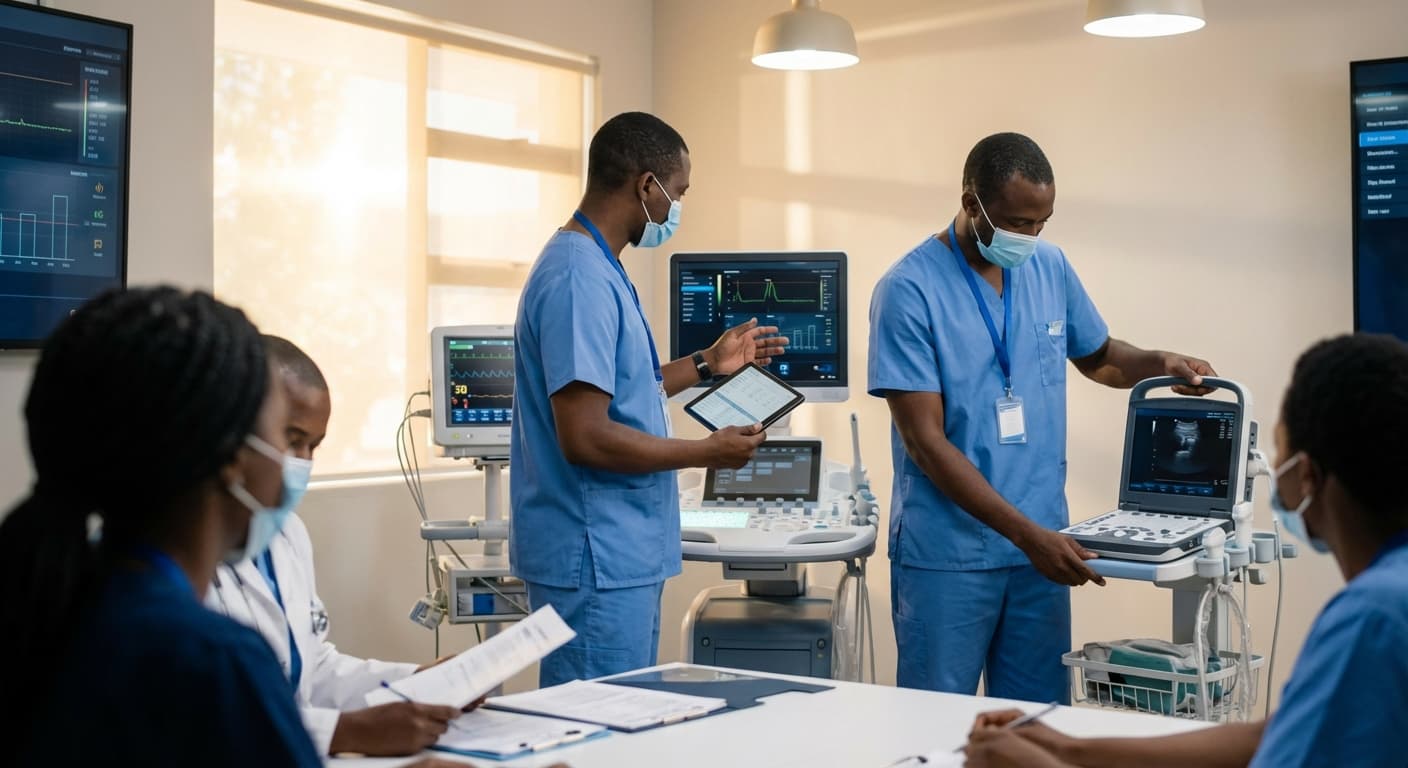
Clinical Needs Assessment for Medical Equipment in Gabon
Engineering Excellence & Technical Support
Clinical Needs Assessment for Medical Equipment High-standard technical execution following OEM protocols and local regulatory frameworks.
Diagnostic Imaging Capacity Building
Addressing the critical shortage of advanced diagnostic imaging equipment (MRI, CT scanners) by conducting a needs assessment to identify key healthcare facilities, prioritize equipment acquisition based on regional disease prevalence, and outline essential training programs for radiographers and radiologists in Gabon.
Laboratory Infrastructure Modernization
Evaluating the current state of laboratory infrastructure and equipment across Gabon to map existing capabilities, identify gaps in essential diagnostic tests (e.g., molecular diagnostics for infectious diseases), and recommend a phased modernization plan with robust quality control measures and skilled personnel development.
Rehabilitation & Assistive Technology Access
Assessing the unmet needs for rehabilitation equipment and assistive technologies for patients with disabilities and chronic conditions in Gabon, focusing on mobility aids, physical therapy devices, and communication tools, while also identifying local manufacturing or import facilitation strategies.
What Is Clinical Needs Assessment For Medical Equipment In Gabon?
Clinical Needs Assessment for Medical Equipment in Gabon is a systematic evaluation process designed to identify, analyze, and prioritize the medical equipment requirements of healthcare facilities within the Gabonese context. It involves a comprehensive review of existing infrastructure, patient demographics, disease prevalence, available human resources, financial constraints, and national health policies to ensure that procured equipment aligns with actual clinical demands and strategic health objectives. The assessment aims to optimize resource allocation, enhance service delivery quality, and improve patient outcomes by preventing over- or under-provision of medical technology. This service is critical for informed decision-making in healthcare planning and capital investment.
| Who Needs It? | Typical Use Cases |
|---|---|
| Ministry of Health, Gabon: For national health strategic planning, resource allocation, and infrastructure development. | Development of national essential medical equipment lists and procurement guidelines. Planning for the renovation or construction of new healthcare facilities (hospitals, health centers). Responding to public health emergencies and epidemiological shifts. |
| Regional Health Directorates: For localized planning and resource allocation within specific provinces or regions. | Equipping newly established health posts or expanding services in existing ones. Upgrading equipment in regional hospitals to meet local demand. Assessing equipment needs for specific public health campaigns (e.g., vaccination, maternal health). |
| Public and Private Healthcare Facilities (Hospitals, Clinics, Diagnostic Centers): For operational planning and capital investment. | Procurement of new diagnostic imaging equipment (e.g., X-ray, ultrasound). Acquisition of specialized surgical instruments or patient monitoring systems. Replacement of obsolete or non-functional medical devices. Expansion of laboratory services and their associated equipment. |
| International Development Partners and NGOs: For targeted investments and project implementation. | Identifying critical equipment needs for specific health programs (e.g., HIV/AIDS, malaria, maternal and child health). Assessing equipment gaps in areas targeted for donor-funded projects. Ensuring alignment of equipment donations with local needs and maintenance capacity. |
| Healthcare Equipment Manufacturers and Suppliers: For market entry and product development. | Understanding the specific technological needs and preferences in the Gabonese market. Tailoring product offerings and training support to local conditions. Identifying opportunities for long-term service and maintenance contracts. |
Key Components of a Clinical Needs Assessment:
- Facility Assessment: Evaluating current infrastructure, space, power supply, and maintenance capabilities.
- Demographic and Epidemiological Analysis: Understanding patient population characteristics and disease burden.
- Service Line Review: Identifying existing and planned clinical services and their equipment dependencies.
- Technology Evaluation: Assessing the suitability, efficacy, and sustainability of various medical technologies.
- Human Resource Capacity: Determining the availability of trained personnel for operation and maintenance.
- Financial Feasibility: Analyzing procurement, operational, and maintenance costs against budget.
- Regulatory and Policy Alignment: Ensuring compliance with national health regulations and guidelines.
- Stakeholder Consultation: Engaging with clinicians, administrators, technicians, and policymakers.
- Gap Analysis: Identifying deficiencies between current and desired equipment provision.
- Prioritization Framework: Establishing criteria for ranking equipment needs based on impact and urgency.
Who Needs Clinical Needs Assessment For Medical Equipment In Gabon?
Clinical needs assessments for medical equipment are crucial for ensuring that healthcare facilities in Gabon have the right tools to provide effective patient care. These assessments identify the specific equipment requirements of a facility based on its services, patient demographics, and existing infrastructure. This process helps optimize resource allocation, prevent unnecessary spending, and improve the overall quality of healthcare delivery. Understanding who benefits most from these assessments and which departments are key stakeholders is vital for successful implementation and adoption of new medical technologies.
| Target Customer/Entity | Key Departments Involved | Primary Needs Addressed |
|---|---|---|
| Public Hospitals | Medical Staff (Doctors, Nurses), Procurement, Biomedical Engineering, Administration, IT, Pharmacy, Radiology, Laboratory, Surgical Departments, Emergency Services | Essential life-saving equipment, diagnostic tools, patient monitoring systems, specialized surgical instruments, infrastructure upgrades, training for staff on new technologies, equipment maintenance and repair. |
| Private Hospitals/Clinics | Medical Directors, Department Heads, Nursing Supervisors, Procurement Officers, Finance Department, IT Department, Specialists (e.g., Cardiologists, Oncologists) | Advanced diagnostic and treatment equipment to meet patient expectations and competition, specialized equipment for niche services, upgrade of existing infrastructure, integration of new technologies with existing systems, staff training. |
| Rural Health Centers/Clinics | General Practitioners, Nurses, Community Health Workers, Local Health Administrators | Basic diagnostic equipment, essential medical supplies, reliable point-of-care testing devices, equipment for primary care services, simple yet durable equipment suitable for remote areas, training on basic equipment operation and maintenance. |
| Specialty Care Centers (e.g., Cardiology, Oncology) | Specialist Physicians, Technicians, Nurses, Researchers, Imaging Specialists | Highly specialized diagnostic and therapeutic equipment (e.g., MRI, CT scanners, advanced ultrasound, radiation therapy machines), equipment for research and development, advanced monitoring systems, specialized surgical tools. |
| Diagnostic Laboratories | Laboratory Technicians, Pathologists, Laboratory Managers, Quality Control Officers | Automated analyzers, microscopes, centrifuges, incubators, specialized reagents and consumables, equipment for molecular diagnostics, sample handling and storage equipment. |
Target Customers and Departments for Clinical Needs Assessment in Gabon
- Hospitals (Public and Private)
- Clinics and Health Centers
- Specialty Care Centers
- Diagnostic Laboratories
- Surgical Centers
- Maternity Wards
- Emergency Rooms/Departments
- Intensive Care Units (ICUs)
- Outpatient Departments
- Rehabilitation Centers
Clinical Needs Assessment For Medical Equipment Process In Gabon
This document outlines the comprehensive workflow for conducting a clinical needs assessment for medical equipment in Gabon. This process is crucial for ensuring that healthcare facilities acquire appropriate, functional, and sustainable equipment aligned with patient care requirements and resource availability. The workflow spans from the initial inquiry to the final execution and post-implementation review. It emphasizes collaboration between healthcare providers, technical experts, and procurement bodies to achieve optimal outcomes. The process is designed to be transparent, efficient, and adaptable to the specific needs of different healthcare settings within Gabon.
| Phase | Key Activities | Responsible Parties | Deliverables | Timeline (Indicative) |
|---|---|---|---|---|
| Receipt of request for needs assessment from a healthcare facility or government health authority. Initial discussion to understand the scope, objectives, and specific areas of concern. Preliminary identification of the healthcare facility type (e.g., regional hospital, rural clinic). | Healthcare Facility Management, Ministry of Health (MoH) Representative, Project Coordinator | Documented understanding of the assessment's scope, objectives, and preliminary list of involved facilities. | 1-2 Weeks |
| Assembling a multidisciplinary team comprising clinical specialists (doctors, nurses, technicians), biomedical engineers, procurement officers, and MoH representatives. Defining roles and responsibilities within the team. | MoH, Project Coordinator, Heads of Departments (Healthcare Facility) | Appointed Needs Assessment Team with defined roles and responsibilities. | 1 Week |
| Site visits to healthcare facilities. Conducting interviews with healthcare professionals. Reviewing existing patient data, service utilization statistics, and current equipment inventory. Assessing infrastructure readiness (power, space, maintenance capabilities). Analyzing disease prevalence and projected healthcare needs. Identifying gaps in current equipment provision. | Needs Assessment Team (Clinical Specialists, Biomedical Engineers, Procurement Officers) | Comprehensive data report including facility assessments, interviews summaries, equipment inventory, and gap analysis. | 4-8 Weeks |
| Based on the data analysis, prioritizing equipment needs according to impact on patient care, cost-effectiveness, and sustainability. Developing detailed technical specifications for each prioritized equipment item, including performance requirements, safety standards, and maintenance needs. Considering local capacity for operation and maintenance. Identifying potential suppliers. | Needs Assessment Team (Clinical Specialists, Biomedical Engineers) | Prioritized list of medical equipment with detailed technical specifications and justifications. Preliminary market research on potential suppliers. | 3-5 Weeks |
| Presenting the prioritized equipment list and specifications to the healthcare facility management and relevant MoH committees for review and validation. Incorporating feedback and making necessary revisions. Obtaining formal approval for the recommended equipment. | Needs Assessment Team, Healthcare Facility Management, MoH Review Committee, Ministry of Finance (if applicable) | Approved list of medical equipment with confirmed specifications and budget allocation. | 2-3 Weeks |
| Developing tender documents based on approved specifications. Issuing tenders and managing the bidding process. Evaluating bids based on technical and financial criteria. Selecting the supplier(s) and negotiating contracts. Overseeing the procurement and delivery of equipment. | Procurement Department (MoH or designated agency), Project Coordinator, Legal Department | Procured medical equipment delivered to the designated healthcare facilities. | 12-20 Weeks (can vary significantly based on procurement regulations and lead times) |
| Coordinating with suppliers for the installation of equipment. Performing thorough testing and calibration to ensure proper functioning according to specifications. Conducting site acceptance tests (SAT) with facility staff and technical experts. | Biomedical Engineering Department, Supplier Technicians, Needs Assessment Team | Fully installed, tested, and commissioned medical equipment. Signed acceptance certificates. | 2-4 Weeks per facility |
| Developing and delivering comprehensive training programs for healthcare professionals and technical staff on the operation, maintenance, and troubleshooting of the newly acquired equipment. Providing user manuals and support materials. | Supplier Trainers, Biomedical Engineering Department, Clinical Trainers | Trained healthcare and technical staff. Training materials and reports. | Ongoing, integrated with installation |
| Establishing a system for ongoing monitoring of equipment performance, utilization, and maintenance. Collecting feedback from users. Conducting periodic evaluations to assess the impact of the new equipment on patient care and service delivery. Identifying any challenges and recommending corrective actions. | Biomedical Engineering Department, Healthcare Facility Management, MoH Quality Assurance Unit | Monitoring reports, user feedback, impact assessment reports, recommendations for improvement. | Ongoing (first 6-12 months post-installation) |
Clinical Needs Assessment Workflow for Medical Equipment in Gabon
- Inquiry and Initial Scoping
- Formation of the Needs Assessment Team
- Data Collection and Analysis
- Equipment Prioritization and Specification Development
- Validation and Approval
- Procurement and Acquisition
- Installation and Commissioning
- Training and Capacity Building
- Post-Installation Monitoring and Evaluation
Clinical Needs Assessment For Medical Equipment Cost In Gabon
This clinical needs assessment aims to explore the pricing factors and ranges for essential medical equipment in Gabon, focusing on local currency (CFA Franc - XAF). Understanding these costs is crucial for healthcare providers, policymakers, and procurement specialists to ensure equitable access to quality medical care. The assessment considers the unique economic and logistical landscape of Gabon, which influences the final price of imported and domestically sourced medical devices.
| Medical Equipment Category | Estimated Price Range (XAF) | Notes |
|---|---|---|
| Basic Diagnostic Tools (e.g., Stethoscope, BP Cuff, Thermometer) | 10,000 - 50,000 | Generally accessible, with variations in brand quality. |
| Vital Signs Monitors (e.g., Pulse Oximeter, Portable ECG) | 150,000 - 750,000 | Depends on portability, accuracy, and features. |
| Basic Laboratory Equipment (e.g., Microscope, Centrifuge, Hematology Analyzer - entry-level) | 500,000 - 5,000,000 | Significant price jump for automated systems. Import costs are high. |
| Imaging Equipment (e.g., X-ray Machine - portable/basic, Ultrasound - portable) | 5,000,000 - 50,000,000+ | High initial investment. Installation and maintenance are critical. |
| Surgical Instruments (Basic Sets) | 200,000 - 1,500,000 | Per set. Quality of stainless steel and precision are key. |
| Anesthesia Machines (Basic) | 3,000,000 - 15,000,000 | Includes essential ventilation and gas delivery components. |
| Hospital Beds (Manual) | 150,000 - 750,000 | Adjustable features and materials influence price. |
| Sterilization Equipment (e.g., Autoclave - small to medium) | 500,000 - 5,000,000 | Capacity and sterilization cycles determine cost. |
| Dental Chairs and Equipment (Basic Unit) | 2,000,000 - 10,000,000 | Includes chair, light, and basic handpieces. |
| Refrigeration for Vaccines/Medications (Specialized) | 300,000 - 2,000,000 | Requires precise temperature control and reliability. |
Key Pricing Factors for Medical Equipment in Gabon
- Import Duties and Taxes: Gabon levies import duties and value-added tax (VAT) on most imported goods, including medical equipment, significantly impacting their final cost.
- Transportation and Logistics: The cost of shipping, handling, customs clearance, and last-mile delivery within Gabon can be substantial due to infrastructure limitations and geographical distribution.
- Supplier Margins and Distribution Channels: The profit margins of importers, distributors, and local retailers, along with the complexity of the distribution network, contribute to price variations.
- Brand and Manufacturer Reputation: Well-established international brands often command higher prices due to perceived quality, reliability, and after-sales support.
- Technology and Features: Advanced medical equipment with specialized functionalities and cutting-edge technology will naturally be more expensive than basic models.
- Warranty and After-Sales Service: The availability and cost of warranties, maintenance contracts, spare parts, and technical support play a significant role in the overall cost of ownership.
- Exchange Rate Fluctuations: As most medical equipment is imported, fluctuations in the exchange rate of the CFA Franc against major currencies can lead to price volatility.
- Regulatory Compliance and Certification: Costs associated with meeting Gabonese health regulations and obtaining necessary certifications can be passed on to consumers.
- Local Availability and Supply Chain: Limited local production or fewer reliable suppliers can lead to higher prices due to reduced competition and potential supply chain vulnerabilities.
- Service Contracts and Training: Ongoing service agreements and user training are essential for optimal equipment utilization and longevity, adding to the total cost.
Affordable Clinical Needs Assessment For Medical Equipment Options
Ensuring access to appropriate medical equipment is crucial for effective healthcare delivery. However, the cost of acquiring and maintaining this equipment can be a significant barrier, especially for resource-limited settings or growing practices. This document outlines strategies for conducting affordable clinical needs assessments and explores cost-saving measures through value bundles and strategic purchasing.
| Value Bundle Component | Description | Cost-Saving Strategy | Benefit Example |
|---|---|---|---|
| Equipment Package Deals | Bundling multiple related pieces of equipment from a single vendor at a discounted price. | Negotiate volume discounts; leverage vendor relationships. | Purchasing a diagnostic imaging suite (e.g., X-ray, Ultrasound) as a package can be 10-15% cheaper than individual purchases. |
| Service and Maintenance Contracts | Including extended warranties, preventive maintenance, and on-site repair services with the equipment purchase. | Predictable operational costs; reduced downtime; potentially lower per-service rates. | A comprehensive service contract can save an estimated 5-10% on unscheduled repair costs annually. |
| Consumables and Accessories Subscription | Bundling necessary disposables, reagents, or accessories with the equipment, often on a subscription basis. | Bulk purchasing discounts; guaranteed supply chain; simplified inventory management. | Securing a year's supply of essential consumables at a fixed price can protect against price fluctuations. |
| Training and Support Packages | Integrating staff training, software updates, and technical support into the equipment acquisition. | Improved staff proficiency; faster adoption; reduced errors; ongoing technical assistance. | Well-trained staff can improve efficiency by up to 20%, leading to better patient throughput. |
| Integrated Workflow Solutions | Bundling equipment with software for data management, reporting, and connectivity to existing IT infrastructure. | Streamlined data flow; improved interoperability; enhanced reporting capabilities; reduced manual data entry. | Integrated systems can reduce administrative time spent on data entry and reporting by 15-25%. |
Key Components of an Affordable Clinical Needs Assessment
- Define Clear Clinical Objectives: Understand the specific patient populations, diagnostic and treatment needs, and desired outcomes. This prevents over-specification and ensures equipment directly addresses required functions.
- Prioritize Essential Equipment: Categorize needs by urgency and impact on patient care. Focus on high-priority items first, deferring less critical or aspirational acquisitions.
- Research Multiple Vendor Options: Actively seek out a diverse range of suppliers, including both established manufacturers and newer entrants, to identify competitive pricing and innovative solutions.
- Consider Refurbished and Certified Pre-Owned Equipment: Explore the viability of high-quality, refurbished equipment that meets current standards and offers significant cost savings over new units.
- Evaluate Total Cost of Ownership (TCO): Look beyond the initial purchase price to include maintenance contracts, consumables, training, and eventual disposal costs. This provides a more accurate financial picture.
- Leverage Technology for Assessment: Utilize cloud-based assessment tools or standardized questionnaires to streamline data collection and analysis, reducing administrative overhead.
- Engage Clinical Staff Early: Involve end-users in the assessment process to ensure practical needs are met and to foster buy-in, which can prevent costly errors in equipment selection.
Verified Providers In Gabon
In Gabon's evolving healthcare landscape, identifying trusted and skilled medical professionals is paramount. Franance Health stands out as a beacon of quality and reliability, offering a network of verified providers who consistently meet stringent standards. These credentials signify not just adherence to regulations, but a deep commitment to patient well-being, continuous professional development, and ethical practice. Choosing a Franance Health verified provider means opting for expertise, safety, and a patient-centered approach that prioritizes your health journey.
| Credential Area | Franance Health Standard | Benefit to Patients |
|---|---|---|
| Medical Licensing | Up-to-date and valid Gabonese medical license | Ensures legal and authorized practice |
| Professional Qualifications | Verified academic and specialization degrees | Confirms expertise in specific medical fields |
| Clinical Experience | Demonstrated years of practical experience | Indicates hands-on skill and accumulated knowledge |
| Reputation and Ethics | Positive feedback and adherence to ethical guidelines | Promotes trustworthy and patient-focused interactions |
| Continuing Education | Evidence of participation in ongoing medical training | Guarantees providers are up-to-date with medical advancements |
Why Franance Health Credentials Matter in Gabon:
- Rigorous Vetting Process: Franance Health employs a comprehensive evaluation of qualifications, licenses, and experience.
- Commitment to Quality Care: Verified providers demonstrate a dedication to delivering high-standard medical services.
- Patient Safety Focus: Credentials ensure adherence to best practices and safety protocols.
- Continuous Professional Development: Many verified providers actively engage in ongoing training and skill enhancement.
- Ethical Practice Standards: Franance Health promotes providers who uphold the highest ethical and professional conduct.
- Enhanced Patient Trust: The "verified" status offers a crucial layer of assurance for individuals seeking medical care.
Scope Of Work For Clinical Needs Assessment For Medical Equipment
This document outlines the Scope of Work (SOW) for a comprehensive Clinical Needs Assessment (CNA) for medical equipment. The CNA will identify, prioritize, and define the specifications for medical equipment required to support the clinical services offered by [Healthcare Facility Name]. This assessment will ensure that procured equipment aligns with current and future clinical needs, patient care standards, operational efficiency, and budget constraints. The technical deliverables will detail the functional requirements, performance standards, and integration needs of each identified piece of equipment. Standard specifications will be referenced to ensure compliance with industry best practices, regulatory requirements, and interoperability.
| Phase | Activities | Deliverables | Key Stakeholders |
|---|---|---|---|
| Phase 1: Planning and Initiation | Define assessment scope and objectives.<br>Form the CNA team.<br>Develop the project plan and timeline.<br>Identify existing equipment inventory and clinical workflows. | Project Charter.<br>CNA Project Plan.<br>Stakeholder Register. | Project Sponsor, CNA Team Lead, Clinical Department Heads, IT Department. |
| Phase 2: Data Collection and Analysis | Conduct interviews and workshops with clinical staff.<br>Review patient demographics and service utilization data.<br>Analyze current equipment performance and maintenance records.<br>Identify gaps in existing equipment or technology.<br>Research emerging medical technologies and trends. | Needs Analysis Report.<br>Gap Analysis Report.<br>Benchmarking Data.<br>Clinical Workflow Maps. | CNA Team, Clinical Staff (Doctors, Nurses, Technicians), Biomedical Engineers, Procurement Specialists, IT Specialists. |
| Phase 3: Equipment Identification and Specification Development | Identify specific medical equipment required.<br>Define functional requirements (e.g., diagnostic capabilities, treatment modalities).<br>Define performance requirements (e.g., accuracy, speed, throughput).<br>Specify interface and connectivity requirements.<br>Identify applicable international and national standards.<br>Develop draft technical specifications for each equipment item.<br>Perform risk assessments for new equipment. | Equipment List.<br>Draft Technical Specifications.<br>Risk Assessment Reports.<br>Interoperability Matrix. | CNA Team, Biomedical Engineers, Clinical Specialists, IT Integration Specialists, Risk Management. |
| Phase 4: Prioritization and Validation | Prioritize identified equipment based on clinical impact, urgency, ROI, and strategic alignment.<br>Validate technical specifications with clinical users and technical experts.<br>Obtain consensus on prioritized equipment and specifications.<br>Develop preliminary budget estimates. | Prioritized Equipment List.<br>Validated Technical Specifications.<br>Consensus Report.<br>Preliminary Budget Estimates. | CNA Team Lead, Clinical Department Heads, Finance Department, Procurement Department. |
| Phase 5: Finalization and Reporting | Finalize all technical specifications and documentation.<br>Prepare the comprehensive CNA report.<br>Present findings and recommendations to stakeholders. | Final Clinical Needs Assessment Report.<br>Finalized Technical Specifications.<br>Equipment Procurement Recommendation Report. | CNA Team, Project Sponsor, Executive Leadership, Procurement Committee. |
Key Objectives of the Clinical Needs Assessment
- To identify current and anticipated clinical service needs requiring medical equipment.
- To define functional and performance requirements for each piece of equipment.
- To prioritize equipment based on clinical impact, urgency, and resource availability.
- To establish technical specifications and standard compliance requirements.
- To assess integration needs with existing IT infrastructure and other medical devices.
- To consider lifecycle costs, including acquisition, maintenance, and training.
- To facilitate informed procurement decisions and capital expenditure planning.
- To ensure compliance with relevant national and international standards (e.g., FDA, CE, ISO).
Service Level Agreement For Clinical Needs Assessment For Medical Equipment
This Service Level Agreement (SLA) outlines the terms and conditions for the provision of Clinical Needs Assessment (CNA) services for medical equipment. It defines the expected response times for inquiries and support, as well as uptime guarantees for any associated software or platforms facilitating the CNA process.
| Service Component | Description | Service Level Objective (SLO) | Measurement Method |
|---|---|---|---|
| Initial Inquiry Acknowledgement | Acknowledgement of receipt for new CNA service requests or general inquiries. | Within 4 business hours. | Automated ticketing system timestamp. |
| Request for Information (RFI) Response | Response to specific questions or requests for clarification regarding the CNA process or preliminary findings. | Within 1 business day. | Email timestamp and ticketing system log. |
| Escalated Support for Technical Issues (CNA Platform) | Resolution or workaround for critical technical issues impacting the CNA platform's functionality. | Within 4 business hours for critical issues; within 1 business day for non-critical issues. | Ticketing system categorization and resolution timestamp. |
| CNA Platform Uptime | Percentage of time the CNA platform is accessible and functional for users. | 99.5% monthly uptime. | Monitoring of platform accessibility and availability by a third-party monitoring tool. |
| CNA Report Delivery | Timely delivery of the final Clinical Needs Assessment report after completion of the assessment phase. | As per agreed project timeline, typically within 5 business days of assessment completion. | Date of report submission recorded in project management system. |
Key Service Components
- Clinical Needs Assessment (CNA) Service
- Response Times for Inquiries and Support
- Uptime Guarantees for CNA Platform
Frequently Asked Questions

Ready when you are
Let's scope your Clinical Needs Assessment for Medical Equipment in Gabon project in Gabon.

Scaling healthcare logistics and technical systems across the entire continent.