
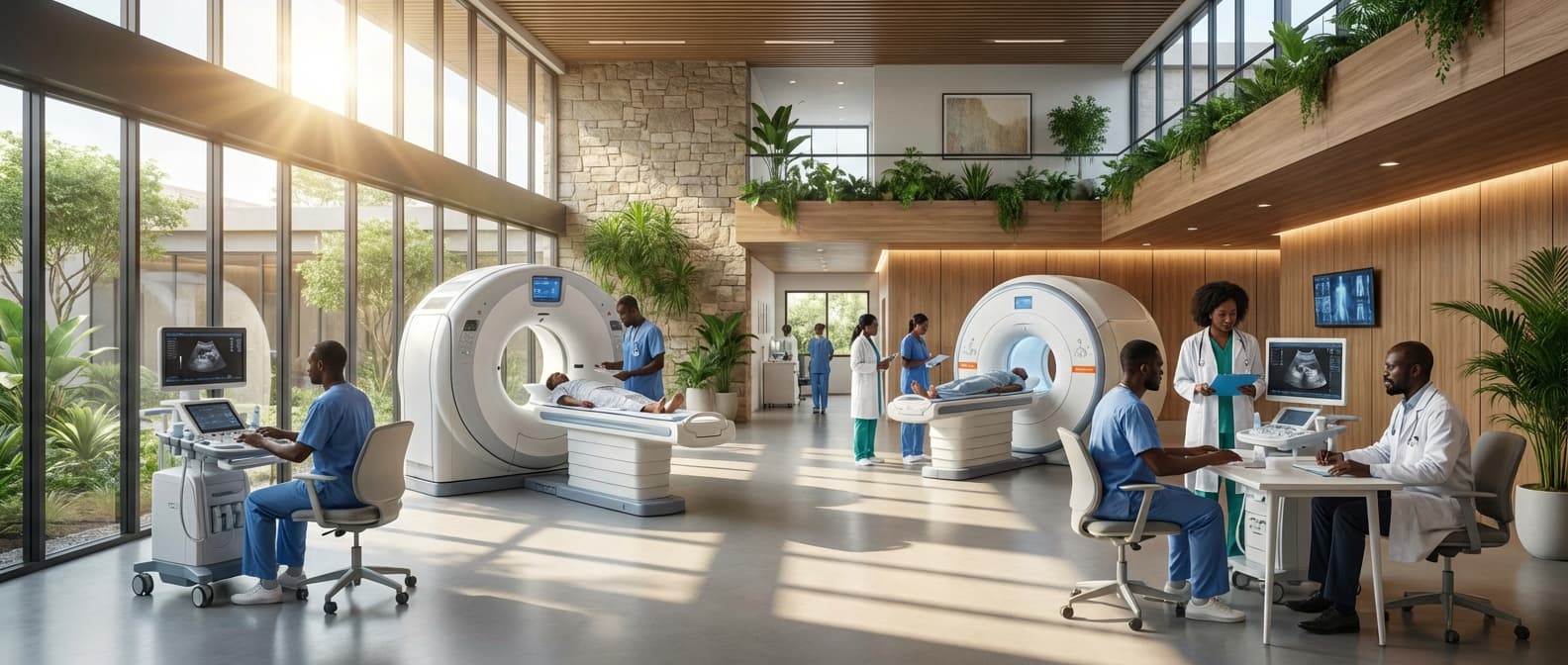
Diagnostic Imaging in Gabon
Engineering Excellence & Technical Support
High-resolution imaging systems including CT scanners, MRI, X-ray, and ultrasound technology for accurate clinical diagnosis. High-standard technical execution following OEM protocols and local regulatory frameworks.
Advanced MRI & CT Capabilities
Introducing state-of-the-art Magnetic Resonance Imaging (MRI) and Computed Tomography (CT) scanners, enabling precise and detailed visualization of internal structures. This enhances diagnostic accuracy for a wide range of conditions, from neurological disorders to complex oncological assessments, significantly improving patient outcomes in Gabon.
AI-Powered Diagnostic Support
Leveraging artificial intelligence (AI) algorithms for image analysis, this initiative provides radiologists with powerful tools to detect subtle abnormalities and expedite diagnoses. AI support streamlines workflow, reduces the risk of human error, and ensures higher quality diagnostic interpretations for imaging studies across Gabon.
Remote Consultation Network
Establishing a robust telemedicine network connecting local healthcare facilities with expert radiologists and specialists, both within Gabon and internationally. This enables remote interpretation of imaging studies, facilitating access to specialized diagnostic expertise in underserved regions and ensuring timely and accurate diagnoses for all Gabonese citizens.
What Is Diagnostic Imaging In Gabon?
Diagnostic imaging in Gabon refers to the use of various medical technologies to visualize the internal structures of the human body for the purpose of diagnosis, disease management, and treatment planning. This involves a range of non-invasive and minimally invasive procedures that produce anatomical and physiological information. These techniques are critical for identifying abnormalities, characterizing diseases, and guiding medical interventions across numerous specialties. The service is essential for both public and private healthcare sectors within Gabon, supporting a spectrum of clinical needs from routine screenings to complex diagnostic workups.
| Who Needs Diagnostic Imaging? | Typical Use Cases | ||||||||
|---|---|---|---|---|---|---|---|---|---|
| Patients with suspected or known pathologies: Individuals presenting with symptoms suggestive of internal disease or injury. | Trauma patients: Assessing for fractures, internal bleeding, organ damage, and other injuries following accidents or falls (e.g., head injuries, abdominal trauma). | Patients with chronic conditions: Monitoring the progression of diseases such as cancer, cardiovascular disease, or degenerative joint conditions. | Patients undergoing surgery: Pre-operative assessment for surgical planning and post-operative evaluation for complications. | Pregnant women: Ultrasound for fetal monitoring, dating pregnancy, and identifying potential abnormalities. | Individuals undergoing screening programs: For early detection of diseases like breast cancer (mammography) or lung nodules (low-dose CT). | Patients with neurological symptoms: Investigating conditions like stroke, tumors, or multiple sclerosis using CT or MRI. | Patients with abdominal pain or suspected gastrointestinal issues: Ultrasound or CT to evaluate organs like the liver, gallbladder, kidneys, and intestines. | Patients with musculoskeletal complaints: X-ray for fractures and dislocations, MRI for soft tissue injuries (ligaments, tendons, cartilage). | Patients requiring interventional guidance: Ultrasound or fluoroscopy-guided biopsies or fluid drainage. |
| Radiography (X-ray): Diagnosis of fractures, pneumonia, bowel obstruction, evaluation of bone and joint abnormalities. | Computed Tomography (CT): Detailed cross-sectional imaging for detecting and staging cancers, diagnosing acute conditions like stroke and pulmonary embolism, trauma assessment, and complex bone fractures. | Magnetic Resonance Imaging (MRI): High-resolution imaging of soft tissues, including the brain, spinal cord, muscles, ligaments, and internal organs. Essential for neurological disorders, sports injuries, and detailed assessment of certain tumors. | Ultrasound (Sonography): Real-time imaging for evaluating abdominal organs, pelvic structures, blood vessels (Doppler ultrasound), and prenatal care. Widely used due to its safety and cost-effectiveness. | Mammography: Specialized X-ray imaging of the breast for breast cancer screening and diagnosis. | Fluoroscopy: Real-time X-ray imaging used during interventional procedures like angiography, barium studies, and stent placement. |
Key Aspects of Diagnostic Imaging Services in Gabon
- Purpose: To provide visual representations of internal bodily structures and functions, aiding in the detection and characterization of diseases, injuries, and other medical conditions.
- Technologies Employed: Includes modalities such as X-ray (radiography), Computed Tomography (CT), Magnetic Resonance Imaging (MRI), Ultrasound (sonography), and potentially Nuclear Medicine (e.g., PET scans, SPECT) where available.
- Personnel: Requires trained radiologists, radiographers (radiologic technologists), sonographers, and other specialized medical professionals for operation, interpretation, and reporting.
- Infrastructure: Demands specialized equipment, dedicated imaging suites, secure data management systems (PACS - Picture Archiving and Communication System), and associated safety protocols (e.g., radiation protection).
- Accessibility: Provision of services can vary across urban and rural areas, with major hospitals and specialized clinics in cities like Libreville and Port-Gentil typically offering more advanced modalities.
- Integration: Forms an integral part of the diagnostic pathway, often preceding or complementing other diagnostic tests and clinical evaluations.
Who Needs Diagnostic Imaging In Gabon?
Diagnostic imaging plays a crucial role in modern healthcare, enabling accurate diagnosis and effective treatment planning. In Gabon, understanding who requires these services and within which departments is essential for optimizing resource allocation and ensuring access to quality care. This document outlines the primary target customers and departments benefiting from diagnostic imaging services in the Gabonese healthcare landscape.
| Department | Primary Users/Patients | Common Imaging Modalities Used | Key Applications |
|---|---|---|---|
| Radiology/Medical Imaging Department | All departments (as a central service) | X-ray, CT, MRI, Ultrasound, Fluoroscopy | General diagnostics, trauma assessment, cancer staging, neurological evaluation, gastrointestinal assessment |
| Emergency Department | Patients with acute injuries, sudden illnesses, trauma | X-ray, CT, Ultrasound | Fracture identification, bleeding detection, organ damage assessment, foreign body localization |
| Surgery Departments (General, Orthopedic, Neurosurgery, etc.) | Patients requiring surgical intervention or post-operative assessment | X-ray, CT, MRI, Ultrasound | Pre-operative planning, post-operative monitoring, implant placement assessment, complication detection |
| Internal Medicine/Cardiology | Patients with cardiovascular diseases, respiratory illnesses, gastrointestinal disorders | Echocardiogram (Ultrasound), CT angiogram, MRI (cardiac), X-ray (chest) | Heart function assessment, blood vessel blockages, lung disease diagnosis, abdominal organ evaluation |
| Neurology/Neurosurgery | Patients with neurological disorders, head injuries, stroke | MRI, CT, X-ray (skull) | Brain tumor detection, stroke evaluation, spinal cord injury assessment, epilepsy workup |
| Oncology Departments | Patients diagnosed with or suspected of having cancer | CT, MRI, PET-CT (if available), Ultrasound | Tumor detection, staging, treatment response monitoring, metastatic disease assessment |
| Obstetrics and Gynecology (OB/GYN) | Pregnant women, women with gynecological conditions | Ultrasound (Obstetric and Pelvic) | Fetal development monitoring, pregnancy complications, uterine and ovarian abnormalities |
| Pediatrics Department | Infants, children, and adolescents | X-ray, Ultrasound, CT (with reduced radiation protocols) | Skeletal abnormalities, congenital defects, abdominal pain, respiratory infections in children |
| Urology Department | Patients with urinary tract and male reproductive system conditions | Ultrasound, CT, X-ray (KUB) | Kidney stone detection, bladder assessments, prostate evaluation, urinary tract obstruction |
Target Customers for Diagnostic Imaging in Gabon
- Individuals experiencing symptoms requiring medical investigation.
- Patients diagnosed with acute or chronic conditions requiring monitoring.
- Individuals undergoing pre-operative assessments.
- Patients involved in accidents or experiencing trauma.
- Individuals with a family history of specific diseases (e.g., cancer, cardiovascular disease).
- Patients requiring follow-up care after treatment.
- Individuals undergoing routine health check-ups (depending on specific indications).
- Women undergoing prenatal care and screening.
- Children requiring assessment for developmental or congenital issues.
Diagnostic Imaging Process In Gabon
The diagnostic imaging process in Gabon, like elsewhere, follows a structured workflow to ensure accurate and timely patient care. This process typically begins with an inquiry or referral from a medical professional, leading to scheduling, patient preparation, image acquisition, interpretation by a radiologist, and finally, the delivery of a diagnostic report to the referring physician. Each stage is critical for effective diagnosis and treatment planning. Challenges may arise due to resource availability, infrastructure, and specialized personnel, necessitating careful management of the workflow.
| Stage | Description | Key Personnel Involved | Potential Challenges in Gabon |
|---|---|---|---|
| Patient Referral/Inquiry | A physician or other healthcare provider identifies the need for diagnostic imaging based on a patient's symptoms or condition. | Referring Physician, Nurse | Lack of awareness of available imaging services; communication barriers. |
| Appointment Scheduling | The patient or their representative contacts the imaging facility to schedule the procedure, considering availability and urgency. | Receptionist, Scheduler, Patient/Caregiver | Limited appointment slots; long waiting times due to high demand and limited equipment/personnel. |
| Patient Pre-Procedure Preparation | Instructions are given to the patient regarding dietary restrictions, medication adjustments, or the need for contrast agents. | Technologist, Nurse, Patient | Difficulty in patient understanding of instructions; limited availability of specialized preparation materials (e.g., contrast agents). |
| Image Acquisition | The diagnostic imaging procedure (e.g., X-ray, Ultrasound, CT, MRI) is performed by a trained technologist. | Radiologic Technologist, Radiographer | Equipment malfunction or lack of advanced imaging modalities; insufficient trained technologists. |
| Image Processing and Enhancement | Acquired images are processed, enhanced, and sometimes manipulated for better visualization. | Radiologic Technologist, PACS Administrator | Outdated or insufficient imaging software; lack of robust Picture Archiving and Communication Systems (PACS). |
| Radiologist Interpretation | A qualified radiologist reviews the images to identify abnormalities and formulate a diagnosis. | Radiologist | Shortage of qualified radiologists; high workload leading to potential delays or fatigue. |
| Report Generation | The radiologist dictates or writes a comprehensive report detailing their findings and diagnostic conclusions. | Radiologist, Medical Secretary | Inadequate dictation equipment; slow transcription services. |
| Report Communication | The diagnostic report is delivered to the referring physician, often through a secure system or directly. | Radiologist, Referring Physician, IT support (for electronic systems) | Inefficient or unreliable communication channels; delays in report delivery. |
| Follow-up and Further Investigations | The referring physician discusses the report with the patient and may order further tests or initiate treatment. | Referring Physician, Patient | Limited access to follow-up imaging or specialized consultations. |
Diagnostic Imaging Workflow in Gabon
- Patient Referral/Inquiry
- Appointment Scheduling
- Patient Pre-Procedure Preparation
- Image Acquisition (Imaging Procedure)
- Image Processing and Enhancement
- Radiologist Interpretation
- Report Generation
- Report Communication to Referring Physician
- Follow-up and Further Investigations (if needed)
Diagnostic Imaging Cost In Gabon
Diagnostic imaging costs in Gabon are influenced by a combination of factors, leading to a range of prices for various procedures. These factors include the type of imaging modality used (e.g., X-ray, ultrasound, CT scan, MRI), the complexity of the examination, the specific clinic or hospital (public vs. private), their equipment quality and maintenance, the expertise of the radiologist, and the location within Gabon. Private facilities, particularly in larger urban centers like Libreville, generally command higher prices due to their advanced technology, specialized personnel, and potentially more comfortable patient experience. Public institutions, while often more affordable, may have longer waiting times and less readily available advanced imaging services. The cost also fluctuates based on the need for contrast agents, sedation, or specialized post-processing. It's crucial for patients to inquire directly with healthcare providers for the most accurate and up-to-date pricing.
| Imaging Modality | Typical Cost Range (XAF - Central African CFA Franc) | Notes |
|---|---|---|
| X-ray (e.g., Chest X-ray) | 15,000 - 40,000 | Basic imaging, generally more affordable. Price can vary based on the number of views. |
| Ultrasound (e.g., Abdominal, Pelvic) | 25,000 - 75,000 | Commonly used for soft tissue imaging. Price depends on the area examined and complexity. |
| CT Scan (e.g., Head, Abdomen) | 70,000 - 250,000+ | Significantly more expensive due to technology. Prices escalate with contrast administration and scan area. |
| MRI Scan (e.g., Brain, Spine) | 150,000 - 500,000+ | The most expensive modality. Prices are highly dependent on the body part and if contrast is used. |
| Mammography | 30,000 - 80,000 | Specific imaging for breast health, often performed in specialized centers. |
| Contrast Agent Supplement | 20,000 - 100,000+ | An additional cost often added to CT and MRI scans. |
Key Factors Influencing Diagnostic Imaging Costs in Gabon
- Imaging Modality (X-ray, Ultrasound, CT, MRI, etc.)
- Procedure Complexity and Scope
- Facility Type (Public vs. Private)
- Equipment Quality and Maintenance
- Radiologist Expertise and Specialization
- Geographic Location (Urban vs. Rural, Major Cities)
- Use of Contrast Agents or Sedation
- Post-Processing and Reporting Requirements
Affordable Diagnostic Imaging Options
Diagnostic imaging plays a crucial role in healthcare, but costs can be a significant barrier. Fortunately, there are ways to make these essential services more affordable. Value bundles and various cost-saving strategies can help patients and providers reduce expenses without compromising the quality of care. Understanding these options empowers individuals to make informed decisions about their healthcare.
| Strategy | Description | Potential Savings |
|---|---|---|
| Value Bundles | Pre-packaged groups of imaging services for specific conditions or pathways. | Significant discount compared to individual service costs. |
| Outpatient Imaging Centers | Independent facilities with lower overhead than hospitals. | Up to 30-50% less than hospital-based imaging. |
| Price Comparison | Obtaining quotes from multiple providers. | Potential savings of 10-30% or more. |
| Cash Discounts | Reduced prices for self-pay patients who pay upfront. | Varies by facility, often 10-20%. |
| Bundled Payments | Single payment for an episode of care including imaging. | Encourages efficiency, leading to cost reductions. |
| Tele-Radiology | Remote interpretation of images. | Can lower operational costs, potentially reducing patient price. |
| Negotiated Rates | Discounts through insurance plans or provider partnerships. | Dependent on the specific agreement. |
Understanding Value Bundles and Cost-Saving Strategies
- Value Bundles: These are packages of related diagnostic imaging services offered at a pre-determined, often discounted, price. They are typically designed for common diagnostic pathways or specific conditions, ensuring a comprehensive approach at a predictable cost.
- Pre-Negotiated Pricing: Some healthcare providers or insurance plans have arrangements with imaging centers for discounted rates on specific procedures. Inquiring about these partnerships can lead to savings.
- Outpatient Imaging Centers: Imaging performed at independent outpatient centers is generally less expensive than at hospital-based facilities, as overhead costs are typically lower.
- Generic vs. Brand-Name Contrast Agents: While less common for patients to directly choose, awareness of different contrast agents and their cost implications is relevant. Providers may opt for more cost-effective, yet equally effective, generic options.
- Tele-Radiology: In some cases, initial image interpretation can be performed remotely by radiologists, potentially reducing on-site staffing costs and thereby lowering the overall price for certain services.
- Bundled Payment Models: This approach pays a single, all-inclusive fee for a defined episode of care, which may include imaging. This incentivizes efficiency and coordination across providers.
- Second Opinions & Price Comparison: Don't hesitate to shop around. Obtain price quotes from multiple imaging providers for the same procedure. Inquire about cash discounts or payment plans if you are uninsured or paying out-of-pocket.
- High-Deductible Health Plans (HDHPs) with Health Savings Accounts (HSAs): For those with HDHPs, HSAs offer tax-advantaged savings that can be used for medical expenses, including diagnostic imaging, making it easier to manage upfront costs.
- Generic or Biosimilar Medications: Similar to contrast agents, if medication is required in conjunction with imaging (e.g., for a specific type of scan), inquiring about generic or biosimilar options can lead to savings.
- Preventive Screenings and Early Detection: While not a direct cost-saving strategy for imaging itself, early detection through regular screenings can lead to less complex and less expensive treatments down the line, potentially avoiding the need for extensive and costly imaging.
Verified Providers In Gabon
In Gabon, identifying verified healthcare providers is crucial for ensuring quality and trustworthy medical services. Franance Health stands out as a leading platform that meticulously vets and credentials healthcare professionals and facilities. This rigorous verification process guarantees that providers listed on Franance Health meet high standards of professionalism, expertise, and ethical practice. Choosing a Franance Health-verified provider offers unparalleled peace of mind, knowing you are accessing care from competent and reliable sources. Their commitment to transparency and patient safety makes them the premier choice for navigating healthcare in Gabon.
| Provider Type | Franance Health Verification Criteria | Benefits for Patients |
|---|---|---|
| Doctors/Physicians | Valid medical license, specialized certifications, clean disciplinary record, relevant experience. | Access to qualified and experienced medical professionals; assurance of proper diagnosis and treatment. |
| Hospitals/Clinics | Adherence to national healthcare regulations, advanced medical equipment, qualified nursing and support staff, patient safety protocols. | Safe and well-equipped facilities; high standards of patient care and hygiene. |
| Specialist Practitioners (e.g., Dentists, Optometrists) | Specific professional licenses, advanced training in their specialty, up-to-date practice methods. | Expert care tailored to specific health needs; access to specialized treatments. |
| Diagnostic Laboratories | Accreditation by relevant bodies, use of calibrated equipment, qualified technicians, robust quality control measures. | Accurate and reliable diagnostic results essential for effective treatment planning. |
Why Choose Franance Health Verified Providers in Gabon?
- Uncompromising Quality Assurance: Franance Health implements a stringent verification process, ensuring all listed providers meet established medical and ethical standards.
- Enhanced Patient Safety: By choosing a verified provider, patients can be confident in the competency and qualifications of their healthcare professionals, minimizing risks.
- Access to Expertise: Franance Health connects you with specialists and general practitioners who have undergone thorough background checks and credential validation.
- Trust and Reliability: The Franance Health seal of approval signifies a commitment to trustworthy and dependable healthcare services.
- Streamlined Healthcare Navigation: Franance Health simplifies the process of finding reliable medical care, saving you time and reducing uncertainty.
- Commitment to Transparency: Franance Health promotes open and honest communication regarding provider qualifications and services.
Scope Of Work For Diagnostic Imaging
This Scope of Work (SOW) outlines the technical deliverables and standard specifications for the provision of diagnostic imaging services. The objective is to ensure high-quality, efficient, and safe diagnostic imaging procedures and reporting. This SOW covers the requirements for equipment, personnel, image acquisition, image interpretation, reporting, data management, and quality assurance.
| Section | Deliverable/Specification | Description | Standard/Reference |
|---|---|---|---|
| Equipment and Technology | Imaging Modalities | Provision and maintenance of state-of-the-art imaging equipment including, but not limited to, MRI, CT, X-ray, Ultrasound, Mammography, and PET/CT scanners. Equipment must meet current technological standards for image resolution, speed, and patient comfort. | Manufacturer specifications, ACR guidelines, relevant national/international standards (e.g., IEC 60601 series). |
| Equipment and Technology | Picture Archiving and Communication System (PACS) / Vendor Neutral Archive (VNA) | Implementation and maintenance of a PACS/VNA solution for secure storage, retrieval, and display of diagnostic images and associated reports. Must support industry standards for image exchange. | DICOM 3.0 standard, HL7 standards, HIPAA/GDPR compliance. |
| Personnel Qualifications and Training | Radiologists | Board-certified or equivalent radiologists with subspecialty expertise as required by the imaging modalities. Must maintain current medical licenses and certifications. | ACR, RCR, relevant medical boards' accreditation requirements. |
| Personnel Qualifications and Training | Radiologic Technologists/Radiographers | Certified and licensed radiologic technologists experienced in operating the specified imaging equipment. Must demonstrate proficiency in patient positioning, radiation safety, and protocol adherence. | ARRT, radiographer registration boards, relevant national certification requirements. |
| Image Acquisition Protocols | Standardized Protocols | Development and adherence to standardized imaging protocols for each modality and anatomical region to ensure consistency, diagnostic quality, and dose optimization. Protocols should be regularly reviewed and updated. | ACR Appropriateness Criteria, institutional guidelines, modality-specific best practices. |
| Image Acquisition Protocols | Dose Optimization | Implementation of strategies and technologies for minimizing radiation exposure to patients and staff while maintaining diagnostic image quality. | ALARA principle, national radiation protection guidelines, equipment manufacturer recommendations. |
| Image Interpretation and Reporting | Radiologist Interpretation | Timely and accurate interpretation of all diagnostic images by qualified radiologists. Interpretation must be based on established diagnostic criteria and clinical information provided. | ACR, RCR guidelines for reporting, relevant medical literature. |
| Image Interpretation and Reporting | Reporting Turnaround Time (TAT) | Establishment of clear TAT standards for different types of imaging studies (e.g., routine, urgent, stat). Reports should be electronically signed and available within the PACS. | Institution-specific requirements, agreed-upon contractual terms. |
| Image Interpretation and Reporting | Report Content | Reports must be comprehensive, clear, and include a description of findings, impression, and recommendations. Reports must be legible and free of grammatical errors. | ACR, RCR guidelines for report content, clarity and conciseness standards. |
| Data Management and Archiving | Image Archiving | Secure and long-term archiving of all diagnostic images and reports for a minimum period as defined by regulatory requirements and institutional policy. | HIPAA, GDPR, national medical records retention laws, PACS/VNA vendor specifications. |
| Data Management and Archiving | Data Security and Privacy | Implementation of robust security measures to protect patient data from unauthorized access, breaches, and loss, in compliance with all relevant privacy regulations. | HIPAA Security Rule, GDPR, NIST Cybersecurity Framework. |
| Quality Assurance and Control | Equipment Quality Control (QC) | Regular scheduled QC testing of all imaging equipment to ensure optimal performance, image quality, and safety. Documentation of all QC procedures and results. | ACR, manufacturer guidelines, physicist recommendations. |
| Quality Assurance and Control | Peer Review | Establishment of a peer review process for a statistically significant sample of interpreted studies to monitor radiologist performance and ensure diagnostic accuracy. | ACR, RCR guidelines for peer review. |
| Quality Assurance and Control | Performance Metrics | Tracking and reporting on key performance indicators (KPIs) related to TAT, accuracy, patient satisfaction, and operational efficiency. | Institution-defined KPIs, contractual agreements. |
| Safety and Compliance | Radiation Safety | Adherence to all applicable radiation safety regulations and best practices for patient and staff protection. | National Council on Radiation Protection and Measurements (NCRP), local regulatory bodies. |
| Safety and Compliance | Infection Control | Implementation of strict infection control protocols for all imaging procedures and equipment, including regular cleaning and disinfection. | CDC guidelines, hospital infection control policies. |
| Safety and Compliance | Regulatory Compliance | Full compliance with all local, state, and federal regulations pertaining to diagnostic imaging, healthcare provision, and data privacy. | FDA, state licensing boards, HIPAA, GDPR. |
Key Areas Covered by the Scope of Work
- Equipment and Technology
- Personnel Qualifications and Training
- Image Acquisition Protocols
- Image Interpretation and Reporting
- Data Management and Archiving
- Quality Assurance and Control
- Safety and Compliance
Service Level Agreement For Diagnostic Imaging
This Service Level Agreement (SLA) outlines the performance standards and commitments for the provision of Diagnostic Imaging services. It defines the expected response times for critical requests and the guaranteed uptime for the imaging systems and related infrastructure.
| Service Component | Service Level Objective (SLO) | Measurement Metric | Reporting Frequency |
|---|---|---|---|
| Critical Request Imaging Procedure Initiation | Within 30 minutes of request receipt | Time from HIS/RIS order entry to start of scan | Monthly |
| Standard Request Imaging Procedure Initiation | Within 2 hours of request receipt | Time from HIS/RIS order entry to start of scan | Monthly |
| Preliminary Report Availability (Critical) | Within 1 hour of scan completion | Time from scan completion to preliminary report availability in HIS/RIS | Monthly |
| Final Report Availability (Standard) | Within 24 hours of scan completion | Time from scan completion to final report availability in HIS/RIS | Monthly |
| Diagnostic Imaging System Uptime | 99.8% uptime (excluding scheduled maintenance) | Percentage of operational time per month | Monthly |
| PACS/RIS Availability | 99.9% uptime (excluding scheduled maintenance) | Percentage of operational time per month for Picture Archiving and Communication System (PACS) and Radiology Information System (RIS) | Monthly |
Key Definitions
- Diagnostic Imaging Services: Includes all medical imaging modalities such as X-ray, CT, MRI, Ultrasound, and Nuclear Medicine, along with associated reporting and image archival.
- Critical Request: An imaging request deemed urgent by a clinician due to a life-threatening condition or the immediate need to guide critical treatment decisions.
- Standard Request: Any imaging request that is not classified as Critical.
- System Downtime: A period during which the Diagnostic Imaging systems are unavailable for use, preventing the acquisition or reporting of images. Scheduled maintenance is excluded.
- Uptime Guarantee: The percentage of time the Diagnostic Imaging systems are operational and available for use.
- Response Time: The time elapsed from the initiation of a request (e.g., order placed in the HIS/RIS) to the initiation of the imaging procedure or the availability of a preliminary report.
Frequently Asked Questions

Ready when you are
Let's scope your Diagnostic Imaging in Gabon project in Gabon.

Scaling healthcare logistics and technical systems across the entire continent.