
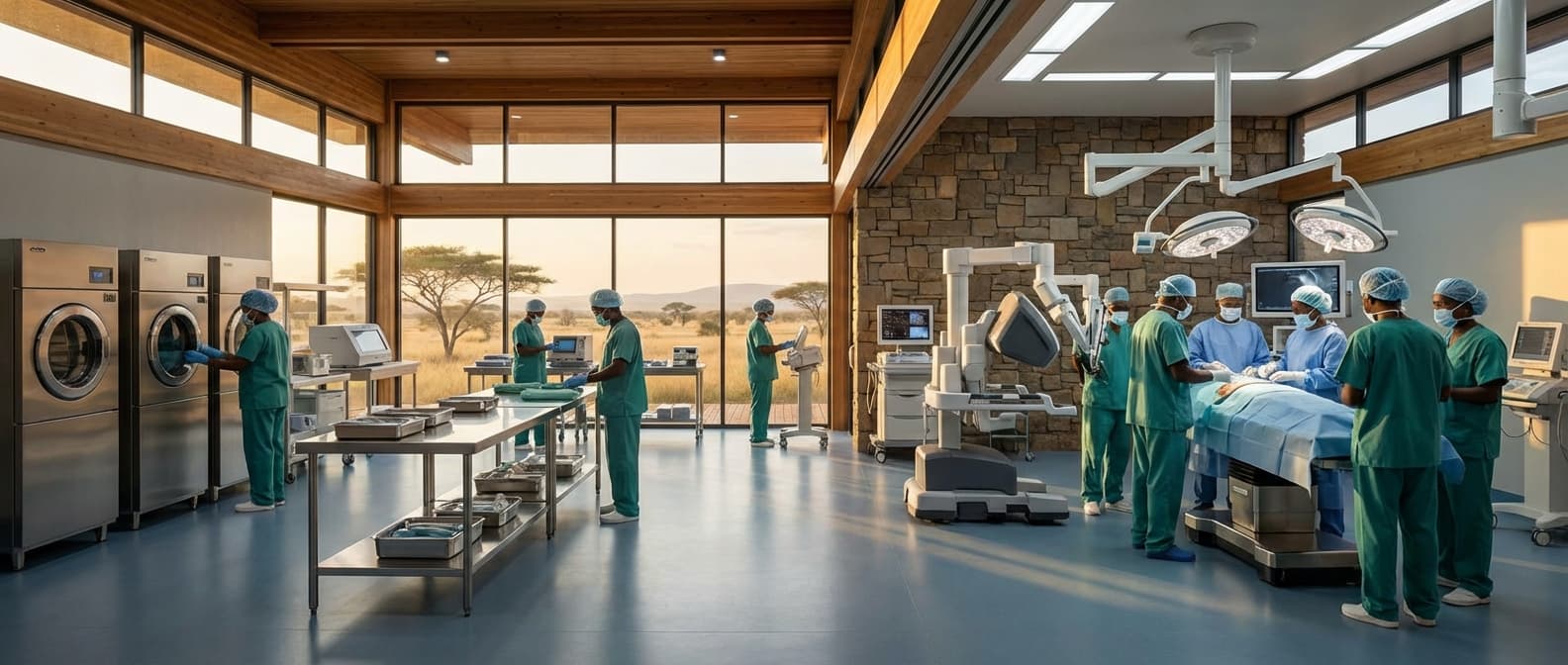
Endoscopy Reprocessing Validation in Gabon
Engineering Excellence & Technical Support
AER validation, SOP development and compliance High-standard technical execution following OEM protocols and local regulatory frameworks.
Rigorous AAMI ST79 Compliance
Our validation protocols in Gabon adhere strictly to AAMI ST79 guidelines, ensuring all flexible and rigid endoscopes undergo a meticulously documented process for disinfection and sterilization validation, guaranteeing patient safety and regulatory compliance.
Advanced Microbiological Testing
We employ state-of-the-art microbiological testing techniques, including targeted culture and rapid detection methods, to confirm the absence of critical pathogens on reprocessed endoscopes. This rigorous approach verifies the efficacy of our cleaning and disinfection cycles, crucial in the diverse environmental conditions of Gabon.
Comprehensive Validation Documentation & Traceability
Each validation cycle in Gabon is supported by comprehensive documentation, including detailed logs, calibration records, and test results. This ensures complete traceability and provides auditable evidence of compliance, a vital component for healthcare facilities and regulatory bodies.
What Is Endoscopy Reprocessing Validation In Gabon?
Endoscopy Reprocessing Validation in Gabon refers to the systematic and documented verification process ensuring that flexible and rigid endoscopes, along with their accessories, are rendered safe for subsequent patient use through a validated multi-step cleaning, disinfection, and/or sterilization procedure. This validation is critical for preventing the transmission of healthcare-associated infections (HAIs) originating from inadequately reprocessed endoscopic equipment. It encompasses verifying the efficacy of the entire reprocessing cycle, from initial manual cleaning through high-level disinfection (HLD) or sterilization, including the performance of automated endoscope reprocessors (AERs) and the integrity of the disinfection agents employed.
| Who Needs Endoscopy Reprocessing Validation? | Typical Use Cases in Gabon | ||||||
|---|---|---|---|---|---|---|---|
| Hospitals and Clinics: All healthcare facilities in Gabon that utilize flexible and rigid endoscopes for diagnostic and therapeutic procedures. | Endoscopic Suites: Dedicated departments performing gastrointestinal endoscopies (gastroscopy, colonoscopy), bronchoscopies, cystoscopies, arthroscopies, and laparoscopies. | Surgical Centers: Facilities performing minimally invasive surgical procedures utilizing endoscopic instruments. | Outpatient Endoscopy Centers: Standalone centers offering diagnostic and screening endoscopic services. | Medical Device Manufacturers and Distributors: For products intended for endoscopic procedures, ensuring their compatibility with validated reprocessing protocols. | Regulatory and Public Health Authorities: For oversight and enforcement of infection control standards. | ||
| Preventing Transmission of Hepatitis B and C, HIV, and other bloodborne pathogens: Particularly relevant in settings where reusable instruments are common. | Mitigating the risk of bacterial infections: Such as Clostridium difficile and multidrug-resistant organisms, from inadequately cleaned endoscopes. | Ensuring patient safety during diagnostic procedures: Gastroscopy, colonoscopy, sigmoidoscopy, and ERCP. | Ensuring patient safety during interventional procedures: Bronchoscopy, cystoscopy, hysteroscopy, and ENT endoscopies. | Compliance with national healthcare regulations and infection prevention mandates in Gabon. | Facilitating international accreditation or recognition for healthcare facilities. | Reducing the incidence of post-procedural infections and associated morbidity/mortality. | Optimizing the lifespan of expensive endoscopic equipment through proper maintenance and reprocessing. |
Key Components of Endoscopy Reprocessing Validation:
- Process Characterization: Understanding the physical, chemical, and biological parameters of the reprocessing workflow.
- Equipment Verification: Validating the performance of automated endoscope reprocessors (AERs) and other critical equipment (e.g., ultrasonic cleaners, drying cabinets).
- Cleaning Efficacy Assessment: Demonstrating the removal of organic debris, bioburden, and biofilms from lumens and surfaces.
- Disinfection/Sterilization Efficacy Testing: Confirming the inactivation of a defined spectrum of microorganisms, including high-risk pathogens, at specified time-temperature parameters for HLD or sterilization.
- Microbiological Monitoring: Implementing routine environmental and product testing to detect potential contamination.
- Chemical Monitoring: Verifying the concentration and potency of cleaning and disinfection agents.
- Water Quality Testing: Ensuring that the water used in reprocessing meets regulatory standards.
- Documentation and Record-Keeping: Maintaining comprehensive records of all validation activities, test results, and training.
- Personnel Competency Assessment: Verifying that reprocessing staff possess the knowledge and skills to perform procedures correctly.
- Maintenance and Calibration: Ensuring that reprocessing equipment is regularly maintained and calibrated.
- Adherence to Standards: Compliance with national and international guidelines and standards (e.g., from regulatory bodies, professional societies).
Who Needs Endoscopy Reprocessing Validation In Gabon?
Endoscopy reprocessing validation is crucial for ensuring the safety and efficacy of endoscopic procedures in healthcare facilities. In Gabon, this validation is particularly vital for any institution performing gastrointestinal, pulmonary, or other procedures involving reusable endoscopic instruments. The primary goal is to prevent the transmission of infections by confirming that sterilization and disinfection processes effectively eliminate pathogens from the endoscopes. This is not just a regulatory requirement but a fundamental aspect of patient care and risk management.
| Target Customer/Department | Specific Needs and Rationale for Validation | Key Departments Involved |
|---|---|---|
| Public Hospitals (e.g., University Hospital of Libreville, regional hospitals) | High patient volume, diverse patient population, potential for hospital-acquired infections (HAIs). Validation ensures consistent adherence to safety protocols, protecting a broad spectrum of vulnerable patients. | Gastroenterology, Pulmonology, Surgery, Central Sterile Supply Department (CSSD), Infection Control Department |
| Private Clinics and Hospitals | May have advanced equipment but require robust validation to maintain reputation and meet international standards. Critical for procedures like upper endoscopy, colonoscopy, and bronchoscopy. | Gastroenterology, Pulmonology, Endoscopy Suite, CSSD, Quality Assurance Department |
| Specialty Endoscopy Centers | Focus on specific endoscopic procedures, requiring high levels of precision in reprocessing. Often cater to elective procedures where patient safety is paramount. | Endoscopy Unit, CSSD, Biomedical Engineering, Quality Management |
| Diagnostic Laboratories with Endoscopic Services | While primarily diagnostic, these facilities perform invasive procedures requiring the same rigorous reprocessing standards to prevent sample contamination and patient infection. | Endoscopy Department, Laboratory Medicine, Infection Control |
| Military and Government Healthcare Facilities | Serve a specific population with unique healthcare needs. Validation ensures that these essential services operate at the highest safety standards, often with limited resources. | Medical Services, CSSD, Infection Prevention and Control Teams |
Target Customers and Departments in Gabon Requiring Endoscopy Reprocessing Validation:
- Public Hospitals
- Private Clinics and Hospitals
- Specialty Endoscopy Centers
- Diagnostic Laboratories with Endoscopic Services
- Military and Government Healthcare Facilities
Endoscopy Reprocessing Validation Process In Gabon
This document outlines the comprehensive workflow for validating the endoscopy reprocessing process in Gabon, from initial inquiry to the final execution and reporting. The validation process ensures that all reusable endoscopes are thoroughly cleaned, disinfected, and sterilized according to established guidelines and manufacturer's instructions, thereby preventing healthcare-associated infections.
| Phase | Key Activities | Deliverables/Outcomes |
|---|---|---|
| Inquiry & Planning | Initial consultation, Scope definition, Site assessment, Documentation review | Understanding of current practices, Identified gaps, Agreed validation scope |
| Protocol Development | Drafting validation protocol, Defining test methods and acceptance criteria, Timeline establishment | Approved validation protocol |
| Execution | Performing cleaning verification, HLD/sterilization efficacy tests, Water quality tests | Raw test data, Observation notes |
| Analysis & Reporting | Data analysis, Interpretation of results, Report writing, Recommendation formulation | Validation report, CAPA recommendations |
| Follow-up & Maintenance | CAPA implementation, Re-validation (if needed), Final approval, Routine monitoring plan | Validated process, Approved status, Ongoing quality assurance |
Endoscopy Reprocessing Validation Process Workflow
- {"step":1,"title":"Inquiry and Initial Consultation","description":"The process begins when a healthcare facility in Gabon expresses interest in validating their endoscopy reprocessing procedures. This involves an initial consultation with a designated validation team or regulatory body to understand their current practices, the types of endoscopes used, and the reprocessing equipment available. Requirements and scope of the validation are clarified."}
- {"step":2,"title":"Site Assessment and Documentation Review","description":"A preliminary site visit is conducted to assess the physical environment, the layout of the reprocessing area, and the availability of necessary utilities (water, electricity). Existing Standard Operating Procedures (SOPs), training records of staff, and maintenance logs for reprocessing equipment are reviewed to identify potential gaps or areas for improvement."}
- {"step":3,"title":"Development of Validation Protocol","description":"Based on the initial assessment, a detailed validation protocol is developed. This protocol outlines the specific tests to be performed, the acceptance criteria, the sampling plan, the methodologies for testing (e.g., cleaning verification, high-level disinfection efficacy testing, sterility assurance), and the timeline for the validation study. It will align with national and international guidelines (e.g., WHO, CDC, national Ministry of Health guidelines)."}
- {"step":4,"title":"Pre-Validation Preparations and Training","description":"The healthcare facility prepares for the validation by ensuring all reprocessing equipment is calibrated and functional, and consumables (e.g., disinfectants, detergents) are within their expiry dates and stored correctly. Staff involved in reprocessing receive refresher training on the validated procedures and the importance of adherence to the protocol."}
- {"step":5,"title":"Execution of Validation Tests","description":"The core validation activities are performed. This includes: \n- Cleaning Verification: Using visual inspection, protein/biochemical assays, or ATP testing to confirm the removal of organic matter.\n- High-Level Disinfection (HLD) Efficacy Testing: Using biological indicators (e.g., Mycobacterium tuberculosis, Geobacillus stearothermophilus) to demonstrate the effectiveness of the HLD process against resistant microorganisms.\n- Sterilization Validation (if applicable): For sterilizable components, using biological and chemical indicators to confirm the sterilization cycle's efficacy.\n- Water Quality Testing: Ensuring the quality of water used in rinsing and disinfection meets required standards."}
- {"step":6,"title":"Data Collection and Analysis","description":"All results from the executed tests are meticulously recorded. This data is then analyzed by the validation team to determine if the reprocessing procedures meet the pre-defined acceptance criteria outlined in the validation protocol."}
- {"step":7,"title":"Validation Report Generation","description":"A comprehensive validation report is compiled, detailing the scope of the validation, the methodologies used, the raw data, the analysis of results, and a clear conclusion on the efficacy and compliance of the endoscopy reprocessing process. Any deviations or non-conformities observed during the validation are documented, along with recommendations for corrective actions."}
- {"step":8,"title":"Corrective and Preventive Actions (CAPA)","description":"If any non-compliance issues are identified, the healthcare facility, with guidance from the validation team, implements corrective actions to address the immediate problems and preventive actions to avoid recurrence. This may involve revising SOPs, retraining staff, or adjusting equipment settings."}
- {"step":9,"title":"Re-validation (if necessary)","description":"If significant changes were made to the reprocessing process, equipment, or if initial validation failed, re-validation activities may be required to confirm the effectiveness of the implemented CAPA and ensure ongoing compliance."}
- {"step":10,"title":"Final Approval and Ongoing Monitoring","description":"Upon successful completion of validation and implementation of any necessary CAPA, the endoscopy reprocessing process is formally approved. A schedule for routine monitoring and periodic re-validation is established to ensure continued adherence to validated procedures and to maintain a high standard of patient safety."}
Endoscopy Reprocessing Validation Cost In Gabon
Endoscopy reprocessing validation is a critical step in ensuring patient safety and preventing healthcare-associated infections. In Gabon, the cost of this validation process can vary significantly due to several factors. These include the type of endoscope being validated, the specific reprocessing protocol used, the laboratory conducting the validation, and the level of accreditation of that laboratory. The validation typically involves biological and chemical indicator testing to confirm the efficacy of cleaning and disinfection or sterilization processes. Local currency is the Gabonese CFA franc (XAF).
| Service Component | Estimated Cost Range (XAF) |
|---|---|
| Biological Indicator Testing (per cycle) | 20,000 - 50,000 |
| Chemical Indicator Testing (per cycle) | 10,000 - 30,000 |
| Initial Validation Protocol Development/Review | 50,000 - 150,000 |
| Microbiological Testing (e.g., rinse water, surface swabs) | 30,000 - 70,000 |
| Full Validation Package (including multiple tests and reporting) | 200,000 - 750,000+ |
Factors Influencing Endoscopy Reprocessing Validation Costs in Gabon
- Type of Endoscope: Flexible endoscopes (gastroscopes, colonoscopes, bronchoscopes) generally have more complex reprocessing requirements than rigid endoscopes, potentially impacting validation costs.
- Reprocessing Method: Validation for high-level disinfection (HLD) will differ in cost from validation for sterilization, with sterilization often being more rigorous and thus more expensive to validate.
- Laboratory Fees: The chosen laboratory's pricing structure, overhead costs, and reputation will directly affect the validation price.
- Scope of Validation: The number of validation tests performed (e.g., multiple cycles, different disinfectants) can influence the overall cost.
- Accreditation and Quality Standards: Laboratories with higher levels of accreditation or adherence to international quality standards might charge more for their services.
- Reagent and Consumable Costs: The price of biological indicators, chemical indicators, and other testing materials can fluctuate.
- Travel and Logistics: If the laboratory is located in a different city, transportation costs for samples and personnel might be factored in.
Affordable Endoscopy Reprocessing Validation Options
Endoscopy reprocessing validation is a critical step to ensure patient safety and compliance with regulatory standards. However, the cost of validation can be a significant concern for many healthcare facilities, especially smaller ones or those with budget constraints. Fortunately, there are several affordable options and strategies available to manage these costs effectively.
| Strategy/Option | Description | Potential Cost Savings |
|---|---|---|
| Third-Party Validation Services | Outsourcing validation to specialized companies. | Lower per-test costs, reduced need for in-house equipment and personnel, predictable budgeting. |
| Manufacturer-Provided Kits/Services | Utilizing validation offerings from endoscope manufacturers. | Bundled pricing, potential discounts with equipment purchases or service contracts. |
| Risk-Based Validation | Prioritizing validation efforts based on risk assessment. | Reduced number of tests, optimized resource allocation. |
| Inter-Facility Collaboration | Forming partnerships with other healthcare facilities. | Bulk purchasing discounts, shared service costs, consolidated testing. |
| In-House Training & QC | Investing in staff education and internal quality checks. | Reduced errors, fewer repeat tests, minimized downtime, prevention of costly failures. |
| Point-of-Use Testing | Employing immediate testing at the point of use. | Early detection of issues, potentially fewer extensive external validations. |
| Digital Documentation | Implementing digital systems for tracking and management. | Reduced administrative overhead, improved efficiency, easier audits. |
| Proactive Equipment Maintenance | Regular servicing of reprocessing equipment. | Prevention of breakdowns, avoidance of validation failures due to equipment issues, extended equipment lifespan. |
Affordable Endoscopy Reprocessing Validation Options
- Leveraging Third-Party Validation Services: Many specialized companies offer cost-effective validation services. These providers have standardized protocols, experienced personnel, and established relationships with accredited laboratories, often leading to lower per-test costs compared to in-house validation.
- Utilizing Manufacturer-Provided Validation Kits: Some endoscope manufacturers offer validation kits or services as part of their equipment purchase or maintenance agreements. Exploring these options can sometimes lead to bundled pricing or discounts.
- Implementing Risk-Based Validation Approaches: Instead of validating every single step of the reprocessing cycle with the same intensity, a risk-based approach prioritizes validation efforts based on the likelihood of failure and the potential impact on patient safety. This can reduce the number of tests required and, consequently, the overall cost.
- Collaborating with Other Facilities: Forming alliances with other local healthcare facilities can create opportunities for bulk purchasing of validation services or reagents. Shared resources and negotiated rates can lead to significant savings.
- Investing in Robust In-House Training and Quality Control: While initial training has a cost, a well-trained reprocessing staff is less likely to make errors that necessitate costly revalidation or investigation. Implementing strong internal quality control measures can proactively identify and address issues before they become expensive validation failures.
- Exploring Point-of-Use Testing Solutions: While not a complete validation replacement, certain point-of-use tests can provide immediate feedback on critical reprocessing parameters, potentially reducing the need for extensive external validation for every single cycle.
- Digital Documentation and Data Management: Implementing digital systems for tracking reprocessing and validation data can streamline the process, reduce administrative overhead, and facilitate easier access to information for audits and quality improvement initiatives, indirectly saving costs.
- Regular Equipment Maintenance: Proactive maintenance of automated endoscope reprocessors (AERs) and other equipment can prevent malfunctions that lead to validation failures and the associated costs of troubleshooting and retesting.
Verified Providers In Gabon
In Gabon's evolving healthcare landscape, identifying reliable and high-quality medical services is paramount. Franance Health has emerged as a leading organization committed to ensuring patients have access to verified, competent healthcare providers. Their rigorous credentialing process offers a significant advantage, providing peace of mind and a clear pathway to optimal health outcomes. Choosing a Franance Health-verified provider means opting for a commitment to excellence, patient safety, and ethical medical practice.
| Franance Health Credentialed Provider | Benefits for Patients | Why This is the Best Choice |
|---|---|---|
| Expertise in [Specific Medical Field, e.g., Cardiology] | Access to highly specialized diagnostic and treatment options for heart conditions. | Ensures you receive care from a doctor with proven experience and advanced training in managing your specific cardiac needs, leading to better treatment outcomes and a reduced risk of complications. |
| Adherence to International Best Practices | Care aligned with global standards of medical excellence and safety protocols. | Guarantees that you are receiving treatment following the most up-to-date and effective medical procedures, minimizing risks and maximizing the potential for recovery. |
| Verified Qualifications and Experience | Confidence in the provider's educational background and practical experience. | Eliminates the guesswork in selecting a doctor. You can be assured that the provider has met all necessary educational requirements and has a demonstrable track record of successful patient care. |
| Commitment to Patient-Centered Care | A healthcare experience focused on your individual needs and preferences. | Means your voice will be heard, your concerns addressed, and your treatment plan developed collaboratively, leading to a more positive and effective healthcare journey. |
Why Franance Health Credentials Matter:
- Rigorous Vetting: Franance Health employs a multi-faceted vetting process that goes beyond basic licensing. This includes scrutinizing qualifications, experience, specialization, and adherence to international best practices.
- Quality Assurance: The credentialing process ensures that providers meet stringent quality benchmarks, reducing the risk of substandard care and enhancing patient safety.
- Specialized Expertise: Franance Health identifies and verifies providers with specialized knowledge and skills, ensuring patients are matched with the right experts for their specific medical needs.
- Ethical Standards: Providers are assessed for their commitment to ethical medical conduct and patient-centered care, fostering trust and transparency in the healthcare relationship.
- Continuous Monitoring: Franance Health's commitment doesn't end with initial verification. They often implement ongoing monitoring mechanisms to ensure continued adherence to their standards.
- Access to Trusted Networks: By choosing a Franance Health-verified provider, patients gain access to a network of healthcare professionals who have demonstrated a commitment to quality and patient well-being.
Scope Of Work For Endoscopy Reprocessing Validation
This Scope of Work (SOW) outlines the requirements for validating the reprocessing of flexible endoscopes according to industry best practices and regulatory guidelines. The objective is to ensure that all steps in the reprocessing cycle, from pre-cleaning to high-level disinfection (HLD) or sterilization, effectively eliminate microbial contamination and render the endoscope safe for patient use. This validation will encompass the entire reprocessing workflow, including manual and automated processes, chemical efficacy, and equipment performance.
| Parameter | Standard Specification/Reference | Acceptance Criteria | Testing Method |
|---|---|---|---|
| Pre-cleaning Effectiveness | Manufacturer's Instructions for Use (IFU), AAMI ST79, SPD Best Practices | Visual inspection for gross soil removal; Residual protein and hemoglobin levels below established limits (<5 µg protein/cm², <10 µg hemoglobin/cm²) | Visual inspection; Protein and hemoglobin assays (e.g., colorimetric methods) |
| Manual Cleaning Solution Efficacy | Manufacturer's IFU, EPA/FDA approved disinfectants | Demonstrated antimicrobial activity against relevant microorganisms (e.g., vegetative bacteria, fungi, mycobacteria) | Microbial challenge studies (e.g., ASTM E1054, carrier tests) |
| AER Cycle Parameters | Manufacturer's IFU, AER operational manual | Cycle time, temperature, chemical concentration, flow rate, and rinse volumes within manufacturer-specified ranges | Equipment logs, direct observation, calibrated temperature and flow sensors |
| HLD Chemical Efficacy | Manufacturer's IFU, EPA/FDA registered HLDs, AORN Guidelines | Demonstrated sporicidal activity (if applicable), efficacy against relevant microorganisms (e.g., M. tuberculosis, P. aeruginosa, S. aureus) at specified contact time and concentration | Microbial challenge studies (e.g., ASTM E1837 for HLDs, AOAC methods) |
| Chemical Residue | Manufacturer's IFU, regulatory guidelines | Residual chemical levels below toxicologically relevant limits | Chemical residue testing (e.g., HPLC, GC-MS, specific test strips) |
| Lumen Cleaning Effectiveness | Manufacturer's IFU, industry guidelines | Microbial counts below established limits (<10 CFU/cm² or per sample) | Microbial sampling (swabs, rinses) followed by culture and enumeration |
| Drying Effectiveness | Manufacturer's IFU, CDC Guidelines | Internal lumens demonstrably dry; absence of moisture upon inspection | Visual inspection, moisture detection indicators, humidity sensors |
| Storage Conditions | Manufacturer's IFU, AAMI ST79 | Maintained in a clean, dry, and dust-free environment; protected from contamination | Environmental monitoring (temperature, humidity, particle counts) |
| Leak Testing | Manufacturer's IFU | No pressure drop indicating a leak | Leak testing equipment |
Technical Deliverables
- Validation Master Plan (VMP) detailing the overall validation strategy, scope, responsibilities, and schedule.
- IQ (Installation Qualification) protocol and report for all reprocessing equipment (e.g., automated endoscope reprocessors (AERs), drying cabinets, leak testing equipment).
- OQ (Operational Qualification) protocol and report to verify that all equipment operates within specified parameters during reprocessing.
- PQ (Performance Qualification) protocol and report to demonstrate consistent and effective reprocessing of endoscopes under simulated or actual use conditions.
- Protocols for validation of manual cleaning steps, including efficacy testing of cleaning solutions and verification of cleaning procedures.
- Protocols for validation of high-level disinfection (HLD) or sterilization processes, including chemical efficacy testing (e.g., microbial challenge studies, residual testing) and process parameter verification.
- Endoscope lumen and surface sampling protocols for microbial enumeration.
- Bioburden and endotoxin testing reports for processed endoscopes.
- Validation of drying and storage procedures to prevent microbial growth.
- Process flow diagrams illustrating the entire reprocessing workflow.
- Detailed test results and data analysis for all qualification activities.
- Final Validation Report summarizing all activities, results, deviations, and conclusions, including recommendations for ongoing monitoring.
- Deviation reports for any non-conformances encountered during validation activities.
- Revalidation plan for future periodic validation and following significant changes.
Service Level Agreement For Endoscopy Reprocessing Validation
This Service Level Agreement (SLA) outlines the expected performance standards for Endoscopy Reprocessing Validation services. It defines response times for critical issues and uptime guarantees for the validation system and related support.
| Issue Category | Response Time Target | Resolution Target | Uptime Guarantee |
|---|---|---|---|
| Critical Issue | Within 1 hour of notification | Within 4 business hours of notification (resolution may involve a workaround or temporary fix) | 99.5% uptime (scheduled maintenance excluded) |
| High Priority Issue | Within 4 business hours of notification | Within 1 business day of notification | 99.5% uptime (scheduled maintenance excluded) |
| Low Priority Issue | Within 1 business day of notification | Within 3 business days of notification | N/A (support will be provided during business hours) |
Key Performance Indicators (KPIs)
- Critical Issue: Any malfunction or failure of the Endoscopy Reprocessing Validation system that prevents reprocessing validation from being performed, leading to a potential delay in patient care or regulatory non-compliance.
- High Priority Issue: Any significant performance degradation or partial system malfunction that impacts the efficiency or accuracy of reprocessing validation but does not completely halt operations.
- Low Priority Issue: General inquiries, feature requests, or non-critical system alerts that do not directly impede reprocessing validation activities.
Frequently Asked Questions

Ready when you are
Let's scope your Endoscopy Reprocessing Validation in Gabon project in Gabon.

Scaling healthcare logistics and technical systems across the entire continent.