
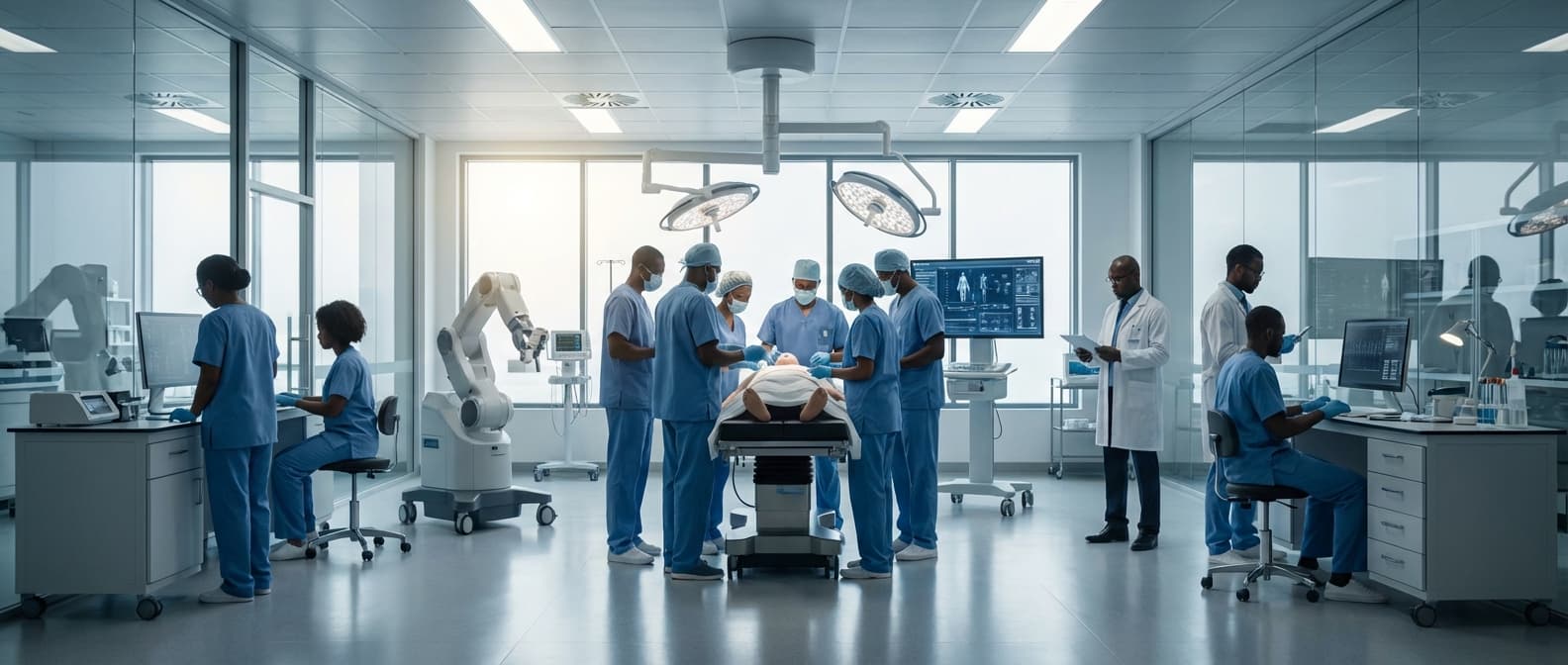
Managed Equipment Service (MES) in Gabon
Engineering Excellence & Technical Support
Long‑term equipment provision with uptime SLAs and lifecycle management. High-standard technical execution following OEM protocols and local regulatory frameworks.
24/7 Remote Equipment Monitoring & Diagnostics
Leveraging advanced IoT sensors and cloud-based platforms, MES in Gabon provides continuous, real-time monitoring of critical assets. Our expert technicians can remotely diagnose issues, predict potential failures, and proactively schedule maintenance, minimizing unplanned downtime and ensuring optimal operational efficiency for your Gabonese operations.
AI-Powered Predictive Maintenance for Reduced Downtime
Our MES solution in Gabon utilizes sophisticated AI and machine learning algorithms to analyze equipment performance data. This enables us to anticipate and prevent breakdowns before they occur, significantly reducing costly unplanned downtime, extending equipment lifespan, and ensuring the reliability of your vital machinery in the Gabonese context.
Optimized Spare Parts Inventory & Supply Chain Management
MES in Gabon integrates intelligent inventory management with a robust local and international supply chain network. We ensure the right spare parts are available when and where you need them, minimizing lead times and associated costs. This proactive approach to inventory and logistics is crucial for maintaining continuous operations in remote Gabonese locations.
What Is Managed Equipment Service (Mes) In Gabon?
Managed Equipment Service (MES) in Gabon refers to a comprehensive, outsourced model for the acquisition, operation, maintenance, and eventual disposal of critical capital equipment. This service is designed to transfer the full operational and financial risk associated with equipment management from the client organization to a specialized third-party provider. MES contracts are typically long-term, often spanning several years, and encompass not only the physical hardware but also associated consumables, spare parts, software, and a dedicated technical support infrastructure. The core objective of MES is to ensure the client organization has access to reliable, up-to-date, and optimally performing equipment without the burden of direct ownership, procurement complexities, and ongoing management overhead. This allows clients to focus on their core business competencies, improve operational efficiency, and achieve predictable cost structures.
| Who Needs MES in Gabon? | Typical Use Cases/Sectors | |||||
|---|---|---|---|---|---|---|
| Healthcare Institutions: Hospitals, clinics, and diagnostic centers requiring high-availability medical equipment (e.g., imaging machines, laboratory analysers, surgical instruments). | Oil & Gas Sector: Companies operating exploration, production, and refining facilities that depend on specialized heavy machinery, pumps, compressors, and analytical instruments. | Mining Operations: Businesses involved in resource extraction needing robust and reliable heavy-duty vehicles, processing equipment, and safety apparatus. | Telecommunications Providers: Infrastructure operators requiring reliable network equipment, base stations, and testing devices. | Manufacturing & Industrial Facilities: Plants and factories with complex production lines, automated machinery, and specialized processing equipment. | Research & Development Laboratories: Institutions requiring advanced scientific instruments and experimental apparatus. | Government & Public Sector Entities: Agencies that require specialized equipment for public services (e.g., infrastructure maintenance, environmental monitoring). |
| Medical Imaging: MRI scanners, CT scanners, X-ray machines. | Laboratory Diagnostics: Hematology analyzers, chemistry analyzers, PCR machines. | Oilfield Services: Drilling equipment, seismic survey instruments, pipeline inspection tools. | Process Control & Automation: Industrial sensors, PLCs, robotic arms. | Telecommunications Infrastructure: Base stations, fiber optic testing equipment, network monitoring systems. | Heavy Machinery: Excavators, loaders, drilling rigs. | Analytical Instrumentation: Spectrometers, chromatographs, microscopes. |
Key Components of Managed Equipment Service (MES) in Gabon:
- Equipment Procurement & Deployment: MES providers source, procure, and install specified equipment according to client requirements and industry standards.
- Operation & Utilization Monitoring: Continuous monitoring of equipment performance, uptime, and utilization rates to optimize operational efficiency and identify potential issues proactively.
- Preventive & Corrective Maintenance: Implementation of robust preventive maintenance schedules to minimize downtime, coupled with rapid response for corrective maintenance and repairs.
- Consumables & Spare Parts Management: Proactive management and stocking of necessary consumables and spare parts to ensure uninterrupted operation and minimize lead times.
- Technical Support & Training: Provision of expert technical support, troubleshooting, and training for client personnel on equipment operation and basic maintenance.
- Performance Reporting & Optimization: Regular reporting on equipment performance metrics, key performance indicators (KPIs), and recommendations for process and equipment optimization.
- End-of-Life Management & Upgrade Planning: Planning and execution of equipment decommissioning, disposal, and timely upgrades to newer technologies to maintain competitive advantage.
- Risk Transfer: Transfer of risks associated with equipment obsolescence, technological advancements, and maintenance costs from the client to the MES provider.
- Financial Management: Fixed or performance-based payment structures that offer predictable operational expenditure (OPEX) rather than capital expenditure (CAPEX).
Who Needs Managed Equipment Service (Mes) In Gabon?
Managed Equipment Service (MES) is a comprehensive solution designed to optimize the use, maintenance, and lifecycle management of critical equipment. In Gabon, MES is particularly valuable for organizations that rely heavily on specialized machinery and technology for their operations, and who wish to offload the complexities of procurement, installation, maintenance, and upgrades to a specialized third-party provider. This allows them to focus on their core business activities, improve operational efficiency, and manage costs more predictably.
| Target Customer Segment | Key Departments/Operations | Specific Equipment Needs (Examples) | Benefits of MES |
|---|---|---|---|
| Oil & Gas Sector | Exploration & Production, Refining, Petrochemicals, Maintenance & Operations | Drilling rigs, pumps, compressors, refinery units, offshore platforms, analytical instruments, safety equipment. | Reduced downtime, enhanced safety, predictable operational costs, access to specialized technical expertise, optimized asset utilization. |
| Mining & Metallurgy | Extraction, Processing, Smelting, Material Handling, Laboratory Services | Crushers, grinders, excavators, conveyor systems, haul trucks, smelting furnaces, laboratory analysis equipment. | Improved productivity, reduced maintenance costs, extended equipment lifespan, better inventory management of spare parts, focus on resource extraction. |
| Healthcare Facilities | Diagnostic Imaging, Surgery, Laboratories, Intensive Care Units, Sterilization | MRI scanners, CT scanners, X-ray machines, surgical robots, laboratory analyzers, ventilators, sterilizers. | Ensured equipment availability for patient care, compliance with medical standards, reduced capital expenditure, predictable service costs, access to latest technology. |
| Telecommunications & IT Infrastructure | Network Operations, Data Centers, Field Services | Servers, network switches, routers, base stations, data storage systems, diagnostic tools. | High availability of critical IT and network infrastructure, scalability, proactive maintenance, cybersecurity enhancements, managed upgrades. |
| Manufacturing & Industrial Production | Production Lines, Quality Control, Logistics | Automated machinery, robotic arms, assembly lines, testing equipment, material handling systems. | Optimized production efficiency, reduced defects, improved turnaround times, streamlined maintenance schedules, flexible capacity management. |
| Government & Public Services | Transportation (Airports, Ports), Public Works, Water & Sanitation, Defense | Air traffic control systems, port cranes, road construction equipment, water treatment plants, communication systems. | Reliable public infrastructure, extended asset life, budget certainty, improved service delivery to citizens, operational continuity. |
| Research & Development Centers | Laboratories, Testing Facilities, Pilot Plants | Advanced scientific instruments, specialized testing equipment, analytical devices, pilot-scale production machinery. | Access to cutting-edge technology, guaranteed equipment performance for research integrity, efficient resource allocation, faster research cycles. |
| Universities & Higher Education | Science & Engineering Departments, Medical Schools, Research Labs | Laboratory equipment (spectrophotometers, centrifuges), simulation software, specialized machinery for technical courses, IT infrastructure. | Enhanced learning experience, access to modern research tools, reduced burden on IT and facilities departments, consistent availability of teaching equipment. |
Target Customers and Departments for MES in Gabon
- Industries with High Equipment Dependency:
- Public Sector & Government Agencies:
- Research & Development Institutions:
- Educational Institutions:
Managed Equipment Service (Mes) Process In Gabon
The Managed Equipment Service (MES) process in Gabon outlines the lifecycle of a service request for medical equipment, from initial client inquiry to successful execution and ongoing management. This workflow ensures that healthcare providers in Gabon have access to reliable, well-maintained, and up-to-date medical equipment, thereby enhancing patient care. The process is designed to be transparent, efficient, and responsive to the specific needs of Gabonese healthcare facilities.
| Stage | Description | Key Activities | Responsible Parties | Output/Deliverable |
|---|---|---|---|---|
| Inquiry & Needs Assessment | The initial stage where a healthcare facility expresses interest in MES and outlines their equipment requirements. | Initial contact from client, understanding of current equipment situation, identification of specific needs (e.g., type of equipment, quantity, budget, timeline). | Healthcare Facility, MES Provider Sales/Business Development | Needs assessment document, preliminary understanding of requirements. |
| Proposal Development & Quotation | Based on the needs assessment, the MES provider develops a tailored service proposal and a detailed quotation. | Defining service scope, equipment selection, defining service levels (preventive maintenance, corrective maintenance, calibration), cost breakdown, service level agreements (SLAs). | MES Provider (Technical, Commercial, Legal Teams) | Detailed MES proposal, formal quotation, draft SLA. |
| Contract Negotiation & Signing | Formalizing the agreement between the healthcare facility and the MES provider. | Review of proposal and quotation, negotiation of terms and conditions, pricing, SLAs, and payment schedules. Finalization and signing of the MES contract. | Healthcare Facility Management, MES Provider Legal & Commercial Teams | Signed MES contract, agreed-upon SLAs. |
| Equipment Procurement & Delivery | Acquiring the specified medical equipment and delivering it to the healthcare facility. | Placing orders with manufacturers, managing logistics, customs clearance, transportation to the site, quality checks upon arrival. | MES Provider (Procurement, Logistics, Operations Teams) | Delivered and received medical equipment at the facility. |
| Installation & Commissioning | Setting up and ensuring the equipment is fully operational and compliant with standards. | Physical installation of equipment, calibration, functional testing, ensuring compliance with relevant medical and safety standards. | MES Provider (Field Service Engineers, Technical Specialists) | Installed, calibrated, and commissioned equipment. Commissioning report. |
| Training & Handover | Educating the healthcare facility's staff on the proper operation and basic maintenance of the equipment. | Developing training materials, conducting on-site training sessions for medical and technical staff, providing user manuals and documentation. | MES Provider (Training Specialists, Field Service Engineers) | Trained staff, handover of equipment and documentation. |
| Ongoing Maintenance & Support | Providing continuous support to ensure the equipment remains in optimal working condition. | Scheduled preventive maintenance, prompt response to corrective maintenance requests (breakdowns), remote monitoring (if applicable), availability of spare parts. | MES Provider (Field Service Engineers, Technical Support, Spare Parts Management) | Maintained equipment, reduced downtime, timely repairs. |
| Performance Monitoring & Reporting | Tracking equipment performance and reporting to the healthcare facility. | Collecting data on equipment uptime, maintenance activities, response times, and costs. Regular performance reports shared with the client. | MES Provider (Operations Management, Service Delivery Managers) | Performance reports, insights into equipment utilization and cost-effectiveness. |
| Equipment Upgrade/Replacement | Planning for and executing the upgrade or replacement of equipment as per contract terms or evolving needs. | Assessing equipment lifecycle, identifying obsolescence, planning for technological advancements, managing the procurement and installation of new equipment. | MES Provider (Strategic Planning, Technical Teams), Healthcare Facility Management | Upgraded or replaced equipment, ensuring continued technological relevance. |
| Contract Closure | The formal conclusion of the MES contract. | Final performance review, asset handover (if applicable), administrative closure of all records and financial accounts. | MES Provider (Contract Management, Finance), Healthcare Facility Management | Completed contract documentation, final reports, mutually agreed closure. |
MES Process Workflow in Gabon
- Inquiry & Needs Assessment
- Proposal Development & Quotation
- Contract Negotiation & Signing
- Equipment Procurement & Delivery
- Installation & Commissioning
- Training & Handover
- Ongoing Maintenance & Support
- Performance Monitoring & Reporting
- Equipment Upgrade/Replacement
- Contract Closure
Managed Equipment Service (Mes) Cost In Gabon
Managed Equipment Service (MES) in Gabon, while still an emerging sector, offers a cost-effective and efficient alternative to outright equipment ownership for businesses. The pricing for MES is not standardized and can vary significantly based on several key factors. These factors influence the overall cost, making it crucial for businesses to conduct thorough research and obtain tailored quotes.
The primary drivers of MES cost in Gabon include:
- Equipment Type and Specifications: The complexity, size, age, and technological sophistication of the equipment are paramount. Specialized machinery for industries like mining, oil & gas, construction, or healthcare will naturally command higher fees than standard office equipment or general-purpose vehicles.
- Service Level Agreement (SLA) Scope: The breadth and depth of services included in the MES contract significantly impact pricing. This encompasses:
* **Maintenance and Repairs:** The frequency and type of planned maintenance, response times for unscheduled repairs, and the inclusion of spare parts.
* **Technical Support:** The availability of on-site technicians, remote support, and the expertise required.
* **Software/Firmware Updates:** For IT equipment, regular updates and patches are crucial and can be factored into the cost.
* **Consumables:** Whether consumables (e.g., printer ink, filters, lubricants) are included in the service package.
* **Asset Tracking and Management:** Advanced asset tracking solutions can add to the overall cost.
- Contract Duration: Longer-term MES contracts often come with more favorable pricing per unit of time or equipment due to the provider's ability to amortize their investment and operational costs over a longer period. Conversely, short-term or project-based MES will typically be more expensive.
- Volume and Scale of Operations: The number of pieces of equipment under the MES agreement can influence the price. Larger volumes may lead to economies of scale, potentially offering lower per-unit costs.
- Geographic Location within Gabon: While not as pronounced as in larger countries, logistical challenges and accessibility to remote operational sites can add to the service provider's costs, which may be passed on to the client. This can include transportation of technicians and spare parts.
- Provider's Reputation and Expertise: Established MES providers with a proven track record, strong technical capabilities, and a broad network of service partners may command premium pricing. Newer or smaller providers might offer more competitive rates.
- Financing and Ownership Model: Some MES agreements might involve a lease-to-own component or a pure rental model. The financing structure will directly influence the monthly or annual cost.
- Downtime Clauses and Penalties: Contracts with strict uptime guarantees and associated penalties for non-compliance can impact the initial pricing, as providers factor in the risk and cost of ensuring high availability.
Estimated Pricing Ranges (in CFA Francs BCEAO - XAF):
It's challenging to provide precise, universally applicable figures due to the dynamic nature of the market and the specific factors mentioned above. However, based on general industry trends and potential market entry points in Gabon, here are some indicative ranges.
These ranges are highly variable and serve only as a rough guide. Actual costs will depend on detailed negotiations and specific requirements.
Important Note: The CFA Franc (XAF) is the currency used in Gabon.
| Equipment Category | Estimated Monthly Cost Range (XAF) | Key Considerations |
|---|---|---|
| Standard Office Equipment (Printers, Copiers, IT Hardware) | 50,000 - 300,000 | Includes maintenance, consumables, and basic support. Depends on volume and SLA details. |
| Light Construction/Utility Vehicles (Trucks, Vans) | 150,000 - 800,000 | Covers maintenance, repairs, and potentially basic fleet management. Age and usage are critical. |
| Heavy Construction Machinery (Excavators, Bulldozers, Cranes) | 750,000 - 5,000,000+ | High cost due to complexity, specialized maintenance, on-site support, and potential downtime impact. Varies greatly with equipment size and age. |
| Industrial Machinery (Manufacturing, Processing) | 1,000,000 - 10,000,000+ | Extremely variable. Depends on the nature of the machinery, uptime criticality, and specialized technical expertise required for maintenance and repair. |
| Medical Equipment (Diagnostic Machines, Imaging Systems) | 300,000 - 2,000,000+ | Requires highly specialized technicians, strict regulatory compliance, and often includes calibration and software updates. High criticality for patient care. |
Key Pricing Factors for Managed Equipment Service (MES) in Gabon
- Equipment Type & Specifications
- Scope of Service Level Agreement (SLA)
- Contract Duration
- Volume and Scale of Operations
- Geographic Location
- Provider Reputation & Expertise
- Financing & Ownership Model
- Downtime Guarantees & Penalties
Affordable Managed Equipment Service (Mes) Options
Managed Equipment Service (MES) offers businesses a way to outsource the management, maintenance, and often the procurement of their essential equipment. This can lead to significant cost savings and improved operational efficiency. Affordable MES options are increasingly available, often built around flexible value bundles and strategic cost-saving measures.
| MES Component | Potential Cost Savings Mechanism | Impact on Business |
|---|---|---|
| Equipment Procurement/Leasing | Bulk discounts, negotiated lease rates, reduced capital outlay | Lower upfront investment, predictable operational expenses |
| Proactive Maintenance | Reduced emergency repair costs, minimized downtime, extended equipment life | Increased productivity, improved service continuity |
| Consumables Management | Bulk purchasing, discounted rates, streamlined inventory | Reduced waste, optimized supply chain costs |
| Performance Monitoring | Optimized usage, early identification of inefficiencies, delayed replacement needs | Higher equipment ROI, improved operational efficiency |
| End-of-Life Management | Responsible disposal, compliance, potential for residual value | Environmental compliance, reduced disposal fees |
| Technical Support | Reduced need for specialized in-house staff, faster issue resolution | Lower labor costs, increased staff focus on core business activities |
Key Components of Affordable MES Value Bundles
- {"title":"Equipment Procurement & Leasing","description":"MES providers can leverage bulk purchasing power and negotiate better lease terms, reducing upfront capital expenditure and offering predictable monthly costs."}
- {"title":"Proactive Maintenance & Repairs","description":"Regular, scheduled maintenance by certified technicians minimizes unexpected breakdowns, reducing costly emergency repairs and downtime. This often includes on-site support or rapid response services."}
- {"title":"Consumables Management","description":"MES can encompass the sourcing and management of necessary consumables (e.g., printer ink, IT supplies), often at discounted rates through the provider's supply chain."}
- {"title":"Performance Monitoring & Optimization","description":"Utilizing data and analytics, MES providers can track equipment performance, identify inefficiencies, and suggest upgrades or configuration changes to maximize output and lifespan."}
- {"title":"End-of-Life Management & Recycling","description":"Responsible disposal and recycling of old equipment, often included in the service, ensures compliance with environmental regulations and can sometimes generate residual value."}
- {"title":"Technical Support & Helpdesk","description":"Access to expert technical support for troubleshooting and issue resolution, reducing the need for in-house IT staff dedicated to equipment problems."}
Verified Providers In Gabon
In Gabon, ensuring access to reliable and high-quality healthcare is paramount. Franance Health stands out as a leading provider, distinguished by its rigorous credentialing process and commitment to excellence. This dedication translates into a superior patient experience and outcomes. When seeking healthcare services in Gabon, partnering with verified providers like Franance Health is not just a matter of convenience, but a critical step towards safeguarding your well-being. Their verified status signifies adherence to stringent standards, encompassing medical expertise, ethical practices, and patient safety protocols. This meticulous vetting process eliminates guesswork for individuals and organizations looking for dependable healthcare partners, offering peace of mind and confidence in the services received.
| Category | Franance Health Verification Mark | Benefits for Patients |
|---|---|---|
| Medical Expertise | All practitioners undergo a thorough review of their qualifications, experience, and licenses. | Access to skilled and competent medical professionals for accurate diagnosis and effective treatment. |
| Ethical Standards | Adherence to a strict code of conduct and ethical guidelines. | Ensured fair treatment, patient confidentiality, and respectful care. |
| Patient Safety | Compliance with established safety protocols and best practices in healthcare delivery. | Minimized risks and a secure environment for medical procedures and consultations. |
| Regulatory Compliance | Meeting all national and international healthcare regulations and standards. | Guaranteed that services provided are legitimate and meet legal requirements. |
| Continuous Improvement | Commitment to ongoing professional development and service enhancement. | Patients benefit from the latest advancements in medical knowledge and patient care techniques. |
Why Franance Health is the Best Choice:
- Rigorous Credentialing: Franance Health undergoes a stringent verification process, ensuring all affiliated healthcare professionals meet the highest standards of expertise and ethical practice.
- Quality Assurance: Their commitment to quality is embedded in every aspect of their operation, from patient care to administrative processes.
- Patient-Centric Approach: Franance Health prioritizes the needs and well-being of their patients, fostering a supportive and trustworthy healthcare environment.
- Comprehensive Services: They offer a wide range of medical services, catering to diverse healthcare needs within Gabon.
- Trust and Reliability: The verified status of Franance Health instills confidence, assuring individuals and organizations of dependable and professional healthcare services.
Scope Of Work For Managed Equipment Service (Mes)
This document outlines the Scope of Work (SOW) for a Managed Equipment Service (MES) contract. It details the technical deliverables expected from the service provider and the standard specifications to which these deliverables must adhere. The MES provider will be responsible for the lifecycle management of specified medical equipment, ensuring optimal performance, availability, and cost-effectiveness for the client organization.
| Specification Category | Standard Specification Description | Verification Method | Frequency/Trigger |
|---|---|---|---|
| Response Time (Critical Equipment) | On-site response within 2 hours of notification. | Log of service requests and response times. | Upon equipment failure notification for critical equipment. |
| Repair Time (Critical Equipment) | Resolution of critical equipment failure within 8 business hours. | Log of repair actions and time to resolution. | Upon equipment failure notification for critical equipment. |
| Preventive Maintenance Completion | 100% completion of scheduled PMs within +/- 15 days of due date. | PM completion reports, asset management system records. | As per PM schedule (e.g., quarterly, annually). |
| Equipment Uptime (Critical) | Minimum 98% uptime for critical equipment. | Equipment logs, asset management system reports. | Monthly reporting. |
| Calibration Accuracy | Equipment calibration within manufacturer-specified tolerances. | Calibration certificates, performance verification reports. | As per manufacturer recommendations or regulatory requirements. |
| Parts Availability | On-site stock or guaranteed access to critical spare parts within 24 hours. | Inventory records, vendor agreements. | Continuous monitoring, triggered by PM or repair needs. |
| Training Documentation | Provision of comprehensive user manuals and training materials. | Review of training materials, attendance records. | Upon installation of new equipment or significant updates. |
| Reporting Accuracy | All reports must be accurate, complete, and delivered by the agreed-upon deadline. | Audits of report content and delivery timelines. | As per reporting schedule (e.g., monthly, quarterly). |
| Safety Compliance | 100% adherence to all relevant safety standards and protocols. | Safety audit reports, incident reports, compliance checklists. | Periodic audits, and immediately following any safety-related incident. |
Key Technical Deliverables for Managed Equipment Service (MES)
- Equipment Inventory Management: Comprehensive and accurate cataloging of all managed equipment, including make, model, serial number, location, acquisition date, warranty status, and maintenance history.
- Preventive Maintenance (PM): Scheduled and documented maintenance activities to prevent equipment failures and ensure optimal performance, adhering to manufacturer recommendations and regulatory requirements.
- Corrective Maintenance & Repair: Timely and effective troubleshooting and repair of equipment failures, minimizing downtime and ensuring patient safety. Includes on-site response, parts procurement, and labor.
- Calibration and Performance Verification: Regular calibration and performance testing to ensure equipment meets specified accuracy and functional standards.
- Equipment Upgrades and Replacements: Management of the lifecycle, including advising on, procuring, installing, and decommissioning equipment as needed to meet evolving clinical and technological demands.
- Asset Tracking and Reporting: Real-time tracking of equipment location, utilization, and status. Provision of regular reports on equipment performance, maintenance activities, costs, and asset lifecycle.
- Compliance and Regulatory Adherence: Ensuring all managed equipment complies with relevant local, national, and international safety, performance, and regulatory standards (e.g., FDA, CE, ISO).
- User Training and Support: Provision of training for clinical staff on the proper use and basic maintenance of equipment. Ongoing technical support for equipment-related queries.
- Technology Assessment and Recommendations: Periodic assessment of emerging technologies and recommendations for upgrades or replacements to enhance clinical capabilities and efficiency.
- Risk Management and Safety Assurance: Implementation of procedures to identify, assess, and mitigate risks associated with equipment use and maintenance. Ensuring adherence to patient safety protocols.
- Service Level Agreements (SLAs): Meeting agreed-upon response times, repair times, uptime guarantees, and other performance metrics.
- Decommissioning and Disposal: Safe, compliant, and environmentally responsible removal and disposal of obsolete or end-of-life equipment.
Service Level Agreement For Managed Equipment Service (Mes)
This Service Level Agreement (SLA) outlines the performance expectations and guarantees for the Managed Equipment Service (MES) provided by [Provider Name] to [Client Name]. This SLA is an addendum to the Master Service Agreement (MSA) between both parties, dated [MSA Date].
| Severity Level | Description | Uptime Guarantee | Response Time (during Service Hours) | Target Resolution Time (during Service Hours) |
|---|---|---|---|---|
Key Definitions
- Managed Equipment Service (MES): The provision of equipment, maintenance, support, and related services as defined in the MSA and accompanying Statement of Work (SOW).
- Equipment: All hardware, software, and accessories covered under the MES, as detailed in the SOW.
- Service Hours: [Specify operating hours, e.g., Monday to Friday, 8:00 AM to 6:00 PM Eastern Time, excluding public holidays].
- Uptime: The percentage of time the Equipment is fully operational and available for use by the Client during Service Hours. Exclusions for scheduled maintenance and force majeure events apply.
- Downtime: The period during which the Equipment is unavailable or not fully operational.
- Incident: Any event that causes or may cause disruption to the normal operation of the Equipment.
- Severity Level: A classification of an Incident based on its impact on business operations.
- Response Time: The maximum time allowed for the Provider to acknowledge and begin working on an Incident after it is reported.
- Resolution Time: The maximum time allowed for the Provider to resolve an Incident and restore the Equipment to full operational status.
- Scheduled Maintenance: Planned downtime for updates, upgrades, or routine maintenance, communicated to the Client in advance.
Frequently Asked Questions

Ready when you are
Let's scope your Managed Equipment Service (MES) in Gabon project in Gabon.

Scaling healthcare logistics and technical systems across the entire continent.