
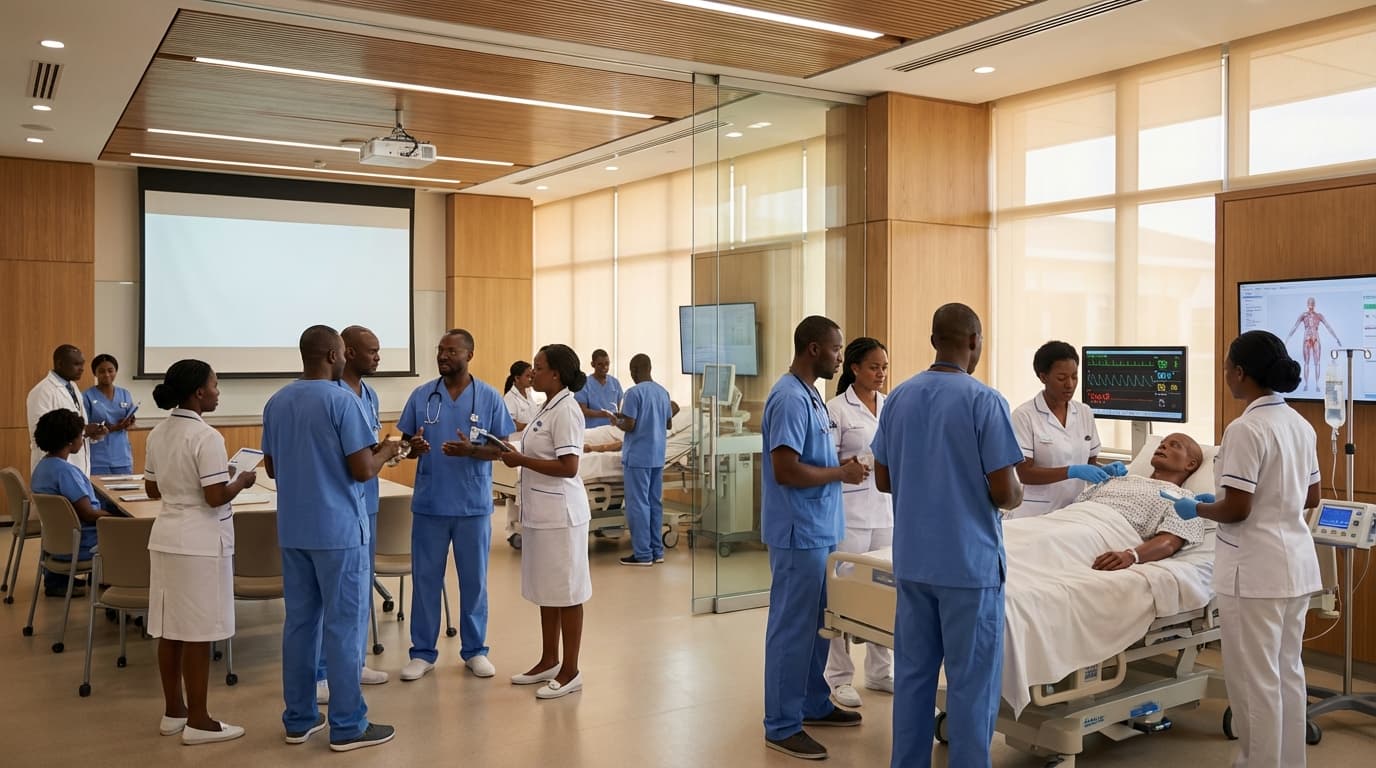
Equipment Training & Education in Ethiopia
Engineering Excellence & Technical Support
Comprehensive equipment training and certification programs High-standard technical execution following OEM protocols and local regulatory frameworks.
Skills for the Future: Advanced Equipment Operation & Maintenance Certification
Empowering Ethiopian technicians with hands-on training and certified courses in operating and maintaining critical agricultural and construction machinery. This program focuses on reducing downtime, improving efficiency, and ensuring the longevity of vital equipment for national development.
Immersive Learning: VR/AR Simulation for Safe & Effective Equipment Training
Leveraging cutting-edge Virtual Reality (VR) and Augmented Reality (AR) technologies to provide realistic, risk-free training environments for complex machinery. Trainees can practice troubleshooting, operational procedures, and safety protocols repeatedly, building confidence and proficiency before working with actual equipment.
Digital Classroom: Accessible Online Training Modules for Remote Regions
Developing and delivering comprehensive online training modules accessible to individuals and communities across Ethiopia, even in remote areas. This initiative breaks down geographical barriers to education, offering flexible learning opportunities for operating and maintaining essential equipment, thereby fostering wider skills development and economic empowerment.
What Is Equipment Training & Education In Ethiopia?
Equipment training and education in Ethiopia refers to the systematic process of imparting knowledge, skills, and competencies necessary for the safe, efficient, and effective operation, maintenance, and repair of various types of machinery and specialized equipment. This service is critical for enhancing workforce productivity, ensuring operational integrity, reducing workplace accidents, and maximizing the lifespan and performance of technological assets across diverse sectors.
| Who Needs Equipment Training & Education? | Typical Use Cases & Sectors |
|---|---|
| Industrial Workers & Operators: Individuals directly operating heavy machinery, manufacturing equipment, and production line systems. | Construction Personnel: Site managers, engineers, and laborers requiring proficiency in operating excavators, cranes, bulldozers, and concrete mixers. |
| Agricultural Technicians & Farmers: Professionals and individuals managing and operating farm machinery such as tractors, harvesters, irrigation systems, and processing equipment. | Healthcare Professionals & Technicians: Nurses, medical technologists, and biomedical engineers operating diagnostic equipment (MRI, CT scanners), surgical instruments, and laboratory apparatus. |
| IT & Telecommunications Staff: Technicians responsible for installing, maintaining, and troubleshooting network infrastructure, servers, and specialized communication devices. | Mining & Extractive Industry Employees: Operators and maintenance crews for drilling rigs, haul trucks, crushers, and conveyor systems. |
| Logistics & Transportation Personnel: Drivers, warehouse staff, and fleet managers requiring training on forklifts, automated storage systems, and specialized vehicle operation. | Energy Sector Workforce: Technicians and engineers involved in operating and maintaining power generation equipment, transmission systems, and renewable energy installations (solar panels, wind turbines). |
| Service Technicians & Maintenance Staff: Individuals responsible for the upkeep and repair of equipment across various industries, from automotive to HVAC systems. | Research & Development Personnel: Scientists and technicians requiring precise operation of laboratory equipment, analytical instruments, and specialized scientific apparatus. |
Key Components of Equipment Training & Education in Ethiopia:
- Theoretical Instruction: Classroom-based learning covering principles of operation, technical specifications, safety protocols, regulatory compliance, and troubleshooting methodologies.
- Practical Demonstration: Hands-on sessions where trainers showcase the correct usage, handling, and basic maintenance procedures of specific equipment.
- Supervised Practice: Trainees actively operate and maintain equipment under the guidance of experienced instructors, reinforcing learned skills and receiving real-time feedback.
- Simulation & Virtual Training: Utilization of simulators or virtual reality environments to replicate real-world scenarios for risk-free practice, particularly for complex or hazardous equipment.
- Assessment & Certification: Evaluation of trainee proficiency through written tests, practical examinations, and performance observation, leading to the issuance of certifications or competency reports.
- On-the-Job Training (OJT): Integration of training directly into the work environment, allowing employees to learn while performing their duties, often with mentorship from senior personnel.
- Refresher Courses & Continuous Professional Development: Periodic training to update skills, introduce new technologies, and ensure adherence to evolving safety standards and operational best practices.
Who Needs Equipment Training & Education In Ethiopia?
In Ethiopia, comprehensive equipment training and education are crucial for a wide range of individuals and organizations across various sectors. Investing in skilled personnel who can operate, maintain, and troubleshoot equipment safely and efficiently directly impacts productivity, reduces operational costs, enhances safety, and promotes the adoption of advanced technologies. This ensures that businesses and institutions can maximize their return on investment in machinery and equipment, thereby contributing to national economic growth and development.
| Customer Type | Key Departments Requiring Training | Specific Equipment Examples |
|---|---|---|
| Manufacturing | Production, Maintenance, Quality Control | CNC Machines, Assembly Line Equipment, Welding Machines, Packaging Machinery |
| Agriculture | Farm Operations, Machinery Maintenance | Tractors, Harvesters, Irrigation Systems, Drones |
| Construction | Site Operations, Heavy Equipment, Health & Safety | Excavators, Bulldozers, Cranes, Concrete Mixers, Scaffolding |
| Mining | Mine Operations, Equipment Maintenance | Drilling Rigs, Loaders, Crushers, Conveyor Systems |
| Healthcare | Biomedical Engineering, Nursing, Laboratory | MRI Machines, X-ray Machines, Ventilators, Autoclaves, Laboratory Analyzers |
| Transportation | Fleet Management, Vehicle Maintenance | Trucks, Buses, Forklifts, Warehouse Management Systems |
| Energy/Utilities | Operations, Field Service, Control Room | Generators, Turbines, Pumps, Electrical Distribution Equipment |
| Government/Public Sector | Public Works, Disaster Management, Extension Services | Heavy Machinery for road maintenance, Emergency response equipment, Agricultural machinery |
| SMEs | Technical Staff | Depends on industry (e.g., 3D printers, specialized kitchen equipment) |
| Educational Institutions | Instructors, Students | All types of industry-relevant equipment for practical training |
Target Customers & Departments for Equipment Training & Education in Ethiopia
- {"customer":"Manufacturing and Industrial Companies","departments":["Production/Operations","Maintenance and Repair","Quality Control","Engineering","Logistics and Warehousing"]}
- {"customer":"Agricultural Cooperatives and Large-Scale Farms","departments":["Farm Operations","Machinery Maintenance","Agronomy","Irrigation and Water Management"]}
- {"customer":"Construction and Infrastructure Development Firms","departments":["Site Operations","Heavy Equipment Operation","Machinery Maintenance","Project Management","Health and Safety"]}
- {"customer":"Mining and Extractive Industries","departments":["Mine Operations","Equipment Maintenance","Geology","Safety and Compliance"]}
- {"customer":"Healthcare Facilities (Hospitals, Clinics)","departments":["Medical Equipment Management","Biomedical Engineering","Nursing Staff (for specific equipment use)","Laboratory Technicians"]}
- {"customer":"Transportation and Logistics Companies","departments":["Fleet Management","Vehicle Maintenance","Warehouse Operations (forklifts, etc.)","Driver Training"]}
- {"customer":"Energy and Utility Providers (Power, Water)","departments":["Operations and Maintenance","Field Service Technicians","Control Room Operators","Safety Personnel"]}
- {"customer":"Government Agencies and Public Institutions","departments":["Public Works","Municipal Services","Disaster Management Agencies","Agricultural Extension Services","Educational Institutions (vocational training centers)"]}
- {"customer":"Small and Medium Enterprises (SMEs) utilizing specialized equipment","departments":["General Operations","Technical Staff"]}
- {"customer":"Vocational Training Centers and Technical Colleges","departments":["Instructors","Curriculum Developers","Students (future workforce)"]}
Equipment Training & Education Process In Ethiopia
The Equipment Training & Education Process in Ethiopia involves a structured workflow, typically initiated by an inquiry from a client or organization seeking training on specific equipment. This process is crucial for ensuring safe, efficient, and effective operation of machinery across various sectors, including agriculture, construction, manufacturing, and healthcare. The workflow generally progresses through distinct stages, from initial contact and needs assessment to training delivery, evaluation, and post-training support.
| Stage | Description | Key Activities | Responsible Parties | Output/Outcome |
|---|---|---|---|---|
| Inquiry & Initial Contact | The process begins when a potential client expresses interest in equipment training. | Receiving inquiries (phone, email, website), initial discussions about training needs. | Client, Training Provider | Acknowledgement of inquiry, initial understanding of client's general requirements. |
| Needs Assessment & Consultation | A detailed understanding of the client's specific training requirements is gathered. | On-site visits (if necessary), detailed discussions about equipment type, user experience, specific operational challenges, desired learning outcomes. | Training Provider (Training Manager, Technical Specialist), Client (End-users, Supervisors, Management) | Comprehensive training needs analysis report, identification of specific equipment models and functionalities to be covered. |
| Proposal Development & Agreement | A formal proposal outlining the training program is presented to the client. | Developing a detailed training proposal (scope, objectives, duration, methodology, trainers, costs), contract negotiation, signing of agreement. | Training Provider (Sales/Business Development, Management), Client (Procurement, Management) | Approved training proposal, signed contract, deposit/payment arrangements. |
| Curriculum Design & Material Preparation | Tailoring the training content to the specific needs identified. | Developing or adapting training modules, creating presentations, manuals, practical exercises, assessment tools, translating materials if required. | Training Provider (Curriculum Developers, Technical Experts, Translators) | Ready-to-use training curriculum, participant manuals, trainer guides, assessment forms. |
| Trainer Allocation & Scheduling | Assigning qualified trainers and setting the training dates. | Identifying and assigning experienced trainers, coordinating schedules with the client, booking training venues/facilities. | Training Provider (Training Coordinator, Management), Client (Logistics) | Assigned trainers, confirmed training schedule and venue. |
| Training Execution | The actual delivery of the training program. | Conducting theoretical sessions (classroom-based), practical demonstrations and hands-on exercises on the actual equipment, Q&A sessions, troubleshooting scenarios. | Assigned Trainer(s), Participants (Trainees) | Knowledge transfer, skill development, practical competence in operating the equipment. |
| Assessment & Certification | Evaluating the participants' understanding and competence. | Administering written tests, practical skill assessments, observation of performance, issuing certificates of completion/competence. | Trainer(s), Training Provider (Assessment Team) | Trainee performance reports, certified personnel. |
| Feedback & Evaluation | Gathering feedback to improve future training programs. | Collecting feedback from participants and clients (surveys, interviews), evaluating trainer performance, assessing the overall effectiveness of the training. | Training Provider (Quality Assurance, Management), Client (Participants, Management) | Training evaluation report, identification of areas for improvement. |
| Post-Training Support & Follow-up | Providing ongoing assistance to ensure continued effective use of the equipment. | Answering follow-up questions, providing additional resources, offering refresher courses, site visits for problem-solving, performance monitoring. | Training Provider (Technical Support, Trainers), Client (End-users, Maintenance Team) | Sustained operational efficiency, reduced downtime, continued skill development, strengthened client relationship. |
Key Stages in the Equipment Training & Education Process:
- Inquiry & Initial Contact
- Needs Assessment & Consultation
- Proposal Development & Agreement
- Curriculum Design & Material Preparation
- Trainer Allocation & Scheduling
- Training Execution
- Assessment & Certification
- Feedback & Evaluation
- Post-Training Support & Follow-up
Equipment Training & Education Cost In Ethiopia
Equipment training and education costs in Ethiopia are influenced by a variety of factors, leading to a broad spectrum of pricing. These costs are typically denominated in the local currency, the Ethiopian Birr (ETB). The type of equipment, the complexity of the training, the duration, the provider's reputation, and the location all play significant roles in determining the final price. Training for specialized industrial machinery will naturally command higher fees than basic software or office equipment instruction. Similarly, in-depth certification courses will be more expensive than introductory sessions. The market in Ethiopia, like many developing economies, can have a wide range of providers, from government-backed institutions offering more subsidized programs to private training centers and international consultants with premium offerings.
| Training Category (Example) | Estimated Price Range (ETB) | Notes |
|---|---|---|
| Basic Office Software Training (e.g., Microsoft Office Suite) | 1,500 - 5,000 ETB per participant (for a few days) | Varies by depth of modules covered (e.g., Word, Excel, PowerPoint basics vs. advanced functions). |
| Basic IT Hardware Training (e.g., PC assembly/troubleshooting) | 3,000 - 8,000 ETB per participant (for a week) | Includes practical components and basic diagnostics. |
| Industrial Machinery Operation (e.g., basic forklift, manufacturing equipment) | 5,000 - 15,000 ETB per participant (per course, typically 3-5 days) | Focuses on safe operation and fundamental maintenance. Costs can be higher for specialized equipment. |
| Heavy Equipment Operation (e.g., excavators, bulldozers) | 8,000 - 25,000 ETB per participant (per certification course, 1-2 weeks) | Includes hands-on training, safety protocols, and certification exams. Highly dependent on the specific machine. |
| Medical Equipment Training (e.g., basic diagnostic tools, lab equipment) | 10,000 - 30,000+ ETB per participant (per course, variable duration) | Often requires specialized instructors and adherence to strict safety and regulatory standards. Can be very high for complex surgical or imaging equipment. |
| Agricultural Equipment Training (e.g., tractors, irrigation systems) | 4,000 - 12,000 ETB per participant (for a few days to a week) | Can include operation, basic maintenance, and best practices for efficient use. |
| Advanced Technical/Specialized Equipment Training (e.g., CNC machines, complex lab instruments) | 15,000 - 50,000+ ETB per participant (duration varies greatly) | Requires highly specialized instructors and often involves significant hands-on practice. Costs can be negotiated for group training. |
Key Pricing Factors for Equipment Training & Education in Ethiopia
- Type and Complexity of Equipment: Heavy machinery, specialized scientific instruments, advanced IT systems, or complex industrial equipment generally incur higher training costs due to the expertise required and potential risks involved.
- Training Duration and Depth: The length of the training program (e.g., a few hours, days, weeks) and the depth of the curriculum (e.g., basic operation, maintenance, advanced troubleshooting, certification) directly impact the overall cost.
- Provider's Reputation and Accreditation: Established training centers with certified instructors, industry recognition, and a proven track record often charge more than less experienced or unaccredited providers.
- Location of Training: Training conducted in major cities like Addis Ababa may have different pricing structures compared to remote or regional areas, potentially due to overheads, instructor travel, and demand.
- Customization and On-site vs. Off-site Training: Tailored training programs designed for specific organizational needs or on-site training at the client's premises can increase costs due to logistical arrangements and specialized content development.
- Materials and Resources: The cost of training manuals, simulators, practical equipment usage, and any necessary learning materials can contribute to the overall price.
- Instructor Expertise and Qualifications: Highly experienced and specialized instructors with relevant certifications and industry experience will typically command higher fees.
- Certification and Assessment: If the training culminates in a recognized certification or includes rigorous assessments, this often adds to the cost.
Affordable Equipment Training & Education Options
Investing in proper equipment training and education is crucial for safety, efficiency, and longevity of your machinery. Fortunately, there are numerous affordable options available. This guide explores various avenues, focusing on value bundles and effective cost-saving strategies to help you acquire the necessary knowledge without breaking the bank.
| Strategy | Description | Cost-Saving Benefit | Considerations |
|---|---|---|---|
| Value Bundles | Packages that combine training with equipment purchase, maintenance plans, or ongoing support. Look for tiered options offering increasing levels of training and benefits. | Reduced overall cost compared to purchasing components separately. Bundles can include discounts on training modules, extended warranties, or access to premium resources. | Ensure the bundle meets your specific needs. Sometimes, unneeded components can inflate the price. Compare bundle pricing with individual purchases. |
| Multi-User Licenses/Group Discounts | Many online training platforms and some in-person courses offer reduced per-person costs when training multiple employees simultaneously. | Significant savings for organizations with several staff members requiring training. Promotes consistent knowledge across the team. | Assess the number of employees who genuinely need the training. Ensure the content is relevant to all participants. |
| Tiered Training Programs | Training offered at different levels (e.g., basic operator, advanced maintenance, safety specialist). Choose the level most appropriate for each employee's role. | Avoids overspending on advanced training for entry-level staff. Allows for targeted skill development, maximizing return on investment. | Clearly define the skill requirements for each role to select the correct training tier. |
| Certification Bundles | Combine foundational courses with certification exams. This provides a recognized credential and comprehensive learning. | Often more cost-effective than purchasing courses and exams separately. Streamlines the certification process. | Ensure the certification is recognized and valued within your industry. |
| Subscription Services | Ongoing access to a library of training materials, updates, and new courses for a recurring fee. Ideal for continuous learning and new equipment integration. | Predictable costs and access to a wide range of resources. Often includes updates on new equipment models and best practices. | Evaluate the frequency of new content and if the breadth of offerings justifies the subscription cost for your organization. |
| Train-the-Trainer Programs | Educate a select few internal staff members who can then train other employees. This creates internal expertise and reduces reliance on external trainers. | Significant long-term cost savings by leveraging internal resources. Builds in-house knowledge base and capacity. | Requires investing in highly skilled and motivated internal trainers. Needs robust training materials and ongoing support for trainers. |
| Early Bird Discounts | Registering for in-person workshops, conferences, or online courses well in advance of the start date often comes with discounted pricing. | Direct monetary savings on training fees. Encourages proactive planning for training needs. | Requires accurate forecasting of training requirements and budget availability. |
| Leveraging Free Resources | Utilize free online guides, manufacturer's manuals, YouTube tutorials (from reputable sources), and industry forums for foundational knowledge. | Zero direct cost for basic understanding and troubleshooting. Can supplement more formal training. | Quality and accuracy can vary greatly. May not provide the depth or hands-on experience of paid training. Always cross-reference information. |
Affordable Equipment Training & Education Options
- Online Courses & Webinars: Accessible, flexible, and often more budget-friendly than in-person sessions. Many platforms offer introductory and advanced courses on a wide range of equipment.
- Manufacturer-Provided Training: Some equipment manufacturers offer free or low-cost training as part of their sales package or through online portals. Inquire about these resources when purchasing new equipment.
- Community Colleges & Vocational Schools: These institutions often provide hands-on training for specific types of equipment at a significantly lower cost than specialized training centers.
- On-the-Job Training (OJT) & Mentorship: Experienced staff can provide invaluable, cost-free training to new employees. Establishing a formal mentorship program can structure this effectively.
- Industry Associations & Trade Groups: These organizations frequently host workshops, seminars, and provide access to training materials, sometimes at discounted rates for members.
- Government & Non-Profit Programs: Look for local or national initiatives that may offer subsidized training programs for specific industries or skill sets.
- Rental Company Training: Some equipment rental companies offer basic operational training to their customers, especially for specialized or potentially hazardous machinery.
- E-Learning Platforms (e.g., Coursera, Udemy, LinkedIn Learning): While not always equipment-specific, these platforms offer foundational knowledge in areas like mechanics, safety protocols, and general machinery operation that can be applied broadly.
Verified Providers In Ethiopia
In Ethiopia's evolving healthcare landscape, identifying verified and reputable providers is crucial for patients seeking quality and trustworthy medical services. Franance Health stands out as a leading organization committed to ensuring the highest standards of care. This document outlines Franance Health's credentials and elaborates on why they represent the best choice for individuals and organizations in Ethiopia.
| Credential/Aspect | Description | Why it Matters for Patients |
|---|---|---|
| International Healthcare Accreditation | Franance Health actively pursues and maintains accreditations from recognized international bodies that set benchmarks for healthcare quality, safety, and operational efficiency. | Ensures services meet global standards of excellence, providing patients with confidence in the care they receive. |
| Robust Quality Management Systems | Implementation of comprehensive quality assurance and control processes across all operational areas, including clinical services, administration, and patient experience. | Minimizes risks, reduces medical errors, and consistently delivers high-quality healthcare outcomes. |
| Strategic Partnerships with Ethiopian Hospitals and Clinics | Collaboration and integration with a network of established and reputable healthcare facilities throughout Ethiopia, fostering a comprehensive and accessible care network. | Provides patients with access to a wider range of specialized services and a seamless referral system when needed. |
| Ethical Governance and Transparency | Adherence to a strict code of ethics, prioritizing patient rights, data privacy, and transparent communication in all dealings. | Builds trust and ensures patients are treated with respect and integrity throughout their healthcare journey. |
| Patient-Centric Approach | A core philosophy focused on understanding and addressing individual patient needs, preferences, and concerns, with an emphasis on accessibility and affordability. | Leads to a more personalized and satisfactory healthcare experience, improving patient adherence to treatment and overall well-being. |
| Investment in Medical Technology and Facilities | Continuous investment in state-of-the-art medical equipment, diagnostic tools, and modern healthcare infrastructure. | Enables accurate diagnoses, effective treatments, and the delivery of advanced medical care. |
| Skilled and Dedicated Healthcare Workforce | Recruitment and retention of highly qualified, licensed, and experienced medical professionals, including doctors, nurses, and support staff, with ongoing training and development. | Guarantees that patients receive care from competent and compassionate experts. |
| Regulatory Compliance | Strict adherence to all relevant Ethiopian Ministry of Health regulations, licensing requirements, and national healthcare policies. | Ensures that all services are legally compliant and meet the specific needs and standards of the Ethiopian healthcare system. |
Franance Health's Core Credentials and Commitments
- Accreditation with International Healthcare Standards
- Rigorous Quality Assurance Protocols
- Partnerships with Leading Ethiopian Medical Institutions
- Commitment to Ethical Healthcare Practices
- Focus on Patient-Centric Care and Accessibility
- Investment in Healthcare Infrastructure and Technology
- Highly Qualified and Experienced Medical Professionals
- Adherence to Ethiopian Healthcare Regulations and Best Practices
Scope Of Work For Equipment Training & Education
This Scope of Work (SOW) outlines the requirements for providing comprehensive equipment training and educational services to ensure our personnel are proficient in the operation, maintenance, and troubleshooting of the specified equipment. The training will cover theoretical knowledge and practical application, leading to the successful and safe utilization of the equipment. This SOW details the technical deliverables and standard specifications expected from the training provider.
| Deliverable Type | Description | Standard Specification / Requirement | Acceptance Criteria |
|---|---|---|---|
| Training Curriculum | Detailed outline of all training modules, topics, and learning objectives. | Must cover theoretical principles, operational procedures, safety, maintenance, and troubleshooting. Tailored to specific equipment models and user roles (e.g., operator, technician). | Curriculum approved by [Your Organization Name] prior to commencement. Content accuracy and completeness verified. |
| Training Materials | Participant handbooks, presentations, case studies, and supplementary resources. | High-quality, clear, and concise. Available in digital and/or print format as specified. Translated if necessary. | Materials are relevant, up-to-date, and easy to understand. All materials provided before or at the start of respective modules. |
| Hands-on Training Sessions | Practical, instructor-led sessions utilizing the actual equipment or high-fidelity simulators. | Sufficient time allocated for practical exercises. Instructor-to-participant ratio no more than [X:Y]. Safe and controlled training environment. | Demonstrated ability of participants to perform key operational tasks and maintenance procedures. Successful completion of practical assessments. |
| Assessment and Evaluation Tools | Quizzes, practical tests, performance evaluations, and post-training surveys. | Designed to measure knowledge retention and skill acquisition. Objective and standardized scoring methods. | Measurable improvement in participant scores from pre- to post-training assessments. A minimum pass rate of [Z]% for all assessments. |
| Certification | Formal certification of successful completion for participants. | Issued upon successful completion of all training modules and assessments. Clearly states the equipment and skill level certified. | Certificates are accurate, reflect the scope of training, and are issued within [Number] business days of course completion. |
| Post-Training Support | Access to subject matter experts for follow-up questions and remote assistance. | Defined response times for inquiries. Availability of support during specified hours/days. | Prompt and accurate resolution of participant queries. Feedback collected on the effectiveness of post-training support. |
| Training Report | Comprehensive report detailing training activities, participant performance, and recommendations. | Includes attendance records, assessment results, a summary of issues encountered, and suggestions for future improvements. Submitted within [Number] days of training completion. | Report is accurate, complete, and submitted on time. Recommendations are actionable and reviewed by [Your Organization Name]. |
| Instructor Qualifications | Credentials and experience of the trainers assigned to the program. | Minimum of [Number] years of experience in the specific equipment domain. Proven training delivery capabilities. Relevant certifications. | Resumes and certifications of trainers submitted and approved by [Your Organization Name] prior to commencing training. |
| Equipment Calibration & Maintenance Records | Documentation verifying the operational readiness of training equipment. | All training equipment must be calibrated and maintained according to manufacturer specifications. Records of maintenance and calibration to be available. | Availability of current calibration and maintenance records for all training equipment upon request. |
Key Training Objectives
- Achieve a defined level of proficiency for all trained personnel in equipment operation.
- Ensure understanding of preventative maintenance procedures and schedules.
- Develop skills in basic troubleshooting and fault diagnosis.
- Promote adherence to all safety protocols and best practices.
- Familiarize personnel with equipment documentation, including manuals and schematics.
- Provide a pathway for continuous learning and skill enhancement.
Service Level Agreement For Equipment Training & Education
This Service Level Agreement (SLA) outlines the commitment of [Your Company Name] to provide high-quality equipment training and education services to [Client Company Name]. This agreement covers response times for support requests and uptime guarantees for access to training platforms and resources.
| Service Component | Description | Service Level Target | Measurement Method |
|---|---|---|---|
| Training Platform Uptime | Availability of the online training portal, including access to course materials, videos, and interactive modules. | 99.5% Uptime (excluding scheduled maintenance) | Monitoring of platform accessibility via automated tools. Uptime is calculated as (Total Minutes in Period - Downtime Minutes) / Total Minutes in Period. |
| Technical Support Response Time (Critical Issue) | Initial response time to resolve critical technical issues preventing access to training or core functionality. Critical issues include system outages or major functional failures. | Within 2 Business Hours | Tracking of support ticket submission times and technician assignment/acknowledgement. |
| Technical Support Response Time (Standard Issue) | Initial response time to address non-critical technical issues, such as minor glitches, questions about navigation, or access to specific non-essential content. | Within 8 Business Hours | Tracking of support ticket submission times and technician assignment/acknowledgement. |
| Instructor Availability (Scheduled Sessions) | Ensuring instructors are available and logged into virtual training sessions at the scheduled start time. | 100% Availability | Verification of instructor login and presence at the start of scheduled virtual training sessions. |
| Access to Training Materials | Availability of all agreed-upon training materials (e.g., PDFs, videos, presentations) for download or viewing. | 99.8% Availability | Monitoring of file server and content delivery network accessibility. |
Key Service Metrics
- This SLA is effective as of [Start Date] and will remain in effect until [End Date], unless terminated by either party according to the terms of the Master Service Agreement.
- All times referenced in this SLA are in [Time Zone, e.g., Eastern Standard Time (EST)].
Frequently Asked Questions

Ready when you are
Let's scope your Equipment Training & Education in Ethiopia project in Ethiopia.

Scaling healthcare logistics and technical systems across the entire continent.