
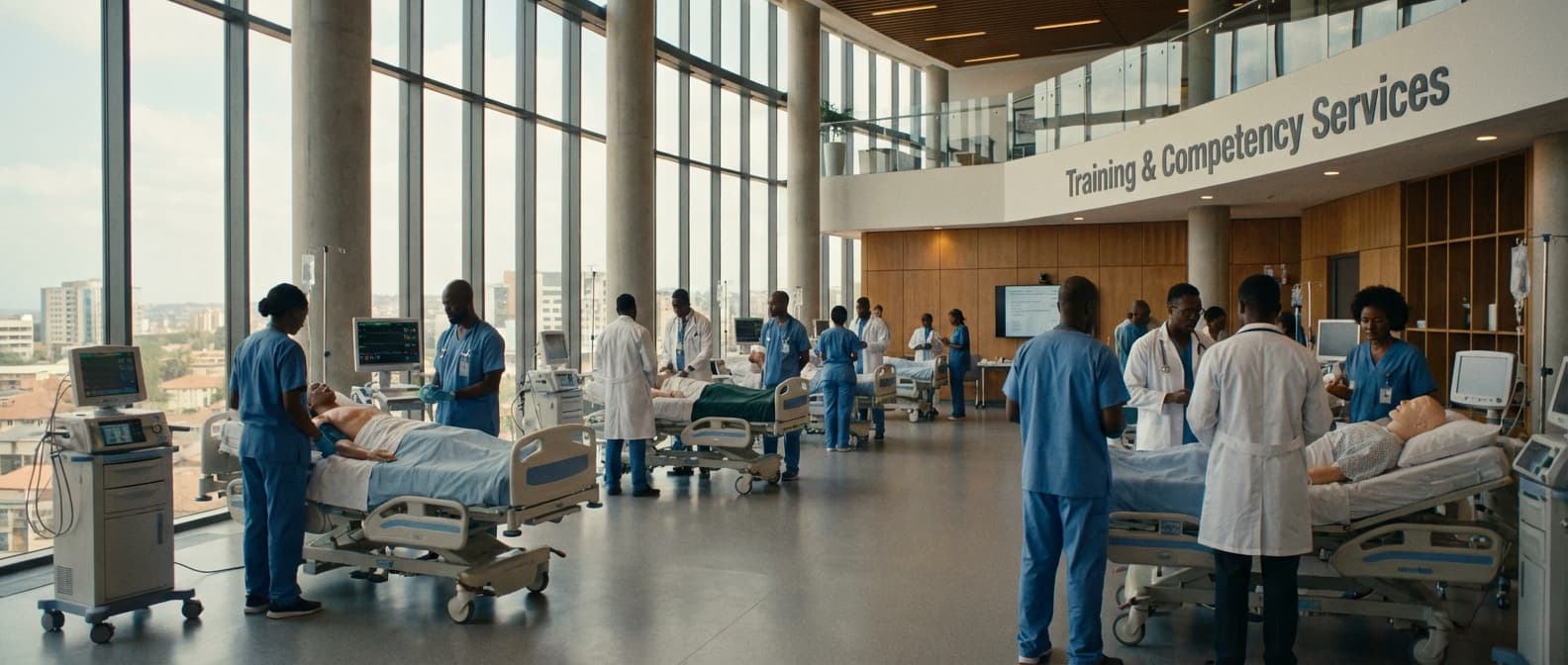
Ultrasound Application Training Service (Protocol-Based) in Ethiopia
Engineering Excellence & Technical Support
Ultrasound Application Training Service (Protocol-Based) High-standard technical execution following OEM protocols and local regulatory frameworks.
Standardized Protocols for Consistent Quality
Our training leverages meticulously developed, protocol-based ultrasound procedures specifically adapted for the Ethiopian healthcare context. This ensures trainees master standardized imaging techniques, leading to reproducible and reliable diagnostic outcomes across different facilities and operators.
Expert-Led, Hands-On Skill Development
Benefit from intensive, practical training delivered by experienced sonographers and radiologists. We focus on hands-on scanning sessions with real patients, guided by expert instructors who provide immediate feedback and personalized coaching, accelerating skill acquisition and confidence.
Leveraging Technology for Enhanced Learning
Our training incorporates modern educational tools, including high-fidelity ultrasound simulators and interactive learning modules. This allows for safe practice of complex scenarios, repeated learning of challenging anatomy, and a deeper understanding of ultrasound physics and image optimization, even in resource-limited settings.
What Is Ultrasound Application Training Service (Protocol-based) In Ethiopia?
Ultrasound Application Training Service (Protocol-Based) in Ethiopia refers to a structured, curriculum-driven educational program designed to equip healthcare professionals with the knowledge and practical skills necessary to perform and interpret ultrasound examinations according to established diagnostic protocols. This service emphasizes a systematic approach to ultrasound acquisition and analysis, ensuring consistency, reproducibility, and adherence to best practices within the Ethiopian healthcare context. The training is typically delivered by experienced sonographers or radiologists and involves theoretical instruction, hands-on simulation, and supervised clinical practice. The objective is to enhance diagnostic accuracy, improve patient care, and expand the availability of advanced imaging modalities in the country.
| Target Audience | Training Needs | Typical Use Cases |
|---|---|---|
| Radiologists and Radiology Residents | Developing expertise in specialized ultrasound applications, standardizing examination protocols, and enhancing diagnostic interpretation for complex cases. | Comprehensive abdominal imaging, advanced obstetric and gynecological assessments, Doppler studies for vascular pathologies, musculoskeletal ultrasound, and interventional ultrasound guidance. |
| General Practitioners and Internists | Acquiring foundational ultrasound skills for point-of-care diagnostics, screening examinations, and initial assessment of common conditions. | Basic abdominal scans for fluid or organ abnormalities, focused cardiac assessments, bladder volume measurements, and preliminary assessment of lumps or masses. |
| Obstetricians and Gynecologists | Mastering standardized protocols for antenatal care, fetal well-being assessment, and gynecological evaluations. | Routine obstetric scans (dating, anomaly, growth), fetal biometry, amniotic fluid assessment, Doppler velocimetry in high-risk pregnancies, and transvaginal pelvic ultrasounds. |
| Nurses and Midwives (with advanced scope) | Developing skills for specific screening or monitoring roles, particularly in resource-limited settings. | Point-of-care ultrasound for fluid status, bladder scanning, basic obstetric screening, and potentially assisting in broader diagnostic imaging workflows. |
| Sonographers (new and experienced) | Formalizing existing skills, learning new protocols, and achieving proficiency in specialized areas. | Expanding their repertoire of examinations, improving image quality and consistency, and preparing for accreditation or advanced roles. |
Service Components
- Protocol-Based Curriculum: Training follows standardized ultrasound examination protocols for specific anatomical regions and clinical indications (e.g., obstetric, abdominal, small parts, vascular).
- Theoretical Instruction: Covers ultrasound physics, instrumentation, image optimization, anatomy, physiology, pathology, and protocol-specific interpretive criteria.
- Hands-on Skills Development: Emphasizes proper transducer manipulation, scanning techniques, patient positioning, and image acquisition to generate diagnostically relevant views.
- Case Study Analysis: Review of real-world ultrasound cases to reinforce interpretive skills and decision-making processes.
- Supervised Clinical Practice: Participants perform ultrasound examinations under the direct supervision of experienced instructors in a clinical setting.
- Competency Assessment: Evaluation of participants' theoretical knowledge and practical skills through written examinations, practical scanning assessments, and case reviews.
- Certification: Issuance of certificates upon successful completion, attesting to the individual's proficiency in specific ultrasound applications.
Who Needs Ultrasound Application Training Service (Protocol-based) In Ethiopia?
In Ethiopia, a specialized Ultrasound Application Training Service (Protocol-Based) is crucial for enhancing diagnostic capabilities and improving patient care across various healthcare settings. This training focuses on standardized protocols to ensure consistent, accurate, and reproducible ultrasound examinations. The primary beneficiaries are healthcare professionals who directly perform or interpret ultrasound scans, as well as institutions that rely on this technology for diagnosis and patient management.
| Target Customer Group | Specific Departments/Roles | Key Training Needs Addressed | Impact on Healthcare Delivery |
|---|---|---|---|
| Hospitals (Public & Private) | Radiology, Obstetrics & Gynecology, Cardiology, Emergency Medicine, Pediatrics, Surgery | Standardized scan acquisition, accurate interpretation, reduced misdiagnosis, improved workflow efficiency | Enhanced diagnostic accuracy, better patient management, reduced need for external referrals, improved outcomes |
| Health Centers & Clinics (Urban & Rural) | General Practice, Primary Healthcare, Obstetrics | Basic ultrasound skills, protocol adherence for common conditions, early detection | Increased access to diagnostic imaging, early intervention, reduced burden on referral hospitals |
| Medical Training Institutions | Medical Schools, Nursing Schools, Allied Health Science Colleges | Curriculum integration, hands-on training with standardized protocols, faculty development | Producing competent ultrasound practitioners, raising the standard of medical education |
| Government Health Ministries & Regional Health Bureaus | Quality Assurance, Training & Capacity Building Units | Developing national ultrasound guidelines, assessing training needs, monitoring quality of service | Standardization of ultrasound services nationwide, improved public health outcomes |
| Non-Governmental Organizations (NGOs) & International Health Organizations | Maternal & Child Health Programs, Emergency Response Teams | Deploying trained personnel in underserved areas, implementing ultrasound in specific health initiatives | Strengthening healthcare infrastructure in remote areas, improving access to essential diagnostics |
Target Customers and Departments for Ultrasound Application Training Service (Protocol-Based) in Ethiopia
- {"item":"Radiologists and Radiology Technologists","description":"These professionals are at the forefront of ultrasound imaging. Training ensures they can perform and interpret scans according to established protocols for various body parts and clinical scenarios."}
- {"item":"Obstetricians and Gynecologists","description":"Essential for prenatal care, fetal monitoring, and gynecological assessments. Protocol-based training ensures standardized examinations for optimal maternal and fetal health outcomes."}
- {"item":"Emergency Medicine Physicians and Staff","description":"Rapid and accurate ultrasound (e.g., FAST scans) is critical in emergency settings. Training on specific protocols allows for timely diagnosis and intervention."}
- {"item":"Cardiologists and Cardiac Technologists","description":"For echocardiography, standardized protocols are vital for assessing cardiac function and diagnosing heart conditions."}
- {"item":"Anesthesiologists","description":"Increasingly using ultrasound for regional anesthesia guidance and central line placement. Protocol-based training ensures safety and efficacy."}
- {"item":"Pediatricians and Neonatologists","description":"For specialized pediatric and neonatal ultrasounds, adherence to specific protocols is crucial due to anatomical differences and the delicate nature of patients."}
- {"item":"General Practitioners and Primary Healthcare Providers","description":"In areas with limited specialist access, trained primary care providers can utilize ultrasound for basic diagnostics, guided by protocols, to improve initial patient assessment."}
- {"item":"Veterinarians","description":"While not directly human healthcare, veterinary ultrasound plays a significant role in animal health diagnostics, and protocol-based training would enhance their capabilities."}
Ultrasound Application Training Service (Protocol-based) Process In Ethiopia
This document outlines the workflow for Ultrasound Application Training Services (Protocol-Based) in Ethiopia, from the initial client inquiry to the successful execution and completion of the training. The service focuses on providing standardized, protocol-driven ultrasound training to healthcare professionals, ensuring consistent and high-quality diagnostic capabilities.
| Phase | Step | Description | Key Activities | Responsible Party | Deliverables/Outcomes |
|---|---|---|---|---|---|
| Phase 1: Inquiry and Needs Assessment |
| Client expresses interest in ultrasound application training. | Contacting the training provider, requesting information about services. | Prospective Client | Initial expression of interest, identification of potential training need. |
| Understanding the client's specific training requirements and context. | Discussion of target audience, existing skill levels, specific ultrasound modalities, clinical setting, number of participants, desired outcomes, and budget. | Training Provider & Prospective Client | Detailed understanding of training needs, identification of relevant protocols. | |
| Determining the specific ultrasound protocols to be covered based on needs. | Reviewing standard Ethiopian medical protocols, client's specialized needs, and available expertise. | Training Provider (with client input) | Agreed-upon list of ultrasound protocols for training. | |
| Phase 2: Proposal and Agreement |
| Creating a comprehensive proposal outlining the training plan. | Developing training curriculum, outlining modules, duration, methodology, trainer profiles, equipment requirements, and cost breakdown. | Training Provider | Detailed training proposal. |
| Client reviews the proposal and negotiates terms. | Clarifying any aspects of the proposal, discussing modifications, finalizing pricing and schedule. | Prospective Client & Training Provider | Agreement on training scope, schedule, and cost. | |
| Formalizing the training service agreement. | Signing of the contract specifying all terms and conditions. | Prospective Client & Training Provider | Signed training agreement. | |
| Phase 3: Pre-Training Preparation |
| Identifying and registering eligible participants. | Client provides list of participants; training provider sends registration forms. | Client & Training Provider | Confirmed list of trainees. |
| Preparing or tailoring training materials. | Developing presentations, case studies, practical guides, and assessment tools aligned with selected protocols. | Training Provider | Ready-to-use training materials. | |
| Securing training venue, equipment, and scheduling. | Booking venue, confirming availability of ultrasound machines and phantoms, scheduling trainers, and arranging for any necessary travel. | Training Provider (with client coordination) | All logistical arrangements in place. | |
| Informing participants about the training details. | Sending out joining instructions, pre-reading materials, and schedule. | Training Provider | Participants are informed and prepared. | |
| Phase 4: Training Execution |
| Commencing the training session. | Welcome address, overview of training objectives, introduction of trainers and participants. | Trainer | Introduction and setting the tone for the training. |
| Delivering knowledge on ultrasound principles and protocols. | Lectures, presentations, case discussions, and Q&A sessions covering the selected protocols. | Trainer | Understanding of theoretical aspects of ultrasound applications and protocols. | |
| Showcasing practical application of ultrasound techniques. | Live demonstrations on phantoms and/or models by trainers, highlighting proper probe handling, image acquisition, and protocol adherence. | Trainer | Visual understanding of practical techniques. | |
| Allowing participants to practice under supervision. | Trainees operate ultrasound machines, applying learned techniques under trainer guidance, focusing on protocol execution and image optimization. | Trainees & Trainer | Development of practical scanning skills and protocol adherence. | |
| Applying knowledge to real-world scenarios. | Discussion of anonymized patient cases, requiring trainees to identify findings and apply relevant protocols for diagnosis. | Trainer & Trainees | Enhanced diagnostic reasoning and protocol application. | |
| Evaluating participant learning and providing feedback. | Written/practical assessments, observation of scanning skills, and individual feedback sessions. | Trainer | Identification of strengths and areas for improvement. | |
| Phase 5: Post-Training Evaluation and Support |
| Formalizing completion of the training program. | Issuance of certificates of completion to participants who meet the required standards. | Training Provider | Certificates of completion. |
| Assessing the overall effectiveness of the training. | Collecting feedback from the client on training delivery, impact, and satisfaction. | Client | Feedback on training effectiveness and provider performance. | |
| Providing ongoing support to trainees. | Follow-up consultations, access to online resources, or refresher sessions as defined in the agreement. | Training Provider | Sustained learning and skill development. | |
| Formal closure of the training service engagement. | Final reporting, invoicing, and archival of training records. | Training Provider | Completed training service and associated documentation. |
Ultrasound Application Training Service (Protocol-Based) Workflow in Ethiopia
- Phase 1: Inquiry and Needs Assessment
- Phase 2: Proposal and Agreement
- Phase 3: Pre-Training Preparation
- Phase 4: Training Execution
- Phase 5: Post-Training Evaluation and Support
Ultrasound Application Training Service (Protocol-based) Cost In Ethiopia
The cost of Ultrasound Application Training Services (Protocol-Based) in Ethiopia can vary significantly depending on several factors. These services are crucial for medical professionals looking to enhance their diagnostic skills, particularly in specialized areas like obstetrics, gynecology, abdominal imaging, and cardiology. Protocol-based training ensures standardized and accurate interpretations, which is vital for patient care and effective medical practice. The pricing in Ethiopia is influenced by the provider's reputation, the duration and intensity of the training, the specific ultrasound applications covered, the qualifications of the instructors, and the logistical arrangements (e.g., location, materials provided).
| Training Type/Duration | Estimated Cost Range (ETB) | Typical Inclusions |
|---|---|---|
| Basic Abdominal/Obstetric Ultrasound (2-3 Days) | 15,000 - 35,000 ETB | Didactic lectures, basic protocol introduction, limited hands-on practice with models, certificate of attendance. |
| Advanced Obstetric & Gynecological Ultrasound (5-7 Days) | 30,000 - 70,000 ETB | In-depth protocols for fetal anomaly scans, Doppler, 3D/4D basics, significant hands-on scanning, study materials, certificate of completion. |
| Specialized Ultrasound Applications (e.g., Cardiology, Vascular, Interventional) (5-10 Days) | 40,000 - 100,000+ ETB | Highly specialized protocols, expert instructors, extensive hands-on sessions with diverse cases, advanced simulation if available, comprehensive study packs, potential for certification. |
| Refresher/Update Courses (1-2 Days) | 10,000 - 25,000 ETB | Focus on protocol updates, challenging cases, discussion sessions, demonstration of new techniques. |
| Individualized/Customized Training (Variable Duration) | Negotiable (typically higher per hour/day than group courses) | Tailored curriculum, one-on-one instruction, flexible scheduling, specific skill development. |
Key Pricing Factors for Ultrasound Application Training in Ethiopia:
- Provider's Reputation and Accreditation: Established institutions or training centers with a strong track record and accreditation often command higher fees due to perceived quality and credibility.
- Duration and Intensity of Training: Shorter, introductory courses will be less expensive than comprehensive, multi-day or multi-week programs. The number of hours of didactic learning and hands-on practice directly impacts cost.
- Specific Ultrasound Applications: Training in highly specialized areas (e.g., advanced fetal echocardiography, interventional ultrasound) generally costs more than general abdominal or obstetric ultrasound training.
- Instructor Qualifications and Experience: Training provided by renowned sonographers, radiologists, or specialist physicians with extensive experience will likely be priced higher.
- Location and Logistics: Training conducted in major cities like Addis Ababa might have different pricing than in more remote areas. Costs associated with venue rental, equipment maintenance, and participant refreshments are also factored in.
- Training Materials and Resources: Whether the training includes comprehensive manuals, access to simulation software, or practical demonstration equipment can influence the overall cost.
- Group vs. Individual Training: Group training sessions are typically more cost-effective per participant compared to individualized one-on-one training.
- Certification and Assessment: If the training leads to a recognized certification or includes rigorous assessment, this can add to the overall fee.
- Inclusion of Practical Scanning Sessions: The amount and quality of hands-on scanning experience with real or phantom patients are critical and directly influence the training's value and cost.
Affordable Ultrasound Application Training Service (Protocol-based) Options
Our Affordable Ultrasound Application Training Service offers protocol-based training designed for healthcare professionals seeking to enhance their diagnostic ultrasound skills without breaking the bank. We understand the financial pressures in healthcare, and our service is structured to provide exceptional value. We offer flexible training options to suit different learning styles and institutional needs, focusing on practical application and adherence to established protocols for accurate and efficient examinations. This ensures that trainees gain confidence and proficiency quickly, leading to improved patient care and potentially reduced misdiagnosis rates.
| Training Package | Included Modules | Format | Estimated Cost Savings (vs. Individual Purchase) |
|---|---|---|---|
| Foundation Bundle | Basic Abdominal, Introduction to Physics, Image Optimization | On-Demand Online Modules | 15% |
| Specialist Bundle (e.g., OB/GYN) | Foundation Bundle + OB/GYN Specific Protocols, Fetal Biometry, Pelvic Ultrasound | Blended Learning (Online + Virtual Workshop) | 20% |
| Comprehensive Training (e.g., Full Department) | Multiple Specialist Bundles, Advanced Techniques, Quality Assurance | Blended Learning (On-Demand + Live Virtual/In-Person) | 25%+ |
| Group of 5+ Staff | Any chosen bundle(s) | Flexible (On-Demand, Virtual, In-Person) | 10-20% (additional) |
Value Bundles and Cost-Saving Strategies
- Tiered Training Packages: We offer various bundles catering to different levels of expertise and specific application needs (e.g., Basic Abdominal, Advanced Cardiac, Obstetrics & Gynecology, Point-of-Care Ultrasound). These packages combine foundational knowledge with specialized modules at a reduced price compared to individual module purchases.
- On-Demand Online Modules: Access a comprehensive library of recorded lectures, demonstrations, and case studies available 24/7. This self-paced learning format allows trainees to study at their convenience, reducing the need for expensive travel and time away from clinical duties.
- Group Discounts: Significant cost savings are available for institutions sending multiple staff members for training. The more participants, the greater the per-person discount.
- Train-the-Trainer Programs: Empower your internal staff to deliver ongoing ultrasound training within your organization. This is a highly cost-effective long-term solution that builds internal capacity and reduces reliance on external providers.
- Blended Learning Approach: Combine the flexibility of online modules with live, interactive virtual workshops or in-person practical sessions. This approach optimizes learning efficiency and can be tailored to fit budgetary constraints.
- Subscription-Based Access: For ongoing professional development, consider our subscription models offering continuous access to updated content, new modules, and a community forum for peer-to-peer learning.
- Early Bird Registration Discounts: Sign up for upcoming training sessions well in advance to take advantage of special promotional pricing.
- Customizable Training Curriculums: Work with our experts to design a training program specifically for your institution's needs and existing skill sets, ensuring you only pay for the essential training required.
Verified Providers In Ethiopia
In Ethiopia's burgeoning healthcare sector, identifying truly verified and competent providers is paramount for both individuals and organizations. Franance Health stands out as a premier choice due to its rigorous credentialing process and commitment to excellence. This approach ensures that all affiliated healthcare professionals and facilities meet the highest standards of quality, safety, and ethical practice. Choosing a verified provider like Franance Health mitigates risks, guarantees access to reliable medical services, and ultimately contributes to better health outcomes. Their dedication to maintaining a roster of accredited and continuously evaluated healthcare partners makes them an indispensable resource for anyone seeking quality medical care in Ethiopia.
| Franance Health Aspect | Benefit to Patients/Clients |
|---|---|
| Verified Credentials | Ensures competence and qualification of healthcare professionals. |
| Quality Assurance | Guarantees adherence to high medical standards and best practices. |
| Safety Protocols | Confirms that facilities and providers follow strict safety measures. |
| Ethical Standards | Affirms commitment to patient rights and professional integrity. |
| Continuous Monitoring | Ensures ongoing compliance and service excellence. |
| Reputation and Trust | Builds confidence in the reliability and effectiveness of healthcare services. |
Why Franance Health Represents the Best Choice:
- Rigorous Credentialing Process: Franance Health meticulously vets all its healthcare providers, ensuring they meet strict quality, safety, and ethical standards.
- Commitment to Excellence: Their focus on continuous evaluation and improvement guarantees that clients receive services from top-tier medical professionals and facilities.
- Risk Mitigation: By choosing Franance Health, you significantly reduce the risk of encountering unqualified or substandard healthcare providers.
- Access to Reliable Services: Franance Health's verified network provides access to trustworthy and effective medical care across various specialties.
- Improved Health Outcomes: Their dedication to quality ensures that patients receive appropriate and timely treatment, leading to better health results.
- Ethical Practice Assurance: Franance Health prioritizes providers who adhere to the highest ethical guidelines in their medical practice.
Scope Of Work For Ultrasound Application Training Service (Protocol-based)
This Scope of Work (SOW) outlines the services to be provided for a protocol-based ultrasound application training program. The objective is to equip participants with the theoretical knowledge and practical skills necessary to perform specific ultrasound examinations according to established protocols. The training will focus on [Specify Ultrasound Modality, e.g., Abdominal Ultrasound, Echocardiography, Vascular Ultrasound] and will adhere to recognized clinical standards and best practices.
| Deliverable | Description | Standard Specifications/Key Features | Format | Completion Criteria |
|---|---|---|---|---|
| Ultrasound Training Curriculum | Comprehensive syllabus detailing theoretical modules, practical sessions, and assessment methods. | Covers ultrasound physics, anatomy, physiology, protocol-specific scanning techniques, image optimization, artifact recognition, common pathologies, and reporting. Aligned with relevant professional body guidelines. | Digital Document (PDF) | Approved by the client's clinical lead/training department. |
| Training Manuals/Handouts | Detailed guides for each module and scanning protocol. | Includes high-quality anatomical diagrams, sample images, step-by-step scanning instructions, troubleshooting tips, and case studies. | Digital Document (PDF) and/or Printed Copy | Content accuracy verified by subject matter experts; user-friendly layout. |
| Practical Scanning Demonstrations | Live demonstrations of protocol-specific ultrasound examinations performed by experienced sonographers. | Focus on correct probe handling, patient positioning, scanning pathways, and image acquisition techniques. May include live patient or phantom scanning. | Live Session (In-person or Virtual) / Recorded Videos | Demonstrations clearly illustrate all key elements of the protocol; participants can ask questions/seek clarification. |
| Hands-on Practice Sessions | Supervised practical sessions where participants apply learned scanning techniques. | Adequate scanner-to-participant ratio for personalized feedback. Access to phantoms and/or supervised patient scanning opportunities as agreed. | In-person Practical Session | Participants demonstrate ability to perform core scanning steps and acquire diagnostic images according to the protocol. Trainer provides constructive feedback. |
| Case Study Library | Collection of real-world ultrasound cases relevant to the trained application. | Includes representative images, clinical history, pathology findings, and differential diagnoses. May include quizzes for self-assessment. | Digital Document (PDF) or Online Platform | Cases are diverse, representative of common and important pathologies, and clearly annotated. |
| Competency Assessment Tools | Methods for evaluating participant's understanding and practical skills. | Includes written examinations (theory), practical image assessment (e.g., image portfolio review), and/or direct observation of scanning skills. | Written Exam (Online/Paper), Image Portfolio Submission, Observation Checklist | Clear grading rubric; successful completion based on predefined passing scores for each assessment component. |
| Training Feedback Forms | Mechanism for participants to provide feedback on the training program. | Covers content relevance, trainer effectiveness, resource quality, and overall satisfaction. | Online Survey or Paper Form | Collected and analyzed to inform future training improvements. |
| Certificate of Completion | Formal document acknowledging successful completion of the training program. | Includes participant's name, training course title, date of completion, and the issuing organization's details. May indicate Continuing Professional Development (CPD) credits. | Digital Document (PDF) and/or Printed Copy | Issued upon successful completion of all assessment requirements. |
Key Training Objectives
- Understand the principles of ultrasound physics and image acquisition relevant to the specific application.
- Master the identification of anatomical structures and common pathologies within the defined protocol.
- Develop proficiency in optimizing ultrasound machine settings for optimal image quality.
- Execute standardized scanning techniques and probe manipulations as per the protocol.
- Accurately document findings and interpret ultrasound images.
- Understand the indications, contraindications, and limitations of the specific ultrasound application.
- Adhere to patient safety and infection control procedures during examinations.
Service Level Agreement For Ultrasound Application Training Service (Protocol-based)
This Service Level Agreement (SLA) outlines the guaranteed response times and uptime for the Ultrasound Application Training Service (Protocol-Based). This service provides expert-led training sessions designed to familiarize users with specific ultrasound protocols and their effective application. This SLA applies to all active subscriptions for the Ultrasound Application Training Service.
| Service Component | Uptime Guarantee | Response Time Guarantee (Critical Issues) | Response Time Guarantee (Standard Issues) | Resolution Time Target (Critical Issues) | Resolution Time Target (Standard Issues) |
|---|---|---|---|---|---|
| Training Platform Access & Navigation | 99.5% (Monthly Average) | 1 Business Hour | 4 Business Hours | 8 Business Hours | 2 Business Days |
| Access to Protocol-Specific Training Modules | 99.5% (Monthly Average) | 1 Business Hour | 4 Business Hours | 8 Business Hours | 2 Business Days |
| Live Training Session Availability (Scheduled) | 99.8% (Monthly Average) | N/A (Scheduled) | N/A (Scheduled) | N/A (Scheduled) | N/A (Scheduled) |
| Technical Support for Platform Issues | 99.5% (Monthly Average) | 1 Business Hour | 4 Business Hours | 8 Business Hours | 2 Business Days |
| Support for Protocol Content & Application Queries | 99.0% (Monthly Average) | 4 Business Hours | 8 Business Hours | 2 Business Days | 5 Business Days |
Key Performance Indicators (KPIs)
- Response Time: The time taken by the support team to acknowledge and begin addressing a reported issue.
- Uptime: The percentage of time the training platform and associated services are operational and accessible to users.
- Resolution Time: The time taken to resolve a reported issue to the satisfaction of the user.
Frequently Asked Questions

Ready when you are
Let's scope your Ultrasound Application Training Service (Protocol-Based) in Ethiopia project in Ethiopia.

Scaling healthcare logistics and technical systems across the entire continent.