
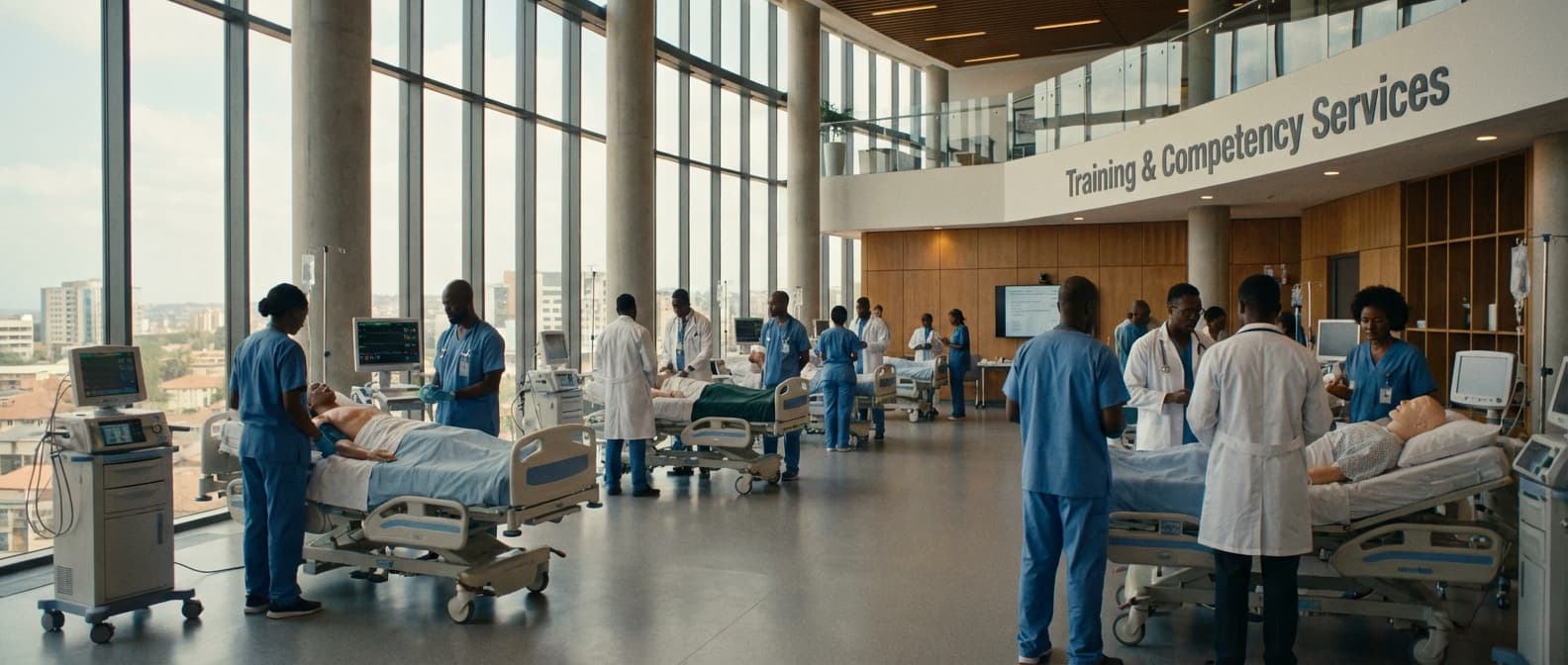
CT Operator Training Service (Radiographers) in Ethiopia
Engineering Excellence & Technical Support
CT Operator Training Service (Radiographers) High-standard technical execution following OEM protocols and local regulatory frameworks.
Advanced CT Imaging Techniques Mastery
Gain hands-on expertise in advanced CT protocols, including helical scanning, multi-detector CT (MDCT), and contrast-enhanced imaging for optimal diagnostic accuracy in Ethiopian healthcare settings.
Quality Assurance & Radiation Safety Compliance
Learn robust quality assurance procedures and adhere to international radiation safety standards crucial for patient and staff well-being in Ethiopia's diverse medical environments.
Patient Preparation & Contrast Administration Protocols
Master essential techniques for effective patient preparation, secure intravenous access, and safe administration of CT contrast agents tailored to the needs of Ethiopian patients.
What Is Ct Operator Training Service (Radiographers) In Ethiopia?
CT Operator Training Service (Radiographers) in Ethiopia refers to specialized educational programs designed to equip radiographers with the theoretical knowledge and practical skills necessary to safely and effectively operate Computed Tomography (CT) scanners. These services aim to ensure that healthcare professionals in Ethiopia are proficient in CT acquisition protocols, image optimization, artifact reduction, patient positioning, radiation safety, and basic troubleshooting of CT equipment, thereby enhancing diagnostic imaging quality and patient care within the Ethiopian healthcare system.
| Who Needs CT Operator Training Service? | Typical Use Cases in Ethiopia | |||||||||
|---|---|---|---|---|---|---|---|---|---|---|
| Registered Radiographers (Diploma or Bachelor's degree in Radiography/Medical Imaging) seeking to specialize in CT. | Screening for trauma patients (e.g., head injuries, internal bleeding). | Diagnosis of various medical conditions affecting organs and tissues (e.g., tumors, infections, vascular abnormalities, neurological disorders). | Pre-operative and post-operative assessment. | Monitoring disease progression and treatment response. | Guidance for interventional procedures (e.g., biopsies, drainages). | Radiographers working in public hospitals and private diagnostic centers equipped with CT scanners. | Radiographers employed by humanitarian organizations or non-governmental organizations involved in healthcare provision. | Medical imaging departments in tertiary referral hospitals and specialized medical centers. | New CT scanner installations requiring initial operator training. | Radiographers requiring refresher courses or training on new CT technologies or protocols. |
Key Components of CT Operator Training Service:
- Theoretical Instruction: Covering principles of CT physics, X-ray generation, beam attenuation, image reconstruction algorithms, and radiation biology.
- Equipment Operation: Hands-on training on specific CT scanner models, including console operation, patient table movement, gantry angulation, and parameter selection.
- Protocol Management: Understanding and application of various CT protocols for different anatomical regions and clinical indications (e.g., head, chest, abdomen, pelvis).
- Image Quality Optimization: Techniques for minimizing artifacts (e.g., motion, beam hardening, metal), selecting appropriate reconstruction kernels, and adjusting window/level settings.
- Radiation Safety: Comprehensive training on dose optimization techniques, ALARA principles, patient shielding, and regulatory compliance for radiation protection.
- Patient Care and Positioning: Methods for preparing patients for CT scans, ensuring proper immobilization, and managing patient comfort and safety during the procedure.
- Image Archiving and Transmission: Familiarity with Picture Archiving and Communication Systems (PACS) and Digital Imaging and Communications in Medicine (DICOM) standards.
- Basic Troubleshooting: Identifying common equipment malfunctions and performing rudimentary troubleshooting procedures.
Who Needs Ct Operator Training Service (Radiographers) In Ethiopia?
In Ethiopia, the demand for specialized CT operator training for radiographers is driven by the increasing adoption of advanced imaging technologies in healthcare. This training is crucial for ensuring accurate diagnoses, patient safety, and the efficient utilization of CT scanners. The target customers are primarily healthcare facilities and the professionals who operate CT equipment within them. This service addresses a critical need for upskilling and standardization in CT imaging practices across the country.
| Department | Specific Roles Requiring Training | Key Responsibilities Related to CT Operation |
|---|---|---|
| Radiology Department | Radiographers/Radiologic Technologists | Operating CT scanners, patient positioning, image acquisition protocols, radiation safety, image quality control, data management. |
| Diagnostic Imaging Department | CT Technicians | Performing scans, basic equipment maintenance, patient preparation, assisting radiologists. |
| Medical Imaging Training Programs | Instructors/Lecturers | Developing and delivering CT training curricula, hands-on supervision of trainees. |
| Healthcare Administration/Management | Department Heads, Imaging Directors | Ensuring staff competency, compliance with safety standards, efficient workflow management. |
Target Customers for CT Operator Training Service (Radiographers) in Ethiopia
- Public Hospitals (Federal and Regional)
- Private Hospitals and Clinics
- Teaching Hospitals and Medical Schools
- Specialized Diagnostic Imaging Centers
- Non-Governmental Organization (NGO) Healthcare Facilities
- Government Health Bureaus (for capacity building initiatives)
Ct Operator Training Service (Radiographers) Process In Ethiopia
This document outlines the comprehensive workflow for CT Operator Training Services for Radiographers in Ethiopia, covering the entire process from initial inquiry to successful execution and post-training follow-up. The service aims to equip radiographers with the necessary skills and knowledge to operate CT scanners effectively and safely, adhering to Ethiopian healthcare standards and best practices. The process is designed to be transparent, efficient, and tailored to the specific needs of the trainees and their institutions.
| Phase | Stage | Key Activities | Responsible Party | Deliverables/Outcomes |
|---|---|---|---|---|
| Phase 1: Inquiry and Needs Assessment | Initial Contact & Inquiry | Potential client (hospital, clinic, individual radiographer) expresses interest in CT operator training. Inquiries received via email, phone, or website. | Client, Training Provider | Initial interest registered, basic information exchanged. |
| Phase 1: Inquiry and Needs Assessment | Needs Assessment Meeting/Call | Detailed discussion to understand the client's specific requirements: number of trainees, existing knowledge level, desired learning outcomes, available equipment, preferred training dates, and budget. | Training Provider, Client | Understanding of training scope, trainee profile, and logistical constraints. |
| Phase 2: Proposal and Agreement | Proposal Development | Development of a comprehensive training proposal outlining the curriculum, training methodology, duration, trainers' qualifications, fees, and terms and conditions based on the needs assessment. | Training Provider | Formal training proposal document. |
| Phase 2: Proposal and Agreement | Proposal Review and Negotiation | Client reviews the proposal. Negotiations may occur regarding curriculum adjustments, pricing, or scheduling. | Client, Training Provider | Agreement on the final training plan. |
| Phase 2: Proposal and Agreement | Contract/Agreement Signing | Formalization of the training agreement, including payment schedules and responsibilities of both parties. | Client, Training Provider | Signed training contract/agreement. |
| Phase 3: Pre-Training Preparation | Curriculum Finalization & Material Development | Finalizing the training curriculum and preparing all necessary training materials (presentations, manuals, handouts, case studies). | Training Provider | Completed and approved training curriculum and materials. |
| Phase 3: Pre-Training Preparation | Logistics and Scheduling | Confirming training dates, venue (on-site or off-site), equipment availability (if applicable), and any necessary travel arrangements for trainers or trainees. | Training Provider, Client | Confirmed training schedule and logistical arrangements. |
| Phase 3: Pre-Training Preparation | Trainee Registration & Pre-assessment | Collecting trainee details and potentially conducting a pre-assessment to gauge baseline knowledge and tailor the training further. | Training Provider, Client | Registered trainees, pre-assessment results (if conducted). |
| Phase 4: Training Delivery | Theoretical Sessions | Delivering classroom-based lectures, presentations, and discussions covering CT principles, physics, image acquisition protocols, patient positioning, radiation safety, and quality control. | Training Provider (Lecturer/Trainer) | Trainees gain theoretical understanding of CT operations. |
| Phase 4: Training Delivery | Practical/Hands-on Sessions | Providing supervised practical sessions on actual CT scanners (or simulators if available), focusing on patient setup, scanning techniques, image reconstruction, and artifact identification. | Training Provider (Clinical Instructor) | Trainees develop practical skills in operating CT equipment. |
| Phase 4: Training Delivery | Case Study Analysis & Problem-Solving | Engaging trainees in analyzing real-world CT cases, discussing diagnostic challenges, and practicing troubleshooting common operational issues. | Training Provider (Trainer) | Enhanced analytical and problem-solving abilities for trainees. |
| Phase 5: Assessment and Certification | Theoretical Assessment | Administering written or online tests to evaluate trainees' comprehension of theoretical concepts. | Training Provider | Assessment of theoretical knowledge. |
| Phase 5: Assessment and Certification | Practical Assessment | Observing and evaluating trainees' performance during hands-on scanning scenarios, assessing their proficiency in operating the CT scanner and managing patient care. | Training Provider | Assessment of practical skills and competency. |
| Phase 5: Assessment and Certification | Certification Issuance | Issuing certificates of completion to trainees who successfully meet the assessment criteria. | Training Provider | Official certification for trained CT operators. |
| Phase 6: Post-Training Support and Evaluation | Feedback Collection | Gathering feedback from trainees and their institutions on the training program's effectiveness, content, and delivery. | Training Provider, Client | Feedback forms and reports. |
| Phase 6: Post-Training Support and Evaluation | Post-Training Support | Providing limited post-training support, such as answering queries, offering minor troubleshooting advice, or facilitating access to further resources. | Training Provider | Continued engagement and support for trained personnel. |
| Phase 6: Post-Training Support and Evaluation | Program Evaluation & Improvement | Analyzing feedback and assessment results to identify areas for improvement in future training programs. | Training Provider | Refined training methodologies and curriculum for enhanced future offerings. |
CT Operator Training Service Workflow for Radiographers in Ethiopia
- Phase 1: Inquiry and Needs Assessment
- Phase 2: Proposal and Agreement
- Phase 3: Pre-Training Preparation
- Phase 4: Training Delivery
- Phase 5: Assessment and Certification
- Phase 6: Post-Training Support and Evaluation
Ct Operator Training Service (Radiographers) Cost In Ethiopia
The cost of CT Operator Training (Radiographers) in Ethiopia can vary significantly due to several factors. This training is crucial for ensuring qualified professionals can operate CT scanners safely and effectively, leading to accurate diagnostic imaging. The pricing is typically influenced by the duration and intensity of the program, the reputation and accreditation of the training institution, the level of hands-on practical experience offered, and the inclusion of specialized modules.
Key pricing factors include:
- Duration and Intensity: Shorter, introductory courses will naturally cost less than comprehensive programs spanning several weeks or months, which often include extensive clinical rotations.
- Institution's Reputation and Accreditation: Well-established institutions with strong ties to hospitals and recognized accreditations often command higher fees due to their perceived quality and the value of their certification.
- Practical Training Component: The extent of hands-on experience with actual CT scanners, including simulations and real patient scans under supervision, is a significant cost driver. Programs offering more extensive practical sessions will be more expensive.
- Curriculum and Specialization: Basic CT operation training will be less costly than specialized courses focusing on advanced techniques, specific CT modalities (e.g., cardiac CT, interventional CT), or advanced image processing.
- Location and Resources: Training offered in major cities like Addis Ababa might have higher overhead costs reflected in the pricing compared to regional centers.
- Inclusion of Materials and Assessments: The cost may or may not include training manuals, study materials, examination fees, and certification costs. It's important to clarify what is included in the quoted price.
The pricing ranges can be broad. For a general estimate, foundational CT operator training courses for radiographers in Ethiopia can range from ETB 10,000 to ETB 50,000 or more. More specialized or in-depth programs, especially those with extensive clinical placements, could potentially exceed this range. It is highly recommended for aspiring CT operators to directly contact training providers for the most accurate and up-to-date quotations based on their specific program offerings.
| Training Type | Estimated Cost Range (ETB) |
|---|---|
| Basic CT Operator Training (Introductory) | 10,000 - 25,000 |
| Comprehensive CT Operator Training (with practicals) | 25,000 - 50,000 |
| Specialized CT Modality Training (e.g., Cardiac CT) | 30,000 - 60,000+ |
Factors Influencing CT Operator Training Costs in Ethiopia:
- Duration and Intensity of the Program
- Reputation and Accreditation of the Training Institution
- Level of Hands-on Practical Experience
- Specialized Modules or Advanced Techniques
- Location and Associated Overhead Costs
- Inclusion of Training Materials, Assessments, and Certification
Affordable Ct Operator Training Service (Radiographers) Options
This document outlines affordable Computed Tomography (CT) operator training services specifically for radiographers. We understand the importance of specialized CT skills for career advancement and patient care. This guide explores various training options, emphasizing value bundles and cost-saving strategies to make obtaining this critical certification accessible.
| Value Bundle Component | Description | Cost-Saving Strategy |
|---|---|---|
| Comprehensive Online Modules + Practice Exams | Includes all necessary theoretical knowledge, image interpretation, patient care, safety protocols, and simulated exams to prepare for certification. | Significantly reduces travel, accommodation, and lost work time associated with in-person training. Allows self-paced learning. |
| Blended Learning (Online Theory + On-Site Clinical Hours) | Combines the flexibility of online learning with essential hands-on practical experience in a clinical setting. | Potentially lower tuition than fully in-person programs. Leveraging existing workplace relationships for clinical sites can eliminate placement fees. |
| Group Discounts for Institutions/Departments | When multiple radiographers from the same facility enroll, significant discounts can be negotiated with training providers. | Reduces per-person training costs for hospitals and imaging centers, encouraging team-wide skill development. |
| Bundled Certification Exam Fees | Some programs include the cost of the CT certification exam as part of the overall training package. | Eliminates the need for separate exam registration and potential late fees. Provides a clear, all-inclusive cost. |
| Lifetime Access to Course Materials | Provides ongoing access to lectures, notes, and resources for future reference and continuing education. | Reduces the need to repurchase training materials for refreshers or when pursuing further specialization. |
| Payment Plans/Installment Options | Allows trainees to spread the cost of the program over several months or years. | Makes expensive training programs more manageable for individual radiographers by distributing the financial burden. |
| Early Bird Registration Discounts | Offers reduced pricing for those who register and pay for a course well in advance of the start date. | Incentivizes timely enrollment and planning, leading to direct cost savings. |
Types of Affordable CT Operator Training Services
- {"title":"Online/Virtual CT Training Programs","description":"These programs offer flexibility and are often the most cost-effective. They typically include lectures, case studies, and quizzes accessible from anywhere with internet access. Some may offer blended learning with limited in-person components."}
- {"title":"Hospital-Based Training Rotations/Apprenticeships","description":"Many larger hospitals offer training programs for their existing radiographers. These are often subsidized or free, providing hands-on experience under the supervision of experienced CT technologists. The cost is typically absorbed by the institution as a professional development investment."}
- {"title":"Community College/Technical School Programs","description":"Some educational institutions offer certificate or associate's degree programs in CT technology. While these may be more comprehensive and longer, they are generally more affordable than university-level programs and can include clinical rotations."}
- {"title":"Manufacturer-Specific Training","description":"CT scanner manufacturers sometimes offer training courses for operators on their specific equipment. These can be valuable for understanding advanced features and protocols but may be less comprehensive in general CT principles. Cost varies widely, from free with equipment purchase to paid courses."}
- {"title":"Professional Organization Workshops/Seminars","description":"Radiography professional organizations (e.g., ASRT, UNSCA) often host workshops and seminars on CT. These are typically shorter, focused sessions that can supplement existing knowledge or provide specific skill development. Costs can range from moderate to expensive."}
Verified Providers In Ethiopia
Finding trusted and verified healthcare providers in Ethiopia is paramount for ensuring quality care and peace of mind. Franance Health stands out as a leading organization dedicated to connecting individuals with vetted healthcare professionals. This commitment to verification and quality makes Franance Health a superior choice for your healthcare needs. Our rigorous credentialing process ensures that every provider listed on our platform meets the highest standards of expertise, ethics, and patient care. We understand that navigating the healthcare landscape can be complex, which is why Franance Health has established a transparent and reliable system for identifying and endorsing qualified medical practitioners across Ethiopia.
| Key Features of Franance Health Verification | Benefit to Patients | Example Provider Type |
|---|---|---|
| Verification of Medical Licenses and Registrations | Ensures providers are legally authorized to practice medicine. | General Practitioner |
| Screening of Educational Background and Specializations | Confirms providers possess the necessary expertise and training. | Cardiologist |
| Background Checks for Professional Conduct | Minimizes risks by identifying any disciplinary actions or malpractice claims. | Pediatric Surgeon |
| Assessment of Clinical Experience and Competencies | Guarantees providers have practical experience in their field. | Dermatologist |
| Adherence to Ethical Codes and Patient Care Standards | Promotes trust and assures patient-centric care. | Oncologist |
Why Franance Health is the Best Choice for Verified Providers in Ethiopia:
- Rigorous Verification Process: Franance Health employs a multi-stage verification system that scrutinizes each provider's qualifications, licenses, certifications, and professional history. This ensures that only genuinely qualified and ethical practitioners are listed.
- Comprehensive Provider Network: We have built an extensive network of doctors, specialists, clinics, and hospitals across various medical disciplines, offering a wide range of healthcare services.
- Commitment to Patient Safety and Quality: Our primary focus is on ensuring patient safety and delivering high-quality medical care. We continuously monitor provider performance and patient feedback to maintain our standards.
- Transparency and Accessibility: Franance Health provides clear and accessible information about each provider, including their specializations, experience, and patient reviews, empowering you to make informed decisions.
- Ethical Practice Standards: We uphold strict ethical guidelines for all our affiliated providers, promoting patient-centered care and professional integrity.
- Streamlined Healthcare Access: Our platform simplifies the process of finding and booking appointments with verified healthcare professionals, saving you time and effort.
Scope Of Work For Ct Operator Training Service (Radiographers)
This Scope of Work (SOW) outlines the requirements for a comprehensive Computed Tomography (CT) Operator Training Service specifically designed for Radiographers. The objective is to equip radiographers with the advanced knowledge and practical skills necessary to safely, efficiently, and effectively operate CT scanners, interpret basic image quality, and adhere to all relevant safety protocols.
| Deliverable | Description | Standard Specification / Criteria | Timeline |
|---|---|---|---|
| Training Curriculum Development | A detailed curriculum covering all modules listed above, tailored to the specific CT scanner models in use. | Curriculum must be modular, include learning objectives, detailed lesson plans, and assessment strategies. Must be reviewed and approved by client's medical imaging department lead. | Week 1-2 |
| Training Materials | Provision of comprehensive training materials for each module. | Materials to include: presentation slides, participant workbooks, reference guides, case studies, and hands-on practical exercises. Materials must be provided in digital (PDF) and/or printed format. | Week 2-3 |
| Theoretical Training Sessions | Delivery of classroom-based theoretical instruction for all modules. | Sessions to be led by qualified and experienced CT instructors. Each session should include interactive Q&A. Maximum class size to be specified based on client needs (e.g., 10-15 participants per session). | Weeks 4-8 |
| Hands-on Practical Training | Supervised practical training on actual CT scanner equipment. | Participants will perform scan protocols, practice patient positioning, and gain experience with image acquisition. Training must be conducted on client's site using their equipment. Instructor-to-participant ratio for practical sessions to be 1:3. | Weeks 5-10 |
| Simulation Training (if applicable) | Use of CT simulation software to reinforce learning and practice complex scenarios. | Software should accurately replicate scanner interface and physics. Exercises should focus on protocol selection, parameter adjustments, and artifact recognition. | Integrated within Weeks 4-10 |
| Assessment and Evaluation | Formal assessment of radiographers' comprehension and practical skills. | Includes written/online quizzes, practical competency assessments (e.g., performing specific scans), and case study analysis. A passing score of 80% for written and 90% for practical is required. | Week 11 |
| Post-Training Support | Provision of limited post-training support to address emergent questions. | Support to be provided via email or scheduled calls for a period of 4 weeks post-completion of formal training. | Weeks 12-15 |
| Training Report | A comprehensive report detailing training activities, participant performance, and recommendations. | Report to include attendance records, assessment results for each participant, and an overall summary of training effectiveness. To be submitted within 5 business days of training completion. | Week 11 |
Key Training Modules
- CT Physics and Principles
- CT Scanner Operation and Safety
- Image Acquisition Techniques and Protocols
- Image Quality Assessment and Optimization
- Artifact Recognition and Reduction
- Patient Care and Contrast Administration
- Radiation Safety and Protection
- Introduction to CT Angiography (CTA) and Cardiac CT
- Basic Troubleshooting and Maintenance
Service Level Agreement For Ct Operator Training Service (Radiographers)
This Service Level Agreement (SLA) outlines the response times and uptime guarantees for the CT Operator Training Service provided to Radiographers. It aims to ensure efficient support and reliable access to training resources.
| Service Component | Response Time Target | Uptime Guarantee | Notes |
|---|---|---|---|
| Support Requests (Email/Ticket System) | Within 4 business hours | N/A (Service is reactive) | Business hours defined as Monday-Friday, 9:00 AM - 5:00 PM local time (excluding public holidays). |
| Critical Issue Support (Phone - for system outage affecting training) | Within 1 business hour | N/A (Service is reactive) | Critical issues are defined as complete inaccessibility of the online training platform. |
| Online Training Platform Availability | N/A | 99.5% uptime per calendar month | Scheduled maintenance will be communicated at least 48 hours in advance and will occur outside of peak training hours where possible. Uptime is calculated as (Total Minutes in Month - Downtime Minutes) / Total Minutes in Month. |
| Content Updates/New Course Availability | N/A | N/A (Service is proactive, not reactive) | Frequency and timeline for new content will be communicated separately through the training portal announcements. |
Key Performance Indicators (KPIs)
- Response Time for Support Requests
- Uptime Guarantee for Online Training Platform
- Resolution Time for Critical Issues
Frequently Asked Questions

Ready when you are
Let's scope your CT Operator Training Service (Radiographers) in Ethiopia project in Ethiopia.

Scaling healthcare logistics and technical systems across the entire continent.