
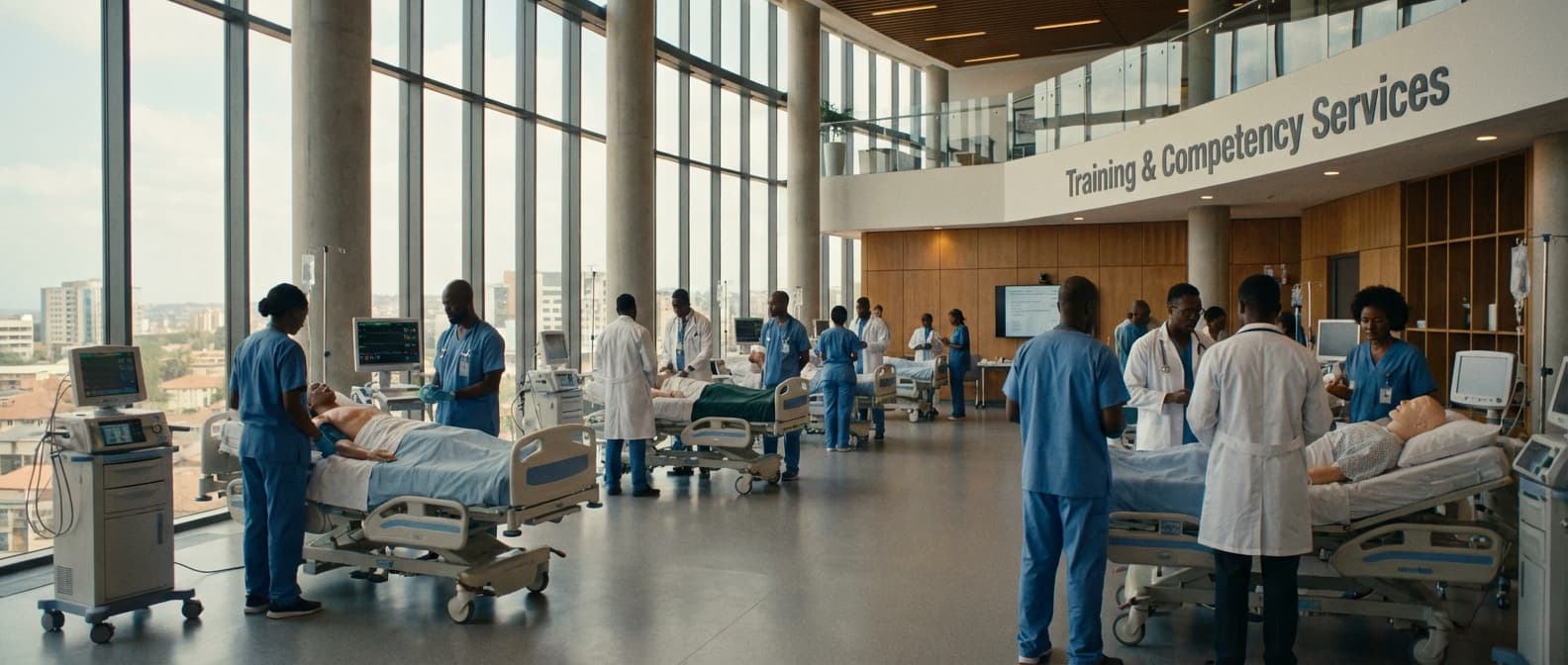
Biomedical Engineering First-Line Support Training Service in Ethiopia
Engineering Excellence & Technical Support
Biomedical Engineering First-Line Support Training Service High-standard technical execution following OEM protocols and local regulatory frameworks.
Localized Medical Equipment Expertise
Gain hands-on proficiency with commonly used medical devices in Ethiopian healthcare settings, including essential diagnostics, patient monitoring systems, and basic surgical equipment. Our training focuses on practical troubleshooting and preventative maintenance tailored to local environmental conditions and resource availability.
Bridging the Technology Gap
Develop skills in maintaining and troubleshooting a range of medical technologies, from legacy analog systems to emerging digital platforms. Learn best practices for equipment integration, network connectivity troubleshooting, and basic cybersecurity relevant to biomedical devices, ensuring uninterrupted patient care.
Compliance and Documentation Mastery
Understand and apply Ethiopian regulatory requirements for medical equipment maintenance and safety. Master essential documentation practices, including accurate repair logs, calibration records, and incident reporting, ensuring adherence to standards and facilitating efficient hospital operations.
What Is Biomedical Engineering First-line Support Training Service In Ethiopia?
Biomedical Engineering First-Line Support Training Service in Ethiopia refers to a structured educational program designed to equip individuals with the foundational knowledge and practical skills necessary to perform initial troubleshooting, maintenance, and basic repair of medical equipment within healthcare facilities in Ethiopia. This service aims to enhance the operational readiness and reliability of medical devices, thereby improving patient care outcomes and reducing downtime. It addresses the critical need for localized, accessible, and competent technical support for a wide range of medical equipment prevalent in Ethiopian healthcare settings.
| Target Audience | Involvement/Role | Typical Use Cases |
|---|---|---|
| Healthcare Facility Technicians/Assistants: Individuals already employed in hospitals, clinics, or health centers, often with general technical backgrounds. | Performing routine checks, basic troubleshooting, and minor repairs on a daily basis. Acting as the initial point of contact for equipment issues. | Ensuring vital signs monitors are functional for patient monitoring, troubleshooting a non-responsive infusion pump before it impacts patient therapy, performing routine cleaning and battery checks on portable diagnostic devices, reporting significant equipment failures to higher-level support. |
| Entry-Level Biomedical Technicians: Individuals aspiring to a career in biomedical equipment maintenance. | Gaining fundamental practical skills and foundational knowledge to support more experienced engineers and gradually taking on more responsibility. | Assisting senior technicians with PM tasks, performing basic diagnostic tests under supervision, learning to identify common fault codes on medical equipment. |
| Clinical Staff (Nurses, Doctors): In resource-limited settings, clinical personnel may receive basic training for immediate on-site operational checks. | Performing simple user-level checks, power cycle troubleshooting, and reporting issues accurately to the technical support team. | Verifying that a patient monitor is powered on and displaying basic parameters, confirming that a nebulizer has power and is producing aerosol, initiating the reporting process for a malfunctioning piece of equipment. |
| Biomedical Engineering Students: Students undergoing formal biomedical engineering education. | Supplementing theoretical knowledge with hands-on experience, understanding the practical challenges of medical equipment maintenance in a real-world context. | Practicing preventive maintenance procedures on donated or older equipment, participating in simulated troubleshooting scenarios, observing and assisting with real service calls. |
Key Components of Biomedical Engineering First-Line Support Training:
- Equipment Familiarization: Understanding the fundamental principles of operation, common components, and intended uses of various medical devices (e.g., vital signs monitors, ECG machines, infusion pumps, basic diagnostic imaging equipment).
- Preventive Maintenance (PM): Training on scheduled inspections, cleaning, lubrication, calibration checks, and functional testing to ensure equipment reliability and longevity.
- Basic Troubleshooting: Developing systematic approaches to identify and resolve common equipment malfunctions, including power issues, connectivity problems, and user-interface errors.
- Routine Servicing and Minor Repairs: Performing straightforward maintenance tasks and replacing easily accessible components (e.g., fuses, filters, batteries, certain cables).
- Safety Procedures: Adherence to electrical safety, mechanical safety, and infection control protocols during equipment handling and servicing.
- Documentation and Reporting: Proper recording of maintenance activities, diagnostic findings, and completed repairs for asset management and historical data analysis.
- Resource Management: Understanding the use of basic tools, test equipment, and access to relevant technical documentation (manuals, schematics).
- Escalation Protocols: Knowing when and how to escalate complex issues to specialized biomedical engineers or external service providers.
Who Needs Biomedical Engineering First-line Support Training Service In Ethiopia?
Biomedical Engineering First-Line Support Training Service in Ethiopia is crucial for enhancing the operational efficiency, safety, and longevity of medical equipment across various healthcare facilities. This specialized training equips individuals with the fundamental skills to perform routine maintenance, troubleshoot common issues, and ensure the proper functioning of a wide range of biomedical devices, thereby minimizing downtime and improving patient care.
| Customer Type | Relevant Departments | Key Responsibilities of Trainees |
|---|---|---|
| Hospitals (Public and Private) | Biomedical Engineering Department, Clinical Engineering Department, Maintenance Department, Technical Support Units, Radiology Department, Anesthesiology Department, Intensive Care Unit (ICU), Operating Theatre (OT) | Performing preventive maintenance on medical devices (e.g., vital signs monitors, infusion pumps, ECG machines). Troubleshooting and resolving basic equipment malfunctions. Performing basic calibration. Ensuring safe operation of equipment. Documenting maintenance activities. Escalating complex issues to senior engineers. |
| Clinics and Health Centers | Clinic Administration, Technical Staff | Ensuring basic functionality of essential medical equipment. Identifying and reporting equipment problems. Performing simple cleaning and disinfection of devices. Maintaining inventory of consumables for equipment. |
| Medical Equipment Suppliers and Service Providers | Field Service Technicians, Technical Support Teams, Installation and Commissioning Teams | Providing initial on-site support for newly installed equipment. Conducting routine maintenance as per manufacturer guidelines. Performing first-level troubleshooting for clients. Educating end-users on basic equipment operation and maintenance. Preparing service reports. |
| Government Health Ministries and Agencies | Procurement Department, Logistics and Maintenance Units, Public Health Program Management | Overseeing the maintenance and functionality of equipment in public health facilities. Training regional technical staff. Developing maintenance protocols and standards. Monitoring equipment performance across the public health system. |
| Non-Governmental Organizations (NGOs) in the Health Sector | Program Implementation Teams, Logistics and Equipment Management | Ensuring the operational readiness of medical equipment in project areas. Training local staff in partner facilities on basic equipment care. Managing and maintaining donated or procured medical devices. |
| Academic and Research Institutions with Medical Laboratories | Laboratory Technicians, Research Assistants, Facilities Management | Maintaining the functionality of laboratory equipment (e.g., centrifuges, microscopes, incubators). Performing basic troubleshooting for common laboratory instruments. Ensuring the safety and proper calibration of research equipment. |
Target Customers and Departments for Biomedical Engineering First-Line Support Training in Ethiopia
- Hospitals (Public and Private)
- Clinics and Health Centers
- Medical Equipment Suppliers and Service Providers
- Government Health Ministries and Agencies
- Non-Governmental Organizations (NGOs) in the Health Sector
- Academic and Research Institutions with Medical Laboratories
Biomedical Engineering First-line Support Training Service Process In Ethiopia
This document outlines the workflow for the Biomedical Engineering First-Line Support Training Service Process in Ethiopia. It details the steps involved from the initial inquiry by a healthcare facility to the successful execution and completion of the training.
| Phase | Key Activities | Responsible Parties | Deliverables/Outcomes |
|---|---|---|---|
| Phase 1: Initiation & Planning | Inquiry, Initial Consultation, Scope Definition, Proposal Development, Proposal Review & Negotiation | Healthcare Facility, Training Service Provider (TSP) | Defined training needs, Training Proposal, Agreed Scope |
| Phase 2: Agreement & Preparation | Formal Agreement & Contract, Training Schedule & Logistics Planning, Pre-Training Communication | Healthcare Facility, TSP | Signed Contract, Confirmed Schedule, Prepared Participants |
| Phase 3: Execution & Delivery | Training Delivery, On-Site Support (if applicable) | TSP Trainers, Healthcare Facility Participants | Knowledge Transfer, Skill Development, Practical Application |
| Phase 4: Closure & Follow-Up | Post-Training Assessment & Feedback, Training Report & Certification, Follow-Up & Evaluation | TSP, Healthcare Facility | Trained Personnel, Training Report, Certificates, Sustained Skill Application, Impact Evaluation |
Biomedical Engineering First-Line Support Training Service Process in Ethiopia
- Inquiry & Needs Assessment: Healthcare facilities express interest in first-line biomedical engineering support training.
- Initial Consultation & Scope Definition: A meeting is held to understand the facility's specific needs, existing equipment, technical capacity, and desired training outcomes.
- Proposal Development & Submission: A tailored training proposal is created, outlining objectives, curriculum, duration, trainers, costs, and expected benefits.
- Proposal Review & Negotiation: The healthcare facility reviews the proposal, and discussions may occur to refine aspects before agreement.
- Formal Agreement & Contract: A service agreement or contract is signed by both parties, formalizing the terms and conditions of the training.
- Training Schedule & Logistics Planning: Dates, times, venue, participant lists, and any necessary equipment or materials are finalized.
- Pre-Training Communication: Participants are informed about the training schedule, prerequisites, and any required preparation.
- Training Delivery (Execution): The training is conducted by qualified biomedical engineering trainers, covering theoretical concepts and practical hands-on sessions.
- On-Site Support & Mentorship (Optional/Integrated): During or immediately after the training, trainers may provide on-site support for initial application of learned skills.
- Post-Training Assessment & Feedback: Trainees undergo assessments to gauge learning, and feedback is collected from participants and the facility.
- Training Report & Certification: A comprehensive training report is prepared, detailing the content covered, participant performance, and recommendations. Certificates of completion are issued.
- Follow-Up & Evaluation: A follow-up mechanism is established to monitor the sustained application of skills and to evaluate the long-term impact of the training.
Biomedical Engineering First-line Support Training Service Cost In Ethiopia
Biomedical Engineering First-Line Support Training in Ethiopia is a critical service for ensuring the proper functioning and maintenance of medical equipment within healthcare facilities. The cost of such training is influenced by several factors, leading to a range of pricing in the local currency (Ethiopian Birr - ETB). Understanding these factors is essential for hospitals, clinics, and medical device suppliers when budgeting for this vital training.
Key Pricing Factors:
- Scope and Depth of Training: Basic troubleshooting and routine maintenance will be less expensive than comprehensive training covering advanced diagnostics, calibration, and repair of complex equipment. The number of medical device categories covered (e.g., imaging, patient monitoring, laboratory equipment) also impacts cost.
- Duration of Training: Longer, more in-depth training programs naturally incur higher costs due to increased instructor time, materials, and potential overhead.
- Trainer Expertise and Qualifications: Highly experienced biomedical engineers with specialized certifications and a proven track record will command higher fees.
- Training Modality: On-site training at the healthcare facility offers convenience but may incur travel and accommodation costs for trainers. Off-site training at a dedicated training center can be more standardized but may require participants to travel. Online or blended learning options can sometimes offer cost efficiencies.
- Training Materials and Resources: The provision of comprehensive manuals, practical kits, simulation tools, and access to specialized software will add to the overall cost.
- Number of Participants: While often priced per participant, bulk discounts may be available for larger groups from a single institution. Conversely, very small, customized sessions might have a higher per-person rate.
- Accreditation and Certification: Training programs leading to recognized certifications (if applicable) may involve additional fees for examination and administration.
- Provider Reputation and Demand: Established training providers with a strong reputation and high demand may be able to charge a premium.
- Customization: Tailoring the training content to specific equipment models or the unique needs of a healthcare facility will likely increase the cost.
Estimated Cost Ranges (in Ethiopian Birr - ETB):
The following are estimated ranges for Biomedical Engineering First-Line Support Training in Ethiopia. These figures are indicative and can vary significantly based on the factors listed above. It is always recommended to obtain specific quotes from training providers.
- Basic Troubleshooting & Routine Maintenance (1-2 days): ETB 5,000 - 15,000 per participant.
- Intermediate Support & Basic Repair (3-5 days): ETB 10,000 - 30,000 per participant.
- Comprehensive First-Line Support (5+ days, multiple equipment types): ETB 20,000 - 60,000+ per participant.
- On-site Group Training (per day, estimated for a group of 10-15): ETB 15,000 - 50,000+ (excluding participant-specific fees).
These costs typically cover trainer fees, training materials, and basic administrative costs. Additional charges might apply for specialized equipment access, certification exams, and extended support.
| Training Level/Type | Estimated Duration (Days) | Estimated Cost Range (ETB per participant) |
|---|---|---|
| Basic Troubleshooting & Routine Maintenance | 1-2 | 5,000 - 15,000 |
| Intermediate Support & Basic Repair | 3-5 | 10,000 - 30,000 |
| Comprehensive First-Line Support (Multiple Equipment) | 5+ | 20,000 - 60,000+ |
| On-site Group Training (Daily Rate, est. for 10-15 participants) | N/A | 15,000 - 50,000+ (excluding participant fees) |
Factors Influencing Biomedical Engineering First-Line Support Training Costs in Ethiopia
- Scope and Depth of Training
- Duration of Training
- Trainer Expertise and Qualifications
- Training Modality (On-site, Off-site, Online)
- Training Materials and Resources
- Number of Participants
- Accreditation and Certification
- Provider Reputation and Demand
- Customization of Content
Affordable Biomedical Engineering First-line Support Training Service Options
This document outlines affordable biomedical engineering first-line support training service options, emphasizing value bundles and cost-saving strategies to empower organizations to effectively train their technical staff. First-line support is critical for maintaining the operational readiness of medical devices, ensuring patient safety, and minimizing downtime. Investing in robust, yet cost-effective training is paramount.
| Training Strategy | Description | Value Proposition | Cost-Saving Potential |
|---|---|---|---|
| Online Self-Paced Modules | Pre-recorded video lessons, interactive quizzes, and downloadable resources covering core concepts. Accessible anytime, anywhere. | Flexibility, scalability, and immediate access to foundational knowledge. | Reduced travel and instructor costs. No need for dedicated training facilities. High volume delivery at minimal incremental cost. |
| Blended Learning Packages | Combines online modules with occasional live virtual workshops or webinars for Q&A, case studies, and expert interaction. | Balances self-sufficiency with targeted expert guidance and interactive learning. | Lower cost than fully in-person training. Efficient use of instructor time. Reduces travel expenses compared to fully in-person. |
| Train-the-Trainer Programs | Empowers experienced internal staff or selected individuals to deliver in-house training, becoming subject matter experts and trainers. | Builds internal capacity, fosters knowledge retention, and creates a sustainable training ecosystem. | Significant long-term cost savings by eliminating external trainer fees. Knowledge remains within the organization. Scalable to large teams. |
| Vendor-Specific Training (Bundled) | Negotiating bundled training packages with medical device manufacturers for essential equipment. Often includes access to specialized online resources. | Ensures up-to-date, accurate training directly from the source, crucial for complex devices. | Reduced per-course fees when purchasing multiple modules or devices. Potential for bulk discounts. Avoids redundant training efforts. |
| Open-Source & Community Resources | Leveraging free online courses, forums, and documentation from reputable biomedical engineering communities. | Provides access to a broad range of information and diverse perspectives at no direct cost. | Zero direct financial outlay for materials. Relies on internal time for curation and synthesis of information. |
| Subscription-Based Learning Platforms | Access to a library of on-demand training courses and resources for a recurring subscription fee. | Provides continuous learning opportunities and access to a wide variety of topics. | Predictable monthly/annual costs. Can be more economical than individual course purchases for ongoing training needs. |
Key Components of Affordable First-Line Support Training
- Core Device Knowledge: Understanding fundamental principles of common medical equipment (e.g., vital signs monitors, infusion pumps, ECG machines).
- Basic Troubleshooting Techniques: Developing systematic approaches to identify and resolve common device malfunctions.
- Preventive Maintenance Fundamentals: Learning essential routine checks and cleaning procedures to extend device lifespan.
- Safety Protocols: Adhering to strict safety guidelines for device handling, patient interaction, and infection control.
- Documentation and Reporting: Mastering accurate record-keeping for service calls, repairs, and inventory management.
- Introduction to Regulatory Compliance: Basic awareness of relevant regulations (e.g., FDA, HIPAA) impacting device maintenance.
- Soft Skills for User Interaction: Effective communication with clinical staff and patient empathy.
Verified Providers In Ethiopia
Finding reliable and credentialed healthcare providers is crucial for ensuring quality care in Ethiopia. This document outlines why Franance Health stands out as a leading choice for verified healthcare services, backed by their rigorous credentialing processes and commitment to excellence.
| Credential Type | Franance Health Verification Standard | Importance for Patients |
|---|---|---|
| Medical License | Up-to-date and valid license from recognized Ethiopian medical boards. | Ensures legal and authorized practice of medicine. |
| Educational Degrees | Verification of degrees from accredited medical schools and post-graduate institutions. | Confirms foundational knowledge and specialized training. |
| Professional Certifications | Validation of relevant specialist certifications and ongoing professional development. | Indicates expertise in specific medical fields. |
| Clinical Experience | Review of past practice history and references. | Assesses practical application of skills and experience. |
| Ethical Conduct | Checks for disciplinary records or complaints with professional bodies. | Guarantees adherence to ethical medical practices and patient welfare. |
| Patient Feedback/Reviews | Incorporation of patient satisfaction data and feedback into ongoing evaluations. | Provides insight into patient experience and communication skills. |
Why Franance Health is the Best Choice for Verified Providers in Ethiopia
- Rigorous Vetting Process: Franance Health employs a multi-stage credentialing process that goes beyond basic qualifications. This includes verifying medical licenses, educational degrees from accredited institutions, professional certifications, and a history of ethical practice.
- Comprehensive Background Checks: To ensure patient safety and trust, Franance Health conducts thorough background checks on all its affiliated providers, screening for any disciplinary actions or malpractice claims.
- Continuous Performance Monitoring: Franance Health doesn't stop at initial vetting. They continuously monitor the performance of their network providers through patient feedback, peer reviews, and adherence to established clinical guidelines.
- Commitment to Quality Standards: By partnering with providers who meet stringent quality benchmarks, Franance Health guarantees a high level of care, focusing on patient outcomes, safety, and satisfaction.
- Access to Specialized Expertise: Their network includes a diverse range of specialists, ensuring that patients have access to the best possible care for their specific medical needs, from primary care to complex surgical interventions.
- Transparency and Accountability: Franance Health is committed to transparency in its provider network. Patients can be confident that the healthcare professionals they are referred to have been thoroughly vetted and meet the highest professional standards.
- Enhanced Patient Trust: The verified status of Franance Health providers fosters greater trust and confidence among patients, reducing anxiety and improving the overall healthcare experience.
Scope Of Work For Biomedical Engineering First-line Support Training Service
This Scope of Work (SOW) outlines the requirements for a comprehensive Biomedical Engineering First-Line Support Training Service. The service aims to equip support personnel with the necessary technical knowledge and practical skills to effectively handle initial troubleshooting, basic maintenance, and escalation of issues related to biomedical equipment. The training will focus on common medical devices, diagnostic tools, and therapeutic equipment, emphasizing safety protocols, regulatory compliance, and efficient problem resolution.
| Technical Deliverable | Description | Standard Specification/Requirement | Associated Tools/Resources |
|---|---|---|---|
| Training Curriculum Development | Creation of a structured and comprehensive training program covering theoretical concepts and practical applications. | Curriculum must be modular, scalable, and adaptable to different equipment categories. Includes learning objectives, content outlines, and assessment strategies. | Learning Management System (LMS), Subject Matter Experts (SMEs) in biomedical engineering, instructional designers. |
| Training Material Creation | Development of all necessary training materials, including presentations, manuals, handbooks, and visual aids. | Materials must be clear, concise, and visually engaging. Includes diagrams, flowcharts, and real-world case studies. Must be available in digital and/or print formats. | Authoring tools (e.g., PowerPoint, Word), graphic design software, video editing software. |
| Hands-on Training Modules | Practical sessions allowing trainees to work with actual or simulated biomedical equipment. | Modules must simulate common operational scenarios and failure modes. Emphasis on safe operation, disassembly/reassembly (where applicable), and diagnostic procedures. | Access to a range of common biomedical equipment (e.g., patient monitors, infusion pumps, ECG machines, defibrillators), simulation equipment, specialized tools (multimeters, oscilloscopes, diagnostic software). |
| Troubleshooting Scenarios and Simulations | Development and execution of realistic troubleshooting scenarios to test and reinforce problem-solving skills. | Scenarios should cover a spectrum of complexities, from simple errors to multi-component failures. Includes guided walkthroughs and independent problem-solving exercises. | Scenario documentation, simulated fault injection tools, diagnostic test sets. |
| Assessment and Evaluation Tools | Creation of tools to measure trainee comprehension and skill proficiency. | Includes pre- and post-training assessments, practical skill demonstrations, and knowledge-based quizzes. Must align with learning objectives. | Assessment forms, rubrics for skill evaluation, online quiz platforms. |
| Trainer Qualification and Certification | Ensuring trainers possess the requisite technical expertise and pedagogical skills. | Trainers must have a minimum of 5 years of experience in biomedical engineering support and demonstrable training delivery capabilities. Certification process for trainers may be required. | Trainer resumes, interview process, demonstration of training delivery, professional certifications. |
| Post-Training Support and Refresher Courses | Provision of ongoing support and opportunities for continued learning. | Includes access to online resources, Q&A forums, and scheduled refresher courses for emerging technologies or updated procedures. Minimum of one refresher course per year. | Online knowledge base, dedicated support portal, webinar platforms. |
| Reporting and Documentation | Regular reporting on training progress, trainee performance, and overall program effectiveness. | Reports should include metrics on attendance, assessment scores, and feedback. Final report summarizing the training outcomes and recommendations. | Reporting templates, data analysis tools. |
Key Objectives of the Training Service
- Enhance the competence of first-line support staff in identifying and resolving common biomedical equipment malfunctions.
- Instill a strong understanding of patient safety protocols and regulatory requirements (e.g., FDA, HIPAA) in the context of biomedical equipment support.
- Develop practical skills in performing basic preventive maintenance and calibration procedures.
- Improve the ability to accurately document support activities and escalate complex issues to appropriate technical teams.
- Foster effective communication and collaboration with clinical staff and other stakeholders.
- Standardize troubleshooting methodologies and best practices across the organization.
Service Level Agreement For Biomedical Engineering First-line Support Training Service
This Service Level Agreement (SLA) outlines the response times and uptime guarantees for the Biomedical Engineering First-Line Support Training Service. This SLA applies to all accredited training modules and resources provided through the designated online platform and authorized support channels.
| Service Component | Uptime Guarantee | Response Time (Business Hours) | Target Resolution Time (Business Hours) |
|---|---|---|---|
| Online Training Platform Accessibility | 99.5% | 2 hours | 8 business hours (for minor issues/queries) 24 business hours (for complex issues requiring investigation) |
| Access to Training Modules | 99.5% | 1 business hour | 4 business hours (for access issues) |
| Email Support | N/A (response time based) | 4 business hours | 8 business hours (for minor issues/queries) 24 business hours (for complex issues requiring investigation) |
| Ticketing System | N/A (response time based) | 2 business hours | 8 business hours (for minor issues/queries) 24 business hours (for complex issues requiring investigation) |
| Live Chat Support | N/A (response time based) | 15 minutes | Immediately addressed or escalated for follow-up |
Service Scope and Definitions
- Service: Biomedical Engineering First-Line Support Training Service.
- Training Modules: All officially recognized and updated training content related to first-line support for biomedical equipment.
- Support Channels: Designated email support, dedicated ticketing system, and live chat (during business hours).
- Business Hours: Monday to Friday, 9:00 AM to 5:00 PM (Local Time Zone), excluding public holidays.
- Uptime: The percentage of time the online training platform and its core functionalities are accessible and operational.
- Response Time: The maximum time taken to acknowledge a reported issue or request from the user.
- Resolution Time: The maximum time taken to provide a solution or a workaround for a reported issue.
Frequently Asked Questions

Ready when you are
Let's scope your Biomedical Engineering First-Line Support Training Service in Ethiopia project in Ethiopia.

Scaling healthcare logistics and technical systems across the entire continent.