
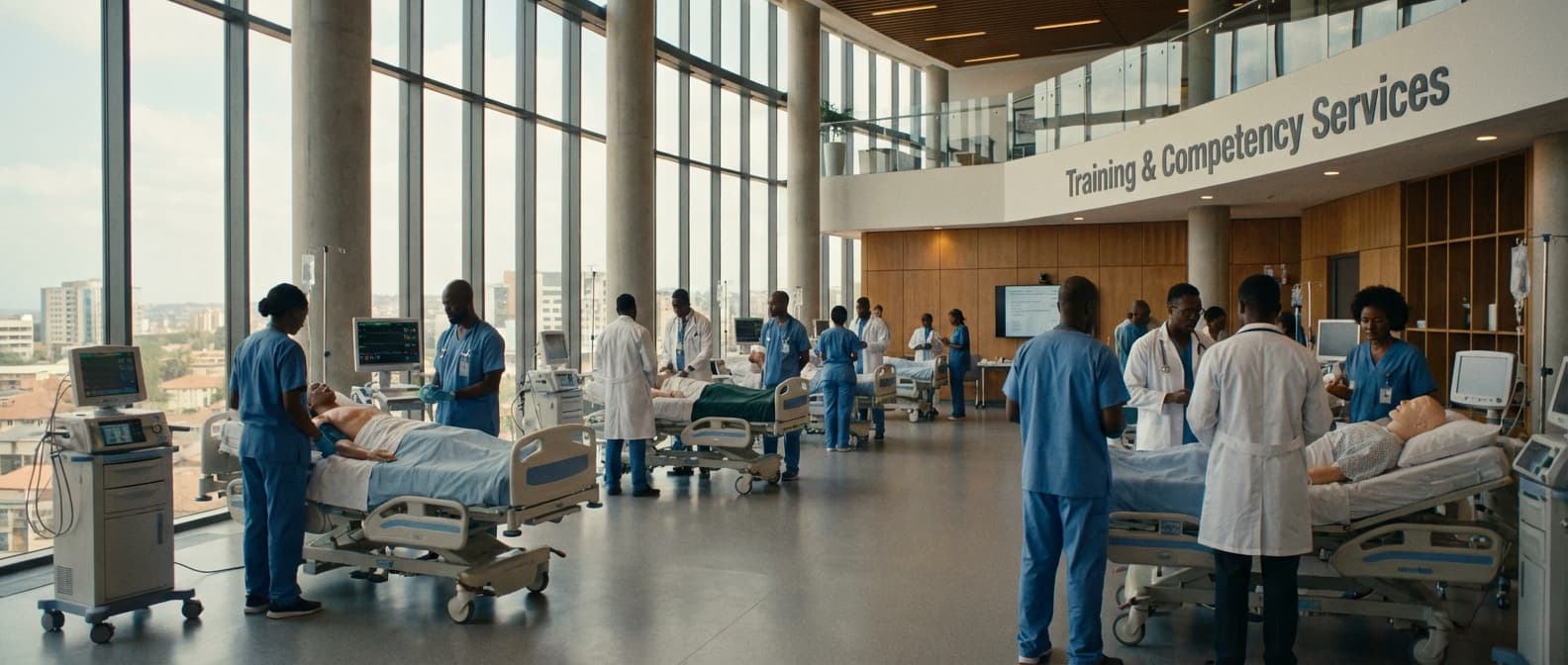
Anesthesia Workstation User Training Service in Ethiopia
Engineering Excellence & Technical Support
Anesthesia Workstation User Training Service High-standard technical execution following OEM protocols and local regulatory frameworks.
Mastering Advanced Airway Management
Gain hands-on proficiency with the workstation's advanced ventilation modes, crucial for complex pediatric and adult airway cases. Understand waveform analysis and ventilator troubleshooting for optimal patient safety.
Optimizing Inhalational Anesthetic Delivery
Learn precise techniques for agent selection, vaporizer calibration, and real-time concentration monitoring. Maximize anesthetic efficiency, minimize waste, and ensure rapid emergence with our expert-led sessions.
Integrated Hemodynamic Monitoring & Intervention
Deepen your understanding of the workstation's integrated vital signs monitoring, including ECG, SpO2, EtCO2, and invasive/non-invasive blood pressure. Learn to interpret trends and respond effectively to hemodynamic instability.
What Is Anesthesia Workstation User Training Service In Ethiopia?
Anesthesia Workstation User Training Service in Ethiopia refers to specialized educational programs designed to equip healthcare professionals with the knowledge and practical skills necessary for the safe and effective operation of modern anesthesia workstations within the Ethiopian healthcare context. This service is crucial for ensuring patient safety, optimizing anesthetic delivery, and maximizing the utility of sophisticated medical equipment in resource-limited settings. The training typically encompasses theoretical understanding of workstation components, physiological principles, anesthetic gas management, ventilation modes, monitoring capabilities, and emergency procedures, alongside hands-on practice with simulated or actual equipment. Emphasis is placed on adapting best practices to local infrastructure, available consumables, and common clinical scenarios encountered in Ethiopian hospitals and clinics. The objective is to foster competency, reduce the incidence of user-related errors, and promote efficient utilization of expensive capital equipment, thereby improving the quality and accessibility of surgical and perioperative care.
| Stakeholder Group | Rationale for Training | Specific Needs Addressed |
|---|---|---|
| Anesthesiologists | To ensure advanced proficiency in operating complex workstations, optimize anesthetic delivery, and manage critically ill patients. | Advanced ventilation strategies, complex monitoring interpretation, integration of advanced drug delivery systems, troubleshooting of intricate malfunctions. |
| Anesthesia Residents and Trainees | To build foundational knowledge and practical skills for safe and competent anesthetic practice as they progress through their training. | Basic operation of the workstation, understanding of core physiological principles, safe initiation and maintenance of anesthesia, basic monitoring. |
| Certified Nurse Anesthetists (CNAs) / Anesthetic Officers | To provide competent and safe anesthesia care, especially in settings where anesthesiologists may be scarce. | Safe operation of standard ventilation modes, essential patient monitoring, emergency preparedness, drug administration, basic troubleshooting. |
| Biomedical Engineers/Technicians | To facilitate effective maintenance, repair, and calibration of anesthesia workstations. | Understanding of internal mechanisms, diagnostic procedures, calibration protocols, preventive maintenance schedules, identification of critical components. |
| Nursing Staff (Operating Room) | To understand the role of the anesthesia workstation in patient care and to assist the anesthesia provider. | Basic understanding of workstation functions, safe patient positioning around the equipment, awareness of alarm conditions, basic supply management. |
Key Components of Anesthesia Workstation User Training Service:
- Theoretical curriculum covering anesthesia machine principles, gas physics, pharmacokinetics, and pharmacodynamics.
- Detailed instruction on ventilation modes (e.g., volume control, pressure control, SIMV, PSV), their application, and parameter selection.
- Hands-on operation of specific anesthesia workstation models, including setup, calibration, and troubleshooting.
- Understanding and utilization of integrated patient monitoring systems (e.g., ECG, SpO2, EtCO2, NIBP, invasive BP).
- Safe handling and management of anesthetic gases (e.g., volatile agents, nitrous oxide) and medical gases.
- Emergency procedures, including management of equipment failure, difficult airway, and adverse patient responses.
- Infection control protocols related to anesthesia equipment.
- Preventive maintenance and basic troubleshooting of workstation components.
- Adaptation of training to prevalent disease patterns and surgical procedures in Ethiopia.
- Competency assessment and certification upon successful completion of training.
Who Needs Anesthesia Workstation User Training Service In Ethiopia?
In Ethiopia, the demand for anesthesia workstation user training is driven by the continuous need to ensure safe and effective anesthetic delivery. As healthcare facilities acquire new and advanced anesthesia machines, or as existing ones undergo upgrades, proper training for healthcare professionals becomes paramount. This training is crucial for minimizing medical errors, optimizing equipment performance, and ultimately improving patient outcomes. Furthermore, the growth of specialized surgical procedures and the increasing complexity of patient care necessitate a highly skilled anesthesia workforce capable of operating sophisticated workstations with confidence and precision.
| Target Customer | Key Departments Requiring Training |
|---|---|
| Public Hospitals | Anesthesiology Department, Operating Room (OR) Staff, Intensive Care Unit (ICU), Emergency Department (ED) |
| Private Hospitals | Anesthesiology Department, Operating Room (OR) Staff, Intensive Care Unit (ICU), Emergency Department (ED), Pain Management Clinics |
| Tertiary Care Centers | Anesthesiology Department (including sub-specialties like cardiac, neuro, pediatric anesthesia), Operating Room (OR) Staff, Intensive Care Unit (ICU), Post-Anesthesia Care Unit (PACU), Emergency Department (ED), Pain Management Services |
| Regional Hospitals | Anesthesiology Department, Operating Room (OR) Staff, Intensive Care Unit (ICU), Emergency Department (ED) |
| Specialized Surgical Centers (e.g., Cardiac Centers, Cancer Centers) | Anesthesiology Department (with focus on the center's specialization), Operating Room (OR) Staff, Intensive Care Unit (ICU), Post-Anesthesia Care Unit (PACU) |
| Medical Training Institutions (Universities, Colleges) | Medical Students (during their anesthesia rotations), Anesthesiology Residents, Nursing Students (specializing in critical care or perioperative nursing), Faculty and Instructors in Anesthesiology and Critical Care Programs |
| Non-Governmental Organizations (NGOs) and International Aid Organizations | Medical Teams operating in various healthcare facilities, Staff in facilities supported by the organizations, Local healthcare professionals being trained by the NGOs |
Target Customers and Departments for Anesthesia Workstation User Training Service in Ethiopia:
- Hospitals (Public and Private)
- Tertiary Care Centers
- Regional Hospitals
- Specialized Surgical Centers
- Medical Training Institutions
Anesthesia Workstation User Training Service Process In Ethiopia
This document outlines the typical workflow for Anesthesia Workstation User Training Services in Ethiopia, from the initial inquiry to the final execution of the training. The process is designed to ensure that healthcare professionals receive comprehensive and effective training on operating anesthesia workstations, thereby enhancing patient safety and care quality. The service involves multiple stages, including understanding client needs, developing customized training plans, delivering the training, and providing post-training support.
| Stage | Description | Key Activities | Deliverables/Outcomes | Responsible Party |
|---|---|---|---|---|
| The initial contact from a healthcare facility or individual seeking training for anesthesia workstations. | Client contacts service provider; Initial discussion of training requirements, target audience, number of participants, specific workstation models, desired learning outcomes, and logistical constraints. | Understanding of client's specific training needs, identification of workstation models to be covered, preliminary scope of training. | Healthcare Facility/Individual (Client), Training Service Provider |
| Based on the needs assessment, a formal proposal is prepared. | Detailed breakdown of training modules, duration, methodology (theory, practical, simulation), trainer qualifications, and proposed schedule; Cost estimation and quotation generation. | Formal training proposal, detailed quotation outlining costs, proposed training schedule, and terms and conditions. | Training Service Provider |
| Formalizing the service agreement and confirming training dates. | Client reviews and accepts the proposal; Negotiation of terms if necessary; Signing of a service agreement/contract; Final confirmation of training dates, times, and location (on-site or virtual platform details). | Signed service agreement, confirmed training schedule, and logistics plan. | Healthcare Facility/Individual (Client), Training Service Provider |
| Development or customization of training resources. | Creation or adaptation of user manuals, presentation slides, practical exercises, case studies, and assessment tools relevant to the specific anesthesia workstation models and the Ethiopian healthcare context. | Comprehensive and tailored training materials (digital or print). | Training Service Provider |
| The core phase where training is conducted. | Theoretical sessions covering workstation principles, functions, safety features, and troubleshooting; Hands-on practical sessions with actual or simulated workstations; Demonstration of core procedures and emergency management; Q&A sessions. | Trained healthcare professionals with enhanced knowledge and practical skills in operating anesthesia workstations. | Training Service Provider (Trainer), Healthcare Professionals (Trainees) |
| Evaluating the effectiveness of the training and gathering participant input. | Post-training assessments (quizzes, practical evaluations, simulations) to gauge understanding and skill proficiency; Collection of feedback from participants and their supervisors on the training content, delivery, and relevance. | Assessment results indicating competency levels; Feedback report for continuous improvement. | Training Service Provider, Healthcare Facility/Individual (Client) |
| Formalizing the completion of the training. | Issuance of certificates of completion to participants who have successfully met the training objectives; Provision of a training report to the facility summarizing the training conducted, participant performance, and any recommendations. | Certificates of attendance/completion; Training completion report. | Training Service Provider |
| Ensuring continued learning and addressing any ongoing needs. | Providing access to support channels for queries; Offering refresher courses or advanced training modules if required; Follow-up to assess the impact of training on clinical practice and patient outcomes; Sharing updates on new features or protocols. | Sustained competency, improved workstation utilization, and enhanced patient safety; Long-term relationship with the client. | Training Service Provider, Healthcare Facility/Individual (Client) |
Anesthesia Workstation User Training Service Process in Ethiopia: Workflow Stages
- Inquiry & Needs Assessment
- Proposal Development & Quotation
- Agreement & Scheduling
- Training Material Preparation
- On-site/Remote Training Delivery
- Competency Assessment & Feedback
- Certification & Documentation
- Post-Training Support & Follow-up
Anesthesia Workstation User Training Service Cost In Ethiopia
The cost of anesthesia workstation user training services in Ethiopia can vary significantly based on several key factors. These factors influence the overall pricing structure and the range of costs a healthcare facility might expect to encounter. Understanding these elements is crucial for accurate budgeting and selecting the most appropriate training provider. The pricing is typically quoted in Ethiopian Birr (ETB).
| Service Component | Estimated Price Range (ETB) | Notes |
|---|---|---|
| Basic User Training (1-2 Days) | 15,000 - 40,000 | Covers fundamental operations, safety features, and basic setup. Often for new staff or basic models. |
| Comprehensive User Training (3-5 Days) | 35,000 - 80,000 | Includes advanced features, troubleshooting, maintenance basics, and scenario-based learning. For complex models or in-depth understanding. |
| On-Site Training (per day, inclusive of trainer's fee) | 10,000 - 25,000 | This is a daily rate and does not include travel/accommodation for remote locations. The total cost will be the daily rate multiplied by the training duration. |
| Per Participant Fee (for larger groups, in addition to base fee) | 1,000 - 3,000 | Some providers may add a per-participant fee for groups exceeding a certain number (e.g., 10 participants). |
| Certification Fee | 5,000 - 15,000 | For accredited certification upon successful completion of assessments. |
| Training Materials (per participant, if not included) | 500 - 2,000 | Covers printed manuals, handouts, etc. |
| Travel & Accommodation (for trainer, if applicable) | Variable (depends on location) | Will be added to the total cost for on-site training outside the provider's immediate vicinity. |
Key Pricing Factors for Anesthesia Workstation User Training in Ethiopia:
- Provider Type: Training can be delivered by the workstation manufacturer's certified trainers, authorized local distributors, independent training companies, or specialized medical equipment training institutions. Manufacturer-led training is often the most expensive but may offer the highest level of expertise and direct access to product knowledge. Local distributors might offer competitive pricing with good on-site support. Independent providers might be more flexible on pricing but require careful vetting.
- Training Duration and Depth: The length of the training program directly impacts the cost. A basic introductory session for new users will be less expensive than a comprehensive program covering advanced features, troubleshooting, and maintenance. The number of days or hours dedicated to the training is a primary cost driver.
- Number of Participants: While some providers might have a flat fee per session, others charge per participant. Larger groups might benefit from economies of scale, but significantly large groups might require additional trainers or longer training periods, increasing the overall cost.
- Location of Training: On-site training at the healthcare facility is generally more expensive than off-site training at a dedicated training center. This is due to travel, accommodation, and logistical costs for the trainers. Remote or online training options, if available and suitable for the workstation, can be more cost-effective.
- Workstation Complexity and Model: More advanced and complex anesthesia workstations with a wider range of functionalities and integrated technologies will often require more specialized and, therefore, more expensive training. The specific model and its features will influence the curriculum and the trainer's expertise needed.
- Training Materials and Resources: The cost of training materials, such as user manuals, handouts, simulation equipment, and any software licenses for simulators, can be included in the overall fee or charged separately. High-quality, comprehensive materials contribute to a better learning experience and can add to the price.
- Certification and Assessment: If the training includes formal certification or assessment, this often comes with an additional cost. This can involve written exams, practical evaluations, and the issuance of certificates.
- Post-Training Support: Some training packages may include a period of post-training support, such as follow-up consultations or access to a technical helpline. The duration and scope of this support will affect the price.
- Customization of Training: Tailoring the training program to the specific needs and existing skill levels of the healthcare facility's staff can incur additional development costs for the training provider, potentially leading to a higher price.
Affordable Anesthesia Workstation User Training Service Options
This document outlines user training service options for affordable anesthesia workstations, focusing on value bundles and cost-saving strategies. Effective training is crucial for safe and efficient operation of any medical equipment, and for budget-conscious facilities, optimizing training expenditure is paramount. We present a range of service levels designed to meet diverse needs and financial considerations.
| Service Option | Description | Value Proposition | Cost-Saving Strategy | Typical Price Range (USD) |
|---|---|---|---|---|
| Basic Online Module | Self-paced, web-based modules covering core functionalities, safety features, and basic troubleshooting. | Accessible anytime, anywhere; ideal for foundational knowledge and refreshers. | Significantly lower cost than in-person training; reduces travel expenses. | $100 - $300 per user |
| Virtual Instructor-Led Training (VILT) | Live, interactive sessions conducted remotely via video conferencing. Allows for Q&A and tailored discussions. | Combines the flexibility of online learning with real-time instructor interaction. | More cost-effective than on-site, while still offering direct engagement. | $300 - $700 per session (group rates available) |
| On-Site Basic Training | A dedicated instructor travels to your facility for hands-on training with your specific workstation. | Direct, practical experience with your equipment; immediate feedback. | Cost-effective for training multiple staff members simultaneously at one location. | $1,500 - $3,000 per day + travel expenses |
| Value Bundle: 'Foundation & Facility' | Includes a set of basic online modules for all staff, plus one VILT session for a small group to cover advanced topics or specific workflow integration. | Provides comprehensive foundational knowledge and targeted interactive learning. | Bundled pricing offers a discount compared to purchasing separately; efficient knowledge dissemination. | $800 - $1,500 per facility |
| Value Bundle: 'Expert & Enable' | Combines on-site training for a core team with a 'train-the-trainer' component, plus access to an online knowledge base and quarterly refresher webinars. | Empowers internal expertise for long-term cost savings and consistent training quality. | Maximizes ROI by creating internal trainers; ongoing access to updated content. | $5,000 - $10,000 (initial investment, ongoing support fees may apply) |
| Customized Training Solutions | Tailored training programs developed in consultation with your facility to address unique needs, advanced procedures, or specific device integrations. | Guarantees that training is perfectly aligned with your operational requirements. | Strategic investment for facilities with specialized or complex anesthesia protocols. | Quoted per project, generally higher upfront but can yield significant long-term efficiencies. |
Key Considerations for Affordable Anesthesia Workstation Training
- Needs Assessment: Tailor training to the specific skill level of your staff (e.g., experienced anesthesiologists vs. new residents) and the features of your chosen workstation.
- Scalability: Opt for training solutions that can be scaled up or down based on your facility's current and future staffing and equipment needs.
- Remote vs. On-Site: Evaluate the cost-benefit of on-site training (personalized but potentially more expensive) versus remote/online options (flexible and often more economical).
- Train-the-Trainer Programs: Invest in training a few key personnel who can then train other staff members, creating an internal knowledge base and reducing ongoing external training costs.
- Maintenance and Support Integration: Consider training packages that include ongoing technical support and software updates, as these can prevent costly downtime and errors.
- Certification and Compliance: Ensure training meets all relevant regulatory and accreditation requirements for your region.
Verified Providers In Ethiopia
Ensuring access to reliable and high-quality healthcare is paramount for individuals and communities in Ethiopia. This pursuit of excellence leads many to seek out Verified Providers, those who have undergone rigorous credentialing processes and consistently demonstrate a commitment to best practices. Among these distinguished institutions, Franance Health stands out, not just as a provider, but as a beacon of trust and quality. Their dedication to patient well-being, coupled with stringent internal standards and verifiable accreditations, makes them the optimal choice for comprehensive healthcare needs in Ethiopia. This document will delve into the specific credentials that underpin Franance Health's reputation and illuminate why they represent the best choice for your healthcare journey.
| Credential/Attribute | Franance Health's Distinction | Why it Matters for Patients |
|---|---|---|
| Ministry of Health Accreditation | Fully compliant and regularly inspected by the Federal Ministry of Health of Ethiopia. | Guarantees adherence to national healthcare regulations, ensuring safe and effective medical services. |
| International Quality Certifications (e.g., ISO) | Actively pursuing or holding recognized international quality management system certifications. | Demonstrates a commitment to standardized processes, operational efficiency, and consistent service delivery on a global scale. |
| Medical Staff Qualifications | All physicians, nurses, and allied health professionals are licensed, certified, and possess advanced degrees/specializations relevant to their practice. | Ensures you are treated by competent and knowledgeable experts, leading to accurate diagnoses and effective treatment plans. |
| Specialized Training & Competency | Regular in-house and external training programs focusing on the latest medical advancements, patient care techniques, and ethical guidelines. | Provides access to the most up-to-date medical knowledge and skills, crucial for complex or emerging health conditions. |
| Equipment & Technology Verification | Investment in and maintenance of modern medical equipment and diagnostic tools, regularly calibrated and certified. | Facilitates accurate diagnostics, minimally invasive procedures, and advanced treatment options, improving patient outcomes and recovery times. |
| Patient Safety & Infection Control | Implementation of comprehensive patient safety programs, including stringent infection control protocols, medication management, and error reporting systems. | Minimizes risks of healthcare-associated infections and medical errors, prioritizing your well-being and security during your treatment. |
| Patient Feedback Mechanisms | Proactive collection and analysis of patient feedback to identify areas for improvement and ensure a positive patient experience. | Reflects a commitment to patient satisfaction and continuous service enhancement, ensuring your voice is heard and acted upon. |
Why Franance Health Excels as a Verified Provider in Ethiopia
- Rigorous Adherence to National Healthcare Standards and Regulations
- International Accreditation and Certification Recognition
- Highly Qualified and Experienced Medical Professionals
- Commitment to Continuous Professional Development
- State-of-the-Art Facilities and Advanced Medical Technology
- Robust Patient Safety Protocols and Quality Assurance Measures
- Positive Patient Outcomes and High Satisfaction Rates
- Ethical Practice and Patient-Centric Approach
Scope Of Work For Anesthesia Workstation User Training Service
This Scope of Work (SOW) outlines the requirements for providing comprehensive user training services for the Anesthesia Workstation. The training aims to equip healthcare professionals with the necessary knowledge and skills to safely and effectively operate the Anesthesia Workstation. This document details the technical deliverables, standard specifications, and expected outcomes of the training program.
| Deliverable Type | Description | Standard Specifications | Format/Delivery Method | Acceptance Criteria |
|---|---|---|---|---|
| Training Curriculum | A structured curriculum outlining all training modules, learning objectives, and content. | Modules to cover hardware overview, user interface navigation, ventilation modes, gas delivery, monitoring, drug delivery, alarm system, safety features, and troubleshooting. Tailored to different user roles (e.g., anesthesiologist, nurse anesthetist, technician). | Digital document (PDF) and presentation slides. | Curriculum approved by the client prior to commencement of training. |
| Training Materials | Comprehensive user manuals, quick reference guides, and supplementary learning resources. | Materials to be clear, concise, accurate, and visually engaging. Include diagrams, flowcharts, and practical examples. Available in the primary language of the users. | Digital (PDF) and printed copies. Online portal access for supplementary resources. | Materials reviewed and accepted by the client for accuracy and comprehensiveness. |
| Hands-on Training Sessions | Practical training sessions utilizing the actual Anesthesia Workstation or a highly accurate simulator. | Sessions to be conducted by certified and experienced trainers. Low trainer-to-trainee ratio to ensure individual attention. Realistic patient scenarios to be simulated. | In-person, on-site sessions. Scheduled at the client's facility. | Successful completion of practical exercises and demonstrated proficiency by trainees. |
| Competency Assessment | Evaluation methods to assess user understanding and practical skills. | Includes written quizzes, practical demonstrations, and case-based scenarios. Assessment to cover all key learning objectives. | Digital and/or paper-based assessments. Practical assessments observed and documented. | Minimum passing score of 85% on written assessments and successful demonstration of all critical skills in practical assessments. |
| Training Report | A detailed report summarizing the training activities, participant performance, and recommendations. | Report to include attendance records, assessment scores, identified training gaps, and suggestions for further training or support. | Digital document (PDF). | Report submitted within 7 days of training completion and reviewed by the client. |
| Post-Training Support | Provision of ongoing support to users after the initial training. | Includes access to a dedicated support hotline, email support, and potential for follow-up refresher training sessions. Response time for support inquiries within 24 business hours. | Phone, email, and scheduled virtual/on-site sessions. | Client satisfaction with the responsiveness and effectiveness of post-training support. |
| Certification of Completion | Issuance of certificates to participants who successfully complete the training and assessments. | Certificates to be personalized with the participant's name, training date, and scope of training. | Digital (PDF) and/or printed certificates. | Certificates issued within 5 business days of successful completion. |
Objectives of the Training Program
- To ensure users understand the core functionalities and features of the Anesthesia Workstation.
- To provide hands-on experience with the Anesthesia Workstation in a simulated environment.
- To train users on proper setup, configuration, and calibration procedures.
- To educate users on safe operating practices, including alarm management and troubleshooting.
- To familiarize users with emergency procedures and contingency plans.
- To cover routine maintenance and basic troubleshooting of the Anesthesia Workstation.
- To enable users to confidently integrate the Anesthesia Workstation into their clinical workflow.
- To ensure compliance with relevant healthcare regulations and manufacturer guidelines.
Service Level Agreement For Anesthesia Workstation User Training Service
This Service Level Agreement (SLA) outlines the performance standards for the Anesthesia Workstation User Training Service provided by [Your Company Name]. It defines the expected response times for support requests and the guaranteed uptime of the online training platform. This SLA aims to ensure a high-quality and reliable training experience for all users.
| Service Component | Service Level Objective (SLO) | Measurement Period | Reporting Frequency |
|---|---|---|---|
| Support Request Response Time (Severity 1: Critical System Failure) | Acknowledge and begin troubleshooting within 30 minutes. | Per incident | N/A (Immediate acknowledgement) |
| Support Request Response Time (Severity 2: Major Functionality Impaired) | Acknowledge and begin troubleshooting within 2 business hours. | Per incident | N/A (Immediate acknowledgement) |
| Support Request Response Time (Severity 3: Minor Issue or Inquiry) | Acknowledge and begin troubleshooting within 8 business hours. | Per incident | N/A (Immediate acknowledgement) |
| Training Platform Uptime Guarantee | 99.5% Uptime | Monthly | Monthly |
| Scheduled Maintenance Windows | Scheduled maintenance will occur during off-peak hours (e.g., weekends, late nights) with at least 48 hours prior notification. | As needed | N/A |
Key Definitions
- Anesthesia Workstation User Training Service: The comprehensive online and/or in-person training program designed to educate healthcare professionals on the safe and effective operation of specific anesthesia workstations.
- Training Platform: The online portal or software application used to deliver the Anesthesia Workstation User Training Service, including modules, simulations, assessments, and administrative features.
- Support Request: A formal request for assistance submitted by a user regarding technical issues, content clarification, or access problems with the Training Platform or training materials.
- Response Time: The maximum time allowed for [Your Company Name] to acknowledge and begin addressing a Support Request after it has been submitted through the designated channels.
- Resolution Time: The maximum time allowed for [Your Company Name] to resolve a Support Request, either by providing a solution or a clear plan for resolution.
- Uptime: The percentage of time the Training Platform is accessible and functional for users to access training content and features.
- Downtime: The percentage of time the Training Platform is inaccessible or non-functional for users.
Frequently Asked Questions

Ready when you are
Let's scope your Anesthesia Workstation User Training Service in Ethiopia project in Ethiopia.

Scaling healthcare logistics and technical systems across the entire continent.