
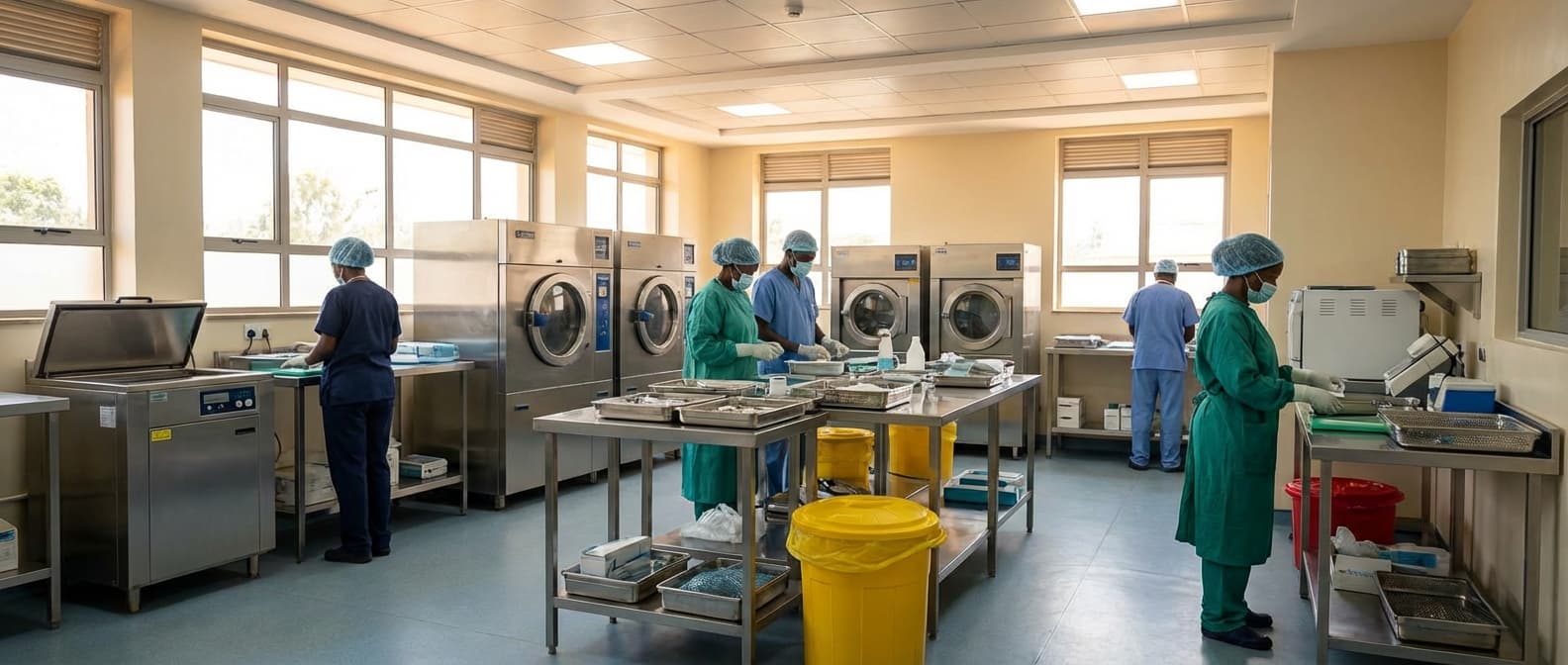
Medical Equipment Decontamination Service (Pre-Repair/Pre-Relocation) in Ethiopia
Engineering Excellence & Technical Support
Medical Equipment Decontamination Service (Pre-Repair/Pre-Relocation) High-standard technical execution following OEM protocols and local regulatory frameworks.
Advanced Decontamination Protocols
We employ multi-stage decontamination processes, utilizing EPA-approved disinfectants and validated sterilization techniques to eliminate bioburden and ensure patient safety for all medical equipment prior to repair or relocation in Ethiopia.
Expertly Trained Technicians
Our specialized team is rigorously trained in handling a wide array of medical devices and understands the critical importance of proper decontamination to prevent cross-contamination and maintain equipment integrity throughout Ethiopia's diverse healthcare landscape.
Comprehensive Chain of Custody
We provide detailed, auditable documentation for every piece of equipment, from collection to decontamination and release, ensuring full transparency and compliance with Ethiopian healthcare regulations for pre-repair and pre-relocation services.
What Is Medical Equipment Decontamination Service (Pre-repair/pre-relocation) In Ethiopia?
Medical Equipment Decontamination Service (Pre-Repair/Pre-Relocation) in Ethiopia refers to the process of rendering medical devices safe for handling, maintenance, or transport by removing or neutralizing biological, chemical, and radioactive contaminants. This critical service ensures the well-being of technicians, engineers, healthcare personnel, and the environment by mitigating risks associated with potential exposure to hazardous materials present on or within the equipment. The decontamination process employs validated methods and agents to achieve a state of reduced bioburden, thereby preventing cross-contamination and ensuring compliance with safety protocols. This service is an integral part of the equipment lifecycle management framework within Ethiopian healthcare facilities and service providers.
| Service Beneficiary | Requirement Rationale | Typical Use Cases |
|---|---|---|
| Biomedical Engineers and Technicians | To ensure personal safety by eliminating exposure to potentially infectious biological materials (blood, bodily fluids), chemical agents (disinfectants, cleaning solvents), or radioactive isotopes prior to invasive maintenance or repair procedures. | Repairing diagnostic imaging equipment (X-ray, CT scanners) with potential for bodily fluid contamination. Servicing laboratory analyzers that process biological samples. Performing preventative maintenance on surgical instruments with potential for bioburden. Handling equipment used in isolation wards or for patients with infectious diseases. |
| Equipment Relocation Teams | To prevent the spread of pathogens and hazardous substances during the physical movement of medical devices between departments, facilities, or during asset disposition. This is crucial for maintaining biosecurity and regulatory compliance. | Transferring equipment from a closed ward or a facility with active outbreaks. Moving equipment for renovations or facility upgrades. Disposing of decommissioned medical devices. Shipping equipment for refurbishment or sale. |
| Healthcare Facilities (Hospitals, Clinics, Laboratories) | To uphold stringent infection control standards, protect staff and patients from iatrogenic infections, and ensure compliance with national and international health regulations. Proactive decontamination reduces the risk of equipment-borne transmissions. | As a routine pre-maintenance procedure for all critical medical equipment. Implementing enhanced decontamination protocols for equipment used in high-risk environments. Managing equipment after a suspected or confirmed contamination event. Ensuring adherence to healthcare accreditation standards. |
| Medical Equipment Manufacturers/Distributors (Service Departments) | To maintain the integrity and safety of returned equipment for repair, refurbishment, or warranty assessment. This protects their service personnel and prevents contamination of their facilities. | Receiving equipment for depot repair. Handling returned units for quality control assessment. Servicing loaner or demo equipment. |
Key Components of Medical Equipment Decontamination Service (Pre-Repair/Pre-Relocation)
- Initial Assessment and Classification: Determining the type and level of contamination (e.g., biological fluids, chemical residues, radioactive isotopes).
- Disassembly (if applicable): Partial or full dismantling of the equipment to access all contaminated areas.
- Cleaning: Removal of gross soil and debris using appropriate detergents and mechanical action.
- Disinfection/Sterilization: Application of chemical disinfectants or physical methods (e.g., autoclaving, irradiation, if applicable and compatible with equipment materials) to eliminate or inactivate microorganisms.
- Decontamination of Specific Components: Targeted treatment of internal components, tubing, and interfaces.
- Rinsing and Drying: Removal of cleaning/disinfection agents and ensuring the equipment is dry to prevent microbial regrowth.
- Verification and Validation: Confirmation of the effectiveness of the decontamination process through appropriate testing (e.g., microbial sampling, chemical residue analysis).
- Documentation: Comprehensive recording of the decontamination process, including agents used, procedures followed, and verification results.
Who Needs Medical Equipment Decontamination Service (Pre-repair/pre-relocation) In Ethiopia?
In Ethiopia, specialized medical equipment decontamination services are crucial for a range of facilities and departments that handle or interact with medical devices. These services are particularly vital before any repair or relocation of equipment to ensure the safety of technicians, prevent cross-contamination, and maintain the integrity of the equipment itself. The target customers for these services are diverse, encompassing both public and private healthcare providers, as well as entities involved in the broader medical ecosystem.
| Target Customer Type | Specific Departments/Units Requiring Service | Reason for Decontamination (Pre-Repair/Pre-Relocation) |
|---|---|---|
| Hospitals | Operating Theatres, Intensive Care Units (ICUs), Emergency Rooms, Sterilization Units (CSSD), Radiology Departments, Laboratory Departments, Renal Dialysis Units, Physiotherapy Departments | Protecting repair technicians from biohazards, preventing transmission of infections to other patients, ensuring clean environment for sensitive equipment maintenance, maintaining hygiene standards during equipment transfer. |
| Specialty Clinics | Dental Clinics (dental chairs, x-ray units), Ophthalmology Clinics (slit lamps, ophthalmoscopes), Physiotherapy Clinics (treatment machines, exercise equipment), Dialysis Centers (dialysis machines) | Preventing exposure to bodily fluids, safeguarding specialized instruments, ensuring operational integrity before moving or servicing. |
| Diagnostic Laboratories | Microbiology Labs, Pathology Labs, Chemistry Labs (analyzers, microscopes) | Preventing contamination of samples, protecting lab personnel and service engineers from infectious agents, ensuring accurate diagnostic results. |
| Medical Equipment Suppliers/Distributors | Showrooms, Warehousing, Delivery Departments | Ensuring equipment is clean and safe for demonstration or installation, preventing contamination during transport to clients. |
| Medical Equipment Repair & Maintenance Companies | Workshop, Field Service Teams | Protecting their technicians from biohazards, preventing cross-contamination of equipment in their workshops, ensuring safe handling during on-site repairs. |
| NGOs & Government Health Agencies | Clinics, mobile health units, public health facilities | Ensuring safety and hygiene in often resource-constrained settings, protecting vulnerable populations, facilitating effective deployment of equipment. |
Who Needs Medical Equipment Decontamination Service (Pre-Repair/Pre-Relocation) in Ethiopia?
- Hospitals (both public and private)
- Specialty Clinics (e.g., dental, ophthalmology, physiotherapy, dialysis centers)
- Diagnostic Laboratories
- Medical Equipment Suppliers and Distributors
- Medical Equipment Repair and Maintenance Companies
- Non-Governmental Organizations (NGOs) involved in healthcare delivery
- Government Health Ministries and their sub-agencies
- Research Institutions with medical equipment
- Emergency Medical Services (EMS) providers
Medical Equipment Decontamination Service (Pre-repair/pre-relocation) Process In Ethiopia
The Medical Equipment Decontamination Service (Pre-Repair/Pre-Relocation) in Ethiopia ensures that medical devices are safely cleaned and sterilized before they are sent for repair or moved to a new location. This process is critical for preventing the spread of infections, protecting personnel handling the equipment, and ensuring the integrity of the repair or relocation process. The workflow begins with an inquiry from a healthcare facility and concludes with the validated decontamination of the equipment. This comprehensive service is essential for maintaining a safe and efficient healthcare environment.
| Phase | Key Activities | Responsible Party | Documentation |
|---|---|---|---|
| Inquiry & Planning | Receive inquiry, gather equipment details, provide quotation, schedule service, plan logistics. | Healthcare Facility, Decontamination Service Provider | Inquiry form, Quotation, Service Agreement |
| Collection & Receipt | Pick-up or receive equipment, initial inspection and documentation. | Decontamination Service Provider | Equipment Log/Receipt Form, Pre-decontamination Inspection Report |
| Decontamination Process | Disassembly (if needed), cleaning, rinsing, sterilization/disinfection, drying. | Decontamination Technicians | Process Logs, Chemical Usage Records, Biological Indicator Results (if used) |
| Quality Assurance & Certification | Final inspection, validation checks, packaging, certificate issuance. | Quality Assurance Officer, Decontamination Service Provider | Quality Control Checklist, Decontamination Certificate |
| Return & Handover | Package equipment securely, transport to facility/repairer, handover with certificate. | Decontamination Service Provider, Healthcare Facility/Repairer | Delivery Note, Signed Decontamination Certificate |
Medical Equipment Decontamination Service (Pre-Repair/Pre-Relocation) Workflow in Ethiopia
- {"title":"Step 1: Inquiry and Initial Assessment","description":"A healthcare facility contacts the decontamination service provider with a request for decontamination of specific medical equipment slated for repair or relocation."}
- {"title":"Step 2: Information Gathering and Quotation","description":"The service provider gathers detailed information about the equipment (type, model, intended use, known contaminants). A quotation is provided based on the complexity and volume of the decontamination."}
- {"title":"Step 3: Scheduling and Logistics Planning","description":"Once the quotation is accepted, a schedule is agreed upon. Logistics for pick-up (if applicable) or drop-off of the equipment are planned, considering the facility's operational needs."}
- {"title":"Step 4: Equipment Collection/Receipt","description":"The decontamination team collects the equipment from the healthcare facility or the facility transports the equipment to the decontamination center. Proper documentation of the equipment received is maintained."}
- {"title":"Step 5: Pre-Decontamination Inspection and Documentation","description":"A thorough visual inspection is conducted to assess the condition of the equipment and identify any visible contamination. The initial state and any existing damage are documented."}
- {"title":"Step 6: Disassembly (if required)","description":"For complex equipment, selective disassembly might be necessary to access all potentially contaminated areas for thorough cleaning and sterilization."}
- {"title":"Step 7: Cleaning and Rinsing","description":"The equipment is subjected to a multi-stage cleaning process using appropriate detergents and disinfectants, followed by thorough rinsing to remove all residues."}
- {"title":"Step 8: Sterilization/High-Level Disinfection","description":"Depending on the equipment type and its intended use, appropriate sterilization methods (e.g., autoclaving, chemical sterilization) or high-level disinfection are applied. The chosen method adheres to international and national standards."}
- {"title":"Step 9: Drying and Packaging","description":"The decontaminated equipment is thoroughly dried to prevent microbial growth. It is then carefully packaged to maintain its sterile status during transport for repair or relocation."}
- {"title":"Step 10: Validation and Quality Assurance","description":"A quality assurance check is performed to ensure the decontamination process was successful. This may include visual inspection, biological indicator testing (if applicable), and documentation review."}
- {"title":"Step 11: Issuance of Decontamination Certificate","description":"A formal certificate of decontamination is issued, detailing the equipment, the methods used, and the date of decontamination. This certificate serves as proof of compliance."}
- {"title":"Step 12: Equipment Return/Release","description":"The decontaminated and certified equipment is returned to the healthcare facility or released to the designated repair service/relocation team, accompanied by the decontamination certificate."}
Medical Equipment Decontamination Service (Pre-repair/pre-relocation) Cost In Ethiopia
The cost of medical equipment decontamination services in Ethiopia, especially for pre-repair or pre-relocation purposes, can vary significantly. This service is crucial for ensuring the safety of technicians and the environment, as well as preventing cross-contamination. The pricing is influenced by several key factors, making it difficult to provide a single, definitive price. It's essential for healthcare facilities to obtain quotes from multiple reputable decontamination service providers to get an accurate estimate for their specific needs. The local currency for these transactions is the Ethiopian Birr (ETB).
| Equipment Category (Example) | Estimated Cost Range (ETB) | Notes |
|---|---|---|
| Small Diagnostic Devices (e.g., thermometer, pulse oximeter) | 200 - 800 ETB | Standard disinfection procedures. May be bundled for multiple items. |
| Medium-Sized Laboratory Equipment (e.g., centrifuge, microscope) | 700 - 2,500 ETB | Requires more detailed cleaning and potentially specialized disinfectants. |
| Large Medical Imaging Equipment (e.g., X-ray machine components, ultrasound probe) | 1,500 - 6,000 ETB | Complexity and size influence cost. Specialized cleaning agents might be needed. |
| Surgical Instruments (sets) | 500 - 2,000 ETB (per set) | Depends on the number of instruments and material. Sterilization protocols are key. |
| Ventilators and Anesthesia Machines (internal components) | 2,000 - 8,000+ ETB | Highly complex, requiring expert disassembly and meticulous decontamination of internal circuits. |
| Equipment with Suspected Biohazard Contamination | 3,000 - 10,000+ ETB | Significant increase due to strict containment, PPE, and specialized waste disposal. |
| Equipment with Chemical Residues | 2,500 - 9,000+ ETB | Dependent on the type and hazard level of the chemical. Specific neutralizing agents may be required. |
Key Pricing Factors for Medical Equipment Decontamination in Ethiopia:
- Type and Complexity of Equipment: More complex equipment with intricate parts, internal components, or specialized materials will generally incur higher decontamination costs. Devices with multiple surfaces or areas that require specialized cleaning agents will also be priced accordingly.
- Level of Contamination: The degree to which the equipment is contaminated (e.g., presence of biohazards, chemical residues, radioactive materials) directly impacts the time, resources, and expertise required for decontamination. More severe contamination necessitates more thorough and potentially specialized procedures.
- Size and Weight of Equipment: Larger and heavier equipment can be more challenging to move, handle, and thoroughly decontaminate, which can translate to higher labor and equipment usage costs.
- Decontamination Method Required: Different types of contamination necessitate different decontamination methods. For example, steam sterilization, chemical disinfection, or specialized containment procedures will have varying costs associated with them. The choice of method is dictated by the type of contaminant and the material of the equipment.
- Urgency of Service: If the decontamination is required on an urgent or emergency basis, providers may charge a premium for expedited services. This often involves adjusting schedules and potentially incurring overtime labor costs.
- Location and Accessibility: The geographical location of the equipment within Ethiopia can influence costs due to transportation expenses and the availability of specialized personnel in remote areas. Difficult-to-access locations may incur additional charges.
- Provider's Expertise and Reputation: Established decontamination service providers with a proven track record, specialized certifications, and experienced technicians may command higher prices due to their reliability and quality of service.
- Volume of Service: For larger-scale decontamination projects involving multiple pieces of equipment, providers might offer volume discounts. Conversely, a single, small item might have a higher per-unit cost due to fixed overheads.
- Specific Biohazard or Chemical Handling Requirements: If the equipment has been exposed to highly infectious diseases, potent chemicals, or radioactive isotopes, specialized containment, disposal, and highly trained personnel will be required, significantly increasing the cost.
Affordable Medical Equipment Decontamination Service (Pre-repair/pre-relocation) Options
Ensuring medical equipment is properly decontaminated before repair or relocation is crucial for preventing the spread of infections and maintaining a safe healthcare environment. Our Affordable Medical Equipment Decontamination Service offers cost-effective solutions through strategically designed value bundles and smart cost-saving strategies. We understand the budgetary constraints faced by many healthcare facilities, and our aim is to provide high-quality decontamination without compromising on safety or efficiency. By optimizing our processes and offering flexible service packages, we empower you to manage your equipment maintenance and relocation needs responsibly.
| Cost-Saving Strategy | Description | Benefit |
|---|---|---|
| Bundled Services | Combine decontamination with other services like minor repairs or temporary storage. | Reduces logistical costs and administrative overhead. Potentially better pricing for combined service packages. |
| Scheduled Service Agreements | Commit to regular decontamination schedules for your equipment fleet. | Predictable budgeting, priority scheduling, and potential discounts for long-term contracts. Prevents urgent, higher-cost emergency decontamination. |
| Tiered Service Levels | Choose decontamination packages based on the specific needs and risk level of each equipment piece. | Avoids overspending on unnecessary services for lower-risk equipment. Tailors costs to actual requirements. |
| Off-Peak Scheduling | Schedule decontamination during non-peak hours or days when possible. | May result in lower service rates and reduced disruption to your operational flow. |
| Volume Discounts | For large quantities of equipment needing decontamination, we offer tiered discounts based on volume. | Significant per-unit cost reduction for larger decontamination projects. |
| Proactive Assessment & Planning | Work with our team to assess your equipment and anticipate decontamination needs. | Allows for more efficient scheduling and resource allocation, leading to better pricing and reduced emergency service costs. |
Value Bundles for Decontamination Services
- {"title":"Basic Decontamination Package","description":"Ideal for routine maintenance or minor equipment. Includes standard cleaning, disinfection protocols, and basic visual inspection for decontamination efficacy."}
- {"title":"Standard Decontamination Package","description":"Recommended for pre-repair and standard relocation needs. Encompasses thorough surface disinfection, removal of visible contaminants, and documentation of the process."}
- {"title":"Advanced Decontamination Package","description":"Suited for high-risk equipment or situations requiring enhanced decontamination. Includes specialized cleaning agents, bioburden testing (optional add-on), and detailed reporting."}
- {"title":"Bulk Decontamination Bundle","description":"Designed for facilities with multiple equipment pieces needing decontamination simultaneously. Offers significant per-unit cost savings when services are bundled."}
- {"title":"Scheduled Maintenance Decontamination","description":"Proactive decontamination integrated into your regular equipment maintenance schedule. Ensures ongoing hygiene and can reduce the urgency and cost of future decontamination needs."}
Verified Providers In Ethiopia
In Ethiopia's rapidly evolving healthcare landscape, identifying trustworthy and competent healthcare providers is paramount. Franance Health stands out as a beacon of reliability, offering a network of verified providers who meet stringent quality standards. This ensures that patients receive the highest quality of care, backed by professionalism and ethical practice. Choosing Franance Health means opting for peace of mind, knowing you are in the hands of credentialed and dedicated healthcare professionals committed to your well-being.
| Category | Franance Health Advantage | Patient Benefit |
|---|---|---|
| Provider Vetting | Strict credentialing, license verification, and background checks. | Assurance of competence and legitimacy. |
| Quality Standards | Adherence to evidence-based medicine and patient safety protocols. | Receiving effective and safe medical treatments. |
| Professional Conduct | Emphasis on ethical practices, communication, and patient rights. | Trustworthy and respectful healthcare experience. |
| Specialty Access | Comprehensive network of generalists and specialists. | Easy access to the right expertise for any medical condition. |
| Ease of Access | Streamlined platform for finding and booking appointments. | Saving time and reducing stress in seeking medical care. |
Why Franance Health Providers Are the Best Choice in Ethiopia:
- Rigorous Credentialing Process: Franance Health implements a thorough vetting system for all its partner providers, ensuring they possess valid licenses, certifications, and a proven track record.
- Commitment to Quality Care: Our verified providers adhere to international best practices and are dedicated to delivering patient-centered, evidence-based medical services.
- Professionalism and Ethics: We prioritize healthcare professionals who demonstrate the highest standards of integrity, empathy, and respect in their patient interactions.
- Diverse Network of Specialists: Franance Health connects you with a wide range of medical specialists, from general practitioners to highly specialized surgeons, catering to all your healthcare needs.
- Accessibility and Convenience: Our platform simplifies the process of finding and booking appointments with trusted healthcare professionals across Ethiopia.
Scope Of Work For Medical Equipment Decontamination Service (Pre-repair/pre-relocation)
This Scope of Work (SOW) outlines the requirements for medical equipment decontamination services. The service is intended to prepare medical equipment for either repair or relocation. The primary objective is to ensure that the equipment is free from biological and chemical contaminants that could pose a risk to personnel, the environment, or the equipment itself during subsequent handling. The decontamination process must adhere to strict safety protocols and industry best practices. Technical deliverables will include a detailed decontamination certificate for each piece of equipment, confirming the completion and efficacy of the service. Standard specifications will govern the cleaning agents, methods, personal protective equipment (PPE), waste disposal, and documentation required.
| Category | Specification/Requirement | Notes/Rationale |
|---|---|---|
| Decontamination Agents | Must be hospital-grade, EPA-registered, and approved for use on medical equipment materials (e.g., plastics, metals, electronics). Specific agents will be selected based on the type of contamination and equipment materials. | Ensures efficacy without damaging equipment or posing health risks. |
| Decontamination Methods | Includes wiping, spraying, fogging (if applicable and safe for electronics), and immersion (for certain components if permitted and feasible). Methods will be tailored to the equipment's design and sensitivity. | Maximizes coverage and effectiveness while minimizing risk of damage. |
| Personal Protective Equipment (PPE) | Technicians must wear appropriate PPE including gloves (nitrile or similar), eye protection (goggles or face shield), respiratory protection (if indicated by agent MSDS or risk assessment), and protective clothing (gowns or coveralls). | Protects technicians from exposure to contaminants and cleaning agents. |
| Waste Disposal | All contaminated materials (wipes, gloves, packaging) must be collected, bagged, labeled, and disposed of as biohazardous or chemical waste in accordance with local, state, and federal regulations. | Prevents the spread of contamination and ensures regulatory compliance. |
| Documentation | Each decontaminated equipment item must be accompanied by a Decontamination Certificate. The certificate will include: equipment identification (model, serial number), date of decontamination, decontamination agent used, method employed, technician's name/ID, and a declaration of successful decontamination. A comprehensive service report detailing all activities, any encountered issues, and waste disposal manifests will be provided. | Provides auditable proof of service and ensures traceability. |
| Environmental Controls | Decontamination will be performed in a designated, well-ventilated area. If required, HEPA filtration will be used to control airborne particles. | Minimizes environmental contamination and ensures technician safety. |
| Equipment Handling | Care must be taken during decontamination to avoid damage to sensitive components, connectors, and displays. Equipment should be powered off and unplugged before cleaning, unless otherwise specified by the manufacturer. | Preserves the integrity and functionality of the medical equipment. |
| Post-Decontamination Verification | Visual inspection for residual contaminants. If specific bio-indicators are required for validation, this will be detailed in a separate addendum. | Confirms the effectiveness of the decontamination process. |
Key Services and Deliverables
- Pre-repair decontamination of medical equipment.
- Pre-relocation decontamination of medical equipment.
- Inspection and assessment of equipment for visible contamination.
- Application of approved decontamination agents and methods.
- Cleaning of accessible surfaces, internal components (where applicable and safe), and accessories.
- Drying of equipment post-decontamination.
- Packaging of decontaminated equipment (if specified in contract).
- Disposal of contaminated waste according to regulatory guidelines.
- Issuance of a Decontamination Certificate for each equipment item.
- Provision of a detailed service report.
Service Level Agreement For Medical Equipment Decontamination Service (Pre-repair/pre-relocation)
This Service Level Agreement (SLA) outlines the response times and uptime guarantees for the Medical Equipment Decontamination Service provided by [Your Company Name] (hereinafter referred to as 'Provider') for [Client Name] (hereinafter referred to as 'Client'). This SLA specifically covers decontamination services required prior to equipment repair or relocation.
| Service Component | Service Level Objective (SLO) | Measurement Method | Client Notification Process |
|---|---|---|---|
| Response Time (On-Site) | Within 4 business hours for critical equipment; Within 8 business hours for non-critical equipment, from confirmed SR receipt. | Provider logs SR receipt time and logs time of technician arrival at Client site. | Automated email notification upon SR submission and technician dispatch. Client portal for SR status tracking. |
| Response Time (Off-Site/Facility) | Within 1 business day from equipment receipt at Provider's facility. | Provider logs equipment receipt time and logs time decontamination process begins. | Automated email notification upon equipment receipt. Client portal for SR status tracking. |
| Completion Time (On-Site) | Varies based on equipment complexity and decontamination method, typically within 4-8 business hours after initiation. | Provider logs initiation time and completion time of decontamination. | Automated email notification upon completion. Client portal for SR status tracking. |
| Completion Time (Off-Site/Facility) | Varies based on equipment complexity and decontamination method, typically within 24-48 business hours after initiation. | Provider logs initiation time and completion time of decontamination. | Automated email notification upon completion. Client portal for SR status tracking. |
| Uptime Guarantee | 99.5% availability of decontamination services during Client's operational hours (Monday-Friday, 8 AM - 6 PM, excluding public holidays). | Monitored by Provider's internal scheduling and dispatch system. Downtime is defined as the inability to schedule or perform a requested decontamination service due to Provider-related issues. | Proactive notification of planned maintenance or service disruptions. Immediate notification of unforeseen outages and estimated restoration times. |
Key Definitions
- Decontamination: The process of rendering medical equipment free from harmful microorganisms, complying with relevant regulatory standards and manufacturer guidelines.
- Service Request (SR): A formal request submitted by the Client to the Provider for decontamination services.
- Response Time: The maximum allowable time from the Provider's acknowledgment of an SR to the initiation of decontamination efforts on-site or at the Provider's facility.
- Completion Time: The maximum allowable time from the initiation of decontamination efforts to the successful completion of the decontamination process.
- Uptime Guarantee: A commitment to ensure that the decontamination service is available for use by the Client as per the agreed-upon schedule and operational hours, minimizing preventable downtime.
Frequently Asked Questions

Ready when you are
Let's scope your Medical Equipment Decontamination Service (Pre-Repair/Pre-Relocation) in Ethiopia project in Ethiopia.

Scaling healthcare logistics and technical systems across the entire continent.