
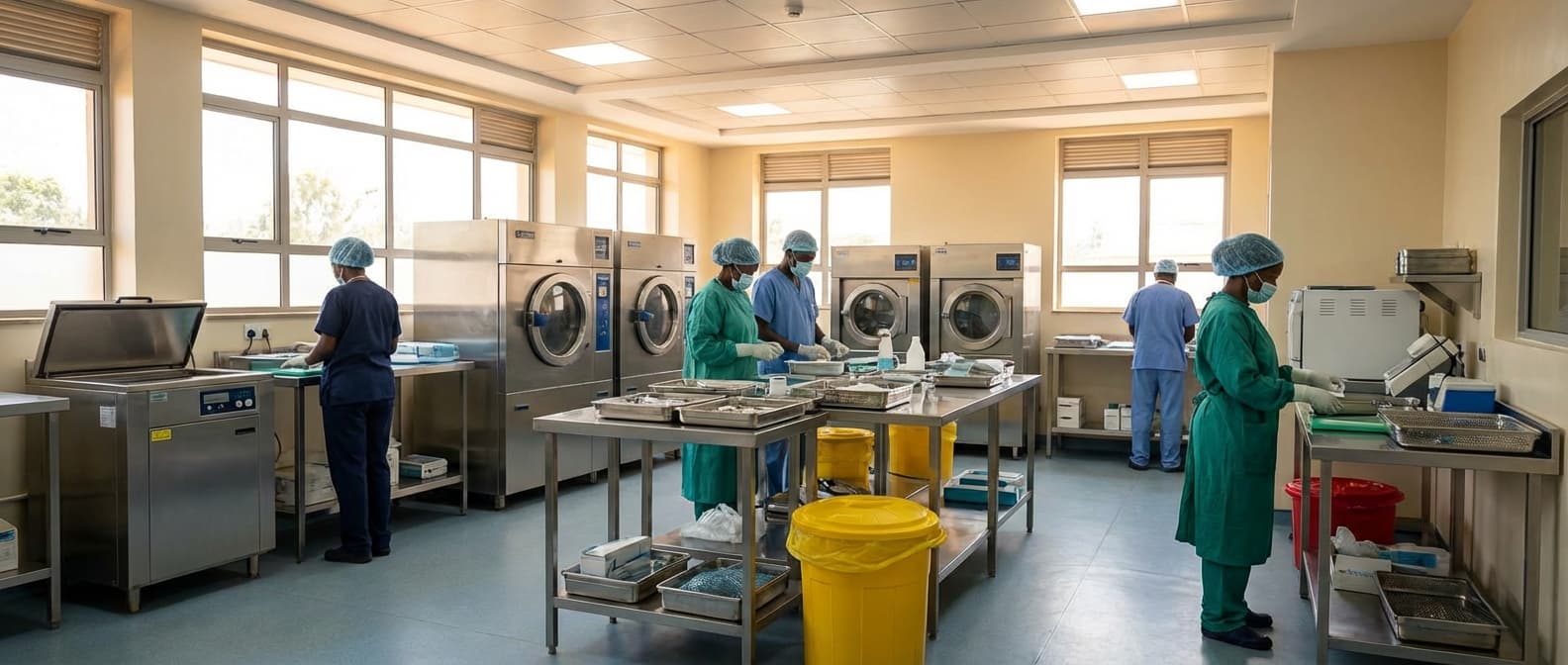
Infection-Control Readiness Support Service for Reusable Equipment in Ethiopia
Engineering Excellence & Technical Support
Infection-Control Readiness Support Service for Reusable Equipment High-standard technical execution following OEM protocols and local regulatory frameworks.
Comprehensive Sterilization Protocols
Deployment of advanced sterilization techniques and standardized operating procedures (SOPs) for a wide range of reusable medical equipment, ensuring optimal pathogen inactivation and adherence to national and international infection prevention standards across Ethiopian healthcare facilities.
Real-time Equipment Tracking & Traceability
Implementation of a robust digital system for real-time monitoring and traceability of reusable equipment throughout its lifecycle, from decontamination to sterilization and deployment, enabling rapid identification and management of any potential breaches in the infection control chain.
Skilled Workforce Training & Capacity Building
Provision of intensive, hands-on training programs for healthcare professionals on proper decontamination, disinfection, sterilization, and handling of reusable medical equipment, fostering a culture of safety and building sustainable in-house infection control expertise within Ethiopian hospitals and clinics.
What Is Infection-control Readiness Support Service For Reusable Equipment In Ethiopia?
Infection-Control Readiness Support Service for Reusable Equipment in Ethiopia refers to a specialized program designed to ensure healthcare facilities and their personnel are adequately prepared to prevent healthcare-associated infections (HAIs) stemming from the reprocessing and reuse of medical devices and equipment. This service focuses on enhancing the capacity of Ethiopian healthcare providers to safely and effectively clean, disinfect, and sterilize reusable medical items, thereby mitigating the risk of transmission of pathogens among patients.
| Target Audience | Rationale for Need | Typical Use Cases |
|---|---|---|
| Public and Private Hospitals | High volume of reusable medical equipment; critical need to prevent HAIs in vulnerable patient populations; often resource-constrained settings requiring optimized practices. | Surgical instrument reprocessing; endoscope disinfection; sterilization of anesthesia equipment; reprocessing of diagnostic tools (e.g., ultrasound probes). |
| Health Centers and Clinics | Serve as primary points of care, often with limited resources; essential to ensure basic reprocessing standards are met to avoid infection spread. | Sterilization of minor surgical instruments; disinfection of thermometers and stethoscopes; reprocessing of non-invasive diagnostic accessories. |
| Medical Training Institutions | Education and practical training of future healthcare professionals; ensuring adherence to best practices from the outset of their careers. | Hands-on training modules for sterilization technicians; simulation exercises for sterile processing workflows; curriculum development on infection control principles. |
| Ministry of Health (MoH) and Regional Health Bureaus | Policy development, standardization of practices, and oversight of infection prevention and control across the healthcare system; national strategy implementation. | Development of national guidelines for reusable medical equipment reprocessing; implementation of national HAI surveillance programs; capacity building initiatives at regional levels. |
| Non-Governmental Organizations (NGOs) and International Aid Organizations | Support for healthcare infrastructure development and capacity building, particularly in underserved areas; implementation of specific infection control projects. | Establishment of centralized sterilization units; provision of reprocessing equipment to facilities lacking them; technical assistance during outbreaks or public health emergencies. |
Components of Infection-Control Readiness Support Service
- Assessment of current reprocessing practices and infrastructure.
- Development and implementation of Standard Operating Procedures (SOPs) for cleaning, disinfection, and sterilization.
- Provision of technical training and capacity building for healthcare workers involved in reprocessing.
- Guidance on the selection, procurement, and maintenance of appropriate reprocessing equipment and consumables.
- Establishment of quality assurance and monitoring mechanisms for reprocessing processes.
- Support in developing and implementing waste management protocols related to reusable equipment reprocessing.
- Facilitation of adherence to national and international infection prevention and control guidelines.
- Troubleshooting and ongoing technical advisory services.
Who Needs Infection-control Readiness Support Service For Reusable Equipment In Ethiopia?
The Infection-Control Readiness Support Service for Reusable Equipment in Ethiopia is designed to bolster the capacity of healthcare facilities to safely and effectively manage reusable medical devices. This service addresses critical gaps in infection prevention and control (IPC) practices related to the cleaning, disinfection, sterilization, and storage of reusable items. By ensuring proper handling, the service aims to prevent healthcare-associated infections (HAIs), protect patients and healthcare workers, and improve overall patient safety and outcomes within the Ethiopian healthcare system. The focus is on establishing and maintaining robust systems that comply with national and international IPC standards for reusable equipment.
| Customer Type | Primary Focus | Key Needs | Departments Involved |
|---|---|---|---|
| Public Hospitals (Federal, Regional, Zonal, Woreda) | Comprehensive patient care, often with high patient loads. | Training, equipment assessment, standardized protocols, resource mobilization for sterilization equipment, auditing. | CSSD, OT, ICU, ED, Maternity, OPD, Lab, Nursing. |
| Private Hospitals & Clinics | Offering specialized services, often with a focus on quality and patient satisfaction. | Advanced training, compliance with international standards, technical support for modern sterilization technologies, quality assurance. | CSSD, OT, Private Clinics, Specialized Units. |
| Health Centers (PHUs) | Providing primary healthcare services to local communities. | Basic training on cleaning and disinfection, appropriate technology recommendations, simplified protocols, essential supplies. | General Outpatient, Maternity, Minor Procedure Rooms, Nursing Stations. |
| Specialized Medical Centers (e.g., Teaching Hospitals, Referral Centers) | Complex procedures, research, and training. | Advanced sterilization techniques, validation of processes, competency assessments for specialized staff, supply chain management for sterile processing. | CSSD, OT, ICU, Endoscopy, Highly Specialized Surgical Units. |
Target Customers and Departments for Infection-Control Readiness Support Service in Ethiopia
- {"items":["Hospitals (Federal, Regional, Zonal, Woreda, Private)","Health Centers (Primary Healthcare Units - PHUs)","Clinics (Government and Private)","Specialized Medical Centers"],"heading":"Healthcare Facilities","description":"The primary beneficiaries are all types of healthcare facilities across Ethiopia that utilize reusable medical equipment."}
- {"items":["Sterilization & Central Sterile Supply Department (CSSD): Crucial for all aspects of reprocessing reusable medical devices.","Operating Theatres (OT) / Surgical Wards: High volume of reusable surgical instruments requiring rigorous sterilization.","Emergency Departments (ED): Immediate need for sterilized equipment, often under pressure.","Maternity Wards & Delivery Rooms: Critical for safe childbirth practices with sterile instruments.","Intensive Care Units (ICU) / Critical Care Units: High risk of HAIs, demanding stringent IPC measures for all equipment.","Outpatient Departments (OPD) / Clinics: Use of reusable instruments for minor procedures and diagnostics.","Dental Clinics: Rely heavily on reusable dental instruments requiring effective sterilization.","Endoscopy Units: Specific requirements for cleaning and disinfection of complex reusable endoscopes.","Laboratory Departments: Sterilization of reusable glassware, tools, and other equipment.","Nursing Services: Direct patient care where reusable items are frequently handled."],"heading":"Key Departments within Healthcare Facilities","description":"Specific departments that extensively use and process reusable equipment are central to this service."}
- {"items":["Hospital Directors & Administrators","Infection Prevention and Control (IPC) Coordinators/Officers","Chief Nursing Officers (CNOs)","Heads of Departments","Procurement and Logistics Managers (for ensuring availability of necessary supplies)"],"heading":"Administrative and Management Roles","description":"Leadership and management personnel are essential for the successful implementation and sustainability of IPC programs."}
- {"items":["Ministry of Health (MoH) Ethiopia","Regional Health Bureaus (RHBs)","Ethiopian Food and Drug Administration (EFDA)"],"heading":"Government and Regulatory Bodies","description":"While not direct users, these entities benefit from improved healthcare safety and may be partners in service delivery."}
Infection-control Readiness Support Service For Reusable Equipment Process In Ethiopia
This service aims to enhance infection-control readiness for the processing of reusable medical equipment in healthcare facilities across Ethiopia. The workflow is designed to be comprehensive, starting from an initial inquiry and culminating in the successful implementation and ongoing support of robust infection-control practices.
| Stage | Key Activities | Deliverables | Responsible Parties | Timeline (Indicative) |
|---|---|---|---|---|
| Healthcare facility or regional health bureau expresses interest. Initial discussion to understand scope, challenges, and objectives. Site visit may be scheduled for preliminary understanding. | Confirmation of interest, preliminary understanding of needs. | Inquiring Facility/Bureaus, Service Provider. | 1-2 Weeks |
| Service provider develops a detailed proposal outlining scope of work, methodology, timeline, budget, and expected outcomes. Proposal is reviewed and negotiated. A formal agreement is signed. | Detailed Project Proposal, Signed Service Agreement. | Service Provider, Inquiring Facility/Bureaus. | 2-4 Weeks |
| Comprehensive on-site assessment of current practices, infrastructure, equipment (availability, functionality, maintenance), staffing, and existing infection-control protocols for reusable equipment. Collection of baseline data on infection rates, equipment reprocessing effectiveness, and staff knowledge. | Detailed Assessment Report, Baseline Data Report. | Service Provider (Infection Control Specialists, Technical Experts). | 2-4 Weeks |
| Development and delivery of tailored training programs for healthcare workers (nurses, technicians, cleaning staff) on principles of infection control, CSSD workflow, sterilization methods, safe handling of sharps, and waste management. Training may include theoretical sessions, practical demonstrations, and competency assessments. | Training Materials (Manuals, Presentations), Trained Personnel, Competency Assessment Records. | Service Provider (Trainers), Facility Staff. | 4-8 Weeks (Phased) |
| Collaborative development or refinement of facility-specific SOPs for every stage of reusable equipment reprocessing: cleaning, disinfection, sterilization, packaging, storage, and distribution. SOPs align with national guidelines and international best practices. | Facility-Specific SOPs for Reusable Equipment Processing. | Service Provider, Facility Infection Control Committee, Department Heads. | 3-6 Weeks |
| Identification of gaps in equipment (e.g., washers, sterilizers, testing devices) and infrastructure (e.g., dedicated reprocessing areas, ventilation). Recommendations for procurement, repair, or upgrades. Facilitation of access to essential supplies. | Equipment Recommendations Report, Infrastructure Improvement Plan, Facilitated Supply Access. | Service Provider, Facility Management, Procurement Departments. | Ongoing, based on assessment findings |
| Assisted implementation of new or revised SOPs and practices. On-site mentorship and supervision by service provider staff to guide staff, troubleshoot issues, and reinforce learning. Regular feedback sessions. | Implemented SOPs, On-site Mentorship, Troubleshooting Support. | Service Provider (Mentors), Facility Staff. | 6-12 Months (Phased) |
| Regular monitoring of compliance with SOPs and infection-control guidelines. Collection of data on key performance indicators (KPIs) such as reprocessing turnaround times, sterilization monitoring results, and infection rates. Regular reporting on progress, challenges, and recommendations. | Monitoring Reports, Evaluation Reports, Performance Dashboards. | Service Provider, Facility Infection Control Committee. | Ongoing |
| Development of a sustainability plan, including training of in-house trainers, establishment of regular internal audits, and mechanisms for ongoing quality improvement. Transition of ownership and responsibility to the facility. Post-implementation support. | Sustainability Plan, Trained Internal Trainers, Established Audit System, Post-Implementation Support. | Service Provider, Facility Management, Ministry of Health (if applicable). | Ongoing |
Workflow Stages
- Inquiry and Needs Assessment
- Proposal Development and Agreement
- On-site Assessment and Baseline Data Collection
- Training and Capacity Building
- Development of Standard Operating Procedures (SOPs)
- Equipment and Infrastructure Support
- Implementation and Mentorship
- Monitoring, Evaluation, and Reporting
- Continuous Improvement and Sustainability
Infection-control Readiness Support Service For Reusable Equipment Cost In Ethiopia
This document outlines the pricing factors and estimated cost ranges for an Infection-Control Readiness Support Service for Reusable Equipment in Ethiopia. This service aims to ensure healthcare facilities have the necessary infrastructure, training, and supplies to safely reprocess reusable medical devices, thereby preventing healthcare-associated infections (HAIs). The costs are presented in Ethiopian Birr (ETB) and are subject to variation based on specific facility needs, geographical location, and the scope of services provided. The service typically includes a combination of assessment, training, equipment provision/maintenance, and ongoing support.
| Service Component/Category | Estimated Cost Range (ETB) | Notes/Assumptions | |
|---|---|---|---|
| Initial Assessment & Consultation | 10,000 - 30,000 | Includes site visit, needs assessment, preliminary report. Varies by facility size and complexity. | |
| Staff Training (Per Session/Group) | 5,000 - 25,000 | Covers theoretical and practical training on sterilization and disinfection protocols. Cost depends on the number of participants and training duration. | |
| Basic Disinfection Supplies Kit (Per Facility) | 15,000 - 50,000 (initial) | For small clinics/health centers. Includes detergents, high-level disinfectants, PPE, testing strips. Recurring costs will apply. | |
| Standard Sterilization Equipment (e.g., Autoclave - small/medium capacity) | 150,000 - 500,000 (purchase) | Excludes installation and maintenance. Cost varies by brand, capacity, and technology (e.g., steam, chemical). | 5,000 - 15,000 (annual maintenance contract) |
| Advanced Sterilization/Disinfection Equipment (e.g., Washer-Disinfector, Plasma Sterilizer - for larger facilities) | 500,000 - 2,500,000+ (purchase) | Significant capital investment. Highly dependent on specific equipment type and manufacturer. | 20,000 - 100,000+ (annual maintenance contract) |
| Consumables (Detergents, Disinfectants, Indicators, Wraps) | 10,000 - 50,000+ (monthly) | Highly variable based on volume of equipment processed and type of consumables used. Larger facilities will have higher monthly costs. | |
| Infrastructure Upgrades (e.g., plumbing, ventilation, electrical) | 50,000 - 500,000+ | Highly site-specific. Depends on the current condition of the facility and required standards. | |
| Ongoing Monitoring & Support (Monthly/Quarterly) | 10,000 - 40,000 | Includes periodic site visits, quality control checks, troubleshooting, and refresher training. Varies by frequency and scope of support. | |
| Comprehensive Support Package (Annual) | 200,000 - 1,000,000+ | Bundled service covering assessment, training, equipment maintenance, consumables management, and ongoing support. Most cost-effective for facilities seeking a full-service solution. |
Key Pricing Factors for Infection-Control Readiness Support Service
- Scope of Services: The breadth and depth of the support offered is a primary driver of cost. This can range from a basic assessment and training program to a comprehensive solution including equipment procurement, installation, and maintenance.
- Facility Size and Complexity: Larger hospitals with more departments and a higher volume of reusable equipment will naturally incur higher costs compared to smaller clinics or health centers.
- Type and Quantity of Reusable Equipment: The specific types and number of medical devices requiring reprocessing (e.g., surgical instruments, endoscopes, respiratory equipment) significantly influence the required cleaning and sterilization technologies and consumables.
- Current Infrastructure Assessment: The existing state of the facility's sterilization and disinfection areas (e.g., water supply, ventilation, space, power) will determine the extent of required upgrades or new installations.
- Training Needs and Duration: The number of staff to be trained, the complexity of the training modules, and the duration of the training program will affect labor and material costs.
- Equipment Procurement and Maintenance: If the service includes the provision of new cleaning, disinfection, or sterilization equipment, the initial capital outlay and subsequent maintenance contracts will be a significant cost component. This also includes the cost of consumables (detergents, disinfectants, sterilization wraps, indicators).
- Geographical Location: Transportation costs for personnel and equipment, as well as potential variations in local labor rates, can influence pricing based on the facility's location within Ethiopia.
- Level of Ongoing Support: The frequency and intensity of post-implementation monitoring, technical support, and refresher training will impact the recurring costs.
- Regulatory Compliance Requirements: Adherence to specific national and international infection control standards may necessitate more sophisticated equipment or processes, leading to higher costs.
Affordable Infection-control Readiness Support Service For Reusable Equipment Options
Our Affordable Infection-Control Readiness Support Service for Reusable Equipment Options is designed to empower healthcare facilities with comprehensive and cost-effective solutions for maintaining the highest standards of infection prevention. We understand the critical need for reliable infection control, especially with the increasing use of reusable medical devices. This service focuses on proactive readiness, offering a tiered approach to support that aligns with your facility's specific needs and budget. We achieve affordability through smart value bundling and implementing strategic cost-saving measures throughout our service delivery.
| Cost-Saving Strategy | Description | Benefit to Your Facility |
|---|---|---|
| Preventative Maintenance Scheduling | Proactive, scheduled maintenance of sterilization and disinfection equipment, along with reusable device inspection and cleaning protocols. This is integrated into our service at a predetermined, discounted rate within bundles. | Reduces costly emergency repairs, extends equipment lifespan, and minimizes downtime, preventing lost revenue and operational disruptions. |
| Bulk Purchasing & Strategic Sourcing | Leveraging our scale and established relationships with suppliers to procure infection control supplies (e.g., cleaning agents, disinfectants, testing indicators) at lower costs, which are then passed on through bundled pricing. | Lower overall expenditure on essential consumables without compromising on quality. |
| Optimized Workflow Analysis | Our experts analyze your current reusable equipment processing workflows to identify inefficiencies and suggest streamlined, cost-effective procedures for cleaning, disinfection, and sterilization. | Improved staff productivity, reduced waste of materials and time, and enhanced compliance through standardized processes. |
| Remote Monitoring & Tele-Support | Utilizing technology for remote monitoring of key infection control equipment and providing virtual support for troubleshooting and guidance, reducing the need for on-site visits for minor issues. | Faster resolution of minor issues, reduced travel costs for our technicians, and minimized disruption to your operations. |
| Tiered Service Levels | Offering distinct value bundles with varying levels of service ensures you only pay for what you need, avoiding overspending on unnecessary features. | Financial flexibility and a clear understanding of service costs, allowing for better budget allocation. |
| Staff Training & Competency Assurance Integration | Incorporating standardized, efficient training modules for your staff as part of our bundles, ensuring consistent and correct infection control practices, which reduces errors and rework. | Reduced risk of compliance failures, fewer costly errors in reprocessing, and improved patient safety. |
Value Bundles Offered
- {"title":"Basic Readiness Bundle","description":"Ideal for facilities needing foundational support. Includes core essential services to ensure baseline infection control compliance for reusable equipment."}
- {"title":"Standard Readiness Bundle","description":"A balanced offering for most facilities. Expands on the Basic bundle with additional preventative measures and enhanced reporting."}
- {"title":"Premium Readiness Bundle","description":"Comprehensive support for facilities prioritizing advanced infection control. Features proactive risk assessment, specialized training, and custom reporting."}
- {"title":"Customizable Bundle","description":"Tailored solutions to meet unique facility requirements. We work with you to design a service package that perfectly fits your operational and financial goals."}
Verified Providers In Ethiopia
In Ethiopia's burgeoning healthcare landscape, distinguishing between credible and unreliable medical service providers is paramount for public health and individual well-being. This article highlights the significance of verified providers and delves into why Franance Health stands out as a premier choice due to its rigorous credentialing and unwavering commitment to quality care. Access to trusted healthcare professionals directly impacts patient outcomes, reduces the risk of misinformation, and ensures that individuals receive appropriate and effective treatments. Franance Health's dedication to maintaining high standards through thorough verification processes makes them a beacon of reliability in the Ethiopian healthcare sector.
| Franance Health Credential | Description | Benefit to Patients |
|---|---|---|
| Accredited Medical Professionals | All healthcare practitioners at Franance Health undergo a rigorous verification process, confirming their medical degrees, specialist certifications, and active licenses with relevant Ethiopian health authorities. | Patients are assured they are receiving care from individuals with proven expertise and the legal authority to practice. |
| Adherence to Ethical Guidelines | Franance Health upholds the highest ethical standards in medical practice, including patient confidentiality, informed consent, and non-discriminatory treatment. | This fosters a trusting patient-provider relationship and ensures respectful and dignified care. |
| Commitment to Continuous Professional Development | The organization actively encourages and supports its staff in ongoing training and education to stay abreast of the latest medical advancements and best practices. | Patients benefit from up-to-date medical knowledge and modern treatment approaches. |
| Stringent Quality Assurance Protocols | Franance Health implements robust quality control measures across all its services, from diagnostics to treatment and patient follow-up. | This translates to consistent and high-quality healthcare delivery, minimizing errors and maximizing treatment efficacy. |
| Patient-Centric Approach | The core philosophy of Franance Health revolves around the patient's well-being, with services designed to be accessible, affordable, and responsive to individual needs. | Patients experience personalized care that prioritizes their comfort and health goals. |
Key Advantages of Choosing Verified Providers like Franance Health:
- Enhanced Patient Safety: Verified providers adhere to strict medical ethics and professional standards, minimizing risks associated with unqualified practitioners.
- Access to Qualified Professionals: Verification ensures that practitioners possess the necessary education, training, and licensing to deliver competent care.
- Trust and Reliability: A verified status builds confidence, allowing patients to make informed decisions about their healthcare with peace of mind.
- Improved Health Outcomes: Patients are more likely to receive accurate diagnoses and effective treatments from verified and competent healthcare professionals.
- Regulatory Compliance: Verified providers operate within established legal and ethical frameworks, ensuring accountability and transparency.
Scope Of Work For Infection-control Readiness Support Service For Reusable Equipment
This Scope of Work (SOW) outlines the requirements for Infection-Control Readiness Support Services specifically for reusable medical equipment within [Healthcare Facility Name]. The primary objective is to ensure that all reusable equipment undergoes appropriate cleaning, disinfection, and sterilization processes to prevent healthcare-associated infections (HAIs) and maintain patient safety. This SOW details the technical deliverables and standard specifications required to achieve these goals.
| Deliverable | Description | Standard Specifications/Criteria |
|---|---|---|
| Assessment Report of Current Reusable Equipment Reprocessing Program | A comprehensive review of existing protocols, equipment, workflows, and staff training related to reusable equipment cleaning, disinfection, and sterilization. This includes identifying gaps and areas for improvement. | Report includes: detailed findings, risk assessment, analysis of compliance with current guidelines (e.g., CDC, AAMI, local regulations), identification of training needs, and recommendations for optimization. |
| Development of Standardized Reprocessing Protocols | Creation of clear, concise, and evidence-based written protocols for the cleaning, disinfection, and sterilization of all categories of reusable medical equipment used within the facility. | Protocols must include: step-by-step instructions, appropriate disinfectant/sterilant selection and concentrations, contact times, required personal protective equipment (PPE), documentation requirements, and equipment-specific handling instructions. Protocols should align with manufacturer's instructions for use (IFU) and regulatory guidelines. |
| Staff Training Program and Materials | Development and delivery of a comprehensive training program for all personnel involved in the reprocessing of reusable equipment. This includes initial training and ongoing competency assessments. | Training materials: presentation slides, handouts, practical demonstration guides, competency checklists. Training content covers: principles of infection control, understanding microbial resistance, correct use of cleaning agents, disinfection methods, sterilization techniques (e.g., autoclaving, ethylene oxide, H2O2 plasma), documentation, and troubleshooting. Post-training competency assessment is mandatory. |
| Development of Equipment Tracking and Maintenance Log System | Design and implementation of a system to track reusable equipment throughout its lifecycle, including its reprocessing history and maintenance records. | System should capture: equipment identification (unique ID), date/time of use, date/time of reprocessing, reprocessing method, personnel responsible, sterilizer load records, maintenance schedule, and repair history. Digital or robust manual system acceptable. |
| Guidance on Equipment Selection and Procurement | Recommendations for the selection of new reusable medical equipment with a focus on ease of cleaning, disinfection, and sterilization, and compliance with infection control requirements. | Recommendations based on: manufacturer's IFUs regarding reprocessing, material compatibility with disinfectants/sterilants, design features that facilitate cleaning, and proven performance in infection control settings. |
| Development of Auditing and Monitoring Plan | Creation of a plan for regular auditing and monitoring of reusable equipment reprocessing practices to ensure ongoing compliance and identify any deviations from established protocols. | Plan includes: frequency of audits, audit checklists, sampling methodology, data collection methods, reporting procedures, and corrective action implementation process. Audits should cover all aspects of the reprocessing cycle. |
| Final Report and Recommendations for Continuous Improvement | A comprehensive report summarizing the project's outcomes, including implemented changes, observed improvements, and recommendations for ongoing infection-control readiness and continuous quality improvement. | Report includes: summary of work performed, key findings from audits, data demonstrating improved compliance rates or reduced HAI risks, and a roadmap for sustained best practices. |
Key Objectives
- To assess and improve the current infection-control practices for reusable equipment.
- To provide expert guidance and training on best practices for cleaning, disinfection, and sterilization.
- To develop and implement standardized protocols and procedures.
- To ensure compliance with relevant regulatory guidelines and industry standards.
- To enhance staff competency and awareness regarding reusable equipment reprocessing.
Service Level Agreement For Infection-control Readiness Support Service For Reusable Equipment
This Service Level Agreement (SLA) outlines the commitment of the Infection-Control Readiness Support Service provider to its clients regarding the provision of support for the readiness of reusable equipment in preventing the spread of infections. This SLA specifically addresses response times and uptime guarantees for the critical aspects of this service.
| Service Component | Response Time Guarantee | Uptime Guarantee |
|---|---|---|
| Critical Alert Monitoring & Notification | Within 15 minutes of detection of a critical readiness issue. | 99.9% uptime for the monitoring system. |
| Urgent Support Request (e.g., suspected contamination event) | Within 1 hour of validated request submission during business hours; within 4 hours during off-business hours. | N/A (Support is event-driven) |
| Standard Support Request (e.g., guideline clarification, process review) | Within 4 business hours of validated request submission. | N/A (Support is event-driven) |
| Access to Online Knowledge Base & Updates | Continuous availability. | 99.5% uptime for access to the knowledge base. |
Scope of Service
- Proactive monitoring and assessment of reusable equipment infection-control readiness.
- Real-time alerts and notifications for potential breaches in infection-control protocols.
- On-demand consultation and expert guidance for infection-control related issues.
- Access to updated infection-control guidelines and best practices.
- Support for the validation and verification of cleaning and sterilization processes.
Frequently Asked Questions

Ready when you are
Let's scope your Infection-Control Readiness Support Service for Reusable Equipment in Ethiopia project in Ethiopia.

Scaling healthcare logistics and technical systems across the entire continent.