
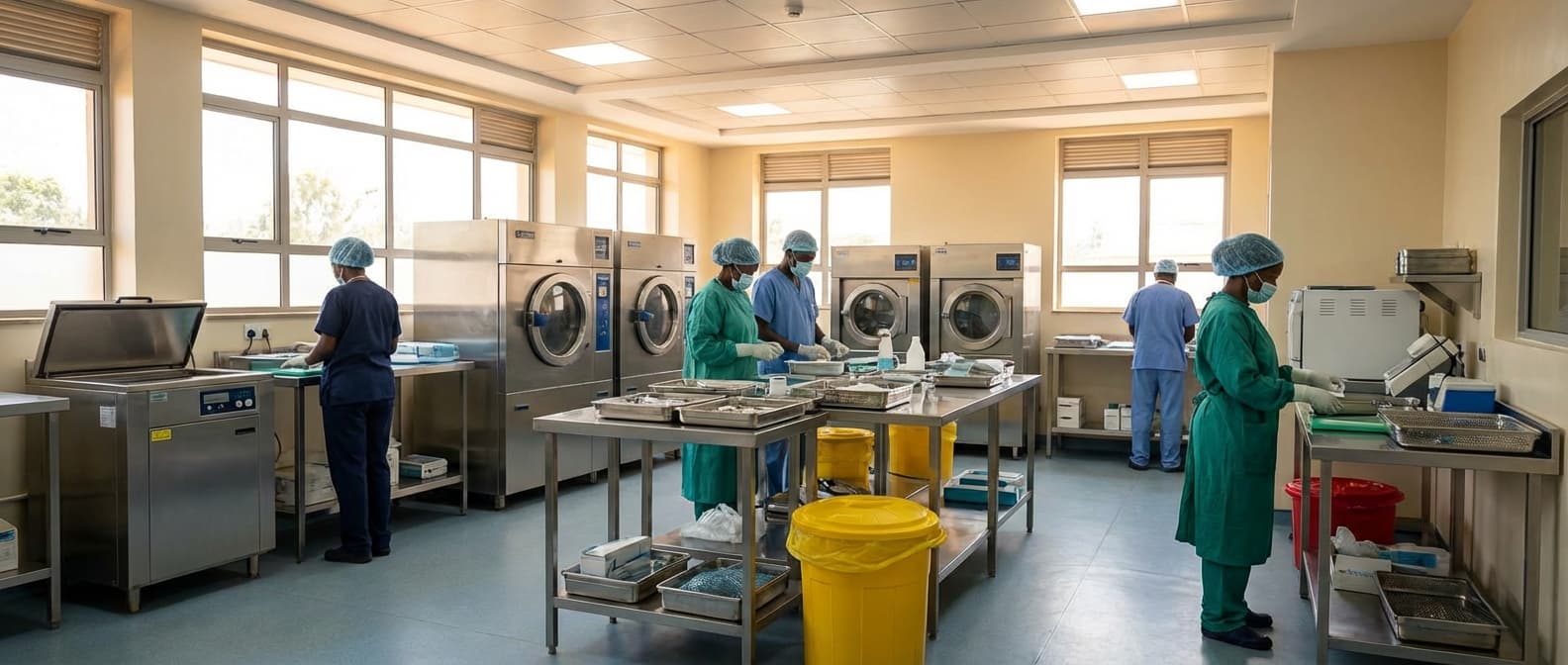
Endoscope Reprocessing Equipment Support Service in Ethiopia
Engineering Excellence & Technical Support
Endoscope Reprocessing Equipment Support Service High-standard technical execution following OEM protocols and local regulatory frameworks.
Rapid On-Site Repair & Maintenance
Minimize downtime for your endoscope reprocessing equipment with our expert technicians providing swift on-site diagnostics, repair, and preventative maintenance services across Ethiopia. We ensure your critical infection control processes remain uninterrupted.
Genuine Spare Parts & Calibration
Maintain optimal performance and extend the lifespan of your reprocessing equipment with authentic manufacturer-grade spare parts and precise calibration services. We guarantee adherence to international standards for reprocessing efficacy and safety.
24/7 Remote Technical Support & Training
Access immediate troubleshooting assistance and comprehensive training modules for your staff through our dedicated 24/7 remote support. Empower your team with the knowledge to operate and maintain your endoscope reprocessing equipment effectively, enhancing patient safety.
What Is Endoscope Reprocessing Equipment Support Service In Ethiopia?
Endoscope reprocessing equipment support service in Ethiopia refers to the provision of maintenance, repair, calibration, validation, and technical assistance for automated endoscope reprocessors (AERs) and associated equipment used in the disinfection and sterilization of flexible and rigid endoscopes. This service is critical for healthcare facilities to ensure the safety and efficacy of endoscopic procedures by maintaining the functionality and compliance of reprocessing equipment with national and international standards. It encompasses preventative maintenance, corrective maintenance, spare parts management, technical training, and regulatory adherence advisory services.
| Who Needs Endoscope Reprocessing Equipment Support Service? | Typical Use Cases | ||||||||
|---|---|---|---|---|---|---|---|---|---|
| Hospitals (public and private) performing endoscopic procedures (e.g., gastroscopy, colonoscopy, bronchoscopy, cystoscopy, laparoscopy). | Regular maintenance to prevent breakdown of AERs, ensuring patient safety and procedural continuity. | Repair of malfunctioning AERs to restore full operational capacity. | Calibration and validation of AERs to meet infection control guidelines and regulatory standards (e.g., Ethiopian Food and Drug Administration (EFDA) regulations, WHO guidelines). | Endoscopy units within larger medical centers. | Diagnostic and treatment centers that utilize flexible or rigid endoscopes. | Healthcare facilities with a high volume of endoscopic procedures requiring frequent reprocessing. | Facilities undergoing accreditation or inspection processes requiring documented equipment maintenance and validation. | Training new staff or biomedical personnel on the operation and maintenance of AERs. | Procurement of new AERs, requiring installation, commissioning, and initial training. |
Key Components of Endoscope Reprocessing Equipment Support Service
- Preventative Maintenance (PM): Scheduled inspections, cleaning, lubrication, and functional checks to identify and address potential issues before they lead to equipment failure.
- Corrective Maintenance (CM): Diagnosis and repair of malfunctions or breakdowns, including the replacement of faulty components.
- Calibration and Validation: Ensuring that the reprocessing equipment operates within specified parameters for temperature, pressure, flow rates, and cycle times, as per manufacturer specifications and regulatory requirements.
- Technical Training and Education: Providing training to hospital biomedical engineers, technicians, and nursing staff on the proper operation, basic troubleshooting, and routine maintenance of the equipment.
- Spare Parts Management: Ensuring the availability of genuine and compatible spare parts to minimize downtime during repairs.
- Troubleshooting and Remote Support: Offering remote diagnostic capabilities and on-site support for immediate issue resolution.
- Compliance and Documentation: Assisting facilities in meeting regulatory requirements and maintaining accurate service records for audits and accreditation.
Who Needs Endoscope Reprocessing Equipment Support Service In Ethiopia?
Endoscope reprocessing equipment support services are crucial for healthcare facilities in Ethiopia to ensure the safety and efficacy of endoscopic procedures. Proper cleaning, disinfection, and sterilization of endoscopes prevent the transmission of infections between patients and healthcare workers. This service encompasses maintenance, repair, validation, and the supply of essential consumables for the reprocessing equipment.
| Department | Primary Endoscopic Procedures | Equipment Support Needs |
|---|---|---|
| Gastroenterology | Esophagogastroduodenoscopy (EGD), Colonoscopy, Sigmoidoscopy, Endoscopic Retrograde Cholangiopancreatography (ERCP) | Support for washer-disinfectors, automated endoscope reprocessors (AERs), leak testing equipment, drying cabinets, and associated testing chemicals. |
| Pulmonology | Bronchoscopy, Mediastinoscopy | Support for AERs, leak testers, and cleaning solutions specifically designed for respiratory scopes. |
| Urology | Cystoscopy, Ureteroscopy, Nephroscopy | Support for AERs, leak testers, and cleaning agents suitable for urological instruments. |
| Gynecology | Hysteroscopy | Support for AERs and cleaning solutions for hysteroscopes. |
| General Surgery | Laparoscopy, Arthroscopy | Support for AERs, sterilization equipment (autoclaves), and cleaning supplies for laparoscopic and arthroscopic instruments. |
| Infection Prevention and Control Department | Oversees adherence to reprocessing protocols | Support for validation testing, calibration of reprocessing equipment, and ensuring compliance with national and international guidelines. |
| Biomedical Engineering Department | Responsible for maintenance and repair of medical equipment | Collaboration on troubleshooting, preventive maintenance, and repair of endoscope reprocessing equipment. May require training on specific models. |
| Operating Theatre/Surgical Units | Utilize endoscopes during surgical procedures | Ensuring rapid and reliable reprocessing of scopes between surgeries to maintain surgical schedules and patient safety. |
Target Customers and Departments Requiring Endoscope Reprocessing Equipment Support Service in Ethiopia
- {"title":"Hospitals (Public and Private)","description":"Hospitals are the primary users of endoscopic procedures and therefore require robust support for their endoscope reprocessing equipment. This includes large referral hospitals, regional hospitals, and specialized medical centers."}
- {"title":"Specialized Clinics","description":"Clinics focusing on specific specialties that utilize endoscopy, such as gastroenterology, pulmonology, urology, and gynecology, will have a direct need for these services."}
- {"title":"Diagnostic Centers","description":"Facilities that offer diagnostic endoscopic services to a wider patient population will also be key customers."}
- {"title":"Training and Research Institutions","description":"Medical training centers and research institutions that utilize endoscopy for educational purposes and scientific study need reliable equipment and support to maintain their operations and ensure the highest standards."}
Endoscope Reprocessing Equipment Support Service Process In Ethiopia
This document outlines the workflow for Endoscope Reprocessing Equipment Support Services in Ethiopia, covering the process from initial inquiry to the successful execution of service. The service aims to ensure the optimal functioning and longevity of essential endoscope reprocessing equipment, critical for patient safety and effective healthcare delivery.
| Step | Description | Key Activities | Responsible Party | Documentation |
|---|---|---|---|---|
| The client initiates contact to report an issue or request routine maintenance for their endoscope reprocessing equipment. | Contacting the service provider (phone, email, website), detailing equipment model, serial number, and nature of the issue. | Client | Service Request Form (internal) |
| The service provider gathers preliminary information to understand the scope of work and provides an estimated cost. | Remote troubleshooting, gathering technical details, identifying potential parts needed, preparing a detailed quotation. | Service Provider | Quotation, Service Estimate |
| Upon client acceptance of the quotation, a formal agreement is established, and the service is scheduled. | Signing of Service Agreement/Work Order, confirming scope, cost, and payment terms, scheduling the service date and time. | Client & Service Provider | Service Agreement, Work Order, Invoice (initial) |
| A qualified technician is dispatched to the client's facility with necessary tools and preliminary parts. | Technician arrives at the site, introduces themselves, and confirms the service request with the client. | Service Provider | Technician's Logbook |
| The technician performs a thorough diagnosis of the equipment to identify the root cause of the problem. | Visual inspection, functional testing, diagnostic tools usage, identifying faulty components. If repair is possible, it is initiated. | Service Provider (Technician) | Diagnostic Report, Technician's Notes |
| If faulty parts are identified, they are either on hand or procured, and then installed. | Identifying required parts, ordering from suppliers if not in stock, receiving and inspecting parts, installing new parts. | Service Provider | Parts Inventory Record, Purchase Order, Installation Report |
| The repaired equipment is rigorously tested to ensure it functions according to specifications. | Performance testing, functional validation, calibration (if applicable), simulated reprocessing cycles. | Service Provider (Technician) | Test Results, Calibration Certificate (if applicable) |
| The technician officially hands over the repaired equipment to the client and provides necessary documentation. | Explaining the repairs performed, demonstrating functionality, providing service report and warranty information. | Service Provider (Technician) & Client | Service Report, Handover Certificate, Warranty Documentation |
| The service provider may follow up to ensure client satisfaction and offer ongoing support. | Post-service check-in, addressing any further queries, scheduling future preventative maintenance. | Service Provider | Client Feedback Form, Service History Update |
Endoscope Reprocessing Equipment Support Service Workflow in Ethiopia
- Inquiry and Service Request
- Initial Assessment and Quotation
- Service Agreement and Scheduling
- On-Site Technician Dispatch
- Equipment Diagnosis and Repair
- Parts Procurement and Installation
- Testing and Verification
- Client Handover and Documentation
- Follow-up and Support
Endoscope Reprocessing Equipment Support Service Cost In Ethiopia
The cost of endoscope reprocessing equipment support services in Ethiopia is influenced by several critical factors, leading to a variable pricing structure. These services are essential for ensuring the safety and longevity of expensive endoscopic equipment, and their cost reflects the complexity of the procedures, the expertise required, and the logistical challenges involved. Pricing can range significantly based on the specific type of service, the make and model of the endoscope reprocessing equipment, the service provider's reputation and overhead, and the geographical location within Ethiopia.
Key pricing factors include:
- Type of Service: Routine preventive maintenance, emergency repairs, validation and qualification of equipment, and software updates all carry different price points. Preventive maintenance is generally the most cost-effective, while emergency repairs, especially those requiring on-site intervention and parts replacement, will be considerably more expensive.
- Equipment Make and Model: Different manufacturers and models of endoscope reprocessing equipment have varying levels of complexity and require specialized knowledge and proprietary parts. High-end, technologically advanced machines typically incur higher support costs.
- Service Provider: Local authorized service partners, independent service organizations, and the original equipment manufacturer (OEM) will have different pricing strategies. OEMs often charge a premium for their specialized knowledge and genuine parts but may offer guaranteed service levels. Independent providers can sometimes offer more competitive pricing, but it's crucial to assess their expertise and track record.
- Scope of Contract: Annual maintenance contracts (AMCs) offer a predictable cost structure and often include a set number of service visits and response times. Ad-hoc service calls are typically more expensive per incident.
- Geographical Location: While major cities like Addis Ababa may have more readily available service technicians, travel and logistical costs can influence pricing for remote locations.
- Parts and Consumables: The cost of replacement parts and consumables (e.g., filters, seals, cleaning solutions) is a significant component of service costs. Genuine OEM parts are generally more expensive than aftermarket alternatives.
- Labor Rates: The hourly rates for qualified and experienced biomedical engineers or technicians specializing in endoscope reprocessing equipment vary based on their skill level and demand.
Pricing Ranges in Ethiopian Birr (ETB):
It's important to note that these are indicative ranges and can fluctuate. Obtaining specific quotes from multiple service providers is crucial for accurate budgeting.
- Annual Maintenance Contracts (AMCs): For a standard endoscope washer-disinfector, an AMC could range from ETB 50,000 to ETB 150,000 per year. More complex systems or multi-equipment contracts would be at the higher end or exceed this range.
- Ad-Hoc Service Call (Labor Only): A single on-site visit for troubleshooting and basic repair might cost between ETB 5,000 to ETB 15,000, depending on the technician's expertise and the duration of the visit.
- Emergency Repairs (Labor & Parts): This is the most variable. A minor repair could be in the range of ETB 10,000 to ETB 30,000, while a major component failure requiring significant parts and extensive labor could escalate to ETB 50,000 to ETB 200,000 or more.
- Validation and Qualification Services: These essential services to ensure equipment meets regulatory standards can range from ETB 20,000 to ETB 70,000 per equipment type.
| Service Type | Indicative Price Range (ETB) | Notes |
|---|---|---|
| Annual Maintenance Contract (AMC) | 50,000 - 150,000 per year | Covers routine checks and potentially a set number of service visits for standard equipment. |
| Ad-Hoc Service Call (Labor Only) | 5,000 - 15,000 per visit | Covers technician's time for troubleshooting and minor repairs. |
| Emergency Repairs (Labor & Parts) | 10,000 - 200,000+ | Highly variable based on the severity of the issue and parts required. Can be significantly higher for major component failures. |
| Validation & Qualification Services | 20,000 - 70,000 per equipment type | Ensures equipment meets regulatory and performance standards. |
Key Factors Influencing Endoscope Reprocessing Equipment Support Service Costs in Ethiopia
- Type of Service (Preventive Maintenance vs. Emergency Repair)
- Equipment Make and Model Complexity
- Service Provider Reputation and Type (OEM, Independent)
- Contractual Agreements (AMC vs. Ad-hoc)
- Geographical Location and Accessibility
- Cost of Replacement Parts and Consumables
- Biomedical Technician Labor Rates
Affordable Endoscope Reprocessing Equipment Support Service Options
Providing comprehensive support for endoscope reprocessing equipment is crucial for maintaining patient safety, operational efficiency, and regulatory compliance. This service aims to offer affordable solutions through flexible value bundles and strategic cost-saving initiatives, ensuring healthcare facilities can access the necessary support without compromising their budgets.
| Value Bundle Tier | Included Services | Benefit | Target Client |
|---|---|---|---|
| Basic Care | Annual Preventive Maintenance, Priority Phone/Email Support | Ensures basic operational reliability and quick issue escalation. | Smaller clinics, facilities with in-house technical staff. |
| Standard Care | Bi-Annual Preventive Maintenance, On-Demand On-Site Repairs (discounted rates), Parts Discount | Balances proactive maintenance with accessible reactive support, cost savings on parts. | Mid-sized hospitals, outpatient surgery centers. |
| Comprehensive Care | Quarterly Preventive Maintenance, Unlimited On-Demand On-Site Repairs (pre-defined response times), Parts & Consumables Bundle, Remote Diagnostics, Annual Compliance Check-up | Maximizes uptime, minimizes unexpected costs, ensures continuous compliance. | Large hospitals, high-volume surgical centers, facilities with zero tolerance for downtime. |
Key Features of Affordable Endoscope Reprocessing Equipment Support Service:
- Preventive Maintenance Programs: Regular servicing to identify and address potential issues before they lead to costly breakdowns.
- On-Demand Repair Services: Swift and efficient troubleshooting and repair by certified technicians.
- Parts and Consumables Management: Access to genuine or high-quality compatible parts at competitive prices, with options for bulk purchasing.
- Training and Education: Empowering in-house staff with the knowledge to perform basic troubleshooting and proper equipment operation.
- Compliance Audits and Consultations: Ensuring adherence to evolving regulatory standards and best practices.
- Remote Diagnostics and Support: Utilizing technology to diagnose and sometimes resolve issues without an on-site visit.
Verified Providers In Ethiopia
Ensuring access to quality healthcare is paramount, and in Ethiopia, identifying verified providers is crucial. Franance Health stands out as a beacon of reliability and excellence. This document outlines why Franance Health's credentials make them the best choice for your healthcare needs in Ethiopia.
| Credential/Aspect | Franance Health's Commitment | Benefit to Patients |
|---|---|---|
| Regulatory Adherence | Strict compliance with Ethiopian Ministry of Health standards and pursuit of accreditations. | Ensures legal and ethical healthcare delivery, patient safety. |
| Medical Expertise | Employing highly qualified and often internationally trained medical professionals. | Access to expert diagnoses and treatments, reducing the need for overseas medical tourism. |
| Infrastructure | Investment in modern diagnostic and treatment technologies. | Accurate and efficient diagnostics, advanced treatment options. |
| Service Breadth | Offering a comprehensive range of medical specialties and general care. | Convenient and integrated healthcare services, reducing the need to visit multiple facilities. |
| Patient Care Philosophy | Emphasis on empathy, privacy, and transparent communication. | Builds trust, enhances patient comfort and understanding. |
| Collaborations | Established partnerships with other healthcare entities and insurers. | Facilitates smooth referrals and wider access to specialized care. |
Key Credentials and Strengths of Franance Health:
- Accreditation and Regulatory Compliance: Franance Health rigorously adheres to all Ethiopian Ministry of Health regulations and standards. They actively pursue and maintain accreditations from relevant national and international health bodies, demonstrating a commitment to operational excellence and patient safety.
- Experienced and Qualified Medical Professionals: The backbone of Franance Health is its team of highly skilled and experienced doctors, nurses, and support staff. Many possess international training and certifications, bringing global best practices to Ethiopia.
- State-of-the-Art Facilities and Technology: Franance Health invests in modern medical equipment and infrastructure. This ensures accurate diagnostics, effective treatments, and a comfortable patient experience, often exceeding the capabilities of other local providers.
- Comprehensive Range of Services: From primary care to specialized treatments, Franance Health offers a broad spectrum of medical services, catering to diverse patient needs under one roof. This integrated approach simplifies healthcare management for individuals and families.
- Patient-Centric Approach and Ethical Practices: Franance Health prioritizes patient well-being and privacy. Their commitment to ethical medical practices, transparency, and compassionate care fosters trust and long-term patient relationships.
- Strong Network and Partnerships: Franance Health collaborates with leading local and international medical institutions and insurance providers, facilitating seamless referrals and access to specialized care when necessary.
- Commitment to Continuous Improvement: Franance Health actively engages in professional development for its staff and stays abreast of the latest medical advancements. This dedication to continuous learning ensures patients receive the most up-to-date and effective treatments.
- Positive Patient Testimonials and Reputation: The consistent positive feedback and strong reputation within the Ethiopian community are a testament to Franance Health's unwavering commitment to quality and patient satisfaction.
Scope Of Work For Endoscope Reprocessing Equipment Support Service
This Scope of Work (SOW) outlines the technical deliverables and standard specifications for Endoscope Reprocessing Equipment Support Services. The objective is to ensure the reliable, safe, and efficient operation of endoscope reprocessing equipment, including but not limited to automated endoscope reprocessors (AERs), drying and storage cabinets, and associated accessories. This service will encompass preventative maintenance, corrective repairs, validation, and calibration of the specified equipment.
| Deliverable | Description | Standard Specification/Requirement | Verification Method |
|---|---|---|---|
| Preventative Maintenance Report | Detailed record of all PM activities performed on each unit. | Includes inspection checklist completion, functional tests, lubrication, filter replacement, and operational parameter checks. Must adhere to manufacturer's PM schedule and protocols. | Signed and dated report provided to client, including all executed checklist items and any observed deviations or recommendations. |
| Corrective Maintenance Service Report | Documentation of all repairs, including diagnosis, parts replaced, and corrective actions taken. | Report must include equipment serial number, date of service, technician's name, detailed description of the issue, root cause analysis, parts used (with part numbers), and confirmation of successful repair. Repairs must meet manufacturer's specifications. | Signed and dated report provided to client, including confirmation of full operational functionality post-repair. |
| Validation Report (IQ/OQ/PQ) | Documentation of Installation Qualification (IQ), Operational Qualification (OQ), and Performance Qualification (PQ) for new or repaired equipment. | IQ: Verifies correct installation according to manufacturer specifications. OQ: Verifies equipment operates within specified parameters. PQ: Verifies equipment consistently performs as intended in the actual use environment. Must follow established industry standards (e.g., AAMI ST58, ISO 15883) and manufacturer's validation protocols. | Comprehensive, signed, and dated report submitted to client, including all test results, calibration certificates, and acceptance criteria met. |
| Calibration Certificate | Certificate for all calibrated instruments and equipment, including temperature, pressure, and flow sensors. | Certificates must be traceable to national or international standards (e.g., NIST). Calibration intervals to be defined based on manufacturer recommendations and regulatory requirements. | Original or certified copy of the calibration certificate provided to client. |
| Technical Support Log | Record of all technical support interactions, including phone calls, emails, and remote assistance. | Log should include date, time, issue description, resolution, and technician involved. Response time SLAs to be defined in the service agreement. | On-demand access to the technical support log as per service agreement. |
| Training Materials | Documentation and/or presentation materials for equipment operation and basic troubleshooting. | Materials should be clear, concise, and tailored to the end-user's understanding. Format to be agreed upon (e.g., PDF, presentation slides). | Delivery of materials in agreed format to client. |
| Parts and Consumables Inventory Report | Regular reports on parts and consumables used, including inventory levels and recommended stock. | Reports to include part description, part number, quantity used, and current stock levels. Used for proactive inventory management. | Monthly or quarterly reports provided to client. |
Key Service Areas
- Preventative Maintenance (PM)
- Corrective Maintenance (CM)
- Equipment Validation and Calibration
- Technical Support and Training
- Parts and Consumables Management
Service Level Agreement For Endoscope Reprocessing Equipment Support Service
This Service Level Agreement (SLA) outlines the support services, response times, and uptime guarantees for Endoscope Reprocessing Equipment. This agreement is designed to ensure the optimal performance and availability of your critical reprocessing equipment, minimizing downtime and ensuring patient safety.
| Service Category | Response Time Target | Resolution Target | Uptime Guarantee | Notes |
|---|---|---|---|---|
| Critical Equipment Failure (e.g., complete machine shutdown, unable to process) | Within 2 business hours of notification | Within 8 business hours of response (striving for immediate resolution) | 98% Uptime (excluding scheduled maintenance) | Requires immediate escalation. Technician dispatched or remote resolution initiated. |
| Major Equipment Malfunction (e.g., partial functionality loss, intermittent errors) | Within 4 business hours of notification | Within 16 business hours of response | 95% Uptime (excluding scheduled maintenance) | Prioritized based on impact to reprocessing workflow. |
| Minor Equipment Issue (e.g., sensor error, alert notification, performance degradation) | Within 8 business hours of notification | Within 24 business hours of response | 90% Uptime (excluding scheduled maintenance) | Resolved remotely where possible, or scheduled for on-site visit. |
| Preventive Maintenance & Calibration | Scheduled in advance with customer approval | As per manufacturer's recommended schedule and duration | N/A (Scheduled maintenance is excluded from uptime guarantees) |
Key Service Objectives
- Minimize equipment downtime through proactive maintenance and rapid incident resolution.
- Ensure high availability of endoscope reprocessing equipment to meet operational demands.
- Provide timely and effective technical support for all supported equipment.
- Maintain documented records of all service activities.
Frequently Asked Questions

Ready when you are
Let's scope your Endoscope Reprocessing Equipment Support Service in Ethiopia project in Ethiopia.

Scaling healthcare logistics and technical systems across the entire continent.