
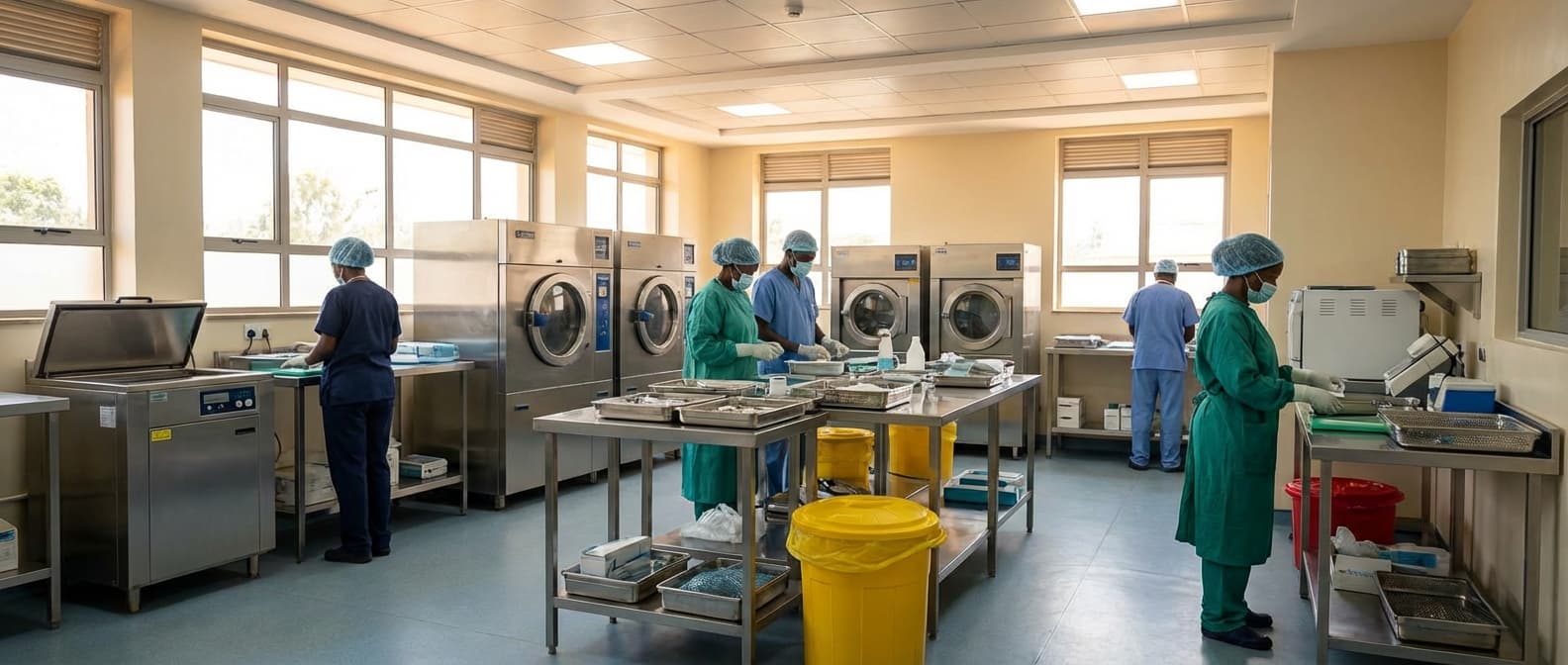
Autoclave Validation Support Service in Ethiopia
Engineering Excellence & Technical Support
Autoclave Validation Support Service High-standard technical execution following OEM protocols and local regulatory frameworks.
Sterilization Efficacy Assurance
Our Autoclave Validation Support Service in Ethiopia provides comprehensive testing and documentation to ensure your autoclaves consistently achieve effective sterilization, meeting stringent international standards and protecting patient safety through rigorous biological and chemical indicator analysis.
Performance Optimization & Compliance
We offer in-depth performance qualification (PQ) and operational qualification (OQ) of autoclaves across Ethiopia, identifying and resolving performance deviations to guarantee optimal functionality, reduce operational costs, and ensure full compliance with Ethiopian healthcare regulations.
Traceability & Record Management
Our service includes meticulous record-keeping and validation reporting, providing Ethiopian healthcare facilities with auditable, traceable documentation for all autoclave validation cycles, simplifying regulatory inspections and enhancing your quality management system.
What Is Autoclave Validation Support Service In Ethiopia?
Autoclave Validation Support Service in Ethiopia refers to the specialized technical services provided to ensure that steam sterilization equipment (autoclaves) within healthcare facilities, laboratories, and other critical sectors consistently and effectively eliminate viable microorganisms. This validation process is crucial for maintaining sterility assurance, preventing healthcare-associated infections (HAIs), and complying with regulatory standards. The service encompasses a series of rigorous tests and documented procedures designed to confirm that the autoclave operates within predefined parameters to achieve a validated level of microbial inactivation across all load types it is intended to sterilize. This is not a one-time event but an ongoing process requiring periodic revalidation and routine performance monitoring.
| Stakeholder/Entity | Reason for Requiring Autoclave Validation Support Service | Typical Use Cases for Autoclaves |
|---|---|---|
| Hospitals and Clinics (Public & Private) | Ensuring sterility of surgical instruments, medical devices, linens, and other critical supplies to prevent HAIs. Compliance with national and international healthcare standards (e.g., ISO 17665). | Sterilization of surgical sets, diagnostic equipment, dressings, gloves, glassware, and laboratory consumables. |
| Diagnostic Laboratories (Medical & Veterinary) | Maintaining sterile environments for accurate diagnostic testing, preventing contamination of samples and reagents. Compliance with Good Laboratory Practices (GLP). | Sterilization of culture media, petri dishes, pipettes, glassware, and laboratory equipment. |
| Pharmaceutical and Biotechnology Companies | Sterilizing equipment and consumables used in research, development, and production to ensure product sterility and prevent microbial contamination. Compliance with Good Manufacturing Practices (GMP). | Sterilization of bioreactors, media preparation equipment, filtration systems, and packaging materials. |
| Dental Practices | Ensuring the sterility of dental instruments (e.g., drills, explorers, scalers) to protect patients from infection. | Sterilization of dental handpieces, explorers, probes, mirrors, and extraction instruments. |
| Research Institutions & Universities (with Biological/Medical Departments) | Maintaining aseptic conditions for scientific experiments and research involving biological materials. | Sterilization of laboratory glassware, media, animal cages, and research equipment. |
| Government Regulatory Bodies & Quality Assurance Agencies | While not direct users, they rely on validated sterilization processes for the safety and efficacy of products and services within their jurisdiction. They may audit validation documentation. | N/A (Auditing and oversight role) |
Components of Autoclave Validation Support Service:
- Installation Qualification (IQ): Verification that the autoclave has been installed correctly according to manufacturer specifications and relevant standards. This includes checking power supply, water quality, environmental conditions, and physical integrity.
- Operational Qualification (OQ): Assessment of the autoclave's functionality within its operating ranges. This involves testing critical parameters such as temperature, pressure, steam penetration, and cycle times across various load configurations. Biological indicators (BIs) and chemical indicators (CIs) are typically used during OQ to confirm efficacy.
- Performance Qualification (PQ): The most critical phase, demonstrating that the validated sterilization process consistently achieves the desired microbial kill for the intended range of loads under actual use conditions. This often involves multiple runs with representative loads, using BIs and CIs to document efficacy.
- Revalidation: Periodic re-testing and documentation to ensure the autoclave continues to meet validation criteria after a specified period, or following significant maintenance, repairs, or modifications. This is mandated by regulatory bodies and best practice guidelines.
- Routine Monitoring & Calibration: Assistance with establishing and maintaining programs for regular performance checks (e.g., daily CI use) and calibration of critical instruments (e.g., temperature probes, pressure gauges) to ensure ongoing operational integrity.
- Documentation & Reporting: Comprehensive generation of validation protocols, test results, certificates of validation, and reports that meet regulatory compliance requirements.
- Troubleshooting & Corrective Actions: Expert support in diagnosing and resolving any performance issues identified during validation or routine operation, including recommending and implementing corrective actions.
Who Needs Autoclave Validation Support Service In Ethiopia?
In Ethiopia, healthcare facilities and laboratories that utilize autoclaves for sterilization purposes require robust autoclave validation support services to ensure the efficacy and safety of their sterilization processes. These services are crucial for maintaining compliance with national and international standards, preventing healthcare-associated infections, and guaranteeing the reliability of sterilized medical equipment and supplies.
| Target Customer Type | Relevant Departments/Functions |
|---|---|
| Hospitals | Central Sterile Supply Department (CSSD)/Sterilization Unit, Operating Theaters, Dental Departments, Laboratories (Microbiology, Pathology), Dialysis Centers, Maternity Wards, Emergency Departments |
| Clinics and Health Centers | Sterilization Area, Nursing Stations, Minor Procedure Rooms |
| Diagnostic Laboratories | General Laboratory Operations, Microbiology, Hematology, Chemistry, Molecular Biology, Veterinary Diagnostics |
| Dental Clinics | Sterilization Room, Treatment Rooms |
| Outpatient Surgical Centers | Sterilization Area, Procedure Rooms |
| Research Institutions | Research Laboratories (requiring sterile consumables and equipment) |
| Pharmaceutical Manufacturing Facilities | Quality Control (QC) Laboratories, Production Areas (for sterilization of equipment and media) |
| Food and Beverage Processing Plants | Quality Assurance (QA) Departments, Production Units (for sterilization of packaging or processing equipment where applicable) |
Target Customers and Departments for Autoclave Validation Support Services in Ethiopia
- Hospitals (Public and Private)
- Clinics and Health Centers
- Diagnostic Laboratories (Medical, Veterinary, Environmental)
- Dental Clinics
- Outpatient Surgical Centers
- Research Institutions
- Pharmaceutical Manufacturing Facilities
- Food and Beverage Processing Plants (requiring sterilization)
Autoclave Validation Support Service Process In Ethiopia
This document outlines the standard workflow for Autoclave Validation Support Services provided in Ethiopia, from the initial inquiry to the final execution and reporting. The process is designed to ensure compliance with relevant standards and regulations, guaranteeing the effectiveness and reliability of autoclave sterilization.
| Stage | Description | Key Activities | Deliverables | Responsible Party |
|---|---|---|---|---|
| Inquiry & Needs Assessment | The client initiates contact to request autoclave validation services. | Client expresses interest, provides details about autoclave type, capacity, and intended use. Service provider conducts preliminary discussion to understand specific needs and regulatory requirements (e.g., Ethiopian FDA guidelines). | Initial understanding of client's requirements, identification of validation scope. | Client, Service Provider |
| Proposal & Quotation | Based on the needs assessment, a detailed proposal and quotation are prepared. | Service provider develops a proposal outlining the validation methodology, scope of work, timeline, and associated costs. Quotation is provided for the proposed services. | Formal proposal document, detailed quotation. | Service Provider |
| Contract Agreement | Upon acceptance of the proposal and quotation, a formal contract is established. | Both parties review and sign a service agreement detailing terms, conditions, responsibilities, and payment schedules. | Signed Service Agreement/Contract. | Client, Service Provider |
| Service Scheduling & Pre-Site Preparation | The validation activities are scheduled, and necessary preparations are made. | Joint scheduling of dates for on-site execution. Client ensures autoclave is operational, clean, and accessible. Service provider prepares validation equipment and documentation. | Agreed-upon service schedule, confirmation of site readiness. | Client, Service Provider |
| On-Site Validation Execution | The actual validation tests are performed at the client's facility. | Installation Qualification (IQ), Operational Qualification (OQ), and Performance Qualification (PQ) are conducted. This includes temperature and pressure mapping, biological indicator testing, and cycle verification according to established protocols. | Raw validation data, test results, calibration certificates for testing equipment. | Service Provider |
| Data Analysis & Reporting | The collected data is analyzed, and a comprehensive validation report is generated. | Service provider analyzes all gathered data, compares it against predefined acceptance criteria. A detailed report is compiled, including findings, conclusions, and recommendations. | Comprehensive Autoclave Validation Report, Certificate of Validation (if criteria are met). | Service Provider |
| Post-Validation Support | Ongoing support and clarification are provided after the validation report is submitted. | Answering client queries regarding the report, providing recommendations for corrective actions if required, and offering advice on future validation cycles or maintenance. | Clarified report, recommendations, ongoing technical support. | Service Provider |
Key Stages of Autoclave Validation Support Service Process
- Inquiry & Needs Assessment
- Proposal & Quotation
- Contract Agreement
- Service Scheduling & Pre-Site Preparation
- On-Site Validation Execution
- Data Analysis & Reporting
- Post-Validation Support
Autoclave Validation Support Service Cost In Ethiopia
The cost of Autoclave Validation Support Services in Ethiopia can vary significantly based on several factors. These services are crucial for ensuring the efficacy and safety of sterilization processes in healthcare facilities, laboratories, and other critical industries. Understanding the pricing structure is vital for budgeting and selecting the right service provider. Key factors influencing cost include the type and number of autoclaves to be validated, the complexity of the validation process, the service provider's expertise and reputation, the geographic location within Ethiopia, and any additional services required.
| Service Component | Estimated Cost Range (ETB - Ethiopian Birr) | Notes |
|---|---|---|
| Initial Autoclave Validation (IQ, OQ, PQ) - Per Unit | 20,000 - 70,000 ETB | Covers comprehensive validation for a single autoclave. Price varies with size, type, and complexity. |
| Re-validation / Periodic Validation - Per Unit | 15,000 - 50,000 ETB | Less extensive than initial validation, often conducted annually or bi-annually. |
| Calibration of Autoclave Probes/Sensors - Per Probe | 3,000 - 8,000 ETB | Essential for accurate temperature and pressure readings. |
| Performance Qualification (PQ) Testing (e.g., Biological Indicators) | 5,000 - 15,000 ETB (per cycle tested) | Cost per biological indicator test run, depends on the number of cycles to be verified. |
| Installation Qualification (IQ) Documentation Review | 5,000 - 12,000 ETB | Review and verification of installation records. |
| Operational Qualification (OQ) Testing | 7,000 - 20,000 ETB | Testing of autoclave functions and parameters. |
| Travel and Accommodation (Outside major cities) | Variable | Dependent on distance and duration of service. Can add 10-30% to the total cost. |
| Report Generation and Documentation | Included in validation cost, but separate requests may incur fees. | Standard for validation, but extensive custom reporting might have additional charges. |
| Emergency Validation Services | Premium pricing (1.5x - 2x standard rates) | For urgent validation needs outside scheduled appointments. |
Factors Influencing Autoclave Validation Support Service Costs in Ethiopia:
- Number and Type of Autoclaves: The more units to validate, the higher the overall cost. Different types of autoclaves (e.g., steam, chemical) might require specialized validation procedures, impacting pricing.
- Scope of Validation: Full validation (Installation Qualification, Operational Qualification, Performance Qualification) is more comprehensive and costly than partial validation or re-validation.
- Service Provider's Expertise and Reputation: Established companies with a proven track record and certified technicians often command higher prices due to their reliability and the quality of their service.
- Geographic Location: Travel and accommodation costs for technicians to reach facilities in remote areas of Ethiopia will be factored into the overall price.
- Frequency of Validation: Regular validation cycles (e.g., annual) might have different pricing structures compared to initial validation or emergency services.
- Additional Services: This could include calibration of associated equipment, training for in-house staff, or the provision of validation documentation and reports.
- Complexity of Sterilization Cycles: Validation for highly complex or critical sterilization cycles may require more detailed testing and analysis, increasing the cost.
- Calibration Standards and Equipment Used: The quality and type of calibration equipment used by the service provider can influence their operational costs and thus their pricing.
Affordable Autoclave Validation Support Service Options
Acquiring reliable autoclave validation is crucial for maintaining sterile environments in healthcare, research, and manufacturing. Recognizing that cost can be a barrier, this guide explores affordable autoclave validation support service options, focusing on value bundles and cost-saving strategies. We aim to empower organizations to meet regulatory requirements without overspending.
| Service Bundle | Key Inclusions | Value Proposition | Cost-Saving Potential |
|---|---|---|---|
| Basic Validation Package | IQ, OQ, and PQ for a single autoclave; standard documentation. | Meets fundamental regulatory requirements for a single unit. | Most cost-effective for single autoclaves or basic needs. |
| Multi-Autoclave Discount Bundle | IQ, OQ, and PQ for multiple autoclaves within the same facility; tiered pricing per unit. | Reduces per-unit validation cost when servicing multiple machines. | Significant savings when validating fleets of autoclaves. |
| Annual Service & Validation Contract | Scheduled preventative maintenance, calibration, and validation (e.g., PQ) on an annual basis. | Proactive maintenance reduces the risk of breakdowns and ensures continuous compliance. | Predictable budgeting, early detection of issues preventing costly repairs, and potential discounts on combined services. |
| Combined Service Offerings | Validation services bundled with other equipment calibration or servicing (e.g., incubators, water baths). | Streamlines service appointments and can lead to volume discounts from a single provider. | Reduces administrative burden and can offer bundled pricing advantages. |
Understanding Affordable Autoclave Validation Support
- Core Service Components: Autoclave validation typically includes installation qualification (IQ), operational qualification (OQ), and performance qualification (PQ). Each phase ensures the autoclave functions as intended and consistently sterilizes effectively.
- Factors Influencing Cost: The price of validation services is determined by the number of cycles to be validated, the type of autoclave, the complexity of its operation, the required documentation, and the service provider's expertise and overhead.
- Importance of Validation: Regular and proper validation ensures patient safety, prevents product contamination, maintains regulatory compliance (e.g., FDA, ISO), and avoids costly recalls or reprocessing.
- Finding Affordable Providers: Seek out reputable service providers that specialize in autoclave validation. Smaller, specialized firms may offer more competitive pricing than large, general service companies.
Verified Providers In Ethiopia
In the dynamic landscape of healthcare in Ethiopia, identifying truly verified and reputable providers is paramount for individuals seeking quality medical services. Franance Health stands out as a beacon of excellence, distinguished by its rigorous credentialing process and unwavering commitment to patient well-being. This document outlines what makes Franance Health's credentials so significant and why they represent the best choice for healthcare needs in Ethiopia.
| Attribute | Franance Health's Approach | Benefits for Patients |
|---|---|---|
| Provider Qualification | Rigorous verification of medical degrees, specialized training, and board certifications from recognized institutions. | Ensures access to highly skilled and knowledgeable medical professionals. |
| Licensing and Regulatory Compliance | Confirmation of active and valid licenses with Ethiopian medical boards and adherence to all relevant healthcare regulations. | Guarantees that providers operate within legal and ethical frameworks, offering safe and legitimate medical services. |
| Clinical Experience | Assessment of practical experience in relevant medical specialties and demonstrated proficiency in patient care. | Connects patients with experienced practitioners who have a proven track record in managing various health conditions. |
| Ethical Standards | Commitment to upholding the highest ethical principles in patient care, including confidentiality, respect, and informed consent. | Fosters trust and confidence in the patient-provider relationship, promoting a supportive healing environment. |
| Facility Standards (for affiliated clinics/hospitals) | Verification of state-of-the-art equipment, hygiene protocols, and adherence to safety standards. | Provides access to well-equipped and safe healthcare facilities, enhancing the quality of treatment and recovery. |
Understanding Franance Health's Verification Process
- Strict Accreditation Standards: Franance Health adheres to international best practices for healthcare facility and professional accreditation, ensuring all affiliated providers meet or exceed these benchmarks.
- Comprehensive Background Checks: Every healthcare professional undergoes thorough vetting, including verification of educational qualifications, licensing, and professional history.
- Continuous Quality Assurance: Franance Health implements ongoing monitoring and evaluation of its providers to ensure consistent delivery of high-quality care and adherence to ethical standards.
- Patient Feedback Integration: Patient experiences and feedback are actively collected and used to refine services and identify areas for improvement among their network.
- Specialized Expertise Validation: For specialized medical fields, Franance Health verifies specific training, certifications, and proven experience, ensuring patients are connected with the right experts.
Scope Of Work For Autoclave Validation Support Service
This Scope of Work (SOW) outlines the services to be provided by the Vendor for Autoclave Validation Support. The objective is to ensure that the Client's autoclaves are operating within validated parameters, meeting all relevant regulatory requirements, and performing effectively for their intended use. This includes a comprehensive approach to validation, covering Installation Qualification (IQ), Operational Qualification (OQ), and Performance Qualification (PQ). The Vendor will provide all necessary expertise, documentation, and calibration services for a successful validation lifecycle. The technical deliverables will be provided in accordance with established industry standards and regulatory guidelines.
| Deliverable Type | Description | Standard Specification / Requirement | Format | Acceptance Criteria |
|---|---|---|---|---|
| Installation Qualification (IQ) Protocol | Document detailing the procedures to verify that the autoclave is installed correctly and meets all specifications. | ISA S88.01 (or equivalent process control standard), manufacturer's specifications, Client's site requirements. | Electronic (PDF) | Approval by Client's designated representative prior to execution. |
| Installation Qualification (IQ) Report | Document summarizing the results of the IQ execution, confirming proper installation. | Completed IQ protocol with all executed tests, deviations, and sign-offs. | Electronic (PDF) | Sign-off by Client's designated representative. |
| Operational Qualification (OQ) Protocol | Document detailing the procedures to verify that the autoclave operates consistently within its defined operational range. | ISA S88.01 (or equivalent), manufacturer's specifications, regulatory guidelines (e.g., PDA TR 18.1, GHTF), Client's critical process parameters (CPPs). | Electronic (PDF) | Approval by Client's designated representative prior to execution. |
| Operational Qualification (OQ) Report | Document summarizing the results of the OQ execution, confirming operational consistency and adherence to parameters. | Completed OQ protocol with all executed tests, recorded data, deviations, and sign-offs. | Electronic (PDF) | Sign-off by Client's designated representative. |
| Performance Qualification (PQ) Protocol | Document detailing the procedures to verify that the autoclave consistently performs according to its intended use under normal operating conditions. | ISA S88.01 (or equivalent), Client's product/process specific requirements, bioburden reduction targets, sterilant efficacy requirements, regulatory guidelines. | Electronic (PDF) | Approval by Client's designated representative prior to execution. |
| Performance Qualification (PQ) Report | Document summarizing the results of the PQ execution, confirming consistent and effective performance for the intended application. | Completed PQ protocol with all executed tests, recorded data, bioburden/sterility test results (if applicable), deviations, and sign-offs. | Electronic (PDF) | Sign-off by Client's designated representative. |
| Calibration Certificates (for testing equipment) | Certificates demonstrating that all measurement and testing equipment used during validation is calibrated and traceable to national or international standards. | ISO/IEC 17025 accredited calibration laboratories, NIST traceability (or equivalent). | Electronic (PDF) | Current and valid calibration certificates for all relevant equipment used. |
| Validation Summary Report | A consolidated report summarizing the findings and conclusions of the IQ, OQ, and PQ activities, providing an overall assessment of the autoclave's validated status. | Comprehensive review of all IQ, OQ, and PQ reports and data. | Electronic (PDF) | Sign-off by Client's designated representative. |
| Executed Test Records | Raw data and completed test forms generated during the execution of the IQ, OQ, and PQ protocols. | Clearly legible, dated, and signed by the executing personnel. | Electronic (PDF or native data files) | Complete and organized, readily available for review. |
| Equipment Logbooks | Records of autoclave operation, maintenance, and repairs maintained during the validation period. | Must be current, accurate, and reflect all operational activities. | Physical logbook or approved electronic system. | Complete and accurate, accessible for review. |
Key Objectives
- To perform IQ, OQ, and PQ for specified autoclave units.
- To ensure the autoclaves meet predefined performance criteria and regulatory requirements (e.g., FDA, ISO).
- To provide comprehensive documentation of all validation activities, including reports, protocols, and calibration certificates.
- To offer recommendations for process optimization and ongoing monitoring, if required.
- To ensure minimal disruption to the Client's operations during the validation process.
Service Level Agreement For Autoclave Validation Support Service
This Service Level Agreement (SLA) outlines the performance commitments for the Autoclave Validation Support Service provided by [Your Company Name] to [Client Company Name]. It defines the expected response times for support requests and the guaranteed uptime of the remote monitoring and data logging systems associated with the validation process.
| Service Component | Response Time Guarantee | Uptime Guarantee |
|---|---|---|
| Critical Support Incident (e.g., autoclave failure preventing production) | 1-hour response for initial assessment and troubleshooting initiation. | N/A (Focus on rapid resolution) |
| High Priority Support Incident (e.g., validation failure requiring immediate attention) | 2-hour response for initial assessment and troubleshooting initiation. | N/A (Focus on rapid resolution) |
| Medium Priority Support Incident (e.g., general inquiry or minor performance issue) | 4-hour response for initial assessment and troubleshooting initiation. | N/A (Focus on rapid resolution) |
| Low Priority Support Incident (e.g., feature request or non-critical question) | 8-business hour response for initial assessment and troubleshooting initiation. | N/A (Focus on rapid resolution) |
| Remote Monitoring & Data Logging System Availability | N/A (Covered by Uptime Guarantee) | 99.5% (Excluding scheduled maintenance) |
Scope of Service
- On-site and remote support for autoclave validation procedures.
- Troubleshooting and diagnostic assistance for validation equipment.
- Data analysis and reporting related to autoclave performance.
- Management and maintenance of remote monitoring and data logging systems.
Frequently Asked Questions

Ready when you are
Let's scope your Autoclave Validation Support Service in Ethiopia project in Ethiopia.

Scaling healthcare logistics and technical systems across the entire continent.