
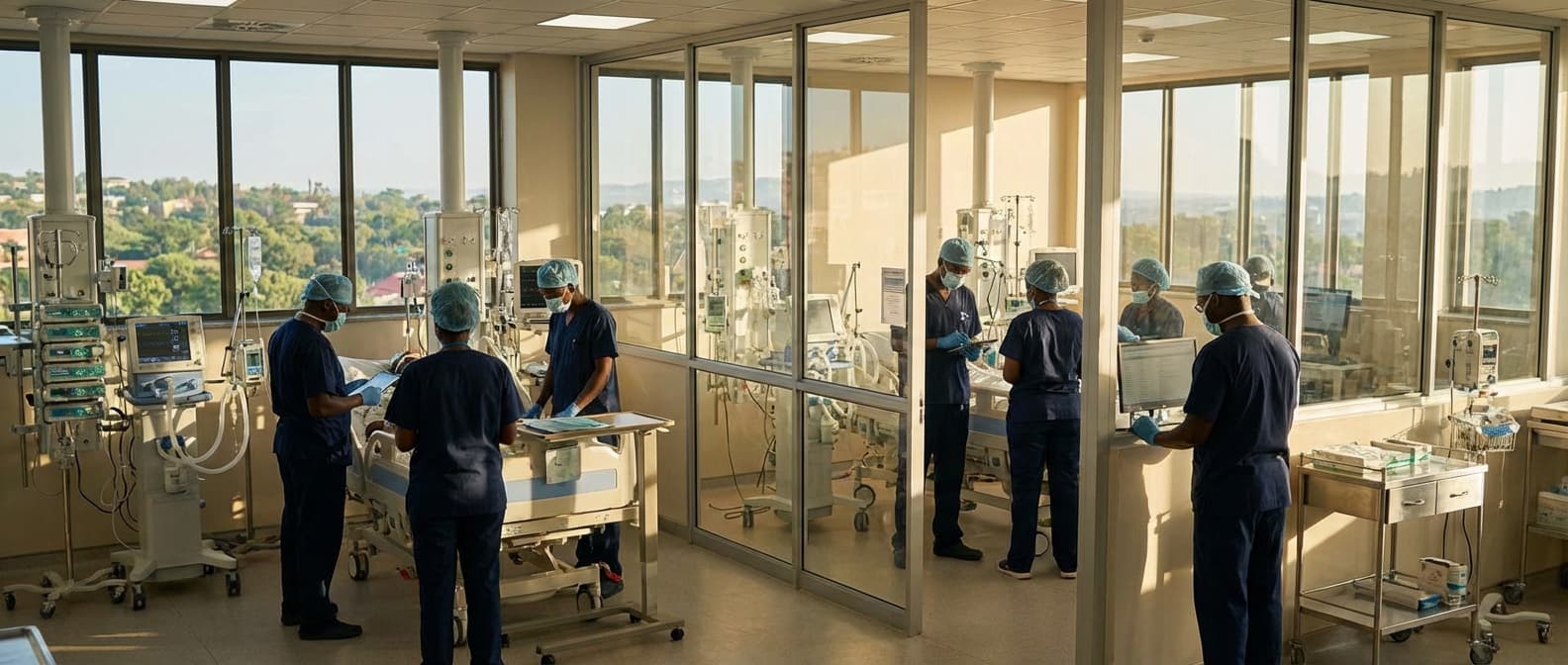
Ventilator Fleet Management & PM in Ethiopia
Engineering Excellence & Technical Support
Preventive maintenance and fleet management for ICU ventilators High-standard technical execution following OEM protocols and local regulatory frameworks.
Centralized Cloud-Based Fleet Monitoring
Implement a secure, cloud-based platform for real-time tracking of all ventilator locations, usage status, and maintenance schedules across Ethiopia, enabling proactive resource allocation and rapid response to critical needs.
Predictive Maintenance & Automated Alerts
Leverage sensor data and historical performance to predict potential equipment failures, triggering automated maintenance alerts and work orders to authorized technicians, minimizing downtime and ensuring patient safety.
Mobile App for Field Technicians
Develop a user-friendly mobile application for field technicians, providing access to equipment manuals, diagnostic tools, repair histories, and enabling digital reporting of completed maintenance tasks, enhancing efficiency and data accuracy.
What Is Ventilator Fleet Management & Pm In Ethiopia?
Ventilator Fleet Management & Preventive Maintenance (PM) in Ethiopia refers to the systematic and comprehensive operational and maintenance strategies employed for a collection of mechanical ventilators within healthcare facilities. This service encompasses the lifecycle management of ventilators, from initial acquisition and deployment to ongoing operation, performance monitoring, repair, and eventual decommissioning. The primary objective is to ensure the consistent availability, reliability, and optimal performance of these critical life-support devices, thereby supporting patient care and public health infrastructure.
| Stakeholder/Entity | Need for Ventilator Fleet Management & PM | Typical Use Cases |
|---|---|---|
| Public Hospitals (Federal and Regional) | High volume of critical care patients requiring mechanical ventilation; limited budgets for frequent equipment replacement; need for standardization and centralized support; ensuring equitable access to functional equipment across diverse geographic locations. | Managing ventilator fleets in intensive care units (ICUs), operating theaters, emergency departments, and isolation wards; supporting pandemic preparedness and response; optimizing resource allocation for maintenance and repair; standardizing training protocols for clinical staff. |
| Private Hospitals and Clinics | Maintaining high standards of patient care and service quality; minimizing revenue loss due to equipment downtime; ensuring compliance with private accreditation bodies; efficient management of a potentially smaller but critical asset base. | Ensuring the availability of ventilators for elective surgeries and critical care admissions; offering specialized respiratory support services; managing contracts with third-party maintenance providers; implementing proactive PM schedules to guarantee uptime. |
| Ministry of Health (MoH) and Regional Health Bureaus | Ensuring national health system resilience; setting and enforcing standards for medical equipment; facilitating procurement and distribution; monitoring the availability and functionality of critical medical devices across the country; strategic planning for healthcare infrastructure. | Developing national guidelines for ventilator procurement, maintenance, and management; coordinating large-scale equipment deployment and support during health emergencies; conducting audits of healthcare facilities' biomedical engineering capacity; facilitating training programs for biomedical technicians. |
| Non-Governmental Organizations (NGOs) and International Aid Agencies | Supporting healthcare initiatives in underserved areas; providing essential medical equipment and training; ensuring the sustainability of donated equipment; demonstrating accountability for donor funds. | Establishing and managing ventilator fleets in project-specific healthcare facilities; training local biomedical staff on maintenance and repair; implementing remote monitoring solutions for equipment in hard-to-reach areas; contributing to the long-term operational viability of critical care infrastructure. |
| Biomedical Engineering Departments/Service Providers | Delivering specialized technical expertise; ensuring adherence to best practices in equipment maintenance; managing service contracts and warranties; optimizing the cost-effectiveness of maintenance operations. | Performing scheduled PM and unscheduled repairs on various ventilator models; conducting performance validation and safety testing; managing spare parts inventory; offering outsourced maintenance services to multiple healthcare facilities. |
Key Components of Ventilator Fleet Management & PM in Ethiopia
- Asset Inventory and Tracking: Maintaining a detailed registry of all ventilators, including make, model, serial number, acquisition date, location, and current operational status.
- Installation and Commissioning: Ensuring proper setup, calibration, and functional testing of new ventilators to meet manufacturer specifications and clinical requirements.
- Routine Inspections and Testing: Scheduled visual checks, operational diagnostics, and safety verifications to identify potential issues before they lead to failure.
- Preventive Maintenance (PM): Performing regular, manufacturer-recommended maintenance tasks, including cleaning, lubrication, filter replacement, battery checks, and software updates, to extend equipment lifespan and minimize unexpected breakdowns.
- Corrective Maintenance and Repair: Prompt diagnosis and repair of malfunctioning ventilators by qualified biomedical engineers or technicians, utilizing appropriate parts and procedures.
- Performance Monitoring and Data Analysis: Collecting and analyzing operational data (e.g., usage hours, alarm frequency, repair history) to identify trends, predict failures, and optimize maintenance schedules.
- Training and Competency Assessment: Providing ongoing training for clinical staff on proper ventilator operation and basic troubleshooting, and for biomedical personnel on advanced maintenance and repair.
- Regulatory Compliance: Adhering to national and international standards and guidelines for medical equipment management and safety.
- Lifecycle Planning: Developing strategies for equipment replacement, upgrade, and disposal based on age, performance, and technological advancements.
- Consumables and Spare Parts Management: Ensuring the availability of essential consumables (e.g., filters, tubing) and critical spare parts to minimize downtime during repairs.
Who Needs Ventilator Fleet Management & Pm In Ethiopia?
In Ethiopia, the efficient and reliable operation of ventilators is critical for patient care, particularly in intensive care units (ICUs) and emergency settings. Ventilator fleet management and preventative maintenance (PM) are essential to ensure these life-saving devices are always ready, calibrated, and functioning optimally. This prevents unexpected breakdowns during critical procedures, extends the lifespan of expensive equipment, and ultimately contributes to better patient outcomes by reducing delays in treatment and improving the overall quality of healthcare.
| Target Customer | Key Departments Involved |
|---|---|
| Public Hospitals (Federal, Regional, Zonal) | Intensive Care Units (ICUs), Anesthesiology Departments, Respiratory Therapy Departments, Biomedical Engineering Departments, Procurement Departments, Maintenance Departments |
| Private Hospitals & Specialist Clinics | ICUs, Anesthesiology, Critical Care, Biomedical Engineering, Facilities Management, Procurement |
| Tertiary & Teaching Hospitals | ICUs, Anesthesia, Pulmonary Medicine, Biomedical Engineering, Clinical Engineering, Training & Education Departments |
| Ministry of Health (Federal & Regional) | Health Infrastructure Department, Medical Equipment Procurement & Management Units, Public Health Emergency Management Departments, National Health Laboratory Services |
| International NGOs & Humanitarian Organizations | Medical Programs, Logistics & Supply Chain Departments, Field Operations, Project Management Teams |
| Medical Equipment Distributors & Service Agents | Sales & Marketing Departments, Field Service Engineers, Technical Support Teams, After-Sales Service Departments |
Who Needs Ventilator Fleet Management & PM in Ethiopia? Target Customers & Departments
- Healthcare Institutions (Hospitals, Clinics)
- Government Health Agencies
- Non-Governmental Organizations (NGOs) involved in healthcare
- Medical Equipment Suppliers & Service Providers
Ventilator Fleet Management & Pm Process In Ethiopia
This document outlines the workflow for managing the ventilator fleet and the preventive maintenance (PM) process in Ethiopia. The process encompasses the entire lifecycle from initial inquiry to the successful execution of maintenance tasks, ensuring the optimal functioning and availability of critical medical equipment.
| Stage | Description | Key Activities | Responsible Parties | Key Outputs/Deliverables |
|---|---|---|---|---|
| Inquiry & Needs Assessment | Initial request or identification of the need for ventilators or PM services. | Receiving and documenting inquiries, assessing immediate needs, identifying existing fleet status, determining PM requirements based on usage and manufacturer recommendations. | Ministry of Health (MoH), Regional Health Bureaus (RHBs), Hospital/Health Facility Management, Biomedical Engineering Department (if applicable). | Documented inquiry, needs assessment report, initial understanding of resource requirements. |
| Procurement & Acquisition | Process of acquiring new ventilators or parts and consumables for PM. | Tender preparation, supplier selection, contract negotiation, order placement, customs clearance, logistics and delivery. | MoH Procurement Unit, Ministry of Finance, Suppliers. | Acquired ventilators, approved purchase orders, delivery notes, invoices. |
| Inventory & Registration | Formalizing the addition of new ventilators to the national or regional asset registry. | Receiving, inspecting, and tagging new equipment, updating asset management systems, assigning unique identification numbers, recording serial numbers, model, purchase date, warranty information. | Biomedical Engineering Department (BED), Hospital/Health Facility Management, Central Stores. | Updated asset registry, tagged ventilators, inventory reports. |
| Preventive Maintenance Scheduling | Proactive planning of routine maintenance to prevent equipment failure. | Developing PM schedules based on manufacturer guidelines, usage hours, environmental factors, and historical data; identifying equipment due for PM; allocating resources (technicians, parts). | Biomedical Engineering Department (National/Regional), Hospital Biomedical Teams. | PM schedule, list of equipment due for PM, resource allocation plan. |
| Work Order Generation | Formalizing the authorization and detailing of PM tasks. | Creating detailed work orders based on the PM schedule, including specific tasks, required parts, tools, safety precautions, and estimated time; assigning work orders to specific technicians. | Biomedical Engineering Department (National/Regional), Hospital Biomedical Teams. | Generated and assigned work orders. |
| Technician Dispatch & Execution | Carrying out the scheduled preventive maintenance. | Technicians arriving at the site, performing inspections, cleaning, calibration, lubrication, part replacements as per work order, recording observations and any issues identified. | Biomedical Engineering Technicians, Field Service Engineers (if applicable). | Completed PM tasks on ventilators, recorded maintenance logs. |
| Parts & Consumables Management | Ensuring availability and proper usage of spare parts and consumables for PM. | Inventorying PM parts and consumables, managing stock levels, requisitioning parts when needed, tracking usage against work orders, ensuring proper storage and handling. | Central Stores, Regional Stores, Hospital Stores, Biomedical Engineering Department. | Adequate stock of PM parts, accurate inventory records, parts usage reports. |
| Quality Assurance & Verification | Ensuring the PM was performed correctly and the equipment is functioning optimally. | Reviewing completed work orders, conducting functional tests, performance verification, and calibration checks, ensuring adherence to standards and protocols. | Biomedical Engineering Department Supervisors, Senior Technicians, Quality Assurance Officers. | Verified and functional ventilators, signed-off work orders, QA reports. |
| Documentation & Reporting | Maintaining comprehensive records of all maintenance activities. | Updating asset management system with PM details, filing work orders and associated documentation, generating PM completion reports, maintenance history reports, and compliance reports. | Biomedical Engineering Department (National/Regional/Hospital), Data Clerks. | Comprehensive maintenance records, PM reports, updated asset registry, audit trails. |
| Fleet Performance Monitoring & Analysis | Evaluating the overall health and reliability of the ventilator fleet. | Analyzing PM data, failure rates, downtime, cost of maintenance, identifying trends, recommending improvements to PM schedules or equipment replacement strategies. | Biomedical Engineering Department (National/Regional), MoH Planning Department, Data Analysts. | Fleet performance reports, recommendations for improvement, strategic planning insights. |
Key Stages of Ventilator Fleet Management & PM Process
- Inquiry & Needs Assessment
- Procurement & Acquisition
- Inventory & Registration
- Preventive Maintenance Scheduling
- Work Order Generation
- Technician Dispatch & Execution
- Parts & Consumables Management
- Quality Assurance & Verification
- Documentation & Reporting
- Fleet Performance Monitoring & Analysis
Ventilator Fleet Management & Pm Cost In Ethiopia
Effective ventilator fleet management is crucial for healthcare systems in Ethiopia, ensuring timely maintenance and operational readiness. This involves proactive preventive maintenance (PM) to minimize breakdowns and costly emergency repairs. The cost of PM for ventilators in Ethiopia is influenced by several key factors, making it difficult to provide a single fixed price. These factors include the type and model of the ventilator, the age and condition of the equipment, the complexity of the PM tasks, the availability of spare parts, the labor rates of qualified technicians, and the location of the service provider (e.g., capital city vs. regional areas). PM typically involves routine checks, calibration, cleaning, filter replacement, and minor part replacements. Larger, more complex, or specialized ventilators will naturally incur higher PM costs due to more intricate components and potentially higher technician expertise required. Furthermore, the accessibility and cost of genuine OEM (Original Equipment Manufacturer) spare parts are significant drivers of pricing. Local service providers may offer varying price structures, and some may also include service contract options that bundle PM with other benefits. The Ethiopian Birr (ETB) is the local currency, and pricing is therefore quoted in ETB.
| Ventilator Category | Estimated Annual PM Cost Range (ETB) | Notes |
|---|---|---|
| Basic Transport Ventilators (e.g., Manual Resuscitators, simple pneumatically powered) | 10,000 - 30,000 ETB | Typically includes periodic inspection, valve checks, and hose replacement. Parts are generally simpler and cheaper. |
| Mid-range Portable/Ward Ventilators (e.g., some basic critical care functions, less advanced controls) | 30,000 - 75,000 ETB | Requires more detailed calibration, sensor checks, and potential replacement of smaller electronic components or filters. Requires trained biomedical technicians. |
| Advanced ICU Ventilators (e.g., comprehensive critical care features, invasive and non-invasive ventilation, advanced monitoring) | 75,000 - 200,000+ ETB | Involves complex electronic checks, pneumatic system calibration, advanced software diagnostics, and higher likelihood of needing OEM-specific spare parts. Requires highly specialized technicians and potentially manufacturer-certified service. |
| Specialized/Neonatal Ventilators | 60,000 - 180,000+ ETB | Similar complexity to ICU ventilators but with specialized features for neonates, often requiring even more precise calibration and specific parts. |
Key Pricing Factors for Ventilator Fleet Management & PM in Ethiopia
- Ventilator Type and Model: Advanced and complex ventilators (e.g., ICU ventilators) will have higher PM costs than simpler transport ventilators.
- Age and Condition of Equipment: Older ventilators or those in poorer condition may require more frequent and extensive maintenance, increasing PM costs.
- Complexity of PM Tasks: The scope of the maintenance routine (e.g., basic checks vs. in-depth diagnostics and calibration) directly impacts cost.
- Availability and Cost of Spare Parts: Genuine OEM parts can be expensive and sometimes difficult to source in Ethiopia, driving up PM expenses.
- Technician Expertise and Labor Rates: Specialized biomedical engineers and technicians command higher salaries. Labor rates can vary significantly between service providers and geographic locations.
- Location of Service Provider: PM costs may be higher in major urban centers like Addis Ababa due to higher overheads and demand.
- Service Contract vs. Ad-hoc Service: Bundled service contracts often offer predictable annual costs, while ad-hoc repairs can be more expensive per incident.
- Service Provider's Overhead and Profit Margins: Different companies will have varying operational costs and pricing strategies.
Affordable Ventilator Fleet Management & Pm Options
Efficiently managing a fleet of ventilators, especially for healthcare organizations with budget constraints, requires a strategic approach that balances maintenance, repair, and acquisition costs. This document outlines affordable ventilator fleet management and Preventive Maintenance (PM) options, highlighting value bundles and cost-saving strategies to optimize your investment.
| Strategy | Description | Potential Cost Savings | Implementation Considerations |
|---|---|---|---|
| Preventive Maintenance (PM) Optimization | Adhering to manufacturer-recommended PM schedules to prevent failures. Consider risk-based PM where frequency is adjusted based on equipment usage and failure history. | Reduced downtime, extended equipment lifespan, lower emergency repair costs. | Develop a robust PM tracking system. Calibrate PM schedules based on actual usage and environmental factors. |
| Managed Service Contracts | Outsourcing all or a portion of your fleet maintenance to a specialized third-party provider. This can be more cost-effective than maintaining an in-house team for smaller fleets. | Lower labor costs, access to expert technicians, predictable budgeting. | Clearly define scope of services, response times, and reporting requirements. Vet potential providers thoroughly. |
| Equipment Lifecycle Management | Strategic planning for acquisition, maintenance, and eventual replacement of ventilators. This includes budgeting for future needs and understanding total cost of ownership. | Avoids costly emergency replacements, optimizes capital expenditure, ensures technological relevance. | Establish clear criteria for equipment retirement. Track total cost of ownership for each unit. |
| Centralized Service & Repair | Establishing a central hub for repairs and maintenance, especially for multi-site organizations, to leverage economies of scale and streamline logistics. | Reduced shipping costs, efficient technician deployment, better inventory management. | Requires dedicated space and qualified personnel. Invest in diagnostic tools and test equipment. |
| Parts Standardization & Bulk Purchasing | Where possible, standardize on specific ventilator models to simplify parts inventory and negotiate bulk discounts for common components. | Reduced parts inventory holding costs, lower per-unit part costs, faster repair times. | Requires careful fleet assessment and vendor negotiation. May limit model diversity. |
Key Value Bundles & Cost-Saving Strategies
- {"title":"Value Bundles","description":"Bundling services can often lead to significant cost reductions compared to procuring individual services. These bundles are designed to streamline operations and offer predictable costs."}
- {"title":"Comprehensive Maintenance Contracts","description":"These contracts often include scheduled PM, on-demand repairs, parts, labor, and sometimes even loaner units. Negotiating longer-term contracts can unlock deeper discounts."}
- {"title":"Tiered Service Levels","description":"Offer different levels of service to match your needs and budget. Basic packages might cover only PM, while premium packages include advanced diagnostics, priority response, and software updates."}
- {"title":"Equipment Refurbishment Programs","description":"Instead of always purchasing new, consider refurbished ventilators. Reputable vendors offer certified refurbished units with warranties, providing a substantial cost saving without compromising quality."}
- {"title":"Extended Warranties & Service Agreements","description":"While an upfront cost, extending warranties beyond the manufacturer's initial period can protect against unexpected high repair bills, especially for older or more frequently used equipment."}
- {"title":"Predictive Maintenance Solutions","description":"Leveraging IoT and advanced analytics to predict potential equipment failures before they occur. This proactive approach minimizes downtime and costly emergency repairs."}
- {"title":"Parts Inventory Management","description":"Optimizing spare parts inventory to ensure availability of critical components while minimizing excess stock. This can involve vendor-managed inventory or collaborative purchasing."}
- {"title":"Training & Skill Development","description":"Investing in in-house biomedical engineering staff training can reduce reliance on external service providers for basic maintenance and troubleshooting."}
- {"title":"Leasing vs. Purchasing Analysis","description":"Evaluate whether leasing new equipment with included maintenance offers a better financial picture than outright purchasing, especially for rapidly evolving technology."}
- {"title":"Vendor Consolidation","description":"Consolidating your ventilator service needs with fewer, trusted vendors can lead to better pricing and stronger partnership opportunities."}
Verified Providers In Ethiopia
In the rapidly evolving healthcare landscape of Ethiopia, identifying genuinely qualified and ethical healthcare providers is paramount. "Verified Providers" is a crucial concept that assures patients they are receiving care from professionals who meet rigorous standards. Franance Health stands out as a premier example of such a verified provider, demonstrating a steadfast commitment to excellence, patient well-being, and adherence to ethical practices. Their credentialing process and dedication to quality care make them the optimal choice for individuals seeking reliable and effective medical services in Ethiopia.
| Feature | Franance Health's Commitment | Benefit to Patients |
|---|---|---|
| Credential Verification | Thorough vetting of licenses, certifications, and experience. | Assurance of competence and qualification. |
| Continuing Education | Mandated and supported ongoing training. | Access to the latest medical knowledge and treatments. |
| Ethical Practice | Prioritization of patient rights, confidentiality, and respect. | Trustworthy and dignified healthcare experience. |
| Communication Clarity | Clear explanations of conditions and treatments. | Informed decision-making and active participation in care. |
| Evidence-Based Care | Application of scientific research and proven methods. | Effective and safe medical interventions. |
Why Franance Health Represents the Best Choice for Verified Healthcare in Ethiopia:
- Rigorous Credentialing and Verification Process: Franance Health goes above and beyond standard verification. They meticulously vet all their healthcare professionals, ensuring they possess the necessary licenses, certifications, and proven experience. This includes background checks and confirmation of their standing within their respective medical boards.
- Commitment to Continuous Professional Development: The medical field is constantly advancing. Franance Health mandates and supports ongoing training and education for its providers, ensuring they are up-to-date with the latest medical knowledge, technologies, and treatment protocols.
- Adherence to Ethical Standards and Patient-Centric Care: Ethical conduct is a cornerstone of Franance Health's philosophy. They prioritize patient confidentiality, informed consent, and compassionate care. Their providers are trained to treat every patient with respect and dignity, fostering a trusting healthcare environment.
- Transparent Communication and Patient Education: Franance Health believes in empowering patients. Their providers are committed to clear and understandable communication, explaining diagnoses, treatment options, and potential outcomes in a way that patients can readily grasp. This promotes active participation in their healthcare journey.
- Focus on Evidence-Based Medicine: All treatment and diagnostic approaches at Franance Health are grounded in evidence-based medicine. This means relying on scientific research and proven methodologies to deliver the most effective and safe care possible.
- Integrated Approach to Healthcare: Franance Health often emphasizes a holistic approach, considering the patient's overall well-being rather than just treating isolated symptoms. This can involve collaboration between different specialists and disciplines.
- Patient Testimonials and Reputation: The positive experiences and trust of their patients are a testament to Franance Health's quality. Their strong reputation within the community is built on consistent delivery of excellent care and patient satisfaction.
Scope Of Work For Ventilator Fleet Management & Pm
This Scope of Work (SOW) outlines the requirements for a comprehensive Ventilator Fleet Management and Preventive Maintenance (PM) program. The program aims to ensure the optimal performance, reliability, and safety of the organization's ventilator fleet through proactive maintenance, efficient asset tracking, and robust reporting. This SOW details the technical deliverables expected from the service provider and establishes standard specifications for all aspects of the program.
| Technical Deliverable | Description | Standard Specification/Requirement | Frequency/Timeline |
|---|---|---|---|
| Ventilator Inventory Management System (VIMS) | A comprehensive system for tracking all ventilators, including serial numbers, model, purchase date, location, maintenance history, and calibration status. | Cloud-based or on-premise solution, secure access controls, robust search and filtering capabilities, integration with existing IT infrastructure (if applicable). | Initial setup within 30 days of contract commencement; ongoing updates as required. |
| Preventive Maintenance (PM) Schedule Development | Detailed PM plans for each ventilator model based on manufacturer recommendations and industry best practices. | Includes specific tasks, required parts, tools, and testing procedures for each PM level. | Developed within 60 days of contract commencement; reviewed and updated annually or as per manufacturer recommendations. |
| Scheduled Preventive Maintenance (PM) Execution | Performance of all scheduled PM tasks on the ventilator fleet. | Adherence to manufacturer's service manuals and established PM protocols. Use of calibrated test equipment. | As per the approved PM schedule (e.g., quarterly, semi-annually, annually). |
| Corrective Maintenance & Repair Services | Prompt and effective repair of ventilators that have malfunctioned or are out of service. | Minimum response time for critical equipment failure (e.g., 4 hours). Use of OEM-approved or equivalent parts. Post-repair functional testing and safety checks. | On-demand, as needed. Service Level Agreements (SLAs) for response and repair times will be defined. |
| Calibration Services | Regular calibration of all critical ventilator parameters to ensure accuracy. | Performed by certified technicians using traceable, calibrated test equipment. Calibration certificates issued for each unit. | As per manufacturer recommendations and regulatory requirements (e.g., annually). |
| Performance Testing & Verification | Comprehensive functional and performance testing after PM or repairs. | Includes verification of all ventilation modes, alarms, and safety features. Documentation of test results. | After each PM and corrective maintenance event. |
| Parts Inventory Management | Maintenance of a sufficient stock of critical spare parts for common repairs and PMs. | Real-time tracking of parts inventory, minimum stock levels, and reorder points. Use of OEM-approved or equivalent parts. | Ongoing management; quarterly inventory audit. |
| Reporting & Analytics | Regular reports on fleet status, PM compliance, repair history, downtime, and cost analysis. | Standardized report templates including executive summaries, detailed technical data, and trend analysis. Monthly and quarterly reporting. | Monthly and quarterly. |
| Technical Training & Support | Provision of technical training for on-site biomedical engineering staff on basic maintenance and troubleshooting. | Training modules to cover common issues, basic PM tasks, and proper equipment handling. On-demand technical support. | Initial training provided within 90 days of contract commencement; ongoing refreshers as needed. |
| Regulatory Compliance Documentation | Maintenance of all documentation required for regulatory compliance (e.g., FDA, Joint Commission). | Records of all maintenance, repairs, calibrations, and certifications readily available for audit. Compliance with relevant standards (e.g., ISO 13485). | Ongoing; audit-ready at all times. |
| Asset Tagging & Identification | Unique and durable tagging of all ventilators for accurate tracking. | Barcodes or RFID tags, clearly visible and resistant to cleaning agents and environmental factors. | Initial tagging upon contract commencement; ongoing for new acquisitions. |
Key Program Objectives
- Maximize ventilator uptime and availability.
- Ensure patient safety by maintaining ventilators in optimal working condition.
- Extend the operational lifespan of ventilator assets.
- Control maintenance costs through scheduled preventive actions.
- Maintain regulatory compliance for medical device maintenance.
- Provide accurate and timely data for fleet utilization and performance analysis.
- Minimize unscheduled downtime and emergency repairs.
Service Level Agreement For Ventilator Fleet Management & Pm
This Service Level Agreement (SLA) outlines the terms and conditions for the management and preventative maintenance (PM) of the designated ventilator fleet. It defines response times for critical issues and guarantees a minimum uptime for the serviced equipment.
| Service Category | Response Time (Critical) | Resolution Target (Critical) | Response Time (Non-Critical) | Uptime Guarantee |
|---|---|---|---|---|
| Equipment Malfunction (Critical - impacting patient care) | 1 hour from notification | 4 hours from notification (on-site) | 8 business hours from notification | 95% of scheduled operational time |
| Scheduled Preventative Maintenance (PM) | N/A (scheduled) | As per PM schedule | N/A (scheduled) | N/A (scheduled) |
| Minor Equipment Malfunction (Non-critical - does not impact immediate patient care) | N/A | 24-48 business hours from notification | 8 business hours from notification | 95% of scheduled operational time |
| PM Completion & Reporting | N/A | 5 business days after scheduled PM | N/A | N/A |
Key Service Components
- Ventilator Fleet Inventory Management
- Scheduled Preventative Maintenance (PM)
- On-Demand Repair and Troubleshooting
- Performance Monitoring and Reporting
- Spare Parts Management
Frequently Asked Questions

Ready when you are
Let's scope your Ventilator Fleet Management & PM in Ethiopia project in Ethiopia.

Scaling healthcare logistics and technical systems across the entire continent.