
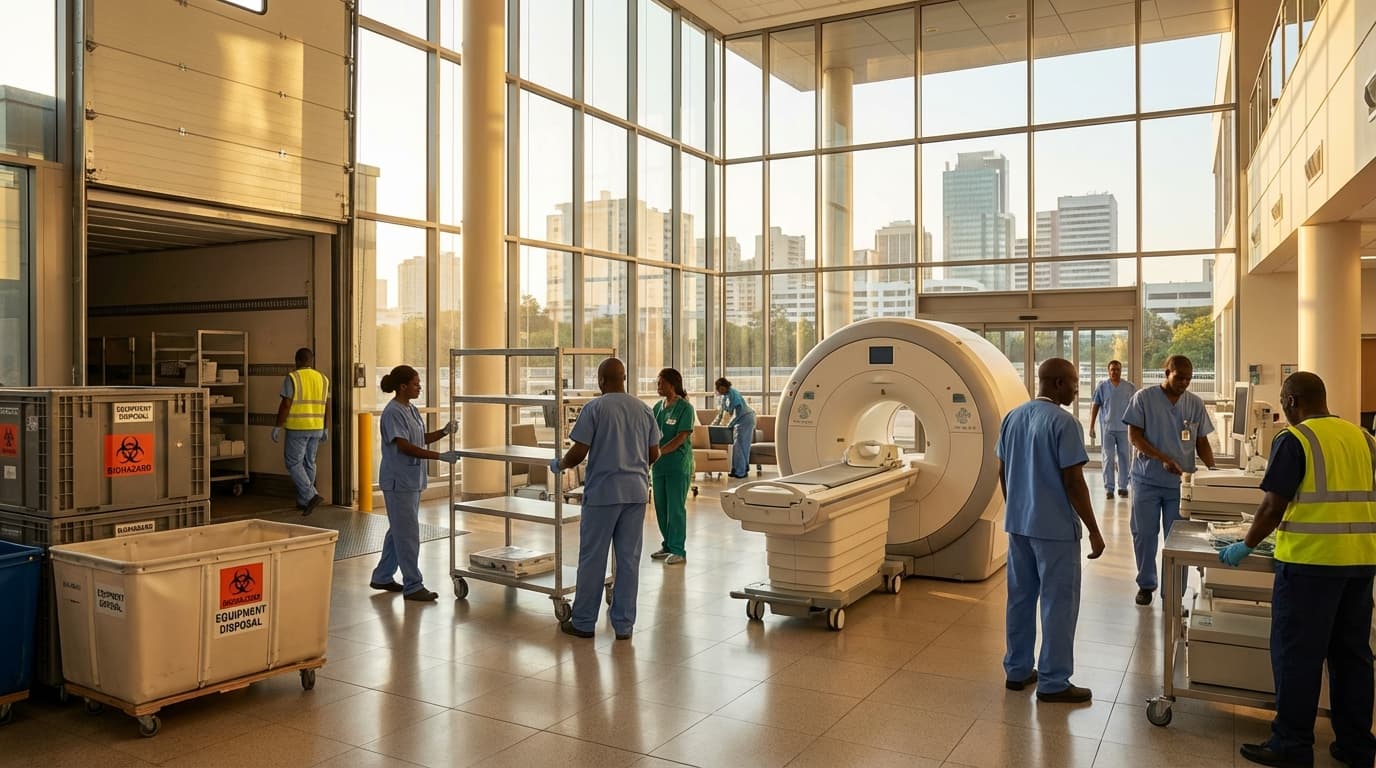
Medical Equipment Relocation Service (Move & Re-Install) in Ethiopia
Engineering Excellence & Technical Support
Medical Equipment Relocation Service (Move & Re-Install) High-standard technical execution following OEM protocols and local regulatory frameworks.
Expert Medical Equipment Handling
Our specialized teams are trained in the precise handling and transportation of sensitive medical equipment, ensuring zero damage and maintaining calibration integrity. We utilize custom-built, climate-controlled vehicles for secure transit across Ethiopia.
Certified Re-Installation & Calibration
We go beyond simple delivery. Our certified technicians ensure your medical equipment is professionally re-installed according to manufacturer specifications and undergo rigorous calibration and testing to guarantee operational readiness from day one.
Seamless Compliance & Documentation
Navigate Ethiopia's regulatory landscape with ease. We provide comprehensive documentation, including asset tracking, handling protocols, and re-installation certifications, ensuring full compliance and a smooth handover for your healthcare facility.
What Is Medical Equipment Relocation Service (Move & Re-install) In Ethiopia?
Medical Equipment Relocation Service (Move & Re-Install) in Ethiopia refers to a specialized logistical process involving the secure transportation and subsequent operational recommissioning of medical devices and systems within or between healthcare facilities in Ethiopia. This service is critical for ensuring the continuity of patient care, minimizing downtime, and maintaining the integrity and functionality of sensitive medical apparatus during periods of facility expansion, renovation, consolidation, or technological upgrades. The service encompasses a comprehensive approach, from initial planning and de-installation to meticulous packaging, transportation, and re-installation, culminating in verification of the equipment's operational status and calibration. Adherence to stringent safety protocols, environmental controls, and regulatory compliance is paramount throughout the entire relocation lifecycle. The objective is to facilitate a seamless transition of medical operations with minimal disruption to healthcare delivery.
| User Group | Typical Use Cases | Specific Needs Addressed | |
|---|---|---|---|
| Hospitals (Public and Private) | Facility expansion, renovation of existing wings or departments, construction of new hospital buildings, departmental reconfigurations, asset redistribution between multiple hospital sites, technology upgrades (e.g., replacing older imaging systems with new ones). | Minimizing patient care disruption, ensuring operational continuity during infrastructure changes, maintaining the integrity of high-cost and complex medical devices, compliance with health facility regulations. | Preventing data loss or corruption for networked equipment, ensuring seamless integration of new technologies, safe handling of radiation-emitting or sterile equipment. |
| Specialized Clinics (e.g., Diagnostic Imaging Centers, Surgical Centers, Dialysis Centers) | Relocation to a larger or more accessible facility, upgrading to more advanced diagnostic or treatment equipment, merging with other clinics, closing a facility and transferring assets. | Maintaining diagnostic accuracy and treatment efficacy, ensuring patient comfort and safety during relocation, meeting specific regulatory requirements for specialized equipment. | Preserving delicate optics in imaging equipment, maintaining precise fluid delivery systems in dialysis units, ensuring sterility of surgical instruments and associated equipment. |
| Medical Research Institutions and Laboratories | Moving research facilities to new campuses, upgrading laboratory instrumentation, consolidating research units, decommissioning old labs. | Protecting sensitive research data and samples, ensuring the continued accuracy and reliability of scientific instruments, minimizing research downtime. | Handling of high-precision analytical instruments (e.g., mass spectrometers, electron microscopes), maintaining sterile environments for biological research, securing sensitive biospecimens. |
| Government Health Agencies and Public Health Programs | Relocating equipment for mobile clinics or vaccination campaigns, transferring equipment between district health offices, establishing new health posts or outreach centers. | Ensuring equitable access to healthcare services, supporting public health initiatives, efficient management of public health assets. | Transporting and re-installing robust, often portable, diagnostic and treatment equipment, ensuring operational readiness for emergency response or public health crises. |
| Medical Equipment Manufacturers and Distributors | Demonstration purposes at new locations, installation of equipment in customer facilities as part of sales agreements, inventory management and redistribution of assets. | Ensuring brand reputation through professional installation, efficient delivery and setup of new equipment, seamless customer onboarding. | Safe handling of new, unpackaged equipment, adherence to warranty and service agreements, providing initial operational training to end-users. |
Key Components of Medical Equipment Relocation Service (Move & Re-Install) in Ethiopia:
- Site Assessment and Planning: Comprehensive evaluation of existing and new site infrastructure, power requirements, environmental controls (temperature, humidity), network connectivity, and access routes to develop a tailored relocation strategy.
- De-installation and Disassembly: Professional disconnection and dismantling of medical equipment by certified technicians, adhering to manufacturer specifications and safety guidelines. This includes proper labeling and documentation of all components and connections.
- Secure Packaging and Handling: Utilization of specialized, often custom-designed, packaging materials and techniques to protect sensitive components from shock, vibration, and environmental factors during transit. This may involve anti-static measures, climate-controlled containers, and shock-absorbent padding.
- Specialized Transportation: Deployment of appropriate transport vehicles, often equipped with climate control, air-ride suspension, and securing mechanisms, to ensure the safe and stable transit of heavy, delicate, or high-value medical equipment.
- Re-installation and Reassembly: Precise reassembly and re-installation of equipment at the destination site according to manufacturer blueprints and technical specifications. This includes re-establishing all physical and data connections.
- System Integration and Connectivity: Reconnecting equipment to existing power sources, utility lines (e.g., medical gases), and IT networks. Verification of seamless integration with other existing systems.
- Testing and Calibration: Thorough functional testing of all relocated equipment to ensure optimal performance. This includes re-calibration of critical parameters as per manufacturer protocols and relevant regulatory standards.
- End-User Training and Handover: Providing refresher training to healthcare professionals on the operation of re-installed equipment, addressing any new configurations or functionalities. Formal handover of the re-installed and verified equipment.
- Documentation and Compliance: Maintaining detailed records of all relocation phases, including inventory, de-installation/re-installation reports, test results, and calibration certificates to ensure regulatory compliance and for future reference.
- Contingency Planning: Development of strategies to mitigate potential risks and address unforeseen challenges during the relocation process, ensuring minimal impact on ongoing patient care.
Who Needs Medical Equipment Relocation Service (Move & Re-install) In Ethiopia?
Specialized medical equipment requires expert handling during relocation to ensure its functionality and prevent damage. Moving and re-installing sensitive medical devices necessitates a dedicated service understanding the unique challenges involved. This service is crucial for a range of healthcare providers and institutions across Ethiopia seeking to upgrade, expand, or reorganize their facilities.
| Target Customer/Institution | Key Departments Involved | Reasons for Relocation |
|---|---|---|
| Hospitals (Public & Private) | Radiology, Surgery, ICU, Laboratories, Cardiology, Pharmacy, In-patient Wards | Renovations, Expansions, Departmental Consolidation, Equipment Upgrades, Reorganization |
| Specialty Clinics | Radiology (X-ray, CT, MRI), Cardiology (Echo, ECG), Oncology (Linear Accelerators), Endoscopy Units | Facility Modernization, Service Expansion, Mergers, Relocation to Larger Premises |
| Diagnostic Laboratories | Clinical Chemistry, Hematology, Microbiology, Molecular Diagnostics, Pathology | Laboratory Expansion, Technology Upgrades, Relocation of Bench Space, Centralization |
| Research Institutions & Universities | Medical Research Labs, Teaching Hospitals, Biomedical Engineering Departments | New Lab Construction, Grant-Funded Equipment Moves, Inter-Departmental Collaboration, Facility Upgrades |
| Government Health Agencies | Public Health Facilities, Regional Health Bureaus, Disease Control Centers | Infrastructure Development, Programmatic Shifts, Equipping New Public Health Centers, Asset Management |
| NGOs & Aid Organizations | Field Hospitals, Mobile Clinics, Health Centers in Underserved Areas | Project Start-up, Relocation of Project Sites, Equipment Transfer to New Locations, Post-Project Handover |
| Medical Equipment Suppliers | Service and Installation Departments, Logistics | Trade-in Equipment Management, Demonstrations, Installation of Replacements, Asset Lifecycle Management |
Target Customers and Departments for Medical Equipment Relocation Services in Ethiopia
- {"title":"Hospitals (Public and Private)","description":"Hospitals are the primary users of a wide array of medical equipment. Relocation is common during renovations, expansions, or when departments are consolidated or reorganized."}
- {"title":"Specialty Clinics (e.g., Cardiology, Radiology, Oncology)","description":"These clinics often house highly specialized and expensive equipment that requires precise calibration and re-installation. Moves might be due to facility upgrades or expansion of services."}
- {"title":"Diagnostic Laboratories","description":"Laboratories rely on sophisticated analytical instruments and imaging devices that are sensitive to movement and require expert re-installation to maintain accuracy."}
- {"title":"Research Institutions and Universities with Medical Programs","description":"Institutions involved in medical research or training often possess advanced equipment that needs to be moved between labs or buildings without compromising experimental integrity."}
- {"title":"Government Health Ministries and Agencies","description":"These bodies may oversee the relocation of equipment for public health facilities, mobile clinics, or during national health initiatives."}
- {"title":"Non-Governmental Organizations (NGOs) and International Aid Organizations","description":"Organizations involved in healthcare delivery in Ethiopia may require relocation services for equipment donated to or purchased for their projects."}
- {"title":"Medical Equipment Suppliers and Manufacturers","description":"Companies that sell and install new medical equipment may outsource the de-installation and re-installation of older or traded-in units."}
Medical Equipment Relocation Service (Move & Re-install) Process In Ethiopia
This document outlines the detailed process for the Medical Equipment Relocation Service (Move & Re-Install) in Ethiopia, guiding clients from initial inquiry to the successful completion of the service.
| Step | Description | Key Activities | Responsible Party | Deliverables/Outcomes |
|---|---|---|---|---|
| The client contacts the relocation service provider to express their need for medical equipment relocation. | Initial discussion of scope, types of equipment, origin and destination locations, timeline, and specific requirements. | Client, Relocation Service Provider (RSP) | Understanding of client's needs, preliminary scope definition, scheduling of site assessment. |
| A thorough assessment of both the origin and destination sites is conducted. | Detailed inventory of equipment, assessment of access routes, power requirements, space availability, necessary permits, and safety protocols. Based on this, a comprehensive quotation is prepared. | RSP (Technical Team) | Detailed site survey report, precise equipment list, identification of potential challenges, and a formal quotation with a breakdown of costs and services. |
| Upon acceptance of the quotation, a formal contract is signed outlining the terms, conditions, responsibilities, timelines, and payment schedule. | Review and signing of the service agreement, confirmation of insurance coverage, and initial payment processing. | Client, RSP | Signed contract, agreed-upon payment schedule, confirmed project start date. |
| All necessary preparations are made to ensure a smooth and safe relocation. | Securing permits, notifying relevant authorities, coordinating with building management at both sites, scheduling utility disconnections/reconnections, and pre-cleaning of equipment if required. | RSP, Client | All necessary permits obtained, site access arranged, communication channels established with stakeholders. |
| Specialized technicians carefully disassemble and package the medical equipment. | Expert disassembly, use of appropriate protective materials (anti-static, shock-absorbent, climate-controlled packaging), labeling of all parts and components for easy re-assembly. | RSP (Technical Team) | Disassembled and securely packaged equipment, clear labeling for identification and re-assembly. |
| The packaged equipment is transported to the destination site using specialized vehicles and logistics. | Loading onto appropriate vehicles, secure transportation, adherence to traffic regulations, real-time tracking of the shipment, and ensuring environmental controls (if necessary) during transit. | RSP (Logistics Team) | Safe and timely delivery of equipment to the destination site. |
| Qualified technicians re-assemble and install the equipment at the new location according to manufacturer specifications and site requirements. | Unpacking, re-assembly, connection to utilities (power, water, gases), positioning according to the site layout. | RSP (Technical Team) | Equipment physically installed and ready for functional checks. |
| Comprehensive testing and calibration are performed to ensure the equipment is functioning optimally and safely. | Functional testing, performance checks, calibration against manufacturer standards, safety checks, and documentation of test results. | RSP (Technical Team) | Certified operational and calibrated equipment, test reports and certificates. |
| End-users are trained on the operation and maintenance of the re-installed equipment. | On-site training sessions for medical staff, provision of user manuals and documentation, and formal handover of the equipment. | RSP (Technical Team), Client (End-users) | Trained personnel, complete documentation, acceptance of the re-installed equipment. |
| The relocation service provider offers support for a defined period after the installation. | Troubleshooting, addressing any initial operational issues, and answering user queries. | RSP | Smooth transition for end-users, resolution of any immediate concerns. |
| The relocation project is formally closed, and feedback is gathered from the client. | Final invoicing, collection of client feedback on the service provided, and project documentation archiving. | RSP, Client | Project closure report, client satisfaction feedback, future service improvements. |
Medical Equipment Relocation Process in Ethiopia (Move & Re-Install)
- Inquiry & Initial Consultation
- Site Assessment & Quotation
- Contract & Agreement
- Pre-Relocation Preparation
- Disassembly & Packaging
- Transportation
- Re-Installation
- Testing & Calibration
- Training & Handover
- Post-Relocation Support
- Project Closure & Feedback
Medical Equipment Relocation Service (Move & Re-install) Cost In Ethiopia
Relocating medical equipment in Ethiopia requires specialized handling and expertise, and the cost can vary significantly based on several factors. This service typically includes the careful dismantling, secure transportation, and precise re-installation of sensitive and often heavy medical devices. Understanding these cost drivers is crucial for budgeting and ensuring a smooth transition for healthcare facilities.
| Equipment Category | Estimated Cost Range (ETB) | Notes |
|---|---|---|
| Small Laboratory Equipment (e.g., centrifuges, microscopes) | 1,500 - 7,500 ETB | Relatively straightforward, lower labor needs. |
| Medium-Sized Imaging Equipment (e.g., portable X-ray, ultrasound) | 5,000 - 25,000 ETB | Requires careful handling and possibly specialized packing. |
| Large Diagnostic Imaging (e.g., fixed X-ray, CT scanners) | 25,000 - 150,000+ ETB | Significant dismantling, specialized transport, and expert re-installation/calibration. |
| Surgical Equipment (e.g., operating tables, anesthesia machines) | 7,500 - 40,000 ETB | Varies greatly by complexity and size. |
| Hospital Beds and Furniture | 500 - 2,500 ETB per unit | Bulk relocation can lead to per-unit discounts. |
| General Movers with Medical Equipment Specialization | 10,000 - 75,000+ ETB | This represents a broad estimate for a complex move involving multiple pieces of varied equipment. It's essential to get custom quotes. |
Key Pricing Factors for Medical Equipment Relocation in Ethiopia:
- Type and Size of Equipment: Larger, heavier, and more complex machines (e.g., MRI scanners, CT scanners, large X-ray units) will naturally incur higher costs due to specialized lifting equipment, larger transport vehicles, and more extensive labor requirements for handling and re-installation.
- Distance of Relocation: The physical distance between the old and new locations is a primary cost determinant. Longer hauls involve more fuel, driver time, potential overnight stays, and increased wear and tear on transport vehicles.
- Dismantling and Re-installation Complexity: Some equipment requires intricate dismantling and re-assembly processes, often involving specialized technicians with specific knowledge of the machinery. This can include calibration and testing post-installation, adding to the labor and time involved.
- Accessibility of Locations: Difficult-to-access sites (e.g., upper floors without elevators, narrow doorways, unpaved roads) can increase relocation costs. Additional labor, specialized equipment (like cranes or ramps), and time will be needed to overcome these challenges.
- Need for Specialized Tools and Equipment: Certain medical devices may require very specific tools for dismantling, transportation (e.g., vibration-dampening dollies), or re-installation. The rental or purchase of these specialized items will be factored into the overall cost.
- Insurance and Risk Mitigation: Comprehensive insurance coverage for valuable medical equipment during transit is essential. The cost of this insurance, which protects against damage or loss, will be added to the service fee.
- Time Sensitivity/Urgency: If the relocation needs to be completed within a tight deadline, expedited services may incur higher charges due to overtime pay for staff and potentially the use of premium transportation options.
- Additional Services: This can include warehousing if the equipment needs to be stored between locations, packing of accessories and consumables, or disposal of old or obsolete equipment. Each additional service will add to the total cost.
- Geographical Region within Ethiopia: While major cities might have more competitive pricing due to a higher concentration of service providers, remote or less developed regions could see higher costs due to logistical challenges and limited availability of specialized resources.
Affordable Medical Equipment Relocation Service (Move & Re-install) Options
Relocating medical equipment can be a complex and costly undertaking. Our Affordable Medical Equipment Relocation Service offers comprehensive solutions, ensuring your valuable assets are moved safely and efficiently, with options for re-installation to minimize downtime. We understand the critical nature of your equipment and strive to provide cost-effective strategies without compromising on quality or safety.
| Service Component | Description | Cost-Saving Benefit |
|---|---|---|
| Specialized Packaging Materials | Use of anti-static wraps, foam padding, and climate-controlled containers for sensitive equipment. | Prevents damage, reducing repair or replacement costs. |
| Experienced & Certified Technicians | Our team possesses expertise in handling various medical devices, including calibration and safety checks. | Ensures proper handling, minimizing risk of damage and costly errors. |
| Route Optimization & Logistics | Planning efficient transport routes to minimize travel time and fuel consumption. | Reduces transportation costs and delivery times. |
| Post-Move Support & Troubleshooting | Availability for follow-up calls or minor adjustments after the move. | Addresses minor issues proactively, preventing larger problems and associated expenses. |
| Bulk Relocation Discounts | Reduced per-unit cost when relocating a larger volume of equipment in a single project. | Directly lowers the overall cost of the relocation project. |
Value Bundles & Cost-Saving Strategies
- Basic Move & Secure: This essential package covers the safe disconnection, secure transport, and precise placement of your medical equipment at the new location. Ideal for equipment that does not require complex re-installation or calibration.
- Move, Re-Install & Basic Calibration: This bundle includes everything in the Basic Move, plus professional re-installation and basic functional testing/calibration to ensure the equipment is ready for immediate use. Best for standard equipment requiring minimal setup.
- Comprehensive Move & Full Re-Installation/Integration: Our premium offering. This package encompasses full disconnection, expert packing, specialized transport for sensitive equipment, meticulous re-installation, comprehensive calibration, and integration into existing facility systems. Recommended for high-end, complex, or mission-critical medical machinery.
- Pre-Move Assessment & Planning: We offer a complimentary on-site or virtual assessment to accurately quote services, identify potential challenges, and develop a tailored relocation plan, saving you from unexpected costs.
- Strategic Scheduling: Flexible scheduling options, including off-peak hours or weekends, can help reduce labor costs and minimize disruption to your operations.
- Equipment Grouping Discounts: Consolidating the relocation of multiple pieces of equipment in a single move can unlock significant volume discounts.
- Dismantle & Reassembly Services: For larger equipment, efficient dismantling and reassembly by our trained technicians can be more cost-effective than full transportation in assembled form.
- Bundled Insurance Coverage: We offer streamlined insurance options that can be more cost-effective when bundled with our relocation services compared to separate policies.
- Long-Term Partnership Rates: For organizations with frequent relocation needs, we offer preferential rates and dedicated support for ongoing partnerships.
- Customized Service Tiers: We can tailor service packages to precisely match your budget and specific equipment requirements, ensuring you only pay for what you need.
Verified Providers In Ethiopia
In Ethiopia, the healthcare landscape is rapidly evolving, with a growing demand for trusted and credentialed medical professionals. Navigating this landscape can be challenging for individuals seeking quality care. This document highlights the importance of verified providers and specifically focuses on Franance Health, detailing their credentials and why they stand out as a premier choice for healthcare services in Ethiopia.
| Credential Type | Description | Franance Health's Assurance |
|---|---|---|
| Medical Licenses and Registrations | Official authorization from the Ethiopian Ministry of Health and relevant medical boards to practice medicine. | Franance Health verifies all listed providers possess current and valid medical licenses and are registered with the appropriate regulatory bodies. |
| Educational Qualifications | Degrees and certifications from accredited medical schools and institutions, both locally and internationally. | We meticulously review and authenticate the educational backgrounds of all Franance Health affiliated doctors, nurses, and specialists. |
| Specialization Certifications | Proof of advanced training and expertise in specific medical fields (e.g., cardiology, pediatrics, surgery). | Franance Health ensures that specialists have obtained recognized certifications in their respective areas of expertise. |
| Professional Experience | Demonstrable history of practice, including years of experience and the types of facilities they have worked in. | Our verification process includes assessing the practical experience and professional history of each healthcare provider. |
| Ethical Conduct and Disciplinary Records | A clean record free from professional misconduct or disciplinary actions. | Franance Health conducts background checks and inquiries to ensure providers maintain high ethical standards and have no adverse disciplinary history. |
| Continuing Medical Education (CME) | Evidence of ongoing participation in educational programs to stay updated with medical knowledge and practices. | We confirm that our affiliated providers actively engage in CME activities to ensure they offer the most current and effective treatments. |
Why Choose Franance Health for Verified Healthcare in Ethiopia?
- Unwavering Commitment to Quality: Franance Health prioritizes patient well-being above all else, adhering to stringent quality control measures in all their services.
- Experienced and Qualified Professionals: Their team comprises highly skilled and experienced medical practitioners with diverse specializations, ensuring comprehensive care.
- Rigorous Verification Processes: Franance Health employs a thorough vetting process for all its partner providers, ensuring they meet the highest standards of medical expertise and ethical practice.
- Patient-Centric Approach: Understanding individual needs is paramount. Franance Health focuses on delivering personalized care plans tailored to each patient's unique health requirements.
- Accessibility and Convenience: With a network of verified providers, Franance Health aims to make quality healthcare more accessible and convenient for the Ethiopian population.
- Ethical Practice and Transparency: Upholding the highest ethical standards and maintaining transparency in all their operations builds trust and confidence with their patients.
- Continuous Professional Development: Franance Health encourages and supports its providers in ongoing training and development, ensuring they stay abreast of the latest medical advancements.
Scope Of Work For Medical Equipment Relocation Service (Move & Re-install)
This Scope of Work (SOW) outlines the requirements for the relocation and re-installation of medical equipment. The objective is to ensure a seamless, safe, and efficient transfer of specified medical devices from their current location to a new designated site, followed by professional re-installation and functional testing to confirm operational readiness. This SOW details the technical deliverables and standard specifications that all service providers must adhere to.
| Category | Technical Deliverable | Standard Specification |
|---|---|---|
| Pre-Relocation Assessment | Site Survey and Equipment Inventory | Detailed report including serial numbers, model numbers, current condition (photographic evidence recommended), power requirements, physical dimensions, and any special handling needs for each piece of equipment. Assessment of both origin and destination sites for access, power, networking, and environmental conditions. |
| De-installation | Safe and Professional Disconnection | Equipment to be safely disconnected from all utilities (power, data, water, gases) by qualified personnel. Proper securing of cables and connections. Adherence to manufacturer's guidelines for safe shutdown and disconnection. |
| Packaging and Transport | Secure and Appropriate Protection | Use of specialized, padded, and shock-absorbent materials. Custom crating or flight cases where necessary. Secure strapping and anchoring within transport vehicles. Use of climate-controlled transport if required for sensitive equipment. Compliance with all transportation regulations for medical devices. |
| Logistics and Scheduling | Coordinated and Timely Move | Development of a detailed move plan with precise scheduling, including coordination with facility management at both sites. Real-time tracking of equipment during transit. Communication of any delays or issues promptly. |
| Re-installation | Precise Placement and Reconnection | Placement of equipment in designated locations as per floor plans. Reconnection to all required utilities (power, data, water, gases) by qualified technicians. Ensure proper grounding and electrical safety. |
| Calibration and Configuration | Restoration of Operational Parameters | Re-calibration of equipment according to manufacturer's specifications. Configuration of network settings, software parameters, and user profiles as required. Verification of all adjustable settings. |
| Functional Testing and Validation | Verification of Performance and Safety | Comprehensive functional testing of all operational modes and features. Performance validation against manufacturer's specifications. Safety checks and electrical performance tests. Use of calibrated test equipment for all validation procedures. |
| Documentation and Handover | Record of Relocation and Status | Provision of a post-relocation report detailing the successful transfer, re-installation, and validation of each equipment item. Include any issues encountered and resolutions. Transfer of ownership documentation where applicable. Training for on-site personnel on any changes or operational aspects. |
| Post-Move Support | Troubleshooting and Issue Resolution | Availability of technical support for a defined period (e.g., 30 days) post-relocation to address any emergent issues or questions. |
Key Considerations & Requirements
- Compliance with all relevant healthcare regulations and safety standards.
- Minimizing disruption to ongoing patient care.
- Ensuring the integrity and functionality of all relocated equipment.
- Proper documentation and communication throughout the relocation process.
- Adherence to environmental and infection control protocols.
- Detailed inventory and condition assessment of all equipment prior to move.
- Secure and appropriate packaging and transport methods.
- Professional re-installation and calibration at the new site.
- Comprehensive functional testing and validation post-installation.
- Post-relocation support and troubleshooting.
Service Level Agreement For Medical Equipment Relocation Service (Move & Re-install)
This Service Level Agreement (SLA) outlines the response times and uptime guarantees for the Medical Equipment Relocation Service (Move & Re-Install) provided by [Your Company Name] to [Client Name]. This agreement is effective from [Start Date] to [End Date].
| Service Element | Response Time Guarantee | Uptime Guarantee (Post-Re-Install) | Escalation Contact |
|---|---|---|---|
| On-Site Arrival (Scheduled Move) | Within 30 minutes of the scheduled appointment time. | N/A | Lead Relocation Technician (on-site) |
| Initial Equipment Functional Test (Post-Re-Install) | Within 2 hours of completion of re-installation for standard equipment; 4 hours for highly complex systems. | N/A | Lead Relocation Technician (on-site) |
| Urgent Technical Support (Post-Re-Install - Critical Equipment Failure) | On-site presence within 4 business hours for Tier 1 issues (diagnosable remotely with client assistance). On-site presence within 8 business hours for Tier 2 issues requiring specialized tools or expertise. | 99.5% uptime for critical patient care equipment (as defined by Client) within 48 hours of successful re-installation and functional testing. This excludes scheduled maintenance or failures caused by external factors beyond the control of [Your Company Name]. | Technical Support Manager: [Phone Number], [Email Address] |
| Non-Urgent Technical Support (Post-Re-Install - Minor Issues) | Remote troubleshooting within 1 business day. On-site visit scheduled within 3 business days. | 98% uptime for non-critical equipment within 7 days of successful re-installation and functional testing. | Technical Support Manager: [Phone Number], [Email Address] |
| Equipment Damage/Malfunction During Transit | On-site assessment within 2 business days of notification. | N/A | Claims Department: [Phone Number], [Email Address] |
Scope of Services
- Safe and secure transportation of specified medical equipment from the originating location to the designated receiving location.
- Professional de-installation of medical equipment at the originating location.
- Professional re-installation and initial setup of medical equipment at the receiving location.
- Basic functional testing of re-installed equipment to confirm operational status.
- Waste removal of packing materials generated during the relocation process.
Frequently Asked Questions

Ready when you are
Let's scope your Medical Equipment Relocation Service (Move & Re-Install) in Ethiopia project in Ethiopia.

Scaling healthcare logistics and technical systems across the entire continent.