
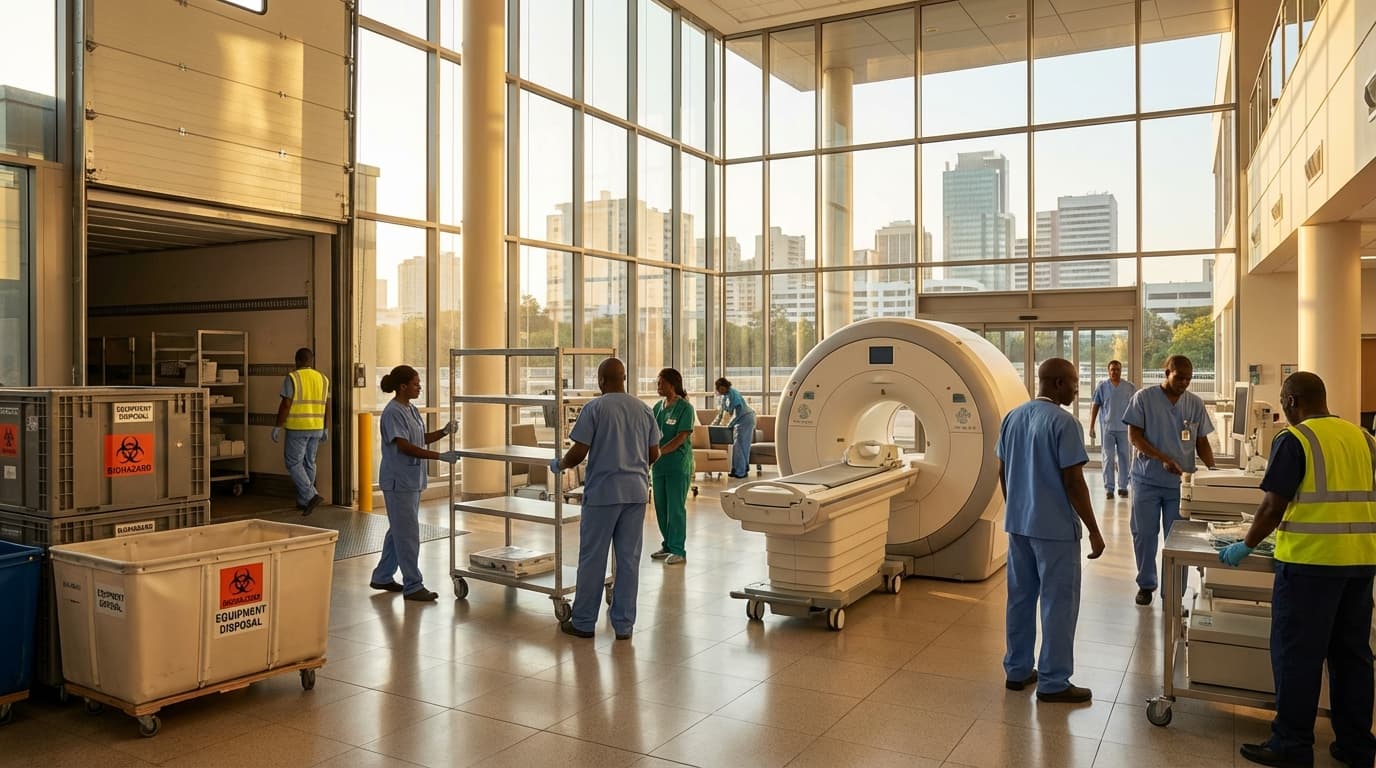
Heavy Medical Equipment De-Installation Service (MRI/CT/Cath Lab) in Ethiopia
Engineering Excellence & Technical Support
Heavy Medical Equipment De-Installation Service (MRI/CT/Cath Lab) High-standard technical execution following OEM protocols and local regulatory frameworks.
Precision MRI/CT De-Installation
Our specialized technicians possess in-depth knowledge of complex MRI and CT scanner architectures. We employ meticulous, step-by-step de-installation procedures, ensuring the integrity of sensitive superconducting magnets, RF coils, and detector systems. Our process minimizes vibration and thermal shock, safeguarding these high-value medical imaging assets for their next deployment in Ethiopia's growing healthcare infrastructure.
Cath Lab System Integrity Assurance
De-installing sophisticated Cardiac Catheterization (Cath) Lab systems requires a nuanced understanding of interlinked imaging, interventional tools, and patient monitoring equipment. Our service guarantees the safe disconnection and segregation of all components, including C-arms, vascular imaging systems, electrophysiology equipment, and associated workstations. We meticulously document every connection and disconnect, ensuring a seamless re-installation and minimal downtime for critical cardiac procedures in Ethiopia.
Logistics & Site Preparation Expertise
Beyond technical de-installation, we provide comprehensive site assessment and logistics planning tailored for the Ethiopian context. This includes evaluating access routes, preparing the site for safe equipment dismantling, and coordinating specialized transport solutions for heavy and delicate medical machinery. Our experienced team ensures compliant packaging, secure transit, and timely delivery, supporting the expansion and upgrade of advanced medical facilities across Ethiopia.
What Is Heavy Medical Equipment De-installation Service (Mri/ct/cath Lab) In Ethiopia?
Heavy medical equipment de-installation service in Ethiopia, specifically for modalities such as Magnetic Resonance Imaging (MRI), Computed Tomography (CT) scanners, and Cardiac Catheterization (Cath) Labs, refers to the highly specialized and complex process of safely and systematically dismantling, preparing for transport, and often packaging these large-scale, sensitive diagnostic and interventional imaging systems. This service is not merely a physical disassembly; it encompasses a multidisciplinary approach involving expert technicians, engineers, and logistics specialists to ensure the integrity and functionality of the equipment are preserved throughout the de-installation lifecycle. The primary objective is to mitigate risks associated with the removal of high-value, technically intricate medical devices, which often operate under stringent radiation safety protocols, require specialized power and cooling systems, and possess significant mass and bulk. Successful de-installation necessitates adherence to manufacturer specifications, regulatory guidelines, and best practices in medical equipment handling.
| Stakeholder/Scenario | Need for De-Installation Service | Typical Use Cases |
|---|---|---|
| Hospitals & Diagnostic Centers (Ethiopia) | Equipment upgrades, replacement, relocation within the facility, or closure of a department/facility. | Replacing an aging CT scanner with a newer model; relocating an MRI suite to a new wing; closing a satellite clinic and transferring valuable imaging equipment. |
| Medical Equipment Manufacturers/Vendors | Facilitating equipment returns, refurbishment, or redeployment to other client sites. | Retrieving a leased MRI under contract; preparing a returned CT scanner for resale after refurbishment. |
| Healthcare Asset Management Companies | Managing the lifecycle of medical assets, including decommissioning and disposition. | A third-party company overseeing the removal of all medical equipment from a hospital undergoing bankruptcy proceedings. |
| Government Health Ministries/Agencies | Centralized procurement and distribution of medical equipment to public health facilities. | Transferring functional MRI machines from a well-equipped national hospital to a regional referral center in need. |
| Research Institutions | Decommissioning specialized imaging equipment for research purposes or upgrades. | Removing a research-dedicated PET-CT scanner for a technological upgrade or to make space for new research infrastructure. |
Key Aspects of Heavy Medical Equipment De-Installation Service
- Systematic dismantling of complex components, including superconducting magnets (MRI), gantry systems (CT), and sophisticated X-ray tubes and detectors (CT/Cath Lab).
- Safe disconnection and isolation of power supplies, cooling systems (e.g., helium lines for MRI), and data/network cabling.
- Decommissioning of associated infrastructure, such as RF shielding (MRI), lead shielding (CT/Cath Lab), and specialized room modifications.
- Secure packaging and crating of sensitive sub-assemblies to prevent damage during transit.
- Compliance with relevant safety regulations, including radiation safety protocols and environmental discharge procedures.
- Coordination with transportation providers for specialized logistics, including oversized and heavy load transport.
- Documentation of the de-installation process for asset tracking and future re-installation purposes.
- Disposal or recycling of non-salvageable components in an environmentally responsible manner.
Who Needs Heavy Medical Equipment De-installation Service (Mri/ct/cath Lab) In Ethiopia?
The de-installation of heavy medical equipment like MRI, CT scanners, and Cath Labs is a complex and specialized process. This service is crucial for a variety of healthcare facilities in Ethiopia that are undertaking significant upgrades, renovations, relocations, or replacements of their diagnostic imaging and interventional cardiology suites. The need arises from a desire to modernize technology, expand capacity, improve patient care, or respond to changes in healthcare infrastructure. These are not routine maintenance tasks but rather project-based requirements demanding expertise in handling sensitive, large-scale medical machinery.
| Customer Type | Key Departments Requiring Service | Reasons for De-Installation | ||||
|---|---|---|---|---|---|---|
| Large Public Hospitals | Radiology/Imaging Department (MRI, CT) | Equipment Upgrade/Replacement | Cath Lab/Interventional Cardiology Department | Facility Renovation/Expansion | Relocation of Imaging Suites | End-of-Life Equipment Removal |
| Major Private Hospitals | Radiology/Imaging Department | Technology Modernization | Cardiac Catheterization Laboratory | Competitive Service Enhancement | New Facility Construction | Partnership with New Equipment Vendors |
| Specialized Medical Centers (e.g., Cardiac, Oncology) | Imaging/Radiology | Capacity Increase | Interventional Procedures Suite | Refurbishment of Existing Units | Strategic Planning for Future Needs | |
| Independent Diagnostic Imaging Centers | MRI Unit | Upgrade to Higher Resolution/Faster Scanners | CT Scanner Unit | Relocation to a New, Larger Facility | Decommissioning of Older Models | |
| Government Health Bureaus/Ministries | Asset Management Division | Centralized Planning for Equipment Replacement across Public Facilities | Regional Hospital Administration | Coordinating Equipment Relocations for Regional Health Networks |
Target Customers and Departments for Heavy Medical Equipment De-Installation Services in Ethiopia
- Hospitals (Public & Private)
- Specialized Medical Centers
- Diagnostic Imaging Centers
- Research Institutions (with medical imaging capabilities)
- Government Healthcare Agencies (for asset management & relocation)
Heavy Medical Equipment De-installation Service (Mri/ct/cath Lab) Process In Ethiopia
This document outlines the comprehensive workflow for heavy medical equipment de-installation services (MRI, CT, Cath Lab) in Ethiopia, from initial inquiry to successful execution. Our specialized team understands the critical nature of these procedures and adheres to stringent safety and operational protocols.
| Stage | Description | Key Activities | Deliverables/Outcomes | Ethiopian Context Considerations |
|---|---|---|---|---|
| Initial Inquiry & Consultation | The client contacts our service to request de-installation of heavy medical equipment. | Understanding client needs, equipment type, location, and desired timeline. Preliminary risk assessment. | Clear understanding of project scope and client expectations. | Communication channels, local language support (Amharic, etc.), time zone differences. |
| Site Assessment & Planning | A team of engineers and technicians visits the site to meticulously plan the de-installation. | Detailed inspection of the equipment, surrounding infrastructure (power, cooling, structural integrity), access routes, and necessary safety measures. Development of a detailed de-installation plan and risk mitigation strategy. | Comprehensive site assessment report, detailed de-installation plan, risk assessment, and safety protocols. | Infrastructure availability and reliability (power quality, voltage stability), building access limitations, local safety regulations, and potential traffic management needs. |
| Quotation & Contract Finalization | Based on the site assessment, a detailed quotation is provided, followed by contract signing. | Preparation of a formal quotation including labor, equipment, transportation, insurance, and any necessary permits. Contract negotiation and signing. | Agreed-upon quotation, signed service contract, and payment schedule. | Currency exchange rates, local taxation, payment terms acceptable in Ethiopia, and legal contract compliance. |
| Pre-De-Installation Preparations | All necessary preparations are made before commencing the physical de-installation. | Procurement of specialized tools and equipment, logistics arrangements for transport, obtaining necessary permits (if any), and briefing the de-installation team. | Fully equipped and prepared de-installation team, secured transportation, and all required permits. | Availability of specialized tools locally or imported, lead times for specialized parts, understanding of local customs and import/export regulations for equipment. |
| De-Installation Execution | The core process of safely and efficiently dismantling the medical equipment. | Systematic disconnection of power, cooling, and data cables. Careful disassembly of components, including shielding, magnets (for MRI), patient beds, and associated hardware. Secure packaging and labeling of all parts. | Dismantled and safely packaged equipment components, ready for transport. | Adherence to strict safety protocols in a potentially demanding environment, handling of sensitive components, ensuring minimal disruption to adjacent areas, and managing local workforce if required. |
| Post-De-Installation Procedures | Concluding activities after the equipment has been dismantled. | Thorough site cleanup, removal of all debris, final inspection of the de-installation area, and handover of the site to the client. | Clean and cleared de-installation site, client sign-off on site handover. | Disposal of waste materials according to local environmental regulations, ensuring no environmental impact. |
| Project Closure & Documentation | Finalizing the project with all necessary documentation. | Issuance of a final project report, including details of the de-installation, any challenges encountered, and confirmation of completion. Invoicing and final payment processing. | Completed project report, final invoice, and successful project closure. | Documentation format requirements, language of reports, and post-project support arrangements. |
Key Stages of the De-Installation Process:
- Initial Inquiry & Consultation
- Site Assessment & Planning
- Quotation & Contract Finalization
- Pre-De-Installation Preparations
- De-Installation Execution
- Post-De-Installation Procedures
- Project Closure & Documentation
Heavy Medical Equipment De-installation Service (Mri/ct/cath Lab) Cost In Ethiopia
The cost of heavy medical equipment de-installation services for MRI, CT scanners, and Cath Labs in Ethiopia can vary significantly based on several factors. These specialized services require expert technicians, meticulous planning, and often specialized tools to ensure the safe and efficient dismantling of high-value, sensitive equipment. The absence of readily available local expertise for such complex procedures can also influence pricing. Therefore, understanding the key drivers behind these costs is crucial for budgeting and procurement.
| Equipment Type | Estimated De-Installation Cost Range (ETB - Ethiopian Birr) | Notes |
|---|---|---|
| CT Scanner | 150,000 - 400,000+ | Varies based on scanner model (e.g., multi-slice vs. single-slice), complexity, and vendor support. |
| MRI Scanner | 250,000 - 700,000+ | Highly dependent on magnet size (e.g., 0.5T, 1.5T, 3T), cryogen handling, and system configuration. |
| Cath Lab (Angiography System) | 180,000 - 500,000+ | Includes dismantling of imaging system, C-arm, patient table, consoles, and associated infrastructure. |
Key Pricing Factors for Heavy Medical Equipment De-Installation in Ethiopia
- Equipment Type and Complexity: MRI, CT scanners, and Cath Labs differ greatly in their size, weight, modularity, and the number of components requiring disassembly. More complex systems with numerous sub-assemblies will naturally incur higher de-installation costs.
- Technician Expertise and Team Size: The number of specialized biomedical engineers and technicians required, along with their experience and certifications, directly impacts the labor cost. Companies with a proven track record in handling such delicate operations will command higher rates.
- Logistics and Site Accessibility: The distance from the service provider's base to the installation site, the ease of access to the equipment within the facility (e.g., elevator availability, corridor width, stair access), and the need for special transportation arrangements will affect overall costs.
- Dismantling and Packaging Requirements: The extent of dismantling needed, the materials and methods used for packaging delicate components for transport, and any specific handling instructions for sensitive parts will contribute to the final price.
- Time Constraints and Urgency: Expedited de-installation services due to relocation deadlines or urgent upgrades will likely incur premium charges.
- Ancillary Services: The cost may also include services like site preparation, minor structural modifications (if any), waste disposal of consumables, and post-de-installation assessment.
- Geographic Location within Ethiopia: Costs can vary slightly between major cities like Addis Ababa and more remote regions due to differences in operational overheads and the availability of specialized resources.
- Service Provider Reputation and Insurance: Established companies with strong reputations, comprehensive insurance coverage, and a history of successful projects may charge more, reflecting their reliability and risk mitigation.
Affordable Heavy Medical Equipment De-installation Service (Mri/ct/cath Lab) Options
Relocating or decommissioning heavy medical equipment like MRI, CT scanners, and Cath Labs is a complex and costly undertaking. Choosing the right de-installation service is crucial for minimizing downtime, ensuring safety, and controlling expenses. This guide explores affordable options, value bundles, and effective cost-saving strategies for your medical equipment de-installation needs.
| Value Bundle | Included Services | Cost-Saving Benefit | Ideal For |
|---|---|---|---|
| De-installation & Rigging | On-site dismantling, disconnection of utilities, specialized rigging and hoisting. | Streamlined process, reduced coordination efforts. | Facilities undergoing minor renovations or equipment replacement. |
| Full Relocation Package | De-installation, rigging, secure transportation, storage (if needed), and re-installation at a new site. | Significant savings through bundled pricing, reduced risk of damage during transit. | Hospitals or clinics relocating to a new facility or expanding to multiple locations. |
| Decommissioning & Disposal | De-installation, safe removal of hazardous materials, and compliant disposal or recycling of old equipment. | Avoids potential fines for improper disposal, responsible environmental practices. | Facilities upgrading to new technology or closing down departments. |
| Emergency De-installation | Priority scheduling, rapid response for urgent equipment removal or site preparation. | Minimizes operational disruption and potential revenue loss. | Unexpected equipment failures, urgent facility changes. |
Key Considerations for Affordable Medical Equipment De-Installation
- {"title":"Expertise and Certification","description":"Ensure the service provider has certified technicians experienced with your specific equipment type. Proper handling prevents damage and costly repairs."}
- {"title":"Comprehensive Service Packages","description":"Look for services that include de-installation, rigging, transport, storage, and re-installation if applicable. Bundling can often lead to discounts."}
- {"title":"Safety Protocols","description":"Verify that the company adheres to strict safety regulations and has appropriate insurance to cover potential accidents during the de-installation process."}
- {"title":"Licensing and Permits","description":"Confirm that the service provider holds all necessary licenses and permits for handling, transporting, and disposing of specialized medical equipment."}
- {"title":"References and Reviews","description":"Check online reviews and ask for references from previous clients to gauge the company's reliability and quality of service."}
Verified Providers In Ethiopia
Finding reliable and qualified healthcare providers is paramount in Ethiopia, impacting everything from individual well-being to public health outcomes. 'Verified Providers' signifies a commitment to quality, ethical practice, and patient safety. Franance Health stands out as a leading platform for identifying these trusted medical professionals. Their rigorous credentialing process ensures that every provider listed has met stringent standards, offering peace of mind to those seeking medical care.
| Verification Aspect | Franance Health's Commitment | Patient Benefit |
|---|---|---|
| Academic & Professional Qualifications | Verification of degrees, diplomas, and relevant professional certifications. | Ensures providers have the foundational knowledge and expertise. |
| Licensure and Registration | Confirmation of active and valid licenses with Ethiopian regulatory bodies. | Guarantees providers are legally permitted to practice. |
| Specialization and Training | Validation of specific training and expertise in chosen medical fields. | Helps patients find specialists for their specific needs. |
| Professional Conduct & Ethics | Checks for disciplinary actions, ethical violations, and adherence to professional codes. | Protects patients from malpractice and ensures respectful treatment. |
| Continuing Medical Education (CME) | Encourages and sometimes verifies ongoing professional development. | Ensures providers stay updated with the latest medical advancements. |
Why Franance Health Credentials Represent the Best Choice:
- Rigorous Vetting Process: Franance Health doesn't simply list providers; they meticulously verify their qualifications, licenses, certifications, and professional backgrounds. This ensures that only genuinely competent and licensed practitioners are featured.
- Focus on Patient Safety: The credentialing goes beyond academic achievements to include checks on disciplinary actions, malpractice history, and adherence to ethical guidelines. This prioritizes patient safety above all else.
- Up-to-Date Information: Healthcare professionals' credentials need to be current. Franance Health regularly updates its database to reflect the latest training, specializations, and any changes in a provider's standing.
- Transparency and Trust: By clearly outlining their verification criteria, Franance Health builds a foundation of trust. Patients can feel confident that the providers they find on the platform have been thoroughly screened.
- Comprehensive Provider Profiles: Beyond just credentials, Franance Health often provides detailed profiles, allowing patients to learn about a provider's experience, specializations, and even patient reviews, facilitating informed decision-making.
- Accessibility to Quality Care: By centralizing verified providers, Franance Health makes it significantly easier for individuals to access high-quality healthcare services across various medical disciplines in Ethiopia.
Scope Of Work For Heavy Medical Equipment De-installation Service (Mri/ct/cath Lab)
This Scope of Work (SOW) outlines the requirements for the de-installation of heavy medical imaging equipment, specifically Magnetic Resonance Imaging (MRI), Computed Tomography (CT) scanners, and Cardiac Catheterization (Cath Lab) systems. The service encompasses all necessary labor, tools, equipment, and procedures to safely and effectively disconnect, dismantle, and prepare the specified equipment for transport. Adherence to manufacturer guidelines, industry best practices, and relevant safety regulations is paramount. This SOW details the technical deliverables and standard specifications for the service provider.
| Phase/Activity | Description | Technical Deliverables | Standard Specifications/Notes |
|---|---|---|---|
| Site Assessment & Planning | Pre-de-installation survey to assess site conditions, equipment layout, access routes, and necessary utilities. Development of a detailed de-installation plan. | Site assessment report including photographs, equipment inventory, and proposed de-installation strategy. Risk assessment document. | Site survey to be completed at least 1 week prior to scheduled de-installation. Plan to be shared with client for approval. Compliance with site-specific safety procedures. |
| Equipment De-Energization & Disconnection | Safe shutdown of the equipment and disconnection of all power, data, RF (for MRI), cooling, and ancillary systems. | Verified power-off confirmation. All cables and connections clearly labeled and documented. Disconnected hoses/tubing properly capped. | Follow manufacturer's de-energization procedures. Lockout/tagout procedures must be strictly followed. Dedicated qualified electricians and biomedical engineers involved. |
| Component Dismantling | Systematic disassembly of the equipment into transportable modules as per manufacturer guidelines. | All major components segregated and identified. Fasteners and small parts bagged, labeled, and secured to corresponding components. Sensitive components protected. | Use of manufacturer-recommended tools and procedures. Specialized lifting equipment (e.g., cranes, forklifts) as required. Personnel trained on specific equipment models. |
| RF Shielding/Containment Removal (MRI Specific) | Careful dismantling and removal of RF shielding, shielding doors, and associated structural elements. | Shielding panels removed without damage. All associated hardware collected and organized. | Compliance with MRI room construction standards. Safety protocols for working at heights if applicable. |
| Cryogen Handling (MRI Specific) | Safe venting or transfer of cryogens (e.g., liquid helium) from the MRI magnet. | Cryogen venting records. Procedures for safe handling and disposal of residual cryogens. | Performed by certified technicians experienced in cryogen management. Strict adherence to safety regulations for cryogenic materials. Potential for vendor-specific cryogen recovery services. |
| Cooling System Decommissioning | Draining and flushing of closed-loop cooling systems for CT and Cath Lab equipment. | Coolant safely contained and disposed of according to environmental regulations. System flushed and dried. | Use of appropriate containment and disposal methods. Environmental permits as required. |
| Packaging & Protection | Secure packaging of all dismantled components for transit. | Components wrapped in protective materials (e.g., bubble wrap, foam), crated or palletized as appropriate. Fragile items clearly marked. Protection against moisture and impact. | Use of high-quality packaging materials. Custom crating may be required for delicate components. Load-bearing capacity of packaging to be considered. |
| Site Clean-up | Removal of all debris, tools, and waste materials from the de-installation area. | De-installation area left clean and in its original condition (or as agreed upon). Waste disposed of responsibly. | Adherence to hospital waste disposal policies. Recycling of materials where possible. |
| Documentation & Reporting | Comprehensive documentation of the entire de-installation process. | Digital photographs of the equipment before, during, and after de-installation. Detailed de-installation report including component list, serial numbers, condition notes, and any observed issues. Certificate of de-installation. | Report to be submitted within 5 business days of completion. Photographs to be high resolution and clearly show progress and final state. |
| Final Sign-off | Client representative to inspect the de-installation site and review documentation. | Signed acceptance form from the client representative confirming satisfactory completion of the de-installation services. | To be conducted immediately upon completion of the clean-up phase. |
Key Objectives of the De-Installation Service:
- Safe and complete disconnection of all power, data, and ancillary service connections.
- Dismantling of the equipment into manageable components according to manufacturer specifications and best practices.
- Secure packaging and protection of all components to prevent damage during handling and transit.
- Documentation of the de-installation process, including photographs and a detailed report.
- Coordination with the site contact for access, power management, and safety protocols.
- Adherence to all environmental and safety regulations, including radiation safety protocols for relevant equipment.
- Minimizing disruption to ongoing hospital operations, where applicable.
Service Level Agreement For Heavy Medical Equipment De-installation Service (Mri/ct/cath Lab)
This Service Level Agreement (SLA) outlines the guaranteed response times and uptime for the de-installation of heavy medical equipment, specifically Magnetic Resonance Imaging (MRI), Computed Tomography (CT), and Cardiac Catheterization Laboratory (Cath Lab) systems. This agreement aims to ensure efficient and timely service provision during equipment relocation, upgrades, or decommissioning.
| Service Type | Service Level Objective (SLO) | Uptime/Downtime Guarantee | Acknowledgement & Scheduling |
|---|---|---|---|
| MRI De-installation (Critical) | Response Time: Within 24 business hours of acknowledgement. | De-installation Completion within agreed project timeline (e.g., within X business days from start). | Acknowledgement: Within 4 business hours of Service Request. Scheduling: Within 1 business day of acknowledgement. |
| MRI De-installation (Standard) | Response Time: Within 48 business hours of acknowledgement. | De-installation Completion within agreed project timeline (e.g., within Y business days from start). | Acknowledgement: Within 8 business hours of Service Request. Scheduling: Within 2 business days of acknowledgement. |
| CT De-installation (Critical) | Response Time: Within 24 business hours of acknowledgement. | De-installation Completion within agreed project timeline (e.g., within X business days from start). | Acknowledgement: Within 4 business hours of Service Request. Scheduling: Within 1 business day of acknowledgement. |
| CT De-installation (Standard) | Response Time: Within 48 business hours of acknowledgement. | De-installation Completion within agreed project timeline (e.g., within Y business days from start). | Acknowledgement: Within 8 business hours of Service Request. Scheduling: Within 2 business days of acknowledgement. |
| Cath Lab De-installation (Critical) | Response Time: Within 24 business hours of acknowledgement. | De-installation Completion within agreed project timeline (e.g., within X business days from start). | Acknowledgement: Within 4 business hours of Service Request. Scheduling: Within 1 business day of acknowledgement. |
| Cath Lab De-installation (Standard) | Response Time: Within 48 business hours of acknowledgement. | De-installation Completion within agreed project timeline (e.g., within Y business days from start). | Acknowledgement: Within 8 business hours of Service Request. Scheduling: Within 2 business days of acknowledgement. |
Key Service Definitions
- De-installation Service: The process of safely and systematically disconnecting, disassembling, and preparing heavy medical equipment (MRI, CT, Cath Lab) for transportation. This includes all necessary safety procedures, documentation, and initial packaging.
- Service Request: A formal notification from the Client to the Service Provider requesting de-installation services for a specific piece of equipment at a designated location and time.
- Response Time: The maximum allowable time from the Service Provider's acknowledgement of a valid Service Request to the commencement of on-site de-installation activities.
- Downtime Guarantee: While de-installation itself is a planned event and not typically subject to 'uptime' in the traditional sense of operational availability, this SLA focuses on the efficiency and promptness of the de-installation process to minimize the duration the equipment is out of service or unavailable for its intended purpose (e.g., awaiting transport). The guarantee pertains to meeting agreed-upon de-installation completion timelines.
- Critical Service Request: A Service Request that, if delayed, could lead to significant disruption to patient care, contractual penalties, or regulatory non-compliance.
- Standard Service Request: A Service Request that does not meet the criteria for a Critical Service Request.
Frequently Asked Questions

Ready when you are
Let's scope your Heavy Medical Equipment De-Installation Service (MRI/CT/Cath Lab) in Ethiopia project in Ethiopia.

Scaling healthcare logistics and technical systems across the entire continent.