
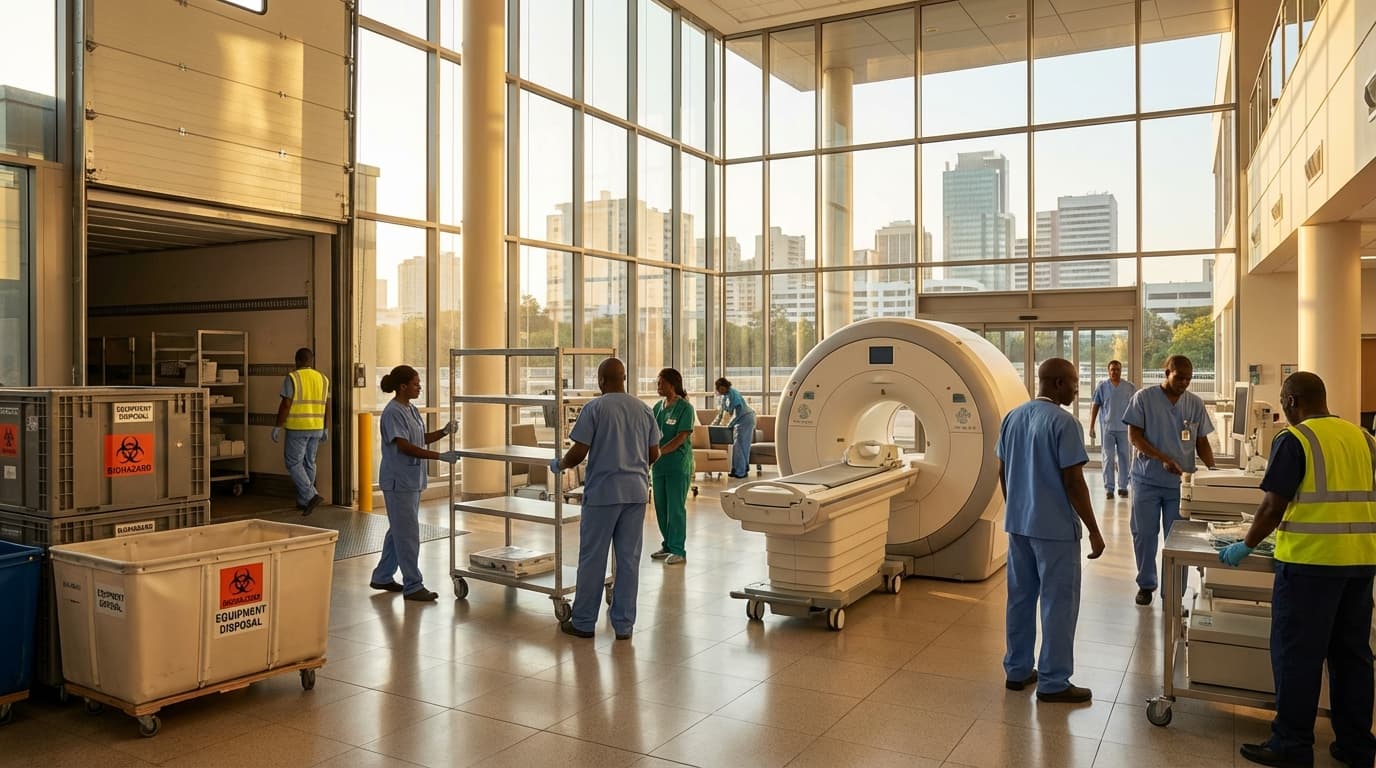
Decommissioning Service for Medical Devices in Ethiopia
Engineering Excellence & Technical Support
Decommissioning Service for Medical Devices High-standard technical execution following OEM protocols and local regulatory frameworks.
Safe & Compliant Disposal
Our expert decommissioning services ensure the secure and environmentally responsible disposal of medical devices in Ethiopia, adhering strictly to national regulations and international best practices for biohazardous waste management.
Data Privacy Assurance
We implement robust data sanitization protocols for all devices containing patient information, guaranteeing complete data destruction and protecting sensitive medical records from unauthorized access during the decommissioning process.
Certified Technical Expertise
Our highly trained and certified technicians possess in-depth knowledge of various medical device types, ensuring accurate identification, safe disassembly, and proper segregation of components for recycling or disposal, minimizing risks and maximizing resource recovery.
What Is Decommissioning Service For Medical Devices In Ethiopia?
Decommissioning service for medical devices in Ethiopia refers to the structured and documented process of permanently retiring a medical device from service. This involves a series of technical, administrative, and safety-related actions to ensure the device is rendered inoperable, data is securely erased, and it is disposed of in an environmentally sound and compliant manner. The primary objective is to prevent unauthorized use, protect patient data, and adhere to national and international regulations governing medical waste management and equipment disposal.
| Who Needs Decommissioning Service? | Typical Use Cases |
|---|---|
| Hospitals and Healthcare Facilities: (Public and Private) - Managing obsolete, damaged, or end-of-life medical equipment. | Diagnostic Laboratories: Replacing aging analytical instruments or upgrading to newer technologies. |
| Clinics and Polyclinics: Disposing of outdated or non-functional examination or treatment equipment. | Medical Training Institutions: Removing old equipment that is no longer relevant for training purposes or is unsafe to operate. |
| Government Health Agencies: Overseeing the decommissioning of medical equipment within their purview or at public health facilities. | Medical Device Manufacturers/Distributors: Managing returned or obsolete stock, or devices recalled from the market. |
| Research Institutions: Decommissioning specialized diagnostic or experimental medical devices. | End of Lease/Rental Agreements: Returning leased or rented equipment in a state that meets contractual obligations for disposal or return. |
| Healthcare organizations undergoing consolidation or relocation: Disposing of redundant equipment. | Facilities upgrading their entire medical technology infrastructure: Systematically replacing and decommissioning older systems. |
Key Stages of Medical Device Decommissioning in Ethiopia
- Inventory and Identification: Cataloging all devices slated for decommissioning, including their make, model, serial number, and location. This also involves verifying ownership and regulatory status.
- Risk Assessment: Evaluating potential hazards associated with the device, such as residual electrical charges, chemical contaminants, or biohazards, to inform safe handling and disposal procedures.
- Data Sanitization and Destruction: Implementing secure data erasure protocols (e.g., NIST 800-88 standards for media sanitization) to permanently remove all sensitive patient information, software configurations, and calibration data. This may involve physical destruction of storage media.
- Disassembly and Component Segregation: Carefully dismantling the device into its constituent parts. Hazardous components (e.g., batteries, mercury switches, CRT tubes) are segregated for specialized disposal according to regulatory requirements.
- Environmental Disposal: Transporting and disposing of device components and materials through authorized channels. This includes adherence to regulations for e-waste, hazardous waste, and general waste, often involving licensed recycling or waste management facilities.
- Documentation and Record-Keeping: Maintaining comprehensive records of the entire decommissioning process, including inventories, disposal certificates, data sanitization reports, and any regulatory permits. These records are crucial for audits and compliance verification.
Who Needs Decommissioning Service For Medical Devices In Ethiopia?
Decommissioning services for medical devices are essential for various healthcare facilities and organizations in Ethiopia. This process ensures the safe, secure, and environmentally responsible disposal or repurposing of outdated, damaged, or end-of-life medical equipment. Properly decommissioning devices prevents data breaches, mitigates health and environmental hazards, and ensures compliance with regulations. This service is crucial for facilities that regularly update their medical technology or manage a large inventory of medical equipment.
| Target Customer Type | Key Departments Involved | Reasons for Decommissioning |
|---|---|---|
| Hospitals (Public & Private) | Biomedical Engineering Department, IT Department, Procurement Department, Facility Management, Clinical Departments (radiology, surgery, etc.) | Equipment obsolescence, upgrade cycles, equipment failure, space optimization, data security (for devices with patient data), regulatory compliance, environmental disposal |
| Health Centers & Clinics | Facility Administrator, Lead Nurse/Physician, Procurement Officer | Limited budgets for replacement, basic equipment reaching end-of-life, consolidation of services |
| NGOs & Charitable Organizations | Program Managers, Logistics Officers, Healthcare Facility Managers | Project funding cycles, equipment donations exceeding lifespan, focus on core mission over equipment management |
| Research Institutions & Laboratories | Lab Managers, Research Scientists, IT Department, Procurement Department | Technological advancements, experimental equipment no longer in use, data sanitization requirements |
| Medical Training Institutions | Department Heads (specific medical fields), Lab Technicians, Procurement Department | Outdated teaching equipment, replacement with modern simulation tools, safety concerns with old equipment |
| Medical Equipment Suppliers/Distributors | Service Department, Sales Department, Logistics Department | Trade-in programs, end-of-lease equipment, demonstration units, obsolete inventory |
Target Customers for Medical Device Decommissioning Services in Ethiopia
- Government Hospitals (Federal and Regional)
- Private Hospitals
- Public Health Centers and Clinics
- Non-Governmental Organizations (NGOs) providing healthcare services
- Research Institutions and Laboratories
- Medical Training Institutions
- Medical Equipment Suppliers and Distributors (for their own retired stock or for client buy-back programs)
- Insurance companies (managing assets after claims)
Decommissioning Service For Medical Devices Process In Ethiopia
This document outlines the workflow for the Decommissioning Service for Medical Devices in Ethiopia, from initial inquiry to successful execution. The process ensures that medical devices are safely and responsibly retired from service, adhering to national regulations and best practices. The service covers the entire lifecycle of decommissioning, including assessment, data sanitization, dismantling, and environmentally sound disposal or recycling.
| Phase | Key Activities | Responsible Parties | Key Deliverables | Notes/Considerations |
|---|---|---|---|---|
| Client contacts decommissioning service provider to inquire about services. Discussion of needs, device types, and project scope. Initial feasibility assessment. | Client, Service Provider | Understanding of client needs, preliminary scope definition. | Timely response to inquiries is crucial. Clear communication of service offerings. |
| On-site visit to assess the physical environment. Detailed inventory of medical devices to be decommissioned (make, model, serial number, condition, location). Identification of potential hazards. | Service Provider (with Client support) | Comprehensive device inventory report, site assessment report, hazard identification report. | Accurate inventory is essential for planning. Ensure access to all relevant areas. |
| Based on the inventory and assessment, a detailed decommissioning plan is created. This includes methodology for dismantling, data removal, disposal methods, timelines, and resource allocation. | Service Provider (with Client review and approval) | Detailed Decommissioning Plan, including schedule, budget, and safety protocols. | Plan must be tailored to each device and site. Client approval signifies agreement on the approach. |
| Identification and adherence to all relevant Ethiopian regulations regarding medical device disposal and environmental protection. Obtaining necessary permits or approvals from regulatory bodies (e.g., Ministry of Health, Environmental Protection Authority). | Service Provider, Client | Proof of regulatory compliance, obtained permits/approvals. | Crucial for legal and ethical decommissioning. Familiarity with local regulations is paramount. |
| Secure removal or sanitization of all sensitive patient or operational data from devices according to established protocols (e.g., HIPAA compliance, if applicable, or local data protection laws). | Service Provider (trained personnel) | Data sanitization certificates/reports for each device. | Protecting sensitive information is a top priority. Utilize certified data destruction methods. |
| Careful and safe dismantling of medical devices by trained technicians. Segregation of components for recycling or disposal. Safe transport of devices/components from the site. | Service Provider (trained technicians) | Dismantled device components, safe transportation logs. | Emphasis on safety and preventing damage to the site. Proper handling of hazardous materials. |
| Disposal or recycling of device components in accordance with environmental regulations and sustainability practices. Partnering with certified e-waste recyclers where applicable. | Service Provider, Certified Recyclers | Waste disposal manifests, recycling certificates. | Prioritize environmentally responsible methods. Track the final destination of all waste materials. |
| Generation of comprehensive documentation for the entire decommissioning process. This includes inventory lists, disposal records, data sanitization certificates, and a final decommissioning certificate. | Service Provider | Final Decommissioning Report, Certificate of Decommissioning. | Documentation serves as proof of responsible decommissioning and compliance. |
| Final review of all documentation and deliverables with the client. Project sign-off and completion. Provision of a final report summarizing the decommissioning activities. | Service Provider, Client | Signed project closure document, Final Project Report. | Ensures client satisfaction and transparency. Opportunity for feedback. |
Decommissioning Service for Medical Devices Workflow in Ethiopia
- Inquiry and Initial Consultation
- Site Assessment and Device Inventory
- Decommissioning Plan Development
- Regulatory Compliance and Approvals
- Data Sanitization and Security
- Physical Dismantling and Removal
- Environmental Disposal/Recycling
- Documentation and Certification
- Project Closure and Reporting
Decommissioning Service For Medical Devices Cost In Ethiopia
Decommissioning medical devices in Ethiopia involves a comprehensive process to ensure safe and environmentally responsible disposal or refurbishment. The cost associated with these services is influenced by a variety of factors, leading to a range of pricing in the local currency (Ethiopian Birr - ETB). Factors such as the type and complexity of the medical device, its size and weight, the required disposal method (e.g., incineration, secure landfill, recycling), the presence of hazardous materials, and the vendor's operational costs all play a significant role in the final quotation. Specialized services like data sanitization for devices containing sensitive patient information also add to the overall expense. The market for medical device decommissioning in Ethiopia is still developing, and therefore, it's crucial for healthcare facilities to obtain detailed quotes from multiple reputable service providers to ensure competitive pricing and adherence to regulatory standards.
| Device Category | Estimated Cost Range (ETB) | Notes |
|---|---|---|
| Small/Simple Devices (e.g., thermometers, blood pressure monitors, basic lab equipment) | 500 - 3,000 ETB | May involve collection and basic disposal/recycling. |
| Medium Complexity Devices (e.g., ECG machines, ultrasound probes, small centrifuges) | 2,000 - 10,000 ETB | May require specialized handling and disassembly. Data sanitization might be an add-on. |
| Large/Complex Imaging Equipment (e.g., X-ray machines, CT scanners - excluding source removal) | 10,000 - 50,000+ ETB | Significant logistical challenges. Costs can escalate with the need for specialized transport and dismantling. |
| High-Risk/Hazardous Devices (e.g., equipment with radioactive sources - excluding source handling) | 20,000 - 100,000+ ETB | Requires highly specialized handling and adherence to strict regulations. Source removal is a separate, highly specialized and costly service. |
| Data Sanitization (per device, on average) | 500 - 5,000 ETB | Varies based on the complexity of the storage media and the required level of sanitization (e.g., wiping, physical destruction). |
Key Pricing Factors for Medical Device Decommissioning in Ethiopia
- Device Type and Complexity (e.g., X-ray machines, MRI scanners, basic laboratory equipment)
- Size and Weight of the Device
- Disposal Method (Incineration, secure landfill, recycling, donation/refurbishment)
- Presence of Hazardous Materials (e.g., mercury, radioactive isotopes, batteries)
- Data Sanitization Requirements for sensitive information
- Transportation and Logistics Costs
- Regulatory Compliance and Documentation Fees
- Vendor's Overhead and Profit Margin
- Urgency of the Decommissioning Service
Affordable Decommissioning Service For Medical Devices Options
Navigating the decommissioning of medical devices can be a complex and costly process. This service aims to provide affordable solutions while ensuring compliance with all regulations and environmental standards. We offer various options, focusing on value bundles and implementing cost-saving strategies to make this essential service accessible to a wider range of healthcare providers.
Value Bundles are designed to streamline the decommissioning process by combining multiple services into a single, cost-effective package. These bundles are tailored to meet different needs and scales of operations. Examples include basic disposal packages for low-volume needs, comprehensive packages for larger facilities including data destruction and recycling, and specialized bundles for specific types of medical equipment. By bundling services, clients benefit from simplified budgeting, reduced administrative overhead, and often a lower per-unit cost compared to individual service procurement.
Cost-Saving Strategies are embedded within our operational model and service offerings. These include maximizing recycling and resale opportunities, optimizing transportation logistics to reduce fuel consumption and time, offering flexible scheduling to accommodate client budgets, and leveraging economies of scale. We also prioritize environmentally responsible disposal methods, which can lead to reduced landfill fees and potential tax incentives. Furthermore, our transparent pricing models ensure no hidden costs, allowing for accurate financial planning.
| Value Bundle Option | Included Services | Target Client | Potential Cost Savings |
|---|---|---|---|
| Basic Disposal Package | Collection, secure transport, environmentally sound disposal (landfill/incineration) | Small clinics, individual practitioners | Reduced per-unit disposal fees, simplified process |
| Standard Recycling & Disposal Bundle | Basic package + certified electronics recycling, minor asset refurbishment/resale | Medium-sized practices, hospitals with moderate volume | Revenue from resale, reduced landfill fees, streamlined compliance |
| Comprehensive Asset Lifecycle Bundle | Standard bundle + advanced data sanitization, comprehensive inventory, full asset reporting, potential for high-value equipment resale | Large hospitals, healthcare networks, research institutions | Maximized asset recovery value, significant reduction in disposal costs, enhanced data security |
| Specialized Equipment Decommissioning | Tailored services for specific high-risk or complex equipment (e.g., MRI machines, CT scanners), including specialized dismantling and disposal | Facilities with specialized imaging or laboratory equipment | Expert handling avoids costly mistakes, compliance with unique disposal requirements |
Key Components of Affordable Decommissioning Services
- Comprehensive regulatory compliance (HIPAA, EPA, state-specific laws)
- Secure data destruction for sensitive patient information
- Environmentally responsible disposal and recycling
- Logistics and transportation management
- Asset tracking and inventory management
- Certification of destruction and disposal
Verified Providers In Ethiopia
Finding reliable healthcare providers in Ethiopia can be a challenge. Franance Health stands out by offering a curated network of verified professionals. This verification process ensures that all providers on the Franance Health platform have met rigorous standards, including up-to-date licensing, verifiable qualifications, and a commitment to ethical patient care. Choosing Franance Health means prioritizing quality, trustworthiness, and a superior healthcare experience for yourself and your loved ones. Their dedication to transparency and patient well-being makes them the optimal choice for accessible and dependable medical services in Ethiopia.
| Feature | Description | Benefit for Patients |
|---|---|---|
| Verification Standards | Franance Health meticulously checks credentials, licenses, and professional history of all listed providers. | Ensures you are connecting with qualified and legitimate healthcare professionals. |
| Quality Assurance | Ongoing monitoring and patient feedback mechanisms are in place to maintain high service standards. | Guarantees a consistently high level of care and service. |
| Accessibility | A comprehensive directory simplifies finding the right specialist or general practitioner. | Saves time and reduces stress in locating suitable healthcare. |
| Patient-Centric Approach | Franance Health prioritizes patient comfort, safety, and satisfaction in its provider selection. | Provides peace of mind and a positive healthcare journey. |
Why Franance Health Providers are the Best Choice:
- Rigorous Verification Process
- Up-to-date Licensing and Qualifications
- Commitment to Ethical Patient Care
- Enhanced Trust and Reliability
- Focus on Transparency
- Superior Healthcare Experience
Scope Of Work For Decommissioning Service For Medical Devices
This Scope of Work (SOW) outlines the requirements for the decommissioning of medical devices. It details the technical deliverables and standard specifications necessary to ensure safe, secure, and compliant removal and disposal of these devices from the healthcare facility. The objective is to minimize risks to patient data, environmental impact, and regulatory non-compliance.
| Category | Deliverable/Specification | Description | Standard/Requirement |
|---|---|---|---|
| Data Sanitization | Data Destruction Report | Certificate of Data Destruction for each device containing patient data. | NIST SP 800-88 Revision 1 (or equivalent), DoD 5220.22-M. |
| Data Sanitization | Sanitization Method | Method used for data erasure (e.g., overwriting, degaussing, physical destruction). | Must be compliant with the chosen standard and appropriate for the storage media. |
| Device Removal | Site Survey and Planning | Detailed plan for device removal, including logistics, access routes, and safety protocols. | Pre-approved by the Facility Management. |
| Device Removal | Physical Dismantling | Safe and controlled dismantling of devices by trained personnel. | Adherence to manufacturer guidelines and safety protocols. |
| Device Removal | Environmental Controls | Containment of dust, debris, and potential biohazards during removal. | OSHA and local environmental regulations. |
| Disposal | Waste Manifest | Documentation tracking the chain of custody for disposed materials. | EPA and local environmental regulations. |
| Disposal | Recycling/Disposal Method | Method of disposal or recycling for device components (e.g., hazardous waste, e-waste, scrap metal). | Certified e-waste recyclers, hazardous waste disposal facilities. |
| Disposal | Environmental Compliance | Confirmation of compliance with all relevant environmental laws and regulations. | Local, state, and federal environmental agencies. |
| Documentation | Decommissioning Report | Comprehensive report detailing all decommissioning activities, including dates, personnel, methods, and results. | To be provided within 10 business days of completion. |
| Documentation | Asset Inventory Update | Updated inventory of decommissioned devices. | To be provided in a mutually agreed-upon format. |
| Documentation | Certificates of Destruction | Certificates for data destruction and proper disposal of hazardous materials. | Signed and dated by authorized personnel. |
| Personnel and Safety | Qualified Personnel | All personnel performing decommissioning activities must be trained and qualified. | Evidence of training and certifications required. |
| Personnel and Safety | Safety Plan | Detailed safety plan for all decommissioning activities. | Includes risk assessments, personal protective equipment (PPE) requirements, and emergency procedures. |
| Personnel and Safety | Insurance | Proof of adequate liability insurance coverage. | Minimum coverage amount to be specified in the contract. |
Key Objectives of Decommissioning Service
- Ensure complete and secure data sanitization of all devices containing patient information.
- Safely dismantle and remove medical devices from their designated locations.
- Dispose of devices in accordance with environmental regulations and manufacturer recommendations.
- Provide comprehensive documentation for audit and compliance purposes.
- Minimize disruption to ongoing clinical operations during the decommissioning process.
Service Level Agreement For Decommissioning Service For Medical Devices
This Service Level Agreement (SLA) outlines the response times and uptime guarantees for the Decommissioning Service for Medical Devices provided by [Your Company Name] (hereinafter referred to as 'Provider') to [Client Company Name] (hereinafter referred to as 'Client'). This SLA is an integral part of the Master Service Agreement between the Provider and the Client.
| Service Component | Priority Level | Response Time Target | Resolution Time Target | Uptime Guarantee |
|---|---|---|---|---|
Definitions
- {"item":"Decommissioning Service: The process of safely and securely rendering medical devices unusable and unusable, including data sanitization, physical destruction, and proper disposal, in accordance with relevant regulations and client policies."}
- {"item":"Downtime: The period during which the Decommissioning Service is unavailable or significantly degraded, preventing the Client from initiating or completing scheduled decommissioning activities."}
- {"item":"Service Request: A formal request submitted by the Client to the Provider for initiating a decommissioning project."}
- {"item":"Response Time: The maximum time allowed for the Provider to acknowledge and begin addressing a Service Request or an Incidental Issue."}
- {"item":"Resolution Time: The maximum time allowed for the Provider to resolve an Incidental Issue to restore the Decommissioning Service to its expected operational state."}
- {"item":"Incidental Issue: Any event that causes Downtime, including but not limited to, technical failures, equipment malfunctions, or personnel availability issues affecting the Provider's ability to perform the Decommissioning Service."}
- {"item":"Scheduled Downtime: Planned periods of unavailability for maintenance, upgrades, or other necessary work, which will be communicated to the Client in advance."}
Frequently Asked Questions

Ready when you are
Let's scope your Decommissioning Service for Medical Devices in Ethiopia project in Ethiopia.

Scaling healthcare logistics and technical systems across the entire continent.