
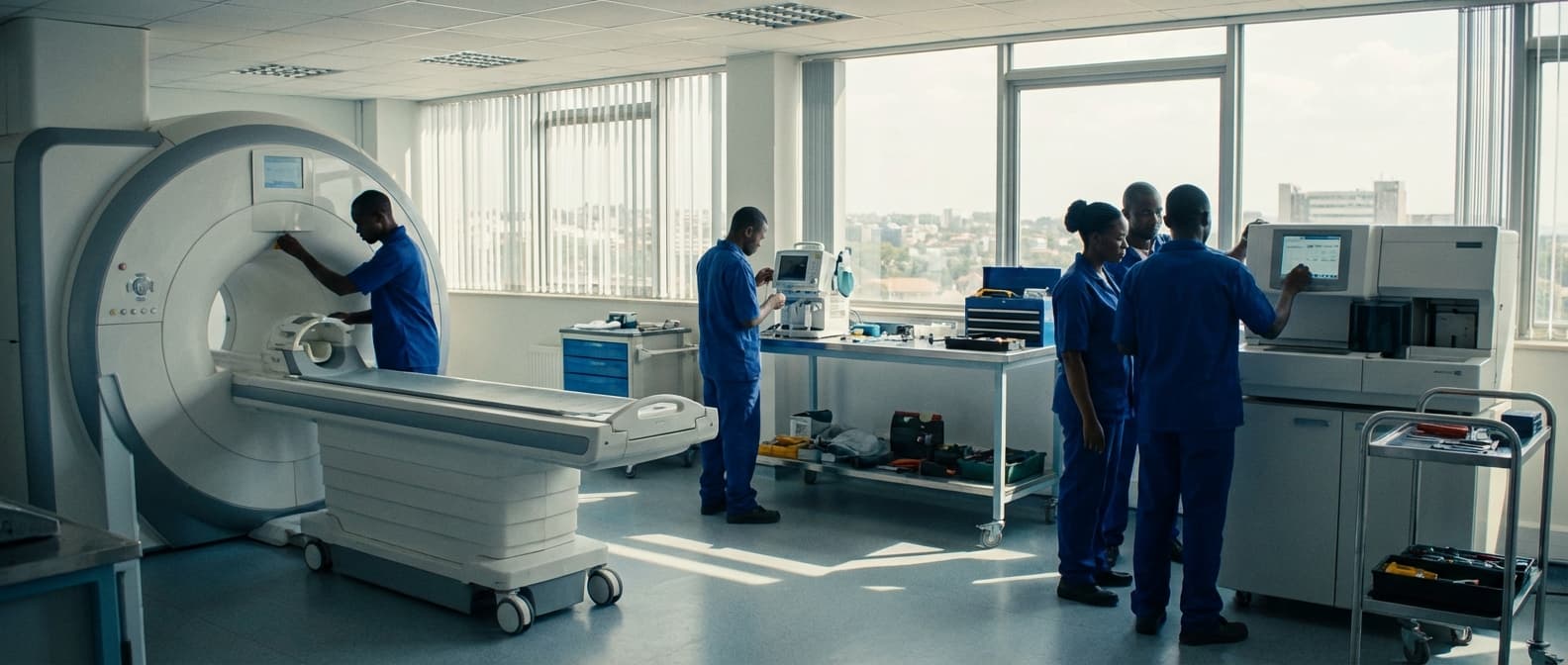
Uptime, Downtime & Root-Cause Analysis Reporting Service in Ethiopia
Engineering Excellence & Technical Support
Uptime, Downtime & Root-Cause Analysis Reporting Service High-standard technical execution following OEM protocols and local regulatory frameworks.
Proactive Uptime Monitoring & Alerting
Leveraging state-of-the-art monitoring tools to continuously track critical infrastructure uptime across Ethiopia. Receive real-time, actionable alerts for any deviation from optimal performance, ensuring rapid response and minimizing potential business disruption.
Comprehensive Downtime Incident Tracking
Meticulously log and categorize all downtime events, including duration, affected services, and timestamps. Our platform provides a clear, auditable trail of service interruptions, essential for service level agreement (SLA) compliance and performance analysis.
Automated Root Cause Analysis (RCA) Insights
Go beyond simple incident reporting. Our service employs automated analysis to identify underlying causes of downtime, providing clear, concise reports with actionable recommendations. Empower your IT teams to prevent recurring issues and optimize system resilience within Ethiopia's unique operational landscape.
What Is Uptime, Downtime & Root-cause Analysis Reporting Service In Ethiopia?
In the Ethiopian context, an Uptime, Downtime, and Root-Cause Analysis (RCA) Reporting Service refers to a specialized offering focused on monitoring, quantifying, and investigating the operational availability and unavailability of IT systems, critical infrastructure, and business processes. This service provides granular insights into periods of system functionality (uptime) and periods of non-functionality (downtime), coupled with a systematic process of identifying the fundamental reasons for any service disruptions (root-cause analysis).
Definition of the Service:
This service encompasses several key components:
- Uptime Monitoring: Continuous, automated, and/or manual observation of systems and services to confirm their operational status and availability against predefined Service Level Agreements (SLAs) or performance benchmarks.
- Downtime Tracking: Accurate recording of all instances where systems or services become unavailable, including the precise start and end times, duration, and the affected components.
- Incident Identification & Classification: Formal documentation of all operational disruptions, categorizing them by severity, impact, and type (e.g., hardware failure, software bug, network outage, human error, external event).
- Root-Cause Analysis (RCA): A structured investigative methodology employed to identify the underlying reasons for a downtime incident, moving beyond superficial symptoms to pinpoint the fundamental failures or systemic weaknesses that led to the event. Common RCA techniques include the '5 Whys', Fishbone diagrams (Ishikawa), Fault Tree Analysis, and Event Correlation.
- Reporting & Documentation: Generation of comprehensive reports detailing uptime percentages, downtime occurrences, incident summaries, RCA findings, and recommended corrective and preventive actions. These reports are crucial for performance evaluation, trend analysis, and continuous improvement.
- Trend Analysis & Prediction: Utilizing historical uptime/downtime data and RCA findings to identify recurring issues, predict potential future failures, and proactively implement mitigation strategies.
- SLA Compliance Assurance: Providing evidence-based reporting to demonstrate adherence to agreed-upon service levels and to support claims or negotiations regarding service performance.
Who Needs This Service in Ethiopia?
This service is essential for a broad spectrum of organizations and entities operating within Ethiopia, particularly those heavily reliant on technology and consistent service delivery. Key stakeholders include:
- Telecommunications Companies: Crucial for ensuring network availability and providing reliable communication services to the populace and businesses.
- Financial Institutions (Banks, Microfinance): Downtime in financial systems can lead to significant financial losses, reputational damage, and erosion of customer trust.
- Government Agencies & Public Services: Essential for maintaining the continuity of public services, administrative functions, and critical national infrastructure.
- E-commerce & Digital Service Providers: Their business models are entirely dependent on continuous online availability.
- Cloud Service Providers & Data Centers: Ensuring the uptime of their infrastructure is paramount for their client base.
- Manufacturing & Industrial Operations: Automation and control systems require high uptime for efficient production.
- Logistics & Transportation Companies: Real-time tracking and operational systems are critical for efficiency and safety.
- Healthcare Providers: Critical systems supporting patient care, diagnostics, and records management demand maximum availability.
- Educational Institutions: Online learning platforms and administrative systems require consistent uptime.
- Large Enterprises with Complex IT Infrastructures: Regardless of sector, any organization managing significant IT assets benefits from this service.
Typical Use Cases in Ethiopia:
- Ensuring Mobile Network Availability: Telcos use this service to monitor cell tower uptime, network core performance, and service availability (voice, data, SMS) to meet regulatory requirements and customer expectations.
- Maintaining Banking System Uptime: Banks track ATM network availability, core banking system performance, online banking portal accessibility, and transaction processing success rates.
- Optimizing E-commerce Platform Performance: Online retailers monitor website uptime, product catalog availability, payment gateway responsiveness, and order fulfillment system status.
- Securing Public Service Continuity: Government bodies use it to ensure the availability of citizen portals, e-government services, and critical infrastructure control systems (e.g., water, electricity).
- Diagnosing Network Performance Issues: IT departments of various organizations use RCA to pinpoint the source of slow network speeds or intermittent connectivity, whether it's a router failure, ISP issue, or internal misconfiguration.
- Preventing Recurring Software Glitches: Software development teams and IT operations utilize RCA to identify the root cause of bugs that lead to application crashes or functional errors, preventing their recurrence.
- Improving Data Center Reliability: Data center operators monitor power, cooling, server, and storage system uptime to ensure their clients' hosted applications remain accessible.
- Incident Response and Post-Mortem Analysis: Following a significant service disruption, this service facilitates a structured post-mortem to learn from the incident and implement preventative measures.
- SLA Verification and Reporting: For outsourced IT services, clients and providers use this reporting to verify that SLA targets for uptime and performance are being met.
- Capacity Planning and Infrastructure Upgrades: Analysis of historical downtime trends can inform decisions about necessary infrastructure upgrades or capacity expansions to prevent future issues.
This service plays a pivotal role in enhancing operational resilience, reducing financial and reputational risks, and fostering a more robust and reliable technological ecosystem within Ethiopia.
| Sector/Entity | Critical Systems/Services Monitored | Impact of Downtime | Typical Use Case Example |
|---|---|---|---|
| Telecommunications | Mobile Network (2G/3G/4G/5G), Core Network, VAS Platforms | Loss of Revenue, Subscriber Churn, Reputational Damage | Ensuring 99.9% Network Availability for Mobile Services |
| Financial Institutions | Core Banking Systems, ATMs, Online Banking Portals, Payment Gateways | Financial Loss, Transaction Failures, Loss of Customer Trust, Regulatory Penalties | Monitoring 24/7 ATM Uptime and Transaction Success Rates |
| E-commerce & Digital Services | Websites, Mobile Applications, Payment Processors, Order Management Systems | Lost Sales, Cart Abandonment, Damaged Brand Image | Tracking Website Uptime and Checkout Process Completion |
| Government & Public Services | E-Government Portals, National ID Systems, Public Utility Control Systems | Disruption of Citizen Services, Inefficiency, Reduced Public Trust | Ensuring Availability of Tax Payment Portals |
| Cloud Service Providers/Data Centers | Servers, Storage, Networking Equipment, Power & Cooling Systems | Client Service Outages, SLA Breaches, Contract Termination | Monitoring Infrastructure Uptime and Environmental Controls |
| Manufacturing & Industrial | SCADA Systems, PLCs, Production Line Control Systems, ERP Systems | Production Halts, Material Waste, Delayed Deliveries, Safety Risks | Diagnosing and Preventing Downtime in Automated Assembly Lines |
Key Components of Uptime, Downtime & Root-Cause Analysis Reporting Service
- Uptime Monitoring
- Downtime Tracking
- Incident Identification & Classification
- Root-Cause Analysis (RCA)
- Reporting & Documentation
- Trend Analysis & Prediction
- SLA Compliance Assurance
Who Needs Uptime, Downtime & Root-cause Analysis Reporting Service In Ethiopia?
In Ethiopia's rapidly developing economic landscape, reliable infrastructure and efficient operations are paramount. Businesses and organizations across various sectors are increasingly reliant on their IT systems and critical infrastructure. Unexpected downtime can lead to significant financial losses, reputational damage, and operational disruptions. To mitigate these risks and optimize performance, a robust Uptime, Downtime, and Root-Cause Analysis (RCA) Reporting Service is essential. This service provides crucial insights into system availability, identifies the reasons for disruptions, and facilitates proactive measures to prevent future failures. This document outlines the target customers and key departments within Ethiopia that would benefit most from such a reporting service.
| Department | Key Responsibilities & Impact of Downtime | Benefits of Uptime/Downtime & RCA Reporting |
|---|---|---|
| IT Operations & Infrastructure Management | Maintaining server availability, network connectivity, application performance. Downtime leads to service disruption, user complaints, and increased support workload. | Proactive identification of issues, faster incident resolution, optimized resource allocation, reduced operational costs, improved system stability. |
| Network Operations Center (NOC) | Monitoring network health, performance, and security. Downtime causes service outages and affects all connected users. | Real-time visibility into network status, rapid detection of anomalies, root cause identification for network failures, improved network resilience. |
| Security Operations Center (SOC) | Monitoring for security threats and incidents. While not directly uptime, security breaches can cause significant downtime and data loss. | Understanding the impact of security events on system availability, correlating security incidents with downtime, enhancing overall system security and resilience. |
| Application Support & Development | Ensuring applications are functional and performant. Downtime or poor performance leads to user frustration and business impact. | Identifying application-specific issues causing downtime, optimizing application code and configurations, improving user experience, facilitating faster bug fixes. |
| Business Continuity & Disaster Recovery Planning | Developing and implementing strategies to minimize the impact of disruptions. Understanding historical downtime is crucial for effective planning. | Data-driven insights for BCDR plan development, identification of critical systems based on historical downtime, testing and validation of recovery procedures. |
| Executive Management & Stakeholders | Overseeing business performance, profitability, and strategic direction. Downtime directly impacts revenue, customer satisfaction, and brand reputation. | High-level overview of system reliability, informed decision-making regarding IT investments, understanding the business impact of IT performance, demonstrating accountability for system availability. |
| Service Desk & Help Desk | First point of contact for user issues. Downtime leads to a surge in support tickets and user dissatisfaction. | Faster ticket resolution by understanding the root cause of outages, improved customer satisfaction by providing accurate information about service status, reduction in repetitive issues. |
Target Customers & Departments in Ethiopia Needing Uptime, Downtime & Root-Cause Analysis Reporting Service:
- {"title":"Telecommunications Companies","description":"With the increasing demand for mobile and internet services, maintaining network uptime is critical. Downtime directly impacts customer satisfaction and revenue. RCA helps identify and resolve network outages, signal disruptions, and service degradations."}
- {"title":"Financial Institutions (Banks, Microfinance, Insurance)","description":"The financial sector relies heavily on secure and available systems for transactions, customer access, and data integrity. Downtime can lead to lost transactions, customer frustration, and regulatory non-compliance. RCA is crucial for identifying vulnerabilities and ensuring system resilience."}
- {"title":"Government Agencies & Public Services","description":"Many government services, from online portals to critical infrastructure management, are increasingly digitized. Uptime is essential for public access, service delivery, and national security. RCA helps ensure the reliability of these vital systems."}
- {"title":"Cloud Service Providers & Data Centers","description":"Organizations offering cloud hosting, data storage, and managed IT services must guarantee high availability to their clients. Uptime is their core product, and any downtime directly impacts their reputation and business. RCA is vital for understanding and rectifying service disruptions."}
- {"title":"E-commerce & Online Retailers","description":"With the growth of online shopping in Ethiopia, website and platform uptime are directly linked to sales and customer trust. Downtime means lost revenue and damaged brand perception. RCA helps identify the causes of website crashes and slow performance."}
- {"title":"Energy & Utilities (Power, Water)","description":"The reliable delivery of essential services like electricity and water depends on operational IT systems and control mechanisms. Downtime can have severe societal and economic consequences. RCA helps prevent and address failures in monitoring and control systems."}
- {"title":"Healthcare Providers (Hospitals, Clinics)","description":"Patient care and critical medical operations are increasingly dependent on IT systems for records, diagnostics, and communication. Downtime can jeopardize patient safety. RCA is vital for ensuring the reliability of electronic health records and other critical systems."}
- {"title":"Transportation & Logistics Companies","description":"Efficient supply chains, flight operations, and public transport rely on real-time tracking, scheduling, and communication systems. Downtime can lead to significant delays and financial losses. RCA helps optimize these critical operational systems."}
- {"title":"Manufacturing & Industrial Sector","description":"Modern manufacturing relies on automated systems, industrial control systems (ICS), and supply chain management software. Downtime can halt production, leading to substantial financial losses. RCA is crucial for maintaining operational efficiency and preventing costly disruptions."}
- {"title":"Large Enterprises & Corporations","description":"Any large organization with significant IT infrastructure and business-critical applications will benefit from understanding their system's availability and identifying performance bottlenecks. RCA helps optimize internal operations and reduce IT expenditure."}
Uptime, Downtime & Root-cause Analysis Reporting Service Process In Ethiopia
This document outlines the standard workflow for the Uptime, Downtime, and Root-Cause Analysis (RCA) Reporting Service within Ethiopia. This service is crucial for businesses relying on consistent operational availability of their IT infrastructure and critical systems. The process ensures that disruptions are identified, analyzed, and addressed effectively to minimize future occurrences and improve overall resilience.
| Stage | Description | Key Activities | Responsible Party(ies) | Deliverables/Outcomes |
|---|---|---|---|---|
| The potential client expresses interest in the Uptime, Downtime, and RCA Reporting Service. | Initial contact, understanding client needs, clarifying service offerings. | Prospective Client, Service Provider Sales/Account Manager | Service interest confirmed, initial understanding of client requirements. |
| A detailed understanding of the client's infrastructure, critical systems, and reporting needs is established. | Site visits (if necessary), technical discussions, infrastructure audit, defining service level agreements (SLAs), scope of reporting. | Service Provider Technical Team, Client IT/Operations Management | Detailed scope of work, agreed SLAs, understanding of critical assets. |
| Tools and processes are put in place to monitor system availability and collect relevant data. | Installation and configuration of monitoring agents, setting up dashboards, defining alert thresholds, establishing baseline performance metrics. | Service Provider Technical Team | Functional monitoring system, defined alert mechanisms, historical performance data (if applicable). |
| When a defined downtime threshold is breached, an alert is automatically triggered. | Automated monitoring system detects anomaly, sends real-time alerts to the Service Provider and designated client contacts. | Automated Monitoring System, Service Provider NOC/Operations Center, Client Key Personnel | Immediate awareness of a potential downtime event. |
| The Service Provider mobilizes to assess the situation and gather initial information about the outage. | NOC team acknowledges alert, performs initial checks, gathers basic event details (e.g., affected systems, time of occurrence, initial impact). | Service Provider NOC/Operations Center | Confirmation of downtime, initial assessment of impact and scope. |
| A systematic investigation is conducted to determine the underlying cause of the downtime. | Data analysis (logs, metrics, configuration changes), interviews with relevant personnel, use of RCA methodologies (e.g., 5 Whys, Fishbone diagram), collaboration with client IT. | Service Provider RCA Specialist, Client IT/Subject Matter Experts | Identified root cause(s) of the downtime event. |
| A comprehensive report detailing the downtime event and its root cause is compiled. | Documenting event timeline, impact assessment, identified root cause, contributing factors, and initial findings. Report is reviewed internally for accuracy and completeness. | Service Provider RCA Specialist/Reporting Team | Draft RCA report. |
| The finalized RCA report is presented to the client. | Formal presentation of the RCA report to client stakeholders, including a detailed explanation of findings and implications. | Service Provider Account Manager/RCA Specialist, Client Management/IT Team | Client understanding of the downtime event and its root cause. |
| Collaborative development and execution of actions to prevent recurrence of the downtime. | Brainstorming solutions, creating action plans, assigning responsibilities, implementing recommended changes, and tracking progress. | Service Provider RCA Specialist, Client IT/Operations Management | Implemented corrective actions, reduced risk of future outages. |
| Evaluation of the effectiveness of implemented corrective actions and formal closure of the reporting cycle for that event. | Monitoring of systems post-implementation, assessing if the issue has been resolved, documenting lessons learned, formal sign-off on the RCA report and corrective actions. | Service Provider RCA Specialist, Client IT/Operations Management | Confirmation of resolution, lessons learned documented, closure of the specific RCA case. |
Uptime, Downtime & Root-Cause Analysis Reporting Service Workflow
- Inquiry and Service Request
- Initial Assessment & Scoping
- Data Collection & Monitoring Setup
- Downtime Event Trigger & Notification
- Incident Response & Initial Diagnosis
- Root-Cause Analysis (RCA) Execution
- Report Generation & Validation
- Service Delivery & Presentation
- Corrective Action Planning & Implementation
- Post-Implementation Review & Closure
Uptime, Downtime & Root-cause Analysis Reporting Service Cost In Ethiopia
Uptime, Downtime & Root-cause Analysis Reporting Service Cost In Ethiopia
Understanding and mitigating service disruptions is crucial for businesses in Ethiopia. Uptime, downtime, and root-cause analysis (RCA) reporting services provide invaluable insights into system reliability and performance. The cost of these services in Ethiopia is influenced by several factors, leading to a range of pricing structures. This report outlines the key pricing factors and provides an estimated cost range in local currency (Ethiopian Birr - ETB).
Factors Influencing Cost:
Several elements contribute to the overall cost of RCA reporting services:
- Scope and Complexity of Services: This is the most significant factor. Do you require basic uptime/downtime monitoring, or in-depth RCA with forensic analysis? The complexity of the systems being monitored (e.g., simple websites vs. complex enterprise resource planning (ERP) systems, cloud infrastructure vs. on-premises) will also impact cost.
- Frequency of Reporting: Daily, weekly, monthly, or on-demand reporting will affect pricing. More frequent reporting generally incurs higher costs.
- Level of Detail and Customization: Standardized reports are typically less expensive than highly customized reports tailored to specific business needs and key performance indicators (KPIs).
- Tools and Technology Used: The sophistication of the monitoring and analysis tools employed by the service provider can influence their operational costs and, subsequently, their pricing. This can include specialized software, AI-driven analytics, or manual investigation techniques.
- Service Provider Expertise and Reputation: Highly experienced and reputable firms with a proven track record may command higher prices. This often reflects their deep understanding of various technologies and industries.
- Response Time and Service Level Agreements (SLAs): Faster response times for critical incidents and guaranteed uptime for the reporting service itself (SLAs) often come with a premium.
- Integration with Existing Systems: If the reporting service needs to integrate with your current IT infrastructure, this can add to the initial setup costs.
- Number of Assets/Systems Monitored: The more servers, applications, websites, or other digital assets that need to be monitored, the higher the cost will be.
- Geographic Location (of the Provider and Target Systems): While less impactful for remote services, local presence for on-site investigations or support can sometimes influence pricing.
- Contract Duration: Longer-term contracts often come with discounted rates compared to short-term or ad-hoc engagements.
Estimated Cost Ranges in Ethiopian Birr (ETB):
It's important to note that these are estimates and actual costs can vary significantly. It is always recommended to obtain personalized quotes from service providers.
1. Basic Uptime/Downtime Monitoring & Reporting (e.g., Website Uptime, Server Availability):
- Description: Focuses on tracking whether a service or system is accessible and operational within predefined intervals. Reports highlight availability percentages and simple downtime instances.
- Estimated Range: 2,000 ETB - 8,000 ETB per month.
2. Intermediate Uptime/Downtime Monitoring with Basic Performance Metrics:
- Description: Includes uptime/downtime tracking, alongside key performance indicators (KPIs) like response times, error rates, and basic resource utilization (CPU, memory). Reports provide a more comprehensive view of service health.
- Estimated Range: 5,000 ETB - 15,000 ETB per month.
3. Advanced Uptime/Downtime & Comprehensive Root-Cause Analysis (RCA) Reporting:
- Description: This level involves in-depth analysis of downtime incidents to identify the underlying causes. It can include log analysis, network tracing, performance bottleneck identification, and recommendations for preventative measures. This often involves dedicated analysts and specialized tools.
- Estimated Range: 15,000 ETB - 50,000+ ETB per month.
- Project-Based RCA (for specific incidents): For a one-off deep-dive RCA after a major outage, costs can range from 20,000 ETB to 100,000+ ETB, depending on the complexity and duration of the investigation.
4. Managed Services & Proactive Monitoring with RCA:
- Description: This is a holistic approach where the provider takes responsibility for continuous monitoring, immediate incident response, and ongoing RCA. It often includes proactive identification of potential issues before they cause downtime.
- Estimated Range: 10,000 ETB - 70,000+ ETB per month (highly dependent on the scale and criticality of the managed environment).
Note on Currency: All prices are in Ethiopian Birr (ETB). Exchange rate fluctuations can affect the perceived cost if comparing with international pricing.
Recommendation: When seeking quotes, clearly define your requirements, the systems to be monitored, the desired frequency and detail of reporting, and any specific SLAs you need. This will enable service providers to offer accurate and competitive pricing.
| Service Level | Description | Estimated Monthly Cost (ETB) | Estimated Project-Based RCA Cost (ETB) - One-off |
|---|---|---|---|
| Basic Uptime/Downtime Monitoring & Reporting | Tracks availability and basic downtime instances. | 2,000 - 8,000 | N/A |
| Intermediate Uptime/Downtime with Basic Performance Metrics | Includes uptime/downtime plus key performance indicators (response times, error rates). | 5,000 - 15,000 | N/A |
| Advanced Uptime/Downtime & Comprehensive Root-Cause Analysis (RCA) Reporting | In-depth analysis to identify downtime causes, log analysis, recommendations. | 15,000 - 50,000+ | 20,000 - 100,000+ |
| Managed Services & Proactive Monitoring with RCA | Holistic approach with continuous monitoring, incident response, and ongoing RCA. | 10,000 - 70,000+ | N/A |
Key Factors Influencing Uptime, Downtime & Root-Cause Analysis Reporting Service Costs in Ethiopia
- Scope and Complexity of Services
- Frequency of Reporting
- Level of Detail and Customization
- Tools and Technology Used
- Service Provider Expertise and Reputation
- Response Time and Service Level Agreements (SLAs)
- Integration with Existing Systems
- Number of Assets/Systems Monitored
- Geographic Location
- Contract Duration
Affordable Uptime, Downtime & Root-cause Analysis Reporting Service Options
Providing comprehensive uptime, downtime, and root-cause analysis (RCA) reporting is crucial for maintaining service reliability and mitigating future issues. This service helps organizations understand performance trends, identify recurring problems, and proactively address them. We offer flexible value bundles and cost-saving strategies to ensure you get the most out of your monitoring and reporting investments.
| Strategy | Description | Cost-Saving Benefit |
|---|---|---|
| Tiered Subscription Model | Choose the bundle that best matches your current needs, with options to scale up as your requirements grow. | Avoids overpaying for features you don't use. |
| Annual Commitments | Commit to an annual service plan for significant discounts compared to monthly billing. | Up to 15-20% savings on total service cost. |
| Bundled Services | Combine uptime, downtime, and RCA reporting with other monitoring solutions (e.g., log management, APM) for package discounts. | Reduces overall IT spend by consolidating vendors and services. |
| Self-Service Analytics (Higher Tiers) | Empower your internal teams with tools to generate their own reports and perform initial investigations. | Reduces reliance on external support for routine reporting, lowering service hours. |
| Long-Term Trend Analysis | Leverage historical data to identify recurring issues, enabling proactive fixes and reducing the frequency of costly downtime incidents. | Minimizes business impact and associated revenue loss from unexpected outages. |
| Automated Reporting | Utilize automated report generation to save valuable IT staff time on manual data compilation and analysis. | Frees up internal resources for strategic initiatives. |
Value Bundles and Service Tiers
- {"title":"Essential Uptime Monitor","description":"Basic uptime checks and historical performance data. Ideal for startups and small businesses with straightforward infrastructure."}
- {"title":"Performance Insights Bundle","description":"Includes uptime monitoring, key performance indicator (KPI) tracking, and basic downtime alerts. Suitable for growing businesses needing to understand performance trends."}
- {"title":"Proactive RCA Suite","description":"Comprehensive uptime and downtime monitoring, advanced KPI analysis, automated downtime alerts, and in-depth root-cause analysis reporting with trend identification. Recommended for businesses with critical applications and a need for rapid issue resolution."}
- {"title":"Enterprise-Grade Observability","description":"Full-spectrum monitoring, including application performance monitoring (APM), infrastructure metrics, real-user monitoring (RUM), advanced RCA with predictive analytics, and custom reporting dashboards. Designed for large organizations with complex distributed systems."}
Verified Providers In Ethiopia
In Ethiopia's growing healthcare landscape, identifying reliable and skilled medical practitioners is paramount for individuals seeking quality care. Verified providers represent a crucial benchmark, assuring patients of competence, adherence to ethical standards, and a commitment to patient well-being. Franance Health stands out as a leader in this regard, meticulously vetting its network of healthcare professionals. Their rigorous credentialing process ensures that every provider associated with Franance Health possesses the necessary qualifications, licenses, and a proven track record of delivering excellent medical services. This dedication to verification provides a significant advantage for patients, offering peace of mind and confidence in the healthcare they receive.
| Credentialing Aspect | Franance Health's Approach | Patient Benefit |
|---|---|---|
| Licensing and Certification | Strict verification of all national and international licenses and certifications. | Ensures providers meet legal and professional requirements. |
| Educational Background | Thorough review of medical degrees, diplomas, and specialized training. | Confirms foundational medical knowledge and expertise. |
| Professional Experience | Assessment of clinical experience, practice history, and any disciplinary actions. | Guarantees practical application of skills and a proven history of care. |
| Ethical Standards | Adherence to a code of conduct and ethical guidelines for medical practice. | Promotes trust, integrity, and patient safety. |
| Continuing Education | Encourages and tracks ongoing professional development and training. | Ensures providers stay updated with the latest medical advancements and techniques. |
Why Franance Health Providers are the Best Choice:
- Rigorous Credentialing: Franance Health employs a multi-faceted verification process that goes beyond basic licensing. This includes thorough background checks, verification of educational qualifications, and assessment of practical experience.
- Specialized Expertise: The network comprises a diverse range of medical specialists, ensuring that patients can find the exact expertise needed for their specific health concerns.
- Patient-Centric Approach: Franance Health providers are selected not only for their medical skills but also for their commitment to compassionate and patient-centered care.
- Commitment to Quality: By adhering to high standards of practice and continuous professional development, Franance Health providers consistently deliver excellent medical outcomes.
- Accessibility and Convenience: Franance Health aims to make accessing quality healthcare easier, connecting patients with verified providers efficiently.
Scope Of Work For Uptime, Downtime & Root-cause Analysis Reporting Service
This Scope of Work (SOW) outlines the requirements for a comprehensive Uptime, Downtime, and Root-Cause Analysis (RCA) Reporting Service. The service aims to provide detailed and actionable insights into system availability, incident occurrences, and the underlying causes of failures, enabling proactive system improvement and enhanced operational efficiency. This document specifies the technical deliverables and standard specifications to be adhered to.
| Deliverable | Description | Frequency | Format | Standard Specifications |
|---|---|---|---|---|
| Uptime/Downtime Report | Detailed report on system availability, highlighting periods of uptime and downtime for specified services. | Weekly | PDF & CSV | Includes percentage uptime/downtime, total downtime hours, affected services, and time intervals. Must adhere to agreed-upon SLA targets. |
| Incident Report | Comprehensive report detailing each detected incident, including its impact, duration, and affected components. | Upon Incident Resolution | PDF & JSON | Includes incident ID, timestamp of detection and resolution, severity level, affected systems/services, brief description of the issue, and impact assessment. |
| Root-Cause Analysis (RCA) Report | In-depth analysis of the underlying causes of significant downtime incidents. | Within 48 hours of Incident Resolution for Severity 1 & 2 incidents, 72 hours for Severity 3 | PDF & Interactive Dashboard Link | Includes incident context, chronological timeline of events, identified root cause(s) with supporting evidence, contributing factors, and recommended corrective/preventive actions. Must follow a structured RCA methodology (e.g., 5 Whys, Fishbone Diagram). |
| Monthly Performance Summary | Aggregated view of uptime/downtime trends, incident frequency, and common RCA findings for the preceding month. | Monthly | PDF & Presentation Slides | Includes key performance indicators (KPIs), trend analysis of incidents and downtime, summary of major RCA findings, and overall system health assessment. |
| Alerting & Notification Mechanism | System for real-time notification of critical incidents and status updates. | Real-time | Email & SMS (configurable) | Configurable thresholds for alerts. Notifications should include incident summary, severity, and affected service. Must integrate with existing incident management tools. |
| Data Source Integration | Ability to ingest data from various monitoring and logging tools. | As required | API & Log File Parsers | Support for common monitoring platforms (e.g., Datadog, New Relic, Prometheus) and log aggregation systems (e.g., Splunk, ELK stack). Data ingestion must be secure and efficient. |
| Historical Data Repository | Secure storage of all incident and RCA data for historical analysis and auditing. | Ongoing | Cloud-based Database / Data Lake | Data retention policy to be defined and agreed upon. Must support data querying and retrieval for trend analysis and reporting. |
Key Objectives
- Accurately track and report system uptime and downtime percentages for defined critical systems.
- Provide detailed incident reports, including timelines, impact, and affected services.
- Conduct thorough Root-Cause Analysis (RCA) for all significant downtime events.
- Deliver actionable recommendations to prevent recurrence of identified issues.
- Maintain a historical log of incidents and RCA findings for trend analysis.
Service Level Agreement For Uptime, Downtime & Root-cause Analysis Reporting Service
This Service Level Agreement (SLA) outlines the commitment to service availability, performance, and reporting for the Uptime, Downtime & Root-Cause Analysis Reporting Service (hereinafter referred to as 'the Service'). This SLA applies to all users of the Service.
| Severity Level | Definition | Target Response Time | Target Resolution Time (Initial Update) | Target RCA Report Delivery |
|---|---|---|---|---|
| Critical (Severity 1) | Service is completely unavailable or major functionality is severely impaired, impacting a significant portion of users. | 15 minutes | 1 hour | 24 hours |
| High (Severity 2) | Significant functionality is unavailable or degraded, impacting a noticeable number of users, but a workaround may exist. | 1 hour | 4 hours | 48 hours |
| Medium (Severity 3) | Minor functionality is impaired, or a performance degradation is observed, impacting a limited number of users. | 4 hours | 24 hours | 72 hours |
| Low (Severity 4) | Non-critical issues, feature requests, or minor cosmetic problems. | 1 business day | N/A (Best effort resolution) | N/A (May be included in future roadmap updates) |
Key Service Metrics
- Uptime Guarantee: The Service will strive for a minimum of 99.9% availability per calendar month.
- Downtime Definition: Downtime is defined as a period where the Service is unavailable to all users, excluding scheduled maintenance windows.
- Root-Cause Analysis (RCA) Reporting: Upon significant incidents causing downtime or performance degradation, a root-cause analysis report will be provided.
- Response Times: Specific response times are defined for different severity levels of incidents.
- Exclusions: Certain events are excluded from this SLA, such as force majeure, customer-induced issues, and third-party failures not directly attributable to the Service's infrastructure.
Frequently Asked Questions

Ready when you are
Let's scope your Uptime, Downtime & Root-Cause Analysis Reporting Service in Ethiopia project in Ethiopia.

Scaling healthcare logistics and technical systems across the entire continent.