
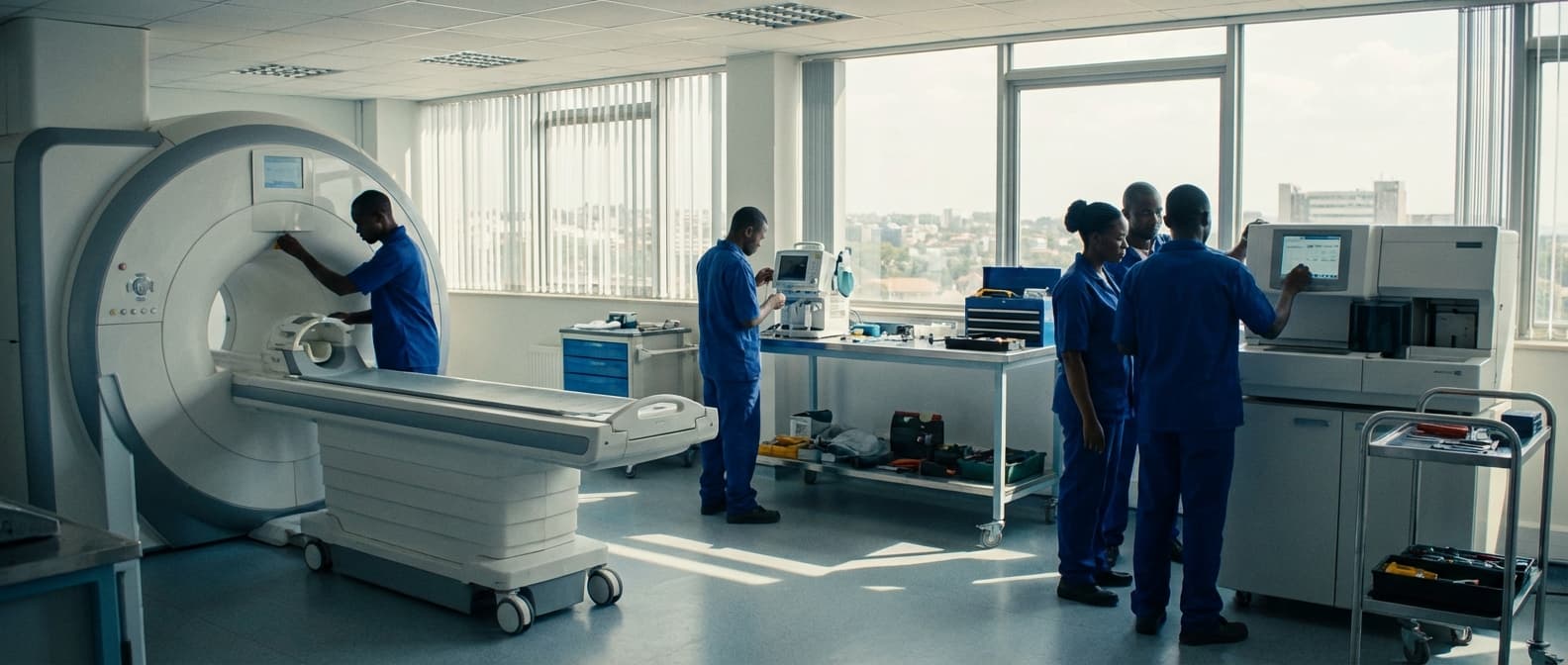
Planned Shutdown Coordination Service for Critical Equipment in Ethiopia
Engineering Excellence & Technical Support
Planned Shutdown Coordination Service for Critical Equipment High-standard technical execution following OEM protocols and local regulatory frameworks.
Predictive Maintenance Integration for Ethiopian Industries
Our service integrates advanced predictive maintenance algorithms and real-time sensor data from critical equipment across Ethiopian sectors (e.g., manufacturing, power generation, mining). This enables proactive identification of potential failures, allowing for planned, optimized shutdowns that minimize unplanned downtime and associated production losses.
Supply Chain & Logistics Optimization for Ethiopian Shutdowns
We meticulously plan and coordinate the entire shutdown lifecycle, from procuring specialized parts and engaging certified technicians to managing transportation and temporary infrastructure within Ethiopia's unique logistical landscape. This ensures all resources are available precisely when needed, streamlining the shutdown process and reducing project timelines.
Risk Mitigation & Compliance Assurance for Critical Ethiopian Assets
Our service employs rigorous risk assessment methodologies and adherence to international safety standards, tailored for the Ethiopian operational environment. We ensure all planned shutdowns for critical equipment comply with local regulations and industry best practices, safeguarding personnel, assets, and the environment while maintaining operational continuity post-shutdown.
What Is Planned Shutdown Coordination Service For Critical Equipment In Ethiopia?
The Planned Shutdown Coordination Service for Critical Equipment in Ethiopia is a specialized operational support function designed to manage and execute scheduled downtime for essential infrastructure and machinery across various sectors within the country. This service is paramount for maintaining asset integrity, optimizing operational efficiency, and mitigating risks associated with unplanned outages. It encompasses a comprehensive suite of activities aimed at ensuring that all preparatory, execution, and recovery phases of a planned shutdown are conducted in a safe, timely, and cost-effective manner. The core objective is to minimize disruption to ongoing operations while maximizing the benefits derived from maintenance, upgrades, or decommissioning activities.
| Who Needs the Service? | Typical Use Cases | ||
|---|---|---|---|
| Power Generation and Distribution Utilities: Organizations responsible for electricity generation, transmission, and distribution networks. | Scheduled maintenance of turbines, generators, transformers, switchgear, and transmission lines. | Installation of new equipment or upgrades to existing infrastructure. | Mandatory safety inspections and regulatory compliance overhauls. |
| Industrial Manufacturing Plants: Facilities involved in large-scale production across sectors like petrochemicals, mining, cement, textiles, and food processing. | Routine and major maintenance of production lines, heavy machinery (e.g., crushers, kilns, presses), and process control systems. | Refurbishment or replacement of critical process equipment. | Implementation of new process technologies or automation systems. |
| Water and Wastewater Treatment Facilities: Municipal and industrial facilities responsible for water purification and wastewater management. | Maintenance of pumps, filtration systems, clarifiers, and chemical dosing equipment. | Inspection and repair of pipelines and storage tanks. | Upgrade of treatment processes or capacity expansion. |
| Telecommunications Infrastructure Providers: Companies managing critical communication networks and data centers. | Maintenance of base stations, transmission towers, and switching equipment. | Data center hardware upgrades or infrastructure expansion. | Planned network upgrades or decommissioning of legacy systems. |
| Transportation and Logistics Infrastructure: Operators of ports, railways, and airports. | Maintenance of port cranes, conveyor systems, and bulk handling equipment. | Railway track maintenance, signaling system upgrades, and rolling stock overhauls. | Airport baggage handling system maintenance and runway repairs. |
| Public Sector and Government Agencies: Entities managing critical public utilities and infrastructure. | Maintenance of government-owned power plants, water treatment facilities, and public transportation systems. | Upgrades to critical national infrastructure managed by government bodies. |
Key Components of Planned Shutdown Coordination Service:
- Scope Definition and Planning: Precisely outlining the equipment and systems to be affected, the objectives of the shutdown (e.g., maintenance, inspection, modification, replacement), and the overall timeline.
- Risk Assessment and Mitigation: Identifying potential hazards associated with the shutdown (e.g., safety risks, environmental impacts, operational disruptions) and developing proactive mitigation strategies.
- Resource Management: Mobilizing and coordinating all necessary human resources (technicians, engineers, safety personnel, external contractors), equipment, and materials.
- Permitting and Regulatory Compliance: Securing all required permits and ensuring adherence to relevant national and industry-specific regulations.
- Pre-Shutdown Preparations: Isolating equipment, draining hazardous fluids, verifying safety interlocks, and conducting pre-shutdown inspections.
- Execution Oversight: Managing the on-site activities during the shutdown, ensuring adherence to the work plan, and facilitating real-time problem-solving.
- Quality Assurance and Control: Verifying that all maintenance and repair work meets specified standards and performance criteria.
- Post-Shutdown Testing and Commissioning: Conducting thorough testing and functional checks to ensure equipment operates as intended before returning it to service.
- Documentation and Reporting: Maintaining detailed records of all activities, findings, and outcomes for future reference and analysis.
- Communication and Stakeholder Management: Ensuring clear and consistent communication with all relevant stakeholders, including internal operational teams, management, regulatory bodies, and affected third parties.
Who Needs Planned Shutdown Coordination Service For Critical Equipment In Ethiopia?
Planned Shutdown Coordination Services are crucial for ensuring the seamless and safe execution of planned maintenance activities for critical equipment across various sectors in Ethiopia. These services minimize operational disruptions, prevent costly downtime, and ensure regulatory compliance. They are particularly vital for organizations that rely heavily on the continuous operation of specialized and high-value machinery, where even minor unplanned stoppages can have significant economic and safety repercussions.
| Customer Sector | Key Departments Involved | Critical Equipment Examples |
|---|---|---|
| Industrial Manufacturing | Production, Maintenance, Engineering, Operations, Safety | Assembly lines, CNC machines, furnaces, packaging machinery, large pumps and compressors |
| Power & Utilities | Operations, Maintenance, Engineering, Grid Control, Safety | Turbines (gas, steam, hydro), generators, transformers, switchgear, transmission lines |
| Oil & Gas | Operations, Maintenance, Process Engineering, Safety, Logistics | Refinery units (distillation, cracking), pipelines, drilling rigs, pumps, compressors, storage tanks |
| Mining | Operations, Mechanical Maintenance, Electrical Maintenance, Safety, Geology | Crushers, ball mills, conveyor systems, haul trucks, excavators, processing plants |
| Telecommunications | Network Operations, Field Maintenance, Engineering, Infrastructure Management | Base stations (BTS), core network equipment, data centers, power backup systems |
| Water Treatment & Supply | Operations, Maintenance, Engineering, Quality Control, Safety | Pumps, filtration systems, chemical dosing units, aeration equipment, reservoirs |
Target Customers in Ethiopia Requiring Planned Shutdown Coordination Service
- Large-scale industrial manufacturers
- Power generation and distribution utilities
- Oil and gas exploration and refining companies
- Mining operations
- Large agricultural processing facilities
- Telecommunication infrastructure providers
- Major transportation hubs (e.g., airports, large rail yards)
- Heavy construction and infrastructure development companies
- Water treatment and supply facilities
- Large hospitals and healthcare facilities with critical medical equipment
Planned Shutdown Coordination Service For Critical Equipment Process In Ethiopia
This document outlines the workflow for the Planned Shutdown Coordination Service for Critical Equipment, designed to manage scheduled maintenance and operational pauses of vital machinery in Ethiopia. The service ensures minimal disruption to operations, optimal resource allocation, and timely execution of planned shutdowns.
| Phase | Activity | Description | Key Stakeholders | Deliverables |
|---|---|---|---|---|
| Customer Inquiry | Client identifies the need for a planned shutdown and submits an inquiry, detailing the critical equipment, desired timeframe, and preliminary objectives. | Client (Facility Manager, Operations Manager), Service Provider (Business Development) | Service Request, Initial Consultation Summary |
| Initial Site Visit & Assessment | Service provider conducts a site visit to assess the equipment, current operational status, safety protocols, and identify potential challenges. | Service Provider (Technical Team, Project Manager), Client (Operations, Maintenance) | Site Assessment Report, Preliminary Risk Assessment |
| Detailed Scope of Work (SOW) Development | Collaboratively define the precise scope of work, including specific maintenance tasks, duration, required expertise, and safety procedures. | Service Provider (Project Manager, Technical Leads), Client (Maintenance, Engineering) | Approved Scope of Work (SOW) |
| Shutdown Schedule Creation | Develop a detailed, phased shutdown schedule, including pre-shutdown, shutdown, and post-shutdown activities, factoring in dependencies and critical path. | Service Provider (Project Manager, Schedulers), Client (Operations, Logistics) | Detailed Shutdown Schedule |
| Risk Assessment & Mitigation Plan | Conduct a comprehensive risk assessment for all planned activities and develop corresponding mitigation strategies. | Service Provider (Safety Officer, Technical Leads), Client (Safety Officer, Operations) | Comprehensive Risk Assessment & Mitigation Plan |
| Resource Identification & Allocation | Identify and secure all necessary resources: skilled personnel (technicians, engineers), specialized tools, equipment, materials, and consumables. | Service Provider (Procurement, HR, Project Manager), Client (Inventory, Operations) | Resource Allocation Plan, Personnel Roster |
| Logistics & Supply Chain Management | Coordinate the timely delivery of all required materials, parts, and equipment to the site. | Service Provider (Logistics Team), Client (Warehouse, Receiving) | Logistics Plan, Material Tracking Reports |
| Stakeholder Communication & Coordination | Establish clear communication channels and conduct coordination meetings with all relevant internal and external stakeholders. | Service Provider (Project Manager, Communication Officer), Client (All relevant departments), Third-Party Vendors | Communication Plan, Meeting Minutes |
| Permit & Authorization Acquisition | Obtain all necessary permits, work authorizations, and safety clearances from relevant authorities and client management. | Service Provider (Safety Officer, Project Manager), Client (Approving Authorities) | Issued Permits and Authorizations |
| Equipment Preparation & Isolation | Prepare the critical equipment for shutdown by following established isolation procedures, locking out and tagging out (LOTO) systems. | Service Provider (Technicians, Safety Officer), Client (Operations, Maintenance) | Isolation Certificates, LOTO Records |
| Toolbox Talks & Safety Briefings | Conduct pre-job safety briefings and toolbox talks for all personnel involved in the shutdown. | Service Provider (Site Supervisor, Safety Officer), Client (Supervisors) | Attendance Records, Safety Briefing Notes |
| On-Site Management & Supervision | Oversee all shutdown activities on-site, ensuring adherence to the schedule, scope of work, and safety procedures. | Service Provider (Site Manager, Supervisors), Client (Oversight Personnel) | Daily Progress Reports |
| Performing Maintenance & Repair Tasks | Execute the planned maintenance, repair, or upgrade tasks as per the SOW. | Service Provider (Skilled Technicians, Engineers), Client (Technical Support) | Completed Task Logs |
| Quality Control & Assurance | Implement quality checks and inspections throughout the execution phase to ensure work quality. | Service Provider (Quality Inspector), Client (Quality Control) | Inspection Reports |
| Pre-Start-up Checks | Perform thorough checks of all work completed, ensure all tools and materials are removed, and systems are ready for restart. | Service Provider (Technical Leads), Client (Operations, Maintenance) | Pre-Start-up Checklist Completion |
| Equipment Start-up & Testing | Oversee the safe and controlled start-up of the critical equipment and conduct functional testing. | Service Provider (Engineers, Technicians), Client (Operations, Commissioning Team) | Start-up Reports, Test Results |
| Formal Handover | Formally hand over the operational critical equipment back to the client's operations team, confirming all tasks are completed to satisfaction. | Service Provider (Project Manager), Client (Operations Manager) | Handover Certificate, Sign-off Document |
| Compilation of Shutdown Report | Prepare a comprehensive report detailing all activities, findings, deviations, lessons learned, and recommendations. | Service Provider (Project Manager, Technical Writer) | Final Shutdown Report |
| Financial Reconciliation & Invoicing | Finalize all project costs, reconcile against the budget, and issue the final invoice. | Service Provider (Finance Department, Project Manager), Client (Finance Department) | Final Invoice, Financial Summary |
| Knowledge Transfer & Feedback | Conduct a post-shutdown review meeting to discuss outcomes, gather feedback, and identify areas for improvement for future shutdowns. | Service Provider (Project Manager, Management), Client (Management, Key Personnel) | Post-Shutdown Review Minutes, Feedback Summary |
Planned Shutdown Coordination Service Workflow
- Inquiry & Initial Assessment
- Scope Definition & Planning
- Resource Mobilization & Scheduling
- Pre-Shutdown Preparations
- Execution of Planned Shutdown
- Post-Shutdown Verification & Handover
- Documentation & Reporting
Planned Shutdown Coordination Service For Critical Equipment Cost In Ethiopia
This document outlines the pricing considerations for a Planned Shutdown Coordination Service for Critical Equipment in Ethiopia. Such services are crucial for minimizing downtime, optimizing maintenance schedules, and ensuring the longevity of vital industrial and infrastructure assets. The cost of these services is influenced by a variety of factors, leading to a range of pricing structures. Understanding these factors is essential for businesses in Ethiopia seeking to budget effectively for planned shutdowns.
| Service Component/Scenario | Estimated Price Range (ETB - Ethiopian Birr) | Notes |
|---|---|---|
| Basic Planned Shutdown Planning & Coordination (e.g., single facility, moderate complexity) | 30,000 - 150,000 ETB per shutdown | Covers initial assessment, schedule development, basic communication, and on-site supervision for a defined period. |
| Comprehensive Planned Shutdown Management (e.g., multi-site, high complexity, extended duration) | 150,000 - 500,000+ ETB per shutdown | Includes detailed risk analysis, contractor vetting, advanced logistics, 24/7 on-site support, and complex stakeholder management. |
| Specialized Equipment Coordination (e.g., power generation, mining, large-scale manufacturing) | Add 20% - 50% to base cost | Requires highly specialized technical expertise and safety protocols. Pricing is heavily dependent on the specific equipment. |
| Remote Location Surcharge | Add 10% - 30% to base cost | Accounts for increased travel, accommodation, and logistical challenges. |
| Emergency/Expedited Planning (if applicable, though planned shutdowns aim to avoid this) | Premium rates may apply (e.g., 50% - 100% uplift) | This is generally not the norm for planned shutdowns but might apply if changes necessitate rapid adjustments. |
| Consulting and Advisory Services (standalone or add-on) | 5,000 - 20,000 ETB per day | For expert advice on shutdown strategy, best practices, or post-shutdown analysis. |
Key Pricing Factors for Planned Shutdown Coordination Services in Ethiopia
- Scope and Complexity of the Shutdown: The more critical and complex the equipment, the more extensive the planning, coordination, and execution required. This includes the number of pieces of equipment, their interdependencies, and the overall duration of the shutdown.
- Duration of the Planned Shutdown: Longer shutdown periods naturally incur higher coordination costs due to the extended involvement of personnel and resources.
- Number and Type of Critical Equipment: The sheer volume and sophistication of the equipment to be serviced directly impact the level of expertise and manpower needed. Specialized equipment may require niche skills and specific safety protocols.
- Geographical Location of the Facility: Remote or difficult-to-access locations in Ethiopia can increase logistical costs (transportation, accommodation, per diems) for the coordination team.
- Level of Expertise and Experience of the Coordination Team: Highly skilled and experienced professionals with a proven track record in managing critical equipment shutdowns command higher fees.
- Inclusion of Specialized Services: Services beyond basic coordination, such as advanced risk assessment, permit acquisition assistance, contractor management, or specialized technical consulting, will add to the overall cost.
- Required Response Time and Urgency: While planned shutdowns are pre-scheduled, any last-minute changes or the need for expedited planning can incur premium charges.
- Contractual Terms and Service Level Agreements (SLAs): The duration of the contract, the level of guaranteed uptime for coordination, and any performance-based incentives or penalties will influence pricing.
- Reporting and Documentation Requirements: Detailed post-shutdown reports, progress updates, and compliance documentation often contribute to the service cost.
- Overhead and Administrative Costs of the Service Provider: The service provider's operational expenses, including office space, administrative staff, insurance, and technology, are factored into their pricing.
- Market Demand and Competition: The availability of qualified service providers in Ethiopia and the general demand for such services can influence price points.
Affordable Planned Shutdown Coordination Service For Critical Equipment Options
Our Affordable Planned Shutdown Coordination Service is designed to minimize downtime and maximize the efficiency of your critical equipment maintenance. We understand that unplanned outages are costly and disruptive. This service offers a structured approach to planning and executing scheduled shutdowns, ensuring that all necessary tasks are completed on time and within budget. We focus on providing cost-effective solutions without compromising on quality or safety. Our expertise lies in streamlining complex shutdown processes, from initial planning and resource allocation to execution and post-shutdown analysis. By leveraging our service, you can reduce the financial impact of downtime, improve equipment reliability, and ensure the longevity of your critical assets.
| Value Bundle | Key Features | Estimated Cost Savings Potential | Ideal For |
|---|---|---|---|
| Basic Shutdown Planning | Risk assessment, scope definition, preliminary schedule | 5-10% reduction in planning overhead, 10-15% reduction in potential delays | Organizations with limited internal planning resources, smaller-scale critical equipment |
| Standard Shutdown Management | Detailed scheduling, resource allocation, vendor coordination, on-site supervision | 15-25% reduction in overall shutdown costs, 20-30% reduction in unplanned downtime | Most industrial facilities with critical equipment, routine scheduled maintenance |
| Comprehensive Shutdown Optimization | Predictive maintenance integration, root cause analysis, performance monitoring, continuous improvement | 25-40% reduction in total cost of ownership, significant increase in equipment reliability | Facilities aiming for operational excellence, reducing recurring issues, and long-term asset management |
| Emergency Response Integration | Rapid response coordination, pre-defined protocols, immediate resource mobilization | Up to 75% reduction in cost of unplanned downtime, minimizing production losses | High-risk industries, facilities with frequent critical equipment challenges |
| Remote Monitoring & Diagnostic Support | Proactive issue identification, early warning systems | Reduces unplanned shutdowns by 10-20%, potentially saving thousands in emergency repair costs | All facilities seeking to minimize reactive maintenance and improve asset health |
Value Bundles and Cost-Saving Strategies
- {"items":["Basic Shutdown Planning: Includes initial risk assessment, scope definition, preliminary scheduling, and stakeholder identification.","Standard Shutdown Management: Builds on basic planning with detailed scheduling, resource allocation (labor, materials, equipment), vendor coordination, and on-site supervision during the shutdown.","Comprehensive Shutdown Optimization: Encompasses all standard services plus advanced predictive maintenance integration, root cause analysis of recurring issues, post-shutdown performance monitoring, and continuous improvement recommendations.","Emergency Response Integration: Optional add-on to ensure rapid and efficient coordination in the event of an unplanned critical equipment failure.","Remote Monitoring & Diagnostic Support: For proactive identification of potential issues before they necessitate a shutdown, reducing the need for reactive maintenance."],"title":"Value Bundles"}
- {"items":["Extended Planning Horizon: Early and thorough planning allows for bulk purchasing of parts and materials, securing better rates, and avoiding expedited shipping costs.","Optimized Resource Allocation: Efficiently scheduling personnel and equipment to avoid idle time and overtime, leading to lower labor costs.","Minimizing Overlap and Rework: Detailed task sequencing and coordination prevent redundant work and costly errors during the shutdown.","Leveraging Existing Skillsets: Identifying and utilizing internal skilled technicians where possible to reduce reliance on expensive external contractors.","Predictive Maintenance Integration: Shifting from reactive to proactive maintenance can prevent minor issues from escalating into major, costly failures requiring extended shutdowns.","Standardized Procedures & Checklists: Ensuring consistency and completeness in every shutdown reduces the likelihood of missed steps and subsequent delays.","Vendor Negotiation & Management: Our experience allows us to negotiate competitive rates with specialized vendors and manage their performance effectively.","Data-Driven Decision Making: Post-shutdown analysis provides insights to optimize future shutdown planning, leading to progressive cost reductions over time.","Phased Shutdowns: Where feasible, breaking down large shutdowns into smaller, manageable phases can reduce the overall impact on production and distribute costs."],"title":"Cost-Saving Strategies"}
Verified Providers In Ethiopia
In Ethiopia's growing healthcare landscape, identifying trustworthy and skilled medical professionals is paramount for individuals seeking quality care. Verified Providers stand out as a benchmark of reliability, and Franance Health is a prime example of an organization that champions this standard. This document outlines the credentials and reasons why Franance Health's network of providers represents the best choice for healthcare needs in Ethiopia.
| Credential Type | Description | Franance Health Verification |
|---|---|---|
| Medical Licenses | Official authorization from the Ethiopian Ministry of Health to practice medicine. | Verified and up-to-date through direct consultation with regulatory bodies. |
| Educational Degrees & Diplomas | Accreditation of medical schools, universities, and postgraduate training institutions. | Verified against recognized national and international educational standards. |
| Specialization Certifications | Proof of advanced training and expertise in specific medical fields (e.g., cardiology, pediatrics, surgery). | Verified with relevant professional bodies and training institutions. |
| Work Experience Verification | Confirmation of previous employment and roles held within reputable healthcare institutions. | Thorough background checks and reference verifications. |
| Professional Memberships | Affiliation with recognized medical associations and societies, indicating adherence to professional codes of conduct. | Verification of active and good-standing membership status. |
| Continuing Medical Education (CME) | Proof of ongoing participation in educational programs to maintain and enhance medical knowledge and skills. | Review of CME records and participation certificates. |
What Makes Franance Health Providers Stand Out?
- Rigorous Credentialing Process: Franance Health employs a stringent vetting system that goes beyond basic licensing. This includes verification of educational qualifications, professional experience, and adherence to ethical standards.
- Specialized Expertise: The network comprises a diverse range of medical specialists, ensuring access to highly skilled professionals for various medical needs, from general practice to complex surgical procedures.
- Commitment to Continuous Professional Development: Franance Health actively encourages and supports its providers in staying abreast of the latest medical advancements and best practices through ongoing training and education.
- Patient-Centric Approach: Providers within the Franance Health network are selected not only for their medical acumen but also for their dedication to compassionate and patient-centered care.
- Adherence to International Standards: Franance Health aligns its credentialing and operational standards with recognized international healthcare benchmarks, guaranteeing a high level of quality and safety.
Scope Of Work For Planned Shutdown Coordination Service For Critical Equipment
This Scope of Work (SOW) outlines the services required for the planned shutdown coordination of critical equipment. The objective is to ensure a safe, efficient, and timely execution of all shutdown-related activities, minimizing downtime and operational impact. This SOW details the technical deliverables and standard specifications that will guide the service provider.
| Technical Deliverable | Description | Standard Specifications / Requirements |
|---|---|---|
| Shutdown Plan Development | Creation of a detailed, integrated shutdown plan covering all phases: pre-shutdown, execution, and post-shutdown. | Shall include: detailed work breakdown structure (WBS), schedule (Gantt chart), resource allocation, risk assessment and mitigation plan, communication plan, safety plan, permit to work system integration, environmental impact assessment, contingency plans, and detailed scope of work for each task. |
| Risk Management Register | A comprehensive register identifying all potential risks associated with the shutdown and outlining mitigation strategies. | Shall include: risk identification, likelihood and impact assessment, mitigation actions, responsible parties, and monitoring mechanisms. Must adhere to industry best practices for hazard identification and risk assessment (e.g., HAZOP, JSA). |
| Resource Management Plan | Detailed plan for managing all personnel (internal/external), equipment, tools, and materials required for the shutdown. | Shall specify: required skill sets, training requirements, vendor management, equipment calibration and certification, material procurement and logistics, and accommodation/transportation if applicable. |
| Communication Plan | A structured plan for disseminating information to all stakeholders throughout the shutdown. | Shall define: key stakeholders, communication channels, frequency of updates, reporting formats, escalation procedures, and designated points of contact. |
| Safety & Environmental Management Plan | Plan detailing all safety protocols, procedures, and environmental protection measures to be implemented during the shutdown. | Shall include: site-specific safety rules, emergency response procedures, PPE requirements, waste management, spill prevention and control, and compliance with local environmental regulations. |
| Permit to Work (PTW) System | Coordination and management of the PTW system to ensure all activities are authorized and controlled. | Shall involve: review and approval of PTW applications, issuance of permits, site inspections, and effective handover between work shifts and trades. |
| Pre-Shutdown Readiness Assessment Report | A report confirming the readiness of all equipment, systems, and personnel prior to the commencement of the shutdown. | Shall include: checklist completion status, verification of material availability, confirmation of personnel training, and final safety walk-through report. |
| Daily/Shift Progress Reports | Regular reports detailing the progress of shutdown activities, any issues encountered, and planned activities for the next period. | Shall include: completed tasks, ongoing tasks, deviations from schedule, safety observations, resource utilization, and immediate action items. Format to be agreed upon with the client. |
| Post-Shutdown Performance Report | A comprehensive report summarizing the execution of the shutdown, including performance against objectives, budget, and schedule. | Shall include: actual work completed vs. planned, reasons for any deviations, root cause analysis of incidents, lessons learned, and recommendations for future shutdowns. |
| As-Built Documentation Updates | Coordination of any necessary updates to engineering drawings and documentation resulting from modifications or repairs during the shutdown. | Shall ensure all changes are accurately documented and submitted for client approval and archiving. |
| Contingency and Emergency Response Plan Execution | Effective implementation of pre-defined contingency and emergency response plans when required. | Shall be executed in accordance with established procedures and all actions logged and reported. |
Objectives of the Planned Shutdown Coordination Service
- To develop and execute a comprehensive shutdown plan that aligns with operational needs and safety regulations.
- To effectively coordinate all internal and external stakeholders involved in the shutdown process.
- To ensure the availability and readiness of all necessary resources, including personnel, equipment, and materials.
- To manage risks and implement mitigation strategies to prevent incidents and delays.
- To maintain clear and consistent communication throughout the shutdown lifecycle.
- To facilitate the successful execution of maintenance, inspection, and upgrade activities.
- To ensure a smooth and timely handover of the equipment back to operations post-shutdown.
- To document all activities, lessons learned, and recommendations for future shutdowns.
Service Level Agreement For Planned Shutdown Coordination Service For Critical Equipment
This Service Level Agreement (SLA) outlines the terms and conditions for the Planned Shutdown Coordination Service for Critical Equipment, focusing on response times for scheduled maintenance events and uptime guarantees for the coordination platform. This agreement is designed to ensure minimal disruption to operations during planned shutdowns and maintain the reliability of the service.
| Service Component | Response Time Guarantee | Uptime Guarantee |
|---|---|---|
| Initial Plan Submission & Review | 99% of plans reviewed within 2 business days of submission. | N/A (Service Delivery) |
| Stakeholder Communication & Meeting Scheduling | 95% of coordination meetings scheduled within 5 business days of request. | N/A (Service Delivery) |
| Real-time Progress Updates (during active shutdown) | Updates provided at agreed-upon intervals (e.g., hourly, bi-hourly) with a 15-minute grace period. | N/A (Service Delivery) |
| Planned Shutdown Coordination Platform Availability | N/A | 99.5% uptime, excluding scheduled maintenance windows. |
| Post-Shutdown Report Generation | Draft report available within 3 business days of shutdown completion. | N/A (Service Delivery) |
Scope of Service
- Coordination of planned maintenance shutdowns for designated critical equipment.
- Scheduling and communication facilitation between all relevant stakeholders (e.g., operations, maintenance, vendors).
- Development and dissemination of detailed shutdown plans and schedules.
- Real-time tracking and reporting of shutdown progress.
- Post-shutdown review and analysis facilitation.
Frequently Asked Questions

Ready when you are
Let's scope your Planned Shutdown Coordination Service for Critical Equipment in Ethiopia project in Ethiopia.

Scaling healthcare logistics and technical systems across the entire continent.