
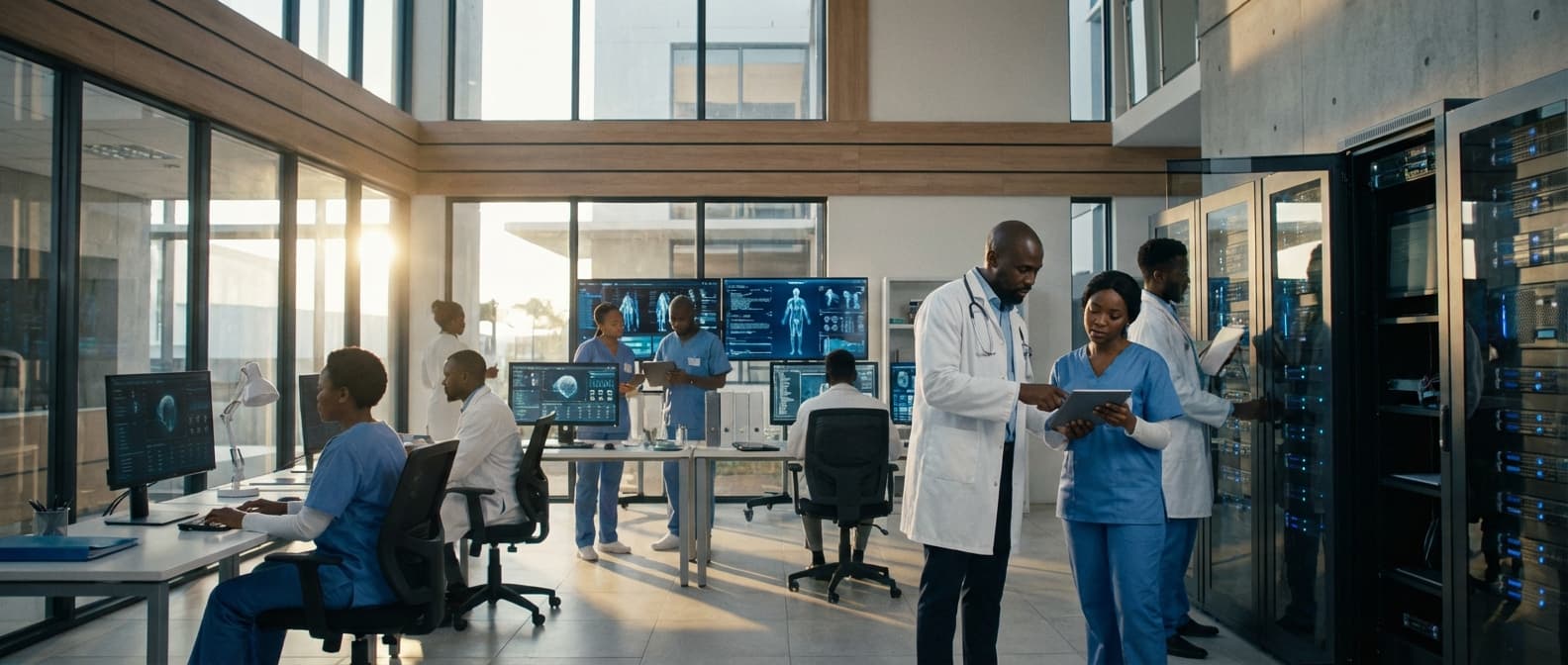
Tele-Radiology in Ethiopia
Engineering Excellence & Technical Support
24/7 access to certified radiologists providing rapid, accurate remote interpretation of diagnostic imaging studies. High-standard technical execution following OEM protocols and local regulatory frameworks.
Remote Diagnostic Powerhouse
Enables Ethiopian healthcare facilities, even in underserved remote areas, to access expert radiology interpretation without the need for on-site specialists, significantly reducing diagnosis delays and improving patient outcomes through immediate access to advanced imaging analysis.
Bridging the Expertise Gap
Facilitates seamless transfer of medical images to a pool of highly qualified radiologists, both domestically and internationally. This ensures that Ethiopian patients receive world-class diagnostic opinions for complex cases, fostering medical knowledge transfer and capacity building within the local healthcare ecosystem.
Enhanced Workflow Efficiency & Data Insights
Streamlines the radiology workflow by digitizing image management and reporting. This leads to faster turnaround times, improved data organization for patient records, and the potential for aggregated data analysis to identify public health trends and inform preventative strategies across Ethiopia.
What Is Tele-radiology In Ethiopia?
Tele-radiology in Ethiopia refers to the transmission of radiological images (such as X-rays, CT scans, MRIs, and ultrasounds) from one location to another for the interpretation and reporting by a radiologist. This service leverages telecommunications technology to bridge geographical distances, enabling access to expert radiological services where qualified personnel or advanced imaging equipment may be scarce.
| Who Needs Tele-radiology? | Typical Use Cases | |
|---|---|---|
| Rural and Remote Healthcare Facilities: Facilities lacking in-house radiologists or advanced imaging capabilities. | Emergency Department Consultations: Providing rapid interpretation of critical imaging findings (e.g., stroke, trauma) when local radiologists are unavailable. | |
| Hospitals with Limited Radiology Staff: Augmenting existing radiology departments, especially during off-hours or periods of high demand. | Specialized Imaging Interpretation: Accessing subspecialty radiologists (e.g., neuroradiology, musculoskeletal radiology) for complex cases. | |
| Clinics and Health Centers: Enabling basic diagnostic imaging services to be accessible in underserved areas. | Follow-up Imaging and Monitoring: Facilitating consistent follow-up imaging for chronic conditions in remote locations. | Screening Programs: Supporting large-scale screening initiatives for diseases like tuberculosis or certain cancers. |
| Primary Healthcare Providers: Empowering general practitioners and other clinicians with timely diagnostic information to guide patient management. | Training and Education: Providing remote learning opportunities for junior radiologists and technologists through case review and feedback. |
Key Components of Tele-radiology in Ethiopia
- Image Acquisition: Radiological studies are performed using standard imaging modalities at a healthcare facility.
- Image Transmission: Digital images are securely transferred via a network (e.g., internet, dedicated VPN) to a remote tele-radiology reading center.
- Image Interpretation: A qualified radiologist at the remote center analyzes the images and generates a diagnostic report.
- Report Delivery: The interpreted report is transmitted back to the originating healthcare facility, often electronically.
- Consultation: In some models, referring physicians can communicate with the remote radiologist for clarification or further discussion.
Who Needs Tele-radiology In Ethiopia?
Tele-radiology offers a crucial solution for improving access to expert radiological interpretation in Ethiopia, addressing the significant shortage of qualified radiologists. This technology connects remote healthcare facilities with radiologists located elsewhere, enabling prompt and accurate diagnosis. The primary beneficiaries are healthcare providers and patients in underserved areas and facilities with limited or no on-site radiological expertise.
| Department | Need for Tele-Radiology | Impact/Benefit |
|---|---|---|
| Radiology Department (where present) | Workload management, second opinions, subspecialty expertise, continuous learning. | Improved diagnostic accuracy, reduced radiologist burnout, enhanced training. |
| Emergency Department | 24/7 availability of rapid image interpretation for critical conditions. | Faster decision-making, improved patient outcomes in emergencies, timely interventions. |
| Internal Medicine | Diagnosis and management of a wide range of diseases (pulmonary, abdominal, etc.). | Accurate diagnosis of complex conditions, better treatment planning. |
| Surgery (General, Orthopedic, Neurosurgery, etc.) | Pre-operative planning, post-operative assessment, diagnosis of injuries and complications. | Safer surgical procedures, effective management of surgical outcomes. |
| Pediatrics | Diagnosis of childhood illnesses and congenital anomalies. | Accurate and timely diagnosis for pediatric patients, leading to appropriate care. |
| Obstetrics and Gynecology | Fetal anomaly screening, diagnosis of gynecological conditions. | Improved maternal and fetal health outcomes, early detection of potential problems. |
| Oncology | Staging of cancers, monitoring treatment response, detection of metastases. | Effective cancer management, personalized treatment strategies. |
| Public Health & Infectious Disease Control | Screening programs (e.g., TB detection through chest X-rays), outbreak investigations. | Wider reach for screening, faster identification and control of disease outbreaks. |
Target Customers and Departments for Tele-Radiology in Ethiopia
- {"title":"Primary Healthcare Facilities","description":"These are often located in rural or remote areas with limited infrastructure and a severe lack of specialized medical professionals, including radiologists. They frequently rely on basic imaging modalities like X-ray and ultrasound."}
- {"title":"Regional and District Hospitals","description":"While having more resources than primary centers, these hospitals often struggle to retain or attract radiologists. They serve a larger population and deal with a wider range of medical conditions requiring diagnostic imaging."}
- {"title":"Specialized Clinics and Diagnostic Centers","description":"These may focus on specific areas like cardiology, neurology, or orthopedics, and while they might have imaging equipment, they may lack the specialized radiologist needed for accurate interpretation of complex cases."}
- {"title":"Public Health Programs and Initiatives","description":"Government-led health programs focusing on disease screening (e.g., tuberculosis, maternal health) can benefit from tele-radiology to scale up their diagnostic capabilities without needing to deploy radiologists to every location."}
- {"title":"Emergency and Trauma Centers","description":"Rapid diagnosis is critical in emergency situations. Tele-radiology can provide immediate interpretation of X-rays, CT scans, and other imaging for trauma patients, even when a radiologist isn't physically present."}
- {"title":"Teaching Hospitals and Medical Training Institutions","description":"Tele-radiology can be used for educational purposes, allowing trainees to learn from a broader range of cases and experienced radiologists, and also for remote consultation during complex cases."}
Tele-radiology Process In Ethiopia
Tele-radiology in Ethiopia is a burgeoning field aimed at extending expert radiological interpretation services to underserved areas, particularly rural and remote regions, where access to qualified radiologists is limited. The workflow encompasses several key stages, from the initial request for a radiological examination to the final delivery of the interpreted report back to the referring physician. This process is crucial for improving diagnostic accuracy, timely treatment initiation, and ultimately, patient outcomes across the country. It relies on a robust technological infrastructure, secure data transfer protocols, and collaborative efforts between primary healthcare facilities and tertiary care centers or specialized tele-radiology hubs.
| Stage | Description | Key Actors | Technology Involved | Challenges |
|---|---|---|---|---|
| Initial Patient Consultation and Referral | A patient presents with symptoms requiring a radiological examination. A clinician at a local health post or hospital assesses the patient and decides if a radiological study is necessary. If so, they initiate a referral for the imaging study. | Clinician (Doctor, Nurse Practitioner) | Basic EMR/Paper-based patient records | Lack of diagnostic imaging availability at the primary facility, limited clinician awareness of tele-radiology benefits. |
| Image Acquisition at Peripheral Facility | The patient is directed to a designated radiology unit within the peripheral facility. X-rays, CT scans, or ultrasound examinations are performed using available equipment. The image quality is critical for accurate interpretation. | Radiographer/Technologist | X-ray machines, CT scanners, Ultrasound machines (varying levels of modernity) | Outdated equipment, frequent equipment malfunction, inconsistent image quality, power outages. |
| Data Preparation and Transmission | Acquired images are processed and anonymized. The anonymized DICOM (Digital Imaging and Communications in Medicine) files are then prepared for secure transmission. This often involves compression to reduce file size and ensure faster transfer. | Radiographer/Technologist, IT Support (if available) | PACS (Picture Archiving and Communication System) viewer/client, secure file transfer protocols (e.g., SFTP, VPN), internet connectivity | Limited or unreliable internet connectivity, lack of standardized PACS, insufficient IT support, data security concerns. |
| Teleradiology Hub Reception and Triage | The tele-radiology hub, often located in a tertiary hospital or a specialized center, receives the transmitted image data. A designated person or system prioritizes the cases based on urgency (e.g., critical findings, STAT requests). | Teleradiology Coordinator, PACS administrator | Central PACS server, RIS (Radiology Information System), network infrastructure | High volume of incoming studies, insufficient staffing for triage, delays in data reception. |
| Radiologist Interpretation | A qualified radiologist at the hub reviews the images, compares them with the patient's clinical information (provided with the referral), and formulates a diagnostic report. | Radiologist | High-resolution monitors, advanced PACS workstation, dictation software | Radiologist workload and burnout, interpretation errors due to image quality or insufficient clinical information, language barriers. |
| Report Generation and Secure Transmission | The radiologist dictates or types the findings and conclusions into a standardized report. This report is then finalized and securely transmitted back to the referring peripheral facility. | Radiologist, Medical Secretary/Transcriptionist | Dictation software, report generation software, secure email or dedicated reporting platform | Delays in report generation, transcription errors, insecure transmission methods, incompatibility of reporting formats. |
| Report Review and Action at Peripheral Facility | The referring clinician receives the tele-radiology report. They review it and integrate the findings into the patient's management plan, potentially ordering further investigations or initiating treatment. | Referring Clinician | EMR/Paper-based patient records, secure communication channels | Misinterpretation of the report, lack of timely access to the report, insufficient clinical context to understand the report's implications. |
| Quality Assurance and Feedback | A system is in place to monitor the quality of tele-radiology services. This can involve periodic review of reports, tracking turnaround times, and collecting feedback from referring clinicians to identify areas for improvement and address any discrepancies. | Teleradiology service management, clinicians, radiologists | QA protocols, feedback forms, data analysis tools | Lack of formal QA processes, difficulty in collecting comprehensive feedback, resistance to change, funding constraints for improvement initiatives. |
Tele-Radiology Workflow in Ethiopia
- Initial Patient Consultation and Referral
- Image Acquisition at Peripheral Facility
- Data Preparation and Transmission
- Teleradiology Hub Reception and Triage
- Radiologist Interpretation
- Report Generation and Secure Transmission
- Report Review and Action at Peripheral Facility
- Quality Assurance and Feedback
Tele-radiology Cost In Ethiopia
Tele-radiology, the interpretation of medical images remotely, is a growing field in Ethiopia offering a potential solution to the shortage of specialist radiologists. Understanding the cost associated with these services is crucial for healthcare providers and patients. Several factors influence tele-radiology pricing in Ethiopia, and these can result in a range of costs when expressed in the local currency, the Ethiopian Birr (ETB).
Key pricing factors include:
- Type of Imaging Modality: The complexity and type of imaging study (e.g., X-ray, CT scan, MRI) directly impact the radiologist's time and expertise required for interpretation, thus affecting the cost.
- Turnaround Time (TAT): Urgent or STAT interpretations typically command a higher fee due to the immediate resource allocation and expedited reporting required.
- Volume of Cases: For larger healthcare facilities or networks, volume-based contracts can lead to discounted per-case pricing.
- Radiologist Experience and Subspecialty: Highly experienced radiologists or those with subspecialty expertise (e.g., neuro-radiology, pediatric radiology) may charge more for their specialized interpretations.
- Technology and Platform Costs: While often bundled, the underlying tele-radiology platform, including software, data storage, and IT support, contributes to the overall cost structure of the service provider.
- Geographic Location and Overhead: While tele-radiology inherently reduces some geographic barriers, the location of the tele-radiology service provider and their operational overhead can still play a role.
- Contractual Agreements: The nature of the agreement between the healthcare provider and the tele-radiology service (e.g., fee-for-service, subscription model) will dictate the pricing.
- Regulatory and Compliance Costs: Adhering to local healthcare regulations and data privacy standards can add to the operational costs, which may be reflected in pricing.
Given these factors, it's challenging to provide a single definitive price. However, based on market observations and potential service models, one can expect a range of costs for tele-radiology interpretations in Ethiopia.
| Imaging Modality (Typical) | Estimated Price Range (ETB) | Notes |
|---|---|---|
| X-ray Interpretation | 500 - 1,500 ETB | Basic interpretations, e.g., chest X-ray, bone X-ray. |
| CT Scan Interpretation | 1,000 - 3,000 ETB | More complex, requiring specialized software and higher radiologist expertise. |
| MRI Scan Interpretation | 1,500 - 4,000 ETB | Often the most complex and time-consuming, demanding significant radiologist expertise. |
| Ultrasound Interpretation | 700 - 2,000 ETB | Varies based on the region scanned (e.g., abdominal vs. obstetric). |
| Urgent/STAT Interpretations | +25% to +50% Premium | Added on top of the base price for expedited reporting. |
| Volume-Based Contracts | Negotiable (potential discounts) | Significant cost savings for high-volume clients. |
Factors Influencing Tele-Radiology Costs in Ethiopia
- Type of Imaging Modality (X-ray, CT, MRI, etc.)
- Required Turnaround Time (Standard vs. Urgent)
- Volume of Cases and Contractual Agreements
- Radiologist Experience and Subspecialty
- Technology and Platform Infrastructure
- Geographic Location of the Service Provider
- Service Level Agreements (SLAs)
- Regulatory Compliance and Data Security
Affordable Tele-radiology Options
Tele-radiology offers a compelling solution for healthcare providers seeking efficient and cost-effective imaging interpretation. This service allows for remote reading of medical images by qualified radiologists, bridging geographical gaps and improving turnaround times. When exploring affordable tele-radiology options, understanding value bundles and implementing cost-saving strategies is crucial. Value bundles typically package services together, offering a predictable cost and often including a comprehensive suite of readings for a specific modality or volume. Cost-saving strategies involve careful vendor selection, negotiating favorable contracts, leveraging technology, and optimizing workflow. By focusing on these aspects, organizations can significantly reduce their radiology expenses without compromising on quality or accessibility.
| Cost-Saving Strategy | Description | Potential Impact |
|---|---|---|
| Negotiate Long-Term Contracts | Securing multi-year agreements can often lead to better per-study rates and service level guarantees. | Significant reduction in per-study cost over time. |
| Leverage Technology and Automation | Utilize AI-powered preliminary reads, automated reporting tools, and efficient PACS integration to streamline workflows. | Reduced radiologist time per study, faster turnaround, lower operational costs. |
| Optimize Reporting Templates | Standardized and efficient reporting templates can reduce dictation and transcription time. | Increased radiologist efficiency and reduced administrative overhead. |
| Careful Vendor Selection | Thoroughly research and compare multiple tele-radiology providers based on cost, quality, turnaround times, and client references. | Ensures competitive pricing and services that meet specific needs. |
| Define Clear Service Level Agreements (SLAs) | Establish precise expectations for turnaround times, accuracy, and communication to avoid costly delays or errors. | Minimizes risk of financial penalties and ensures expected service quality. |
| Bundle with Other Services | Explore if tele-radiology providers offer complementary services like teleradiology quality assurance or IT support at a bundled rate. | Potential for overall cost reduction and streamlined vendor management. |
| Internal Workflow Analysis | Understand your own imaging workflow to identify bottlenecks and areas where tele-radiology can offer the most significant impact and cost savings. | Maximizes the return on investment from tele-radiology services. |
Key Value Bundles in Tele-Radiology
- Per-Study Pricing: A fixed cost for each image study interpreted, ideal for unpredictable caseloads.
- Volume-Based Tiers: Discounted per-study rates as the volume of interpreted studies increases.
- Dedicated Radiologist/Team: Contracting for a specific radiologist or team for consistent coverage and expertise, often with a monthly retainer or hourly rate.
- Round-the-Clock Coverage: Ensuring 24/7 availability of radiologists for urgent reads, often at a premium but can be bundled.
- Subspecialty Bundles: Packages focused on specific areas like neuroradiology, musculoskeletal, or women's imaging, ensuring specialized expertise.
- Software and Integration Fees: Bundled costs that may include the tele-radiology platform, PACS integration, and IT support.
Verified Providers In Ethiopia
In Ethiopia, ensuring you are receiving care from a verified and reputable healthcare provider is paramount. Franance Health stands out as a leading organization committed to connecting individuals with trusted medical professionals and facilities. Their rigorous credentialing process and dedication to patient well-being make them the premier choice for accessing quality healthcare services across Ethiopia.
| Provider Type | Verification Criteria | Franance Health Advantage |
|---|---|---|
| Doctors & Specialists | Valid Medical License, Board Certifications, Postgraduate Training, Clinical Experience, Criminal Background Check, Peer Reviews | Franance Health verifies all essential credentials, ensuring practitioners are qualified, experienced, and ethically sound. Access to detailed profiles and patient feedback. |
| Hospitals & Clinics | Accreditation Status, Licensing by Ministry of Health, Quality of Facilities & Equipment, Staff-to-Patient Ratio, Infection Control Protocols | Franance Health screens facilities for adherence to national standards and best practices in patient care and safety. Commitment to modern infrastructure and well-equipped services. |
| Diagnostic Centers (Labs & Imaging) | Accreditation, Equipment Calibration & Maintenance, Qualified Technicians, Quality Control Measures, Turnaround Times | Franance Health ensures centers utilize certified equipment and employ skilled personnel for accurate and timely diagnostic results. Focus on reliability and precision. |
| Pharmacies | Operating License, Pharmacist Registration, Drug Storage & Handling Protocols, Availability of Essential Medicines | Franance Health verifies that pharmacies are licensed and adhere to strict guidelines for safe and legitimate dispensing of medications. Commitment to genuine pharmaceuticals. |
Why Franance Health Represents the Best Choice for Verified Providers in Ethiopia:
- Comprehensive Vetting Process: Franance Health employs a multi-faceted approach to verify providers, including thorough background checks, validation of medical licenses and certifications, and assessments of professional experience. This ensures that all listed providers meet high standards of competence and ethical practice.
- Focus on Patient Safety and Quality: Patient safety and the delivery of high-quality care are at the core of Franance Health's mission. They prioritize providers who demonstrate a commitment to best practices, patient-centered care, and continuous professional development.
- Extensive Network of Specialists: Franance Health has cultivated a wide network of verified healthcare professionals across various medical disciplines. Whether you require a general practitioner, a specialist, or access to advanced medical facilities, Franance Health can connect you with the right provider.
- Transparent Provider Information: Patients benefit from transparent access to detailed information about each verified provider, including their qualifications, specializations, experience, and patient reviews. This empowers individuals to make informed decisions about their healthcare.
- Commitment to Accessibility: Franance Health strives to make quality healthcare accessible to all Ethiopians. Their platform facilitates easy discovery and booking of appointments, reducing barriers to accessing necessary medical services.
- Upholding Ethical Standards: Franance Health is dedicated to promoting ethical conduct within the healthcare sector. They work with providers who adhere to strict professional ethics and a commitment to patient confidentiality and respect.
Scope Of Work For Tele-radiology
This Scope of Work (SOW) outlines the requirements for a Tele-Radiology service. It details the technical deliverables and standard specifications necessary for the successful implementation and operation of the tele-radiology platform. The objective is to ensure seamless integration, efficient workflow, and high-quality diagnostic imaging services delivered remotely.
| Specification Category | Description | Key Requirements/Standards |
|---|---|---|
| Platform Architecture | The core tele-radiology software and its underlying infrastructure. | Web-based accessibility, modular design, scalability for future growth, compliance with relevant healthcare IT standards (e.g., HL7, DICOM). |
| Image Management (PACS) | Storage, retrieval, and display of medical images. | DICOM compliance, lossless/lossy compression options, robust search and retrieval capabilities, audit trails. |
| Workflow Management (RIS) | Management of radiology orders, scheduling, reporting, and billing. | Integration with existing HIS/EMR, customizable workflows, order tracking, critical finding alerts. |
| Data Security & Privacy | Protection of patient data and compliance with regulations. | HIPAA/GDPR compliance, data encryption (at rest and in transit), user authentication and authorization, audit logging, secure remote access. |
| Network & Connectivity | Requirements for reliable and secure data transmission. | High-bandwidth connectivity, VPN or secure tunnel implementation, Quality of Service (QoS) for imaging data, failover mechanisms. |
| Workstation Requirements | Hardware and software specifications for radiologist viewing and reporting. | High-resolution monitors (minimum 3MP for diagnostic review), dedicated graphics cards, ergonomic design, intuitive user interface, compatibility with reporting templates. |
| Interoperability | Ability to exchange data with other healthcare systems. | HL7 interface for ADT, Orders, and Results; DICOM integration with modalities and archiving systems. |
| Performance & Reliability | Ensuring consistent and timely service delivery. | Uptime guarantees (e.g., 99.9%), low latency for image loading and transmission, system redundancy, defined Service Level Agreements (SLAs). |
| Reporting Functionality | Tools for radiologists to generate and sign reports. | Speech recognition integration, structured reporting capabilities, digital signature support, template management, integration with e-signature solutions. |
| Disaster Recovery & Business Continuity | Measures to ensure service availability in case of outages. | Regular data backups, off-site data storage, documented recovery procedures, defined Recovery Time Objectives (RTO) and Recovery Point Objectives (RPO). |
Technical Deliverables
- Tele-radiology Platform Software (PACS/RIS integration capabilities)
- Image Acquisition Gateway/Modality Interface
- Secure Data Transmission Channels (VPN, TLS/SSL)
- Viewing Workstations (Radiologist End)
- Reporting Workstation (Radiologist End)
- Data Archiving and Retrieval System
- System Integration Documentation
- User Manuals and Training Materials
- Performance Monitoring and Reporting Tools
- Disaster Recovery and Business Continuity Plan
Service Level Agreement For Tele-radiology
This Service Level Agreement (SLA) outlines the performance standards and guarantees for the Tele-Radiology services provided by [Provider Name] to [Client Name]. This SLA is an integral part of the Master Service Agreement (MSA) between the parties.
| Service Component | Service Level Objective (SLO) | Measurement Metric | Reporting Frequency |
|---|---|---|---|
| Image Transmission Success Rate | 99.9% | Percentage of successfully transmitted image studies | Monthly |
| Report Generation Time (Routine) | < 24 hours | Time from image study reception to final report availability | Monthly |
| Report Generation Time (STAT/Urgent) | < 1 hour | Time from STAT image study reception to final report availability | On-demand tracking and Monthly summary |
| System Uptime Guarantee | 99.95% | Percentage of time the Tele-Radiology platform is operational and accessible (excluding scheduled maintenance) | Monthly |
| Emergency/Critical Finding Notification | < 15 minutes | Time from identification of emergency/critical finding to notification to the ordering physician/facility | On-demand tracking and Monthly summary |
| System Availability (Scheduled Maintenance) | 99.00% (excluding planned maintenance) | Percentage of time the system is available, with advance notification for planned maintenance windows. | Monthly |
Key Service Components
- Image Transmission and Reception
- Report Generation and Delivery
- System Uptime and Availability
- Response Times for Urgent Cases
- Data Security and Privacy
Frequently Asked Questions

Ready when you are
Let's scope your Tele-Radiology in Ethiopia project in Ethiopia.

Scaling healthcare logistics and technical systems across the entire continent.