
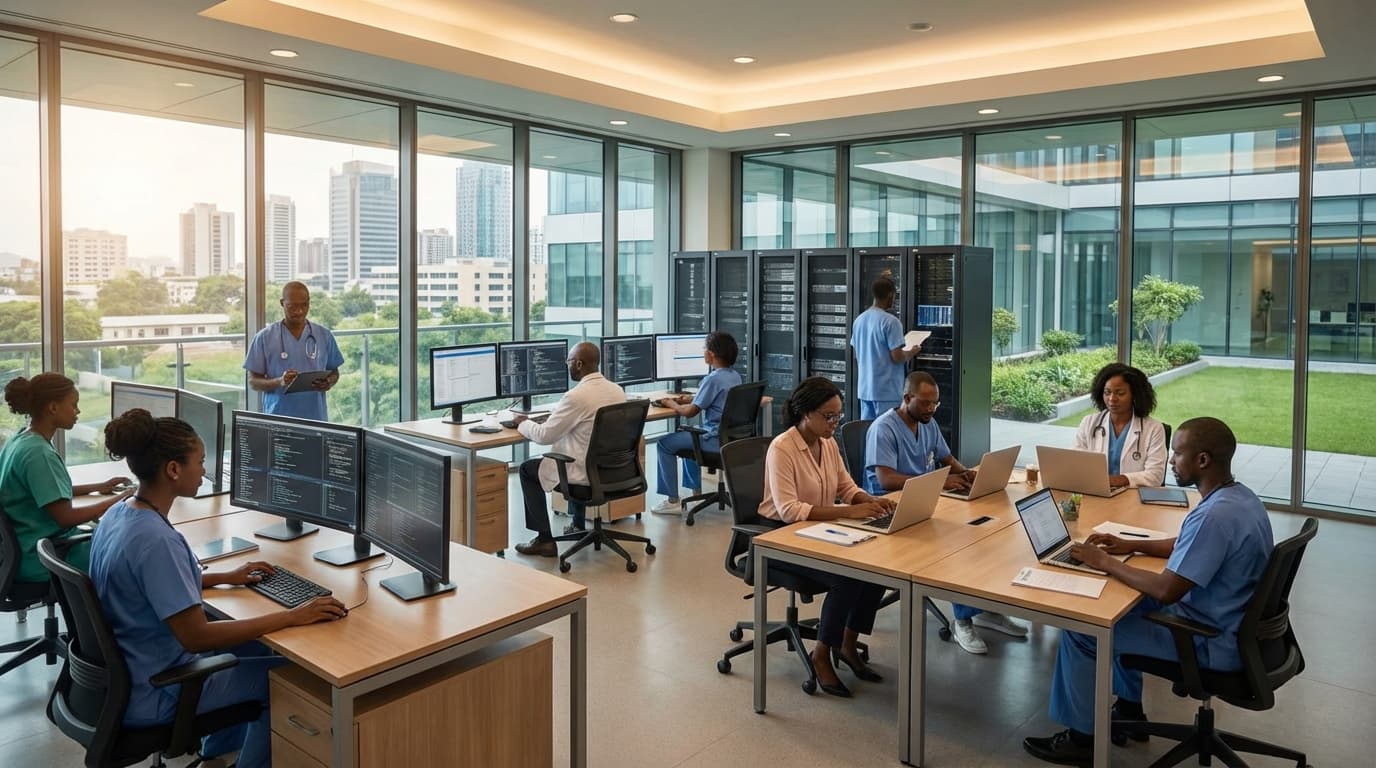
Radiology Reader & Reporting Support in Ethiopia
Engineering Excellence & Technical Support
Remote radiology reading and reporting services High-standard technical execution following OEM protocols and local regulatory frameworks.
Bridging the Gap: Radiology Expertise On-Demand
Our platform connects remote Ethiopian healthcare facilities with specialized radiologists for timely secondary consultations and expert reporting, overcoming geographical barriers and improving diagnostic accuracy for critical cases.
Empowering Local Technologists: Enhanced Image Quality & Workflow
We provide training and remote support for radiology technologists in Ethiopia, focusing on optimal image acquisition techniques and PACS integration, leading to higher quality scans and streamlined reporting workflows.
AI-Assisted Diagnostics: Early Detection & Reduced Workload
Leveraging AI algorithms, we offer preliminary image analysis to flag potential abnormalities, assisting local radiologists in Ethiopia to prioritize urgent cases and reduce diagnostic turnaround times, particularly in underserved areas.
What Is Radiology Reader & Reporting Support In Ethiopia?
Radiology Reader & Reporting Support in Ethiopia refers to the provision of specialized services designed to enhance the interpretation of medical imaging studies and the generation of diagnostic reports. This encompasses a spectrum of technical and clinical assistance, leveraging expert radiologists and advanced technological infrastructure. The primary objective is to improve the accuracy, efficiency, and accessibility of radiological diagnostics within the Ethiopian healthcare landscape, often addressing limitations in local expertise, equipment availability, or workflow bottlenecks.
| Service Recipient | Need | Typical Use Cases |
|---|---|---|
| Hospitals and Clinics (Public & Private): | Limited availability of subspecialist radiologists; high patient volumes; need for rapid turnaround times; geographical remoteness of some facilities; desire to improve diagnostic accuracy and patient outcomes. | Routine interpretation of general X-rays, CT scans, and MRIs; specialized interpretations in areas like neuro-radiology, musculoskeletal radiology, or abdominal imaging; providing out-of-hours or emergency interpretations; supporting diagnostic efforts in underserved regions. |
| Diagnostic Imaging Centers: | Need to expand service offerings and expertise without immediate in-house recruitment; managing fluctuations in demand; ensuring consistent quality of reporting. | Providing specialized interpretations for complex imaging modalities; offering a second opinion on challenging cases; covering for periods of staff leave or absence. |
| Healthcare Providers in Remote Areas: | Lack of access to any in-house radiology services or interpretation expertise; critical need for timely diagnostic information to guide patient management. | Facilitating basic radiological interpretations for primary healthcare decision-making; enabling the remote diagnosis of common conditions; supporting public health initiatives requiring widespread imaging assessment. |
| Medical Schools and Training Institutions: | Need for diverse case material and expert guidance for training future radiologists and healthcare professionals; enhancing the curriculum with real-world interpretations. | Providing case studies for educational purposes; offering mentorship for trainees in radiology; demonstrating best practices in report writing and image interpretation. |
Key Components of Radiology Reader & Reporting Support:
- Remote Image Interpretation (Teleradiology): Utilizing secure, high-bandwidth networks to transmit medical images (e.g., X-ray, CT, MRI, Ultrasound) to off-site radiologists for interpretation and report generation.
- Second Opinion Services: Providing expert review of already interpreted studies to confirm diagnoses, offer alternative interpretations, or clarify complex findings.
- Quality Assurance (QA) and Peer Review: Implementing systematic processes for reviewing radiology reports and images to ensure adherence to established standards, identify potential errors, and facilitate continuous professional development.
- Reporting Template Standardization: Developing and deploying standardized, structured reporting templates to ensure consistency, completeness, and clarity in diagnostic reports, often incorporating relevant clinical information and follow-up recommendations.
- Multidisciplinary Team (MDT) Consultation Support: Facilitating the integration of radiological findings into broader clinical decision-making processes by providing interpreted reports and participating in virtual or physical MDT meetings.
- Training and Capacity Building: Offering training programs for local radiographers, technicians, and junior radiologists on image acquisition protocols, preliminary interpretation, and reporting best practices.
- Workflow Optimization Tools: Implementing software solutions that streamline the radiology workflow, from image acquisition and archival to reporting and communication with referring physicians.
Who Needs Radiology Reader & Reporting Support In Ethiopia?
Radiology reader and reporting support services are crucial for enhancing diagnostic accuracy, improving workflow efficiency, and bridging the gap in specialized radiological expertise within Ethiopia. These services can significantly benefit healthcare providers facing challenges such as a shortage of radiologists, high patient volumes, and limited access to subspecialty interpretations.
| Customer Type | Key Needs/Challenges Addressed | Departmental Impact |
|---|---|---|
| Public Hospitals | High patient load, shortage of radiologists, need for second opinions, capacity building. | Radiology (general, emergency, subspecialty needs), all clinical departments requiring imaging diagnostics. |
| Private Hospitals & Diagnostic Centers | Desire for specialized interpretations, improved turnaround times, competitive edge, expanding service offerings. | Radiology (advanced imaging, subspecialties), Outpatient clinics, all inpatient and outpatient clinical services. |
| Missionary Hospitals | Geographic isolation, limited access to specialists, cost-effectiveness of services. | Radiology (basic and essential imaging interpretation), supporting primary healthcare services. |
| Rural Health Centers & Clinics | Lack of in-house radiological expertise, basic imaging equipment, critical need for interpretation for referrals. | Primary care physicians, general practitioners (indirectly via radiology departments at referral centers or mobile units). |
| Medical Schools & Teaching Hospitals | Training of future radiologists, research support, access to diverse case studies, ensuring high-quality teaching material. | Radiology (educational, research, clinical training), all clinical departments involved in teaching. |
| NGOs (Healthcare Focus) | Providing diagnostic support in underserved areas, supporting specific health programs (e.g., TB screening, maternal health), project-based needs. | Radiology (program-specific needs), mobile clinics, community health centers. |
Target Customers and Departments for Radiology Reader & Reporting Support in Ethiopia
- {"items":["Public Hospitals (Federal and Regional)","Private Hospitals and Diagnostic Centers","Missionary Hospitals","Rural Health Centers and Clinics","Medical Schools and Teaching Hospitals","Non-Governmental Organizations (NGOs) involved in healthcare"],"title":"Target Customers"}
- {"items":["Radiology Departments/Units","Emergency Departments","Oncology Departments","Surgery Departments","Internal Medicine Departments","Pediatric Departments","Cardiology Departments","Neurology Departments","Orthopedics Departments","General Practitioners and Family Medicine Physicians (requiring interpretation for their patients)"],"title":"Target Departments/Users"}
Radiology Reader & Reporting Support Process In Ethiopia
The Radiology Reader & Reporting Support process in Ethiopia aims to streamline the interpretation of medical imaging studies and the generation of diagnostic reports, especially in areas where specialized radiology expertise may be limited. This workflow is designed to ensure timely and accurate diagnostic information is available to referring clinicians, thereby improving patient care. The process typically begins with an inquiry or request for radiology services and culminates in the delivery of a finalized report.
| Stage | Description | Key Actors | Tools/Technologies | Potential Challenges |
|---|---|---|---|---|
| Inquiry/Request Generation | A referring clinician identifies the need for a radiological examination and submits a request. | Referring Clinician, Patient | Paper requisition forms, Electronic Health Record (EHR) system (if available) | Incomplete or unclear clinical information on requisition, Lack of standardized request forms |
| Image Acquisition | The requested radiological study (X-ray, CT, Ultrasound, MRI) is performed by a radiographer or technician. | Radiographer/Technician | Imaging modalities (X-ray machine, CT scanner, Ultrasound machine, MRI scanner) | Equipment malfunction, Inconsistent image quality, Limited availability of specialized equipment |
| Image Transmission | Acquired images are securely transferred from the imaging modality to a Picture Archiving and Communication System (PACS) or a dedicated server. | Radiographer/Technician, IT Support | PACS, DICOM standards, Network infrastructure (LAN/WAN) | Network connectivity issues, Slow transmission speeds, Data security concerns, Lack of PACS infrastructure |
| Initial Review/Triage | A designated radiographer, technologist, or junior radiologist may perform an initial check for technical adequacy and flag urgent cases. | Radiographer, Technologist, Junior Radiologist | PACS viewer, Triage protocols | Subjectivity in triage, Overburdened staff leading to delays |
| Radiology Reader Assignment | A radiologist (general or sub-specialist) is assigned to interpret the study based on availability, expertise, and urgency. | Chief Radiologist, PACS administrator | PACS worklist management, Assignment algorithms | Uneven workload distribution, Lack of sub-specialists in certain regions, Language barriers (if international readers are involved) |
| Image Interpretation & Preliminary Report Generation | The assigned radiologist reviews the images, dictates or writes preliminary findings and impressions. | Radiologist | PACS viewer, Voice recognition software, Reporting templates | Radiologist fatigue, Limited access to prior imaging, Inadequate reporting software |
| Quality Assurance/Second Read (if applicable) | In some settings, a senior radiologist may review a subset of reports or all urgent cases for quality control. | Senior Radiologist | PACS viewer, Reporting system | Time constraints, Consistency of QA protocols |
| Final Report Generation & Review | The final report, incorporating any QA feedback, is finalized by the reporting radiologist and electronically signed. | Reporting Radiologist | Reporting software, Digital signature | Typographical errors, Inconsistent terminology |
| Report Dissemination | The finalized report is sent back to the referring clinician, usually via the EHR system or a secure portal. | IT Support, Referring Clinician | EHR system, Secure email, Fax (less common) | Delays in delivery, Difficulty integrating with existing hospital systems, Ensuring report confidentiality |
| Archiving | Images and reports are stored securely in the PACS and/or a centralized archive for future reference and audits. | IT Support, PACS Administrator | PACS, Long-term archival solutions | Data integrity, Storage capacity, Compliance with retention policies |
Workflow Stages
- Inquiry/Request Generation
- Image Acquisition
- Image Transmission
- Initial Review/Triage
- Radiology Reader Assignment
- Image Interpretation & Preliminary Report Generation
- Quality Assurance/Second Read (if applicable)
- Final Report Generation & Review
- Report Dissemination
- Archiving
Radiology Reader & Reporting Support Cost In Ethiopia
The cost of radiology reader and reporting support services in Ethiopia can vary significantly due to several factors. These factors influence the pricing, leading to a range of costs for medical facilities seeking such specialized services. Understanding these elements is crucial for budgeting and making informed decisions about outsourcing or internalizing these functions. The local currency for these transactions is the Ethiopian Birr (ETB).
| Service Type | Estimated Range (ETB) - Per Study | Estimated Range (ETB) - Monthly (for lower volumes) | Notes |
|---|---|---|---|
| General Radiography Interpretation | 200 - 700 ETB | 5,000 - 20,000 ETB | Basic X-ray interpretation. Lower end for high volumes. |
| Ultrasound Interpretation (General) | 300 - 900 ETB | 7,000 - 25,000 ETB | Standard abdominal, pelvic, or superficial scans. |
| CT Scan Interpretation (Non-contrast) | 500 - 1,500 ETB | 10,000 - 40,000 ETB | Basic CT scans of head, chest, abdomen. |
| MRI Scan Interpretation (Non-contrast) | 700 - 2,000 ETB | 15,000 - 50,000 ETB | Basic MRI scans of joints, spine, brain. |
| Contrast-Enhanced Imaging (CT/MRI) | 800 - 2,500 ETB | 20,000 - 60,000 ETB | Includes interpretation of contrast agents. |
| Specialized Subspecialty Interpretation (e.g., Neuro, Cardiac, MSK) | 1,000 - 3,500+ ETB | 25,000 - 80,000+ ETB | Requires highly specialized radiologists. Price can escalate significantly. |
| STAT/Rush Reporting (Add-on) | 150 - 500+ ETB (per study) | N/A (usually billed per study) | Additional fee for urgent turnaround times. |
| AI-Assisted Teleradiology (Basic screening) | 150 - 400 ETB | 4,000 - 15,000 ETB | May be an add-on service or integrated. |
Key Pricing Factors for Radiology Reader & Reporting Support in Ethiopia
- Complexity and Subspecialty: The more complex the imaging modalities (e.g., advanced MRI, CT angiography) or the more specialized the subspecialty required (e.g., neuro-radiology, pediatric radiology, interventional radiology), the higher the cost will be due to the expertise and experience demanded of the readers. General radiography and basic ultrasound interpretation will be less expensive.
- Volume of Studies: The sheer number of radiology studies that require interpretation directly impacts the cost. Providers often offer tiered pricing based on volume, with higher volumes potentially leading to a lower per-study rate. Conversely, very low volumes might incur higher per-study costs or a minimum monthly fee.
- Turnaround Time (TAT) Requirements: The urgency of reporting is a critical factor. Standard TATs will be priced lower than STAT (immediate) or rush reporting requirements. Medical facilities needing rapid results for critical patient care will typically pay a premium.
- Technology and Infrastructure: The level of technological integration required plays a role. This can include the need for specific PACS (Picture Archiving and Communication System) compatibility, advanced AI tools for initial screening or workflow optimization, or secure data transfer protocols. Facilities requiring more sophisticated integration might face higher setup or recurring costs.
- Reader Experience and Qualification: The credentials, years of experience, and specific qualifications of the radiologists providing the service are paramount. Highly experienced subspecialists will command higher rates than general radiologists or trainees. Peer review and quality assurance processes also add to the overall cost.
- Service Model (On-site vs. Teleradiology): While this question focuses on support, the underlying model impacts pricing. Pure teleradiology, where reports are generated remotely, can be more cost-effective than on-site reader services due to lower overhead for the provider. However, even within teleradiology, the quality and responsiveness of the service are key.
- Contract Length and Commitment: Longer-term contracts often come with discounted rates compared to short-term or ad-hoc services, reflecting a commitment that benefits both parties. Flexibility in contract terms might come at a higher price point.
- Provider Reputation and Market Demand: Established providers with a strong reputation for quality and reliability may charge higher rates, especially in areas with high demand for radiology services and limited supply of qualified professionals. The competitive landscape among teleradiology providers also influences pricing.
Affordable Radiology Reader & Reporting Support Options
Radiology practices and healthcare providers are increasingly seeking efficient and cost-effective ways to manage their reading and reporting workload. This involves finding reliable solutions for interpreting medical images and generating comprehensive reports. Fortunately, several affordable options and strategic approaches exist to optimize these services without compromising quality. Value bundles and proactive cost-saving strategies are key to maximizing budget efficiency.
| Strategy | Description | Cost-Saving Benefit |
|---|---|---|
| Value Bundles | Combining multiple services (e.g., reading, preliminary reports, final reports, AI support) into a single package with a negotiated price. This can offer volume discounts and predictable expenses. | Reduced per-unit cost, simplified billing, potential for integrated workflow efficiencies. |
| Tiered Service Levels | Offering different levels of service (e.g., routine reads, STAT reads, subspecialty reads) at varying price points. Clients can choose the level that best suits their needs and budget for each case. | Pay-as-you-go flexibility, optimized spending based on urgency and complexity. |
| Long-Term Contracts | Committing to a teleradiology provider for an extended period (e.g., 1-3 years) in exchange for preferential rates and guaranteed service availability. | Lower per-case cost due to commitment, price stability over time, access to dedicated resources. |
| Technology Integration | Investing in or utilizing providers with integrated PACS, RIS, and EMR systems. This reduces manual data entry, errors, and turnaround times. | Improved operational efficiency, reduced administrative overhead, faster reporting cycles. |
| Performance-Based Pricing | Negotiating pricing structures that are partially tied to key performance indicators (KPIs) such as turnaround time, accuracy rates, or client satisfaction. | Aligns provider incentives with client goals, encourages quality and efficiency. |
| Off-Peak Hour Rates | Leveraging teleradiology services for overnight, weekend, or holiday reads, which often come with lower per-case pricing compared to peak business hours. | Significant cost reduction for after-hours coverage, efficient utilization of resources. |
Affordable Radiology Reader & Reporting Support Options
- Teleradiology Services: Outsourcing image interpretation to remote radiologists. This can be highly cost-effective, especially for off-hours, subspecialty reads, or to manage fluctuating workloads.
- AI-Powered Reading Assistants: Artificial intelligence tools that can pre-screen images, highlight potential abnormalities, and assist radiologists in their workflow, potentially increasing efficiency and reducing turnaround times.
- Hybrid Models: Combining in-house reading with teleradiology support for specific needs or peak times. This offers flexibility and cost control.
- Reporting Software & Templates: Utilizing advanced reporting software that streamlines the dictation and generation of reports, often incorporating structured reporting templates for consistency and efficiency.
- Locum Tenens Radiologists: Hiring temporary radiologists to cover gaps in staffing or increased demand. While often more expensive than permanent staff, it avoids long-term overhead and can be cost-effective for short-term needs.
- Partnerships with Academic Institutions: Collaborating with university radiology departments for resident and fellow reading, often at a reduced cost, while providing training opportunities.
Verified Providers In Ethiopia
In Ethiopia's burgeoning healthcare sector, identifying genuinely qualified and reliable healthcare providers is paramount for individuals seeking quality medical services. Franance Health stands out as a beacon of trust, distinguished by its rigorous credentialing process and unwavering commitment to patient well-being. This commitment ensures that every provider affiliated with Franance Health has undergone thorough vetting, guaranteeing their expertise, ethical conduct, and adherence to the highest medical standards. Choosing Franance Health means opting for peace of mind, knowing you are in the hands of verified professionals dedicated to your health.
| Provider Type | Key Credentials Verified | Why it Matters for Patients |
|---|---|---|
| Doctors (General & Specialists) | Medical Degree (MD/MBBS), Specialty Board Certification, Medical License, Hospital Affiliations, Continuing Medical Education (CME) records | Ensures accurate diagnosis, effective treatment plans, and access to specialized care. Minimizes risks associated with unqualified practitioners. |
| Nurses (Registered & Enrolled) | Nursing Diploma/Degree, Professional Nursing License, Experience in various clinical settings | Provides essential patient support, monitoring, and administration of care. Guarantees competence in patient management and safety protocols. |
| Pharmacists | Pharmacy Degree, Professional Pharmacy License, Accreditation from relevant pharmaceutical bodies | Ensures safe and accurate dispensing of medications, provides drug information, and prevents adverse drug interactions. |
| Laboratory Technicians | Relevant Certification/Diploma in Medical Laboratory Technology, Accreditation of laboratory facilities | Guarantees accurate and reliable diagnostic testing, crucial for effective medical decision-making. |
| Therapists (Physical, Occupational, etc.) | Relevant Degree/Diploma in Therapy, Professional Registration, Clinical Experience | Ensures effective rehabilitation and recovery services, tailored to individual patient needs. |
Why Franance Health Providers are the Best Choice:
- Rigorous Credentialing: Franance Health employs a multi-stage verification process that scrutinizes educational qualifications, professional licenses, and practical experience of all affiliated healthcare professionals.
- Expertise and Specialization: We ensure that our providers possess demonstrated expertise in their respective fields, offering a wide range of specialized medical services.
- Ethical Standards: A commitment to patient care, integrity, and professional ethics is a non-negotiable criterion for all Franance Health affiliated providers.
- Continuous Professional Development: We encourage and support ongoing learning and training to ensure our providers remain at the forefront of medical advancements.
- Patient-Centric Approach: Franance Health providers are dedicated to understanding individual patient needs and delivering personalized, compassionate care.
Scope Of Work For Radiology Reader & Reporting Support
This Scope of Work (SOW) outlines the requirements for Radiology Reader & Reporting Support services. The objective is to provide qualified and experienced radiologists to perform image interpretation and generate comprehensive diagnostic reports, ensuring timely and accurate medical assessments for a variety of imaging modalities. This document details the technical deliverables and standard specifications expected from the service provider.
| Service Component | Technical Deliverable | Standard Specification / Requirement | Key Performance Indicator (KPI) |
|---|---|---|---|
| Image Interpretation | Interpretation of digital radiological images (X-ray, CT, MRI, Ultrasound, etc.). | Radiologists must possess board certification or equivalent qualifications in Radiology. Interpretation must be performed within the scope of their expertise and licensure. Images are to be accessed and interpreted via secure remote access to the client's PACS/RIS or through a secure VPN connection to the client's network. | Accuracy rate of interpretations (e.g., concordance with subsequent findings/biopsies). |
| Diagnostic Reporting | Generation of comprehensive diagnostic reports. | Reports must be clear, concise, accurate, and include relevant findings, impressions, and recommendations. Reports should follow established templates and formats, and be dictated/written in a structured manner. Electronic signature authentication is required for all reports. Reports should be submitted electronically via the designated RIS or secure portal. | Report turnaround time (e.g., within 24 hours for routine scans, 1 hour for critical findings). |
| Critical Findings Communication | Timely notification of critical findings. | A defined protocol for immediate communication of critical findings (e.g., stroke, acute hemorrhage, pulmonary embolism) to the referring physician or designated contact person via secure messaging, phone, or other agreed-upon method. Documentation of notification is mandatory. | Percentage of critical findings communicated within the specified timeframe. |
| Quality Assurance | Participation in QA/peer review. | Radiologists will be subject to regular review of their reports and interpretations. Feedback mechanisms will be in place to ensure continuous improvement. Adherence to departmental protocols and best practices. | Number of reported discrepancies or errors per radiologist; improvement in QA scores over time. |
| System Integration & Security | Secure access and data handling. | Adherence to strict data privacy and security protocols, including HIPAA compliance. Secure VPN or cloud-based access to client systems. Use of encrypted communication channels. Provider must have robust cybersecurity measures in place. | Number of security incidents or data breaches. |
| Technical Support & Training | System troubleshooting and user support. | Provider shall ensure radiologists have the necessary technical skills and equipment to access and utilize client systems effectively. Basic technical support for system access and functionality may be required. | Resolution time for technical issues impacting service delivery. |
Key Responsibilities and Deliverables
- Perform image interpretation for a defined set of radiology modalities.
- Generate accurate, concise, and clinically relevant diagnostic reports.
- Ensure adherence to established reporting turnaround times (TAT).
- Maintain high-quality standards in image interpretation and report writing.
- Participate in peer review and quality assurance processes as required.
- Utilize provided PACS (Picture Archiving and Communication System) and RIS (Radiology Information System) or compatible systems.
- Communicate critical findings to referring physicians promptly and according to established protocols.
- Provide support for complex cases or second opinions as needed.
- Comply with all applicable healthcare regulations and data privacy laws (e.g., HIPAA).
Service Level Agreement For Radiology Reader & Reporting Support
This Service Level Agreement (SLA) outlines the performance commitments for the Radiology Reader & Reporting Support service. It defines the guaranteed response times for critical issues and the expected uptime of the platform and its associated support functions.
| Service Component | Response Time Guarantee (Business Hours) | Uptime Guarantee (Monthly) | Definition of Incident Severity |
|---|---|---|---|
| Critical System Outage (e.g., inability to access images or dictation) | 15 Minutes | 99.9% | System is completely unavailable, preventing image access, dictation, or report generation for a significant number of users. |
| High Priority Issue (e.g., severe performance degradation, critical dictation/transcription error) | 1 Hour | 99.5% | Significant impact on workflow, causing noticeable delays or errors in critical radiology processes that cannot be easily worked around. |
| Medium Priority Issue (e.g., minor performance issues, non-critical reporting error) | 4 Business Hours | 99.0% | Minor inconvenience or non-critical functional problem that does not significantly hinder workflow. |
| Low Priority Issue (e.g., general inquiries, feature requests) | 8 Business Hours | N/A (Best Effort) | Questions, requests for information, or suggestions for improvement that do not impact current operations. |
Key Service Components
- Real-time image rendering and viewing capabilities.
- Dictation and transcription services integration.
- Report generation and retrieval.
- Technical support for reader software and hardware.
- System monitoring and maintenance.
Frequently Asked Questions

Ready when you are
Let's scope your Radiology Reader & Reporting Support in Ethiopia project in Ethiopia.

Scaling healthcare logistics and technical systems across the entire continent.