
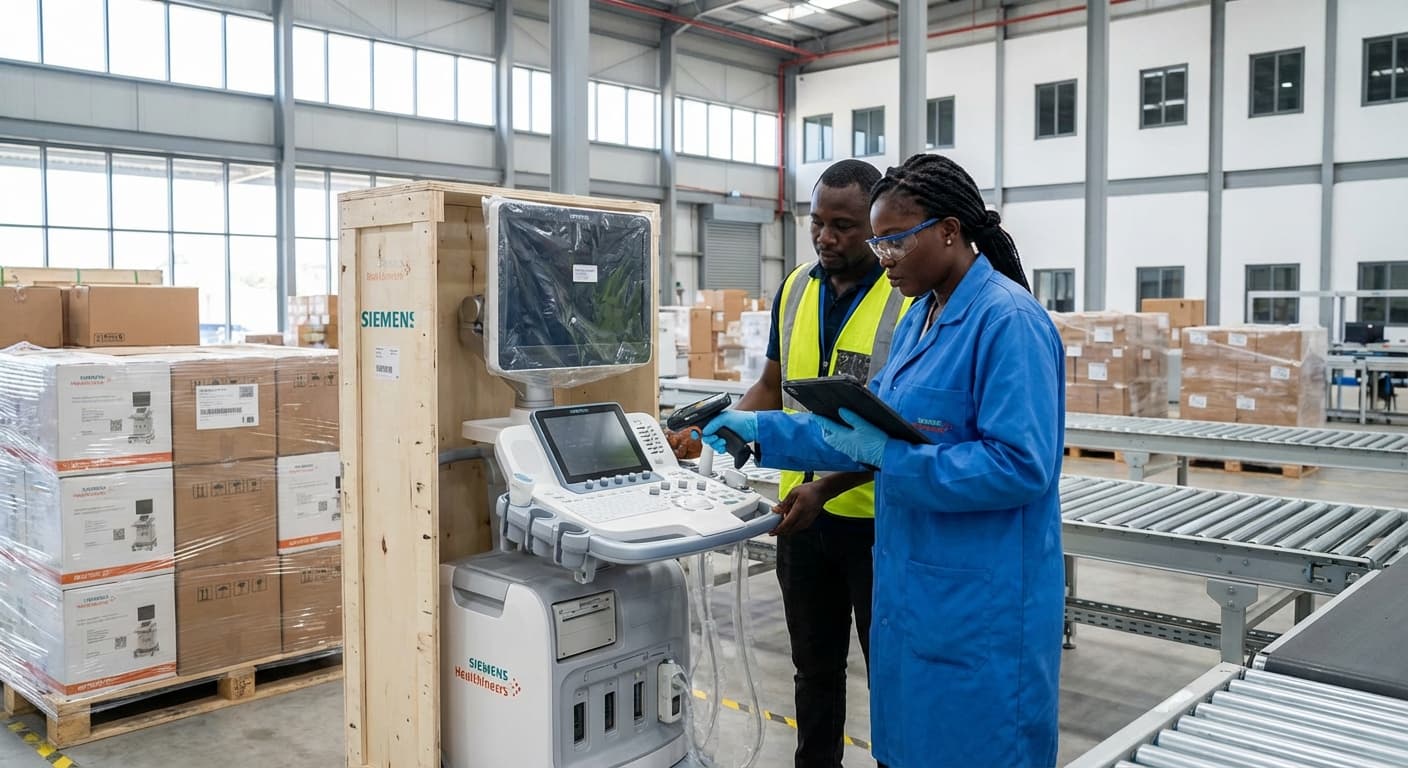
Warehouse Receiving Inspection Service (Medical Equipment) in Ethiopia
Engineering Excellence & Technical Support
Warehouse Receiving Inspection Service (Medical Equipment) High-standard technical execution following OEM protocols and local regulatory frameworks.
ISO 13485 Certified Quality Assurance
Our receiving inspection service adheres strictly to ISO 13485 standards, ensuring the highest level of quality and safety for all medical equipment entering Ethiopian healthcare facilities. This certification guarantees robust processes for compliance, traceability, and risk management.
Advanced Non-Destructive Testing (NDT) Capabilities
We employ state-of-the-art Non-Destructive Testing (NDT) methods, including ultrasonic testing, X-ray inspection, and visual inspection with high-resolution cameras, to detect even microscopic defects in medical equipment without causing damage. This ensures the integrity and functionality of critical medical devices.
Integrated Digital Documentation & Traceability Platform
Our proprietary digital platform meticulously records every stage of the receiving inspection process. From initial receipt to final clearance, all data, including inspection reports, calibration certificates, and compliance documentation, is securely stored and easily accessible. This provides end-to-end traceability for enhanced accountability and regulatory compliance in Ethiopia.
What Is Warehouse Receiving Inspection Service (Medical Equipment) In Ethiopia?
Warehouse Receiving Inspection Service (Medical Equipment) in Ethiopia refers to a specialized quality assurance process undertaken upon the arrival of medical equipment into a designated warehouse or storage facility within Ethiopia. This service is crucial for verifying the integrity, compliance, and readiness for use of medical devices and supplies before they are accepted into inventory and subsequently distributed. It encompasses a systematic examination of incoming shipments against predefined specifications, regulatory requirements, and contractual agreements. The primary objective is to mitigate risks associated with receiving substandard, damaged, counterfeit, or non-compliant medical equipment, thereby safeguarding public health, ensuring operational efficiency for healthcare facilities, and upholding regulatory standards set by Ethiopian health authorities.
| Who Needs This Service? | Typical Use Cases | ||||||||||
|---|---|---|---|---|---|---|---|---|---|---|---|
| Healthcare Institutions: Public and private hospitals, clinics, health centers, and diagnostic laboratories that procure medical equipment. | Government Ministries and Agencies: Ministry of Health, regional health bureaus, and other governmental bodies responsible for public health infrastructure and medical supply chain management. | Medical Equipment Distributors and Suppliers: Companies importing and distributing medical equipment within Ethiopia. | Non-Governmental Organizations (NGOs) and International Aid Organizations: Entities involved in providing healthcare services and medical supplies in Ethiopia. | Procurement and Logistics Departments: Any entity managing the acquisition and inventory of medical equipment. | **Receiving a shipment of new diagnostic imaging equipment (e.g., X-ray machines, CT scanners). | **Accepting a consignment of essential medicines and consumables with specific storage requirements. | **Verifying the integrity of imported surgical instruments and sterile supplies. | **Inspecting donated medical equipment from international partners. | **Ensuring compliance of imported medical devices with EFDA regulations before widespread distribution. | **Receiving bulk orders of hospital furniture and patient care equipment. | **Post-delivery inspection of refurbished or reconditioned medical equipment. |
Key Components of Warehouse Receiving Inspection Service (Medical Equipment) in Ethiopia:
- Identity Verification: Confirming the received equipment matches the order specifications, including model numbers, serial numbers, quantities, and manufacturer details.
- Documentation Review: Scrutinizing accompanying documents such as Certificates of Analysis (CoA), Certificates of Origin (CoO), import permits, invoices, packing lists, and manufacturer's instructions for use (IFU).
- Physical Inspection: Assessing the external condition of packaging for damage, tampering, or breaches. Inspecting the equipment itself for visible defects, damage, or signs of wear.
- Functional Testing (if applicable): Performing basic operational checks to ensure the equipment powers on, basic functions are operational, and no immediate malfunctions are apparent. This may range from simple visual checks to more complex diagnostic tests depending on the equipment type.
- Compliance Checks: Verifying adherence to Ethiopian regulatory standards (e.g., Ethiopian Food and Drug Authority - EFDA requirements), international standards (e.g., ISO, IEC), and any specific client-mandated specifications.
- Labeling and Traceability: Ensuring proper labeling, including product identification, expiry dates (for consumables), batch numbers, and traceability information.
- Environmental Condition Assessment: Checking storage conditions during transit and initial receipt, particularly for temperature-sensitive or humidity-sensitive items.
- Sampling and Quarantine Procedures: Implementing sampling protocols for quality control testing and establishing procedures for quarantining suspect or non-conforming items.
Who Needs Warehouse Receiving Inspection Service (Medical Equipment) In Ethiopia?
In Ethiopia, warehouse receiving inspection services for medical equipment are crucial for ensuring the quality, safety, and compliance of vital healthcare supplies. These services play a pivotal role in safeguarding public health by preventing the introduction of substandard, damaged, or counterfeit medical devices into the healthcare system. The inspection process verifies that the received equipment matches purchase orders, adheres to specified technical standards, and is suitable for its intended use. This is especially critical given the high stakes associated with medical equipment, where defects can have severe consequences for patient care.
| Target Customer Group | Key Departments Involved | Primary Need for Inspection |
|---|---|---|
| Government Healthcare Facilities | Procurement Department, Biomedical Engineering Department, Quality Assurance Unit, Pharmacy Department | Verification of quality, safety, functionality, and adherence to specifications for patient care. |
| Ministry of Health (MOH) | Procurement Department, Quality Assurance Department, Logistics Department | Ensuring compliance with national standards, preventing the influx of substandard equipment, and effective resource management. |
| Ethiopian Pharmaceuticals Supply Agency (EPSA) | Procurement Department, Quality Control Department, Warehouse Management, Logistics Department | Validation of incoming stock, ensuring adherence to tender specifications, and maintaining the integrity of the national supply chain. |
| Private Hospitals and Clinics | Procurement Department, Biomedical Engineering Department, Quality Management Department | Ensuring value for money, patient safety, and maintaining service quality. |
| NGOs and International Aid Organizations | Logistics Department, Program Management, Procurement Department | Verification of donated/procured goods against project requirements and international standards. |
| Medical Equipment Importers and Distributors | Procurement Department, Quality Control Department, Warehouse Management, Sales Department | Ensuring goods received match orders, are free from damage, and comply with import regulations. |
| Research and Academic Institutions | Procurement Department, Laboratory Management, Technical Support Staff | Ensuring equipment is functional and suitable for research and educational purposes. |
| Disaster Relief and Emergency Response Agencies | Logistics Department, Operations Department, Medical Supplies Unit | Rapid verification of essential medical equipment for immediate deployment and effectiveness. |
Target Customers & Departments in Ethiopia Needing Warehouse Receiving Inspection Service (Medical Equipment):
- {"title":"Government Healthcare Facilities","description":"Public hospitals, health centers, and clinics at federal, regional, and local levels are primary recipients of medical equipment procured by the government. They rely on inspections to ensure donated or purchased equipment meets the required standards for effective patient care."}
- {"title":"Ministry of Health (MOH) and its Agencies","description":"The MOH, responsible for national health policy and procurement, often oversees large-scale acquisitions. Its procurement and quality assurance departments would benefit from independent inspection services to validate incoming medical supplies."}
- {"title":"Ethiopian Pharmaceuticals Supply Agency (EPSA)","description":"As the central body for pharmaceutical and medical equipment procurement and distribution, EPSA's logistics and quality control departments are direct beneficiaries. Inspections at their warehouses are essential before onward distribution."}
- {"title":"Private Hospitals and Clinics","description":"While private entities manage their own procurement, they still require assurance of the quality and safety of the medical equipment they purchase to maintain their reputation and provide high-quality patient services."}
- {"title":"Non-Governmental Organizations (NGOs) and International Aid Organizations","description":"Many NGOs and international organizations are actively involved in supplying medical equipment to Ethiopia. They need to ensure that the equipment they donate or procure meets local standards and is fit for purpose."}
- {"title":"Medical Equipment Importers and Distributors","description":"Businesses that import and distribute medical equipment within Ethiopia need to perform receiving inspections to verify the quality of goods from their international suppliers and to comply with local regulations before selling to end-users."}
- {"title":"Research and Academic Institutions","description":"Universities and research centers that utilize medical equipment for education and scientific endeavors require accurate and functional equipment, necessitating receiving inspections for their procured items."}
- {"title":"Disaster Relief and Emergency Response Agencies","description":"Organizations involved in rapid deployment of medical supplies during emergencies need to ensure that received equipment is immediately usable and of good quality, making receiving inspections a critical first step."}
Warehouse Receiving Inspection Service (Medical Equipment) Process In Ethiopia
This document outlines the comprehensive workflow for Warehouse Receiving Inspection Services for Medical Equipment in Ethiopia, covering the process from initial inquiry to final execution. This service ensures that medical equipment procured by organizations meets quality, safety, and regulatory standards upon arrival at designated warehouses in Ethiopia.
| Phase | Step | Description | Key Activities | Responsible Parties | Deliverables/Outcomes |
|---|---|---|---|---|---|
| Phase 1: Inquiry and Quotation | 1.1 Initial Inquiry | Client expresses interest in receiving inspection services for medical equipment. | Client contacts the service provider with details of the consignment (type of equipment, quantity, origin, destination warehouse, estimated arrival date). | Client, Service Provider | Initial understanding of service requirements. |
| 1.2 Information Gathering | Service provider collects detailed information to prepare an accurate quotation. | Request for equipment specifications, purchase orders, shipping documents (Bill of Lading/Air Waybill, packing list), and client's specific inspection requirements. | Service Provider, Client | Comprehensive understanding of the inspection scope. | |
| 1.3 Quotation Preparation and Submission | Service provider provides a detailed cost proposal for the inspection service. | Develop quotation based on equipment complexity, quantity, inspection duration, travel, and reporting requirements. Submit quotation to the client. | Service Provider | Formal quotation document. | |
| Phase 2: Agreement and Planning | 2.1 Quotation Acceptance | Client reviews and accepts the service provider's quotation. | Client formally accepts the quotation, often followed by a Purchase Order (PO) or Letter of Agreement. | Client, Service Provider | Agreement to proceed with the service. |
| 2.2 Contract/Agreement Finalization | Formalization of the service agreement. | Sign a service contract or agreement outlining the scope of work, terms and conditions, payment schedule, and confidentiality clauses. | Service Provider, Client | Signed Service Agreement. | |
| 2.3 Inspection Planning and Scheduling | Detailed planning of the inspection process. | Develop an inspection plan, assign inspectors, schedule the inspection date(s) based on estimated arrival of equipment, and coordinate with warehouse management. | Service Provider, Client (for coordination) | Detailed Inspection Plan and Schedule. | |
| Phase 3: Pre-Inspection Preparation | 3.1 Document Review | Review of all relevant documentation prior to the inspection. | Examine purchase orders, packing lists, manufacturer's specifications, import permits/licenses, and any previous quality control reports. | Service Provider | Verification of compliance with procurement and import regulations. |
| 3.2 Equipment Specification Cross-Referencing | Comparing received documentation with expected specifications. | Ensure the equipment ordered matches the specifications provided by the manufacturer/supplier. | Service Provider | Identification of potential discrepancies before arrival. | |
| Phase 4: On-Site Receiving Inspection | 4.1 Arrival Notification and Site Access | Notification of equipment arrival and securing necessary access. | Client or logistics provider informs the service provider of equipment arrival. Service provider obtains necessary site access permits. | Client/Logistics Provider, Service Provider, Warehouse Management | Access to the warehouse and equipment. |
| 4.2 Visual Inspection | Initial physical examination of the equipment and packaging. | Check for external damage to packaging and equipment, verify correct model/serial numbers against documentation, assess general appearance, and check for any signs of tampering. | Service Provider | Identification of visible damages or discrepancies. | |
| 4.3 Documentation Verification (on arrival) | Confirmation of included documents with the shipment. | Verify that all required documents (manuals, warranties, certificates of origin, test reports) are present and match the equipment. | Service Provider | Ensuring completeness of shipped documentation. | |
| 4.4 Quantity and Condition Check | Verification of the number of items and their condition. | Count the items against the packing list, inspect for any defects, scratches, dents, or operational issues that can be identified without full testing. | Service Provider | Confirmation of received quantities and initial condition assessment. | |
| 4.5 Basic Functionality Testing (if applicable) | Performing preliminary checks on equipment operation. | If feasible and specified, conduct basic functional tests to ensure core operations are sound (e.g., powering on, basic mechanical checks). | Service Provider | Confirmation of basic operational status. | |
| 4.6 Regulatory Compliance Check (initial) | Assessing immediate visible compliance requirements. | Check for proper labeling, safety markings, and any obvious non-compliance with Ethiopian medical device regulations (e.g., Ethiopian Food and Drug Administration - EFDA requirements if applicable). | Service Provider | Initial assessment of regulatory adherence. | |
| Phase 5: Reporting and Documentation | 5.1 Draft Inspection Report | Compilation of findings from the on-site inspection. | Document all observations, discrepancies, damages, and non-conformities in a preliminary report, including photographic evidence. | Service Provider | Draft Inspection Report. |
| 5.2 Report Review and Finalization | Internal review and client submission of the report. | Review the draft report for accuracy and completeness. Submit the final inspection report to the client. | Service Provider, Client | Final Inspection Report. | |
| 5.3 Issuance of Certificate of Inspection | Formal document certifying the inspection outcome. | Issue a Certificate of Inspection (COI) stating whether the equipment passed, failed, or requires further action, based on the inspection findings. | Service Provider | Certificate of Inspection (COI). | |
| Phase 6: Follow-up and Closure | 6.1 Corrective Action Recommendations | Providing guidance for addressing identified issues. | If discrepancies or damages are found, the report will include recommendations for corrective actions (e.g., repair, replacement, claims process). | Service Provider | Recommendations for Rectification. |
| 6.2 Client Decision and Action | Client decides on the course of action based on the report. | Client reviews the report and decides on the necessary steps, potentially involving the supplier, insurer, or regulatory bodies. | Client | Client's action plan. | |
| 6.3 Final Report and Billing | Closure of the inspection process and financial reconciliation. | Confirm client satisfaction with the service. Issue the final invoice for services rendered. | Service Provider, Client | Closed Inspection File and Final Invoice. |
Warehouse Receiving Inspection Service (Medical Equipment) Process in Ethiopia
- Phase 1: Inquiry and Quotation
- Phase 2: Agreement and Planning
- Phase 3: Pre-Inspection Preparation
- Phase 4: On-Site Receiving Inspection
- Phase 5: Reporting and Documentation
- Phase 6: Follow-up and Closure
Warehouse Receiving Inspection Service (Medical Equipment) Cost In Ethiopia
The cost of Warehouse Receiving Inspection Services for medical equipment in Ethiopia can vary significantly due to a multitude of factors. These services are crucial for ensuring the quality, safety, and compliance of imported medical devices before they are stored and distributed. The pricing is typically influenced by the complexity of the equipment, the volume of goods, the required level of detail in the inspection, and the reputation and operational costs of the inspection company.
| Service Component | Estimated Range (ETB) | Notes |
|---|---|---|
| Basic Visual Inspection (per container/shipment) | 3,000 - 8,000 | Covers general condition, packaging, and labeling. |
| Standard Inspection (per item/unit, simple equipment) | 500 - 1,500 | Includes visual check, basic functionality, and documentation review. |
| Comprehensive Inspection (per item/unit, complex equipment) | 2,000 - 10,000+ | Involves in-depth functional testing, calibration, performance verification, and extensive documentation checks. Price escalates significantly with complexity. |
| Per-Hour Inspection Rate (for specialized tasks or extended time) | 800 - 2,500 | Applicable for situations requiring dedicated time beyond standard package. |
| Documentation Review and Compliance Check (per shipment/lot) | 2,000 - 7,000 | Focuses on ensuring all required paperwork (certificates, manuals, etc.) meets standards. |
| Expedited Service Fee | 1,500 - 5,000 (or percentage of base fee) | For urgent inspections to avoid delays. |
| Travel and Logistics (if applicable) | Variable | Depends on distance, mode of transport, and duration. |
Key Pricing Factors for Warehouse Receiving Inspection Services (Medical Equipment) in Ethiopia:
- {"title":"Type and Complexity of Medical Equipment","description":"Simple, non-complex equipment (e.g., basic diagnostic tools, consumables) will generally be less expensive to inspect than complex, high-value, or technologically advanced devices (e.g., MRI machines, sophisticated surgical robots, life-support systems). The latter often require specialized knowledge, calibration tools, and more time for thorough examination."}
- {"title":"Volume of Goods","description":"The total number of items or the total value of the shipment plays a significant role. Larger volumes may benefit from economies of scale, potentially leading to a lower per-unit cost, but might also incur higher overall inspection fees due to the extended time and resources required."}
- {"title":"Scope and Depth of Inspection","description":"The extent of the inspection (e.g., visual check only, functional testing, calibration, documentation verification, compliance with Ethiopian regulatory standards) directly impacts the cost. A comprehensive inspection will naturally be more expensive than a basic one."}
- {"title":"Required Documentation and Reporting","description":"The level of detail in the inspection report, including the need for photographic evidence, detailed defect descriptions, and specific compliance statements, will influence the cost. Standardized report formats may be more cost-effective than custom-designed reports."}
- {"title":"Inspection Company's Reputation and Expertise","description":"Established inspection firms with a proven track record, specialized expertise in medical equipment, and robust quality management systems often command higher fees. Their reliability and the accuracy of their findings are valuable."}
- {"title":"Location of Inspection","description":"The inspection might take place at the port of entry, a designated warehouse, or even the supplier's facility if applicable. Travel time and logistics for inspectors can add to the overall cost."}
- {"title":"Urgency of Service","description":"Expedited inspection services, often required to clear goods quickly and avoid demurrage charges, typically come with a premium."}
- {"title":"Regulatory Requirements","description":"Compliance with specific Ethiopian regulations (e.g., from the Ethiopian Food and Drug Administration - EFDA) might necessitate particular inspection protocols, which can influence the pricing."}
- {"title":"Additional Services","description":"Services such as sample testing, laboratory analysis, or pre-shipment inspections (if conducted by the same firm) will be additional costs."}
Affordable Warehouse Receiving Inspection Service (Medical Equipment) Options
Our affordable warehouse receiving inspection service for medical equipment is designed to be cost-effective and efficient. We understand the critical nature of medical equipment and the need for rigorous quality control upon arrival at your facility. Our service ensures that all received items are accurately identified, inspected for damage, verified against purchase orders, and documented properly, minimizing the risk of costly errors, returns, and delays in patient care. We offer flexible options and value bundles to suit various needs and budgets, focusing on strategies to reduce your overall expenditure without compromising on quality or compliance.
| Value Bundle | Description | Cost-Saving Strategies Incorporated | Ideal For |
|---|---|---|---|
| Basic Scan & Verify | Quick visual check of packaging, item count verification against PO, and basic damage identification. | Streamlined process, reduced labor for non-critical items, focus on immediate discrepancies. | High-volume, low-risk equipment; initial screening for large shipments. |
| Standard Inspection | Includes Basic Scan & Verify plus detailed inspection of packaging, visible damage, and key identification markers (lot/serial numbers). | Efficient defect detection, proactive issue resolution, accurate inventory data entry. | Most common medical equipment, standard procedural items, moderate risk. |
| Comprehensive Quality Assurance | Includes Standard Inspection plus functional checks (where applicable and feasible without specialist tools), detailed documentation, and in-depth compliance verification. | Minimizes costly returns and rework, ensures full regulatory adherence, reduces risk of equipment failure. | High-value or critical medical equipment, items requiring specific certifications, sensitive regulatory environments. |
| On-Demand Support | Ad-hoc inspection services for specific needs, urgent arrivals, or when internal resources are stretched. | Avoids overstaffing, provides flexibility, ensures critical items are inspected without delay. | Companies with fluctuating receiving volumes, unexpected critical shipments. |
Key Components of Our Receiving Inspection Service
- Item Verification: Confirming received items match purchase orders and packing slips.
- Damage Assessment: Thorough visual inspection for any physical damage during transit.
- Documentation & Record Keeping: Detailed reporting with photographic evidence of findings.
- Lot & Serial Number Tracking: Accurate recording for traceability and inventory management.
- Compliance Checks: Ensuring adherence to any specific regulatory or internal requirements.
- Return Authorization Support: Assisting with the process for damaged or incorrect items.
Verified Providers In Ethiopia
In the landscape of healthcare services in Ethiopia, discerning genuine and reliable providers is paramount for individuals seeking quality medical attention. This is where verifying credentials becomes crucial. Franance Health stands out as a beacon of trust, distinguished by its rigorous credentialing process and unwavering commitment to patient well-being. Their adherence to international standards and a deep understanding of local healthcare needs position them as the premier choice for medical services in Ethiopia.
| Credential Type | Description | Franance Health Verification Status |
|---|---|---|
| Medical Doctor Licensure | Official license to practice medicine issued by the Ethiopian Ministry of Health. | Verified and Up-to-Date |
| Specialist Certifications | Proof of completion of accredited residency programs and board certifications. | Verified and Current |
| Hospital Accreditation | Recognition by national or international bodies for meeting high standards of patient care and safety. | Accredited and Compliant |
| Professional Memberships | Affiliation with reputable medical associations and societies. | Active and Valid |
| Continuing Medical Education (CME) | Evidence of ongoing professional development and training. | Regularly Monitored and Documented |
Why Franance Health Credentials Matter
- Rigorous Vetting Process: Franance Health meticulously vets all its affiliated healthcare professionals and institutions, ensuring they meet stringent quality and ethical standards.
- Expertise and Specialization: They partner with providers who possess proven expertise and specialization in various medical fields, guaranteeing patients access to the best possible care.
- Adherence to International Standards: Franance Health aligns its credentialing with globally recognized benchmarks, instilling confidence in the quality and safety of services offered.
- Patient-Centric Approach: Their focus is always on the patient's needs, ensuring a compassionate, transparent, and efficient healthcare experience.
- Local Context Understanding: While upholding international standards, Franance Health deeply understands the unique healthcare challenges and opportunities within Ethiopia, offering relevant and effective solutions.
Scope Of Work For Warehouse Receiving Inspection Service (Medical Equipment)
This Scope of Work (SOW) outlines the requirements for a Warehouse Receiving Inspection Service for medical equipment. The service will ensure that all received medical equipment meets predefined technical specifications and quality standards before being accepted into the warehouse inventory. This inspection process is critical for maintaining product integrity, regulatory compliance, and patient safety.
| Category | Technical Deliverables | Standard Specifications | Inspection Methods & Criteria |
|---|---|---|---|
| Product Identification & Quantity | Accurate matching of received items to PO and packing list. Correct quantity verification. | PO number, Item Part Number (P/N), Serial Number (S/N), Lot Number, Quantity, Description. | Visual check against PO/packing list. Counting of units. Verification of labels and markings. |
| Physical Condition | Inspection for damage, tampering, or defects sustained during transit or prior to shipment. | No visible external damage (e.g., dents, scratches, cracks, punctures). Secure packaging. Intact seals. Absence of foreign material. | Visual inspection of packaging and product. Pressure testing if applicable. Magnification for detailed inspection of critical areas. |
| Product Conformity | Verification that the received equipment matches the specified model, configuration, and features. | Correct Make & Model. Specified configuration (e.g., power supply, accessories, software version). Compliance with technical drawings/datasheets. | Visual identification of model number and serial number. Verification of accessories against purchase order. Functional checks (if specified). |
| Documentation Review | Confirmation of completeness and accuracy of all required accompanying documents. | Certificate of Conformance (CoC), Certificate of Analysis (CoA), User Manuals, Calibration Certificates, Test Reports, Warranty Information, Regulatory Compliance Certificates (e.g., FDA, CE). | Review of hard copy or digital documentation. Verification of validity and correctness of information. Cross-referencing with product markings/labels. |
| Sterility/Packaging Integrity (if applicable) | Assessment of the integrity of sterile packaging. | No breaches in sterile barrier. Indicators (if present) showing expected status. Absence of contamination. | Visual inspection for tears, punctures, or seal compromise. Check integrity of sterile indicators. |
| Labeling & Markings | Ensuring all labels and markings are present, legible, and accurate. | Clear and legible P/N, S/N, Lot Number, Expiration Date (if applicable), Manufacturer Name, Safety Symbols (e.g., CE, UL), UDI (Unique Device Identification). | Visual inspection of all labels. Use of appropriate lighting. Magnification if necessary. |
| Functional/Performance Testing (if specified) | Basic functional verification of critical equipment components or full performance testing. | Equipment powers on. Key functions operate as expected. Meets performance benchmarks defined in specifications. | Predefined test procedures executed by qualified personnel. Measurement of key parameters. Comparison against specified tolerances. |
| Regulatory Compliance | Verification of compliance with relevant medical device regulations and standards. | Appropriate labeling for intended market (e.g., voltage, language). Presence of required regulatory markings. Traceability information. | Review of product markings and documentation against regulatory requirements for the target market. |
| Reporting & Data Entry | Prompt and accurate reporting of inspection results and data entry. | Completion of Inspection Report Form (IRF). Accurate data entry into IMS. Notification of discrepancies or non-conformances. | Standardized IRF. Use of barcode scanners. Automated data import/export capabilities. Clear escalation process for issues. |
Key Objectives of the Receiving Inspection Service
- Verification of received goods against purchase orders (POs) and packing lists.
- Inspection for physical damage, defects, and conformity to specifications.
- Confirmation of required documentation (e.g., certificates of analysis, test reports, user manuals).
- Identification and segregation of non-conforming products.
- Accurate data entry into the inventory management system (IMS).
Service Level Agreement For Warehouse Receiving Inspection Service (Medical Equipment)
This Service Level Agreement (SLA) outlines the agreed-upon performance standards for the Warehouse Receiving Inspection Service for Medical Equipment provided by [Your Company Name] to [Client Company Name]. This SLA defines response times for critical events and uptime guarantees for the inspection service. This agreement is effective as of [Start Date] and remains in effect until [End Date].
| Service Component | Performance Metric | Target | Measurement Period | Escalation Trigger |
|---|---|---|---|---|
| Initial Response to Critical Discrepancy Notification | Acknowledgement of notification and initiation of on-site assessment | Within 2 business hours | Per incident | Failure to acknowledge within 3 business hours |
| On-site Assessment Completion for Critical Discrepancy | Completion of thorough on-site inspection and preliminary findings | Within 4 business hours of initial response | Per incident | Failure to complete within 6 business hours of initial response |
| Final Receiving Inspection Report Generation (Critical Discrepancy) | Delivery of comprehensive report with recommendations | Within 8 business hours of on-site assessment completion | Per incident | Failure to deliver within 12 business hours of on-site assessment completion |
| Initial Response to Minor Discrepancy Notification | Acknowledgement of notification and scheduling of inspection if required | Within 4 business hours | Per incident | Failure to acknowledge within 6 business hours |
| Final Receiving Inspection Report Generation (Minor Discrepancy) | Delivery of comprehensive report | Within 24 business hours of notification acknowledgement | Per incident | Failure to deliver within 36 business hours of notification acknowledgement |
| Uptime Guarantee | Availability of qualified inspectors and reporting system | 99.5% | Monthly | Monthly uptime falls below 99.0% |
Service Level Objectives (SLOs)
- Scope: This SLA applies specifically to the receiving inspection of medical equipment, ensuring accuracy, completeness, and identification of any damage or discrepancies upon arrival at the client's designated warehouse.
- Service Hours: The warehouse receiving inspection service will be available [Specify Days of the Week, e.g., Monday to Friday] from [Start Time] to [End Time] [Time Zone].
- Definitions:
- Critical Discrepancy: Any damage to medical equipment that renders it non-functional, unsafe for use, or significantly deviates from order specifications, requiring immediate attention.
- Minor Discrepancy: Any cosmetic damage, minor packaging issues, or slight deviations in quantity that do not immediately impact the equipment's functionality or safety.
- Report Generation: The creation and delivery of a detailed receiving inspection report, including findings, photographic evidence, and recommendations.
- Uptime: The percentage of time the receiving inspection service is available and operational during the agreed-upon Service Hours.
Frequently Asked Questions

Ready when you are
Let's scope your Warehouse Receiving Inspection Service (Medical Equipment) in Ethiopia project in Ethiopia.

Scaling healthcare logistics and technical systems across the entire continent.