
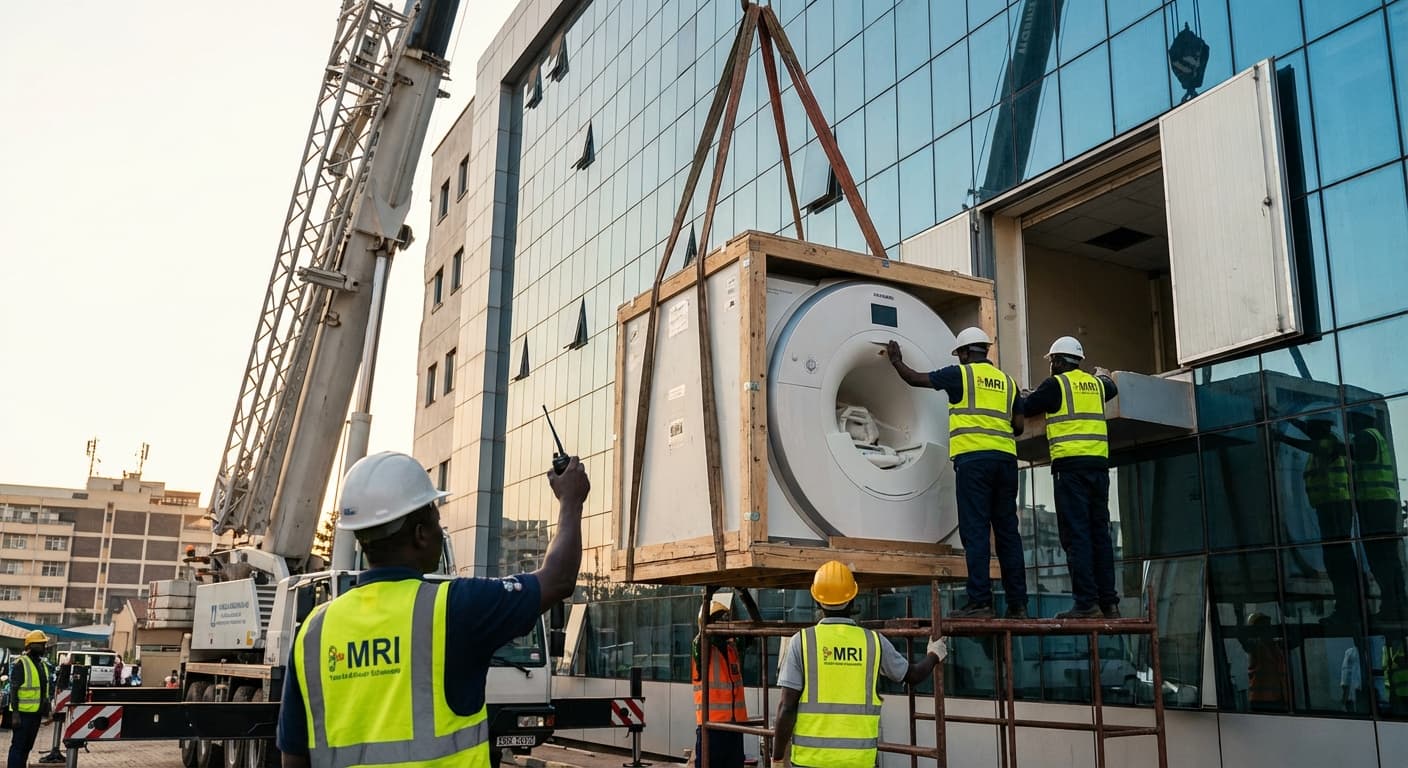
Cranage & Rigging Supervision Service in Ethiopia
Engineering Excellence & Technical Support
Cranage & Rigging Supervision Service High-standard technical execution following OEM protocols and local regulatory frameworks.
Advanced Heavy Lift Planning & Execution
Our Ethiopian operations leverage sophisticated lift planning software and experienced supervisors to ensure the safe and efficient execution of complex heavy lifts. We meticulously analyze load weights, center of gravity, rigging configurations, and site conditions to mitigate risks and optimize crane utilization for projects across sectors like energy, construction, and infrastructure.
Certified Rigging & Safety Standards Compliance
We adhere to stringent international safety standards (e.g., ASME B30) for all rigging operations in Ethiopia. Our team comprises certified riggers and supervisors who conduct thorough pre-lift inspections, load integrity checks, and continuous monitoring to guarantee the integrity of rigging gear and the safety of personnel and assets throughout the lifting process.
Site-Specific Risk Assessment & Mitigation in Ethiopian Terrain
Understanding the unique challenges of Ethiopian terrain and infrastructure, our service includes comprehensive site-specific risk assessments. We identify potential hazards like uneven ground, wind conditions, and accessibility issues, developing tailored mitigation strategies and contingency plans to ensure successful and secure lifting operations even in remote or demanding locations.
What Is Cranage & Rigging Supervision Service In Ethiopia?
Cranage and Rigging Supervision Service in Ethiopia refers to the specialized professional oversight and management of lifting operations involving cranes and rigging equipment. This service ensures that all lifting activities are conducted safely, efficiently, and in compliance with relevant Ethiopian regulations, industry best practices, and project-specific requirements. It involves a multidisciplinary approach, integrating expertise in engineering, safety management, and operational execution to mitigate risks associated with heavy lifting.
| Who Needs Cranage & Rigging Supervision? | Typical Use Cases |
|---|---|
| Construction Companies: For lifting structural components, pre-fabricated modules, heavy machinery, and materials at construction sites. | Industrial Facilities (Manufacturing, Oil & Gas, Mining): For the installation, maintenance, and decommissioning of heavy plant and equipment, including reactors, turbines, transformers, and pipelines. |
| Port and Terminal Operators: For the loading and unloading of cargo, including containers, heavy machinery, and project cargo. | Power Generation Companies: For the installation and maintenance of turbines, generators, transformers, and other power plant equipment. |
| Event Organizers: For the erection and dismantling of stages, lighting rigs, and sound systems for large-scale events. | Infrastructure Projects: For bridge construction, railway installations, and the placement of large structural elements. |
| Logistics and Warehousing: For the placement and relocation of extremely heavy or oversized inventory. | Emergency Response and Disaster Relief: For the removal of debris, salvage operations, and the placement of temporary structures following disasters. |
| Any organization undertaking operations involving the movement of loads exceeding safe manual handling limits or requiring specialized lifting equipment. | The placement or removal of large, sensitive, or high-value equipment where precision and safety are paramount. |
Key Components of Cranage & Rigging Supervision Service
- Pre-Lift Planning and Assessment: Thorough evaluation of the lift plan, including load characteristics, crane selection, rigging gear suitability, site conditions, environmental factors, and potential hazards. This phase often involves engineering calculations for stability, load capacity, and stress analysis.
- Equipment Inspection and Verification: Rigorous inspection and certification of all cranes, hoists, slings, shackles, spreader bars, and other rigging components to ensure they meet international standards and are in optimal working condition.
- On-Site Supervision and Execution: Direct oversight of the lifting operation by qualified supervisors, ensuring adherence to the approved lift plan, safe operating procedures, and communication protocols. This includes monitoring load path, swing radius, clearances, and operator performance.
- Personnel Competency Verification: Ensuring that all personnel involved, including crane operators, riggers, signal persons, and supervisors, possess the necessary certifications, training, and experience.
- Risk Management and Mitigation: Proactive identification of potential risks (e.g., dropped loads, equipment failure, personnel injury, environmental damage) and the implementation of control measures to prevent incidents.
- Compliance Assurance: Ensuring that all operations comply with Ethiopian Occupational Safety and Health (OSH) regulations, relevant building codes, and international standards such as ASME, LOLER, and BS.
- Documentation and Reporting: Maintaining comprehensive records of lift plans, inspections, incident reports, and daily operational logs for accountability and continuous improvement.
Who Needs Cranage & Rigging Supervision Service In Ethiopia?
In Ethiopia's rapidly developing industrial and infrastructure landscape, specialized cranage and rigging supervision services are crucial for ensuring the safe, efficient, and compliant execution of heavy lifting and complex material handling operations. These services are not a luxury but a necessity for minimizing risks, optimizing project timelines, and adhering to stringent safety standards. Businesses and organizations undertaking projects involving the movement and installation of heavy, oversized, or delicate equipment, machinery, and structural components are the primary beneficiaries and clients of such expert services.
| Industry/Sector | Typical Applications Requiring Cranage & Rigging Supervision | Key Departments Involved |
|---|---|---|
| Construction & Infrastructure | Erection of bridges, placing precast concrete elements, lifting steel structures, installation of heavy civil engineering equipment. | Project Management, Engineering, Construction Management, HSE |
| Oil & Gas | Skid-mounted equipment installation, module lifts, pipeline stringing and placement, offshore platform component handling. | Project Management, Engineering, Operations, HSE, Procurement |
| Manufacturing & Industrial Plants | Installation of new production lines, relocation of entire factories, heavy machine setting and alignment, maintenance lifts. | Operations, Engineering, Maintenance, HSE, Project Management |
| Mining & Minerals Processing | Installation of crushers, conveyors, mills; removal and replacement of large mining vehicles; plant expansion lifts. | Operations, Engineering, Maintenance, HSE, Project Management |
| Power Generation | Turbine and generator installation, transformer placement, tower erection, heavy component lifts for renewable energy installations. | Project Management, Engineering, Operations, HSE |
| Port & Logistics | Loading/unloading of heavy machinery from vessels, container handling with specialized equipment, project cargo management. | Operations, Logistics, HSE |
Who Needs Cranage & Rigging Supervision Service in Ethiopia? Target Customers and Departments
- {"items":["Construction & Infrastructure: Companies involved in building large-scale projects like dams, bridges, highways, airports, and commercial/residential complexes.","Oil & Gas: Exploration, production, refining, and pipeline construction companies handling heavy drilling equipment, modules, and pipelines.","Manufacturing & Industrial Plants: Factories and industrial facilities undertaking the installation, relocation, or maintenance of heavy machinery, production lines, and large equipment.","Mining & Minerals Processing: Companies operating mines and processing plants, requiring the movement of heavy excavators, crushers, conveyors, and processing machinery.","Power Generation: Developers and operators of power plants (hydroelectric, thermal, solar, wind), needing to install turbines, generators, transformers, and large structural components.","Port & Logistics: Port authorities and logistics companies managing the loading and unloading of massive cargo, shipping containers, and heavy machinery.","Telecommunications: Companies involved in the installation of large towers, satellite dishes, and associated heavy equipment.","Aviation & Aerospace: Organizations involved in the construction or maintenance of hangars, or the movement of aircraft components.","Government & Public Works: Municipalities and government bodies undertaking public infrastructure projects."],"title":"Target Customers (Industries & Sectors)"}
- {"items":["Project Management Office (PMO): Responsible for overseeing the overall execution of projects, including resource allocation and risk management.","Engineering Department: Involved in the design, planning, and technical specifications of projects, requiring accurate lifting plans and execution oversight.","Operations Department: Manages the day-to-day functioning of industrial facilities and plants, necessitating safe and efficient equipment handling.","Health, Safety, and Environment (HSE) Department: Crucial for ensuring compliance with safety regulations, accident prevention, and risk mitigation during heavy lifting operations.","Procurement & Logistics Department: Involved in sourcing and managing the movement of materials and equipment, benefiting from expert advice on specialized lifting needs.","Maintenance Department: Responsible for the upkeep and repair of machinery and equipment, often requiring controlled and safe lifting for access or replacement.","Construction Management: Teams directly overseeing the physical construction activities on-site.","Asset Management: Departments responsible for the lifecycle management of heavy assets and equipment."],"title":"Target Departments within Organizations"}
Cranage & Rigging Supervision Service Process In Ethiopia
This document outlines the standard workflow for Cranage & Rigging Supervision Services in Ethiopia, from initial client inquiry to the successful completion of the project. The process is designed to ensure safety, efficiency, and adherence to all relevant regulations and best practices. It involves several key stages, each with specific responsibilities and deliverables.
| Stage | Description | Key Activities | Deliverables | Responsible Parties |
|---|---|---|---|---|
| The client contacts the service provider with a need for cranage and rigging supervision. | Receive and acknowledge inquiry. Understand client's project scope, location, type of lifts, weight of loads, and timeline. Request preliminary information (drawings, equipment details, site access). | Confirmation of receipt of inquiry. Initial understanding of project requirements. | Client, Service Provider (Sales/Inquiry Team) |
| A thorough assessment of the project site and potential hazards is conducted. | On-site visit (if feasible). Identify environmental conditions (wind, ground stability), site constraints (space, overhead obstructions), available infrastructure (power, access roads). Conduct preliminary risk assessment for all planned lifting operations. | Site assessment report. Preliminary risk register. Identification of critical safety concerns. | Service Provider (Supervisors, Safety Officers), Client Representative |
| Based on the gathered information, a detailed proposal and cost estimate are prepared. | Develop a technical proposal outlining proposed supervision approach, team structure, safety protocols, and equipment recommendations. Prepare a comprehensive quotation detailing service fees, duration, and any potential additional costs. | Formal proposal document. Detailed quotation/price offer. | Service Provider (Technical Team, Sales/Commercial Team) |
| Formal agreement is established between the client and the service provider. | Review and negotiation of terms and conditions. Signing of contract/service agreement. Clarification of payment schedules and responsibilities. | Signed contract/service agreement. Purchase Order (if applicable). | Client, Service Provider (Management, Legal) |
| Detailed planning and preparation for the execution phase. | Develop a comprehensive lift plan for each critical lift. Conduct toolbox talks with the crew. Ensure all personnel are competent and trained. Mobilize supervisors, safety officers, and necessary equipment to the site. Obtain necessary permits and approvals. | Approved lift plans. Mobilized personnel and equipment. Pre-job safety briefings. | Service Provider (Supervisors, Safety Officers, Logistics), Client Representative |
| The core phase where cranage and rigging operations are supervised. | Continuous monitoring of all lifting and rigging activities. Enforce safety procedures and regulations. Ensure proper communication between all parties. Direct and oversee the positioning of cranes, rigging configurations, and load handling. Respond to any emergent issues or deviations from the plan. | Safe execution of lifts. Real-time adherence to safety protocols. Daily progress updates. | Service Provider (Supervisors, Riggers, Signalmen), Client Representative, Crane Operators |
| Evaluation of the completed operations and formal project closure. | Conduct a post-job review meeting. Assess performance against objectives. Identify lessons learned. Confirm completion of all contracted services. Obtain client sign-off on completed work. | Post-job review minutes. Client acceptance/sign-off. | Service Provider (Supervisors, Project Manager), Client Representative |
| Formal documentation of the entire process and outcomes. | Prepare a final project report detailing all activities, safety observations, incident reports (if any), and performance metrics. Submit all relevant documentation to the client. | Final project report. As-built drawings (if applicable). Certificates of conformity. | Service Provider (Project Manager, Administration) |
Cranage & Rigging Supervision Service Workflow in Ethiopia
- Initial Inquiry & Information Gathering
- Site Assessment & Risk Evaluation
- Proposal Development & Quotation
- Contracting & Agreement
- Pre-Execution Planning & Mobilization
- On-Site Supervision & Execution
- Post-Execution Review & Closeout
- Reporting & Documentation
Cranage & Rigging Supervision Service Cost In Ethiopia
Providing expert Cranage & Rigging Supervision Services in Ethiopia is crucial for ensuring the safe and efficient execution of heavy lifting operations. The cost of these services is influenced by a variety of factors, making it essential for clients to understand these drivers when budgeting for their projects. These factors can include the complexity and duration of the lift, the type and capacity of the cranes and rigging equipment used, the qualifications and experience of the supervisory personnel, the project's location within Ethiopia (considering logistical challenges), and any specific safety or regulatory requirements. The pricing is typically provided on a daily or project basis, with rates fluctuating based on these variables.
| Service Component | Estimated Price Range (ETB) | Notes |
|---|---|---|
| Daily Rate (Experienced Supervisor) | 5,000 - 15,000+ | Varies based on expertise, certifications, and complexity of supervision. Can be higher for specialized roles. |
| Project-Based Fee (Small to Medium Projects) | 50,000 - 250,000+ | This is a broad range and depends heavily on the overall project scope, duration, and complexity. |
| Project-Based Fee (Large Industrial Projects) | 250,000 - 1,000,000+ | For major construction, oil & gas, or manufacturing projects with extensive lifting operations. |
| Consultation and Planning | 2,000 - 5,000 (per hour/day) | For pre-lift assessments, method statement development, and risk analysis. |
| On-Site Inspection and Certification | 3,000 - 10,000 (per inspection) | For verifying equipment suitability and safe operating procedures. |
| Travel and Accommodation (if applicable) | Variable | Dependent on project location and duration. Usually billed at cost plus a small administrative fee. |
Key Pricing Factors for Cranage & Rigging Supervision in Ethiopia
- Complexity and Scope of the Lift: Intricate lifts requiring multiple crane movements, precise positioning, or unusual configurations will command higher supervision costs.
- Duration of the Project: Longer projects naturally incur higher total costs due to extended personnel engagement.
- Type and Capacity of Cranes/Rigging Equipment: The supervision required for larger, specialized, or multiple pieces of equipment will be more intensive.
- Qualifications and Experience of Supervisors: Highly certified and experienced rigging engineers and supervisors will have higher daily rates.
- Project Location and Accessibility: Projects in remote or challenging-to-access locations may incur additional costs for travel, accommodation, and logistics for the supervision team.
- Safety and Regulatory Compliance: Adherence to strict national and international safety standards, including specialized inspections or documentation, can add to the service cost.
- Working Hours and Overtime: Standard working hours are factored into daily rates, but overtime or work during holidays will incur premium charges.
- Insurance and Risk Management: The level of insurance coverage and any specific risk mitigation strategies employed by the supervision service provider.
Affordable Cranage & Rigging Supervision Service Options
Securing reliable and cost-effective cranage and rigging supervision is crucial for projects of all sizes. Our service options are designed to provide flexibility and maximize value, ensuring your lifting operations are safe, efficient, and within budget. We offer tailored solutions, understanding that each project has unique requirements. By leveraging our expertise and transparent pricing, you can achieve significant cost savings without compromising on quality or safety standards.
| Value Bundle Tier | Core Services Included | Additional Benefits | Ideal For |
|---|---|---|---|
| Bronze Package | Basic Cranage (e.g., 50-ton crane for a day) | Certified Rigger | Simple lifts, short-term projects, standard industrial moves |
| Silver Package | Extended Cranage (e.g., 100-ton crane for 3 days) | Certified Rigger & Supervisor | Moderate complexity lifts, medium-term projects, construction site support |
| Gold Package | Heavy-duty Cranage (e.g., 250-ton crane for a week) | Senior Rigger, Supervisor, Dedicated Safety Officer | Complex lifts, critical infrastructure projects, long-term industrial operations |
| Custom Bundle | As per project scope and requirements | Flexible add-ons, tailored pricing | Unique project needs, specialized equipment, variable scope |
Understanding Our Value Bundles and Cost-Saving Strategies
- Tiered Service Packages: We offer pre-defined service bundles that combine essential cranage and rigging supervision elements at a discounted rate. These packages are designed for common project needs, providing a straightforward and economical option.
- Customizable Solutions: For projects with specific or evolving requirements, we can create bespoke service packages. This allows you to select only the services you need, avoiding unnecessary costs and ensuring optimal resource allocation.
- Long-Term Contract Discounts: Projects requiring extended engagement benefit from reduced hourly or daily rates. Committing to a longer contract allows us to optimize our scheduling and resource deployment, passing the savings onto you.
- Off-Peak Scheduling Incentives: Inquire about potential cost reductions for scheduling your lifting operations during off-peak hours or days, when demand may be lower.
- Equipment Optimization Consultation: Our experts can advise on the most suitable crane and rigging equipment for your specific load and site conditions. Selecting the right equipment prevents over-specification and unnecessary rental costs.
- Experienced Personnel Allocation: We ensure that experienced and certified riggers and supervisors are allocated to your project, minimizing the risk of errors, delays, and accidents, which are significant cost drivers.
- Preventative Maintenance Integration: Our approach includes proactive equipment checks and maintenance, reducing the likelihood of unexpected breakdowns and the associated costly downtime.
- Risk Assessment & Mitigation Planning: Thorough pre-project planning and risk assessment help identify potential challenges and develop mitigation strategies, preventing costly issues before they arise.
- Communication & Coordination Efficiency: Clear and consistent communication channels between our team and your project management are vital. This minimizes misunderstandings and ensures smooth operations, preventing delays and rework.
Verified Providers In Ethiopia
In Ethiopia's evolving healthcare landscape, identifying trustworthy and credentialed providers is paramount. Franance Health stands out as a beacon of reliability, offering a robust network of verified healthcare professionals and facilities. This verification process is not merely a formality; it signifies a deep commitment to quality, safety, and ethical practice. By prioritizing providers who have undergone rigorous vetting by Franance Health, patients gain access to care delivered by individuals and institutions that meet stringent standards. This meticulous approach ensures that patients receive competent, compassionate, and effective medical services, fostering greater confidence and peace of mind in their healthcare journey.
| Provider Type | Key Verification Criteria | Benefits of Franance Health Verification |
|---|---|---|
| Individual Practitioners (Doctors, Nurses, Specialists) | Valid medical licenses, educational degrees, board certifications, professional experience, clean disciplinary records. | Ensures competence, expertise, and adherence to ethical standards. Patients receive care from qualified and experienced professionals. |
| Hospitals and Clinics | Accreditation status, adherence to safety and hygiene standards, availability of essential equipment and facilities, qualified medical staff, patient feedback mechanisms. | Guarantees a safe and well-equipped environment for treatment. Patients can expect a high standard of care and operational efficiency. |
| Diagnostic Laboratories | Accreditation by relevant bodies, quality control measures, use of certified equipment, skilled technicians, accurate reporting. | Ensures reliable and accurate diagnostic results, crucial for effective treatment planning. Patients receive trustworthy test outcomes. |
| Pharmacies | Valid operating licenses, proper storage of medications, availability of licensed pharmacists, accurate dispensing practices. | Provides assurance of genuine and safely stored medications. Patients receive correct prescriptions from reputable sources. |
Why Franance Health Credentials Represent the Best Choice:
- Uncompromising Quality Assurance: Franance Health's verification process meticulously assesses qualifications, licenses, and adherence to established medical protocols.
- Patient Safety First: Rigorous background checks and facility inspections prioritize the safety and well-being of every patient.
- Ethical Practice Commitment: Verified providers demonstrate a dedication to professional integrity and ethical patient care.
- Access to Excellence: Franance Health curates a network of skilled practitioners and state-of-the-art facilities, ensuring access to top-tier medical services.
- Enhanced Patient Trust: The credentialing process builds a foundation of trust, empowering patients to make informed healthcare decisions.
- Streamlined Healthcare Navigation: Franance Health simplifies the search for reliable healthcare, saving patients valuable time and reducing stress.
Scope Of Work For Cranage & Rigging Supervision Service
This Scope of Work (SOW) outlines the requirements for Cranage & Rigging Supervision Service to ensure safe and efficient lifting operations. The service includes pre-lift planning, on-site supervision, and post-lift review, adhering to all relevant safety standards and project specifications. The objective is to minimize risks, prevent accidents, and ensure the integrity of lifted equipment and personnel.
| Deliverable | Description | Standard Specification/Reference | Frequency/Timing |
|---|---|---|---|
| Lift Plan Review and Approval | Detailed plans for each lift, including equipment, load, rigging, environment, and personnel. | Project specific lift plan template, ASME B30.26 (Rigging Hardware), ASME B30.5 (Mobile Cranes), client specifications. | Prior to each lift |
| Lifting Equipment Inspection Report | Pre-use and periodic inspection records for all cranes, hoists, and rigging gear. | Manufacturer's recommendations, LOLER 1998 (UK), OSHA 1910.180 (USA), client approved checklist. | Daily before operation, periodic as per regulations/manufacturer |
| Personnel Competency Verification | Documentation of certifications and training for crane operators, riggers, and signalmen. | Relevant certification bodies (e.g., NCCCO, CITB), client HR/training records. | Prior to commencement of work and as updated |
| On-site Supervision Log | Daily record of lifting activities, weather conditions, personnel present, and any observations/actions taken. | Project specific supervision log template. | Daily |
| Incident/Near Miss Report | Documentation of any accidents, injuries, or near misses related to lifting operations. | Project specific incident reporting form, root cause analysis methodology. | Immediately upon occurrence |
| Post-Lift Review Summary | Analysis of lift execution, lessons learned, and recommendations for future operations. | Project specific review template. | After significant or complex lifts, or at project milestones |
| Compliance Audit Report | Assessment of adherence to all safety standards and project procedures. | Client's safety management system, ISO 45001, relevant industry standards. | Periodic (e.g., weekly/monthly) |
Key Responsibilities and Deliverables
- Develop and review detailed lift plans in accordance with project safety requirements and industry best practices.
- Conduct pre-lift inspections of all lifting equipment (cranes, hoists, slings, shackles, etc.) and lifting accessories.
- Verify the competency and certification of all personnel involved in lifting operations (crane operators, riggers, signalmen).
- Provide on-site supervision during all lifting operations, ensuring adherence to the approved lift plan and safety procedures.
- Monitor environmental conditions (wind speed, visibility, etc.) and issue stop-work orders if conditions exceed safe operational limits.
- Identify and report any deviations from the lift plan or unsafe practices observed during operations.
- Participate in post-lift reviews and provide recommendations for improvement.
- Maintain detailed records of all lifting operations, including lift plans, inspection reports, and incident reports.
- Ensure compliance with all relevant national and international standards (e.g., ASME, API, LOLER, OSHA).
- Facilitate communication between all parties involved in lifting operations.
- Provide guidance and training to site personnel on safe lifting practices.
- Conduct toolbox talks and safety briefings related to lifting operations.
- Review and approve equipment load charts and operational limitations.
Service Level Agreement For Cranage & Rigging Supervision Service
This Service Level Agreement (SLA) outlines the guaranteed response times and uptime for Cranage & Rigging Supervision services provided by [Your Company Name] to [Client Company Name]. This SLA is an appendix to the Master Service Agreement (MSA) dated [Date of MSA].
| Service Component | Uptime Guarantee | Response Time (Critical Incident) | Response Time (Routine Request) | Notes |
|---|---|---|---|---|
| On-Site Supervision Availability | 99.9% | 1 hour | 4 business hours | Applies during agreed Service Periods. Uptime excludes scheduled client-requested downtime or unforeseen site access issues beyond [Your Company Name]'s control. |
| Remote Support & Consultation | 99.5% | 30 minutes | 2 business hours | Applies during agreed Service Periods. Remote support is contingent on reliable communication channels. |
| Pre-Operation Safety Briefings & Checks | N/A (Mandatory) | As per Project Schedule | As per Project Schedule | These are mandatory pre-requisites and not subject to uptime/response time metrics in the same way as reactive support. Delays in client provision of necessary information may impact scheduling. |
Key Service Definitions
- Service Uptime: The percentage of time during a defined Service Period that the Cranage & Rigging Supervision service is available and operational, excluding scheduled maintenance.
- Response Time: The maximum allowable time from when a service request is submitted by the Client to when [Your Company Name] acknowledges and begins active work on resolving the request.
- Critical Incident: Any event that significantly impairs or prevents the execution of planned cranage and rigging operations, posing a direct risk to safety, project timelines, or significant financial loss.
- Scheduled Maintenance: Planned downtime for system updates, upgrades, or routine maintenance, communicated to the Client in advance.
- Service Period: The period during which the service is expected to be available, typically defined in the MSA (e.g., 24/7, business hours).
Frequently Asked Questions

Ready when you are
Let's scope your Cranage & Rigging Supervision Service in Ethiopia project in Ethiopia.

Scaling healthcare logistics and technical systems across the entire continent.