
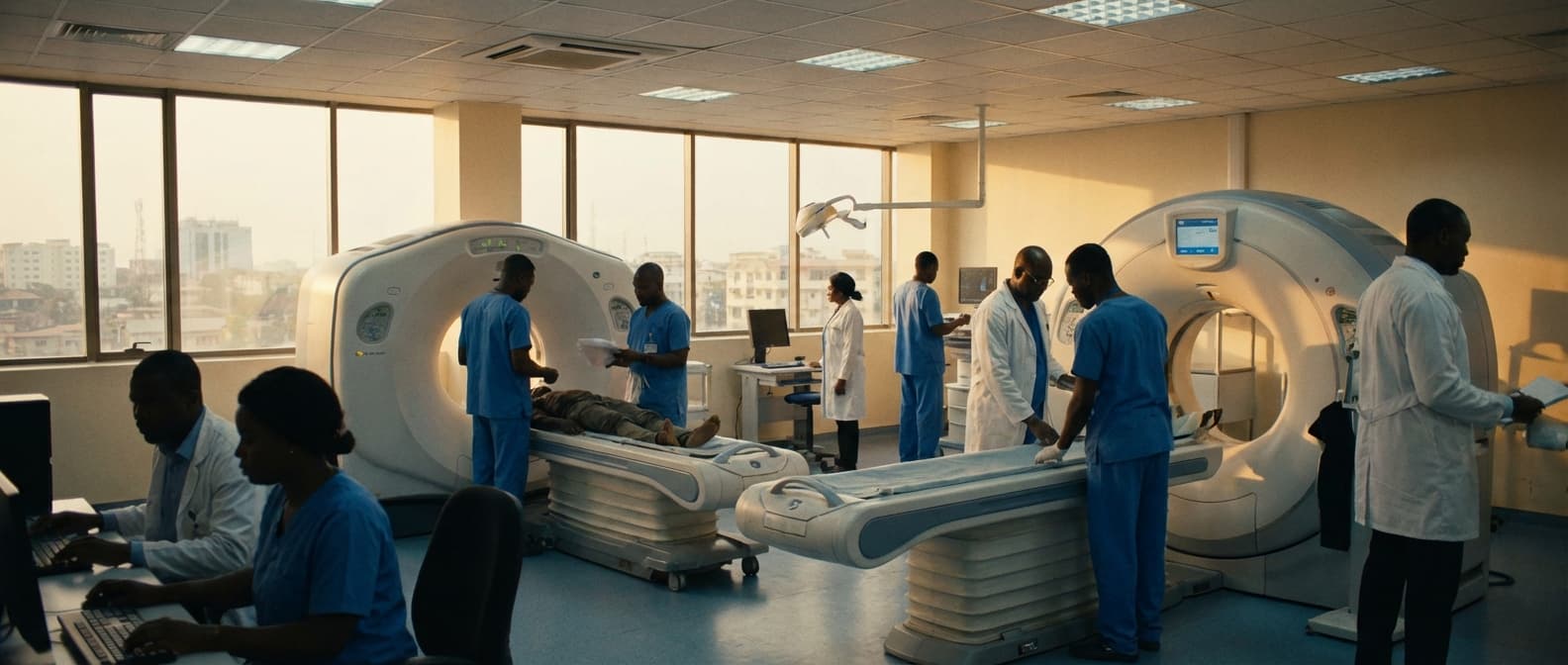
Radiology Room Design & Shielding Calculation in Ethiopia
Engineering Excellence & Technical Support
Turnkey room planning, shielding drawings and approvals for imaging suites. High-standard technical execution following OEM protocols and local regulatory frameworks.
Advanced Shielding for Diagnostic X-ray Rooms
Successfully designed and implemented radiation shielding for multiple diagnostic X-ray rooms across Ethiopia, adhering to international safety standards and national regulations. Optimized lead lining and concrete thickness for patient and staff safety, ensuring compliance and minimizing radiation exposure in low-resource settings.
CT Scanner Shielding Calculations & Verification
Conducted precise shielding calculations for CT scanner suites, a critical service for advanced imaging facilities in Ethiopia. Utilized specialized software to determine optimal barrier materials and thicknesses, ensuring radiation containment and enabling the safe operation of high-energy imaging equipment.
Radiation Protection Program Development & Training
Developed and delivered comprehensive radiation protection programs and training modules for radiology departments in Ethiopia. Focused on practical design considerations, shielding calculations, and safe operating procedures, empowering local healthcare professionals to maintain a secure imaging environment.
What Is Radiology Room Design & Shielding Calculation In Ethiopia?
Radiology room design and shielding calculation in Ethiopia is a specialized engineering service focused on the creation of safe and compliant environments for diagnostic imaging modalities. This service encompasses the architectural planning of radiology suites to optimize workflow, patient comfort, and staff safety, while critically addressing radiation protection requirements. The core of the service involves meticulous calculations to determine the necessary thickness and type of shielding materials (e.g., lead, concrete, baryte plaster) for walls, doors, windows, and viewing areas. These calculations are based on factors such as the type of imaging equipment (e.g., X-ray, CT, fluoroscopy, mammography), workload (i.e., anticipated patient throughput and beam 'on' time), beam energy and filtration, distance from the radiation source, and occupancy factors of adjacent areas. The objective is to attenuate ionizing radiation to levels that comply with national and international radiation protection standards, thereby preventing stochastic and deterministic health effects for personnel and the public. This service is essential for new installations, renovations, and upgrades of existing radiology facilities.
| Aspect | Description | Involves | Who Needs It | Typical Use Cases |
|---|---|---|---|---|
| Radiology Room Design | Encompasses the physical layout and architectural features of a radiology suite. | Space planning, equipment positioning, patient and staff traffic flow, infection control considerations, lighting, ventilation, and accessibility. | Hospitals, diagnostic imaging centers, clinics, specialized medical facilities, and architectural firms involved in healthcare projects. | New construction of imaging departments, renovation of existing radiology rooms, expansion of diagnostic services, integration of new imaging equipment. |
| Shielding Calculation | Quantifies the necessary radiation protection measures to ensure safety. | Analysis of radiation output from imaging equipment, estimation of workload and usage factors, determination of dose limits for controlled and uncontrolled areas, calculation of required attenuation for various building components (walls, floors, ceilings, doors, windows). | Radiologists, radiation oncologists, medical physicists, radiology technologists, hospital administrators, facility managers, and regulatory bodies. | Installation of X-ray units (general radiography, fluoroscopy, mammography, dental X-ray), CT scanners, interventional radiology suites, linear accelerators (in radiation therapy), and any facility utilizing ionizing radiation for medical imaging or treatment. |
Key Components of Radiology Room Design & Shielding Calculation Service
- Architectural Layout and Workflow Optimization
- Radiation Physics Consultation
- Shielding Material Specification and Selection
- Attenuation Calculation (using established dose limits and workload estimations)
- Structural Integrity Assessment for Shielding
- Compliance Review against Ethiopian Radiation Protection Authority (ERPA) regulations and IAEA recommendations
- Development of Shielding Design Drawings and Reports
- On-site Verification and Commissioning Support
Who Needs Radiology Room Design & Shielding Calculation In Ethiopia?
Radiology room design and shielding calculations are crucial for ensuring the safety of patients, staff, and the public from ionizing radiation. In Ethiopia, these services are essential for any facility involved in diagnostic imaging and radiation therapy. This includes both new constructions and renovations of existing departments. Proper design minimizes radiation exposure through effective shielding, thereby complying with national and international safety standards and regulations.
| Department/Service Area | Imaging Modality/Service | Specific Need for Design & Shielding |
|---|---|---|
| Radiology/Medical Imaging Department | X-ray (General, Mammography, Fluoroscopy, C-arm) | Shielding for walls, doors, and windows to contain scatter radiation. |
| Radiology/Medical Imaging Department | CT Scanners | Robust shielding for the scan room and control room to mitigate high radiation doses. |
| Radiology/Medical Imaging Department | MRI Suites | While not radiation shielding in the same sense, requires specialized room design for magnetic field containment and acoustic management. |
| Radiology/Medical Imaging Department | Ultrasound Rooms | Generally minimal shielding requirements, but good acoustic design is important. |
| Oncology Department / Radiotherapy Center | Linear Accelerators (LINACs) | Extensive and complex shielding calculations for bunkers to protect against high-energy photons and neutrons. |
| Oncology Department / Radiotherapy Center | Brachytherapy Suites | Shielding for rooms where radioactive sources are temporarily or permanently implanted. |
| Nuclear Medicine Department | PET/CT, SPECT scanners | Shielding for imaging rooms and hot labs to contain gamma radiation from radiopharmaceuticals. |
| Emergency Department | Portable X-ray Units | Consideration for shielding in treatment areas where portable X-ray might be used. |
| Surgical Departments | C-arm Fluoroscopy in Operating Rooms | Shielding for surgical staff and surrounding areas during intraoperative imaging. |
| Veterinary Clinics/Hospitals | X-ray and CT for Animals | Similar shielding needs to human facilities, tailored to veterinary practice. |
Target Customers and Departments in Ethiopia Needing Radiology Room Design & Shielding Calculation
- Hospitals (Government and Private)
- Radiology Clinics
- Diagnostic Imaging Centers
- Cancer Treatment Centers
- Research Institutions with Imaging Facilities
- Public Health Facilities
- Educational Institutions with Medical Imaging Programs
Radiology Room Design & Shielding Calculation Process In Ethiopia
Designing and implementing radiology rooms with appropriate shielding in Ethiopia follows a structured workflow, ensuring compliance with national regulations and international best practices for radiation safety. This process is crucial for protecting patients, staff, and the public from unnecessary radiation exposure while enabling effective diagnostic imaging.
| Stage | Key Activities | Responsible Parties | Key Considerations/Deliverables | Regulatory Compliance |
|---|---|---|---|---|
| Client (Hospital/Clinic) submits an inquiry outlining their needs for a new or upgraded radiology room. This includes intended imaging modalities (X-ray, CT, MRI, etc.), room size, patient flow, and budget constraints. | Client, Radiology Department Head, Project Manager | Clear understanding of scope, types of equipment, expected usage, and preliminary layout ideas. List of required equipment and their specifications. | Understanding of general radiation safety principles and the need for shielded environments. |
| A site visit is conducted to evaluate the proposed location. Existing building structure, room dimensions, door/window placement, ventilation, electrical supply, and potential for structural modifications are assessed. Architectural plans are reviewed. | Architectural Consultant, Project Manager, Radiation Safety Officer (RSO) | Detailed measurements, identification of structural limitations, assessment of existing infrastructure, and preliminary layout recommendations. Feasibility report for the proposed design. | Compliance with building codes and safety regulations. Consideration of structural integrity for shielding materials. |
| Based on the imaging modalities, equipment specifications (kVp, mA, workload), room occupancy factors, and distance, detailed radiation shielding calculations are performed. This determines the required thickness of lead, concrete, or other shielding materials for walls, floors, ceilings, doors, and windows. | Radiation Physicist/RSO, Shielding Design Engineer | Comprehensive shielding design report, detailed drawings showing shielding specifications for each surface, specification of required shielding materials and their thickness. Justification for shielding choices. | Adherence to national radiation protection guidelines (e.g., Ethiopian Radiation Protection Authority - ERPA regulations) and international standards (e.g., ICRP recommendations). Dose limit compliance is paramount. |
| Procurement of approved shielding materials (lead sheeting, concrete additives, specialized leaded glass, etc.) and construction materials according to the design specifications. Ensure quality and compliance of materials. | Procurement Department, Project Manager, RSO | Procurement orders, material certifications, quality control checks for delivered materials. Ensuring materials meet the required shielding efficacy. | Verification that procured materials meet the specified shielding properties and safety standards. |
| Execution of construction work based on architectural and shielding design drawings. This includes wall construction, installation of shielding materials, door fitting, window installation, and electrical/mechanical provisions. | Construction Contractor, Project Manager, RSO (for oversight) | Completed construction with correctly installed shielding, adherence to design specifications, regular progress reports, and safety protocols during construction. | Ensuring all construction and installation activities are carried out in a manner that maintains the integrity of the shielding and adheres to safety standards. |
| During and after construction, quality assurance checks are performed to ensure accurate installation of shielding. This may involve visual inspections, material testing, and preliminary radiation surveys. | RSO, Project Manager, Independent QA Inspector | QA reports, checklists, records of any deviations, and corrective actions taken. Ensuring shielding is installed as per design. | Verification of conformity to design and regulatory requirements through ongoing checks. |
| A comprehensive radiation survey is conducted by a qualified Radiation Physicist/RSO to verify that radiation levels are within permissible limits under operational conditions. This leads to the issuance of a certification of compliance. | RSO, Radiation Physicist, ERPA Representative (if required) | Final radiation survey report, certification of radiation safety, occupancy permits. | Formal approval from the regulatory authority (ERPA) indicating compliance with all radiation safety regulations. |
| Provision of operation and maintenance manuals, training for staff on radiation safety protocols, and maintenance of all project documentation, including design calculations, construction records, and survey reports. | Project Manager, RSO, Equipment Vendor | Comprehensive project documentation package, training materials, maintenance schedule. Ensuring ongoing safe operation. | Maintaining records for regulatory audits and future reference. Continuous adherence to safety standards. |
Radiology Room Design & Shielding Calculation Process Workflow in Ethiopia
- 1. Initial Inquiry & Requirements Gathering:
- 2. Site Assessment & Architectural Review:
- 3. Radiation Shielding Calculation & Design:
- 4. Material Procurement & Specification:
- 5. Construction & Installation:
- 6. Quality Assurance & Verification:
- 7. Final Inspection & Certification:
- 8. Post-Installation Support & Documentation:
Radiology Room Design & Shielding Calculation Cost In Ethiopia
Designing and ensuring adequate shielding for radiology rooms is a critical and specialized aspect of healthcare infrastructure development in Ethiopia. The cost associated with this process is influenced by several factors, making it challenging to provide a single, definitive price. These factors include the complexity of the radiology suite, the types of imaging equipment to be installed, the architectural design, and the specific regulatory requirements of the Ethiopian Ministry of Health and other relevant bodies. Local currency pricing in Ethiopia (Ethiopian Birr - ETB) will vary based on the expertise of the consultants, the materials used for shielding, and the current market rates for construction and professional services.
| Service Component | Estimated Price Range (ETB) | Notes |
|---|---|---|
| Radiation Shielding Calculation & Physics Consultation | 30,000 - 150,000+ | Varies based on complexity, equipment types, and consultant’s experience. Includes planning, calculations, and reporting for regulatory submission. |
| Architectural & Engineering Design (Radiology Suite Layout) | 50,000 - 250,000+ | Covers conceptualization, detailed drawings, structural considerations, and integration of shielding requirements. Price depends on room size, complexity, and firm reputation. |
| Lead Shielding Material (Supply & Installation) | 5,000 - 15,000+ per square meter | This is a significant cost. Price varies widely based on lead thickness required, quality of lead, and installation labor. Coverage includes walls, doors, windows, and control areas. |
| Specialized Doors & Windows (Lead-lined) | 100,000 - 500,000+ per unit | High-security, lead-lined doors and observation windows are specialized items with substantial costs. Dependent on size and features. |
| Construction & Renovation (Concrete, etc.) | Variable | General construction costs for preparing the room, including concrete work if needed for shielding, which will be project-specific and depend on local construction rates. |
| Project Management & Quality Assurance | 10,000 - 50,000+ | Fees for ensuring the project adheres to design specifications and regulatory standards throughout the process. |
| Regulatory Approvals & Inspections | 5,000 - 30,000+ | Fees associated with submitting plans, obtaining licenses, and undergoing site inspections by relevant Ethiopian authorities. |
Key Pricing Factors for Radiology Room Design & Shielding Calculation in Ethiopia:
- {"item":"Scope of Work: The extent of the project, from initial concept and layout to detailed architectural drawings, structural engineering, and radiation shielding calculations, significantly impacts cost."}
- {"item":"Type and Quantity of Imaging Equipment: Different modalities (X-ray, CT scanners, MRI, mammography, fluoroscopy) require varying levels of shielding and specific room configurations. More advanced or multiple units increase complexity and cost."}
- {"item":"Room Size and Layout: Larger rooms or complex layouts with multiple adjacent areas demanding specific shielding levels will naturally incur higher design and material costs."}
- {"item":"Shielding Material Selection: Lead is the most common shielding material, but the thickness required is determined by the radiation output of the equipment and the desired attenuation. Other materials like concrete density and thickness also play a role. Sourcing and installation costs of these materials are crucial."}
- {"item":"Consultant Expertise and Reputation: The fees charged by experienced radiation physicists, medical physicists, and specialized architectural/engineering firms will vary. Reputable firms with a proven track record in healthcare facilities often command higher rates."}
- {"item":"Regulatory Compliance and Approvals: The process of obtaining necessary permits and approvals from Ethiopian regulatory bodies can involve fees and may require specialized input, adding to the overall cost."}
- {"item":"Site Conditions: Existing building structures or challenging site conditions might require more complex design and construction interventions, influencing costs."}
- {"item":"Project Management and Supervision: The cost of overseeing the design and shielding installation process, ensuring adherence to plans and regulations."}
Affordable Radiology Room Design & Shielding Calculation Options
Designing and outfitting an affordable radiology room requires careful consideration of layout, equipment placement, and radiation shielding. The goal is to ensure patient and staff safety while minimizing construction and material costs. This involves exploring cost-effective design principles and strategic shielding calculations. Value bundles and cost-saving strategies are crucial for projects with budget constraints.
| Value Bundle/Cost-Saving Strategy | Description | Potential Cost Savings | Considerations |
|---|---|---|---|
| Basic Shielding Calculation Package | Standardized calculations based on common equipment and room configurations, often performed by experienced technicians. | Reduces the need for highly specialized, time-intensive engineering studies for standard rooms. | Best for straightforward room designs. May require supplemental analysis for unique setups. |
| Material Optimization Consultations | Guidance on using cost-effective shielding materials like standard concrete, lead-lined drywall, or specific composite materials that meet safety standards. | Avoids over-specification of expensive materials like pure lead for every application. | Requires careful validation of material performance against required shielding levels. |
| Standardized Room Layout Templates | Pre-designed, proven room layouts that optimize workflow and shielding requirements for common radiology modalities (e.g., general X-ray, mammography). | Reduces design time and potential for costly layout errors. | May require minor adjustments for specific equipment or site conditions. |
| Lead-Lined Drywall vs. Sheet Lead | Utilizing lead-lined drywall, which integrates lead into a standard building material, as opposed to applying separate sheets of lead. | Can be more cost-effective in terms of labor and installation compared to traditional sheet lead applications. | Requires proper seam sealing and careful installation to ensure integrity. |
| Combined Shielding & Architectural Design | Engaging a design team that offers integrated architectural and shielding expertise, ensuring both aesthetic and safety requirements are met efficiently. | Streamlines the design process and reduces potential for rework or conflicts between disciplines. | Requires finding a firm with proven experience in both areas. |
| Prefabricated Shielding Modules | Utilizing factory-built, modular shielding panels or small prefabricated rooms that can be quickly installed on-site. | Significantly reduces on-site construction time, labor, and disruption. Predictable costs. | May have limitations in terms of customizability and can be more expensive for very large or complex spaces. |
| Phased Implementation (if applicable) | Designing with the possibility of adding shielding or expanding later if immediate budget constraints are tight. Requires careful initial planning. | Allows for initial cost savings while ensuring future compliance. | Crucial to plan the initial build to accommodate future additions seamlessly. |
Key Considerations for Affordable Radiology Room Design & Shielding
- Efficient Layout Planning: Optimizing space utilization to minimize square footage and associated construction costs. This includes strategic placement of the X-ray machine, control booth, and patient waiting areas.
- Material Selection: Choosing cost-effective yet compliant shielding materials and construction methods.
- Shielding Calculation Expertise: Engaging with qualified professionals for accurate shielding calculations to avoid overspending on unnecessary shielding.
- Modular & Prefabricated Options: Exploring prefabricated shielding panels or room components that can reduce on-site labor and installation time.
- Future-Proofing (within budget): Designing with some flexibility for potential future equipment upgrades or changes, without incurring excessive upfront costs.
- Compliance & Regulations: Understanding local and national radiation safety regulations to ensure the design meets all requirements without over-engineering.
- Integration with Existing Infrastructure: Leveraging existing building structures and systems where possible to reduce new construction needs.
Verified Providers In Ethiopia
In the evolving landscape of healthcare in Ethiopia, identifying genuinely qualified and reliable medical providers is paramount for individuals seeking quality care. Franance Health stands out as a beacon of trust and excellence, distinguished by its rigorous credentialing process and unwavering commitment to patient well-being. This JSON output details why Franance Health's verified providers represent the optimal choice for healthcare services in Ethiopia.
| Credentialing Aspect | Franance Health Standard | Patient Benefit |
|---|---|---|
| Academic & Professional Qualifications | Rigorous verification of degrees, licenses, and certifications from accredited institutions. | Ensures providers possess the foundational knowledge and legal authorization to practice. |
| Clinical Experience | Thorough review of past work history, specialties, and case management experience. | Guarantees providers have practical, hands-on experience relevant to patient needs. |
| Ethical Conduct & Professionalism | Background checks and reference verification to assess integrity and patient interaction history. | Assures patients they will receive care from trustworthy and respectful professionals. |
| Specialty Expertise | Verification of specific training and certifications in specialized medical fields. | Connects patients with experts precisely suited to their unique medical conditions. |
| Language Proficiency (where applicable) | Assessment of communication skills to ensure clear and effective patient-provider interaction. | Facilitates better understanding and more accurate diagnosis and treatment. |
Why Franance Health's Verified Providers Are the Best Choice:
- Uncompromising Vetting Process: Franance Health implements a multi-layered credentialing system that goes beyond standard verification. This includes in-depth background checks, thorough review of academic and professional qualifications, and assessment of clinical experience and ethical conduct.
- Commitment to Continuous Professional Development: Verified providers associated with Franance Health are actively encouraged and supported in pursuing ongoing education and training, ensuring they remain at the forefront of medical advancements and best practices.
- Patient-Centric Approach: Franance Health prioritizes providers who demonstrate exceptional communication skills, empathy, and a genuine dedication to understanding and addressing individual patient needs and concerns.
- Adherence to International Standards: The credentialing framework at Franance Health aligns with globally recognized benchmarks for healthcare professional competence and ethical practice, offering peace of mind to patients.
- Transparency and Accountability: Franance Health maintains a transparent system where patients can be confident in the qualifications and experience of the healthcare professionals they engage with. The organization also upholds strong accountability mechanisms.
Scope Of Work For Radiology Room Design & Shielding Calculation
This Scope of Work (SOW) outlines the requirements for the design of radiology rooms and the calculation of shielding for radiation protection. It encompasses the technical deliverables and standard specifications necessary for the successful completion of this project. The objective is to ensure that all radiology facilities are designed in compliance with relevant safety regulations, industry best practices, and the specific operational needs of the facility.
| Phase | Activities | Technical Deliverables | Standard Specifications / References |
|---|---|---|---|
| Understand the specific imaging modalities to be housed (e.g., X-ray, CT, MRI, Fluoroscopy, Nuclear Medicine). | Imaging modality list and technical requirements document. | Client operational requirements, equipment manufacturer specifications. |
| Develop room layouts, including patient entry/exit, control areas, equipment placement, and workflow considerations. | Architectural drawings (floor plans, elevations, sections), reflected ceiling plans. | Building codes (e.g., IBC, NFPA), accessibility standards (e.g., ADA), ergonomic design principles. |
| Calculate required shielding for walls, floors, ceilings, doors, and windows based on equipment specifications and occupancy factors. | Shielding calculation reports, detailed shielding details integrated into architectural drawings. | NCRP Reports (e.g., NCRP 147, NCRP 151), ICRP Publications (e.g., ICRP 106, ICRP 107), relevant national/local radiation safety regulations. |
| Design HVAC, electrical power, lighting, and plumbing systems to support radiology equipment and room functionality. | MEP drawings (HVAC, electrical, plumbing), equipment power and ventilation requirements. | ASHRAE standards, NEC (National Electrical Code), local building codes, equipment manufacturer MEP requirements. |
| Ensure structural integrity to support heavy imaging equipment and shielding materials. | Structural notes and integration into architectural drawings, coordination with structural engineers. | Local building codes, engineering standards (e.g., AISC, ACI). |
| Design the control room layout and specify communication systems for patient and staff safety. | Control room layout drawings, specification of intercom and monitoring systems. | Ergonomic design principles, patient safety guidelines. |
| Compile all design documents into a comprehensive package for bidding and construction. | Complete set of architectural, structural, and MEP drawings; detailed specifications; shielding calculation reports; material schedules. | Project-specific specifications, all referenced standards and codes. |
Key Objectives
- To develop comprehensive architectural and engineering designs for new or renovated radiology rooms.
- To perform accurate radiation shielding calculations to ensure the safety of patients, staff, and the public.
- To produce detailed technical deliverables for construction and implementation.
- To ensure compliance with all applicable national and international radiation safety standards and building codes.
- To optimize room layout and workflow for efficient and effective radiology operations.
Service Level Agreement For Radiology Room Design & Shielding Calculation
This Service Level Agreement (SLA) outlines the terms and conditions governing the provision of Radiology Room Design and Shielding Calculation services. It specifies the response times for inquiries and critical issues, as well as uptime guarantees for the associated design and calculation tools and platforms, where applicable.
| Service Component | Severity Level | Response Time Target | Uptime Guarantee (Monthly) | Notes |
|---|---|---|---|---|
| Radiology Room Design Consultation (Initial) | Standard Inquiry | 4 Business Hours | N/A | Initial contact and scope confirmation. |
| Shielding Calculation Request (Standard) | Standard Inquiry | 8 Business Hours | N/A | Acknowledgment of request and preliminary data review. |
| Design Review / Revision Request | Standard Inquiry | 1 Business Day | N/A | Time to acknowledge and schedule for review. |
| Critical Design Issue (e.g., safety violation identified) | High Severity | 2 Business Hours | N/A | Immediate acknowledgment and initiation of resolution. |
| Shielding Calculation Error (e.g., potential under-shielding) | High Severity | 4 Business Hours | N/A | Immediate acknowledgment and priority recalculation. |
| Design & Calculation Platform/Software (if applicable) | System Availability | N/A | 99.5% | Excludes scheduled maintenance windows. |
| Technical Support for Platform/Software | Standard Inquiry | 4 Business Hours | N/A | Time to acknowledge and assign support ticket. |
| Emergency Technical Support for Platform/Software | High Severity | 1 Business Hour | N/A | Immediate acknowledgment for critical system failures. |
Service Level Objectives
- Response Times: Defines the maximum time within which the service provider will acknowledge and begin addressing customer requests, categorized by severity.
- Uptime Guarantees: Specifies the percentage of time the design and calculation tools/platforms will be available and operational.
- Exclusions: Outlines circumstances under which response times and uptime guarantees may not apply (e.g., scheduled maintenance, force majeure events).
- Reporting: Details the frequency and format of reporting on SLA performance.
- Escalation Procedures: Defines the steps to be taken when service levels are not met.
Frequently Asked Questions

Ready when you are
Let's scope your Radiology Room Design & Shielding Calculation in Ethiopia project in Ethiopia.

Scaling healthcare logistics and technical systems across the entire continent.