
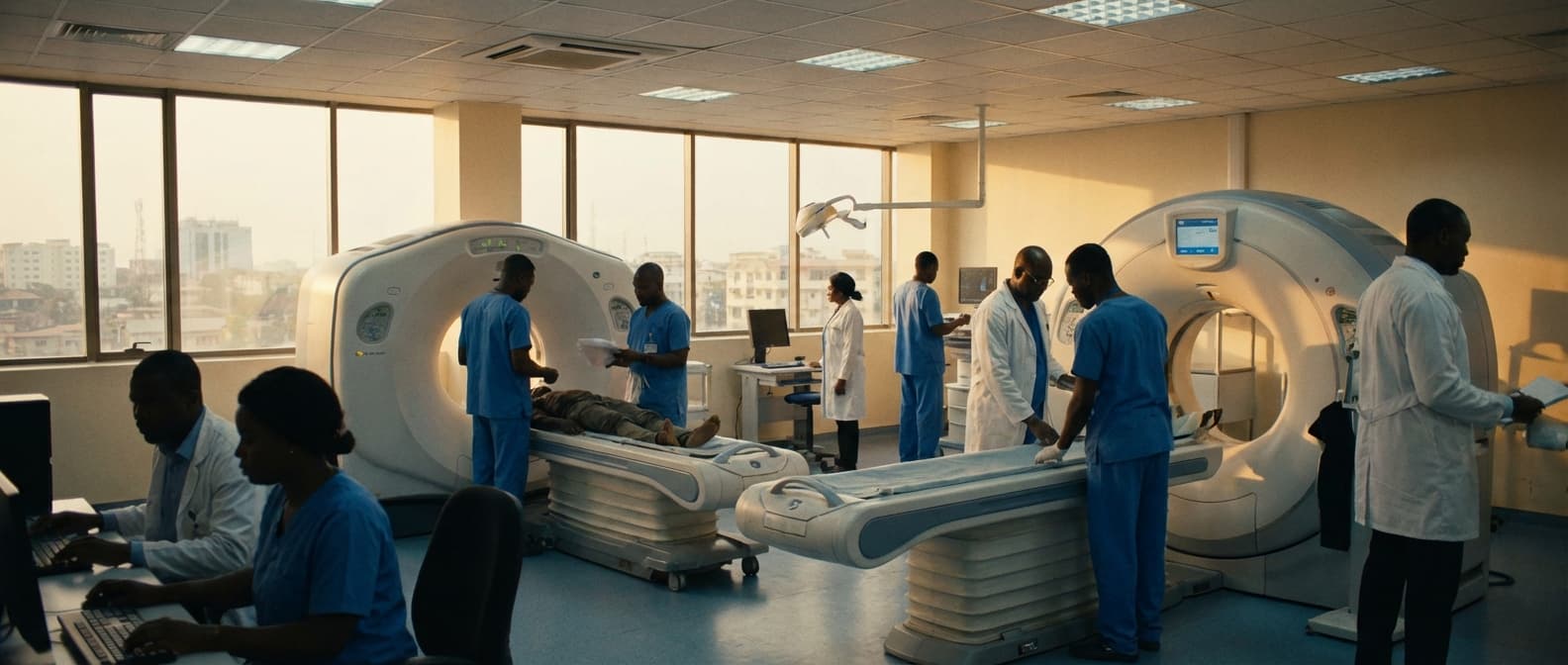
Imaging Acceptance Testing & QA in Ethiopia
Engineering Excellence & Technical Support
Commissioning and periodic QA for CT/MRI/X‑ray/US/Mammo. High-standard technical execution following OEM protocols and local regulatory frameworks.
Ensuring Diagnostic Clarity: Ethiopia's Advanced Imaging QA Protocol
We've implemented a robust, multi-stage imaging acceptance testing protocol that goes beyond basic functionality. Our QA engineers meticulously verify image quality, resolution, artifact detection, and adherence to international diagnostic standards for all new imaging equipment procured in Ethiopia, guaranteeing that clinicians receive the highest fidelity diagnostic information.
Precision Performance Validation: Sub-Pixel Accuracy in Ethiopian Medical Imaging
Our acceptance testing incorporates advanced metrology techniques to validate image sensor performance and geometric accuracy at a sub-pixel level. This meticulous approach ensures that subtle anatomical details and pathological findings are accurately represented, critical for early and precise diagnosis in Ethiopia's healthcare landscape.
Cybersecurity & Data Integrity: Fortifying Ethiopian Imaging Systems
Beyond image quality, our QA process rigorously assesses the cybersecurity posture and data integrity of all imaging systems deployed in Ethiopia. This includes vulnerability scanning, access control verification, and data encryption validation to protect sensitive patient information and ensure compliance with national and international healthcare data regulations.
What Is Imaging Acceptance Testing & Qa In Ethiopia?
Imaging Acceptance Testing (IAT) and Quality Assurance (QA) in the Ethiopian context refer to the systematic processes employed to verify and validate that medical imaging systems and their associated workflows function according to specified requirements and standards, ultimately ensuring the delivery of accurate, reliable, and diagnostically useful medical images. This involves a multi-faceted approach encompassing hardware verification, software validation, image quality assessment, and workflow integration testing, all within the regulatory and operational framework of healthcare in Ethiopia.
| Who Needs Imaging Acceptance Testing & QA in Ethiopia? | Typical Use Cases | |||||
|---|---|---|---|---|---|---|
| Public Healthcare Facilities: Ministry of Health-owned hospitals and clinics across all regions of Ethiopia requiring new or upgraded imaging equipment and IT systems. | Private Healthcare Providers: Private hospitals, diagnostic centers, and specialized clinics in urban and semi-urban areas investing in advanced medical imaging technologies. | Non-Governmental Organizations (NGOs): Organizations involved in healthcare delivery and capacity building, often deploying imaging equipment in underserved areas. | Research and Academic Institutions: Universities and research centers utilizing medical imaging for teaching, training, and scientific studies. | Medical Equipment Suppliers and Integrators: Companies responsible for the installation and commissioning of imaging systems, needing to demonstrate compliance to their clients. | Regulatory Bodies and Health Authorities: Government agencies tasked with overseeing the quality and safety of medical devices and services within Ethiopia. | |
| Procurement of New Imaging Systems: Prior to clinical deployment of new X-ray, CT, MRI, ultrasound, or digital radiography (DR) systems. | Installation of Picture Archiving and Communication Systems (PACS) and Radiology Information Systems (RIS): To ensure proper image archiving, retrieval, and workflow management. | System Upgrades and Updates: Verifying the integrity and functionality of software or hardware upgrades to existing imaging infrastructure. | Integration of Imaging Modalities with EMR/EHR Systems: To facilitate seamless data flow and improve clinical decision-making. | Routine Quality Control (QC) of Existing Equipment: Establishing baseline performance parameters and identifying deviations that may impact diagnostic accuracy. | Response to Performance Issues or Incidents: Diagnosing and rectifying problems identified during daily operations that affect image quality or system availability. | Compliance with National and International Standards: Meeting regulatory requirements for medical imaging equipment and services in Ethiopia. |
Key Components of Imaging Acceptance Testing & QA in Ethiopia:
- Hardware Verification: Ensuring that imaging equipment (e.g., X-ray machines, CT scanners, MRI units, ultrasound devices, PACS/RIS servers) meets manufacturer specifications for performance, safety, and regulatory compliance within the Ethiopian context.
- Software Validation: Rigorous testing of the imaging system's software, including image acquisition, processing, display, storage, and transmission functionalities, to confirm adherence to functional and non-functional requirements.
- Image Quality Assessment: Evaluating the diagnostic quality of acquired images using objective metrics (e.g., signal-to-noise ratio, contrast-to-noise ratio, spatial resolution) and subjective clinical review, considering anatomical variations and disease prevalence relevant to the Ethiopian population.
- Workflow Integration Testing: Verifying seamless integration of the imaging system with other healthcare IT infrastructure, such as Electronic Medical Records (EMR), Laboratory Information Systems (LIS), and billing systems, to ensure efficient patient care pathways.
- User Acceptance Testing (UAT): Involving clinical end-users (radiologists, radiographers, technologists) to confirm that the system meets their practical needs and is user-friendly for routine clinical operations.
- Performance and Stress Testing: Assessing the system's ability to handle expected workloads and maintain performance under peak demand scenarios typical of Ethiopian healthcare facilities.
- Security and Data Integrity Testing: Ensuring the protection of patient data against unauthorized access, corruption, and loss, adhering to Ethiopian data privacy regulations.
- Disaster Recovery and Business Continuity Planning: Validating the effectiveness of backup and recovery procedures to minimize downtime in case of system failures or unforeseen events.
Who Needs Imaging Acceptance Testing & Qa In Ethiopia?
In Ethiopia, the adoption of advanced medical imaging technologies, including CT scanners, MRI machines, and digital X-ray systems, is steadily growing. As these sophisticated tools become more prevalent in healthcare facilities, ensuring their proper functioning and accurate output becomes paramount. This is where Imaging Acceptance Testing (IAT) and Quality Assurance (QA) play a critical role. Without rigorous testing and ongoing QA, the reliability of diagnostic information can be compromised, leading to potential misdiagnoses, inefficient resource utilization, and ultimately, suboptimal patient care. IAT verifies that newly installed imaging equipment meets manufacturer specifications and performs as expected in the clinical environment. QA, on the other hand, is a continuous process of monitoring and evaluating the performance of imaging systems and the quality of the images produced, identifying and rectifying any deviations from established standards.
| Customer Type | Typical Imaging Needs | Impact of Poor Imaging Quality |
|---|---|---|
| Public Hospitals | General diagnostics (X-ray, CT, Ultrasound), trauma imaging, basic MRI for diverse patient populations. | Delayed diagnoses, increased patient suffering, strain on limited resources due to repeat scans or incorrect treatment. |
| Private Hospitals and Clinics | Advanced diagnostics (MRI, multi-detector CT, specialized ultrasound), subspecialty imaging. | Reputational damage, loss of patient trust, financial penalties for inaccurate reporting, inability to attract specialists. |
| Diagnostic Imaging Centers | High-volume imaging for outpatient referrals, specialized imaging protocols. | Reduced throughput, equipment downtime, inability to meet service level agreements, incorrect referrals affecting downstream care. |
| Tertiary Care Facilities | Complex imaging for critical conditions, interventional radiology support, advanced oncology and neuroimaging. | Compromised treatment planning, increased risk of procedural complications, inability to support advanced medical interventions. |
| Teaching Hospitals | All imaging modalities for diverse patient cases, crucial for medical education and research. | Inadequate training data, flawed research outcomes, perpetuation of suboptimal practices among future clinicians. |
| NGO Healthcare Providers | Essential diagnostics in remote or underserved areas, often with limited infrastructure. | Inability to provide basic diagnostic services, exacerbating health disparities, wasted investment in equipment that is not functioning optimally. |
Who Needs Imaging Acceptance Testing & QA in Ethiopia? Target Customers and Departments
- {"items":["Public Hospitals (Federal and Regional)","Private Hospitals and Clinics","Diagnostic Imaging Centers","Tertiary Care Facilities","Teaching Hospitals and Medical Universities","Non-Governmental Organization (NGO) Healthcare Providers","International Aid Organizations supporting healthcare infrastructure"],"title":"Target Customers"}
- {"items":["Radiology/Medical Imaging Departments","Oncology Departments (for treatment planning and monitoring)","Cardiology Departments (for cardiac imaging)","Neurology Departments (for neurological imaging)","Orthopedic Departments (for skeletal imaging)","Emergency Departments (for rapid diagnostic imaging)","Surgical Departments (for pre- and post-operative imaging)","Pediatric Departments (for imaging in children)"],"title":"Target Departments"}
Imaging Acceptance Testing & Qa Process In Ethiopia
This document outlines the Imaging Acceptance Testing & Quality Assurance (QA) process in Ethiopia, detailing the workflow from the initial inquiry to the final execution of tests. The process ensures that imaging equipment and systems meet defined standards, are fit for purpose, and deliver reliable results for diagnostic and medical purposes.
| Phase | Key Activities | Responsible Parties | Deliverables |
|---|---|---|---|
| Inquiry & Requirement Gathering | Define needs, clinical applications, technical specs, regulatory requirements. | Healthcare Facility, Procurement Entity, Clinical Staff | Needs assessment document, preliminary specifications |
| Vendor Selection & Proposal Submission | Identify vendors, evaluate proposals, ensure compliance. | Procurement Entity, Technical Committee | Vendor shortlists, evaluated proposals |
| Contract Negotiation & Agreement | Finalize terms, pricing, delivery, installation, training, warranty. | Procurement Entity, Vendor | Signed contract, Service Level Agreement (SLA) |
| Pre-Shipment Inspection (Optional) | Verify manufactured equipment against specifications before shipment. | Procurement Entity/Representative, Vendor | Inspection report |
| Logistics & Installation Planning | Arrange transport, develop installation plan. | Vendor, Healthcare Facility Logistics | Shipping documents, installation schedule |
| Site Readiness Assessment | Check infrastructure (power, network, etc.). | Healthcare Facility Technical Team, Vendor | Site readiness report, necessary upgrades |
| Equipment Installation & Initial Setup | Physical installation and basic configuration. | Vendor Technicians, Healthcare Facility Technical Staff | Installed equipment, basic configuration report |
| Pre-Acceptance Testing (PAT) | Vendor's internal functional checks. | Vendor Technicians | Internal test results |
| Acceptance Testing (AT) Protocol Development | Define tests, criteria, responsibilities. | Healthcare Facility QA Team, Vendor, Regulatory Body (if applicable) | AT Protocol Document |
| Acceptance Testing Execution | Perform functional, performance, safety, integration tests. | Joint Team (Facility, Vendor, QA Expert) | Test logs, image quality reports, safety reports |
| Documentation & Reporting | Record all test results and observations. | Joint Team | Comprehensive AT Report |
| Issue Resolution & Retesting | Address failures, conduct retests. | Vendor, Healthcare Facility Technical Team | Corrective action reports, retest results |
| Final Acceptance & Sign-off | Formal approval of the installed system. | Authorized Healthcare Facility Personnel | Signed Acceptance Certificate |
| Post-Acceptance QA & Training | Ongoing quality checks, staff training. | Healthcare Facility Staff, Vendor Trainers | Training materials, initial QA procedures |
| Ongoing Monitoring & Maintenance | Regular checks, preventive maintenance, repairs. | Healthcare Facility Technical Team, Vendor Service Team | Maintenance logs, performance reports |
Imaging Acceptance Testing & QA Process Workflow
- 1. Inquiry & Requirement Gathering: The process begins with an inquiry from a healthcare facility, government agency, or a procurement entity regarding the acquisition or deployment of new imaging equipment/systems. This stage involves detailed discussions to understand specific needs, clinical applications, technical specifications, regulatory compliance requirements (local and international), and desired performance metrics.
- 2. Vendor Selection & Proposal Submission: Based on the gathered requirements, potential vendors are identified. Vendors submit detailed proposals outlining their proposed equipment/systems, technical specifications, compliance with standards, training plans, and warranty/maintenance services. The proposals are evaluated against the initial requirements.
- 3. Contract Negotiation & Agreement: Once a preferred vendor is identified, negotiations commence regarding pricing, delivery schedules, installation, training, warranty, and service level agreements (SLAs). A formal contract is established, incorporating all agreed-upon terms and conditions, including the scope of acceptance testing.
- 4. Pre-Shipment Inspection (Optional but Recommended): Before shipment from the manufacturer's site, the procuring entity or its representative may conduct a pre-shipment inspection to verify that the equipment manufactured matches the contracted specifications and appears to be in good condition.
- 5. Logistics & Installation Planning: Upon successful contract execution, logistics are arranged for the transportation and delivery of the imaging equipment/system to the designated healthcare facility in Ethiopia. Detailed installation plans are developed in coordination with the vendor and the facility's technical team, considering site readiness and infrastructure requirements.
- 6. Site Readiness Assessment: The healthcare facility's infrastructure (e.g., power, cooling, shielding, network connectivity) is assessed to ensure it meets the specifications required for the installed imaging equipment/system. Any deficiencies are addressed before installation.
- 7. Equipment Installation & Initial Setup: The vendor's qualified technicians, under the supervision of the facility's technical personnel, install the imaging equipment/system. This includes physical setup, connection to power and networks, and initial software configuration.
- 8. Pre-Acceptance Testing (PAT): Once installation is complete, the vendor typically performs internal tests (PAT) to ensure the equipment is functioning according to its basic operational parameters. This is an internal vendor check before formal acceptance testing begins.
- 9. Formal Acceptance Testing (AT) Protocol Development: A comprehensive Acceptance Testing (AT) protocol is developed. This protocol is based on the initial requirements, manufacturer's specifications, regulatory guidelines (e.g., Ethiopian Food and Drug Administration - EFDA requirements), and best practices for imaging QA. It defines the specific tests to be performed, the expected results, pass/fail criteria, and the individuals responsible for execution and sign-off.
- 10. Acceptance Testing Execution: The AT is executed by a joint team comprising representatives from the healthcare facility, the vendor, and potentially an independent QA expert or regulatory body representative. Tests cover various aspects:
* Functional Testing: Verifying all operational modes, imaging sequences, and user interface functions. * Performance Testing: Assessing image quality, resolution, contrast, noise levels, dose levels (if applicable), and throughput. * Calibration & Accuracy Checks: Ensuring the equipment is accurately calibrated and produces reliable measurements. * Integration Testing: Verifying seamless integration with existing Picture Archiving and Communication Systems (PACS), Electronic Health Records (EHR), and other ancillary systems. * Safety Testing: Confirming compliance with radiation safety standards (if applicable) and general electrical safety. * Usability Testing: Evaluating the ease of use for clinical staff. - 11. Documentation & Reporting: Detailed records of all tests performed, observations, and results are meticulously documented. This includes test logs, calibration certificates, image quality reports, and any deviations or issues encountered. A comprehensive AT report is generated.
- 12. Issue Resolution & Retesting: If any test fails to meet the defined criteria, the issues are documented, and the vendor is responsible for rectifying them. Once corrective actions are taken, retesting of the failed components or the entire system is conducted.
- 13. Final Acceptance & Sign-off: Upon successful completion of all acceptance tests and resolution of any identified issues, the healthcare facility formally accepts the imaging equipment/system. This is typically documented through a formal sign-off by authorized personnel.
- 14. Post-Acceptance Quality Assurance (QA) & Training: Following acceptance, ongoing QA measures are implemented. This includes initial and refresher training for clinical and technical staff on the proper operation, maintenance, and quality control procedures. Regular performance checks and calibration schedules are established.
- 15. Ongoing Monitoring & Maintenance: A service and maintenance plan is put into effect to ensure the continued optimal performance of the imaging equipment/system. This involves periodic preventive maintenance, emergency repairs, and software updates as per the contract and SLAs.
Imaging Acceptance Testing & Qa Cost In Ethiopia
Imaging Acceptance Testing (IAT) and Quality Assurance (QA) for imaging systems in Ethiopia involve a range of costs influenced by several factors. These tests are crucial to ensure that medical imaging equipment (like X-ray, CT, MRI, Ultrasound) performs according to manufacturer specifications, diagnostic standards, and regulatory requirements. The cost can vary significantly based on the complexity of the imaging modality, the scope of testing, the expertise of the personnel, and the location within Ethiopia. Emerging markets like Ethiopia often present unique pricing dynamics due to local economic conditions, availability of specialized technicians, and import/export considerations for specialized testing equipment.
| Service Type | Estimated Price Range (ETB - Ethiopian Birr) | Notes |
|---|---|---|
| Basic X-ray Acceptance Testing (Per Unit) | 20,000 - 50,000 | Includes fundamental performance checks and image quality assessment. |
| Fluoroscopy/Mammography Acceptance Testing (Per Unit) | 30,000 - 70,000 | More detailed testing for specialized X-ray equipment. |
| Ultrasound Acceptance Testing (Per Unit) | 25,000 - 60,000 | Focuses on image quality, Doppler functions, and probe functionality. |
| CT Scanner Acceptance Testing (Per Unit) | 70,000 - 150,000+ | Involves complex physics tests, slice accuracy, dose measurement, and image reconstruction. |
| MRI Scanner Acceptance Testing (Per Unit) | 90,000 - 200,000+ | Extensive testing of magnetic field homogeneity, gradient performance, RF coil function, and safety. |
| Routine QA for Established Modalities (Annual/Bi-annual) | 15,000 - 50,000 per modality | Ongoing quality checks, not full acceptance testing. Price depends on modality and frequency. |
| Specialized Image Analysis & Dose Optimization | Custom Quote | Often project-based, depending on specific needs and equipment. |
| Medical Physicist Consultation/Report Review | 10,000 - 30,000 | For reviewing test results, providing expert advice, or certifying compliance. |
| Travel and Accommodation (Outside Major Cities) | 5,000 - 15,000+ per trip | Variable based on distance and duration. |
Key Pricing Factors for Imaging Acceptance Testing & QA in Ethiopia:
- {"title":"Imaging Modality Complexity:","description":"More complex modalities (e.g., CT, MRI) require more sophisticated testing procedures and specialized equipment, thus incurring higher costs than simpler ones (e.g., basic X-ray or ultrasound)."}
- {"title":"Scope of Testing:","description":"The extent of the testing is a major driver. This includes routine acceptance testing, comprehensive QA programs, performance verification, calibration, and image quality assessments. A more thorough and detailed test plan will naturally cost more."}
- {"title":"Personnel Expertise and Availability:","description":"The availability of qualified and experienced medical physicists, radiographers, or specialized technicians for performing these tests impacts pricing. Highly specialized skills may command higher fees."}
- {"title":"Location and Travel Costs:","description":"Testing performed in remote areas of Ethiopia will likely incur additional travel and accommodation expenses for the testing team compared to those conducted in major cities like Addis Ababa."}
- {"title":"Equipment Calibration and Maintenance:","description":"Ensuring the accuracy of the testing equipment itself is critical. Calibration services for the testing tools can add to the overall cost."}
- {"title":"Regulatory Compliance:","description":"Adherence to Ethiopian regulatory standards for medical devices may necessitate specific testing protocols, potentially increasing the complexity and cost."}
- {"title":"Third-Party Service Provider vs. In-House:","description":"Engaging external specialized QA/IAT service providers will have different pricing structures compared to developing an in-house QA program, which involves infrastructure, training, and ongoing operational costs."}
- {"title":"Warranty and Manufacturer Support:","description":"If acceptance testing is part of a new equipment warranty, the cost might be bundled. However, post-warranty or independent QA services will be charged separately."}
Affordable Imaging Acceptance Testing & Qa Options
Ensuring the quality and accuracy of medical imaging is paramount for patient care and diagnostic reliability. However, the cost of comprehensive acceptance testing and ongoing Quality Assurance (QA) can be a significant barrier for many healthcare facilities. This document outlines affordable imaging acceptance testing & QA options, focusing on value bundles and cost-saving strategies to make robust quality management accessible.
| Strategy/Bundle | Description | Key Benefits | Typical Cost Savings | Best For |
|---|---|---|---|---|
| Basic Acceptance Testing Package | Covers essential initial tests for new imaging equipment (e.g., ACR phantom testing, basic image quality assessments, physicist review). | Ensures fundamental functionality and compliance with initial installation requirements. | 5-10% of equipment cost (avoiding immediate post-install issues). | Smaller clinics, facilities with budget constraints, initial equipment acquisition. |
| Comprehensive Acceptance Testing & Basic QA Bundle | Includes all basic acceptance tests plus a foundational ongoing QA program (e.g., monthly image quality checks, weekly equipment warm-ups, basic performance metrics). | Provides a strong baseline for quality and addresses immediate post-acceptance concerns, while initiating routine monitoring. | 10-15% of equipment cost (ongoing savings through reduced repeat scans & minor issue resolution). | Medium-sized practices, facilities aiming for robust initial QC with manageable ongoing commitment. |
| Value-Based QA Subscription | A tiered subscription model offering a full suite of acceptance testing and a comprehensive, customized ongoing QA program. May include remote monitoring, scheduled on-site visits, and access to a dedicated QA specialist. | Maximizes quality, minimizes risk, ensures continuous compliance, and optimizes equipment performance. Offers predictable budgeting. | 15-25% of equipment cost (significant long-term savings from avoided errors, downtime, and expedited issue resolution). | Hospitals, large imaging centers, organizations prioritizing maximum quality and risk mitigation with predictable costs. |
| 'Pay-as-you-go' Specialized Testing | Engage third-party physicists or specialized vendors for specific, less frequent tests or when in-house expertise is lacking (e.g., dose audits, advanced performance evaluations). | Cost-effective for specific needs without the commitment of a full program. Access to specialized expertise. | Variable, but significantly lower than hiring full-time specialists for sporadic needs. | Facilities with existing QA programs needing specialized support, or for one-off compliance needs. |
| Leveraging Manufacturer Support | Carefully review and utilize the QA services offered by imaging equipment manufacturers during the warranty period. Negotiate inclusion of initial QA in purchase agreements. | Can be cost-effective during warranty. Manufacturers have intimate knowledge of their equipment. | Potentially very low if included in purchase; otherwise, comparable to basic third-party services. | New equipment purchases, facilities with strong vendor relationships. |
| In-House Training & Standardization | Train existing technologists and physicists on standardized QA procedures and protocols. Implement templated reports and checklists. | Reduces reliance on external services, builds internal capacity, and ensures consistent application of QA. | 5-10% savings on external service fees, plus improved internal efficiency. | Organizations with dedicated technical staff seeking to enhance their QA capabilities. |
Understanding the Need for Imaging Acceptance Testing & QA
- Patient Safety: Incorrect imaging can lead to misdiagnosis, delayed treatment, and adverse patient outcomes.
- Diagnostic Accuracy: Reliable imaging is fundamental for confident and accurate diagnoses.
- Regulatory Compliance: Adherence to standards set by bodies like the FDA, ACR, and Joint Commission is mandatory.
- Equipment Longevity: Regular testing helps identify potential issues early, preventing costly repairs and extending equipment life.
- Operational Efficiency: Well-functioning equipment reduces downtime and improves workflow.
- Cost Reduction: Proactive QA identifies minor problems before they escalate into expensive failures or lead to repeat procedures.
Verified Providers In Ethiopia
In Ethiopia's rapidly evolving healthcare landscape, identifying reliable and high-quality medical services is paramount. This is where verified providers, such as Franance Health, come into play. Franance Health distinguishes itself through its rigorous credentialing process and unwavering commitment to patient care, making them a standout choice for individuals and families seeking trustworthy healthcare solutions. Their adherence to international standards, continuous professional development for their practitioners, and a patient-centric approach solidify their position as a leading verified provider.
| Feature | Franance Health's Advantage | Patient Benefit |
|---|---|---|
| Credential Verification | Comprehensive background checks and license validation for all practitioners. | Assurance of competence and ethical practice, reducing risks for patients. |
| Specialized Services | Access to a diverse range of medical specialties and sub-specialties. | Holistic and expert care for various health conditions under one trusted umbrella. |
| Patient Experience | Emphasis on clear communication, empathy, and personalized treatment plans. | Improved patient satisfaction, better understanding of health conditions, and increased adherence to treatment. |
| Technological Integration | Utilization of modern medical equipment and efficient patient management systems. | Accurate diagnoses, effective treatments, and streamlined access to healthcare services. |
Why Franance Health Stands Out:
- Rigorous Credentialing: Franance Health employs a stringent vetting process for all its healthcare professionals, ensuring they meet and exceed established medical and ethical standards.
- Commitment to Quality: Their focus is on delivering exceptional patient outcomes through advanced medical practices and compassionate care.
- Patient-Centric Approach: Franance Health prioritizes individual patient needs, offering personalized treatment plans and fostering a supportive healthcare environment.
- Continuous Professional Development: Healthcare providers at Franance Health are encouraged and supported in ongoing training and skill enhancement, keeping them at the forefront of medical advancements.
- International Standards: Adherence to recognized international healthcare protocols ensures a high level of service and safety.
Scope Of Work For Imaging Acceptance Testing & Qa
This document outlines the Scope of Work (SOW) for Imaging Acceptance Testing & Quality Assurance (QA). It defines the objectives, activities, deliverables, and acceptance criteria for ensuring that the imaging system meets the specified technical requirements and quality standards. The primary goal is to verify the functionality, performance, and reliability of the imaging solution before its final acceptance and deployment.
| Deliverable Type | Description | Standard Specification Reference |
|---|---|---|
| Test Plan | A comprehensive document detailing the testing approach, scope, resources, schedule, and test cases. | IEEE 829-2008 (Standard for Software Test Documentation) |
| Test Cases | Detailed step-by-step instructions to execute specific tests, including expected results and pass/fail criteria. | IEEE 829-2008 (Standard for Software Test Documentation) |
| Test Data | Representative imaging data sets used for testing various functionalities and performance aspects. | DICOM Part 10 (Media Storage and File Format) |
| Defect Log | A centralized repository of all identified defects, including severity, priority, description, and resolution status. | JIRA, Azure DevOps, or similar defect tracking tools. |
| Test Execution Reports | Summaries of test execution, including number of tests executed, passed, failed, and blocked, along with a list of outstanding defects. | Internal standards based on project needs. |
| Performance Test Results | Data and analysis demonstrating the system's performance against specified metrics (e.g., image acquisition time, processing speed, network throughput). | DICOM Part 14 (Grayscale Standard Display Function), custom performance benchmarks. |
| Usability Test Findings | Observations and feedback from user testing sessions, highlighting ease of use, efficiency, and any usability issues. | Nielsen Norman Group heuristics, ISO 9241 (Ergonomics of human-system interaction). |
| Integration Test Results | Evidence of successful data exchange and interoperability with integrated systems. | HL7 standards, FHIR standards, DICOM Conformance Statements. |
| Security Test Report | Documentation of security vulnerability assessments and penetration testing results. | NIST SP 800-53 (Security and Privacy Controls for Federal Information Systems and Organizations), HIPAA. |
| Acceptance Test Report (ATR) | A formal report summarizing all testing activities, results, outstanding issues, and providing a recommendation for system acceptance. | Customer-specific acceptance criteria, Project Management Plan. |
| Final Test Summary Report | A high-level overview of the entire testing effort, including a summary of defects, lessons learned, and overall system quality. | Internal quality assurance standards. |
Key Activities and Objectives
- Verification of imaging hardware and software installation and configuration.
- Functional testing of all core imaging features (capture, processing, storage, retrieval).
- Performance testing to ensure adherence to specified throughput, latency, and resolution requirements.
- Usability testing to confirm ease of operation and user interface intuitiveness.
- Integration testing with existing systems (e.g., PACS, EMR) if applicable.
- Security testing to ensure data integrity and compliance with relevant regulations.
- Defect identification, reporting, and retesting.
- Creation and review of comprehensive test documentation.
- Final acceptance and sign-off on the imaging solution.
Service Level Agreement For Imaging Acceptance Testing & Qa
This Service Level Agreement (SLA) outlines the commitment for Imaging Acceptance Testing and Quality Assurance (QA) services. It defines the expected response times for critical issues and the uptime guarantees for the testing environment and related tools.
| Service/Category | Priority Level | Response Time Guarantee | Resolution Time Target (Best Effort) | Uptime Guarantee |
|---|---|---|---|---|
| Imaging Acceptance Testing Environment | Critical | 1 Hour | 4 Business Hours | 99.5% |
| Imaging Acceptance Testing Environment | Major | 2 Business Hours | 1 Business Day | 99.5% |
| Imaging Acceptance Testing Environment | Minor | 4 Business Hours | 3 Business Days | 99.5% |
| QA Tools (e.g., Defect Tracking System, Test Management Tools) | Critical | 30 Minutes | 2 Business Hours | 99.9% |
| QA Tools (e.g., Defect Tracking System, Test Management Tools) | Major/Minor | 1 Business Hour | 4 Business Hours | 99.9% |
Key Definitions
- Imaging Acceptance Testing: The process of verifying that newly developed or updated imaging software meets specified functional, performance, and quality requirements before release.
- Quality Assurance (QA): The ongoing processes and activities to ensure that the imaging software consistently meets quality standards throughout its development lifecycle.
- Critical Issue: A defect that completely prevents the core functionality of the imaging software from working, leading to significant business impact or data loss.
- Major Issue: A defect that significantly impairs core functionality or causes severe performance degradation, but a workaround might exist.
- Minor Issue: A defect that has minimal impact on functionality or performance, or is cosmetic in nature.
- Response Time: The maximum time allowed for the QA team to acknowledge and begin actively working on a reported issue.
- Resolution Time: The maximum time allowed to provide a fix or a viable workaround for a reported issue.
- Uptime: The percentage of time the designated testing environment and QA tools are available and operational.
- Downtime: The period during which the designated testing environment or QA tools are unavailable or not operational.
Frequently Asked Questions

Ready when you are
Let's scope your Imaging Acceptance Testing & QA in Ethiopia project in Ethiopia.

Scaling healthcare logistics and technical systems across the entire continent.