
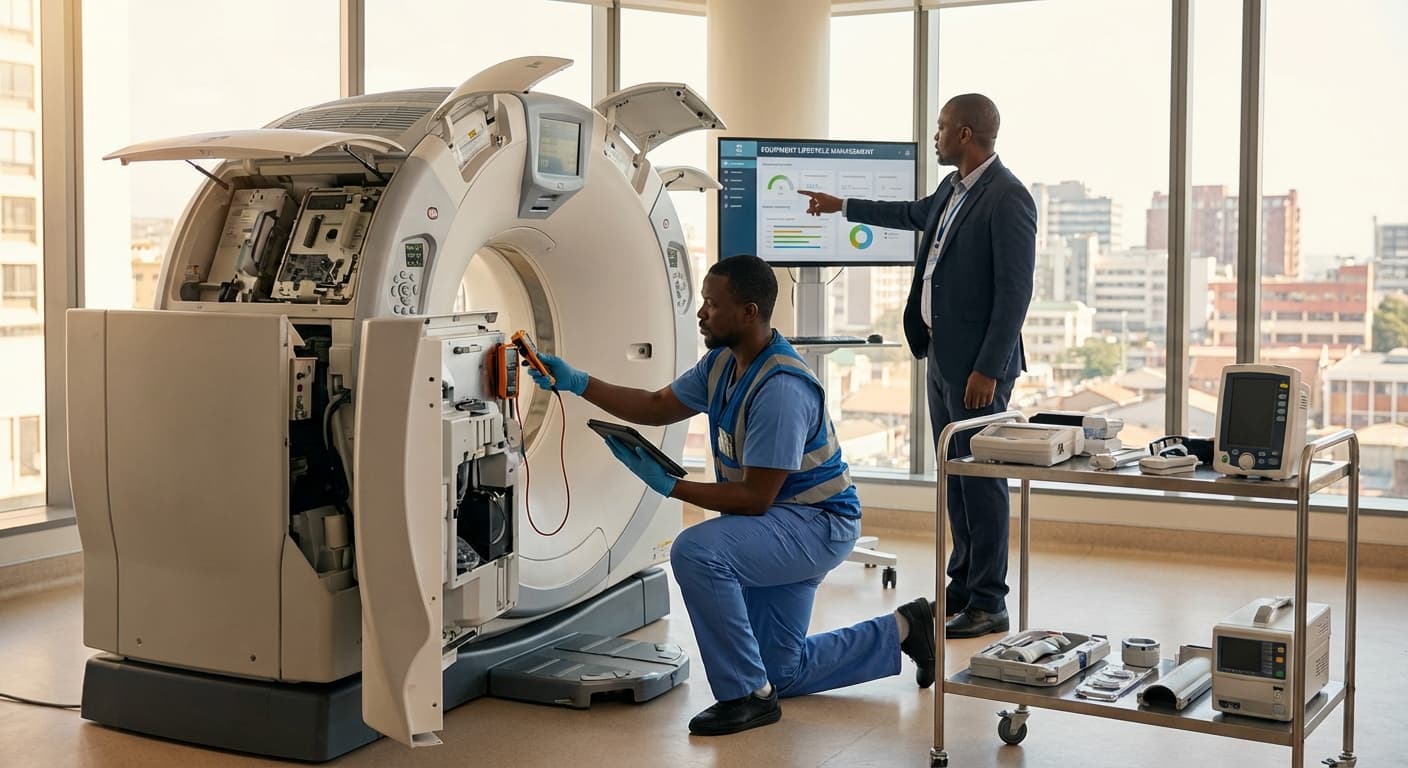
Equipment Replacement Planning & Obsolescence Strategy Service in Ethiopia
Engineering Excellence & Technical Support
Equipment Replacement Planning & Obsolescence Strategy Service High-standard technical execution following OEM protocols and local regulatory frameworks.
Proactive Obsolescence Mitigation
Leverage advanced lifecycle management tools to identify and address potential equipment obsolescence risks early, ensuring uninterrupted operations and preventing costly emergency replacements. Our service offers predictive analytics to forecast component end-of-life and recommend strategic sourcing or alternative solutions.
Optimized Capital Allocation
Develop data-driven replacement strategies that align with operational needs and financial constraints. We provide detailed cost-benefit analyses for refurbishment versus replacement, enabling informed decisions that maximize ROI and extend asset lifespan strategically.
Local Expertise, Global Standards
Benefit from a deep understanding of Ethiopia's industrial landscape and regulatory environment, combined with adherence to international best practices in equipment management. Our service ensures compliance, facilitates smoother procurement, and supports sustainable operational continuity for Ethiopian businesses.
What Is Equipment Replacement Planning & Obsolescence Strategy Service In Ethiopia?
Equipment Replacement Planning & Obsolescence Strategy Service in Ethiopia is a comprehensive offering designed to assist organizations in Ethiopia with the proactive management of their asset lifecycle, specifically focusing on the strategic timing and execution of equipment replacement and mitigating the risks associated with technological obsolescence. This service aims to optimize operational efficiency, reduce total cost of ownership, and ensure continued competitiveness by aligning asset management with business objectives.
| Who Needs This Service? | Typical Use Cases | ||||||||
|---|---|---|---|---|---|---|---|---|---|
| Manufacturing and Industrial Sector: Companies with extensive production machinery, processing equipment, and automation systems that require regular updates to maintain efficiency and quality standards. | Telecommunications Providers: Organizations managing critical network infrastructure, base stations, and switching equipment where rapid technological evolution necessitates strategic replacement to avoid service degradation and maintain competitive edge. | Energy and Utilities Sector: Power generation facilities, transmission networks, and distribution systems relying on aging but essential equipment that requires careful lifecycle management and timely upgrades for reliability and safety. | Transportation and Logistics: Companies operating fleets of vehicles, material handling equipment, and infrastructure components that are subject to wear and tear and technological advancements in efficiency and safety. | Healthcare Institutions: Hospitals and clinics with sophisticated medical imaging equipment, diagnostic tools, and patient monitoring systems that require regular replacement due to technological advancements and evolving medical standards. | Government and Public Sector Agencies: Entities responsible for managing critical infrastructure, public services, and defense equipment that require long-term planning for asset sustainability and modernization. | Mining and Extractive Industries: Operations utilizing heavy machinery, drilling equipment, and processing plants that are exposed to harsh environments and benefit from proactive replacement strategies to minimize downtime and optimize output. | Agricultural Sector: Large-scale farming operations employing advanced machinery and irrigation systems that require strategic upgrades to enhance productivity and sustainability. | ||
| Preventing Production Stoppages: Proactively replacing machinery nearing end-of-life or prone to frequent breakdowns to avoid costly production interruptions. | Ensuring Compliance with Regulations: Upgrading equipment to meet new environmental, safety, or industry-specific compliance standards before penalties are incurred. | Improving Energy Efficiency: Replacing older, energy-intensive equipment with modern, energy-efficient alternatives to reduce operational costs and environmental impact. | Maintaining Competitive Advantage: Adopting newer technologies that offer improved performance, speed, or functionality, enabling businesses to outperform competitors. | Mitigating Cybersecurity Risks: Replacing legacy systems that may have known vulnerabilities and are no longer supported by security updates. | Optimizing Maintenance Costs: Identifying equipment that has escalating maintenance costs and planning for its replacement with more reliable assets. | Facilitating Digital Transformation: Integrating new equipment that supports digital initiatives, IoT adoption, and data analytics for enhanced operational insights. | Strategic Capital Expenditure Planning: Developing a predictable roadmap for capital investments in new equipment, allowing for better financial planning and resource allocation. | Extending Asset Lifespan: Implementing strategies to maximize the useful life of existing equipment through optimized maintenance and minor upgrades where feasible, before full replacement. | Managing the Impact of Supply Chain Disruptions: Understanding the obsolescence status of critical components to proactively secure spare parts or identify alternative suppliers. |
What this Service Involves:
- Asset Inventory and Condition Assessment: Conducting a thorough audit of existing equipment, including its age, condition, performance metrics, maintenance history, and remaining useful life (RUL).
- Obsolescence Risk Analysis: Evaluating the likelihood and impact of equipment becoming obsolete due to technological advancements, manufacturer discontinuations, scarcity of spare parts, or compliance issues.
- Performance and Efficiency Benchmarking: Comparing current equipment performance against industry best practices and contemporary technologies to identify areas for improvement.
- Total Cost of Ownership (TCO) Analysis: Calculating the cumulative costs associated with owning and operating equipment, including acquisition, maintenance, energy consumption, labor, and disposal.
- Replacement Strategy Development: Formulating data-driven recommendations for equipment replacement, including timing, prioritization, and the identification of suitable replacement technologies.
- Technology Roadmapping: Aligning equipment replacement with broader technological trends and future business requirements to ensure long-term strategic fit.
- Risk Mitigation Planning: Developing strategies to address potential disruptions caused by obsolescence, such as sourcing alternative parts, extending support contracts, or developing workarounds.
- Financial Planning and Budgeting: Assisting in the financial forecasting and budgeting required for planned equipment upgrades and replacements.
- Implementation Support: Providing guidance and support during the procurement, installation, and commissioning of new equipment.
- Disposal and Decommissioning Planning: Establishing protocols for the responsible and compliant disposal or decommissioning of retired assets.
Who Needs Equipment Replacement Planning & Obsolescence Strategy Service In Ethiopia?
In Ethiopia, organizations facing the critical challenge of aging infrastructure, evolving technological landscapes, and the need for sustained operational efficiency can significantly benefit from an Equipment Replacement Planning & Obsolescence Strategy Service. This service helps businesses proactively manage the lifecycle of their assets, mitigate risks associated with outdated equipment, and ensure uninterrupted productivity.
| Department | Key Concerns Addressed by the Service | Benefits |
|---|---|---|
| Operations/Production | Equipment breakdowns, reduced output due to aging machinery, unscheduled downtime. | Minimised production interruptions, improved efficiency, enhanced product quality. |
| Maintenance & Engineering | Difficulty sourcing spare parts for obsolete equipment, increasing repair costs, strain on maintenance resources. | Optimised maintenance schedules, reduced repair expenses, extended equipment lifespan through planned upgrades. |
| Procurement & Supply Chain | Unexpected equipment failures leading to emergency procurement, lack of strategic sourcing for replacements, supplier obsolescence. | Proactive procurement strategies, better negotiation power with suppliers, secured access to up-to-date technology. |
| Finance & Asset Management | Unexpected capital expenditure for emergency replacements, poor return on investment from aging assets, inaccurate asset valuation. | Improved capital budgeting, optimized asset lifecycle cost, accurate financial forecasting, enhanced ROI. |
| IT & Technology | Security vulnerabilities in legacy systems, incompatibility with new software, performance issues, data loss risks. | Enhanced cybersecurity, seamless integration with new technologies, improved system performance, data integrity. |
| Risk Management & Compliance | Non-compliance with industry standards due to outdated equipment, safety hazards, potential for operational failures impacting regulatory adherence. | Mitigated operational risks, improved safety records, ensured regulatory compliance, enhanced business continuity. |
Target Customers in Ethiopia
- {"title":"Large Industrial Enterprises","description":"Manufacturing plants, mining operations, and large-scale agricultural processing facilities often rely on heavy machinery and specialized equipment that require meticulous planning for upgrades and replacements to avoid costly downtime."}
- {"title":"Public Utility Companies","description":"Providers of electricity, water, and telecommunications infrastructure have extensive networks of aging equipment that need strategic replacement to ensure service reliability and adapt to technological advancements."}
- {"title":"Transportation and Logistics Companies","description":"Airlines, railway operators, and large fleet management companies depend on the continuous operational readiness of their vehicles and related equipment. Obsolescence can impact safety and efficiency."}
- {"title":"Healthcare Institutions","description":"Hospitals and clinics utilize complex medical equipment that has a finite lifespan and requires regular upgrades to maintain diagnostic accuracy, patient safety, and compliance with medical standards."}
- {"title":"Government Agencies & Parastatals","description":"Organizations responsible for national infrastructure, defense, and essential services need to ensure their operational capabilities are not compromised by outdated or unsupported equipment."}
- {"title":"Financial Institutions","description":"Banks and other financial service providers rely on robust IT infrastructure, including servers, ATMs, and network equipment, which require planned upgrades to ensure security and service delivery."}
- {"title":"Telecommunications Providers","description":"With rapid advancements in communication technology, these companies must plan for the replacement of legacy network infrastructure to offer competitive services and higher bandwidth."}
Equipment Replacement Planning & Obsolescence Strategy Service Process In Ethiopia
The Equipment Replacement Planning & Obsolescence Strategy Service Process in Ethiopia outlines a structured approach to assist organizations in making informed decisions about upgrading or replacing their existing equipment. This service aims to minimize operational disruptions, optimize resource allocation, and mitigate the risks associated with outdated technology. The workflow begins with an initial inquiry and progresses through a series of defined stages, culminating in the successful execution of a replacement plan. This process is crucial for businesses in Ethiopia looking to maintain competitiveness and operational efficiency in a rapidly evolving technological landscape.
| Stage | Description | Key Activities | Deliverables/Outcomes | Ethiopian Context Considerations |
|---|---|---|---|---|
| The client expresses interest in the service and seeks an understanding of how it can benefit their organization. | Initial contact via phone, email, or website. Understanding client's general challenges and objectives. Introduction to the service offering and its value proposition. | Understanding of client's needs. Agreement on next steps. Preliminary scope definition. | Potential for varying levels of technological literacy among clients. Need for clear, concise communication in local languages if necessary. |
| A thorough understanding of the client's current equipment inventory, operational requirements, and strategic goals is established. | Inventory audit of all relevant equipment. Gathering data on equipment age, condition, performance metrics, maintenance history. Understanding current operational workflows and future business plans. | Detailed equipment inventory report. Performance and condition assessment. Identification of critical equipment and potential bottlenecks. | Availability and accessibility of maintenance records. Potential for diverse equipment types across different sectors (agriculture, manufacturing, services). |
| Evaluation of the current equipment's lifecycle stage and the associated risks of continued use. | Assessing technological obsolescence (e.g., end-of-life support, security vulnerabilities). Evaluating operational risks (e.g., breakdown frequency, spare parts availability). Analyzing cost of ownership (maintenance, energy consumption). | Obsolescence report highlighting critical risks. Quantification of potential financial and operational impacts of inaction. Prioritization of equipment for replacement. | Challenges in sourcing spare parts for older equipment. Impact of import regulations and foreign exchange on availability of new technologies. |
| Formulating a tailored strategy for replacing or upgrading the identified obsolete equipment. | Defining replacement criteria (e.g., performance, cost-effectiveness, technological advancement). Exploring different replacement options (e.g., outright purchase, leasing, upgrade). Developing phased implementation plans to minimize disruption. | Documented replacement strategy. Recommended equipment specifications. Phased implementation roadmap. | Considering local manufacturing capabilities and potential for locally sourced solutions. Ensuring compatibility with existing infrastructure and power supply. |
| Developing a comprehensive budget for the replacement project and creating a strong financial case. | Estimating capital expenditure (CAPEX) and operational expenditure (OPEX). Calculating return on investment (ROI) and payback period. Assisting with funding proposals or internal budget approvals. | Detailed project budget. Financial justification report (ROI analysis). Funding recommendation. | Access to financing options for businesses. Understanding government incentives or grants for technology adoption. |
| Identifying, evaluating, and selecting appropriate vendors and initiating the procurement process. | Developing tender documents (RFP/RFQ). Evaluating vendor proposals based on technical capabilities, pricing, and support. Negotiating contracts and managing the procurement process. | Shortlisted vendor list. Selected vendor(s) and negotiated contracts. Procurement order issued. | Navigating local procurement laws and regulations. Due diligence on local and international suppliers. Potential for customs clearance and import duties. |
| Executing the plan for installing new equipment and safely removing old equipment. | Installation and commissioning of new equipment. Training of personnel on new systems. Safe and environmentally responsible decommissioning and disposal of old equipment. | Installed and operational new equipment. Trained personnel. Decommissioning report and waste disposal certificates. | Availability of skilled local technicians for installation and maintenance. Environmental regulations for waste disposal. Logistics and transportation of equipment. |
| Assessing the success of the replacement project and establishing ongoing monitoring mechanisms. | Evaluating actual performance against planned metrics. Gathering client feedback. Establishing ongoing monitoring and maintenance schedules. Recommending further optimization or future planning cycles. | Post-implementation review report. Performance monitoring framework. Recommendations for continuous improvement. | Establishing long-term maintenance partnerships with local service providers. Adapting to evolving technological trends and market conditions in Ethiopia. |
Equipment Replacement Planning & Obsolescence Strategy Service Workflow
- Inquiry & Initial Consultation
- Needs Assessment & Data Collection
- Obsolescence Analysis & Risk Evaluation
- Replacement Strategy Development
- Budgeting & Financial Justification
- Vendor Selection & Procurement
- Implementation & Decommissioning
- Post-Implementation Review & Monitoring
Equipment Replacement Planning & Obsolescence Strategy Service Cost In Ethiopia
Planning for equipment replacement and developing obsolescence strategies are crucial for businesses in Ethiopia to maintain operational efficiency, avoid costly downtime, and ensure compliance with evolving technological standards. The cost of these services can vary significantly based on several factors. This document outlines the key pricing determinants and provides estimated cost ranges in Ethiopian Birr (ETB).
| Service Component | Description | Estimated Cost Range (ETB per project/engagement) | Notes |
|---|---|---|---|
| Initial Asset Inventory & Audit | Cataloging equipment, gathering basic data (age, manufacturer, model). | 50,000 - 200,000 | Dependent on the number and diversity of assets. |
| Obsolescence Risk Assessment | Analyzing equipment age, vendor support, and technological relevance. | 75,000 - 300,000 | Includes identifying high-risk assets. |
| Replacement Cost Analysis & Financial Modeling | Estimating replacement costs, depreciation, and ROI for new equipment. | 100,000 - 400,000 | Involves detailed financial projections. |
| Strategic Replacement Planning (Roadmap Development) | Creating a phased plan for equipment replacement over a defined period. | 150,000 - 600,000 | Includes prioritization and budget allocation. |
| Development of Obsolescence Mitigation Strategy | Creating strategies to manage end-of-life equipment, spare parts, and vendor contracts. | 100,000 - 350,000 | Focuses on risk mitigation and lifecycle management. |
| Comprehensive Service Package (End-to-End) | Combination of all the above, including ongoing advisory. | 300,000 - 1,500,000+ | For larger, more complex projects requiring continuous support. |
| Hourly Consulting Rate (for specific tasks/advisory) | Expert consultation on specific issues. | 3,000 - 10,000 | Varies by consultant's seniority and specialization. |
Key Pricing Factors for Equipment Replacement Planning & Obsolescence Strategy Services in Ethiopia
- Scope and Complexity of Equipment Inventory: The number, type, and criticality of the equipment being assessed directly influence the time and resources required. A comprehensive audit of a large, diverse fleet will be more expensive than a focused review of a few critical machines.
- Data Availability and Quality: The ease with which reliable data on equipment age, maintenance history, performance, and vendor support can be accessed and analyzed impacts the service cost. Poor or incomplete data necessitates more investigative work.
- Level of Detail Required: Services can range from high-level strategic roadmaps to in-depth technical assessments, including detailed repair vs. replace analyses, cost-benefit modeling, and vendor evaluation.
- Consultant Expertise and Experience: Highly specialized consultants with proven track records in asset management and obsolescence planning, particularly within the Ethiopian context, will command higher fees.
- Duration of the Engagement: Whether the service is a one-time assessment, an ongoing advisory role, or a phased implementation project will affect the overall cost.
- Geographic Reach and Site Visits: If the service requires site visits to multiple locations across Ethiopia, travel and accommodation expenses will be added to the base fee.
- Customization vs. Standardized Solutions: Tailoring a strategy to a specific business need will generally be more expensive than utilizing a pre-defined methodology, though customization often yields greater value.
- Technology and Tools Used: The sophistication of the software or tools employed for data analysis, modeling, and reporting can influence the pricing. Access to advanced asset management platforms may incur licensing or integration costs.
- Reporting and Deliverable Format: The complexity and depth of the final reports, including the inclusion of detailed action plans, financial projections, and risk assessments, can impact the final cost.
Affordable Equipment Replacement Planning & Obsolescence Strategy Service Options
Our Affordable Equipment Replacement Planning & Obsolescence Strategy Service helps organizations proactively manage their asset lifecycle, minimize costly unplanned downtime, and optimize capital expenditures. By anticipating equipment end-of-life and obsolescence risks, we enable strategic decision-making, ensuring you have the right equipment at the right time and at the best possible cost. This service focuses on maximizing your return on investment through intelligent planning and risk mitigation.
| Value Bundle | Key Features | Ideal For | Cost-Saving Strategies Highlighted |
|---|---|---|---|
| Foundation Bundle | Asset inventory, basic obsolescence flagging, initial lifecycle assessment, basic replacement recommendations. | Small to medium-sized businesses with limited assets or those new to asset management. | Identifies imminent risks, enabling proactive but less complex replacement, avoiding immediate crisis spending. Basic negotiation leverage with suppliers for upcoming needs. |
| Standard Bundle | Detailed asset condition assessment, predictive obsolescence modeling, multi-year replacement planning, cost-benefit analysis of repair vs. replace, technology trend integration. | Growing businesses with a significant asset base and a desire for more structured planning. | Optimizes replacement timing to avoid over-maintenance of aging equipment. Leverages bulk purchasing power for upcoming replacements. Identifies cost-effective alternative technologies. |
| Advanced Bundle | All Standard features plus, advanced risk mitigation for critical components, scenario planning for supply chain disruptions, total cost of ownership (TCO) analysis, vendor negotiation support, custom obsolescence alerts. | Large enterprises, organizations in highly regulated industries, or those with complex, mission-critical equipment. | Minimizes revenue loss from unplanned downtime. Secures long-term supply agreements for critical parts. Maximizes asset lifespan through informed maintenance decisions. Reduces expenditure on emergency procurements. |
| Custom Solution | Tailored to specific organizational needs, focusing on unique asset types, compliance requirements, or strategic objectives. | Organizations with highly specialized or unique asset portfolios and complex operational challenges. | Addresses specific vulnerabilities and capitalizes on unique opportunities for cost reduction and efficiency gains relevant to the organization's niche. |
Our Service Offers:
- Comprehensive Asset Inventory & Assessment
- Predictive Obsolescence Risk Analysis
- Strategic Replacement Lifecycle Planning
- Cost-Benefit Analysis for Replacement Options
- Vendor and Technology Landscape Monitoring
- Mitigation Strategies for Critical Component Shortages
- Budgetary Planning & Capital Allocation Guidance
- Justification for Investments & ROI Calculation
- Implementation Roadmap & Phased Deployment Support
Verified Providers In Ethiopia
In Ethiopia's evolving healthcare landscape, identifying reliable and skilled medical practitioners is paramount. Verified providers offer a crucial layer of assurance, ensuring patients receive quality care. Franance Health stands out as a leading entity in credentialing and verifying healthcare professionals. This document outlines the rigorous process Franance Health employs and explains why their verified providers represent the best choice for individuals seeking trustworthy medical services in Ethiopia.
| Attribute | Benefit for Patients | Why Franance Health Excels |
|---|---|---|
| Trust and Reliability | Peace of mind knowing you are receiving care from a qualified and legitimate professional. | Franance Health's stringent vetting process eliminates guesswork, reducing the risk of encountering unqualified practitioners. |
| Quality of Care | Access to highly skilled and competent medical professionals who adhere to best practices. | Their focus on skills validation and continuous monitoring ensures providers are up-to-date and proficient. |
| Patient Safety | Minimizing risks associated with malpractice or sub-standard medical treatment. | The ethical conduct review and background checks are designed to protect patients from potential harm. |
| Informed Decision-Making | Empowers patients to make confident choices about their healthcare providers. | Franance Health's transparency in their verification process allows patients to understand the basis of their credibility. |
| Access to Specialists | Facilitates finding specialists who have undergone rigorous evaluation for their specific expertise. | Their specialty-specific accreditation ensures that even highly specialized care is delivered by verified experts. |
Franance Health's Verification Process: A Commitment to Excellence
- Comprehensive Background Checks: Franance Health conducts thorough investigations into the educational qualifications, professional licenses, and work history of all healthcare providers.
- Skills Assessment & Competency Validation: Beyond documentation, Franance Health often incorporates practical assessments or peer reviews to ensure providers possess the necessary clinical skills and maintain high standards of practice.
- Ethical Conduct Review: A critical component involves evaluating a provider's adherence to ethical guidelines and professional conduct, safeguarding patient trust and safety.
- Continuous Monitoring: Verification is not a one-time event. Franance Health implements ongoing monitoring to ensure providers maintain their credentials and continue to meet established quality benchmarks.
- Specialty-Specific Accreditation: For specialized fields, Franance Health may seek or facilitate additional accreditations, signifying expertise in niche areas of medicine.
- Patient Feedback Integration: Where applicable, Franance Health may incorporate patient feedback mechanisms to provide a holistic view of a provider's performance.
Scope Of Work For Equipment Replacement Planning & Obsolescence Strategy Service
This document outlines the Scope of Work (SOW) for a service focused on Equipment Replacement Planning and Obsolescence Strategy. The service aims to proactively manage the lifecycle of critical equipment, ensuring operational continuity, minimizing risks associated with obsolescence, and optimizing capital expenditure for replacements. This SOW details the objectives, scope, deliverables, and standard specifications for this engagement.
| Deliverable | Description | Format | Standard Specification |
|---|---|---|---|
| Equipment Inventory & Data Model | A centralized database or system containing detailed information on all identified equipment, including manufacturer, model, serial number, installation date, maintenance history, criticality rating, and technical specifications. | Digital Database (e.g., SQL, Excel, Asset Management Software) | Data fields must be clearly defined and consistent. Data accuracy and completeness are paramount. Defined data validation rules. |
| Obsolescence Assessment Report | Analysis of identified equipment to determine current and projected obsolescence levels based on manufacturer support, parts availability, technology advancements, and end-of-life notifications. | PDF Document | Includes a scoring mechanism for obsolescence risk. Clearly identifies key drivers of obsolescence for each equipment type. Defines a risk rating scale (e.g., Low, Medium, High). |
| Risk & Criticality Assessment | Evaluation of equipment based on its impact on operations, safety, regulatory compliance, and business continuity in case of failure or unavailability. | PDF Document | Uses a defined criticality matrix. Quantifies impact where possible (e.g., downtime cost, safety incident severity). |
| Equipment Replacement Strategy Framework | A documented strategy outlining the approach to equipment replacement, including decision criteria, prioritization methodologies, and long-term planning horizons. | PDF Document | Must be aligned with business objectives and financial constraints. Includes guidelines for technology refresh considerations and alternative solutions (e.g., upgrades, refurbishment). |
| Replacement Prioritization Matrix | A tool or report that ranks equipment for replacement based on a combination of obsolescence risk, criticality, remaining useful life, and cost-benefit analysis. | Digital Matrix (e.g., Excel, within Asset Management Software) | Clearly defines weighting factors and calculation methodology. Results must be easily sortable and filterable. |
| Capital Expenditure (CAPEX) Forecast for Replacements | A multi-year forecast of anticipated capital expenditure required for equipment replacements, broken down by year, equipment category, and priority. | Digital Spreadsheet (e.g., Excel) | Includes assumptions used in forecasting (e.g., inflation rates, supplier pricing trends). Differentiates between planned and contingency replacements. |
| Obsolescence Management Guidelines | A set of best practices and procedures for ongoing management of equipment obsolescence, including proactive sourcing strategies and vendor relationship management. | PDF Document | Covers aspects like 'Last Time Buy' strategies, alternative part sourcing, and proactive communication with vendors. |
| Executive Summary Report | A high-level overview of the key findings, recommendations, and strategic implications of the equipment replacement and obsolescence strategy. | PDF Document | Concise, actionable insights. Highlights key risks and opportunities. Clearly communicates the return on investment (ROI) of the proposed strategy. |
| Workshop/Presentation Materials | Materials for presenting findings and recommendations to stakeholders, facilitating discussion and buy-in. | PowerPoint Presentation, Handouts | Visually engaging, clear messaging, tailored to the audience. |
Objectives of the Service
- Develop a comprehensive equipment inventory and condition assessment.
- Identify and prioritize equipment at risk of obsolescence and failure.
- Establish a robust, data-driven equipment replacement strategy.
- Define optimal replacement cycles and budget forecasting.
- Mitigate risks associated with aging and obsolete equipment.
- Support informed decision-making for capital investment in equipment.
- Enhance operational efficiency and reliability through proactive management.
Service Level Agreement For Equipment Replacement Planning & Obsolescence Strategy Service
This Service Level Agreement (SLA) outlines the performance standards for the Equipment Replacement Planning & Obsolescence Strategy Service. It defines the response times and uptime guarantees to ensure the client receives timely and reliable support for their equipment lifecycle management.
| Service Component | Response Time (Business Hours) | Target Resolution Time (Business Hours) | Uptime Guarantee |
|---|---|---|---|
| **Initial Consultation & Strategy Development | 2 Business Days | N/A | N/A |
| **Data Gathering & Analysis | 3 Business Days | N/A | N/A |
| **Development of Replacement Plans | 5 Business Days | N/A | N/A |
| **Obsolescence Risk Assessment & Mitigation | 5 Business Days | N/A | N/A |
| **Reporting & Recommendation Delivery | 2 Business Days | N/A | N/A |
| **Technical Support for Platform/Tools (if applicable) | 4 Business Hours | 16 Business Hours (Severity 1) | 99.5% |
| **Urgent Strategic Advisory (e.g., critical equipment failure impact) | 1 Business Hour | 4 Business Hours | N/A |
Key Performance Indicators (KPIs)
- Response Time: The maximum time allowed for the service provider to acknowledge and begin addressing a reported issue or request.
- Resolution Time: The maximum time allowed for the service provider to resolve a reported issue, depending on its severity.
- Uptime Guarantee: The minimum percentage of time the service is available and functioning as expected.
Frequently Asked Questions

Ready when you are
Let's scope your Equipment Replacement Planning & Obsolescence Strategy Service in Ethiopia project in Ethiopia.

Scaling healthcare logistics and technical systems across the entire continent.