
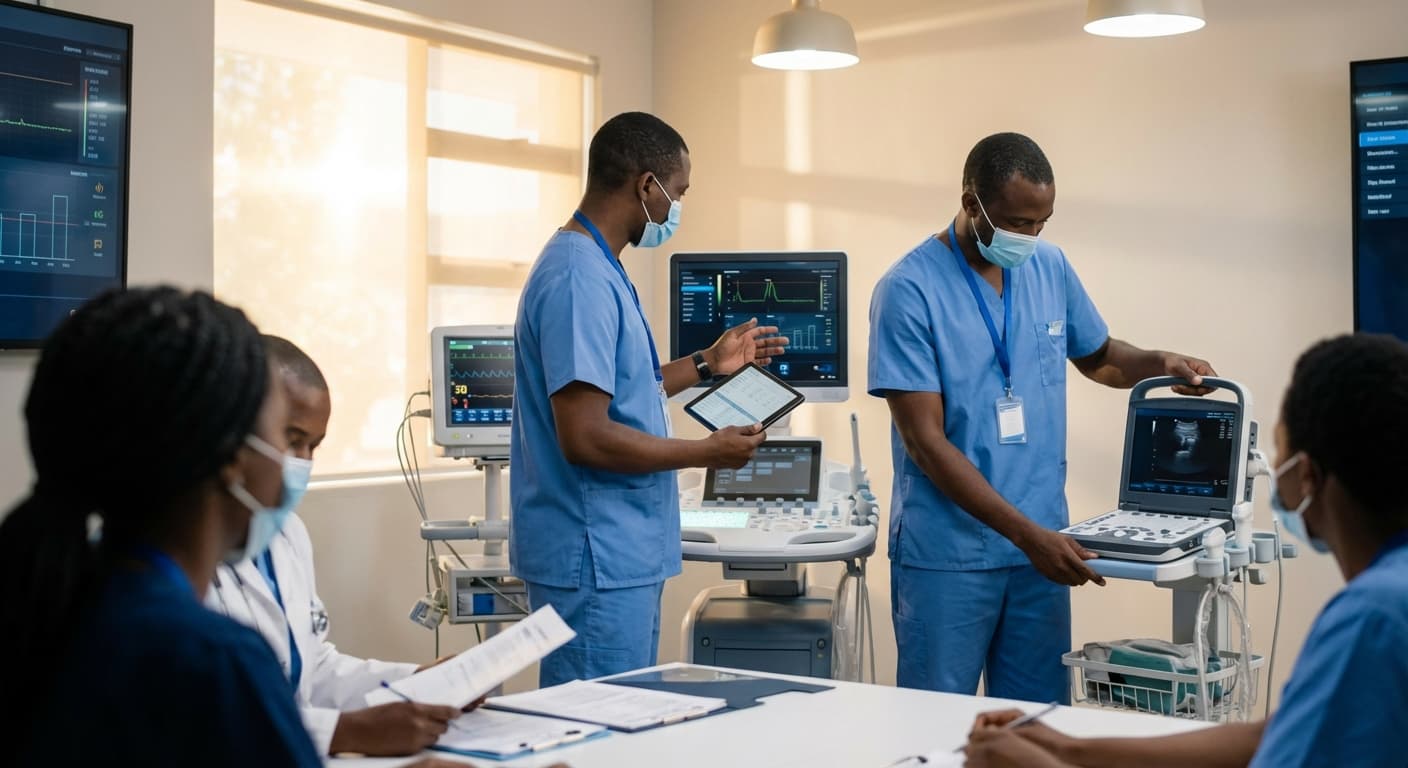
Clinical Needs Assessment for Medical Equipment in Ethiopia
Engineering Excellence & Technical Support
Clinical Needs Assessment for Medical Equipment High-standard technical execution following OEM protocols and local regulatory frameworks.
Optimized Medical Equipment Supply Chain Visibility
Leveraging data analytics and IoT sensors to provide real-time tracking of medical equipment from procurement to deployment in Ethiopian healthcare facilities. This enables proactive identification of stockouts, bottlenecks, and potential equipment failures, ensuring continuous availability for critical patient care.
Geo-Spatial Needs Assessment for Equitable Equipment Distribution
Utilizing GIS mapping and demographic data to identify underserved regions and prioritize medical equipment allocation in Ethiopia. This ensures that resources are directed to areas with the greatest need, improving access to essential healthcare services across diverse geographical and socioeconomic landscapes.
Integrated Equipment Training and Maintenance Planning
Developing a centralized platform that links equipment needs assessment with projected training requirements and maintenance schedules for healthcare professionals in Ethiopia. This proactive approach minimizes downtime, maximizes equipment lifespan, and ensures consistent operational readiness for advanced medical technologies.
What Is Clinical Needs Assessment For Medical Equipment In Ethiopia?
A Clinical Needs Assessment (CNA) for medical equipment in Ethiopia is a systematic process to identify, quantify, and prioritize the essential medical equipment required to deliver safe, effective, and equitable healthcare services across various healthcare facilities and levels within the country. This service involves a comprehensive evaluation of current healthcare needs, existing infrastructure, human resource capacity, patient demographics, disease burden, and national health policies. The objective is to ensure that medical equipment procurement, deployment, and maintenance are aligned with the actual clinical demands, thereby optimizing resource allocation and improving patient outcomes. The assessment considers factors such as technology appropriateness, cost-effectiveness, sustainability, and integration with existing systems.
| Who Needs a Clinical Needs Assessment? | Typical Use Cases | |||||
|---|---|---|---|---|---|---|
| Government Ministries and Agencies: (e.g., Ministry of Health, Regional Health Bureaus) for national health sector planning, budget allocation, and procurement strategies. | Healthcare Providers: Public and private hospitals, health centers, and clinics for their capital investment planning and service expansion. | International Development Partners and NGOs: Organizations funding healthcare projects and equipment donations to ensure alignment with Ethiopian health priorities and effective utilization. | Medical Equipment Manufacturers and Suppliers: To understand market demands and tailor their product offerings to the specific needs of Ethiopian healthcare facilities. | Research Institutions and Academia: For evidence-based policy development and to identify gaps in healthcare provision requiring new equipment or technologies. | ||
| Procurement of New Equipment: To justify and specify essential equipment for new facilities or for upgrading existing ones. | Replacement and Upgrade Planning: To determine when existing equipment is obsolete or no longer meeting clinical demands and to plan for replacements. | Resource Allocation and Budgeting: To inform budgetary decisions and ensure that funds are allocated to the most critical equipment needs. | Capacity Building Initiatives: To identify equipment-related training needs for healthcare professionals and biomedical engineers. | Programmatic Interventions: To equip specific programs (e.g., maternal and child health, infectious disease control) with the necessary medical devices. | Disaster Preparedness and Response: To identify essential equipment for emergency medical services and disaster relief efforts. | Private Sector Investment: To guide private investors in establishing new healthcare facilities or expanding existing services with appropriate equipment. |
Key Components of a Clinical Needs Assessment for Medical Equipment in Ethiopia
- Facility-Level Analysis: Evaluating the specific equipment needs of individual hospitals, health centers, and clinics based on their scope of services, patient volume, and specialty areas.
- Service Area Prioritization: Identifying critical healthcare services and geographic regions with the greatest unmet equipment needs.
- Technology Appraisal: Assessing the suitability, reliability, and maintainability of proposed medical technologies in the Ethiopian context, considering local expertise and spare parts availability.
- Human Resource Capacity Assessment: Determining the availability of trained personnel to operate and maintain the identified equipment.
- Infrastructure Review: Evaluating the existing power supply, space, and environmental conditions required for the installation and operation of specific equipment.
- Cost-Benefit Analysis: Assessing the economic viability of acquiring and maintaining proposed equipment, including procurement, installation, training, and ongoing operational costs.
- Sustainability Planning: Developing strategies for long-term equipment maintenance, repair, and eventual replacement, including service agreements and local capacity building.
- Regulatory Compliance Review: Ensuring that proposed equipment meets national and international safety and quality standards.
Who Needs Clinical Needs Assessment For Medical Equipment In Ethiopia?
A clinical needs assessment for medical equipment in Ethiopia is crucial for a wide range of stakeholders within the healthcare sector. It ensures that procurement decisions are aligned with actual patient care requirements, optimizing resource allocation and improving health outcomes. Without this vital step, institutions risk acquiring obsolete, inappropriate, or redundant equipment, leading to wasted finances and compromised service delivery. The process identifies gaps in existing equipment, forecasts future needs based on disease prevalence and population growth, and evaluates the suitability of available technologies in the Ethiopian context.
| Department/Unit | Key Needs Assessment Focus | Examples of Equipment Categories |
|---|---|---|
| Emergency Department | Resuscitation, trauma care, immediate diagnostic capabilities | Defibrillators, ventilators, ECG machines, portable X-ray, trauma kits |
| Surgical Wards & Operating Theatres | Surgical procedures, anesthesia, post-operative care | Surgical instruments, anesthesia machines, operating tables, surgical lights, patient monitors, electrosurgical units |
| Intensive Care Unit (ICU) | Critical patient monitoring and life support | Advanced ventilators, multi-parameter patient monitors, infusion pumps, dialysis machines, ECMO (in specialized centers) |
| Maternity & Neonatal Units | Antenatal care, delivery, neonatal resuscitation, intensive care for newborns | Ultrasound machines, fetal monitors, incubators, phototherapy units, radiant warmers, neonatal ventilators |
| Radiology & Imaging | Diagnostic imaging for various conditions | X-ray machines, CT scanners, MRI scanners, ultrasound machines, mammography units, PACS systems |
| Laboratory Services | Diagnostic testing for blood, urine, tissues, etc. | Hematology analyzers, biochemistry analyzers, microscopes, centrifuges, PCR machines, serology analyzers |
| Outpatient Departments (OPD) | General consultations, minor procedures, basic diagnostics | Stethoscopes, blood pressure monitors, diagnostic kits, examination tables, minor surgical sets |
| Rehabilitation Services | Physical therapy, occupational therapy, prosthetics/orthotics | Therapy equipment (exercise machines, weights), electrotherapy units, splints, braces |
| Pharmacy | Safe storage and dispensing of medications, compounding | Refrigerators, compounding equipment, dispensing systems |
| Sterilization & Central Sterile Supply Department (CSSD) | Decontamination and sterilization of medical instruments | Autoclaves, ultrasonic cleaners, instrument washers |
| Anesthesia Department | Anesthetic delivery and monitoring during procedures | Anesthesia machines, vaporizers, breathing circuits, capnography monitors |
Target Customers and Departments for Clinical Needs Assessment in Ethiopia
- {"title":"Hospitals (Federal, Regional, Zonal, Woreda)","description":"These are the primary institutions where the most comprehensive needs assessments are conducted due to the diverse range of services and patient populations they serve."}
- {"title":"Health Centers (Primary Healthcare Facilities)","description":"Essential for identifying basic equipment needs to provide essential healthcare services at the community level."}
- {"title":"Specialized Medical Centers and Institutes","description":"Facilities focusing on specific areas like oncology, cardiology, pediatrics, or diagnostics require specialized needs assessments."}
- {"title":"Medical Training Institutions (Universities, Colleges)","description":"To ensure their training facilities are equipped with modern and relevant medical equipment for educating future healthcare professionals."}
- {"title":"Government Ministries and Agencies (e.g., Ministry of Health, Regional Health Bureaus)","description":"For policy formulation, national health strategy development, and overall resource planning and allocation."}
- {"title":"Non-Governmental Organizations (NGOs) and International Organizations","description":"Implementing health projects and programs requiring specific equipment for their interventions."}
- {"title":"Private Healthcare Providers (Hospitals, Clinics, Diagnostic Centers)","description":"For their own operational planning and to ensure they meet national standards and patient expectations."}
Clinical Needs Assessment For Medical Equipment Process In Ethiopia
This document outlines the workflow for conducting a Clinical Needs Assessment for Medical Equipment in Ethiopia. The process is designed to ensure that medical facilities acquire equipment that is appropriate, sustainable, and meets the actual healthcare needs of the population. The workflow moves from an initial inquiry, through a detailed assessment, to the final execution of procurement and deployment.
| Stage | Key Objectives | Primary Stakeholders Involved | Key Deliverables |
|---|---|---|---|
| Inquiry and Initial Screening | Understand request, define scope, initial feasibility | Requesting facility, Regional Health Bureau, Ministry of Health (MoH) focal point | Confirmed scope, assigned assessment team |
| Data Collection and Analysis | Gather comprehensive data on needs, capacity, and gaps | Healthcare facility staff, MoH/Regional Health Bureau assessment team, potentially external consultants | Raw data, initial findings, equipment inventory, infrastructure assessment |
| Needs Validation and Prioritization | Confirm needs, rank by priority, develop equipment list | Healthcare facility management, clinical leads, MoH/Regional Health Bureau technical committee | Prioritized equipment list with specifications, needs validation report |
| Report Generation and Recommendation | Document findings and provide actionable recommendations | MoH/Regional Health Bureau assessment team, MoH equipment unit | Comprehensive needs assessment report, procurement recommendations |
| Procurement and Deployment | Acquire, install, and commission equipment | MoH procurement unit, suppliers, installation/commissioning teams, healthcare facility | Procured equipment, installed and commissioned equipment, trained staff |
| Monitoring and Evaluation | Ensure effective utilization, maintenance, and impact | Healthcare facility management, MoH/Regional Health Bureau monitoring teams, users | Performance reports, utilization data, maintenance logs, impact assessments |
Workflow Stages and Key Activities
- {"title":"Stage 1: Inquiry and Initial Screening","activities":["Receipt of inquiry/request from healthcare facility, regional health bureau, or Ministry of Health.","Initial review of the request for clarity, completeness, and justification.","Preliminary assessment of the facility's current infrastructure and existing equipment.","Determination of initial scope and objectives for the needs assessment.","Assignment of a lead assessor or assessment team."],"description":"This initial stage involves receiving and reviewing requests for needs assessments. It includes understanding the scope, identifying the requesting entity, and performing a preliminary check for feasibility and alignment with national health priorities."}
- {"title":"Stage 2: Data Collection and Analysis","activities":["Site visit to the healthcare facility.","Review of facility's operational plans, service delivery guidelines, and national standards.","Interviews with clinical staff (doctors, nurses, technicians), biomedical engineers, administrators, and procurement officers.","Inventory and condition assessment of existing medical equipment.","Analysis of patient caseload, disease burden, and service utilization patterns.","Assessment of available infrastructure (power, water, space, IT) for new equipment.","Evaluation of existing maintenance and repair capacity, including spare parts availability and skilled personnel.","Identification of critical equipment gaps and priorities based on clinical needs and impact."],"description":"This is the core of the needs assessment, involving detailed data gathering at the facility level. It focuses on understanding clinical services, patient demographics, existing equipment condition, maintenance capacity, and user needs."}
- {"title":"Stage 3: Needs Validation and Prioritization","activities":["Consolidation and analysis of all collected data.","Development of a draft list of required medical equipment, including specifications.","Validation of the draft list with facility management and key clinical personnel.","Prioritization of equipment needs based on impact, urgency, cost-effectiveness, and sustainability.","Consideration of essential equipment packages for different service levels.","Review and endorsement of the prioritized list by the relevant regional or national health authority."],"description":"The data collected is analyzed to identify and prioritize the most critical equipment needs. This stage involves validating findings with stakeholders and developing a clear list of required equipment."}
- {"title":"Stage 4: Report Generation and Recommendation","activities":["Preparation of a detailed clinical needs assessment report.","Inclusion of prioritized equipment list with technical specifications, estimated costs, and justification.","Recommendations for procurement strategies (e.g., tendering, framework agreements).","Recommendations for user training and technical training for maintenance staff.","Recommendations for establishing or strengthening maintenance and repair systems.","Development of a sustainability plan, including budget allocation for consumables and spare parts."],"description":"A comprehensive report is compiled, detailing the assessment findings and providing specific recommendations for equipment procurement, installation, training, and maintenance."}
- {"title":"Stage 5: Procurement and Deployment","activities":["Development of tender documents based on the needs assessment report.","Procurement process (tendering, evaluation, contract awarding).","Delivery of medical equipment to the facility.","Installation and commissioning of equipment by qualified personnel.","User training and orientation on new equipment.","Technical training for maintenance staff.","Handover of equipment to the healthcare facility with proper documentation."],"description":"This stage involves the actual procurement of the identified equipment, followed by its installation, commissioning, and handover to the healthcare facility."}
- {"title":"Stage 6: Monitoring and Evaluation","activities":["Post-installation monitoring of equipment performance.","Assessment of utilization rates and impact on service delivery.","Evaluation of the effectiveness of training programs.","Monitoring of maintenance and repair activities and spare parts availability.","Periodic review of equipment status and identification of any emerging issues.","Feedback collection from users and maintenance staff."],"description":"Following deployment, ongoing monitoring and evaluation are crucial to ensure the equipment is being used effectively, maintained properly, and is contributing to improved healthcare outcomes."}
Clinical Needs Assessment For Medical Equipment Cost In Ethiopia
This document outlines a clinical needs assessment for medical equipment in Ethiopia, focusing on pricing factors and typical cost ranges in the local currency, Ethiopian Birr (ETB). Understanding these elements is crucial for effective procurement, budgeting, and ensuring equitable access to healthcare services across the nation. The assessment considers a wide spectrum of equipment, from basic consumables to sophisticated diagnostic and therapeutic devices. Several key factors influence the cost of medical equipment in Ethiopia, including import duties and taxes, manufacturer and supplier markups, shipping and logistics expenses, currency exchange rates, and the level of technology and brand reputation. The demand for specific equipment, availability of local alternatives or service infrastructure, and government regulations also play a significant role. The following sections detail these pricing factors and provide estimated ranges for common medical equipment categories.
| Equipment Category | Typical Unit (ETB) | Estimated Price Range (ETB) |
|---|---|---|
| Basic Diagnostic Tools (e.g., Stethoscope, Blood Pressure Monitor) | Unit | 1,000 - 15,000 |
| Laboratory Equipment (e.g., Microscope, Centrifuge, Basic Hematology Analyzer) | Unit | 50,000 - 1,000,000+ |
| Imaging Equipment (e.g., X-ray Machine, Ultrasound) | Unit | 500,000 - 10,000,000+ |
| Surgical Instruments (Set) | Set | 10,000 - 100,000+ |
| Anesthesia Machines | Unit | 200,000 - 1,500,000+ |
| Patient Monitors | Unit | 50,000 - 300,000+ |
| Infusion Pumps and Syringe Pumps | Unit | 30,000 - 200,000+ |
| Ventilators (Basic to Advanced) | Unit | 200,000 - 2,000,000+ |
| Dental Chairs and Equipment | Set/Unit | 100,000 - 1,000,000+ |
| Consumables (e.g., Syringes, Gloves, Bandages - per pack/box) | Pack/Box | 50 - 1,000 |
| Sterilization Equipment (e.g., Autoclave) | Unit | 50,000 - 500,000+ |
Key Pricing Factors for Medical Equipment in Ethiopia
- {"item":"Import Duties and Taxes","description":"Ethiopia imposes import duties and Value Added Tax (VAT) on most imported goods, including medical equipment. These can add a substantial percentage to the base cost of the equipment."}
- {"item":"Manufacturer and Supplier Markups","description":"Manufacturers add their profit margins. Local distributors and suppliers also factor in their operational costs and profit expectations, which can vary significantly."}
- Shipping and Logistics
- Currency Exchange Rates
- Technology and Brand Reputation
- After-Sales Service and Maintenance
- Local Availability and Competition
- Government Regulations and Standards
Affordable Clinical Needs Assessment For Medical Equipment Options
This document outlines strategies for conducting an affordable clinical needs assessment for medical equipment, focusing on value bundles and cost-saving opportunities. A comprehensive needs assessment is crucial for ensuring healthcare facilities acquire the right equipment, avoiding unnecessary expenditures, and optimizing patient care. By understanding 'value bundles' and implementing effective cost-saving strategies, organizations can maximize their return on investment and improve operational efficiency.
| Strategy | Description | Cost-Saving Benefit |
|---|---|---|
| Value Bundling | Negotiating for packages that include equipment, installation, training, extended warranties, and often consumables at a reduced overall price compared to purchasing each component separately. | Reduced acquisition cost, simplified procurement, predictable budgeting, minimized administrative overhead. |
| Leasing vs. Purchasing | Evaluating whether leasing equipment offers a more flexible and cost-effective solution, especially for rapidly evolving technologies or for facilities with fluctuating capital budgets. | Lower upfront capital outlay, predictable monthly expenses, easier upgrade paths, avoidance of obsolescence risk. |
| Refurbished or Pre-owned Equipment | Exploring certified refurbished medical equipment from reputable vendors, which can offer significant savings while meeting performance and safety standards. | Substantial reduction in purchase price compared to new equipment, often with warranties. |
| Standardization | Adopting a limited range of equipment models or brands across departments where feasible, simplifying training, maintenance, and inventory management. | Bulk purchasing discounts, reduced training costs, streamlined spare parts management, improved interoperability. |
| Long-Term Service Agreements | Negotiating comprehensive service contracts that cover preventative maintenance, repairs, and potentially parts, to avoid unexpected high repair bills. | Predictable maintenance costs, reduced downtime, extended equipment lifespan, protection against costly emergency repairs. |
| Consumables Management | Negotiating bulk discounts on necessary consumables or exploring alternative, cost-effective suppliers once equipment is chosen. | Reduced ongoing operational expenses, potential for significant savings over the equipment's lifecycle. |
| Technology Assessment | Carefully evaluating the true necessity of the latest technological features. Often, slightly older but proven models can meet clinical needs at a lower price point. | Avoidance of premium pricing for unneeded advanced features, greater likelihood of proven reliability. |
Key Considerations for Affordable Clinical Needs Assessment
- Define Clear Clinical Objectives: Understand the specific patient populations, procedures, and diagnostic needs the equipment will serve.
- Involve Stakeholders: Include clinicians, IT personnel, biomedical engineers, and procurement specialists in the assessment process.
- Prioritize Essential Functions: Differentiate between 'must-have' features and 'nice-to-have' functionalities to avoid overspending on advanced, underutilized capabilities.
- Assess Current Infrastructure: Evaluate existing systems, power, space, and IT compatibility to identify potential integration costs or upgrades.
- Research Market Trends: Stay informed about technological advancements and emerging solutions that might offer better value or lower long-term costs.
- Consider Total Cost of Ownership (TCO): Beyond the initial purchase price, factor in maintenance, service contracts, consumables, training, and potential disposal costs.
Verified Providers In Ethiopia
In Ethiopia's evolving healthcare landscape, identifying reliable and competent medical providers is paramount for ensuring quality care. Franance Health stands out as a distinguished entity, offering a comprehensive network of verified healthcare professionals and facilities. Their rigorous credentialing process, coupled with a commitment to patient well-being and ethical practices, positions them as the superior choice for individuals seeking trusted medical services in Ethiopia. This commitment translates into a higher standard of care, increased patient safety, and a more positive healthcare experience.
| Provider Type | Franance Health Verification Standard | Benefits for Patients |
|---|---|---|
| Doctors (General & Specialists) | Validated Medical Degrees, Licenses, Board Certifications, and relevant experience. | Access to highly qualified and experienced medical professionals, ensuring accurate diagnoses and effective treatment plans. |
| Hospitals & Clinics | Accreditation status, adherence to hygiene and safety protocols, availability of essential equipment, and staff qualifications. | Treatment in safe, well-equipped facilities with competent medical teams, leading to better health outcomes and patient satisfaction. |
| Diagnostic Laboratories | Licensing, quality control measures, certified technicians, and up-to-date equipment. | Reliable and accurate diagnostic results crucial for effective medical decision-making. |
| Pharmacies | Valid operational licenses, qualified pharmacists, and adherence to drug dispensing regulations. | Access to genuine medications dispensed by knowledgeable professionals, ensuring patient safety and efficacy. |
Key Pillars of Franance Health's Credibility:
- Rigorous Vetting Process: Franance Health employs a multi-faceted approach to verify the credentials, qualifications, and experience of every healthcare professional and facility within their network. This includes scrutinizing educational backgrounds, professional licenses, specialized training, and previous performance records.
- Commitment to Ethical Practice: Adherence to the highest ethical standards is non-negotiable. Franance Health ensures all its providers operate with integrity, transparency, and a patient-centric approach, prioritizing well-being and informed consent.
- Continuous Quality Improvement: Beyond initial verification, Franance Health actively monitors and evaluates the performance of its network. This ongoing assessment allows for the identification of areas for improvement and ensures that providers consistently meet and exceed established quality benchmarks.
- Patient-Centric Approach: The focus is always on the patient. Franance Health aims to connect individuals with providers who are not only medically competent but also compassionate, communicative, and dedicated to delivering personalized care.
- Accessibility and Network Breadth: Franance Health offers access to a wide array of specialists and facilities across Ethiopia, making it easier for patients to find the right care, regardless of their location or specific medical needs.
Scope Of Work For Clinical Needs Assessment For Medical Equipment
This document outlines the Scope of Work (SOW) for a Clinical Needs Assessment (CNA) for medical equipment. The purpose of this assessment is to systematically identify, evaluate, and prioritize the medical equipment requirements for a specific healthcare facility or department. This will ensure that procured equipment aligns with clinical needs, enhances patient care, and optimizes resource utilization. The SOW details the objectives, methodology, deliverables, and standard specifications to be adhered to during the assessment process.
| Phase/Activity | Description | Key Deliverables | Standard Specifications/Considerations |
|---|---|---|---|
| Define project scope, objectives, timeline, stakeholders, and reporting structure. | Project Charter, Stakeholder Register, Communication Plan, Risk Assessment. | Alignment with organizational strategy, regulatory requirements, and patient safety standards. |
| Gather information on current services, patient demographics, clinical workflows, existing equipment inventory, and performance data. Conduct interviews and surveys with clinical staff, administrators, and IT personnel. | Current State Analysis Report, Stakeholder Feedback Summary, Equipment Inventory Database. | HIPAA compliance for patient data, data integrity, anonymization where necessary, user-friendliness of data collection tools. |
| Identify gaps in current equipment provision, evaluate unmet clinical needs, and assess opportunities for technology adoption. Prioritize needs based on clinical impact, patient safety, efficiency gains, and cost-effectiveness. | Needs Prioritization Matrix, Gap Analysis Report, List of Prioritized Equipment Requirements. | Evidence-based practice, clinical outcome improvement potential, return on investment (ROI) considerations, availability of local technical support. |
| Develop detailed technical specifications for each prioritized piece of medical equipment, including functional requirements, performance characteristics, safety features, compatibility, and maintenance needs. | Technical Specification Documents (per equipment type), Functional Requirement Lists. | International Electrotechnical Commission (IEC) standards, ISO standards, FDA clearance/CE marking, interoperability standards (e.g., HL7, DICOM), energy efficiency standards, ergonomic design principles. |
| Review and validate the identified needs and developed specifications with key stakeholders. Compile a comprehensive final report summarizing findings, recommendations, and the procurement roadmap. | Final Needs Assessment Report, Executive Summary, Recommended Procurement Plan, Training Needs Assessment (initial). | Clarity, conciseness, actionable recommendations, adherence to formatting and reporting guidelines, stakeholder sign-off. |
Key Objectives of the Clinical Needs Assessment
- To identify current and future clinical demands and service requirements.
- To assess the adequacy and performance of existing medical equipment.
- To determine specific equipment needs based on clinical pathways, patient populations, and technological advancements.
- To prioritize equipment acquisition based on clinical impact, urgency, and budget constraints.
- To define technical specifications, functional requirements, and performance criteria for new equipment.
- To ensure compliance with relevant regulatory standards, safety guidelines, and infection control protocols.
- To provide a roadmap for equipment procurement, integration, and lifecycle management.
Service Level Agreement For Clinical Needs Assessment For Medical Equipment
This Service Level Agreement (SLA) outlines the response times and uptime guarantees for the Clinical Needs Assessment (CNA) service provided for medical equipment. This SLA ensures that critical clinical needs related to medical equipment are addressed promptly and that the assessment platform remains reliably available to facilitate efficient planning and procurement.
| Service Component | Response Time Target | Resolution Time Target | Uptime Guarantee |
|---|---|---|---|
| Critical Issue Support (e.g., platform inaccessibility preventing essential CNA completion) | Within 2 business hours | Within 8 business hours | 99.5% |
| High Priority Issue Support (e.g., significant functionality bug impacting report generation) | Within 4 business hours | Within 16 business hours | 99.5% |
| Medium Priority Issue Support (e.g., minor usability issue, question about feature) | Within 1 business day | Within 3 business days | 99.5% |
| Low Priority Issue Support (e.g., feature request, general inquiry) | Within 2 business days | Best effort, subject to release cycles | 99.5% |
| Platform Availability (for access and use of CNA tools) | N/A | N/A | 99.8% (excluding scheduled maintenance) |
Scope of Service
- The Clinical Needs Assessment (CNA) service encompasses the process of evaluating, documenting, and prioritizing the clinical requirements for new, replacement, or upgraded medical equipment.
- This includes functionalities for data collection, stakeholder input, requirement analysis, and report generation related to clinical efficacy, patient safety, and operational integration.
- The service is accessible via a dedicated web portal/platform.
- Support for the CNA service includes technical assistance for platform access and functionality, and guidance on the CNA process itself.
Frequently Asked Questions

Ready when you are
Let's scope your Clinical Needs Assessment for Medical Equipment in Ethiopia project in Ethiopia.

Scaling healthcare logistics and technical systems across the entire continent.