
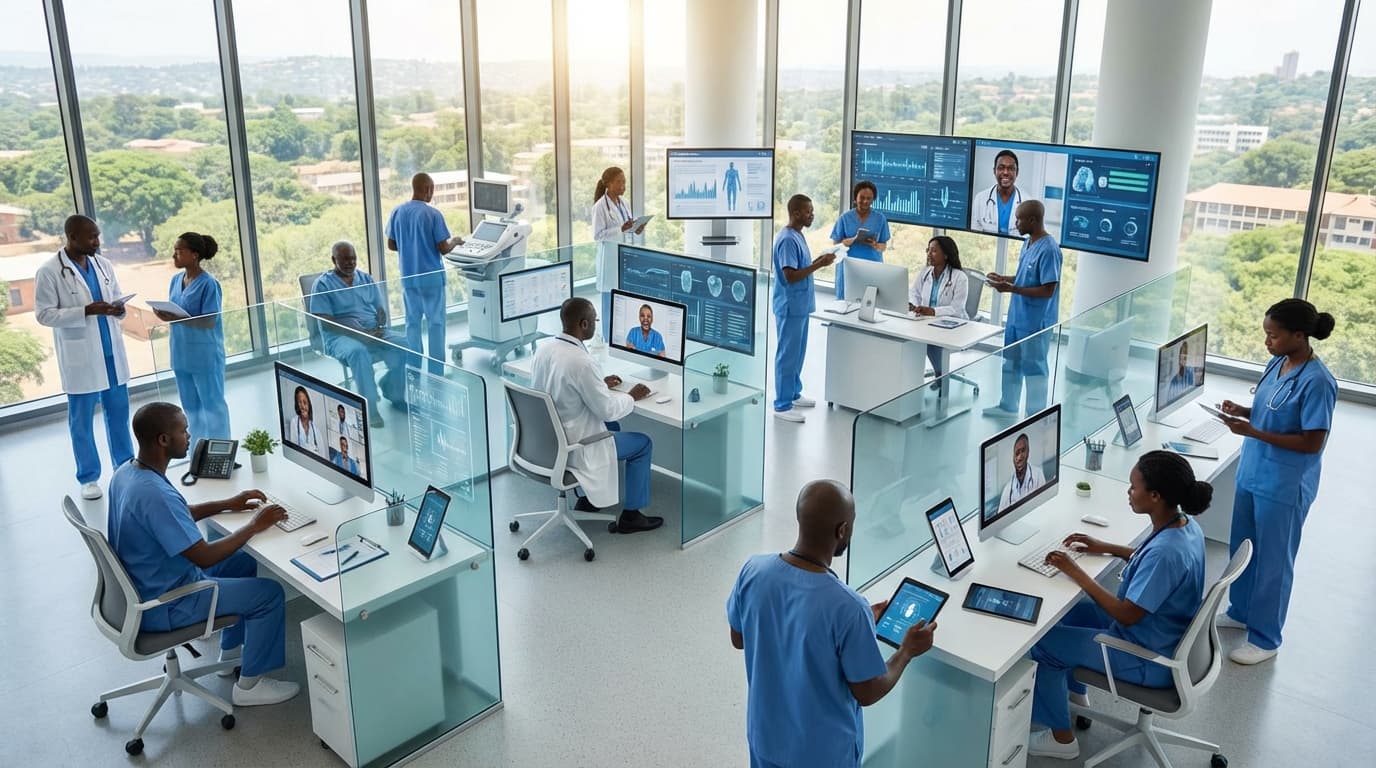
PACS/RIS Migration & Integration in Ethiopia
Engineering Excellence & Technical Support
Data migration, interoperability and workflow integration for imaging IT. High-standard technical execution following OEM protocols and local regulatory frameworks.
Scalable Cloud PACS Infrastructure
Implemented a robust, cloud-based Picture Archiving and Communication System (PACS) infrastructure, enabling scalable storage, secure data access, and efficient image retrieval across multiple healthcare facilities in Ethiopia. This includes leveraging resilient cloud services to ensure high availability and disaster recovery.
Seamless RIS-EHR Interoperability
Successfully integrated the Radiology Information System (RIS) with existing Electronic Health Records (EHR) systems in Ethiopian hospitals. This achieved bi-directional data flow, ensuring seamless transfer of patient demographics, study orders, and reports, thereby improving workflow efficiency and reducing data redundancy.
Secure Data Management & Compliance
Established stringent data security protocols and ensured compliance with relevant Ethiopian healthcare data privacy regulations for the PACS/RIS migration. This included implementing advanced encryption, access controls, and audit trails to safeguard sensitive patient information throughout the transition and ongoing operations.
What Is Pacs/ris Migration & Integration In Ethiopia?
PACS/RIS Migration & Integration in Ethiopia refers to the strategic process of transferring, consolidating, and interoperating Picture Archiving and Communication Systems (PACS) and Radiology Information Systems (RIS) within healthcare facilities in Ethiopia. This service is critical for modernizing medical imaging workflows, enhancing data accessibility, and improving diagnostic efficiency. It encompasses the planning, execution, and validation of moving existing PACS/RIS data and functionalities to a new, unified platform, or integrating disparate systems to enable seamless data flow and communication between imaging devices, archival storage, reporting workstations, and administrative/clinical systems. The objective is to establish a robust, scalable, and interoperable IT infrastructure for radiology and beyond.
| Use Case | Description | Benefits |
|---|---|---|
| Interoperability with EMR/EHR Systems | Enabling seamless access to patient imaging studies and reports directly from the Electronic Medical Record (EMR) or Electronic Health Record (EHR). | Improved clinical decision-making, reduced duplicate studies, enhanced patient care coordination. |
| Centralized Image Archiving | Consolidating imaging data from multiple modalities and locations into a single, unified repository. | Streamlined data retrieval, reduced storage costs, enhanced data security and disaster recovery. |
| Remote Access & Teleradiology | Allowing authorized radiologists and clinicians to access and interpret images from any location, facilitating remote consultations and teleradiology services. | Expanded access to specialist expertise, improved turnaround times for reports, reduced geographical barriers to care. |
| Workflow Automation | Automating tasks such as image routing, study prioritization, report distribution, and billing processes. | Increased radiologist efficiency, reduced administrative burden, minimized errors, faster report turnaround. |
| System Consolidation & Decommissioning | Migrating from multiple legacy, standalone PACS/RIS to a single, modern, and integrated platform, allowing for the decommissioning of older systems. | Reduced IT complexity and maintenance costs, improved system reliability and scalability, enhanced security posture. |
| Data Analytics & Quality Improvement | Utilizing aggregated imaging data for performance monitoring, quality assurance, research, and predictive analytics. | Identification of trends, optimization of resource allocation, improvement of diagnostic accuracy, support for evidence-based medicine. |
Typical Use Cases
- Hospitals (Public & Private): Centralized facilities with high volumes of imaging studies requiring efficient management and access.
- Diagnostic Imaging Centers: Specialized clinics focused on providing imaging services to multiple referring physicians and institutions.
- Poly-clinics & Large Healthcare Groups: Multi-site organizations needing to standardize imaging workflows and centralize data management.
- Government Health Ministries & Regional Health Bureaus: Entities responsible for overseeing and standardizing healthcare IT infrastructure across national or regional levels.
- Research Institutions: Requiring access to anonymized imaging data for scientific studies and advancements.
Who Needs Pacs/ris Migration & Integration In Ethiopia?
The adoption and integration of Picture Archiving and Communication Systems (PACS) and Radiology Information Systems (RIS) are crucial for modernizing healthcare infrastructure in Ethiopia. PACS/RIS migration and integration are essential for organizations looking to improve the efficiency, accuracy, and accessibility of medical imaging and radiology services. This not only enhances patient care but also supports research, education, and data-driven decision-making within healthcare institutions.
| Target Customer/Organization | Key Departments Benefiting | Primary Needs Addressed | Potential Impact |
|---|---|---|---|
| Public Hospitals (Federal & Regional) | Radiology Department, Cardiology, Neurology, Oncology, Orthopedics, Pathology, IT Department, Administration | Improved image management, digital workflow, remote access for consultations, data archiving for audits and research, reduced reliance on physical films, enhanced interoperability with Electronic Health Records (EHRs). | Increased diagnostic speed and accuracy, reduced operational costs, improved patient throughput, enhanced capacity for serving remote areas, better disease surveillance and public health monitoring. |
| Private Hospitals & Diagnostic Centers | Radiology Department, All Clinical Departments, IT, Administration, Billing & Finance | Competitive edge through advanced imaging capabilities, streamlined reporting and billing, patient data security and privacy, enhanced patient experience, marketing of advanced services. | Attraction of more patients and referring physicians, increased revenue, improved service quality, streamlined administrative processes, ability to offer specialized imaging services. |
| Tertiary Care & Referral Hospitals | Radiology, All Specialized Clinical Departments, Research & Education Units, IT, Administration | Centralized imaging repository, advanced image analysis tools, seamless integration with existing EHR/HIS, support for complex multi-disciplinary consultations, robust data for research and clinical trials. | Facilitation of advanced diagnostics and treatments, improved collaboration among specialists, acceleration of medical research, enhanced educational opportunities for medical professionals, national leadership in specialized care. |
| Medical Training & Research Institutions | Radiology Department, Pathology, Anatomy, Biomedical Engineering, Research Departments, Libraries | Access to large datasets of anonymized images for training and research, development of AI-driven diagnostic tools, simulation and learning platforms, historical data for longitudinal studies. | Advancement of medical knowledge and innovation, development of local expertise in medical imaging, contribution to evidence-based medicine, training of future radiologists and healthcare professionals. |
| Government Health Ministries & Agencies | Public Health Departments, Planning & Monitoring Units, Health Information Management, Disease Surveillance | Centralized overview of imaging services and resource allocation, data for national health policy formulation and evaluation, support for public health initiatives and outbreak management, standardization of imaging protocols. | Informed health policy decisions, efficient resource allocation, improved national health outcomes, better preparedness for health emergencies, promotion of equitable access to advanced diagnostics. |
Target Customers & Departments for PACS/RIS Migration & Integration in Ethiopia:
- Hospitals (Public & Private)
- Tertiary Care Centers
- Referral Hospitals
- Diagnostic Imaging Centers
- Medical Training & Research Institutions
- Government Health Ministries & Agencies
Pacs/ris Migration & Integration Process In Ethiopia
This document outlines the typical workflow for a PACS/RIS (Picture Archiving and Communication System/Radiology Information System) migration and integration process within the Ethiopian healthcare context. It covers the entire lifecycle from the initial inquiry to the final execution and post-implementation support. The process is structured to ensure a smooth transition, minimize disruption to clinical operations, and maximize the benefits of the new system.
| Phase | Key Stages | Activities | Deliverables | Ethiopian Context Considerations |
|---|---|---|---|---|
| Phase 1: Pre-Migration & Planning | Initial Inquiry & Vendor Selection | Contacting potential vendors, Request for Proposal (RFP) issuance, vendor demonstrations, technical and financial evaluation, contract negotiation. | Selected Vendor, Signed Contract, Project Scope Document, Budget Allocation. | Understanding local regulatory requirements (e.g., Ministry of Health guidelines), existing IT infrastructure limitations, potential challenges with foreign exchange for payments, identifying local IT support partners. |
| Needs Assessment & Workflow Analysis | Detailed analysis of current PACS/RIS functionalities, radiology workflow, user roles, data storage needs, and integration points with other hospital systems (HIS, EMR). | Detailed Requirements Document, Workflow Maps, Gap Analysis Report. | Mapping existing workflows to potential system improvements, considering language barriers in training materials, understanding the capacity of existing IT staff. | |
| Project Planning & Team Formation | Developing a comprehensive project plan (timeline, resources, budget), establishing a dedicated project team (including IT, radiology, clinical staff, and vendor representatives). | Project Plan, Project Team Charter, Communication Plan. | Ensuring representation from key stakeholders, identifying key champions within the hospital, establishing clear lines of communication with the Ministry of Health if required. | |
| Phase 2: System Design & Configuration | System Architecture Design | Defining the overall architecture of the PACS/RIS, including hardware, software, network requirements, and data storage solutions. | System Architecture Diagram, Hardware/Software Specification. | Considering the availability and reliability of internet connectivity, power supply stability, and local availability of hardware components. |
| System Configuration & Customization | Configuring the PACS/RIS software based on the detailed requirements, including user roles, permissions, study protocols, report templates, and integration parameters. | Configured PACS/RIS System, Customized Report Templates, User Role Matrix. | Adapting templates to local language and terminology, ensuring compatibility with existing equipment and modalities. | |
| Phase 3: Data Migration & Validation | Data Extraction & Cleansing | Extracting existing patient and imaging data from the old PACS/RIS, identifying and cleansing duplicate or erroneous data. | Extracted Data Files, Data Cleansing Report. | Addressing potential data corruption issues in legacy systems, considering the volume of data and available bandwidth for transfer. |
| Data Migration Strategy & Execution | Developing a strategy for migrating data (e.g., full migration, phased migration, historical data archiving), executing the migration process. | Migrated Data, Data Migration Log. | Minimizing downtime during migration, planning for potential data loss and backup strategies, considering the cost and time involved in migrating large datasets. | |
| Data Validation & Verification | Verifying the integrity and accuracy of migrated data in the new PACS/RIS, ensuring all relevant studies and patient information are present and correct. | Data Validation Report, Exception Report. | Involving radiology staff in the validation process to ensure clinical accuracy. | |
| Phase 4: System Integration & Testing | Integration with Other Systems | Integrating the PACS/RIS with existing hospital systems such as HIS, EMR, and billing systems, ensuring seamless data flow. | Integrated Systems, HL7/DICOM Conformance Statements. | Understanding and adhering to local healthcare data standards, potentially requiring custom integration modules. |
| User Acceptance Testing (UAT) | End-users (radiologists, technologists, administrators) test the system functionalities to ensure it meets their requirements and is user-friendly. | UAT Test Cases, UAT Sign-off Report. | Conducting UAT with a diverse group of users to identify any usability issues and ensure smooth adoption. | |
| Performance & Stress Testing | Testing the system's performance under various load conditions to ensure stability and responsiveness. | Performance Test Results, Load Test Reports. | Considering potential network limitations and hardware constraints in the local environment. | |
| Phase 5: Training & Go-Live | User Training | Comprehensive training for all users on the functionalities of the new PACS/RIS, including hands-on sessions and practical exercises. | Training Materials, Trained User List, Post-Training Assessment. | Providing training in local languages, tailoring training content to specific user roles, considering different levels of IT literacy. |
| Go-Live Preparation | Final system checks, data verification, and development of a go-live checklist to ensure a smooth transition. | Go-Live Checklist, Communication Plan for Go-Live. | Planning for phased go-live if necessary, communicating go-live dates and expectations to all stakeholders. | |
| Go-Live Execution | The official launch of the new PACS/RIS system, with intensive on-site support from the vendor and project team. | Live PACS/RIS System, Go-Live Support Team. | Ensuring 24/7 support during the initial go-live period, managing any immediate issues or disruptions. | |
| Phase 6: Post-Implementation Support & Optimization | Post-Go-Live Support | Providing ongoing technical support, troubleshooting issues, and addressing user feedback after the system is live. | Help Desk Support, Issue Resolution Log. | Establishing a sustainable local support model, identifying and training local IT personnel for first-level support. |
| System Optimization & Performance Tuning | Monitoring system performance, identifying areas for improvement, and implementing optimizations to enhance efficiency. | Performance Monitoring Reports, Optimization Recommendations. | Regularly assessing system usage and user feedback to identify areas for further training or system adjustments. | |
| Ongoing Maintenance & Upgrades | Implementing regular system maintenance, security updates, and planned software upgrades to ensure the system remains current and secure. | Maintenance Schedule, Upgrade Plan. | Considering the availability of skilled IT professionals for maintenance, planning for potential downtime during upgrades. |
PACS/RIS Migration & Integration Workflow in Ethiopia
- Phase 1: Pre-Migration & Planning
- Phase 2: System Design & Configuration
- Phase 3: Data Migration & Validation
- Phase 4: System Integration & Testing
- Phase 5: Training & Go-Live
- Phase 6: Post-Implementation Support & Optimization
Pacs/ris Migration & Integration Cost In Ethiopia
Migrating and integrating Picture Archiving and Communication Systems (PACS) and Radiology Information Systems (RIS) in Ethiopia involves a complex set of factors that influence the overall cost. These systems are crucial for modern healthcare facilities, enabling efficient management of medical images and patient data. The pricing is not standardized and can vary significantly based on the scale of the institution, the chosen vendor, the complexity of the integration, and the specific features required. It's essential for Ethiopian healthcare providers to understand these elements to budget effectively. The costs can be broken down into several key categories, including software licensing, hardware acquisition, implementation services, training, and ongoing support and maintenance. Furthermore, the local economic conditions and the availability of specialized IT personnel in Ethiopia play a considerable role in shaping the final price.
| Cost Component | Estimated Range (ETB) | Notes |
|---|---|---|
| Software Licensing (Perpetual) | 500,000 - 5,000,000+ | Varies greatly by vendor, modules, and user count. Can be higher for advanced features. |
| Software Licensing (Subscription/SaaS) | 50,000 - 500,000+ per year | Lower upfront cost, but ongoing operational expense. Dependent on user count and modules. |
| Hardware (Servers, Storage, Workstations) | 300,000 - 3,000,000+ | Includes PACS server, RIS database server, radiologists' workstations, archive storage. Scales with institution size. |
| Network Infrastructure Upgrades | 50,000 - 500,000+ | If existing network is insufficient for high-resolution image transfer. |
| Implementation & Customization Services | 200,000 - 2,000,000+ | Vendor fees for setup, configuration, workflow adaptation, and project management. |
| Data Migration Services | 50,000 - 1,000,000+ | Dependent on the volume and complexity of legacy data. Can involve specialized tools. |
| Training | 50,000 - 500,000+ | For all user groups. Includes on-site or remote training sessions. |
| Annual Support & Maintenance (Software) | 10% - 20% of software license cost per year | Typically includes software updates and technical support. |
| Annual Support & Maintenance (Hardware) | 5% - 15% of hardware cost per year | Covers hardware repairs and technical assistance. |
| Contingency/Unforeseen Costs | 10% - 15% of total project cost | Recommended for unexpected challenges or scope changes. |
Key Pricing Factors for PACS/RIS Migration & Integration in Ethiopia:
- Institution Size & Scope: The number of radiology departments, imaging modalities (X-ray, CT, MRI, Ultrasound, etc.), user licenses required, and the volume of images to be migrated directly impact costs. Larger hospitals with multiple sites will naturally incur higher expenses.
- Software Licensing Model: This can be a one-time perpetual license or a recurring subscription-based model (SaaS). SaaS models often have lower upfront costs but higher long-term expenses. Vendor-specific licensing structures need careful evaluation.
- Hardware Infrastructure: Costs include servers (for PACS archive and RIS database), workstations for radiologists and technicians, network upgrades, storage solutions (SAN/NAS), and potentially new or upgraded imaging equipment with DICOM compatibility.
- Integration Complexity: Integrating the PACS/RIS with existing hospital information systems (HIS), electronic health records (EHRs), and various imaging modalities can be complex and require custom development, increasing costs.
- Data Migration: The volume and format of existing legacy data to be migrated from older systems or archives will significantly affect the time and resources needed, hence the cost.
- Implementation & Customization Services: This includes vendor-provided services for installation, configuration, customization to specific workflows, system testing, and project management. The level of customization required will directly influence this cost component.
- Training: Comprehensive training for radiologists, technologists, IT staff, and administrators on how to effectively use the new PACS/RIS is essential and represents a significant cost.
- Vendor Selection: Different vendors have varying pricing structures, feature sets, and levels of support. Choosing a local Ethiopian vendor might offer cost advantages in terms of support and understanding local regulations, but international vendors might offer more advanced features.
- Ongoing Support & Maintenance: Annual maintenance contracts (AMCs) for software and hardware, software updates, and technical support are recurring costs that need to be factored into the total cost of ownership.
- Local Currency Fluctuations & Import Duties: As much of the hardware and specialized software might be imported, exchange rate fluctuations and import duties in Ethiopia can significantly impact the final Birr (ETB) cost.
- IT Infrastructure Readiness: The existing IT infrastructure's capacity and readiness for such systems can influence costs. Upgrades to network bandwidth, power, and cooling might be necessary.
Affordable Pacs/ris Migration & Integration Options
Migrating and integrating Picture Archiving and Communication Systems (PACS) and Radiology Information Systems (RIS) can be a significant undertaking for healthcare providers. However, strategic planning and leveraging value bundles and cost-saving strategies can make this process more affordable and efficient. This document outlines key considerations, value bundle options, and actionable cost-saving measures to achieve successful and budget-conscious PACS/RIS migration and integration.
| Value Bundle Type | Description | Potential Cost Savings | Considerations |
|---|---|---|---|
| All-in-One Solution (Integrated PACS/RIS) | A single vendor provides a unified PACS and RIS platform, often with pre-built integrations. | Reduced integration costs and complexities; streamlined vendor management; potentially discounted pricing for bundled services. | Ensure the integrated solution meets all specific departmental needs; evaluate vendor's support for both components. |
| Modular Bundles | Vendors offer packages of core PACS and RIS functionalities, with optional modules for advanced features. | Pay only for necessary functionalities; allows for phased upgrades and budget management; scalable to evolving needs. | Carefully assess which modules are truly essential; understand the cost of future add-ons. |
| Cloud-Based Bundles (SaaS) | Subscription-based access to PACS/RIS software and infrastructure hosted by the vendor. | Lower upfront capital expenditure; predictable monthly/annual costs; reduced IT infrastructure and maintenance burden; automatic updates and scalability. | Reliance on vendor's uptime and security; potential long-term subscription costs; data ownership and access concerns. |
| Managed Services Bundles | Includes software, hardware, implementation, ongoing support, and maintenance as a comprehensive package. | Predictable operational expenses; offloads IT management responsibilities; expert support for troubleshooting and optimization. | May have higher recurring costs than à la carte options; ensure service level agreements (SLAs) are robust. |
| Interoperability-Focused Bundles | Bundles specifically designed to facilitate seamless integration with existing EMR/EHR and other healthcare systems. | Reduced custom integration development costs; faster implementation timelines for interoperability; improved data flow and workflow efficiency. | Verify compatibility with all existing systems; ensure adherence to industry standards (e.g., HL7, FHIR). |
Key Considerations for Affordable PACS/RIS Migration & Integration
- Define Clear Objectives: Understand the specific needs and goals for the new PACS/RIS, including desired functionalities, interoperability requirements, and future scalability.
- Thorough Vendor Evaluation: Research and compare vendors based on functionality, pricing, support, implementation timelines, and proven track record.
- Data Migration Strategy: Plan the approach for migrating existing imaging data, considering data volume, format, retention policies, and the need for archiving.
- Interoperability Requirements: Ensure the new system can seamlessly integrate with existing EMR/EHR, other departmental systems, and potentially external healthcare networks.
- Training and Support: Budget for comprehensive user training and ongoing technical support to ensure smooth adoption and minimize operational disruptions.
- Phased Implementation: Consider a phased rollout to manage costs, minimize disruption, and allow for iterative improvements.
- Cloud vs. On-Premise: Evaluate the cost-effectiveness of cloud-based solutions versus traditional on-premise deployments, considering infrastructure, maintenance, and scalability.
- Security and Compliance: Prioritize robust security measures and ensure compliance with HIPAA and other relevant healthcare regulations.
Verified Providers In Ethiopia
In the evolving landscape of healthcare access in Ethiopia, identifying and trusting verified providers is paramount. Franance Health stands out as a beacon of quality and reliability. This document outlines why Franance Health's credentials make them the optimal choice for individuals and organizations seeking dependable healthcare services in Ethiopia.
| Credential Type | Franance Health Verification Standard | Benefit to Patients |
|---|---|---|
| Medical Licenses & Certifications | Verified through Ethiopian Ministry of Health and relevant professional bodies. | Ensures providers are legally qualified and possess recognized expertise. |
| Specialist Qualifications | Confirmation of postgraduate training and board certifications from reputable institutions. | Guarantees access to specialized care from highly trained experts. |
| Clinical Experience | Documentation and references confirming years of practice in relevant fields. | Provides confidence in the provider's ability to handle diverse medical conditions. |
| Facility Accreditations | Partnerships with facilities holding accreditations from national or international bodies (e.g., ISO standards where applicable). | Indicates adherence to high standards of safety, infrastructure, and operational efficiency. |
| Patient Feedback & Reviews | Regularly collected and analyzed patient satisfaction data. | Promotes continuous improvement in service delivery and patient experience. |
| Ethical Conduct & Professionalism | Adherence to a strict code of conduct, verified through background checks and professional standing. | Ensures trustworthy and respectful healthcare interactions. |
Why Franance Health Credentials Matter
- Unwavering Commitment to Quality: Franance Health rigorously vets all its partner providers, ensuring they meet stringent international and local standards for medical excellence, ethical practice, and patient care.
- Extensive Network of Verified Professionals: Our network comprises highly skilled and experienced doctors, specialists, nurses, and allied health professionals across a wide spectrum of medical disciplines.
- Regulatory Compliance and Accreditation: All Franance Health affiliated facilities and providers adhere to Ethiopian Ministry of Health regulations and often hold recognized accreditations, signifying a commitment to safety and efficacy.
- Patient-Centric Approach: Beyond credentials, Franance Health prioritizes providers who demonstrate exceptional communication skills, empathy, and a dedication to understanding and addressing patient needs.
- Technological Integration: We partner with facilities that embrace modern medical technology and diagnostic tools, enabling accurate diagnoses and effective treatment plans.
- Transparency and Accountability: Franance Health fosters an environment of transparency. Our verification process includes background checks, peer reviews, and continuous performance monitoring.
Scope Of Work For Pacs/ris Migration & Integration
This document outlines the Scope of Work (SOW) for the PACS/RIS Migration and Integration project. It details the objectives, responsibilities, deliverables, and standard specifications required to successfully transition from the existing Picture Archiving and Communication System (PACS) and Radiology Information System (RIS) to a new, unified platform. The project aims to enhance efficiency, improve data accessibility, and ensure seamless integration with existing hospital IT infrastructure.
The migration and integration process will encompass data extraction, transformation, loading, system configuration, testing, user training, and post-go-live support. Key technical deliverables will include a fully functional and integrated PACS/RIS system, migrated imaging and report data, comprehensive system documentation, and trained end-users. Standard specifications will guide the implementation process, ensuring compliance with industry best practices, security protocols, and interoperability standards.
| Deliverable ID | Deliverable Name | Description | Responsibility | Acceptance Criteria |
|---|---|---|---|---|
| TD001 | Data Migration Plan | Detailed plan for extracting, transforming, and loading imaging and report data from the legacy system. | Vendor/Implementation Partner | Approved by Hospital IT and Radiology Department. |
| TD002 | Extracted & Transformed Data Sets | All relevant imaging studies (DICOM) and radiology reports (HL7/PDF) extracted and transformed to the new system's format. | Vendor/Implementation Partner | Data successfully loaded into the new PACS/RIS, with defined error rates met. |
| TD003 | Configured PACS/RIS Environment | The new PACS/RIS platform fully installed, configured, and tailored to the hospital's workflows and user roles. | Vendor/Implementation Partner | All critical functionalities tested and validated by end-users. |
| TD004 | Integration Interfaces | Established and tested interfaces between the new PACS/RIS and HIS/EMR systems. | Vendor/Implementation Partner & Hospital IT | Successful bi-directional data exchange confirmed through testing. |
| TD005 | Test Plans & Results | Comprehensive test plans (unit, integration, user acceptance testing) and documented results. | Vendor/Implementation Partner | All critical test cases passed without critical defects. |
| TD006 | System Documentation | Technical manuals, user guides, administrator guides, and operational procedures. | Vendor/Implementation Partner | Documentation reviewed and approved by Hospital IT and Radiology Department. |
| TD007 | Training Materials | User-friendly training materials tailored to different user groups. | Vendor/Implementation Partner | Materials reviewed and approved by Radiology Department. |
| TD008 | Trained End-Users | Demonstrated proficiency of end-users in operating the new PACS/RIS. | Vendor/Implementation Partner & Hospital Training Dept. | Successful completion of training sessions and competency assessments. |
| TD009 | Go-Live Plan | Detailed plan for the transition to the new system, including rollback procedures. | Vendor/Implementation Partner & Hospital IT | Approved by all relevant stakeholders. |
| TD010 | Post-Go-Live Support Plan | Outline of support structure, issue resolution process, and escalation procedures. | Vendor/Implementation Partner | Defined service level agreements (SLAs) met. |
Project Objectives
- Successfully migrate all historical and current imaging studies and associated radiology reports from the existing PACS/RIS to the new platform.
- Integrate the new PACS/RIS with existing hospital information systems (HIS), Electronic Medical Records (EMR), and other relevant departmental systems.
- Configure the new PACS/RIS to meet the specific clinical and operational requirements of the radiology department.
- Ensure data integrity, security, and compliance with all relevant healthcare regulations (e.g., HIPAA, GDPR).
- Provide comprehensive training to all end-users (radiologists, technologists, administrators) on the new system.
- Minimize disruption to radiology workflow during the migration and go-live phases.
- Establish robust reporting and analytics capabilities within the new PACS/RIS.
- Ensure a high level of system availability and performance post-implementation.
Service Level Agreement For Pacs/ris Migration & Integration
This Service Level Agreement (SLA) outlines the response times and uptime guarantees for the PACS/RIS Migration & Integration services provided by [Provider Name] to [Client Name]. This agreement is intended to ensure the successful and uninterrupted operation of your Picture Archiving and Communication System (PACS) and Radiology Information System (RIS) during and after the migration and integration process.
| Incident Severity | Response Time Target | Resolution Time Target (for Critical/Major) | Uptime Guarantee (Monthly) |
|---|---|---|---|
| Critical Incident | 15 minutes | 4 hours | 99.95% |
| Major Incident | 30 minutes | 8 business hours | 99.95% |
| Minor Incident | 2 business hours | 2 business days | 99.95% |
| Service Request | 4 business hours | N/A (handled via Change Management Process) | N/A |
Key Service Components
- Service Scope: This SLA covers the migration of existing PACS/RIS data and the integration of new PACS/RIS functionalities as defined in the Project Scope Document.
- Service Hours: Services are available 24 hours a day, 7 days a week, 365 days a year, unless otherwise specified for scheduled maintenance.
- Definitions:
- Critical Incident: An event that renders the PACS/RIS completely inoperable or significantly impairs core functionalities essential for patient care and radiology workflow.
- Major Incident: An event that causes a significant disruption to PACS/RIS functionality, impacting a substantial number of users or critical workflows, but with some partial functionality remaining.
- Minor Incident: An event that causes a minor disruption, affects a limited number of users, or impacts non-critical functionalities.
- Service Request: A request for a change, enhancement, or information not related to an incident.
- Uptime: The percentage of time the PACS/RIS is operational and accessible for its intended use.
- Downtime: The percentage of time the PACS/RIS is unavailable.
- Response Time: The maximum time allowed from the moment an incident is reported to the provider until the provider acknowledges the incident and begins active troubleshooting.
- Resolution Time: The maximum time allowed from the moment an incident is reported until the issue is resolved or a mutually agreed-upon workaround is implemented.
Frequently Asked Questions

Ready when you are
Let's scope your PACS/RIS Migration & Integration in Ethiopia project in Ethiopia.

Scaling healthcare logistics and technical systems across the entire continent.