
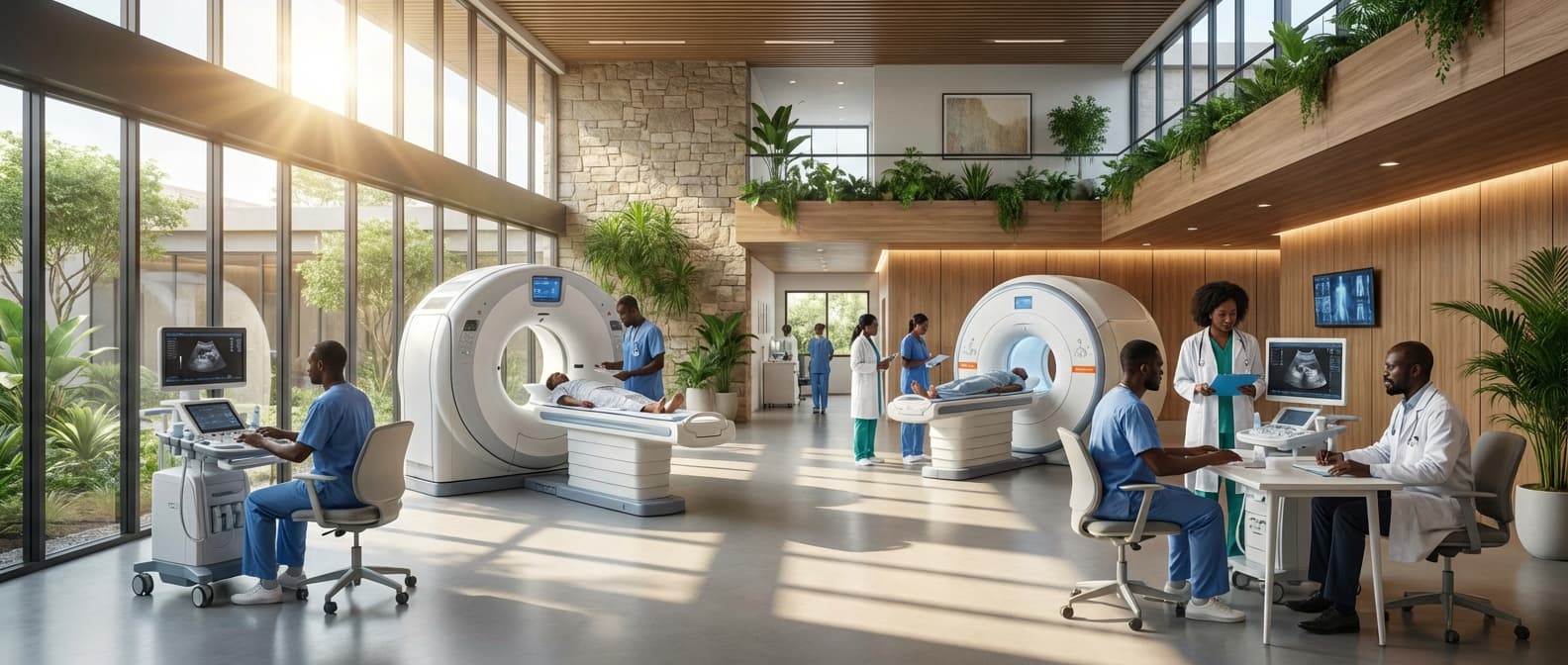
Diagnostic Imaging in Ethiopia
Engineering Excellence & Technical Support
High-resolution imaging systems including CT scanners, MRI, X-ray, and ultrasound technology for accurate clinical diagnosis. High-standard technical execution following OEM protocols and local regulatory frameworks.
Advanced Imaging Access Expansion
Deployment of new CT and MRI scanners across 5 regional referral hospitals, significantly increasing diagnostic capacity and reducing patient travel times for complex imaging needs. This initiative is supported by enhanced training programs for local radiologists and technicians.
PACS & Tele-radiology Network Establishment
Implementation of a Picture Archiving and Communication System (PACS) and a tele-radiology network connecting urban centers with remote clinics. This enables remote interpretation of medical images, providing expert diagnostic opinions to underserved areas and improving patient outcomes.
AI-Powered Early Detection Pilots
Pilot programs introducing Artificial Intelligence (AI) tools for the automated detection of key pathologies in chest X-rays and mammograms. These AI algorithms are being trained on local Ethiopian datasets to improve accuracy and speed up screening processes for common diseases like tuberculosis and breast cancer.
What Is Diagnostic Imaging In Ethiopia?
Diagnostic imaging in Ethiopia encompasses a spectrum of medical imaging technologies and procedures employed for the detection, diagnosis, characterization, and monitoring of diseases and injuries. It plays a crucial role in modern healthcare by providing non-invasive visualization of internal body structures. This service involves the application of physical principles, such as X-rays, magnetic fields, ultrasound waves, and radioactive isotopes, to generate images that aid clinicians in making informed diagnostic and therapeutic decisions. The scope of diagnostic imaging in Ethiopia is expanding, though resource limitations and access remain significant considerations. The services are delivered through various modalities, including radiography (X-ray), computed tomography (CT), magnetic resonance imaging (MRI), ultrasonography, and nuclear medicine imaging, with varying levels of availability across different healthcare facilities within the country.
| Who Needs Diagnostic Imaging? | Typical Use Cases | |||||||
|---|---|---|---|---|---|---|---|---|
| Patients presenting with symptoms indicative of internal pathology (e.g., pain, swelling, abnormal vital signs). | Fracture assessment (radiography, CT). | Pulmonary disease diagnosis and monitoring (radiography, CT). | Cardiovascular evaluation (ultrasound, CT, nuclear medicine). | Gastrointestinal disorders (ultrasound, CT). | Urological conditions (ultrasound, CT). | Gynecological and obstetric assessments (ultrasound). | Neurological conditions (CT, MRI). | Oncological staging, diagnosis, and treatment monitoring (CT, MRI, nuclear medicine). |
| Individuals undergoing pre-operative assessment. | Patients with suspected trauma or acute injuries. | Patients requiring follow-up after medical or surgical interventions. | Screening for certain conditions in high-risk populations (limited application in Ethiopia). | Guidance for interventional procedures (e.g., biopsies, drainages, angioplasty) (ultrasound, CT). | Evaluation of congenital anomalies (ultrasound, MRI). | Assessment of inflammatory and infectious processes (radiography, CT, MRI). |
Key Components of Diagnostic Imaging Services in Ethiopia
- Radiography (X-ray): Fundamental imaging technique utilizing electromagnetic radiation to produce two-dimensional images of internal structures, particularly bones and lungs. Widely available in most healthcare settings.
- Ultrasonography (Ultrasound): Employs high-frequency sound waves to create real-time images of soft tissues, organs, and blood flow. Essential for obstetrics, gynecology, abdominal examinations, and vascular assessments. Increasingly accessible.
- Computed Tomography (CT): Generates cross-sectional images of the body by combining multiple X-ray projections. Offers detailed visualization of bone, soft tissues, and blood vessels. Availability is more concentrated in referral hospitals and specialized centers.
- Magnetic Resonance Imaging (MRI): Utilizes strong magnetic fields and radio waves to produce highly detailed cross-sectional images of organs and tissues, particularly effective for soft tissue evaluation, neurological imaging, and musculoskeletal studies. Limited availability, primarily in major urban centers and advanced medical facilities.
- Nuclear Medicine Imaging (e.g., PET-CT, SPECT): Involves the administration of radiopharmaceuticals to visualize organ function and metabolic activity. Crucial for oncology, cardiology, and endocrinology. Highly specialized and extremely limited in availability within Ethiopia.
Who Needs Diagnostic Imaging In Ethiopia?
Diagnostic imaging plays a crucial role in modern healthcare, offering vital insights for diagnosis, treatment planning, and monitoring. In Ethiopia, the demand for these services is growing across various healthcare settings and for diverse patient populations. This document outlines the primary target customers and the departments that would benefit most from accessible and advanced diagnostic imaging capabilities.
| Customer Segment | Primary Imaging Needs | Key Departments Involved |
|---|---|---|
| Patients with General Symptoms | Initial diagnosis, identifying underlying causes of pain, discomfort, or functional changes. | Radiology, Internal Medicine, Outpatient Clinics |
| Trauma Patients | Rapid assessment of fractures, internal bleeding, head injuries, and other acute injuries. | Emergency Department, Radiology, Surgery (Orthopedics, Neurosurgery) |
| Oncology Patients | Staging of cancer, treatment planning, monitoring response to therapy, detecting recurrence. | Oncology, Radiology, Surgery |
| Cardiovascular Patients | Assessing heart structure and function, detecting blockages, monitoring blood flow. | Cardiology, Radiology, Internal Medicine |
| Pediatric Patients | Diagnosing congenital abnormalities, infections, injuries, and developmental issues. | Pediatrics, Radiology |
| Maternity Patients | Monitoring fetal growth and development, identifying complications, guiding delivery. | OB/GYN, Radiology (Ultrasound) |
| Surgical Candidates | Pre-operative anatomical assessment, identification of pathology, surgical planning. | Surgery, Radiology |
Target Customers and Departments for Diagnostic Imaging in Ethiopia
- {"items":["Patients with Suspected or Diagnosed Illnesses: Individuals presenting with symptoms requiring detailed internal examination to identify the cause.","Patients Requiring Pre-Surgical Assessment: Individuals undergoing surgery need imaging to understand anatomy, identify abnormalities, and plan surgical approaches.","Patients Undergoing Treatment Monitoring: Individuals receiving treatment for chronic conditions or cancer often require imaging to assess treatment efficacy and detect progression or recurrence.","Trauma Patients: Individuals who have sustained injuries, especially head injuries, fractures, or internal bleeding, benefit from rapid imaging for diagnosis and management.","Pediatric Patients: Children with congenital conditions, developmental issues, infections, or injuries require specialized imaging protocols.","Pregnant Women: Imaging, particularly ultrasound, is essential for monitoring fetal development, identifying potential complications, and guiding obstetric care.","Patients with Chronic Diseases: Individuals managing conditions like heart disease, lung disease, kidney disease, or diabetes may require regular imaging to track disease progression and complications."],"title":"Target Customers"}
- {"items":["Radiology Department: The central hub for all diagnostic imaging services, equipped with X-ray, CT, MRI, ultrasound, and potentially mammography units.","Emergency Department (ED): Critical for rapid diagnosis of trauma, acute conditions (e.g., stroke, appendicitis), and life-threatening illnesses.","Internal Medicine Department: Utilizes imaging for diagnosing and managing a wide range of conditions affecting the heart, lungs, gastrointestinal system, kidneys, and more.","Surgery Department (General Surgery, Orthopedics, Neurosurgery, etc.): Essential for pre-operative planning, intra-operative guidance, and post-operative follow-up.","Pediatrics Department: Crucial for diagnosing and managing a spectrum of childhood illnesses, from congenital abnormalities to infections and injuries.","Obstetrics and Gynecology (OB/GYN) Department: Primarily relies on ultrasound for prenatal care, gynecological assessments, and diagnosing pelvic conditions.","Oncology Department: Imaging is fundamental for cancer staging, treatment planning (radiotherapy), and monitoring treatment response.","Cardiology Department: Uses imaging modalities like echocardiography and CT angiography to assess heart structure and function, and detect coronary artery disease.","Pulmonology Department: Employs chest X-rays and CT scans to diagnose and manage lung diseases such as pneumonia, tuberculosis, and COPD.","Neurology Department: Utilizes MRI and CT scans to diagnose and manage neurological conditions like strokes, tumors, and degenerative diseases.","Rehabilitation Department: Imaging can help assess the extent of injury or disease progression and monitor the effectiveness of rehabilitation therapies.","Outpatient Clinics: For initial investigations of persistent symptoms and follow-up examinations."],"title":"Key Departments Benefiting from Diagnostic Imaging"}
Diagnostic Imaging Process In Ethiopia
The diagnostic imaging process in Ethiopia, while facing resource limitations and geographical disparities, generally follows a structured workflow from the initial patient inquiry or referral to the final reporting and interpretation of images. This workflow is crucial for accurate diagnosis and subsequent patient management. The process typically involves several key stages, each with its own set of actors and activities.
| Stage | Key Actors/Activities | Considerations in Ethiopia |
|---|---|---|
| Inquiry/Referral | Patient symptoms, Referring physician assessment, Referral request (written) | Limited access to specialists in remote areas; reliance on primary healthcare workers for initial assessment; potential for delayed referrals. |
| Scheduling & Preparation | Appointment booking, Patient instructions (fasting, etc.) | Long waiting times for appointments; challenges in patient education and adherence to preparation due to literacy or access issues. |
| Image Acquisition | Radiographer/Technologist operation of equipment, Patient positioning, Image capture | Shortage of trained radiographers; frequent equipment breakdowns; limited availability of advanced imaging modalities (CT, MRI) outside major urban centers. |
| Interpretation & Reporting | Radiologist image review, Diagnostic analysis, Report writing | Severe shortage of radiologists; high workload for existing radiologists; reliance on outsourced reporting in some cases; reliance on junior doctors or general practitioners for preliminary interpretation in some facilities. |
| Report Delivery | Dissemination of the report to the referring physician | Manual transport of reports can be slow; digital infrastructure for report transfer is limited; risk of lost reports. |
| Clinical Management | Referring physician's decision-making, Treatment planning, Follow-up | Treatment plans may be delayed due to late or absent reports; accessibility of follow-up imaging can be a challenge. |
Diagnostic Imaging Workflow in Ethiopia
- {"title":"Patient Inquiry/Referral","description":"The process begins when a patient presents with symptoms or a condition requiring imaging. This can be initiated by the patient themselves (self-referral, though less common for specialized imaging) or, more typically, by a referring physician or healthcare professional from a primary, secondary, or tertiary care facility."}
- {"title":"Clinical Assessment and Indication for Imaging","description":"The referring clinician evaluates the patient's history, performs a physical examination, and determines if diagnostic imaging is necessary. They establish a clear clinical question or indication for the imaging procedure."}
- {"title":"Referral to Imaging Department/Center","description":"The referring physician writes a formal referral request, specifying the patient's details, clinical history, suspected diagnosis, and the specific imaging modality requested (e.g., X-ray, Ultrasound, CT scan, MRI). This referral is directed to the appropriate diagnostic imaging department within a hospital or a standalone radiology center."}
- {"title":"Scheduling and Patient Preparation","description":"Upon receiving the referral, the imaging department schedules the appointment. Depending on the imaging modality, specific patient preparation instructions are provided, which may include fasting, dietary restrictions, avoiding certain medications, or wearing specific clothing. This step is critical for image quality and patient safety."}
- {"title":"Image Acquisition (Execution)","description":"The patient reports to the imaging department at the scheduled time. A radiographer or technologist operates the imaging equipment. They position the patient and acquire the necessary images according to the referring physician's request and established protocols. This phase requires skilled personnel and functional equipment."}
- {"title":"Image Processing and Quality Control","description":"The acquired images are processed. In modern settings, this involves digital processing. Radiographers perform initial quality checks to ensure the images are diagnostically adequate, free from artifacts, and meet the required standards."}
- {"title":"Radiological Interpretation","description":"A qualified radiologist reviews the processed images. They analyze the findings, correlate them with the clinical information provided in the referral, and formulate a diagnostic report. This is a critical step involving expert medical knowledge."}
- {"title":"Report Generation","description":"The radiologist dictates or writes a comprehensive report detailing their findings, impressions, and recommendations. This report is usually typed or transcribed and then signed by the radiologist."}
- {"title":"Report Delivery","description":"The final diagnostic report is communicated back to the referring physician. This can be done through a physical copy, electronic transfer (where available), or a direct handover. The speed of delivery can vary significantly based on the facility's infrastructure."}
- {"title":"Clinical Management and Follow-up","description":"The referring physician uses the diagnostic imaging report, along with other clinical information, to confirm a diagnosis, plan treatment, or monitor the patient's progress. Further management decisions are then made based on the integrated findings."}
Diagnostic Imaging Cost In Ethiopia
Diagnostic imaging plays a crucial role in modern healthcare, aiding in the diagnosis and monitoring of a wide range of medical conditions. In Ethiopia, the cost of these services can vary significantly due to several influencing factors. These include the type of imaging modality used (e.g., X-ray, Ultrasound, CT scan, MRI), the specific body part being examined, the complexity of the scan, the location of the healthcare facility (public vs. private, urban vs. rural), and the specific equipment and technology employed. Private facilities generally have higher pricing than public ones due to overhead costs, advanced equipment, and potentially more specialized personnel. The availability of specific advanced imaging technologies like MRI can also be limited, leading to higher costs in facilities that do offer it. Furthermore, the need for contrast agents for certain scans will add to the overall expense. It's important for patients to inquire about pricing at different facilities to make informed decisions.
| Imaging Modality | Estimated Price Range (ETB) - Public Facilities | Estimated Price Range (ETB) - Private Facilities | Notes |
|---|---|---|---|
| X-ray (e.g., Chest X-ray) | 200 - 500 | 400 - 1,200 | Basic imaging, widely available. |
| Ultrasound (e.g., Abdominal, Pelvic) | 300 - 800 | 700 - 2,000 | Common for soft tissue imaging. |
| CT Scan (e.g., Head, Abdomen) | 1,500 - 4,000 | 3,000 - 10,000 | More detailed cross-sectional imaging. Prices can increase significantly with contrast. |
| MRI Scan (e.g., Brain, Spine, Joints) | 3,000 - 8,000 | 7,000 - 25,000+ | Advanced imaging for soft tissues. Less common, hence higher costs and potentially longer wait times. |
| Mammography | 500 - 1,200 | 1,000 - 3,000 | Specialized X-ray for breast imaging. |
| Contrast Agent | 200 - 1,000+ | 500 - 2,000+ | Added cost for specific CT/MRI scans. |
Key Factors Influencing Diagnostic Imaging Costs in Ethiopia
- Imaging Modality (X-ray, Ultrasound, CT, MRI)
- Body Part/Area Examined
- Scan Complexity
- Type of Healthcare Facility (Public vs. Private)
- Geographic Location (Urban vs. Rural)
- Technology and Equipment Used
- Need for Contrast Agents
Affordable Diagnostic Imaging Options
Navigating the world of diagnostic imaging can feel overwhelming, especially when considering the costs. Fortunately, there are increasingly affordable options available. Value bundles and strategic approaches can significantly reduce out-of-pocket expenses while ensuring you receive the necessary medical care. This guide explores these avenues to empower you with knowledge for making informed decisions about your diagnostic imaging needs.
| Cost-Saving Strategy | Description | How to Implement |
|---|---|---|
| Compare Prices | Prices for the same diagnostic imaging procedure can vary significantly between different facilities and even within the same healthcare system. Shopping around is crucial. | Call multiple imaging centers and hospitals in your area. Ask for cash prices or prices for patients with your insurance plan. Websites of some imaging providers also list pricing. |
| Ask for Cash Prices | If you are uninsured or have a high deductible, many facilities offer discounted 'cash prices' for self-pay patients, which can be considerably lower than billed insurance rates. | When scheduling your appointment, state that you are interested in the self-pay or cash price. Don't assume the billed rate is the lowest you can get. |
| Negotiate Prices | In some cases, especially for expensive procedures or when paying out-of-pocket, you may be able to negotiate the price with the imaging facility. | Be polite but firm. Explain your financial situation and inquire if any further discounts or payment plans are available. Leverage competitive pricing you've found elsewhere. |
| Utilize Out-of-Network Providers Strategically | While in-network care is usually cheaper, sometimes an out-of-network provider might offer a significantly lower price that still makes it worthwhile, especially if your insurance has an out-of-network benefit. | Understand your insurance plan's out-of-network coverage. Get pre-authorization if required. Calculate the total cost (billed amount minus your responsibility) to see if it's a better deal. |
| Explore Imaging Centers vs. Hospitals | Freestanding imaging centers often have lower overhead costs than hospital-based departments, which can translate to lower prices for similar imaging services. | Ask your doctor if they recommend a specific imaging center. Research local imaging centers and compare their services and prices with hospital options. |
| Consider Pre-Payment Discounts | Some facilities offer small discounts for patients who pay the full amount upfront, even if they have insurance. | Ask about this option when scheduling or at the time of service. It's a small saving but can add up. |
| Check for Diagnostic Imaging Audits | Occasionally, errors can occur in billing. It's wise to review your bill carefully after receiving it. | Ensure all services rendered are accurately reflected. If you see discrepancies, contact the facility's billing department to clarify or correct the charges. |
| Leverage Health Savings Accounts (HSAs) or Flexible Spending Accounts (FSAs) | These pre-tax accounts can significantly reduce the net cost of diagnostic imaging by using funds that would otherwise be taxed. | Contribute regularly to your HSA/FSA. Use the funds for all eligible medical expenses, including diagnostic imaging, to maximize your savings. |
Understanding Value Bundles in Diagnostic Imaging
- {"title":"What are Value Bundles?","description":"Value bundles are pre-packaged sets of medical services, often including diagnostic imaging, that are offered at a bundled price. This price is typically lower than if each service were purchased individually. These bundles are designed to encourage coordinated care and predictable costs for specific conditions or procedures."}
- {"title":"How Do They Work?","description":"Instead of paying for a doctor's visit, a scan, and a radiologist's interpretation separately, a value bundle might cover all these components under a single, discounted fee. This simplifies billing and often incentivizes providers to work together efficiently."}
- {"title":"Benefits of Value Bundles","description":"The primary benefit is cost savings. They can also lead to improved care coordination, as bundled services often involve a team of providers working collaboratively. This can result in a smoother patient experience and potentially better health outcomes."}
- {"title":"Finding Value Bundles","description":"These bundles are often offered through insurance plans, employer health benefits, or directly by healthcare systems or imaging centers. Inquire with your insurance provider, HR department, or directly with imaging facilities about available bundled packages."}
Verified Providers In Ethiopia
In the competitive landscape of healthcare in Ethiopia, identifying reliable and high-quality providers is paramount. Franance Health stands out as a beacon of excellence, distinguished by its rigorous credentialing process and unwavering commitment to patient care. This commitment translates into a network of verified providers who not only possess the necessary qualifications but also embody the ethical standards and patient-centric approach that define superior healthcare.
| Category | Franance Health Verified Provider Standard | Benefits for Patients |
|---|---|---|
| Clinical Expertise | Possess recognized medical degrees and licenses, with verified specialties and extensive practical experience. | Access to highly skilled and knowledgeable medical professionals for accurate diagnosis and effective treatment. |
| Professional Integrity | Undergo thorough background checks and adherence to a strict code of conduct and ethical guidelines. | Assurance of trustworthy and honest medical care, prioritizing patient well-being above all else. |
| Patient Care Philosophy | Demonstrate a commitment to empathetic communication, active listening, and patient empowerment. | Experience healthcare that is respectful, understanding, and tailored to individual needs. |
| Continuous Improvement | Required to participate in ongoing professional development and stay updated with the latest medical research and techniques. | Benefit from healthcare providers utilizing the most current and effective medical practices. |
| Resource Availability | Affiliated with facilities equipped with modern technology and resources. | Access to a wider range of diagnostic tools and treatment options for comprehensive care. |
Why Franance Health Providers are the Best Choice:
- Rigorous Vetting and Credentialing: Franance Health employs a multi-stage verification process for all its affiliated healthcare professionals. This includes thorough background checks, verification of academic and professional qualifications, and an assessment of their clinical experience and practice history.
- Commitment to Continuous Professional Development: We mandate and facilitate ongoing training and education for our providers. This ensures they remain at the forefront of medical advancements, best practices, and evolving healthcare technologies.
- Patient-Centric Approach: Beyond technical skills, Franance Health prioritizes providers who demonstrate empathy, clear communication, and a genuine dedication to patient well-being. Our verification process includes evaluating their patient interaction and feedback.
- Adherence to Ethical Standards: Integrity and ethical conduct are non-negotiable. All Franance Health providers are expected to uphold the highest ethical principles in their practice, ensuring patient trust and safety.
- Access to Advanced Healthcare: By partnering with Franance Health, patients gain access to a network of providers equipped with modern diagnostic and treatment capabilities, offering comprehensive and effective healthcare solutions.
- Streamlined Access and Transparency: We aim to simplify the process of finding and accessing quality healthcare. Our platform provides transparent information about our verified providers, empowering patients to make informed decisions.
Scope Of Work For Diagnostic Imaging
This document outlines the Scope of Work (SOW) for diagnostic imaging services, detailing the technical deliverables and standard specifications required. It aims to ensure consistent quality, adherence to industry best practices, and timely provision of imaging results.
| Deliverable | Description | Standard Specifications | Reporting Format | Timeline |
|---|---|---|---|---|
| Raw Imaging Data | Unprocessed images generated by imaging modalities. | DICOM (Digital Imaging and Communications in Medicine) format; resolution and bit depth to be specified per modality. | DICOM files | Immediate post-acquisition |
| Processed Images | Images optimized for interpretation (e.g., windowing, leveling, reconstruction). | DICOM format; adherence to specific processing protocols for each study type. | DICOM files | Post-acquisition processing completion |
| Radiology Reports | Written interpretation of imaging findings by a qualified radiologist. | Clear, concise, and comprehensive; includes patient history, findings, impressions, and recommendations. | Structured text report (e.g., PDF, HL7 CDA); integrated with RIS/PACS. | Typically within 24-48 hours for routine studies; STAT reports within 1-2 hours. |
| CD/DVD/PACS Archival | Digital copies of images and reports for patient records and external sharing. | DICOM images and PDF reports; organized and labeled per patient and study. | CD/DVD or secure PACS link/export | As per institutional policy or patient request |
| Quality Assurance Reports | Documentation of regular equipment checks, calibration, and image quality assessments. | Detailed logs of tests performed, results, and any corrective actions taken. | Digital logs and summary reports | Monthly or quarterly, as per accreditation standards |
| Equipment Maintenance Logs | Records of scheduled and unscheduled maintenance, repairs, and parts replaced. | Date, technician, description of work, parts used, and equipment performance. | Digital logs | Ongoing, with annual summaries |
Key Components of Diagnostic Imaging Services
- Patient Scheduling and Registration
- Image Acquisition (e.g., X-ray, CT, MRI, Ultrasound, Nuclear Medicine)
- Image Interpretation and Reporting
- Data Storage and Retrieval
- Quality Assurance and Control
- Equipment Maintenance and Calibration
- Compliance with Regulations and Standards
Service Level Agreement For Diagnostic Imaging
This Service Level Agreement (SLA) outlines the performance standards for diagnostic imaging services provided by [Provider Name] to [Client Name]. It specifies response times for image availability, report generation, and system uptime, ensuring reliable and timely access to critical diagnostic information.
| Service Component | SLA Guarantee | Measurement Method | Exclusions |
|---|---|---|---|
| Image Availability (Post-Study) | 99.5% of images available within 2 hours of study completion. | System logs tracking image upload and PACS availability. | Scheduled maintenance, unscheduled technical outages impacting PACS/RIS, image acquisition delays beyond provider control. |
| Report Generation (Routine) | 98% of routine diagnostic reports finalized within 24 business hours of study completion. | RIS/PACS timestamps for report finalization. | Complex studies requiring subspecialist consultation, STAT report requests (handled separately), reporting system downtime. |
| Report Generation (STAT) | 99% of STAT diagnostic reports finalized within 4 business hours of STAT order. | RIS/PACS timestamps for STAT report finalization. | Unavailability of reporting physician, complex studies requiring extended review, reporting system downtime. |
| System Uptime (PACS/RIS) | 99.9% uptime for PACS and RIS systems during scheduled operational hours. | System monitoring tools tracking system availability. | Scheduled maintenance windows, Force Majeure events, client-side network issues, third-party vendor outages beyond direct control. |
| System Uptime (Workstations) | 99.5% uptime for diagnostic workstations during scheduled operational hours. | Endpoint management and monitoring tools. | Scheduled maintenance, client-managed workstation hardware/software issues, power outages at client site. |
Key Performance Indicators (KPIs)
- Image Availability: All diagnostic images will be accessible within the specified timeframe following completion of the imaging study.
- Report Generation: Diagnostic reports will be finalized and made available within the agreed-upon turnaround time.
- System Uptime: The diagnostic imaging systems and associated infrastructure will maintain a high level of operational availability.
Frequently Asked Questions

Ready when you are
Let's scope your Diagnostic Imaging in Ethiopia project in Ethiopia.

Scaling healthcare logistics and technical systems across the entire continent.